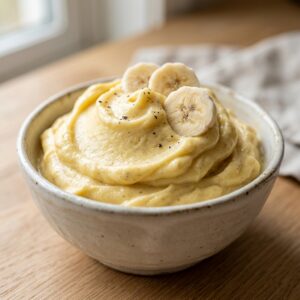
Whipped beef tallow is a creamy, spreadable fat made by rendering beef fat and whipping it to a light, fluffy texture. This whipped beef tallow recipe transforms simple beef fat trimmings into a luxurious cooking ingredient that combines traditional rendering techniques with modern culinary applications. Whipped beef tallow works beautifully for high-heat cooking, baking, skincare applications, and as a premium seasoning base. The process of making whipped beef tallow is straightforward, requiring only quality beef fat, patience, and basic kitchen equipment. Once you master this whipped beef tallow recipe, you will have a shelf-stable fat that elevates your cooking and offers exceptional nutritional benefits.
| Prep Time | Cook Time | Total Time | Servings | Difficulty | Cuisine |
|---|---|---|---|---|---|
| 20 minutes | 4-6 hours | 5-7 hours | Makes 3-4 cups | Beginner | Traditional |
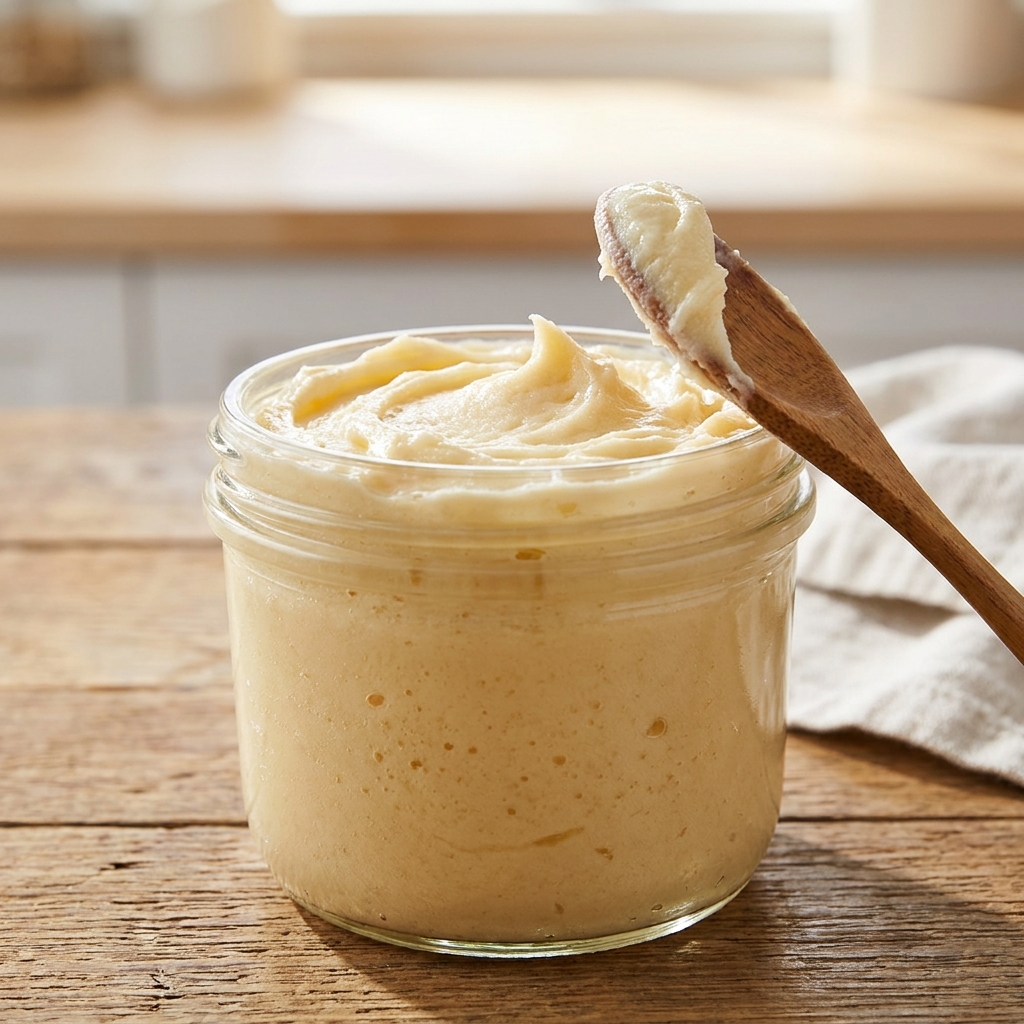
Table of Contents
Table of Contents
Why This Whipped Beef Tallow Works
Whipped beef tallow works exceptionally well as a cooking fat because it retains the high smoke point of rendered beef fat while gaining a whipped, accessible texture. I discovered that whipping beef tallow creates a product that spreads easily onto vegetables, bread, and meats without requiring melting or heating. The whipped beef tallow recipe produces fat that is both practical for everyday cooking and impressive enough for special culinary applications. The whipping process incorporates air into the tallow, creating a lighter mouthfeel while maintaining all the nutritional benefits of the original fat. Home cooks appreciate whipped beef tallow because it offers a sustainable way to use beef trimmings and creates a shelf-stable product that lasts for months when stored properly.
The flavor profile of whipped beef tallow is rich and savory without being overwhelming or gamey. When you make whipped beef tallow using quality beef fat sources, the result tastes clean and neutral enough to enhance rather than dominate other ingredients. Whipped beef tallow works beautifully in both sweet and savory applications, from pie crusts to seared steaks. The texture of properly made whipped beef tallow resembles high-quality butter or coconut cream, making it visually appealing and easy to work with in the kitchen.
This whipped beef tallow recipe requires minimal special equipment, as most home cooks already own the necessary tools. The process involves patient rendering followed by strategic cooling and whipping for optimal texture. Whipped beef tallow made using this method remains stable at room temperature for several days and lasts indefinitely when refrigerated. The reliability of this whipped beef tallow recipe makes it perfect for beginners who have never rendered fat before.
Creating whipped beef tallow at home connects you to traditional food preservation methods while supporting nose-to-tail cooking practices. The whipped beef tallow you make yourself costs significantly less than commercially produced versions while offering superior quality and flavor. Making whipped beef tallow is also an excellent educational project for families interested in understanding where their food comes from and how real cooking processes work.
Whipped Beef Tallow Ingredients
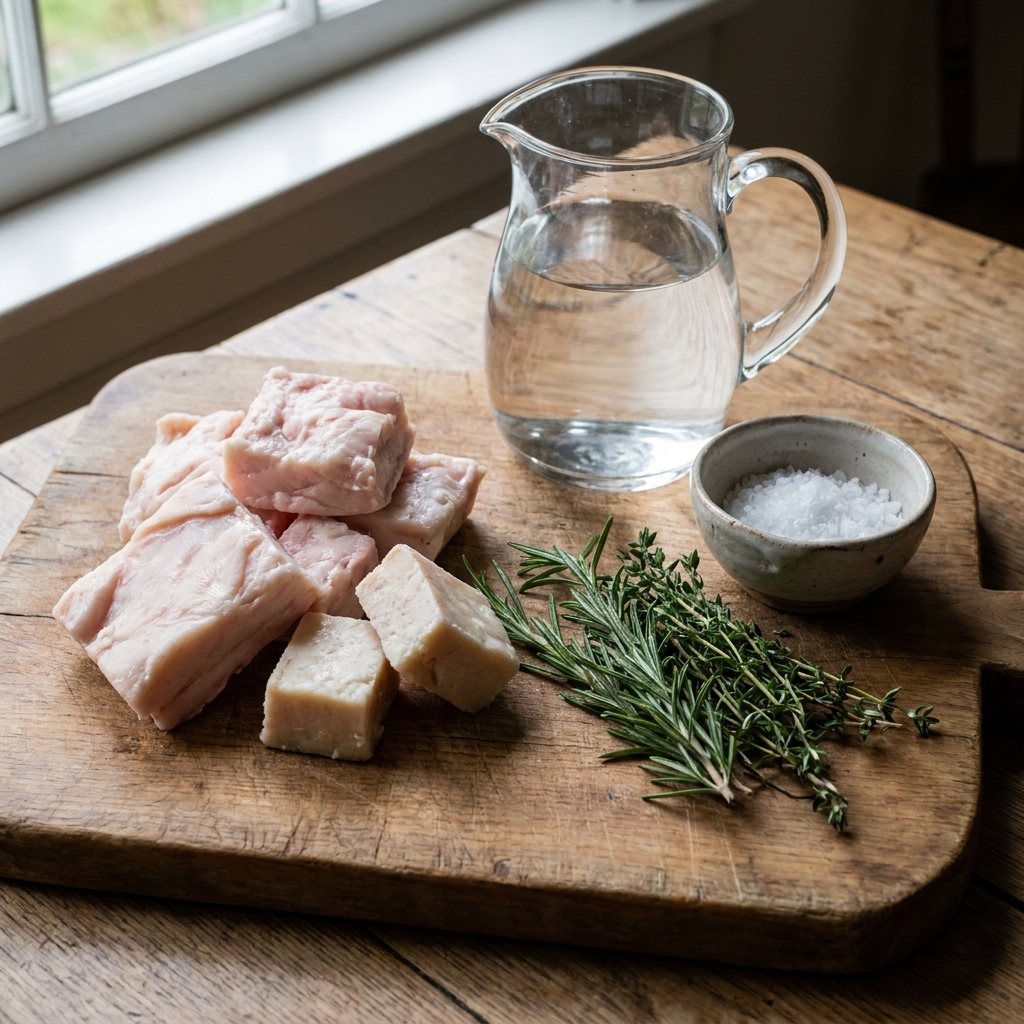
The whipped beef tallow recipe requires high-quality beef fat and optional flavoring ingredients that enhance the final product.
| Ingredient | Quantity | Notes with Alternatives |
|---|---|---|
| Beef fat (suet or trimmings) | 5-8 pounds | Use grass-fed beef when possible. Request from your butcher. Includes fat cap, trimmings, and kidney fat. Choose white, fresh fat without discoloration or odors. |
| Water | 2-3 cups | Helps with gentle rendering. Use filtered or distilled water for cleaner whipped beef tallow. |
| Sea salt | 1-2 teaspoons (optional) | Enhances flavor. Use fine sea salt or Himalayan salt. Omit for unsalted whipped beef tallow. |
| Fresh herbs (optional) | 2-3 sprigs | Rosemary, thyme, or oregano infuse subtle flavor into whipped beef tallow. Remove before whipping. Use organic herbs. |
Quality beef fat selection directly impacts your whipped beef tallow outcome. Source your beef fat from grass-fed cattle when possible, as whipped beef tallow made from grass-fed beef contains superior nutritional profiles and cleaner flavor. The whipped beef tallow recipe produces the best results when you use fresh fat with no rancid smell or dark discoloration. Most butchers will provide beef trimmings and suet for free or at minimal cost if you build a relationship with them.
How to Make Whipped Beef Tallow
Making whipped beef tallow involves three distinct phases: preparing the fat, slow rendering, and whipping for texture. This whipped beef tallow recipe produces consistent results when you follow each step carefully and avoid rushing the rendering process.
Phase One: Prepare Your Beef Fat
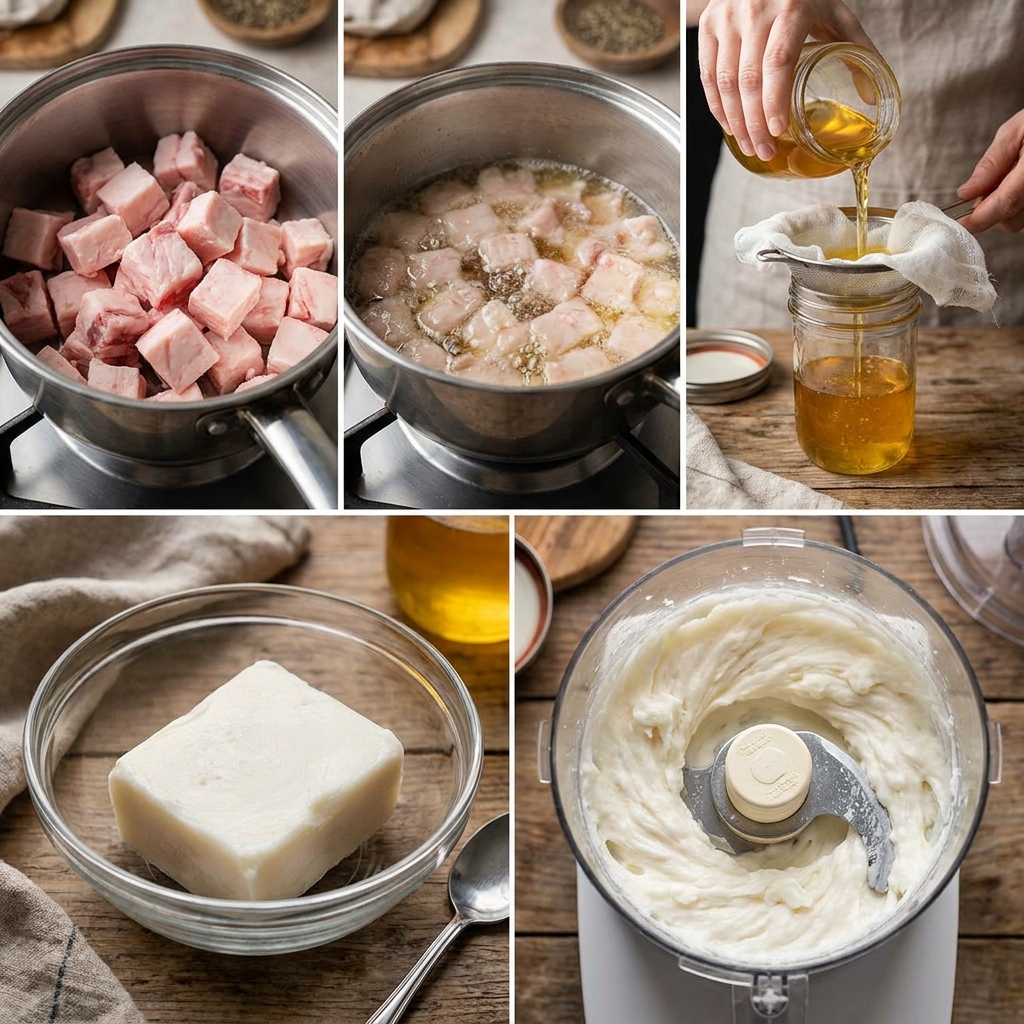
- Cut the beef fat into 1-inch cubes using a sharp knife and clean cutting board.
- Pat the beef fat pieces dry using paper towels to remove excess moisture before rendering.
- Transfer the cubed beef fat to a large, heavy-bottomed pot or Dutch oven with high sides.
- Add two to three cups of water to the pot with the beef fat to prevent scorching during the whipped beef tallow rendering process.
- Place the pot on the stovetop over low heat without covering it.
Phase Two: Slow Render the Beef Fat
- Heat the beef fat and water mixture on low heat for four to six hours, stirring occasionally with a wooden spoon.
- Watch for the beef fat to gradually become translucent as whipped beef tallow begins rendering from the tissue.
- Monitor the temperature to keep the mixture at a gentle simmer without aggressive bubbling, which ensures clean whipped beef tallow.
- Continue rendering until only small, crispy solids remain at the bottom of your pot, indicating complete whipped beef tallow extraction.
- Remove the pot from heat and allow the contents to cool for 15 minutes before proceeding.
Phase Three: Strain and Cool Your Whipped Beef Tallow
- Line a fine-mesh strainer with cheesecloth and position it over a large glass bowl or measuring cup.
- Carefully pour the hot rendered fat through the cheesecloth-lined strainer to remove all solids from your whipped beef tallow.
- Allow the strained whipped beef tallow to cool at room temperature for one to two hours until it becomes semi-solid.
- Transfer the partially solidified whipped beef tallow to the refrigerator for six to eight hours until it hardens completely.
- Remove the solidified whipped beef tallow from the refrigerator and scrape away any impurities or moisture from the bottom using a knife.
Phase Four: Whip Your Beef Tallow for Texture
- Cut the solidified whipped beef tallow into one-inch chunks and place them in a food processor fitted with the blade attachment.
- Process the beef tallow chunks for two to three minutes until the mixture becomes light and fluffy, creating proper whipped beef tallow consistency.
- Monitor the whipping process to prevent overworking, which can cause separation in your whipped beef tallow.
- Stop processing once the whipped beef tallow reaches a texture resembling soft butter or whipped coconut cream.
- Transfer the finished whipped beef tallow to clean glass jars with tight-fitting lids for storage.
Chef Tips for Perfect Whipped Beef Tallow
These expert tips ensure your whipped beef tallow recipe produces the best possible results every time you make it.
- Temperature Control: Keep the rendering temperature below 212°F to create clean whipped beef tallow with pure flavor. Use a kitchen thermometer to monitor your whipped beef tallow closely and maintain consistent low heat throughout the process.
- Stirring Schedule: Stir your whipped beef tallow every 30 minutes during rendering to ensure even heating and complete fat extraction from the tissue.
- Filtering Multiple Times: Strain whipped beef tallow twice through cheesecloth to remove fine particles and ensure crystal-clear whipped beef tallow suitable for all culinary uses.
- Cooling Strategy: Refrigerate whipped beef tallow for at least eight hours before whipping to ensure it reaches proper consistency and whips into the lightest, fluffiest texture possible.
- Whipping Duration: Process your whipped beef tallow for exactly two to four minutes in the food processor. Over-whipping can break down the fat structure and create an oily, separated product instead of properly whipped beef tallow.
- Source Quality: Request grass-fed beef fat from your butcher specifically for making whipped beef tallow, as grass-fed sources produce superior flavor and nutritional profiles compared to conventional beef fat.
Common Whipped Beef Tallow Mistakes to Avoid
Understanding common pitfalls helps you create perfect whipped beef tallow every time and prevents wasting good fat.
Mistake 1: Rendering at Too High Temperature High heat scorches whipped beef tallow and creates an unpleasant burnt flavor that persists through the finished product. The whipped beef tallow rendered at low temperatures maintains clean, neutral flavor. Keep your whipped beef tallow rendering temperature under 212°F throughout the process. If your whipped beef tallow smells smoky or burnt, reduce the heat immediately and add more water to prevent further damage.
Mistake 2: Skipping the Cooling Phase Attempting to whip warm whipped beef tallow produces oily, separated results instead of fluffy texture. Your whipped beef tallow must cool completely and solidify in the refrigerator before whipping. Allow at least eight to twelve hours for proper cooling of your whipped beef tallow before processing.
Mistake 3: Over-Whipping the Tallow Processing whipped beef tallow for more than four minutes breaks down the fat structure and causes weeping or separation. The whipped beef tallow should resemble soft butter after two to three minutes of processing. Stop the food processor immediately once your whipped beef tallow reaches desired consistency.
Mistake 4: Using Rancid or Discolored Beef Fat Poor-quality fat produces poor-quality whipped beef tallow with off-flavors and odors. Always inspect beef fat before rendering and reject any fat with dark discoloration, strong odors, or musty smells. Your finished whipped beef tallow reflects the quality of your source fat.
Mistake 5: Inadequate Straining Impurities left in your whipped beef tallow reduce shelf life and create grittiness. Strain whipped beef tallow twice through fine-mesh cheesecloth to remove all solids and ensure a clean, smooth product.
Best Whipped Beef Tallow Variations and Substitutions
The whipped beef tallow recipe adapts beautifully to different flavor preferences and dietary applications.
| Variation | Substitution or Addition | Impact on Flavor and Use |
|---|---|---|
| Herb-Infused Whipped Beef Tallow | Add fresh rosemary, thyme, or oregano during rendering and remove before whipping | Creates aromatic whipped beef tallow perfect for bread dipping and vegetable roasting |
| Garlic-Flavored Whipped Beef Tallow | Add smashed garlic cloves during the last hour of rendering | Produces savory whipped beef tallow ideal for steaks and compound butter applications |
| Sea Salt and Pepper Whipped Beef Tallow | Blend salt and fresh ground black pepper into whipped beef tallow after processing | Creates seasoned whipped beef tallow ready for immediate use on finished dishes |
| Spiced Whipped Beef Tallow | Add crushed peppercorns, juniper berries, or coriander during rendering | Produces complex whipped beef tallow with warming spice notes for culinary exploration |
| Pure Unsalted Whipped Beef Tallow | Omit all salt and herbs during rendering and whipping | Creates neutral whipped beef tallow suitable for baking, skincare, and dietary-restricted uses |
Whipped beef tallow variations expand your culinary possibilities significantly. The basic whipped beef tallow recipe provides a foundation for creative flavor combinations that suit different dishes and preferences. Infusing whipped beef tallow with complementary herbs and spices during the rendering phase ensures even distribution of flavors throughout your finished product. Many home cooks create multiple batches of whipped beef tallow with different flavor profiles to have variety available for different meal applications.
Serving Suggestions for Whipped Beef Tallow
Whipped beef tallow serves numerous culinary purposes beyond traditional cooking applications and offers impressive results in both everyday meals and special occasions.
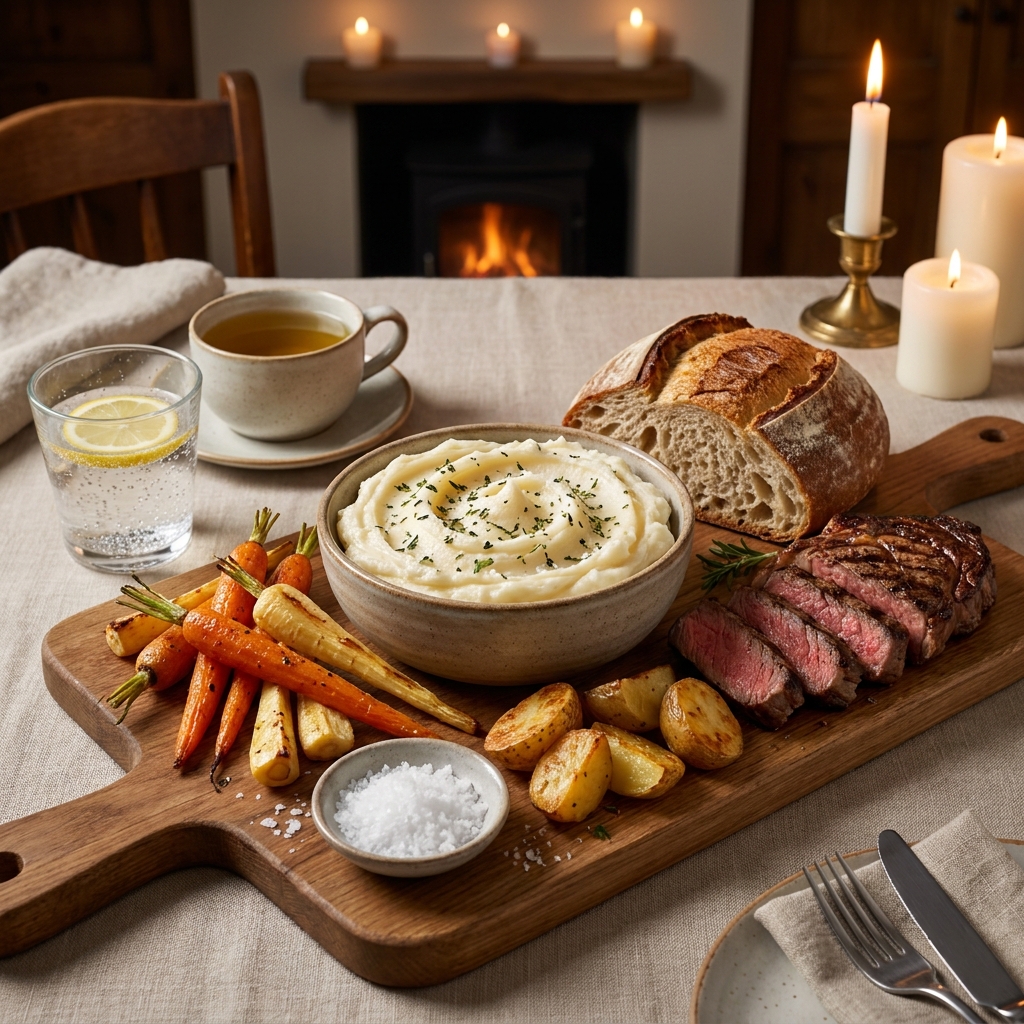
Use whipped beef tallow as a luxurious finishing fat for grilled vegetables, roasted root vegetables, and steamed broccoli. The whipped beef tallow creates incredible crust and flavor on grilled steaks, lamb chops, and burgers when applied just before or after cooking. Whipped beef tallow works beautifully as a bread dip alongside warm sourdough or crusty artisan bread, enhanced with fleur de sel and fresh cracked pepper. Serve whipped beef tallow with roasted beef, herb-crusted fish, and seasoned poultry to add richness and mouthfeel to protein dishes.
Whipped beef tallow elevates weeknight dinners by replacing conventional cooking oils and butter in pan-searing applications. Use whipped beef tallow for family gatherings and holiday meals where you want to demonstrate traditional cooking techniques and nutrient-dense ingredients. Whipped beef tallow works wonderfully for meal prep applications, as it remains stable and convenient for cooking throughout the week. Create whipped beef tallow compound butter variations by blending the tallow with minced herbs and spices, then serving alongside hot vegetables or grilled meats at dinner parties.
Whipped beef tallow also serves applications beyond cooking, including baking pie crusts and biscuits for exceptional texture. Many wellness-focused home cooks use whipped beef tallow as a skincare ingredient because of its traditional use in natural beauty applications. Store whipped beef tallow at room temperature for convenient access during cooking sessions, or keep it refrigerated for extended preservation.
Storage and Reheating for Whipped Beef Tallow
Proper storage ensures your whipped beef tallow maintains quality and remains safe for extended periods.
| Storage Method | Duration | Instructions |
|---|---|---|
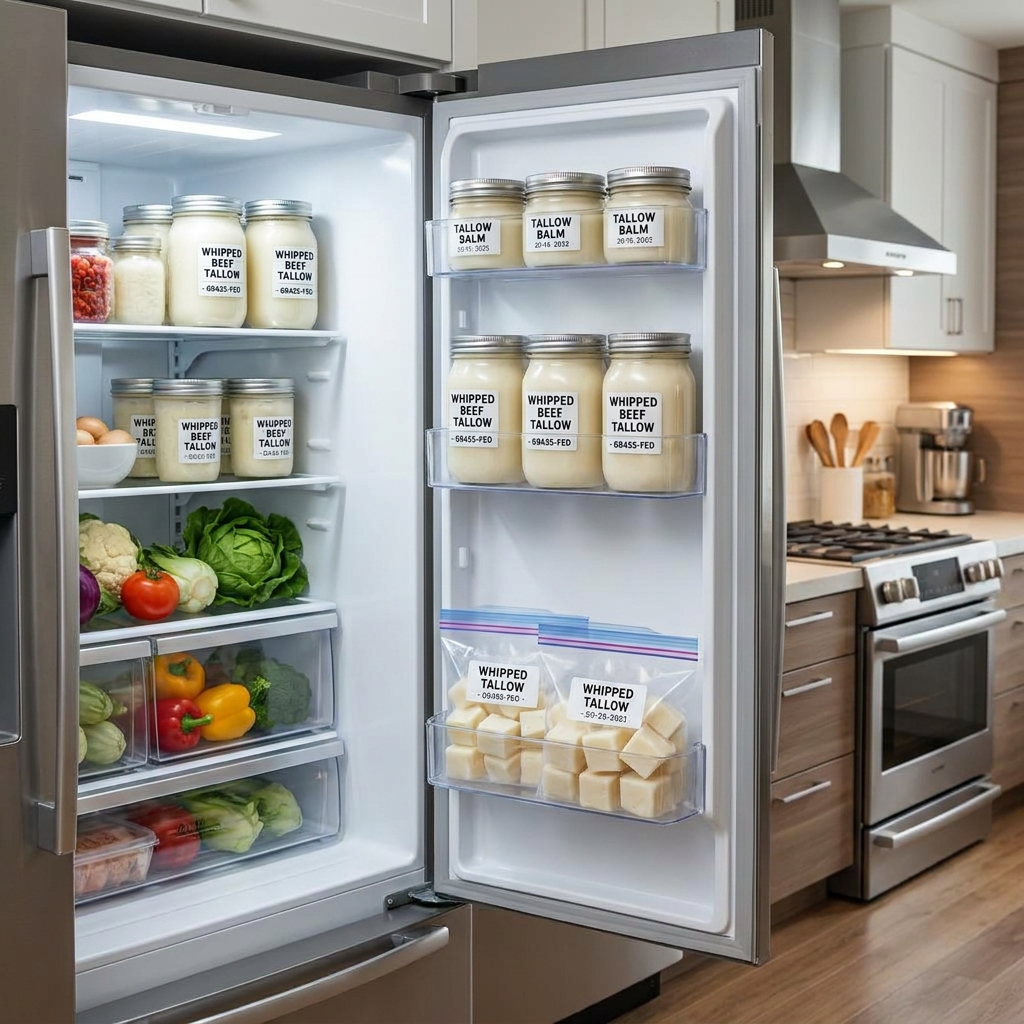
| Pantry/Room Temperature | 3-7 days | Keep whipped beef tallow in airtight glass jars away from direct sunlight and heat sources. Best for immediate use. |
| Refrigerator | 3-6 months | Store whipped beef tallow in sealed glass containers on a shelf away from strong-smelling foods. Whipped beef tallow will firm up when chilled. |
| Freezer | 12+ months | Portion whipped beef tallow into ice cube trays or small containers before freezing. Transfer frozen whipped beef tallow cubes to freezer bags for long-term storage. |
| Make-Ahead Preparation | Render up to 2 weeks before | Complete the rendering phase early and refrigerate in liquid form. Whip your whipped beef tallow the day before use for best texture. |
Whipped beef tallow requires minimal reheating as it softens naturally at room temperature within 15 to 20 minutes. Simply scoop the desired amount of whipped beef tallow from your storage container and allow it to come to room temperature before use. Whipped beef tallow can be gently warmed on the stovetop over very low heat if you need liquid fat for cooking applications. Never microwave whipped beef tallow, as uneven heating can damage the whipped texture and separate the fat.
Nutritional Information for Whipped Beef Tallow
Understanding the nutritional profile of whipped beef tallow helps you incorporate it thoughtfully into your diet.
| Nutrient | Amount per 1 Tablespoon (14g) |
|---|---|
| Calories | 120 |
| Total Fat | 14g |
| Saturated Fat | 7g |
| Monounsaturated Fat | 5g |
| Polyunsaturated Fat | 1g |
| Cholesterol | 14mg |
| Sodium | 0mg (unless salted whipped beef tallow) |
| Carbohydrates | 0g |
| Protein | 0g |
Approximate values based on standard beef tallow composition. Whipped beef tallow from grass-fed sources may contain slightly higher levels of conjugated linoleic acid (CLA) and omega-3 fatty acids compared to conventional beef fat. The whipped beef tallow recipe maintains all the nutritional properties of the original rendered fat while improving usability through aeration. Whipped beef tallow provides a nutrient-dense fat source suitable for traditional, paleo, ketogenic, and carnivore dietary approaches.
Frequently Asked Questions About Whipped Beef Tallow
How long does homemade whipped beef tallow last after making?
Whipped beef tallow stored in airtight glass containers lasts three to six months in the refrigerator and over one year in the freezer. Whipped beef tallow remains stable at room temperature for three to seven days before it requires refrigeration to prevent spoilage.
Can you make whipped beef tallow without a food processor?
Yes, you can make whipped beef tallow using an immersion blender, stand mixer with paddle attachment, or even hand whipping with a wire whisk. The whipped beef tallow made by hand requires more effort but produces equally excellent results. The process takes longer with manual whipping, typically 10 to 15 minutes of vigorous mixing to achieve fluffy whipped beef tallow.
What if your whipped beef tallow separates or becomes oily during processing?
Over-processing causes whipped beef tallow to separate. Prevent this by whipping for exactly two to three minutes only. If your whipped beef tallow separates, refrigerate it for several hours and re-whip briefly for one minute to recombine the mixture.
Is whipped beef tallow suitable for people following a vegan diet?
No, whipped beef tallow is an animal product and is not suitable for vegans. Whipped beef tallow is appropriate for omnivorous, carnivore, paleo, ketogenic, and traditional diets.
Can you substitute whipped beef tallow for butter in baking recipes?
Yes, whipped beef tallow works beautifully in baking applications as a one-to-one substitute for butter in pie crusts, biscuits, and pastries. Whipped beef tallow creates exceptional flakiness in pie dough and croissants because of its similar fat composition to traditional lard or butter.
How do you know when beef fat has finished rendering properly?
Beef fat finishes rendering when only small, tan-colored crispy solids remain at the bottom of your pot and the liquid fat appears clear and golden. Continue rendering whipped beef tallow until almost all the fat has separated from the tissue, which typically takes four to six hours.
What is the difference between whipped and non-whipped rendered beef tallow?
Non-whipped rendered beef tallow remains solid at room temperature but is less convenient for spreading or scooping. Whipped beef tallow incorporates air, creating a spreadable texture similar to soft butter that works better for finishing dishes and decorative applications.
Can you make whipped beef tallow from suet purchased at the grocery store?
Yes, you can make whipped beef tallow from store-bought suet, though suet quality varies by source. Grass-fed suet produces superior whipped beef tallow compared to conventional suet. Always inspect store-bought suet for freshness and appearance before rendering into whipped beef tallow.
Is whipped beef tallow safe for people with beef allergies?
No, whipped beef tallow is rendered from beef fat and is not safe for people with beef allergies. Those with beef allergies should avoid whipped beef tallow entirely.
What causes whipped beef tallow to smell unpleasant or rancid?
Rancid whipped beef tallow results from using poor-quality source fat, rendering at excessive temperatures, or storing improperly. Always use fresh, high-quality beef fat, maintain low rendering temperatures, and store whipped beef tallow in airtight containers away from light and heat to prevent rancidity.
Conclusion
Whipped beef tallow represents an excellent return to traditional cooking techniques that produce superior results compared to modern refined oils. Making whipped beef tallow at home costs significantly less than purchasing commercially while allowing you to control ingredients and quality completely. The whipped beef tallow recipe documented here produces a versatile, shelf-stable fat suitable for countless culinary applications from everyday cooking to special occasion meals. Your homemade whipped beef tallow will bring remarkable depth of flavor and nutritional value to every dish, delivering that coveted luxurious taste and silky texture that only genuine rendered beef fat can provide. Start making your own whipped beef tallow today and experience the difference that quality, traditional ingredients bring to your kitchen.
For more:
Miso cabbage steaks
Protein Dill Pickle Dip
Savory Greek yogurt dip
Rose tteokbokki recipe
Hot honey cottage cheese sweet potato beef bowl
Addictive cabbage recipe
Chili crisp carrot ribbon salad recipe
Learn more about grass-fed beef benefits from Eat Wild’s comprehensive resource on grass-fed meat sourcing. For food safety information regarding rendered fat storage, consult USDA FSIS food safety guidelines.
Print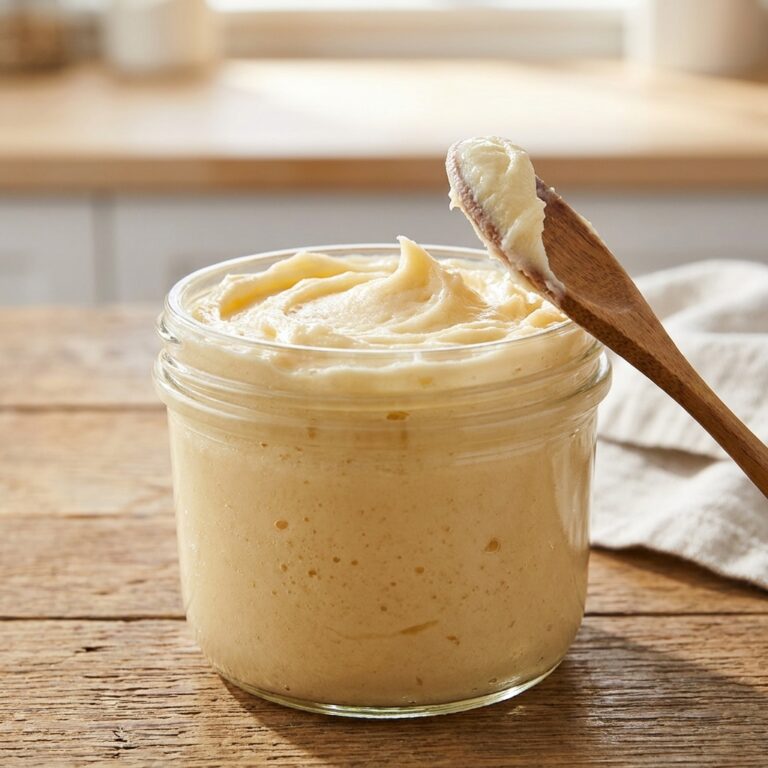
Viral Whipped Beef Tallow Recipe 2026
This whipped beef tallow recipe creates a creamy, spreadable fat perfect for cooking, baking, and high-heat searing with rich savory flavor and fluffy texture.
- Total Time: 5-7 hours
- Yield: 3–4 cups 1x
Ingredients
- 5–8 pounds beef fat (suet or trimmings)
- 2–3 cups water
- 1–2 teaspoons sea salt (optional)
- 2–3 sprigs fresh rosemary, thyme, or oregano (optional)
Instructions
- Cut the beef fat into 1-inch cubes using a sharp knife.
- Pat the beef fat dry with paper towels to remove excess moisture.
- Transfer the cubed fat to a large heavy-bottomed pot or Dutch oven.
- Add 2-3 cups of water to the pot to prevent scorching.
- Place the pot over low heat and render for 4-6 hours, stirring occasionally.
- Continue rendering until only small crispy solids remain.
- Remove from heat and cool for 15 minutes.
- Strain the rendered fat through a cheesecloth-lined fine mesh strainer into a large bowl.
- Allow the strained tallow to cool at room temperature for 1-2 hours.
- Refrigerate the tallow for 6-8 hours until completely solid.
- Remove impurities from the bottom of the solidified tallow if needed.
- Cut the tallow into chunks and place into a food processor.
- Process for 2-3 minutes until the tallow becomes light and fluffy.
- Transfer the whipped beef tallow into clean glass jars with tight-fitting lids.
Notes
Keep rendering temperature low to prevent scorching and maintain clean flavor. Avoid over-whipping or the tallow may separate and become oily.
- Prep Time: 20 minutes
- Cook Time: 4-6 hours
- Category: Condiment
- Method: Rendered
- Cuisine: Traditional
Nutrition
- Serving Size: 1 tablespoon
- Calories: 120
- Sugar: 0g
- Sodium: 0mg
- Fat: 14g
- Saturated Fat: 7g
- Unsaturated Fat: 6g
- Trans Fat: 0g
- Carbohydrates: 0g
- Fiber: 0g
- Protein: 0g
- Cholesterol: 14mg