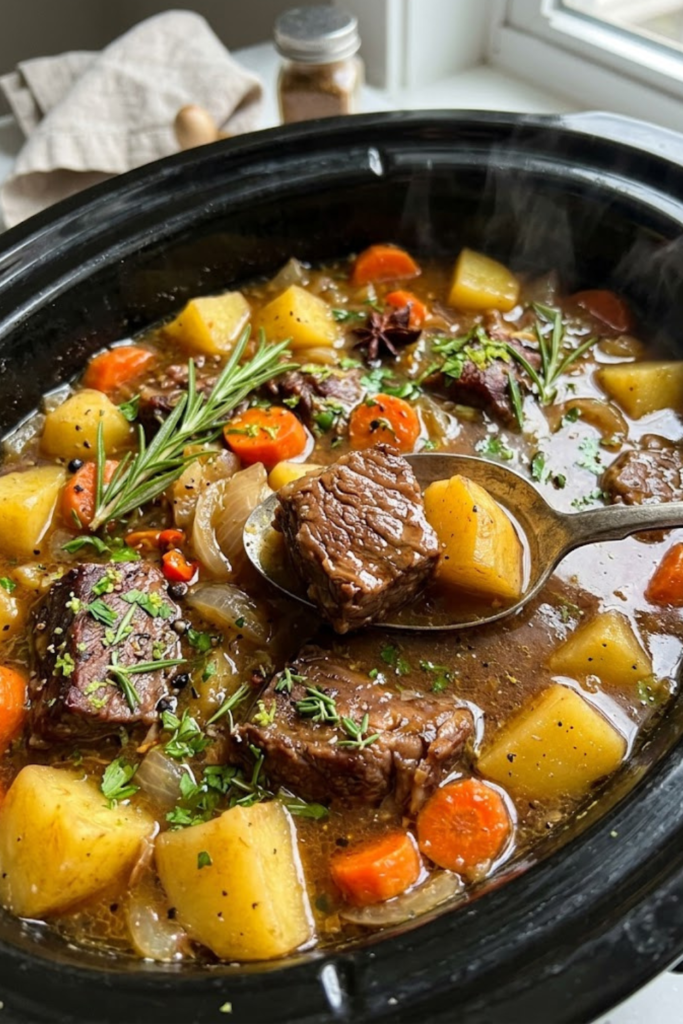
Did you know that according to recent 2026 kitchen surveys, nearly 70% of busy parents say the slow cooker is their “sanity-saving” appliance? I totally get it! There is nothing—and I mean nothing—better than walking through your front door after a long day and being hit with the smell of savory beef and herbs. It feels like a warm hug for your nose. This crockpot beef and potato stew hearty slow cooker dinner recipe is my absolute go-to when the weather gets chilly or life gets hectic. I’ve spent years tweaking this to make sure the meat isn’t dry and the potatoes don’t turn into mush. Let’s get into how you can make the ultimate comfort meal without breaking a sweat!
Choosing the Best Beef Cut for Your Slow Cooker
I have a little secret I tell all my students when we talk about cooking: you cannot hide a bad piece of meat in a slow cooker. I used to think that if I cooked something for eight hours, it would automatically become tender and delicious. Boy, was I wrong! I remember one of the first times I made this stew; I bought an expensive, lean sirloin thinking I was being healthy. We ended up eating something that felt like chewing on a dry sponge. It was a total disaster. If you want that melt-in-your-mouth texture, you have to pick the right cut from the start.
Why Chuck Roast is the Gold Standard
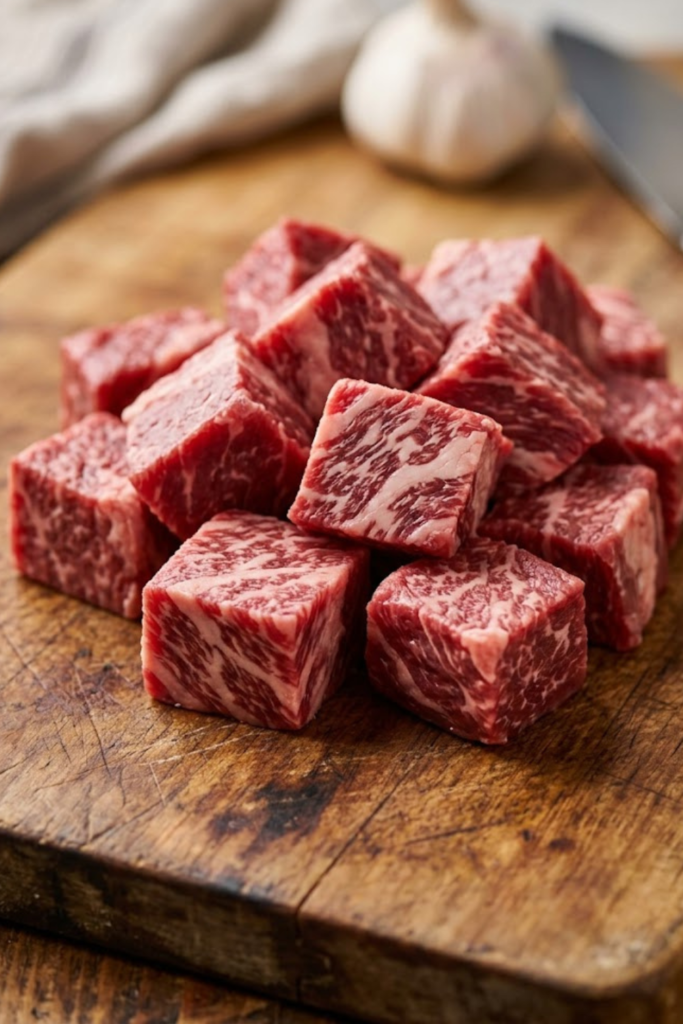
If you look at the meat department, you will see a lot of options, but you should head straight for the beef chuck roast. This cut comes from the shoulder of the cow. It is full of connective tissue and fat marbling. While that might sound “unhealthy” to some, that fat is exactly what you need for a long cook time. As the crockpot heats up, that fat melts down and basts the meat from the inside out. This is how you get a gravy that is rich and beefy without having to add a bunch of artificial thickeners. It’s the workhorse of the kitchen, and it’s usually pretty easy on the budget too.
The Trap of Pre-Cut “Stew Meat”
I know it is tempting to grab those little plastic trays labeled “stew meat” because the work is already done for you. I’ve been there when I’m tired after a long day of teaching! But here is the problem: those trays are often just a mix of leftover scraps. You might get a piece of tough round mixed in with a piece of sirloin. Since they all cook at different speeds, some will be mushy and others will be hard. I always tell people to buy the whole roast and cut it themselves. It only takes five extra minutes, and the results are much better.
How to Prep Your Beef for the Pot
When you get your roast home, you want to cut it into cubes that are about one inch big. Try to keep them all the same size so they finish at the same time. I usually trim off the really thick, hard pieces of fat on the outer edge, but I leave those little white lines inside the meat. You don’t need to be perfect with your knife skills here—it’s a rustic meal! Just make sure you aren’t cutting them too small, or they will just fall apart into the sauce and you won’t have those nice chunks to bite into. Use a sharp knife and take your time; it’s actually kind of relaxing once you get into a rhythm.
Prepping the Potatoes and Vegetables for Maximum Flavor
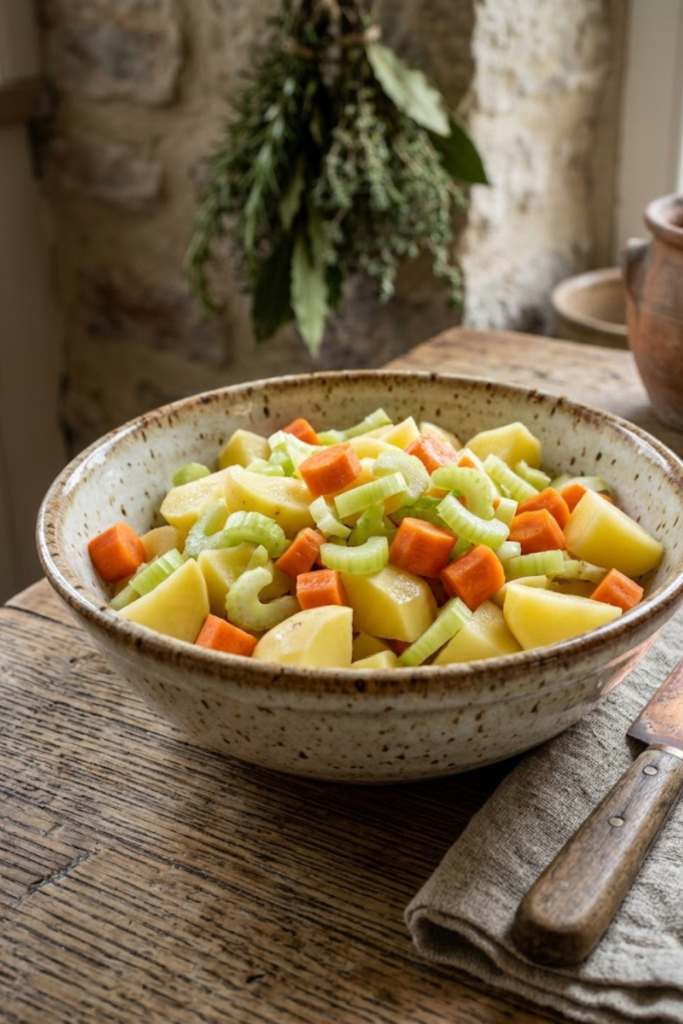
Let’s talk about the potatoes. This is where a lot of my friends mess up their crockpot beef and potato stew hearty slow cooker dinner recipe. They grab whatever big bag of Russet potatoes is on sale at the store. Now, I love a good baked potato as much as anyone, but Russets are just too starchy for a slow cooker. After six or seven hours, they basically dissolve and turn your beautiful stew into a thick, gritty mess. I always reach for Yukon Golds. They have a waxy skin and a buttery inside that holds its shape even after a long soak in the broth. Plus, you don’t even have to peel them if you’re feeling a bit lazy like I am on Monday nights! Just give them a good scrub and you’re good to go.
The Power of the Mirepoix
The foundation of any good stew is what we call the “Mirepoix.” That’s just a fancy kitchen word for a mix of onions, carrots, and celery. I remember a student asking me once why we even bother with celery since it “mostly tastes like water.” Well, when it cooks down with the beef, it adds a salty, savory depth you just can’t get from anything else. I like to cut my carrots into thick coins—at least half an inch thick. If you cut them too thin, they’ll just disappear by the time you’re ready to eat. For the onions, I usually go with a big yellow onion. They have more natural sugar than red onions, which helps sweeten the broth while they sit in the crockpot all day.
Adding Herbs for Aroma
One thing I’ve learned the hard way is that herbs really matter. Don’t just toss in a pinch of dried parsley at the end and expect it to taste like a restaurant meal. You want “hard” herbs like rosemary and thyme. These guys are tough enough to handle the heat for hours without losing their flavor. I like to tie a little bundle of fresh sprigs together with some kitchen string and just drop it right on top of the veggies. By the time the beef is tender, the herbs have let go of all those wonderful oils. It makes the whole house smell incredible while you’re doing chores or grading papers. Just remember to pull the woody stems out before you serve it; nobody wants to bite into a stick!
Keeping Everything from Getting Mushy
The trick to keeping your veggies from getting soggy is all about where you put them. I always put the potatoes and carrots at the very bottom of the pot. Since they are the hardest ingredients, they need to be closest to the heat source. The onions and celery can go on top of that, followed by the meat. This way, the vegetables cook through perfectly without turning into a pile of mush. It takes a little bit of planning, but it makes the final bowl of stew look and taste so much better. Your family will definitely notice the difference when every bite has a bit of texture to it.
The Secret to a Rich, Thick Stew Gravy
I have to tell you the truth. For a long time, my stews were basically just beef-flavored water. It was so annoying! You wait all day, the house smells great, and then you finally ladle out a bowl only to find a thin, runny liquid. I felt like I was failing my family. But after a bunch of trials in my own kitchen, I found that a thick, rich gravy isn’t just luck. It is about a few specific moves that change everything for this crockpot beef and potato stew hearty slow cooker dinner recipe.
Why I Switched to a Cornstarch Slurry
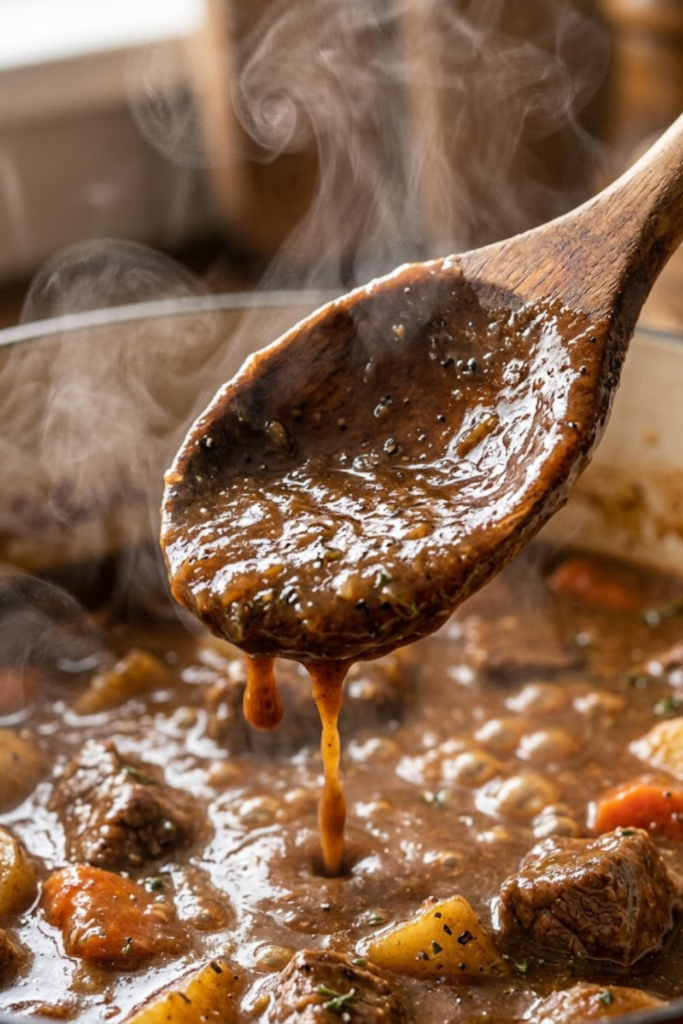
Most old recipes tell you to roll the beef in flour before you brown it. I tried that for years. Usually, the flour just makes the meat a bit gummy, and it doesn’t really thicken the sauce as much as you’d hope. Now, I do things different. About thirty minutes before we are ready to eat, I make a cornstarch slurry. I take two tablespoons of cornstarch and mix it with a tiny bit of cold broth or water in a small cup. You have to make sure the liquid is cold, or it will get lumpy! Once it is smooth, stir it into the pot. You will see the sauce turn from thin juice into a beautiful, silky gravy almost right away.
Building Deep Flavor Layers
A thick gravy is good, but it has to taste like something too. To get that dark, rich look, I always add a big squeeze of tomato paste and a few shakes of Worcestershire sauce. The tomato paste gives it a bit of body and a hint of sweetness. If you want it even better, add a splash of soy sauce. I know it sounds weird for a beef stew, but it brings out a deep savory flavor. It makes the gravy taste like it simmered in a fancy restaurant kitchen instead of a pot on your counter. Also, if you have a bottle of red wine open, a small glass of that helps cut through the richness of the beef fat.
Managing the Liquid Level
One big mistake I see—and I did this too—is adding way too much water at the start. Potatoes and onions have a lot of water inside them. As they cook down, they release all that juice into the pot. If you drown the meat in four or five cups of broth, you’re gonna have a soup, not a stew. I only add enough broth to just barely cover the ingredients. It’s way easier to add a splash more liquid at the end than it is to fix a watery mess. Trust me on this. If you keep the liquid low, the flavors stay concentrated and the gravy stays thick and hearty.
Step-by-Step Instructions: Setting Your Crockpot to Success
I love the morning routine when I’m getting this dinner ready. Usually, I’m running around trying to find my car keys or making sure my lunch is packed, but taking ten minutes to set up the crockpot makes the whole day feel smoother. It’s like a gift to my future self. For this crockpot beef and potato stew hearty slow cooker dinner recipe, the order you put things in actually matters more than you might think. I’ve had days where I just threw everything in a heap, and the meat was okay but the carrots were still kind of crunchy. Nobody wants crunchy carrots in a stew!
Why the Bottom Layer is for Veggies
You want to start by putting your “hard” vegetables at the very bottom of the pot. This means the potatoes and the carrots. In most slow cookers, the heat comes from the bottom or the sides near the base. These root vegetables take the longest to get soft, so they need to be right there where the heat is strongest. I usually spread them out in an even layer so they act like a little bed for the meat to sit on. If you put the meat on the bottom, it can sometimes get a bit too scorched or dry out before the veggies are even finished. Plus, the meat juices will drip down and soak into the potatoes all day, which makes them taste incredible.
Setting the Right Temperature
This is a big choice you have to make. My slow cooker has two main settings: Low and High. If you are in a rush because you started late, you can do High for about 4 or 5 hours. But I’m telling you, Low for 8 hours is where the magic happens. When you cook beef chuck roast on low heat, the tough stuff in the meat—that connective tissue—slowly turns into gelatin. That is what makes the beef so tender you can cut it with a spoon. If you cook it too fast on high heat, the meat fibers can sometimes seize up and stay a little chewy. If you have the time, always go low and slow.
The Final “Set it and Forget it” Phase
Once everything is in, I pour my broth mixture over the top. Don’t stir it yet! Just let it sit. Put the lid on and—this is the hardest part—leave it alone. Every time you lift that lid to “check” on it or smell it, you let out a ton of heat. Doing that can add about 20 minutes to your cook time every single time you peek. I just let it do its thing while I go to work or do chores. Right before I serve it, I give it a gentle stir to mix that rich gravy and the tender beef together. It’s the best feeling in the world to open that lid at dinner time and see everything perfectly cooked and ready to go.
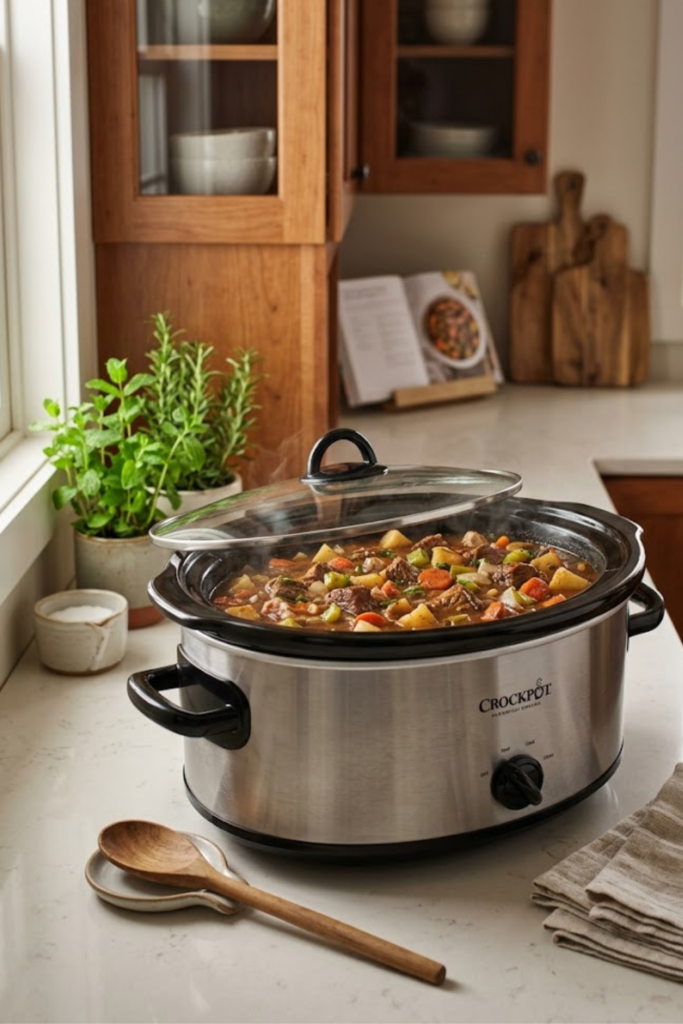
Storing and Reheating Your Beef Stew Leftovers
I’ve gotta tell you, being a teacher means I absolutely live for leftovers. There is nothing quite like sitting in the school breakroom with a warm, steaming bowl of this crockpot beef and potato stew hearty slow cooker dinner recipe while the other teachers are stuck eating cold sandwiches. Most people don’t realize that stew is actually one of those rare things that tastes way better the next day. It is like the beef, the broth, and the spices finally had a chance to sit down and get to know each other. The flavors really soak deep into those potatoes after they spend a night in the fridge. But, you have to be a bit careful about how you store it so it stays fresh and doesn’t end up tasting like the inside of a refrigerator.
Cool it Down Before the Fridge
One mistake I used to make all the time was taking the big, heavy ceramic pot out of the slow cooker and shoving it straight into the fridge while it was still piping hot. Don’t do that! It can actually raise the temperature inside your fridge and make your milk or eggs spoil. Plus, it takes way too long for that big hunk of ceramic to get cold. I usually let the stew sit on the counter for maybe twenty or thirty minutes to let the steam die down. Then, I move it into smaller, shallow containers. Using smaller bowls helps the stew cool down much faster and makes it way easier to just grab a single serving for my lunch the next morning. Just make sure the lids are on nice and tight so your whole fridge doesn’t smell like onions.
Can You Freeze Beef Stew?
Yes, you definitely can! This is a total lifesaver for those weeks when I know I’m going to be busy with parent-teacher conferences or grading a giant stack of essays. I like to use those heavy-duty freezer bags for this. I fill them up about three-quarters of the way, squeeze out all the extra air, and lay them flat on the freezer shelf. Once they are frozen solid, you can stack them up like books. They take up way less space that way. Just keep in mind that potatoes can sometimes get a little bit grainy after they have been frozen and thawed out. It doesn’t ruin the taste at all, but the texture might be a tiny bit different than when it was fresh out of the crockpot.
The Best Way to Get it Hot Again
When you are ready to eat those leftovers, the way you heat them up really matters. If I am at home, I always put the stew in a small pot on the stove over medium heat. I usually add just a tiny splash of water or extra beef broth to loosen up the gravy, because it often gets really thick in the fridge. If you are using a microwave at work, please make sure you cover the bowl with a damp paper towel. Stew has a habit of “popping” when it gets hot, and cleaning beef gravy off the inside of a microwave is not how I want to spend my 20-minute lunch break! Give it a good stir halfway through so the middle gets hot too, and it will taste just as good as the night you made it.
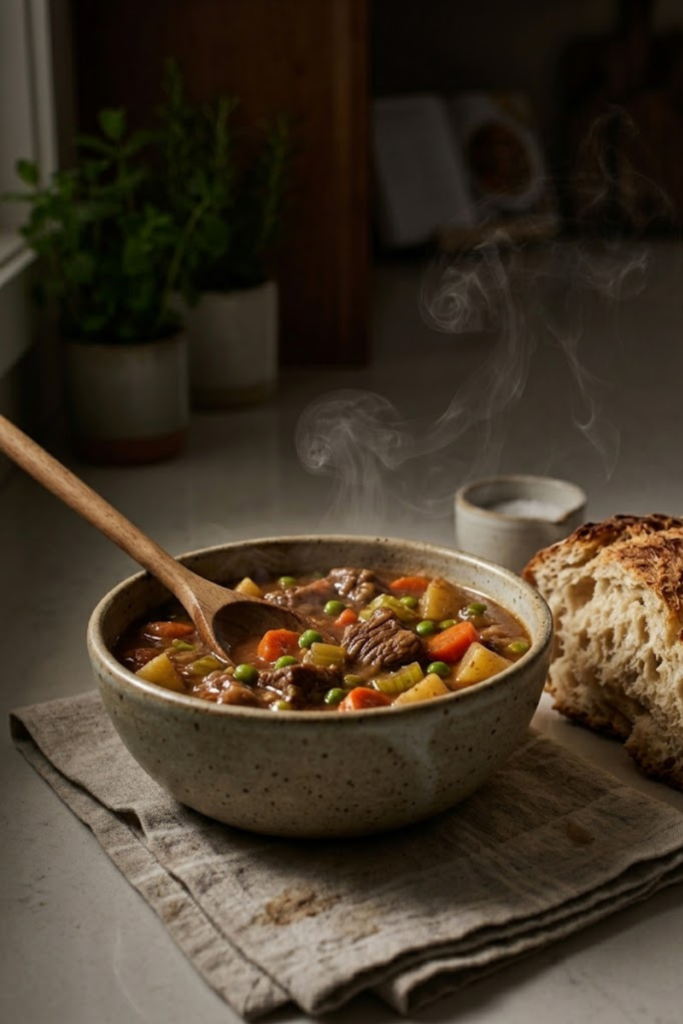
Final Thoughts: Making Memories Around the Dinner Table
Well, there you have it. That is my whole routine for making a crockpot beef and potato stew hearty slow cooker dinner recipe. I know it might seem like a lot of little details, but once you do it once or twice, it becomes second nature. Honestly, I think the reason I love this recipe so much isn’t just about the food itself—though the beef is incredibly tender and that gravy is to die for. It is really about the feeling it gives my home. As a teacher, my days are usually pretty loud and fast. There is always someone who needs help with a math problem or a stack of papers that needs to be graded. Coming home to the smell of a slow-cooked meal makes the whole house feel peaceful. It is like a signal to my brain that the workday is over and it is time to relax.
Why This Recipe Stays in My Rotation
I have tried a lot of different “trendy” recipes over the years, but I always come back to this one. It is dependable. You don’t need any weird, expensive ingredients that you’ll only use once and then let sit in the back of your pantry for three years. Everything in here is simple and honest. Plus, it is a great way to stretch a dollar. You can take a cheaper, tougher cut of meat and turn it into something that feels like a luxury. I also love that it is a complete meal in one pot. You have your protein, your starch, and your veggies all right there. If I’m feeling extra fancy, I might bake some frozen rolls to dip in the gravy, but usually, the stew is plenty on its own.
Encouraging You to Get Cooking
If you are someone who feels a bit nervous in the kitchen, please give this a shot. You really can’t mess it up too badly as long as you remember to keep the heat low and give it plenty of time. If your first batch is a little thin, just remember the cornstarch trick for next time. If your potatoes are a bit too soft, try cutting them bigger. Cooking is a skill just like anything else, and every pot of stew you make is just practice for the next one. The best part is that even the “mistakes” usually still taste pretty good! There is nothing more satisfying than seeing your family or friends scrape their bowls clean and ask for seconds.
Share the Love on Pinterest
I really hope this guide helps you get a delicious dinner on the table with a lot less stress. If you found these tips helpful or if you tried the recipe and loved it, I would be so happy if you would share this on Pinterest! It helps other busy people find easy, hearty meal ideas, and it really supports me in sharing more of my favorite kitchen stories with you all. I love seeing photos of what you all cook, so feel free to tag me if you post your creation. Now, go get that crockpot out of the cupboard and start chopping those potatoes. You’ve got a great dinner ahead of you! Happy cooking, everyone!