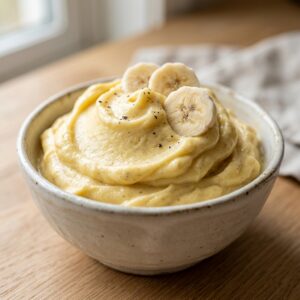
Mango sago pudding recipe is a beloved Southeast Asian dessert that combines creamy, sweet mango puree with chewy tapioca pearls suspended in a silky custard base. This refreshing treat delivers natural tropical flavors and a delightful textural contrast that appeals to home cooks of all skill levels. The mango sago pudding recipe works perfectly for warm weather entertaining, family gatherings, or whenever you crave an elegant yet simple dessert. Rich mangoes pair beautifully with the subtle sweetness of condensed milk and the distinctive bounce of cooked sago pearls. Learning this mango sago pudding recipe opens doors to creating restaurant-quality desserts in your own kitchen without requiring advanced culinary techniques.
| Prep Time | Cook Time | Total Time | Servings | Difficulty | Cuisine |
|---|---|---|---|---|---|
| 15 minutes | 25 minutes | 40 minutes (plus chilling) | 6 servings | Easy | Filipino, Southeast Asian |
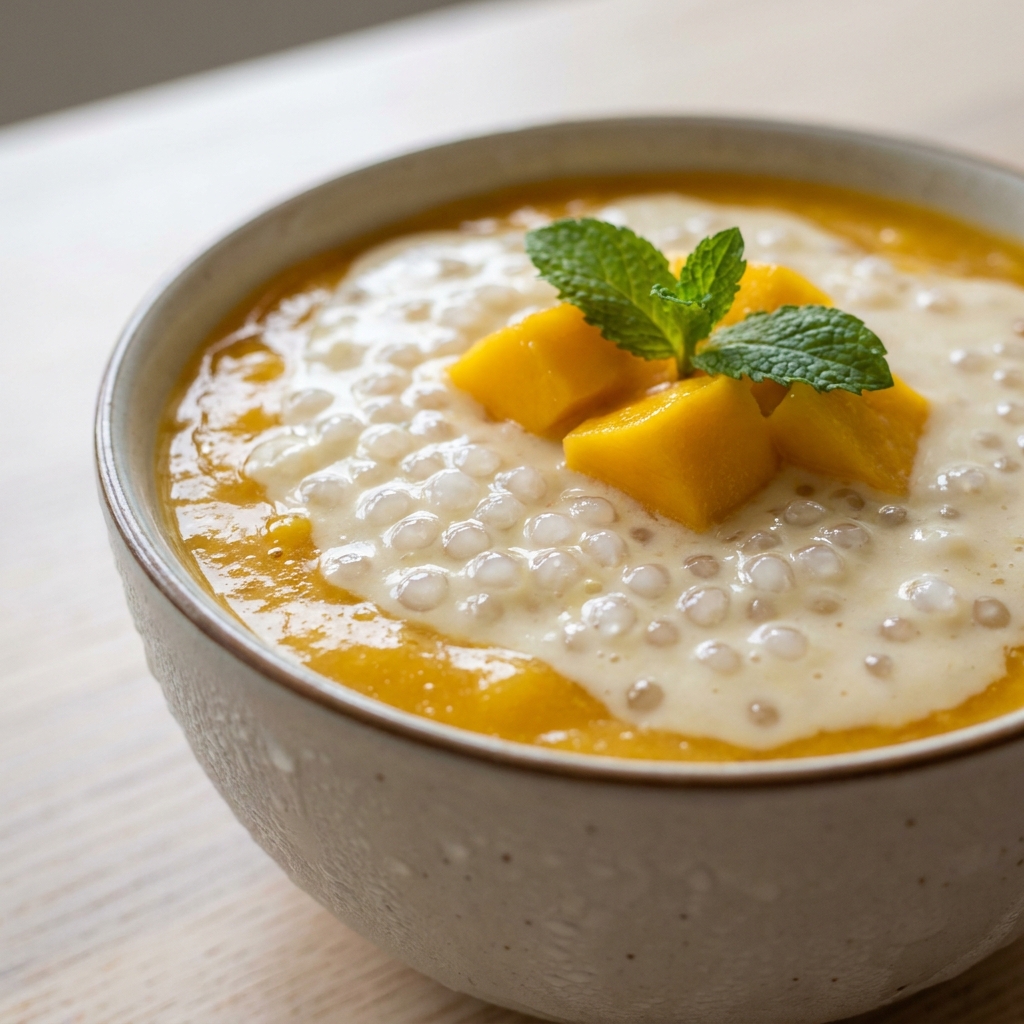
Table of Contents
Table of Contents
Why This Mango Sago Pudding Recipe Works
The mango sago pudding recipe succeeds because it balances three essential elements: vibrant tropical mango flavor, creamy richness from condensed milk and evaporated milk, and the satisfying chew of cooked sago pearls. I have prepared this mango sago pudding recipe countless times for family dinners and celebrations, and it never disappoints. The beauty of this mango sago pudding recipe lies in its straightforward technique that relies on quality ingredients rather than complicated cooking methods. Most home cooks can master this mango sago pudding recipe within their first attempt because each step builds logically from preparation through final assembly.
The textural complexity within this mango sago pudding recipe keeps every spoonful interesting and satisfying. Soft, yielding sago pearls contrast beautifully against smooth mango custard, creating a dessert that feels both indulgent and refreshing. This mango sago pudding recipe works particularly well during hot months when chilled desserts provide welcome relief. The natural sweetness of ripe mangoes means you control sugar levels precisely, making this mango sago pudding recipe adaptable to personal preference and dietary considerations.
Flavor development in this mango sago pudding recipe depends heavily on selecting properly ripe mangoes and combining them with quality dairy products. The creamy base of this mango sago pudding recipe comes from a balanced mixture of condensed and evaporated milk, which adds richness without overwhelming the fruit’s delicate notes. Many home cooks appreciate that this mango sago pudding recipe requires minimal equipment and produces impressive results suitable for serving to guests.
Home bakers love this mango sago pudding recipe because it demonstrates how simple ingredients transform into an elegant presentation. The mango sago pudding recipe teaches valuable cooking fundamentals including proper sago preparation, mango pulping, and custard-making techniques. Whether you are preparing this mango sago pudding recipe for a family meal or special occasion, the results consistently impress without requiring chef-level expertise.
Mango Sago Pudding Recipe Ingredients
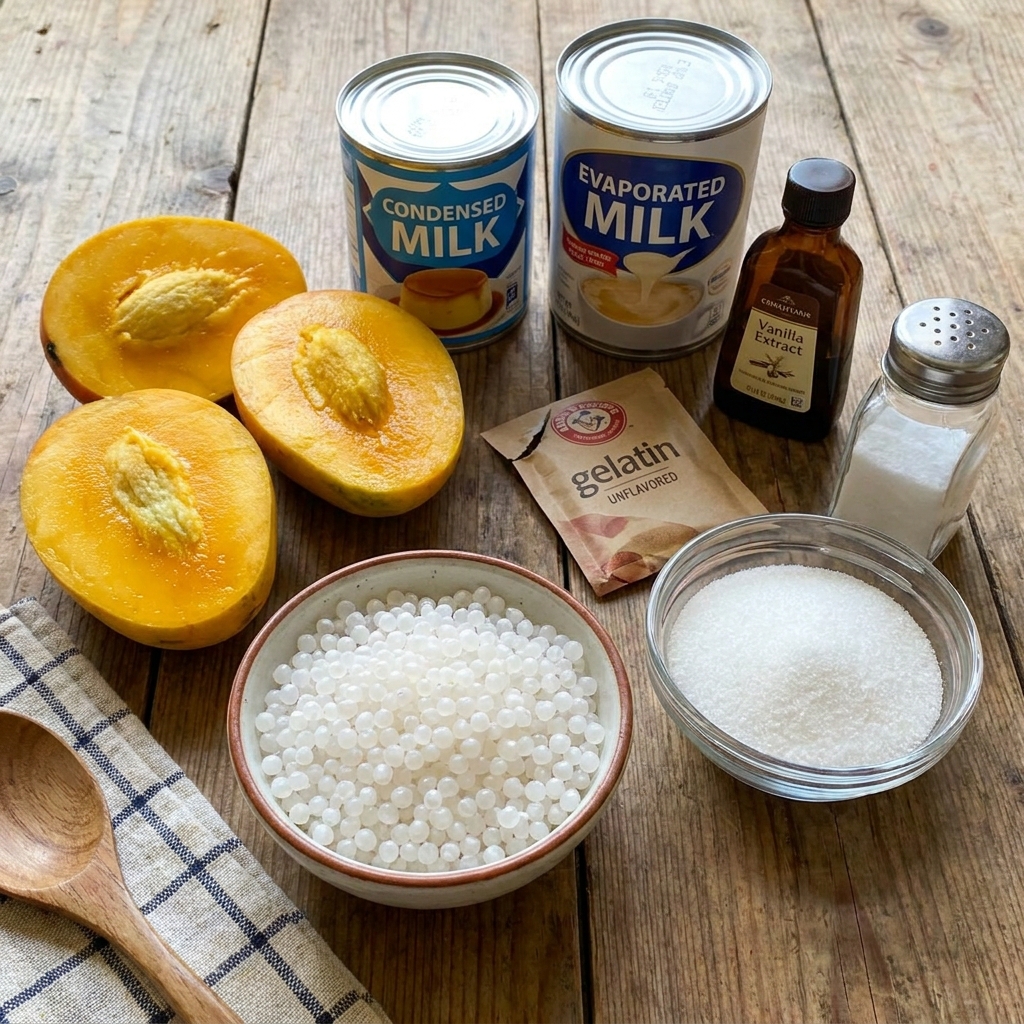
This mango sago pudding recipe requires quality ingredients measured carefully to achieve perfect consistency and flavor balance. The mango sago pudding recipe performs best when you source ripe, fragrant mangoes and use full-fat dairy products for optimal creaminess.
| Ingredient | Quantity | Notes with Alternatives |
|---|---|---|
| Ripe mangoes | 3 medium (about 2 cups puree) | Choose sweet varieties like Ataulfo, Honey, or Alphonso mangoes. Should yield soft pulp when pressed gently. Frozen mango puree works well if fresh mangoes are unavailable. |
| Sago pearls | 1 cup | Small pearl tapioca found in Asian markets. Must be cooked until translucent before adding to pudding. Pearl tapioca can substitute sago in equal measure. |
| Condensed milk | 1 can (14 oz) | Provides sweetness and body to custard. Full-fat version essential for proper richness and texture. |
| Evaporated milk | 1 can (12 oz) | Creates creamy consistency without heaviness. Whole milk evaporated version recommended for best results. |
| Water | 2 cups | For cooking sago pearls and creating pudding base. Use filtered water for best taste. |
| Gelatin powder | 2 teaspoons (unflavored) | Provides light gel structure to pudding. Optional but recommended for silkier texture. Agar powder can substitute for vegetarian alternative. |
| Sugar | 1/4 cup | Adjustable based on mango sweetness. Reduce if using very sweet mangoes or adjust to personal preference. |
| Vanilla extract | 1 teaspoon | Enhances overall flavor profile without masking mango notes. Optional but adds subtle depth. |
| Salt | 1/8 teaspoon | Balances sweetness and brightens mango flavor. Do not omit as it enhances overall taste perception. |
Understanding ingredient roles helps ensure your mango sago pudding recipe turns out perfectly every time. This mango sago pudding recipe depends on proper sago preparation and ripe mango selection above all other factors.
How to Make Mango Sago Pudding Recipe
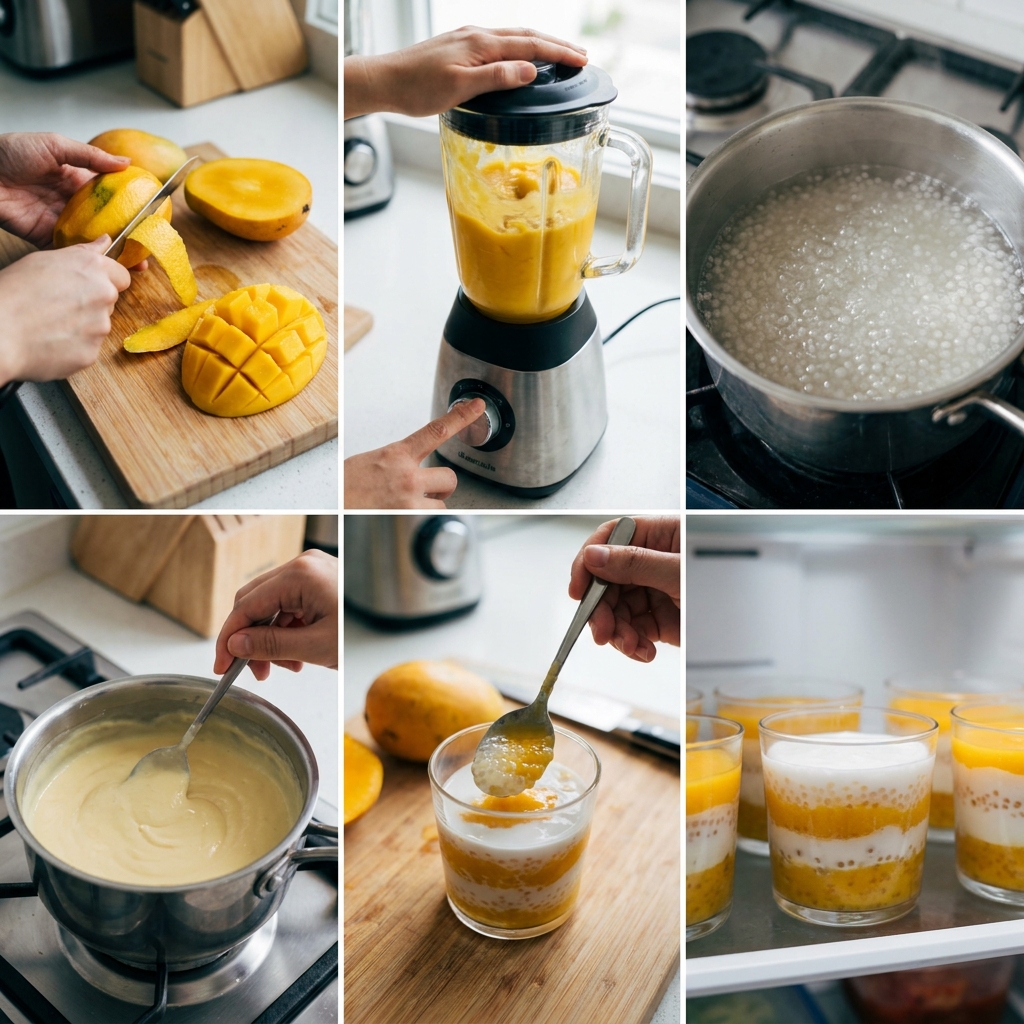
Making this mango sago pudding recipe involves several straightforward steps that build progressively from preparing the sago through final assembly and chilling. Understanding each step ensures consistent results when preparing this mango sago pudding recipe for your household or guests.
Preparing the Sago Pearls
- Bring a large pot of water to a rolling boil, using approximately 4 to 5 times the volume of sago pearls.
- Gradually add sago pearls to boiling water while stirring continuously to prevent clumping and sticking.
- Reduce heat to medium and simmer for 12 to 15 minutes, stirring occasionally to ensure even cooking.
- Cook until sago pearls become translucent with just a small white dot remaining in the center of each pearl.
- Drain cooked sago pearls through a fine-mesh strainer and rinse under cool running water to stop cooking.
- Spread cooked sago on a clean kitchen towel to dry slightly before adding to pudding base.
Creating the Mango Puree
- Select three ripe mangoes and cut them in half lengthwise, carefully avoiding the large flat pit in the center.
- Use a sharp spoon to scoop mango flesh directly into a blender, being careful not to include the peel.
- Blend mango flesh on high speed for 1 to 2 minutes until you achieve a smooth, uniform puree without lumps.
- Strain mango puree through a fine-mesh strainer to remove any remaining fiber if you prefer ultra-smooth pudding.
- Reserve the fresh mango puree in a clean bowl while preparing the custard base for this mango sago pudding recipe.
Building the Custard Base
- Pour 2 cups of water into a medium saucepan and bring to a simmer over medium heat.
- Add 1/4 cup sugar and 1/8 teaspoon salt, stirring until sugar dissolves completely into the liquid.
- Sprinkle unflavored gelatin over the mixture and let it bloom for 2 to 3 minutes without stirring.
- Stir the gelatin mixture thoroughly until completely dissolved and no lumps remain visible.
- Remove the saucepan from heat and allow the mixture to cool for approximately 5 minutes.
- Pour in one can of condensed milk and one can of evaporated milk, stirring thoroughly until fully incorporated.
- Add 1 teaspoon vanilla extract and stir to distribute evenly throughout the custard base.
Assembling Your Mango Sago Pudding Recipe
- Divide the cooled custard base evenly between serving glasses or a large serving bowl.
- Distribute the drained sago pearls evenly over the custard layer in each serving vessel.
- Top each serving with mango puree, creating a beautiful golden layer that showcases the natural fruit color.
- Gently stir each serving with a spoon to create a marbled effect, or leave layers distinct for visual appeal.
- Cover the mango sago pudding recipe servings with plastic wrap and refrigerate for at least 3 to 4 hours.
- Serve the mango sago pudding recipe chilled directly from the refrigerator for optimal texture and flavor.
Chef Tips for Perfect Mango Sago Pudding Recipe
Professional preparation techniques ensure your mango sago pudding recipe delivers optimal texture, flavor, and visual appeal every time you prepare it. These expert tips elevate your homemade mango sago pudding recipe to restaurant-quality standards.
- Select mangoes that yield slightly to gentle pressure but remain firm enough to handle without excessive softness. Overly soft mangoes may ferment or develop off-flavors, while underripe varieties lack the sweetness essential to excellent mango sago pudding recipe results. Choose mangoes with intact, unblemished skin and fragrant aroma.
- Cook sago pearls exactly until translucent with a barely visible white center dot. Overcooked sago becomes mushy and loses its characteristic bounce in your mango sago pudding recipe, while undercooked pearls retain hard centers that detract from the eating experience. Test doneness by biting into a cooled pearl.
- Cool the custard base to room temperature before combining with mango puree to preserve delicate fruit flavors and prevent heat-induced separation in your mango sago pudding recipe. Hot custard can break down fresh mango notes and compromise texture.
- Layer your mango sago pudding recipe components in reverse order if serving in tall glasses: custard base first, then sago pearls, then mango puree on top. This presentation showcases each component’s unique color and creates visual distinction that impresses diners.
- Refrigerate prepared mango sago pudding recipe for a minimum of four hours to allow flavors to meld and gelatin to set properly. This resting period is essential for achieving the characteristic silky-smooth texture this dessert demands.
Common Mango Sago Pudding Recipe Mistakes to Avoid
Understanding frequent errors prevents disappointment and ensures your mango sago pudding recipe delivers reliable, delicious results. Learning from common pitfalls accelerates your mastery of this beloved tropical dessert.
- Using underripe or overripe mangoes: Underripe mangoes lack sweetness and aromatic qualities essential to memorable mango sago pudding recipe results, while overripe mangoes ferment or develop mushy texture. Solution: Select mangoes that smell fragrant and yield slightly to gentle pressure. Test ripeness by smelling the stem end for sweet mango aroma.
- Clumpy or improperly cooked sago: Rushing sago preparation or failing to stir continuously results in stuck, clumpy pearls that ruin the mango sago pudding recipe texture. Solution: Add sago gradually while stirring vigorously, maintain consistent medium heat, and stir every 2 to 3 minutes throughout cooking. Proper sago preparation ensures even cooking and translucent results.
- Curdled or broken custard base: Adding hot custard directly to mango puree or mixing improperly can cause separation or curdling that compromises your mango sago pudding recipe. Solution: Allow custard to cool completely before combining with fruit puree. Stir gently but thoroughly to incorporate components uniformly without introducing excess air.
- Insufficient chilling time: Serving mango sago pudding recipe before proper refrigeration results in loose texture, inadequate gelatin setting, and muted flavors. Solution: Always chill finished pudding for minimum four hours. This allows gelatin to set fully and flavors to develop depth and complexity.
- Overmixing the final pudding: Aggressive stirring introduces air bubbles and creates lumpy texture rather than the smooth, silky consistency your mango sago pudding recipe should deliver. Solution: Fold ingredients together gently using a rubber spatula with slow, deliberate movements.
- Using low-quality dairy products: Skim milk or low-fat evaporated milk results in thin, watery texture that disappoints in your mango sago pudding recipe. Solution: Always use full-fat condensed and evaporated milk to ensure proper richness and body.
Best Mango Sago Pudding Recipe Variations and Substitutions
Creative variations of this mango sago pudding recipe accommodate different preferences, dietary needs, and ingredient availability without sacrificing delicious results. Experimenting with substitutions helps you discover personal preferences while maintaining the essential character of this tropical dessert.
| Ingredient | Substitution | Impact on Flavor and Texture |
|---|---|---|
| Fresh mango puree | Frozen mango puree or canned mango pulp | Convenient alternative that delivers similar flavor when quality products are selected. Frozen puree works especially well when fresh mangoes are out of season. Some brands add excess sugar or additives, so read labels carefully. This mango sago pudding recipe adapts beautifully to frozen fruit. |
| Sago pearls | Pearl tapioca (boba) or small tapioca pearls | Pearl tapioca delivers nearly identical texture and appearance to traditional sago in this mango sago pudding recipe. Slightly larger boba pearls create more pronounced textural contrast. Both alternatives require the same cooking method and timing. |
| Gelatin powder | Agar powder (vegetarian alternative) or cornstarch slurry | Agar creates slightly firmer gel structure than gelatin in this mango sago pudding recipe. Cornstarch slurry produces thicker, more custard-like consistency. Both work effectively for home cooks seeking dairy-free or vegetarian versions. |
| Condensed milk | Sweetened coconut milk or dulce de leche | Coconut milk adds tropical depth to this mango sago pudding recipe, creating a more authentic Southeast Asian flavor profile. Dulce de leche introduces caramel notes that complement mango beautifully. Reduce total sugar by 2 tablespoons when using these alternatives. |
| Evaporated milk | Heavy cream or coconut cream | Heavy cream creates richer, more decadent texture in this mango sago pudding recipe. Coconut cream delivers authentic tropical character that pairs perfectly with fresh mango. Both alternatives result in thicker base that requires slight gelatin reduction. |
| Vanilla extract | Almond extract, coconut extract, or rum extract | Almond extract adds subtle almond undertones to this mango sago pudding recipe. Coconut extract reinforces tropical notes beautifully. Rum extract provides complex flavor depth without alcohol content. Use half the quantity when substituting extracts. |
These substitutions ensure your mango sago pudding recipe remains delicious and adaptable to your specific preferences and dietary requirements. Experimenting teaches you how ingredient variations affect the final result, deepening your understanding of this beloved dessert.
Serving Suggestions for Mango Sago Pudding Recipe
The mango sago pudding recipe shines as a standalone dessert but welcomes thoughtful accompaniments and presentations that enhance the dining experience. Proper serving elevates this tropical treat from simple home dessert to impressive finale worthy of special occasions.
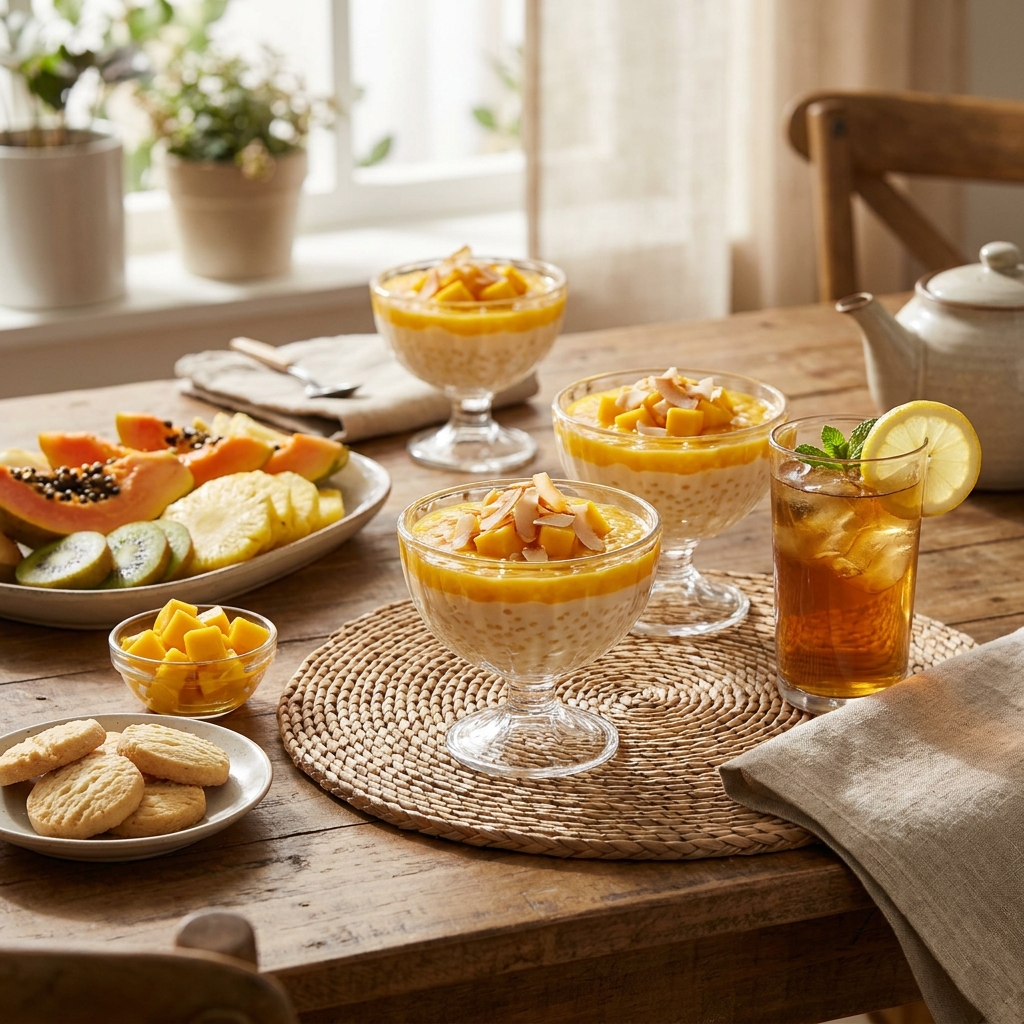
Serve this mango sago pudding recipe chilled directly from the refrigerator in tall glasses for an elegant presentation that showcases the beautiful golden mango color and distinct layers. Top each serving with a light sprinkle of toasted coconut flakes and fresh mango cubes for visual appeal and complementary texture. The mango sago pudding recipe pairs beautifully with delicate shortbread cookies or butter wafers that provide crisp contrast to the soft pudding.
For warm weather gatherings, present this mango sago pudding recipe in chilled bowls alongside fresh tropical fruit salad featuring pineapple, papaya, and passion fruit. The combination of this mango sago pudding recipe with light iced tea or sparkling lemonade creates a refreshing meal finale perfect for summer entertaining. Consider serving alongside coconut milk-based beverages that complement the tropical character of this dessert beauli.
During holiday celebrations, this mango sago pudding recipe works perfectly as part of a dessert buffet alongside other traditional Filipino or Southeast Asian sweets. Family dinners benefit from the bright, refreshing character of this mango sago pudding recipe after heavier main courses. Individual servings can be prepared hours ahead, making this mango sago pudding recipe ideal for meal planning and entertaining multiple guests without last-minute stress.
Storage and Reheating for Mango Sago Pudding Recipe
Proper storage techniques preserve your mango sago pudding recipe’s texture and flavor, extending enjoyment while maintaining food safety. Understanding storage methods ensures you maximize the shelf life of this delicious tropical dessert.
| Storage Method | Duration | Instructions |
|---|---|---|
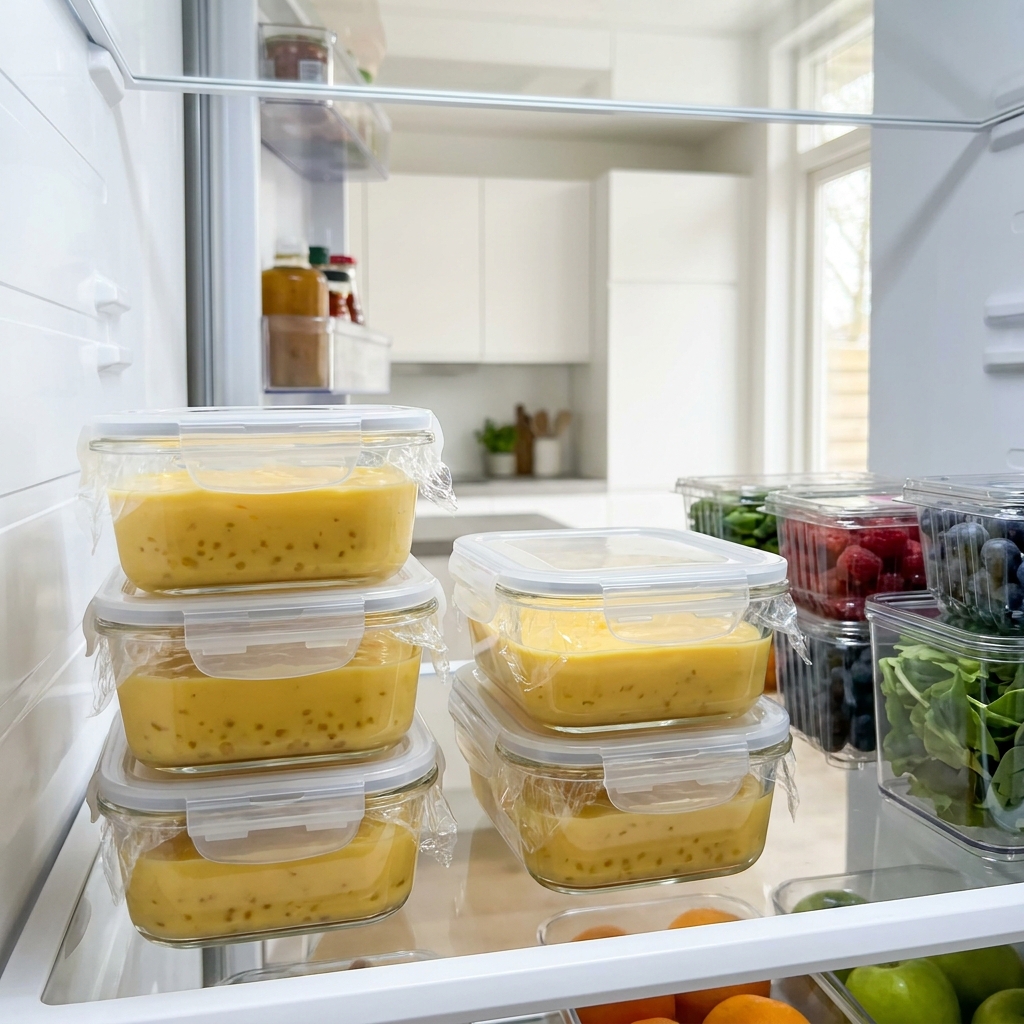
| Refrigerator Storage | 3 to 4 days | Cover mango sago pudding recipe containers with plastic wrap or airtight lids. Store on middle refrigerator shelf away from strong-smelling foods that can transfer flavors. Check for any separation or off-smell before serving after extended storage. |
| Freezer Storage | Up to 2 months | Freeze this mango sago pudding recipe in airtight freezer-safe containers, leaving 1/2-inch headspace for expansion. Thaw overnight in the refrigerator before serving. Texture may become slightly grainy after freezing due to gelatin separation; stir well to recombine. |
| Make-Ahead Preparation | Up to 1 day | Prepare custard base and cook sago up to 24 hours in advance. Store separately in airtight containers. Complete assembly and layering on the day of serving for best texture and flavor. This approach streamlines preparation for entertaining. |
| Individual Cup Servings | 3 to 4 days | Layer this mango sago pudding recipe into individual serving glasses and cover tightly with plastic wrap. Store on refrigerator shelf. Ideal for grab-and-go breakfast or snack throughout the week. |
| No Reheating Needed | Serve Chilled | This mango sago pudding recipe is always served cold directly from the refrigerator. Never heat or warm this dessert as heat destroys delicate mango flavor and compromises pudding texture. Cold service is essential to the eating experience. |
The mango sago pudding recipe remains best when consumed within three to four days of preparation for optimal flavor development and texture integrity. Proper storage methods preserve your investment of time and quality ingredients while maintaining food safety throughout the storage period.
Nutritional Information for Mango Sago Pudding Recipe
Understanding the nutritional profile of this mango sago pudding recipe helps you incorporate it into balanced meal planning while enjoying its delicious tropical flavors. This mango sago pudding recipe provides a good balance of carbohydrates, protein, and healthy fats from quality dairy ingredients.
| Nutrient | Amount per Serving (1 of 6) |
|---|---|
| Calories | 285 calories |
| Total Fat | 8 grams |
| Saturated Fat | 5 grams |
| Trans Fat | 0 grams |
| Cholesterol | 28 milligrams |
| Sodium | 65 milligrams |
| Total Carbohydrates | 48 grams |
| Dietary Fiber | 1 gram |
| Total Sugars | 42 grams |
| Protein | 4 grams |
| Vitamin A | 45% Daily Value |
| Vitamin C | 35% Daily Value |
| Calcium | 18% Daily Value |
| Iron | 3% Daily Value |
Approximate values based on recipe ingredients and standard USDA nutrition databases. Actual nutrition may vary based on specific brands and ingredient substitutions made when preparing your mango sago pudding recipe. This mango sago pudding recipe offers natural vitamins and minerals from fresh mango alongside bone-supporting calcium from dairy products.
Frequently Asked Questions About Mango Sago Pudding Recipe
Can I make mango sago pudding without gelatin?
Yes, you can omit gelatin to create a thinner, creamier pudding if preferred. The pudding will be less firm but still delicious, with a more custard-like consistency. Increase cornstarch by 1 to 2 tablespoons for a thicker texture without using gelatin. Many home cooks prefer the lighter texture that results from skipping gelatin entirely in this mango sago pudding recipe.
How do I know when sago pearls are properly cooked for this recipe?
Properly cooked sago pearls should be completely translucent with only a small white dot remaining in the very center of each pearl. Undercooked sago maintains a hard white center, while overcooked sago becomes mushy and loses its characteristic chewy texture. Test doneness by removing a cooled pearl and biting into it to confirm the ideal texture for your mango sago pudding recipe.
What type of mangoes work best for this mango sago pudding recipe?
Sweet mango varieties like Ataulfo, Honey, Carabao, Alphonso, and Champagne mangoes deliver the best flavor for this mango sago pudding recipe. These varieties have smooth fiber content, natural sweetness, and aromatic qualities that shine in this dessert. Avoid mealy or stringy varieties that produce grainy texture unsuitable for pudding preparation in this recipe.
Can I prepare this mango sago pudding recipe a day in advance?
Prepare the custard base and cooked sago separately up to 24 hours ahead, storing each in airtight containers. Complete final assembly and layering on the day of serving to preserve optimal texture and prevent the sago from absorbing excess liquid in this mango sago pudding recipe. This approach streamlines preparation for entertaining without sacrificing quality.
How should I serve mango sago pudding for a large gathering?
Prepare this mango sago pudding recipe in a large clear glass bowl or trifle dish, layering custard, sago, and mango puree beautifully. Guests can serve themselves into individual bowls, or you can pre-portion into serving glasses for elegant presentation. Both approaches work well for entertaining and showcase the natural beauty of this tropical dessert.
Can I freeze mango sago pudding to extend storage?
Freezing this mango sago pudding recipe is possible but affects texture slightly due to gelatin separation and ice crystal formation. Thaw overnight in the refrigerator before serving, then stir well to recombine separated layers. Frozen pudding keeps up to two months but is best consumed fresh within four days for optimal texture and flavor in this recipe.
What happens if I use overripe mangoes for this recipe?
Overripe mangoes may ferment or develop mushy texture that affects this mango sago pudding recipe’s quality. The puree may separate or taste slightly off, and fiber content increases, creating graininess. Select mangoes that yield slightly to pressure but remain firm, with fragrant aroma at the stem end. Proper mango selection ensures consistent quality in your mango sago pudding recipe.
Can I reduce sugar in this mango sago pudding recipe?
Yes, you can reduce sugar incrementally based on your mango’s natural sweetness and personal preference. Start by reducing sugar to 3 tablespoons and taste before serving, adjusting further if desired. Very sweet mango varieties may need less sugar, while less aromatic mangoes benefit from full sugar quantity in this mango sago pudding recipe.
What dairy-free options work for this mango sago pudding recipe?
Substitute condensed coconut milk and canned coconut cream for dairy products, adjusting quantities to achieve desired consistency. Full-fat coconut milk delivers richness comparable to dairy versions. This substitution creates an authentically tropical mango sago pudding recipe suitable for those avoiding dairy products while maintaining delicious flavor and creamy texture.
Why is my mango sago pudding watery or separated?
Watery texture usually results from insufficient gelatin, inadequate chilling time, or using low-fat dairy products. Separation occurs when hot custard is added to fruit puree or ingredients are overmixed. Ensure proper chilling for minimum four hours, use full-fat dairy, and allow custard to cool completely before combining. These steps prevent texture problems in your mango sago pudding recipe.
Conclusion
Mango sago pudding recipe represents the pinnacle of simple yet elegant tropical desserts that home cooks can master with confidence. This mango sago pudding recipe delivers restaurant-quality results through straightforward techniques, quality ingredients, and proper timing rather than complicated procedures or specialized equipment. The combination of creamy custard, chewy sago pearls, and vibrant mango flavor creates a memorable dessert that impresses family and guests consistently. Whether you are entertaining during warm weather months or satisfying a personal craving for something tropical and refreshing, mastering this mango sago pudding recipe opens endless possibilities for creative variations and presentation styles. Your first attempt at this mango sago pudding recipe will likely lead to many delicious repeats as you discover why this beloved dessert remains a Southeast Asian classic celebrated across generations and cultures.
Related Recipes You’ll Love
pink gelatin trick recipe for weight loss
caribbean curry bowl homemade recipe
tiktok ramen noodles recipe
tiktok tomato feta pasta recipe
no butter single serve chocolate chip recipe
instant mango ice cream with cool whip curry
chana masala instant pot zero oil
homemade mounds bars 3 ingredients
berry cottage cheese breakfast bowl
healthy chocolate coconut snack cake gluten free
chocolate chip cookie dough brownie bites
bariatric gelatin recipe for weight loss
silken tofu miso dressing recipe
Expert Resources and Food Safety
Learn more about mango nutrition benefits from official nutrition resources, and discover food safety guidelines at food safety authorities.
Print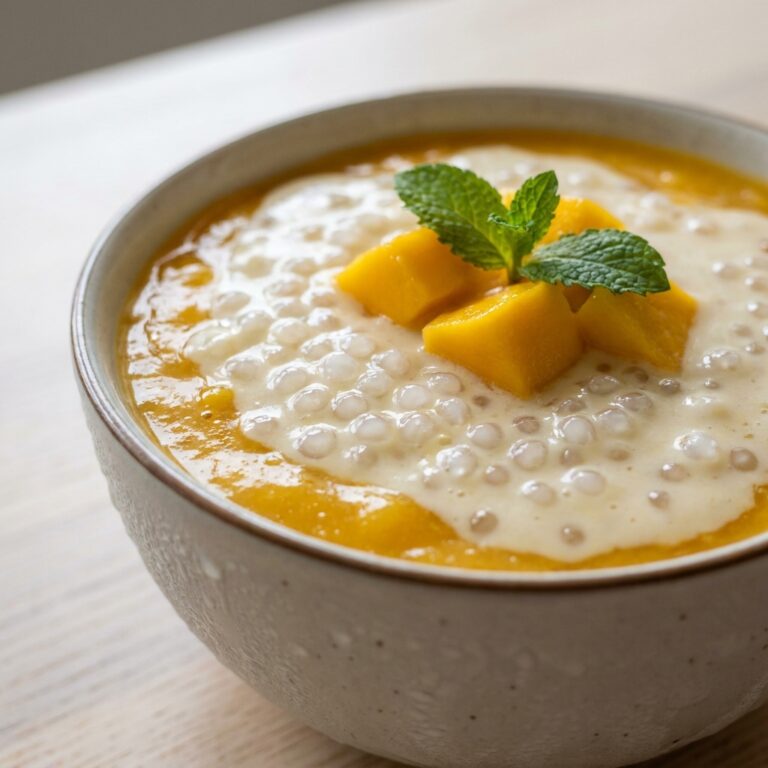
Viral Mango Sago Pudding Recipe 2026
Mango sago pudding recipe is a beloved Southeast Asian dessert that combines creamy, sweet mango puree with chewy tapioca pearls suspended in a silky custard base. This refreshing treat delivers natural tropical flavors and a delightful textural contrast that appeals to home cooks of all skill levels.
- Total Time: 40 minutes plus chilling
- Yield: 6 servings 1x
Ingredients
- 3 medium ripe mangoes, about 2 cups puree
- 1 cup sago pearls
- 1 can 14 oz condensed milk
- 1 can 12 oz evaporated milk
- 2 cups water
- 2 teaspoons unflavored gelatin powder
- 1/4 cup sugar
- 1 teaspoon vanilla extract
- 1/8 teaspoon salt
Instructions
- Bring a large pot of water to a rolling boil, using 4 to 5 times the volume of sago pearls.
- Gradually add the sago pearls to the boiling water while stirring continuously.
- Reduce heat to medium and simmer for 12 to 15 minutes, stirring occasionally.
- Cook until the sago pearls become translucent with a small white dot remaining in the center.
- Drain the cooked sago pearls through a fine-mesh strainer.
- Rinse under cool running water to stop the cooking process.
- Spread the cooked sago on a clean kitchen towel to dry slightly.
- Cut the ripe mangoes in half lengthwise, avoiding the large flat pit.
- Scoop the mango flesh into a blender.
- Blend on high speed for 1 to 2 minutes until smooth and uniform.
- Strain the mango puree through a fine-mesh strainer if an ultra-smooth texture is desired.
- Pour 2 cups of water into a medium saucepan and bring to a simmer over medium heat.
- Add sugar and salt, stirring until dissolved.
- Sprinkle gelatin over the mixture and let it bloom for 2 to 3 minutes without stirring.
- Stir the gelatin mixture until completely dissolved with no visible lumps.
- Remove the saucepan from heat and cool for about 5 minutes.
- Pour in the condensed milk and evaporated milk.
- Stir thoroughly until fully incorporated.
- Add vanilla extract and stir evenly through the custard base.
- Divide the cooled custard base evenly between serving glasses or a large serving bowl.
- Distribute the drained sago pearls evenly over the custard layer.
- Top each serving with mango puree.
- Gently stir each serving for a marbled effect or leave the layers distinct.
- Cover with plastic wrap.
- Refrigerate for at least 3 to 4 hours.
- Serve chilled directly from the refrigerator.
Notes
Choose ripe, fragrant mangoes that yield slightly to gentle pressure. Cook the sago pearls until translucent with only a tiny white center, then rinse under cool water to prevent clumping. Chill the pudding for at least 4 hours for the best silky texture.
- Prep Time: 15 minutes
- Cook Time: 25 minutes
- Category: Dessert
- Method: Stovetop
- Cuisine: Filipino, Southeast Asian
- Diet: Vegetarian
Nutrition
- Serving Size: 1 serving
- Calories: 285
- Sugar: 42g
- Sodium: 65mg
- Fat: 8g
- Saturated Fat: 5g
- Unsaturated Fat: 3g
- Trans Fat: 0g
- Carbohydrates: 48g
- Fiber: 1g
- Protein: 4g
- Cholesterol: 28mg