Julian Michael gelatine recipe is a classic dessert preparation that combines smooth, jiggly gelatine with vibrant flavors and elegant presentation. This Julian Michael gelatine recipe stands out for its simplicity, reliability, and ability to impress dinner guests without requiring advanced culinary skills. Whether you’re preparing a family gathering, holiday celebration, or everyday treat, mastering this gelatine recipe delivers consistent results every single time. The foundation of a great Julian Michael gelatine recipe lies in understanding proper gelatine ratios, temperature control, and flavor balance. Home cooks have trusted this method for generations because it transforms basic ingredients into a show-stopping dessert that looks restaurant-quality yet tastes homemade and genuine.
| Prep Time | Cook Time | Total Time | Servings | Difficulty | Cuisine |
|---|---|---|---|---|---|
| 20 minutes | 10 minutes | 4 hours (plus chilling) | 8 servings | Easy | Contemporary |
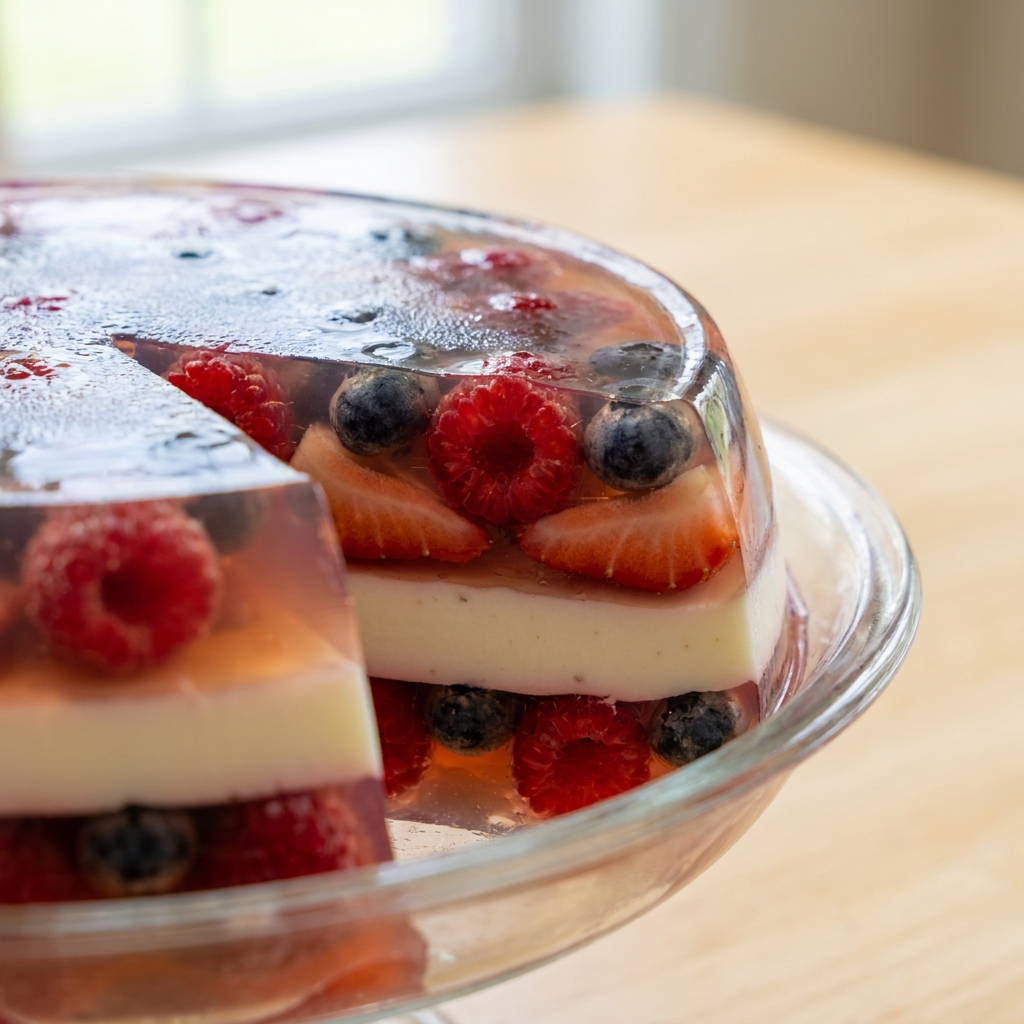
Table of Contents
Table of Contents
Why This Julian Michael Gelatine Recipe Works
The Julian Michael gelatine recipe succeeds because it balances texture, flavor, and visual appeal with remarkable ease. I’ve made this recipe countless times over the years, and it never disappoints guests or family members. The secret behind why this Julian Michael gelatine recipe works so well lies in the precise gelatine-to-liquid ratio, which creates that perfect wobble without becoming rubbery or too soft. The flavor profile adapts beautifully to seasonal fruits and juice variations, making it versatile enough for any occasion. This Julian Michael gelatine recipe requires minimal equipment and straightforward technique, making it ideal for beginner and experienced home cooks alike.
What sets this Julian Michael gelatine recipe apart from others is its foolproof nature and forgiving methodology. The cooking process involves minimal active time, allowing you to prepare other components of your meal simultaneously. The gelatine’s smooth, elegant presentation makes it appear far more complicated than it actually is, which impresses dinner guests while requiring just basic kitchen knowledge. Temperature management remains the most critical factor in this Julian Michael gelatine recipe, but even small temperature variations rarely result in failure. The finished dessert features a luxurious, silky mouthfeel that melts on the tongue and leaves a clean, fruity aftertaste.
I recommend this Julian Michael gelatine recipe because it delivers consistent results across different seasons, ingredient sources, and kitchen setups. The recipe adapts well to dietary preferences through simple substitutions without compromising the final product’s quality. Home cooks appreciate how this gelatine recipe can be prepared a full day ahead, reducing stress on busy cooking days. The visual presentation of this Julian Michael gelatine recipe elevates even casual family meals into special occasions without requiring special plating skills. Whether you’re serving at a children’s birthday party or an elegant dinner party, this recipe maintains its appeal and delicious flavor profile.
Beyond taste and appearance, this Julian Michael gelatine recipe represents excellent value and budget-friendly entertaining. The ingredient list contains common pantry staples and affordable fresh fruits, making this recipe accessible to all home cooks regardless of budget. The preparation requires no specialized equipment beyond basic kitchen tools found in every household. This Julian Michael gelatine recipe teaches fundamental cooking techniques that transfer to more advanced dessert preparations, making it educational for developing cooks. The long shelf life and make-ahead properties of this gelatine recipe make meal planning remarkably convenient.
Julian Michael Gelatine Recipe Ingredients
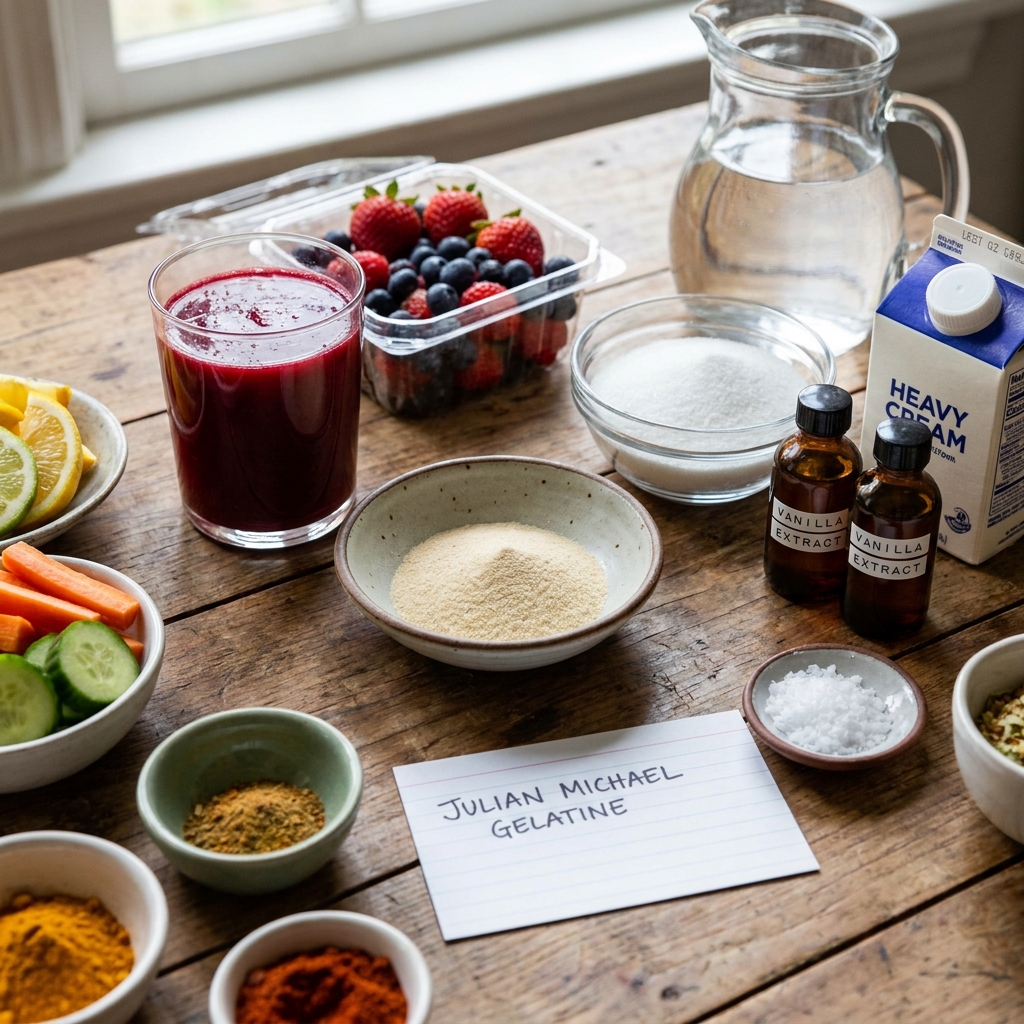
The essential components of Julian Michael gelatine recipe create the foundation for this beautiful and delicious dessert. Each ingredient serves a specific purpose in developing the perfect texture, flavor, and presentation. Understanding your ingredient options allows you to customize this Julian Michael gelatine recipe to match personal preferences and dietary requirements. Quality ingredients directly impact the final result, so selecting fresh, premium options enhances your gelatine recipe considerably.
| Ingredient | Quantity | Notes with Alternatives |
|---|---|---|
| Unflavored gelatine powder | 2 tablespoons (or 6 sheets) | Use bloomed gelatine sheets for a smoother result. Avoid using flavored gelatine for this Julian Michael gelatine recipe. |
| Fresh fruit juice | 2 cups | Apple, orange, berry, or grape juice work excellently. Use 100% juice for best flavor in this gelatine recipe. |
| Water | 1 cup | Filtered or spring water produces clearer gelatine than tap water. |
| Granulated sugar | ¼ cup | Substitute with honey (use ¼ cup plus 1 tablespoon) or agave nectar for alternative sweeteners. |
| Fresh berries | 1½ cups | Raspberries, strawberries, blueberries, or blackberries enhance this Julian Michael gelatine recipe visually and flavor-wise. |
| Heavy cream | ½ cup (optional) | Use whipped cream, Greek yogurt, or coconut cream as alternatives for dairy-free versions of this gelatine recipe. |
| Vanilla extract | 1 teaspoon | Almond extract, lemon zest, or mint extract provide different flavor profiles for your Julian Michael gelatine recipe. |
| Pinch of sea salt | ¼ teaspoon | Enhances flavor complexity without adding noticeable saltiness to this gelatine recipe. |
This Julian Michael gelatine recipe requires fresh, high-quality juice for optimal flavor development and visual clarity. The gelatine powder must be unflavored and fresh to ensure proper setting without altering the intended flavor profile of your gelatine recipe.
How to Make Julian Michael Gelatine Recipe
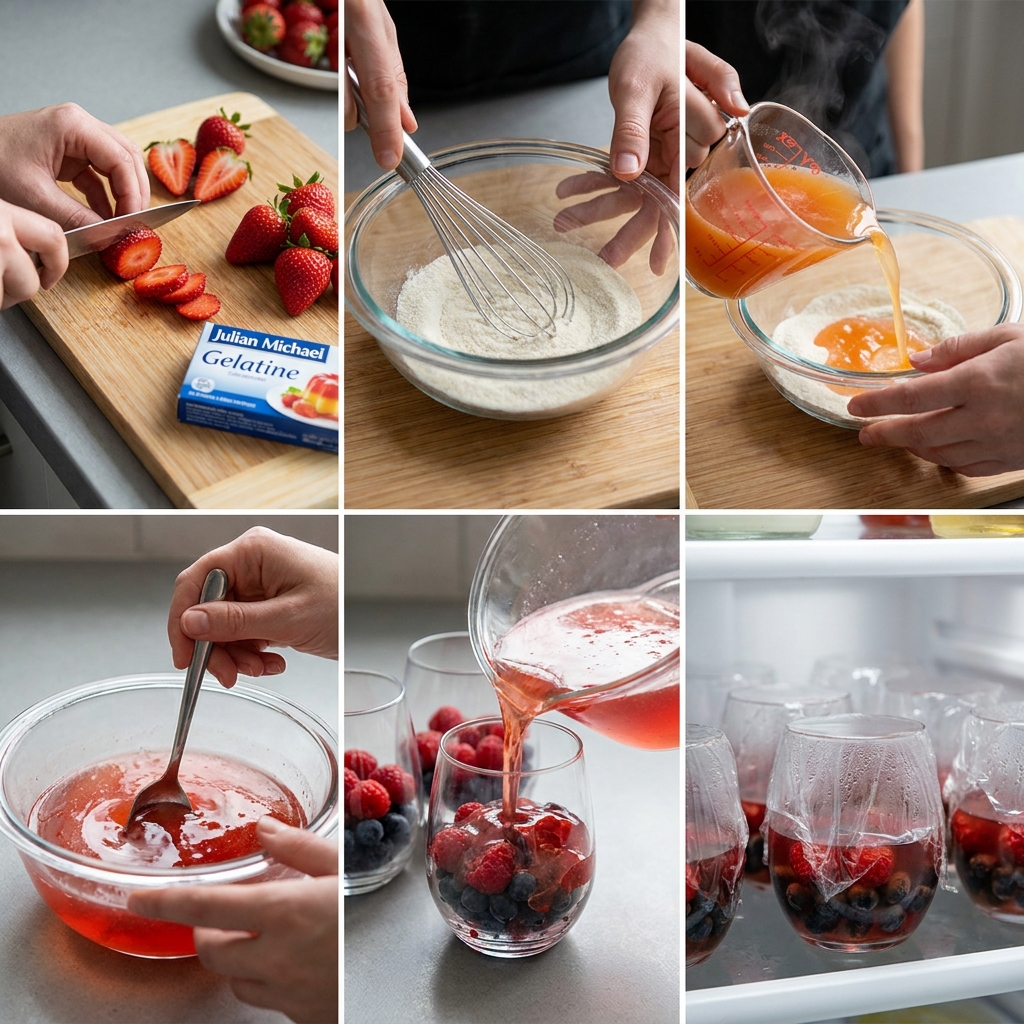
Creating this Julian Michael gelatine recipe follows a logical progression that anyone can master with attention to detail and careful temperature monitoring. The technique involves blooming the gelatine, dissolving it properly, chilling to set, and layering your desired fruits or toppings. Follow these step-by-step instructions to achieve perfect results with your Julian Michael gelatine recipe every single time. The entire process requires minimal active cooking time, though total preparation includes several hours of refrigeration.
Preparing Your Julian Michael Gelatine Recipe Base
- Measure two tablespoons of unflavored gelatine powder into a small mixing bowl and set aside.
- Pour one cup of room-temperature water into the bowl with gelatine and stir continuously for one minute until the mixture becomes thick and saturated.
- Allow this bloomed gelatine mixture to rest undisturbed for exactly five minutes, which allows the gelatine granules to fully hydrate before heating.
- Heat two cups of fresh fruit juice in a saucepan over medium heat until small bubbles form at the edges but the mixture does not reach a rolling boil.
- Add one-quarter cup of granulated sugar to the warm juice and stir for two minutes until the sugar dissolves completely.
- Remove the saucepan from heat and carefully pour the hot juice mixture into the bloomed gelatine, stirring constantly for two minutes.
- Add one teaspoon of vanilla extract and one-quarter teaspoon of sea salt, stirring gently for one minute to incorporate these flavoring elements throughout your Julian Michael gelatine recipe.
Setting and Chilling Your Julian Michael Gelatine Recipe
- Pour the warm gelatine mixture through a fine mesh strainer into a clean mixing bowl to remove any undissolved particles.
- Allow the strained gelatine to cool to room temperature for approximately ten minutes, stirring occasionally.
- Arrange one and one-half cups of fresh berries evenly across the bottom of eight individual dessert glasses or a large glass serving bowl.
- Slowly pour the cooled gelatine mixture over the berries, filling each glass three-quarters full for individual servings.
- Transfer the glasses to your refrigerator and allow the Julian Michael gelatine recipe to set for at least three hours, ideally overnight for completely firm results.
- Top each serving with a dollop of whipped cream or unsweetened Greek yogurt just before serving your finished Julian Michael gelatine recipe.
Chef Tips for Perfect Julian Michael Gelatine Recipe
Professional techniques transform your Julian Michael gelatine recipe from adequate to exceptional through careful attention to specific details throughout the preparation process. These expert tips address common challenges and elevate your final result’s texture, clarity, and flavor profile. Apply these strategies to achieve restaurant-quality gelatine consistently in your home kitchen every single time you make this recipe.
- Bloom your gelatine in cool water for exactly five minutes before heating, which prevents lumps and ensures smooth, even texture throughout your Julian Michael gelatine recipe. Under-blooming creates grainy texture, while over-blooming can result in tough, rubbery gelatine.
- Never allow your juice mixture to exceed 180 degrees Fahrenheit when incorporating the bloomed gelatine, as excessive heat damages the gelatine’s setting ability and compromises your Julian Michael gelatine recipe’s final texture.
- Strain your finished gelatine mixture through fine mesh before pouring into serving vessels for your Julian Michael gelatine recipe, which removes any undissolved particles and creates crystal-clear, professionally finished appearance.
- Add fresh berries or other inclusions after the gelatine has cooled slightly but remains liquid, which prevents them from floating to the surface or sinking to the bottom of your Julian Michael gelatine recipe.
- Use fresh, high-quality fruit juice without preservatives or artificial ingredients for superior flavor development in your gelatine recipe, as commercial juices with additives can interfere with proper gelatine setting.
- Allow your Julian Michael gelatine recipe to chill undisturbed on a flat refrigerator shelf for minimum three hours, as movement or vibration during setting affects the final texture and clarity of this delicate dessert.
Common Julian Michael Gelatine Recipe Mistakes to Avoid
Even experienced home cooks occasionally encounter challenges when preparing this Julian Michael gelatine recipe, but understanding these common pitfalls allows you to prevent them entirely. Each mistake stems from specific technique failures or misunderstandings about gelatine’s behavior under different conditions. Avoid these errors to achieve perfect results with your Julian Michael gelatine recipe consistently.
Mistake: Gelatine Won’t Set Properly
This occurs when using juice that is too acidic or when the gelatine receives insufficient chilling time. High-acid juices like pineapple, kiwi, or fresh papaya contain enzymes that break down gelatine proteins. Fix this by using gentler juices like apple, grape, or berry juice, and always allow at least four hours of undisturbed refrigeration for your Julian Michael gelatine recipe.
Mistake: Rubbery, Tough Texture
This results from using too much gelatine powder relative to liquid, or from excessive heat exposure during preparation. The standard ratio for this Julian Michael gelatine recipe is two tablespoons gelatine per three cups total liquid. Measure precisely and keep your juice mixture below 180 degrees Fahrenheit to maintain perfect texture.
Mistake: Cloudy or Hazy Appearance
Undissolved gelatine particles or impurities in your juice create this undesirable appearance in your Julian Michael gelatine recipe. Prevent this by blooming gelatine completely, straining the finished mixture through fine mesh, and using filtered juice or water rather than tap water.
Mistake: Air Bubbles Throughout
Aggressive stirring or pouring incorporates air into your Julian Michael gelatine recipe mixture, creating bubble pockets in the final product. Stir gently and pour slowly along the side of serving vessels rather than directly in the center to minimize bubble formation in your gelatine recipe.
Mistake: Gelatine Sets Too Quickly
If your gelatine begins setting before you’ve poured it into serving vessels, it has cooled too much or the mixture contains insufficient liquid. Reheat the mixture gently over low heat for one minute, stirring constantly, to restore pourable consistency for your Julian Michael gelatine recipe.
Best Julian Michael Gelatine Recipe Variations and Substitutions
The foundation of Julian Michael gelatine recipe adapts beautifully to numerous variations while maintaining its essential character and appeal. Creative substitutions allow you to customize this gelatine recipe for seasonal availability, dietary restrictions, and personal flavor preferences. Each variation builds upon the classic technique while introducing new dimensions to your final dessert.
| Ingredient | Substitution | Impact on Flavor and Texture |
|---|---|---|
| Fruit juice | Coconut water, herbal tea, or strong brewed coffee | Creates exotic tropical flavor profiles or rich coffee essence while maintaining the classic gelatine texture of your Julian Michael gelatine recipe. |
| Fresh berries | Sliced stone fruits, citrus segments, or pomegranate arils | Introduces different seasonal flavors and textures while maintaining visual appeal and nutritional benefits of your gelatine recipe. |
| Vanilla extract | Almond extract, lemon zest, or fresh mint | Adds complementary or contrasting flavor notes that enhance the fruit juice profile of your Julian Michael gelatine recipe. |
| Heavy cream topping | Coconut cream, Greek yogurt, or whipped coconut milk | Creates dairy-free or reduced-fat versions of this gelatine recipe while maintaining creamy texture and richness. |
| Granulated sugar | Honey, maple syrup, or agave nectar | Introduces subtle flavor complexity and alternative sweetness while requiring slight ratio adjustments in your Julian Michael gelatine recipe. |
| Individual servings | Large tiered serving bowl or layered parfait glasses | Creates dramatic visual presentation of your Julian Michael gelatine recipe suitable for formal entertaining or buffet service. |
Experiment with different juice combinations, fresh fruits, and flavor extracts to develop your signature version of Julian Michael gelatine recipe. Each variation teaches you more about how ingredients interact and how to troubleshoot minor technique issues throughout your gelatine recipe preparation.
Serving Suggestions for Julian Michael Gelatine Recipe
This Julian Michael gelatine recipe shines as a standalone dessert or as part of an elegant multi-course meal, adapting beautifully to various serving occasions. The light, refreshing character of this gelatine recipe makes it ideal for warm weather gatherings, formal dinner parties, or casual family meals. Thoughtful serving presentations elevate your Julian Michael gelatine recipe into an impressive finale to any dining experience.
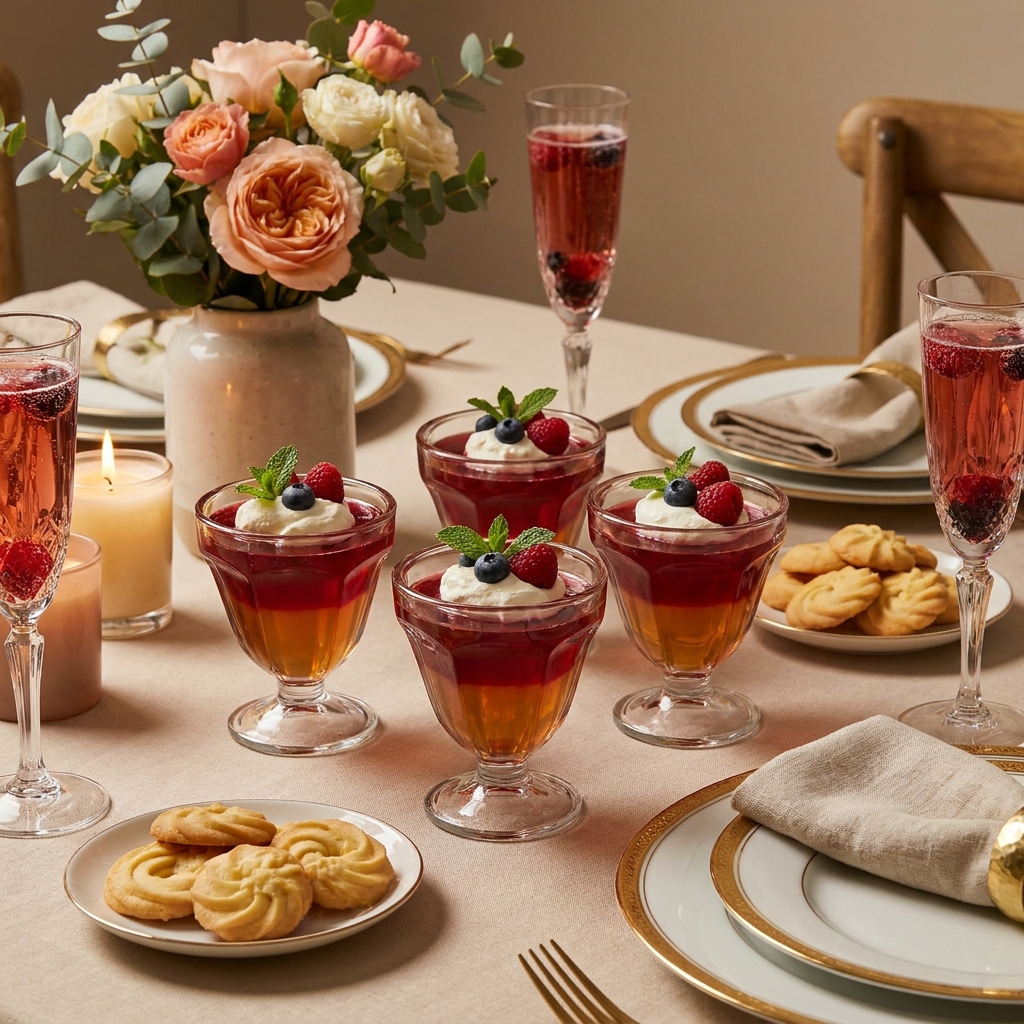
Serve your Julian Michael gelatine recipe alongside delicate butter cookies, shortbread, or madeleines for added textural contrast and elegant presentation. Pair this gelatine recipe with sparkling cider, refreshing herbal teas, or light white tea beverages that complement the fruit flavors without overwhelming the palate. For holiday entertaining, serve your Julian Michael gelatine recipe with roasted almonds, candied citrus peel, or fresh mint sprigs as sophisticated garnishes.
This Julian Michael gelatine recipe works beautifully for children’s birthday parties served in small individual cups with colorful spoons and fun fruit toppings. For elegant dinner parties, present your gelatine recipe in clear stemware with a dollop of unsweetened whipped cream and a single perfect berry on top. Layer your Julian Michael gelatine recipe with different colored juices in tall glasses to create a stunning ombre effect that impresses guests before they even taste it.
Summer picnics benefit from portable portions of this Julian Michael gelatine recipe served in disposable cups with lids for easy transport and mess-free enjoyment. Office potlucks and meal prep settings appreciate this gelatine recipe’s make-ahead convenience and storage stability throughout the week. Buffet service presentations of your Julian Michael gelatine recipe benefit from clear labeling indicating any allergens, dairy content, or dietary information.
Storage and Reheating for Julian Michael Gelatine Recipe
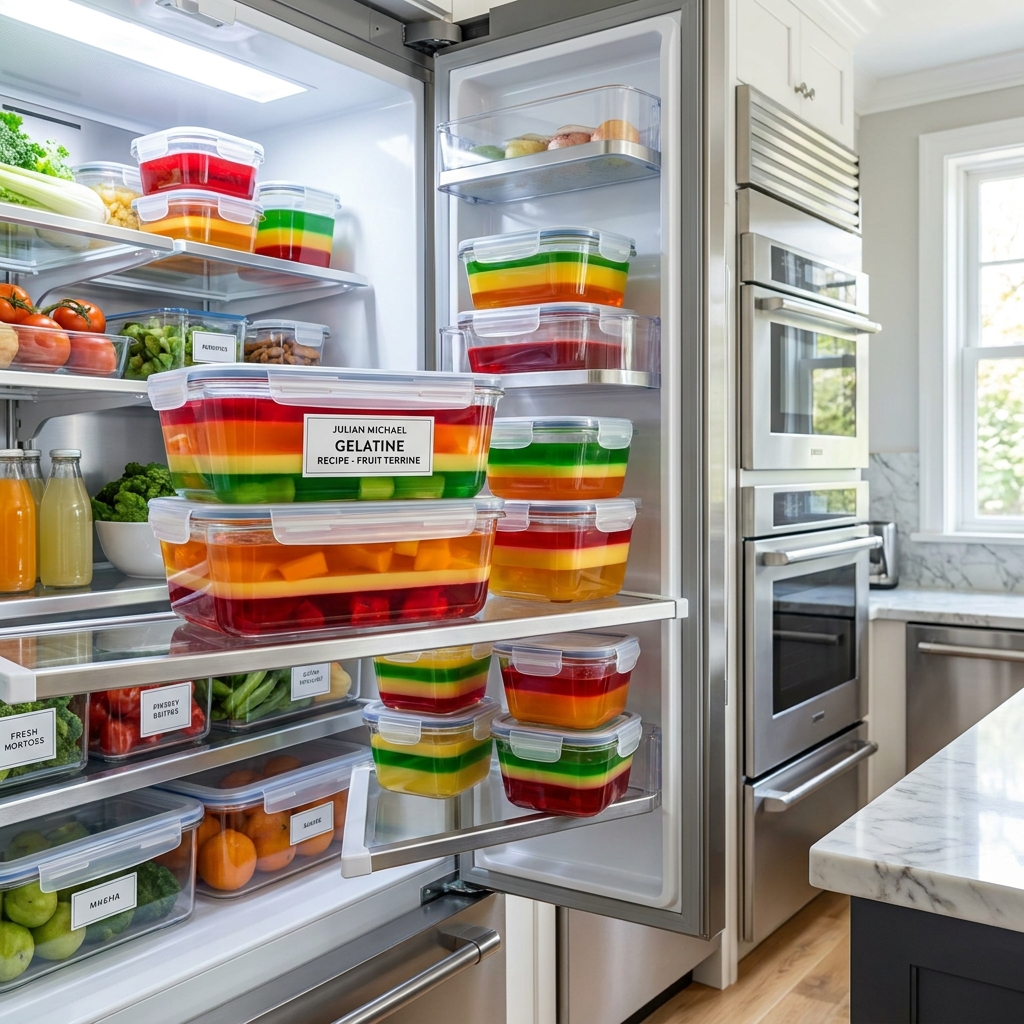
Proper storage extends the shelf life of your finished Julian Michael gelatine recipe while maintaining optimal texture, flavor, and food safety standards. This gelatine recipe’s make-ahead capabilities make it exceptional for busy schedules and advance meal planning. Understanding correct storage methods ensures your Julian Michael gelatine recipe remains delicious and safe to consume for maximum time.
| Method | Duration | Instructions for Your Julian Michael Gelatine Recipe |
|---|---|---|
| Refrigerator storage | Up to 5 days | Cover your Julian Michael gelatine recipe with plastic wrap or airtight lids. Store on a flat shelf away from strong-smelling foods. Check for signs of mold or off odors before consuming. |
| Freezer storage | Up to 3 weeks | Cover your gelatine recipe with plastic wrap then foil. Allow to thaw in the refrigerator for 8 hours before serving. Freezing may slightly affect texture, creating a more granular mouthfeel. |
| Make-ahead preparation | Up to 1 day before serving | Prepare your Julian Michael gelatine recipe entirely one full day in advance for busy entertaining days. Cover and refrigerate immediately after final assembly. |
| Unmolded storage | Up to 4 days | If unmolding your Julian Michael gelatine recipe from serving vessels, place on parchment paper on a flat plate and cover with plastic wrap to prevent drying. |
| Reheating method | Not recommended | Your Julian Michael gelatine recipe is designed to be served chilled. Never reheat or remelt finished gelatine as this damages the texture irreparably. |
Your finished Julian Michael gelatine recipe maintains peak quality when stored in airtight containers at consistent refrigerator temperatures between 35-40 degrees Fahrenheit. This gelatine recipe can be prepared in individual serving cups up to five days ahead, making it ideal for batch meal prep or entertaining planning.
Nutritional Information for Julian Michael Gelatine Recipe
Understanding the nutritional profile of your Julian Michael gelatine recipe helps you make informed decisions about portion sizes and inclusion in balanced meal plans. This gelatine recipe provides moderate calories with minimal fat and protein, making it suitable for various dietary approaches. The specific nutritional values of your Julian Michael gelatine recipe depend on juice selection, fruit inclusions, and cream toppings.
| Nutrient | Amount per Serving (¾ cup) |
|---|---|
| Calories | 85-95 calories |
| Total Fat | 0.5g |
| Saturated Fat | 0.2g |
| Cholesterol | 0mg |
| Sodium | 45mg |
| Total Carbohydrates | 22g |
| Dietary Fiber | 1.5g (from berries) |
| Total Sugars | 18g |
| Protein | 1.5g |
| Calcium | 12mg |
| Iron | 0.3mg |
| Vitamin C | 8mg (from juice and berries) |
Approximate values vary based on specific juice brand, fresh fruit selection, and topping choices for your Julian Michael gelatine recipe. These nutritional figures do not include optional cream toppings, which add approximately 50 calories and 5 grams of fat per serving.
Frequently Asked Questions About Julian Michael Gelatine Recipe
What is the best juice to use when making homemade Julian Michael gelatine recipe?
Apple juice, grape juice, and berry juice work exceptionally well for this Julian Michael gelatine recipe because they have gentle acidity that doesn’t interfere with gelatine setting. Avoid pineapple, papaya, and fresh kiwi juice, as these contain natural enzymes that break down gelatine proteins. Your Julian Michael gelatine recipe will set properly and develop beautiful flavor with these recommended juice varieties.
How can I tell when my Julian Michael gelatine recipe has set completely?
Your Julian Michael gelatine recipe has set completely when it jiggles slightly when shaken but holds its shape and doesn’t flow like liquid. Insert a knife at a slight angle; properly set gelatine will hold the cut rather than closing back over itself. Most home cooks find that their Julian Michael gelatine recipe reaches perfect doneness after exactly four hours of continuous refrigeration, though overnight chilling is even better.
Can I add fresh pineapple or kiwi to my Julian Michael gelatine recipe?
Fresh pineapple and kiwi contain natural enzymes called proteases that break down gelatine proteins, preventing your Julian Michael gelatine recipe from setting properly. You may use canned pineapple in juice (the heating process deactivates the enzymes) or choose alternative fruits like berries, peaches, or citrus for your gelatine recipe. If you must use fresh pineapple or kiwi, cook them briefly in the juice mixture before adding gelatine to inactivate their enzymes.
How far in advance can I prepare Julian Michael gelatine recipe for entertaining?
You can prepare your Julian Michael gelatine recipe completely up to five days ahead when stored properly in airtight containers in the refrigerator. For best flavor and texture, prepare this gelatine recipe within one to two days of serving. Your Julian Michael gelatine recipe maintains peak quality when assembled in individual serving glasses rather than in a single large mold.
What dairy-free options work best for topping Julian Michael gelatine recipe?
Unsweetened coconut cream, whipped coconut milk, dairy-free whipped topping, or cashew cream provide excellent alternatives to traditional cream for your Julian Michael gelatine recipe. Greek yogurt alternatives made from coconut or oat milk also work beautifully. Your Julian Michael gelatine recipe maintains its elegant appearance and delicious flavor with any of these dairy-free topping options.
Why is my Julian Michael gelatine recipe cloudy instead of clear?
Cloudiness in your Julian Michael gelatine recipe typically results from undissolved gelatine particles or impurities in your juice. Prevent this by straining your finished gelatine mixture through fine mesh before pouring into serving vessels. Use filtered water for blooming gelatine, and ensure the juice contains no pulp or additives that cloud your Julian Michael gelatine recipe.
Can I use powdered gelatine sheets instead of granulated gelatine in my Julian Michael gelatine recipe?
Yes, gelatine sheets work wonderfully in your Julian Michael gelatine recipe with a one-to-one ratio adjustment: use six sheets instead of two tablespoons of powdered gelatine. Bloom the sheets separately in cool water, then squeeze out excess water before adding to your warm juice mixture. Your Julian Michael gelatine recipe will set with slightly smoother texture when using sheets instead of powder.
What temperature should my juice be when adding it to bloomed gelatine for Julian Michael gelatine recipe?
Your juice should be hot (between 160-180 degrees Fahrenheit) when combining with bloomed gelatine for your Julian Michael gelatine recipe. This temperature dissolves the gelatine completely without damaging its setting ability. Juice that is too cool won’t dissolve the gelatine properly, while juice exceeding 180 degrees damages the gelatine proteins, compromising your Julian Michael gelatine recipe’s final texture.
Can I make a sugar-free version of Julian Michael gelatine recipe?
Yes, substitute sugar with an equal amount of your preferred sweetener in your Julian Michael gelatine recipe, such as stevia, monk fruit extract, or sugar alcohols. Some home cooks find that using sweet juice varieties allows them to reduce or eliminate added sugar entirely in their Julian Michael gelatine recipe. Experiment with different sweeteners to find the ratio that produces your preferred level of sweetness.
How should I store leftover fresh berries used in my Julian Michael gelatine recipe?
Store unused berries in a covered container in your refrigerator for up to five days after preparing your Julian Michael gelatine recipe. Keep berries unwashed until just before use to extend their shelf life. Frozen berries can be substituted in your Julian Michael gelatine recipe with slightly softer texture in the finished product, though they add beautiful color and flavor.
Conclusion
The Julian Michael gelatine recipe represents an elegant yet simple approach to homemade dessert preparation that consistently delivers impressive results for home cooks of all skill levels. This gelatine recipe combines straightforward technique with sophisticated presentation, making it ideal for both casual family meals and formal entertaining occasions. The beauty of this Julian Michael gelatine recipe lies in its reliability, versatility, and forgiving nature throughout the preparation process. Whether you’re serving this dessert at weekend dinners, holiday celebrations, or summer picnics, your guests will appreciate the thoughtful homemade quality and delicious flavor. Master this Julian Michael gelatine recipe today, and you’ll return to it repeatedly throughout your cooking journey, each time discovering new flavor combinations and serving presentations that keep this classic dessert fresh and exciting. The silky, jiggly texture that melts on the tongue and the vibrant fruity flavors create an unforgettable dessert experience.
Related Recipes You’ll Love
Baking Soda Lemon and Ice Recipe
Dementia prevention spice blend recipe
Glucose reset ritual recipe
Jello diet recipe for weight loss
Honey and baking soda trick recipe
Lemon pepper matcha recipe
Organic ice cream metal contamination Recipe
Expert Resources and Food Safety
For detailed food safety information regarding gelatine and proper refrigeration practices, consult the official FDA food safety website. For comprehensive nutritional analysis and dietary considerations, refer to the Academy of Nutrition and Dietetics.
Print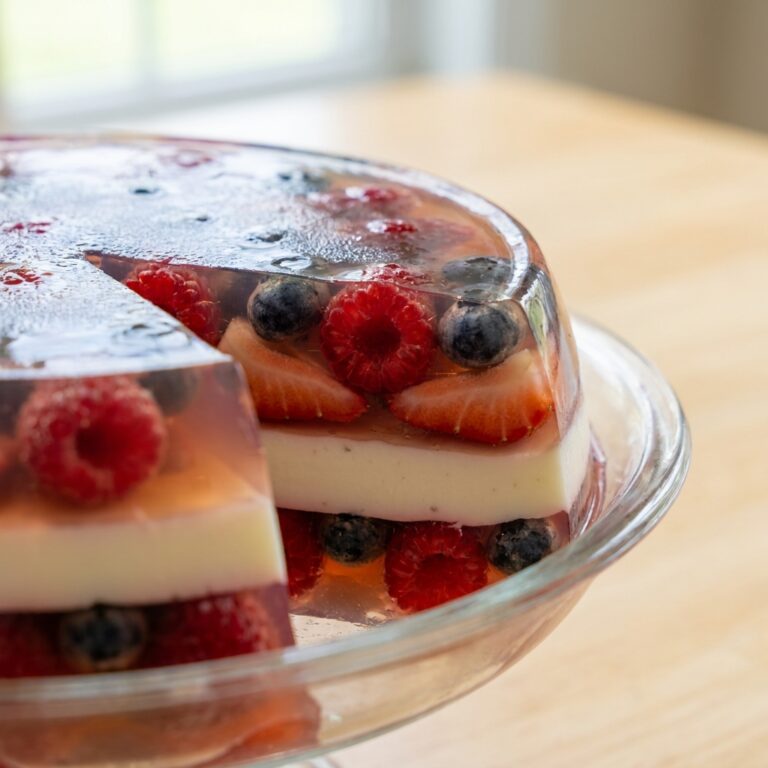
Julian Michael Gelatine Recipe 2026
This Julian Michael gelatine recipe stands out for its simplicity, reliability, and ability to impress dinner guests with its smooth, jiggly texture and vibrant flavors.
- Total Time: 4 hours
- Yield: 8 servings 1x
Ingredients
- 2 tablespoons (or 6 sheets) unflavored gelatine powder
- 2 cups fresh fruit juice
- 1 cup water
- ¼ cup granulated sugar
- 1½ cups fresh berries
- ½ cup heavy cream (optional)
- 1 teaspoon vanilla extract
- ¼ teaspoon sea salt
Instructions
- Measure two tablespoons of unflavored gelatine powder into a small mixing bowl and set aside.
- Pour one cup of room-temperature water into the bowl with gelatine and stir continuously for one minute until the mixture becomes thick and saturated.
- Allow this bloomed gelatine mixture to rest undisturbed for exactly five minutes, which allows the gelatine granules to fully hydrate before heating.
- Heat two cups of fresh fruit juice in a saucepan over medium heat until small bubbles form at the edges but the mixture does not reach a rolling boil.
- Add one-quarter cup of granulated sugar to the warm juice and stir for two minutes until the sugar dissolves completely.
- Remove the saucepan from heat and carefully pour the hot juice mixture into the bloomed gelatine, stirring constantly for two minutes.
- Add one teaspoon of vanilla extract and one-quarter teaspoon of sea salt, stirring gently for one minute to incorporate these flavoring elements throughout your Julian Michael gelatine recipe.
- Pour the warm gelatine mixture through a fine mesh strainer into a clean mixing bowl to remove any undissolved particles.
- Allow the strained gelatine to cool to room temperature for approximately ten minutes, stirring occasionally.
- Arrange one and one-half cups of fresh berries evenly across the bottom of eight individual dessert glasses or a large glass serving bowl.
- Slowly pour the cooled gelatine mixture over the berries, filling each glass three-quarters full for individual servings.
- Transfer the glasses to your refrigerator and allow the Julian Michael gelatine recipe to set for at least three hours, ideally overnight for completely firm results.
- Top each serving with a dollop of whipped cream or unsweetened Greek yogurt just before serving your finished Julian Michael gelatine recipe.
Notes
Bloom your gelatine in cool water for exactly five minutes before heating to prevent lumps. Never allow your juice mixture to exceed 180 degrees Fahrenheit as excessive heat damages the gelatine’s setting ability. Strain your finished gelatine mixture through a fine mesh before pouring to achieve a crystal-clear appearance.
- Prep Time: 20 minutes
- Cook Time: 10 minutes
- Category: Dessert
- Method: Chilling
- Cuisine: Contemporary
- Diet: Vegetarian
Nutrition
- Serving Size: ¾ cup
- Calories: 90
- Sugar: 18g
- Sodium: 45mg
- Fat: 0.5g
- Saturated Fat: 0.2g
- Unsaturated Fat: 0.3g
- Trans Fat: 0mg
- Carbohydrates: 22g
- Fiber: 1.5g
- Protein: 1.5g
- Cholesterol: 0mg