Can I be honest with you? I used to think salads were just for summer. Big mistake! There is something absolutely magical about a crisp, colorful bowl of greens when it’s gray and freezing outside. Did you know that nearly 40% of people abandon their healthy eating resolutions by February? That’s because they’re eating boring food! Not on my watch.
This isn’t just a pile of lettuce; it’s a celebration of seasonal bounty. I’m talking roasted root vegetables that caramelize in the oven, bright citrus segments that pop in your mouth, and a dressing so good you’ll want to drink it. Whether you are looking for a light lunch or a show-stopping side for a dinner party, this winter salad recipe is going to change your mind about cold-weather eating forever. Let’s dive in!
Choosing the Best Bases for Your Winter Salad Recipe
I used to think a salad was just a bag of iceberg lettuce and some generic ranch dressing. Man, was I wrong. There is honestly nothing sadder than a cold, watery salad when it’s snowing outside. I learned the hard way that delicate summer greens just turn to mush when you pair them with heavier ingredients.
For a solid winter salad recipe, you have to build a foundation that can actually handle the heat—literally. If you use flimsy leaves, you’re going to end up with a slimy mess at the bottom of the bowl.
Go Tough or Go Home
Stop buying spring mix for these recipes. Seriously, just walk past it in the grocery store. You need hearty winter greens that have some backbone to them.
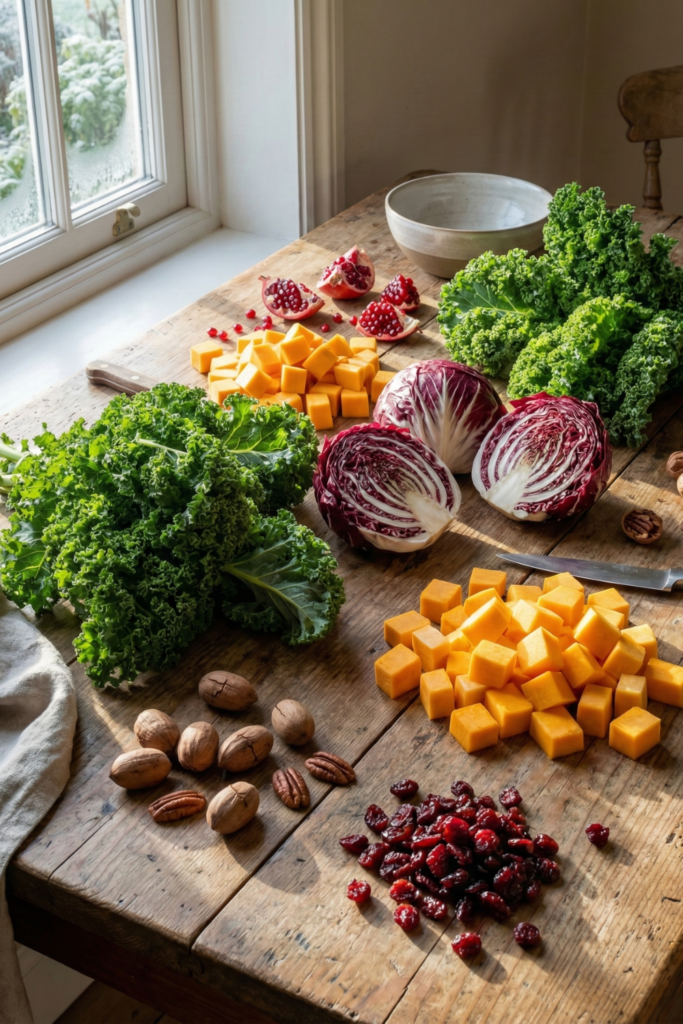
I’m talking about kale, shredded Brussels sprouts, or radicchio. I remember the first time I tried to serve a kale salad to my family; I didn’t massage the leaves first. It was like trying to eat construction paper. My jaw literally hurt afterward, and nobody finished their plates!
The trick I learned is to toss your kale with a little bit of olive oil and salt, then squeeze it with your hands until it relaxes. It sounds totally weird, but it softens the fibers and makes it actually enjoyable to eat. Shredded sprouts are awesome too because they have all these little nooks and crannies that hold onto the dressing without getting soggy.
Bringing the Heat
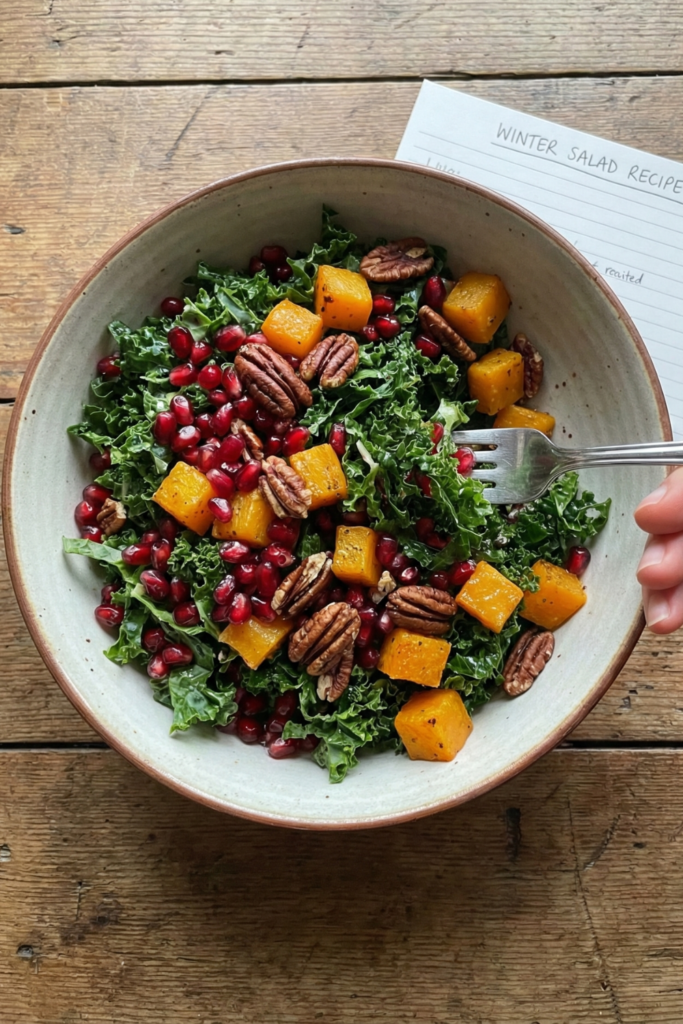
Here is where I messed up for years: I served everything stone cold. In January, your body craves warmth. I love adding a roasted vegetable salad element right on top of the greens to make it feel like a comfort meal.
Butternut squash, beets, and sweet potatoes are my absolute favorites for this. I usually cube them up small and roast them until they are dark and almost burnt on the edges. That caramelization adds a deep sweetness that makes you forget you’re eating healthy food.
Just don’t toss them on the greens straight out of the oven, or you will wilt everything way too much. I learned that lesson after ruining a dinner party appetizer by being too impatient. Let them cool for about five minutes first.
Grains and Sweetness
If I’m eating a salad for dinner, it better fill me up, or I’m going to be raiding the pantry an hour later. I usually mix in some cooked farro or quinoa. It adds this chewy, nutty texture that transforms the bowl into a real meal.
And don’t forget the fruit! The seasonal produce January offers is actually pretty vibrant. I use pomegranates, pear slices, or persimmons to cut through the heavy, savory flavors of the roasted roots.
The Secret to the Perfect Winter Vinaigrette
I have a confession to make. For years, I ruined perfectly good salads by drowning them in that neon-yellow Italian dressing from the grocery store. You know the one—it tastes mostly like salt and preservatives? Yuck.
When you are dealing with hearty winter produce, a weak, watery dressing just isn’t going to cut it. A proper winter vinaigrette needs to stand up to the strong flavors of kale and roasted roots. It took me a lot of trial and error (and some really sour salads) to figure this out.
Ditch the Lemon
Here is the thing I learned the hard way. In the summer, a squeeze of lemon is great on delicate arugula. But if you put plain lemon juice on raw Brussels sprouts? It just tastes like sour cabbage.
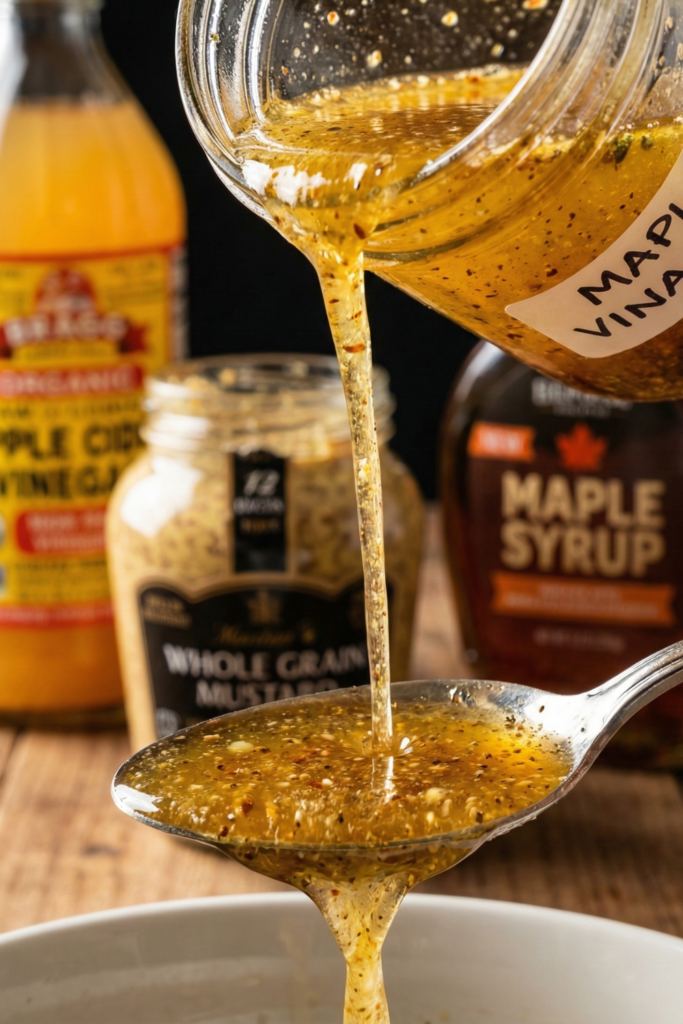
For a warm salad dressing vibe, you need a heavier acid. I almost exclusively use apple cider vinegar uses or a thick balsamic reduction now. The apple cider vinegar has that fermented funk that pairs so well with squash.
I remember making a fancy dinner for my in-laws and using lime juice on a beet salad. It was a disaster. The flavors clashed so hard it was awkward to eat. Stick to the darker, richer vinegars for the cold months.
The Emulsification Trick
Have you ever made a dressing that separated into an oil slick five minutes later? So annoying. The secret weapon I found is high-quality Dijon mustard.
It acts as an emulsifier, which is just a fancy way of saying it glues the oil and vinegar together. Plus, it adds a spicy kick that warms you up. I usually do a tablespoon of mustard for every three tablespoons of oil.
If you don’t whisk it enough, it breaks. I actually stop whisking entirely and just use a mason jar. Put everything in, screw the lid on tight, and shake it like a bartender. It creates this creamy, thick texture without using any dairy at all.
Sweeten the Deal
Winter greens can be incredibly bitter. If you don’t balance that out, eating your salad feels like a punishment. I always add a natural sweetener.
My go-to is a maple mustard dressing combo. The maple syrup brings out the earthiness in things like roasted pecans or walnuts. Honey works too, but it doesn’t dissolve as easily in cold vinegar.
I once forgot the sweetener entirely when making a radicchio salad. It was so bitter my eyes watered! A teaspoon of maple syrup would have saved the whole meal.
Don’t Skimp on the Oil
Since we are eating raw veggies, the oil flavor really shines through. Don’t use the cheap vegetable oil here.
Grab a decent extra virgin olive oil. It adds a peppery finish that makes the winter salad recipe feel rich and satisfying.
Adding Crunch and Texture to Seasonal Salads
Is there anything worse than a “one-note” salad? You know the kind—where every bite is just soft, wilted greens and soft veggies. It gets boring fast. I used to force myself to eat those bowls, thinking I was being healthy, but I was actually just miserable.
Texture is what makes a winter salad recipe actually crave-able. If you aren’t adding a crunch factor, you are missing out on the best part of the meal. I learned that you need to hit different textures in every bite to keep your brain interested.
Go Nuts (Literally)
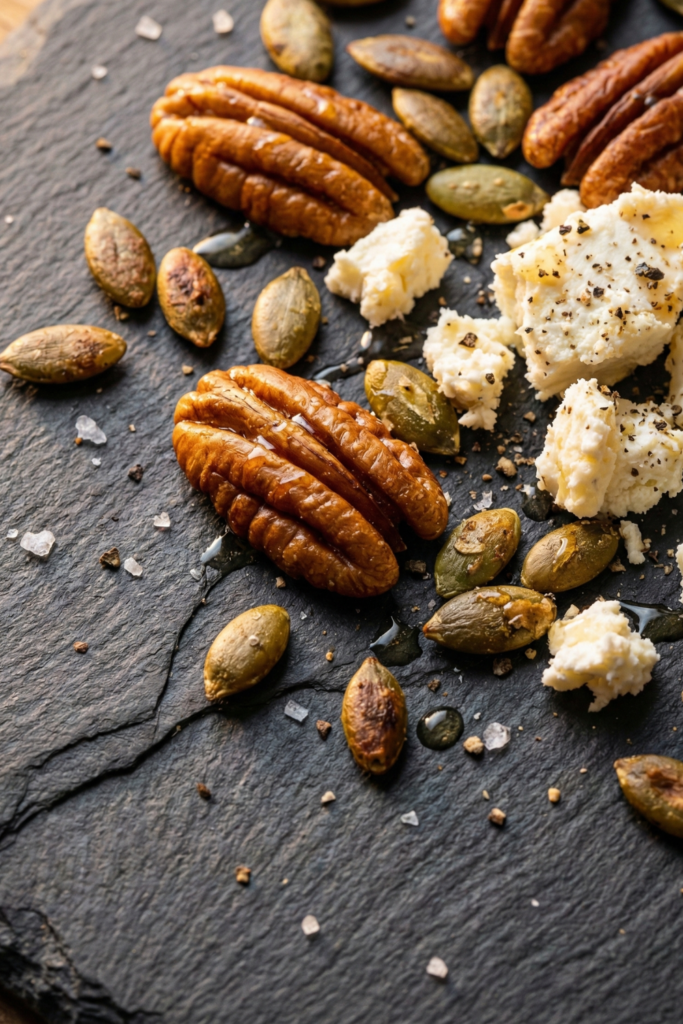
I cannot stress this enough: Toast your nuts! Putting raw walnuts or pecans on a salad is fine, but toasting them is a total game changer.
I remember one time I was in a rush and just threw raw pecans into a pear and walnut salad. It was okay, but it tasted “dusty.” The next time, I threw them in a dry pan for three minutes. The oils released, and the flavor exploded.
Just watch them like a hawk. I have burned more pine nuts than I care to admit. I once turned my back to wash a spoon, and poof—$10 worth of nuts ruined. It happens to the best of us. Toasted pumpkin seeds (pepitas) are a cheaper, safer bet if you’re prone to burning things like me.
The Cheese Factor
Cheese is the glue that holds a salad together. For winter bowls, I steer clear of mild cheeses like mozzarella. You need something punchy.
I am obsessed with a good goat cheese salad combo. The creaminess of the goat cheese coats the roasted veggies and makes a sort of secondary dressing. If you find goat cheese too “barnyard-y” (my husband hates it), try feta cheese pairings.
The saltiness of feta cuts right through the sweetness of roasted beets or squash. I usually buy the block and crumble it myself because the pre-crumbled stuff has this weird powder on it that stops it from melting into the warm veggies.
Unexpected Crunch
Croutons are great, but have you tried crispy chickpeas? This was a discovery born out of desperation when I ran out of bread one night.
I drained a can of chickpeas, tossed them in olive oil and paprika, and roasted them until they rattled on the pan. They add this massive crunch but with way more protein than bread.
If you are strictly a crouton person, stop buying the boxed ones. They are rock hard and hurt the roof of your mouth. Tear up some old sourdough, toss it in olive oil, and bake it. It’s a great way to use up stale bread so you don’t have to throw it away.
don’t Forget the Fresh Herbs
I used to think herbs were just for garnish, like the parsley sprig at a diner. Wrong. Treat them like salad greens.
I tear huge handfuls of fresh dill, parsley, or mint and toss them right in with the lettuce. It wakes up the heavy winter flavors. It makes the whole dish taste like it came from a garden, even if it’s February. Just don’t chop them too fine, or they get lost in the dressing. Keep the leaves whole!
Winter Salad Meal Prep and Storage Tips
Let’s be real for a second: the “sad desk lunch” is a tragedy we have all experienced. You know the one. You pack a salad with good intentions at 7 AM, but by noon, it’s a wilted, soggy pile of mush that you inevitably throw away in exchange for a slice of pizza. I have been there so many times.
If you want to actually stick to eating healthy during the week, you have to master the art of storage. Meal prep salads are a lifesaver, but only if you treat them like a science experiment.
The Jar Method Actually Works
I used to think those Pinterest photos of salads in mason jars were just for show. Turns out, they are actually genius. The vertical storage is the only way to keep a salad fresh for more than 24 hours.
Here is the layering rule I live by: Dressing goes at the very bottom. Always.
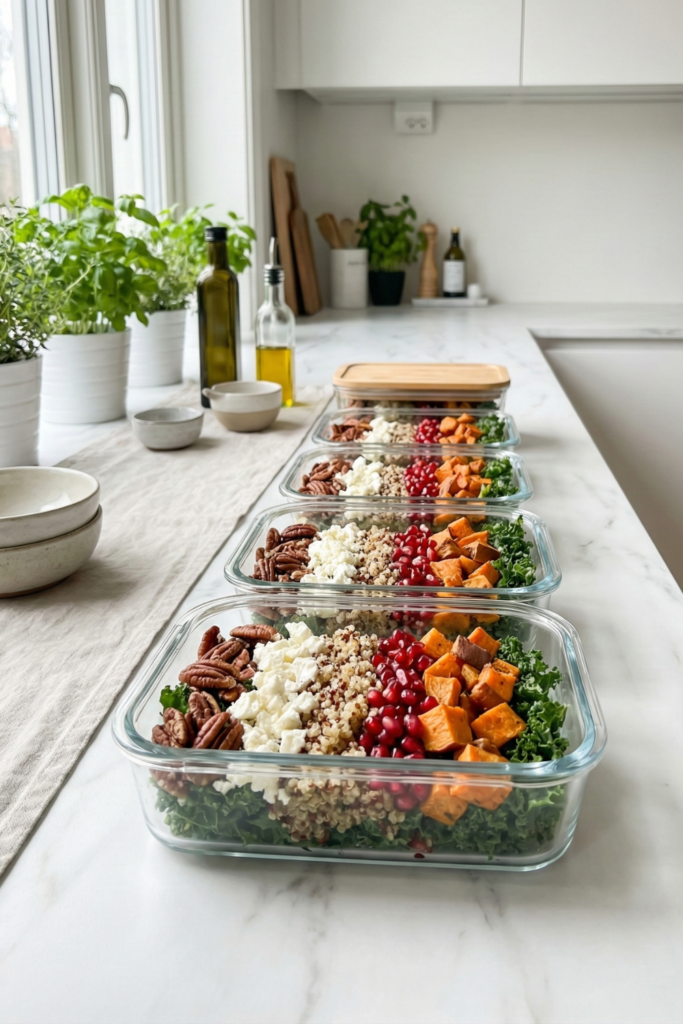
If the dressing touches the greens, it’s game over. I put the vinaigrette in, then I add a “shield” layer of hard vegetables—like carrots, cucumbers, or chickpeas. This protects the delicate stuff. Then I stack the roasted vegetable salad ingredients, and finally, shove the greens in at the very top.
I once messed up the order and put the goat cheese at the bottom with the vinegar. By lunch, it had turned into this weird, curdled soup. Don’t make my mistake.
Batch Roasting on Sundays
I am lazy during the week. The last thing I want to do on a Tuesday night is peel a butternut squash. It takes forever, and the peel gets everywhere.
On Sundays, I crank the oven and do a massive “sheet pan roast.” I’ll do a tray of sweet potatoes, a tray of beets, and maybe some chickpeas. I roast enough for healthy dinner sides for the whole week.
Store these in a separate glass container. Why? because if you put warm roasted veggies into a container with cold lettuce, you basically steam the lettuce. It turns gross instantly. I learned that after opening a Tupperware container that smelled like old gym socks because the warm kale had fermented. Let everything cool completely before you pack it away!
Reviving the Dead
Okay, so let’s say you messed up. You dressed the salad, didn’t eat it, and now it’s in the fridge looking sad. Can you save it?
Sort of. My trick for reviving leftovers involves adding fresh crunch. If the leaves are a bit limp, I toss in a handful of fresh, dry cabbage or extra nuts. It distracts your mouth from the softer textures.
Also, a squeeze of fresh lemon juice right before eating can wake up the flavors that have gone flat in the fridge. It’s not perfect, but it saves you from wasting food.
Storing the Liquid Gold
If you aren’t doing the jar method, keep your dressing separate. I have a collection of tiny jam jars specifically for this.
Homemade vinaigrettes can solidify in the fridge because of the olive oil. This used to freak me out—I thought it had gone bad. It hasn’t! You just need to set the jar on the counter for ten minutes before you eat, or run it under warm water.
Being prepared means you don’t have to think about lunch when you’re hungry and stressed. That is usually when the bad decisions happen.
So, there you have it. We have officially moved past the idea that salads are just boring bowls of cold leaves reserved for summer diets. Honestly, once you start making a proper winter salad recipe, you might never go back to basic iceberg lettuce again.
It really is all about balance. You need those hearty winter greens to stand up to the dressing, the warmth from the roasted vegetable salad elements, and that critical crunch from the toasted nuts. When you get that combo right, it stops feeling like “health food” and starts feeling like actual comfort food.
I really hope this inspires you to get into the kitchen and experiment. Don’t be afraid to mess up! I have made plenty of salads that were too sour, too crunchy, or just plain weird. That is how you learn what you like.