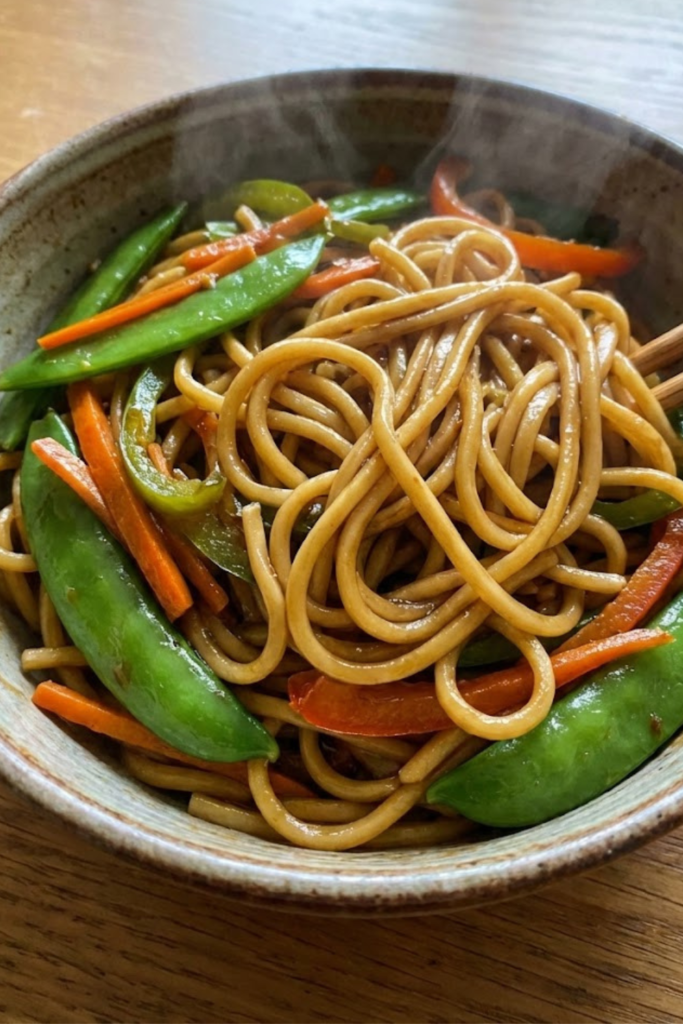
I’ll be honest—I used to be addicted to those little white takeout cartons. You know the ones! But there is nothing more heartbreaking than opening a delivery bag to find soggy, sad noodles that cost you $20. Frustrating, right? That’s exactly why I started making my own. This Veggie Lo Mein isn’t just a “healthy alternative”; it’s actually better than the restaurant version. We are talking chewy noodles, veggies that actually have a crunch, and a sauce that coats everything in savory, garlicky perfection. Let’s get that wok heated up!
Why You’ll Love This Homemade Lo Mein
Look, we’ve all been there. It’s 6 PM on a Tuesday, you’re absolutely exhausted, and the takeout menu is calling your name. It feels so easy to just hit “order” on your phone. But let’s be real for a second. Remember the last time you actually ordered delivery?
I do. I distinctly remember waiting over an hour, paying way too much for delivery fees, and finally opening the bag only to find disappointment. What greeted me was a white carton of greasy, lukewarm noodles that had steamed themselves into a mushy brick during the car ride over. It was heartbreaking. I actually sat there and ate it out of frustration, wishing I hadn’t spent twenty bucks on something so mediocre.
That was the night I decided I was done. I knew I could make a veggie lo mein that actually tasted fresh. And guess what? It’s not just doable; it is infinitely better than what arrives at your doorstep.
It’s Faster Than the Delivery Guy
The craziest part about making this at home? It is fast. Like, really fast. You can literally have dinner on the table in less time than it takes to decide what movie to stream on TV.
We are talking about 15 to 20 minutes, tops. By the time you would have found your credit card to pay for takeout, you could be tossing fresh noodles in a hot wok. There is something really satisfying about beating the clock like that. Plus, the smell of garlic and ginger hitting the hot oil is way better than the smell of stale cardboard.
No More “Mystery Vegetables”
When you order out, you get what you get. usually, that means a mountain of cheap cabbage and maybe one sad piece of broccoli if you’re lucky. I hate digging through a container looking for the good stuff.
When I make veggie lo mein at home, I’m the boss of the veggie ratio. This recipe is the ultimate fridge clean-out tool. Got a wilting bell pepper in the crisper drawer? Throw it in. Leftover snow peas from a salad? They go in too. You can pack this dish with so much color and crunch that you actually feel good about eating it.
The Texture is a Game Changer
This is the big one for me. Restaurant noodles sit in a sealed container for twenty to thirty minutes before they get to you. They sweat. They get soft. They lose their soul.
But when you toss veggie lo mein fresh in your own wok (or a large skillet, I don’t judge!), magic happens. The veggies stay crisp-tender, not soggy. The noodles keep their chew and bounce. That contrast between the soft noodle and the crunchy snap pea is something you just can’t buy. It has to be made fresh.
You Control the “Salt Bomb”
I love salty food. I really do. But sometimes takeout leaves me chugging water for the rest of the night because the sodium levels are off the charts. It’s just too much.
Cooking this at home means I decide how much soy sauce and oyster sauce goes in. You can make it savory and delicious without waking up with puffy eyes the next day. It’s a healthier choice that doesn’t taste like “health food.” It just tastes like the best version of your favorite comfort food. Trust me, once you make this, that takeout menu is going to stay in the drawer.

Lo Mein vs. Chow Mein: What’s the Difference?
Okay, confession time. For the longest time, I honestly thought Lo Mein and Chow Mein were basically the same thing. I used to stare at the takeout menu, totally confused, and just flip a coin.
I remember this one specific time in college—I was craving those soft, slurpy noodles. I ordered the Chow Mein, thinking I was safe. When I opened the box, I found these hard, crunchy fried noodles that looked like snacks, not dinner. I was so bummed out. I sat there eating my crunchy dinner, wondering where I went wrong. It turns out, there is a huge difference, and knowing it saves you from a lot of dinner disappointment.
Let’s clear this up once and for all so you never order the wrong thing again.
It’s All About the Noodle
The biggest difference is actually in the noodles themselves.
Veggie Lo Mein uses fresh egg noodles. They are thick, soft, and satisfyingly chewy. They feel a bit like spaghetti but with more bounce. Because they are fresh (not dried), they soak up that savory sauce like a sponge.
On the other hand, Chow Mein usually uses dried noodles. In many authentic restaurants, these noodles are fried until they are super crispy. Sometimes they are semi-crispy, but they never have that soft, slurpy texture that Lo Mein has. If you want comfort food that you can twirl with your chopsticks, you want Lo Mein.
The Cooking Method Matters
The names actually tell you how they are cooked. In Cantonese, “Lo Mein” translates to “tossed noodles.”
That is exactly what we do. We boil the noodles separately first to get them soft. Then, at the very end of the cooking process, we toss them into the wok with the veggies and sauce. It’s a gentle mix. The goal is to coat everything, not fry the life out of it.
Chow Mein means “fried noodles.” Those noodles get thrown into the hot oil and fried hard. They aren’t just tossed; they are cooked directly in the wok to get that crunch.
The Sauce Factor
Here is my favorite part: the sauce. Veggie Lo Mein is definitely the saucier sibling.
Because the noodles are boiled and soft, they need a lot of liquid to keep them from sticking together. The sauce is the star here. It coats the broccoli and peppers and makes the noodles slippery and delicious.
Chow Mein is usually much drier. Since the focus is on the crunch of the noodle, too much sauce would make them soggy. So if you are a sauce lover like me, Lo Mein is always the way to go.
What to Buy at the Store
When you are shopping for this recipe, don’t just grab any package that says “Asian Noodles.”
You want to look in the refrigerated section, usually near the tofu or wonton wrappers. Look for “fresh egg noodles” or “Lo Mein noodles.” They are yellow and soft to the touch, not hard like pasta.
If you can’t find them, don’t panic! I’ve made veggie lo mein with dried spaghetti in a pinch. Just boil it, drain it, and toss it in. Is it 100% authentic? No. Does it taste amazing when you are hungry on a Wednesday night? Absolutely.

Essential Ingredients for the Best Vegetable Lo Mein
I have a confession to make. When I first started cooking Asian food at home, I was a bit of a disaster. I remember trying to make a stir-fry using olive oil and spaghetti, thinking, “Eh, it’s basically the same thing, right?”
Spoiler alert: It was not. It tasted like Italian pasta that had an identity crisis.
The truth is, while veggie lo mein is incredibly forgiving, the specific ingredients you choose actually matter. You don’t need a pantry full of obscure items, but you do need the right basics to get that authentic flavor. If you use the wrong oil or the wrong noodle, you just end up with a sad bowl of oily pasta. I learned that the hard way so you don’t have to.
The Noodles: The Heart of the Dish
Let’s talk about the star of the show. Please, I beg you, put down the box of dried spaghetti. For a truly great veggie lo mein, you need fresh egg noodles.
I usually find these in the refrigerated section of my grocery store, right next to the tofu or the wonton wrappers. They are thick, yellow, and have this amazing chewiness that dried pasta just can’t replicate. If you have an Asian market nearby, even better! Look for packages labeled “Lo Mein Noodles” or “Oil Noodles.”
If you absolutely can’t find fresh ones, dried egg noodles are your next best bet. But whatever you do, avoid thin noodles like angel hair. They turn into mush the second they hit the sauce. You want a noodle with some heft to it so it can stand up to all that tossing.
The Veggie Lineup
This is where you get to be creative. I love veggie lo mein because it’s basically a salad you can eat with chopsticks. However, texture is everything here. You want vegetables that will keep their crunch.
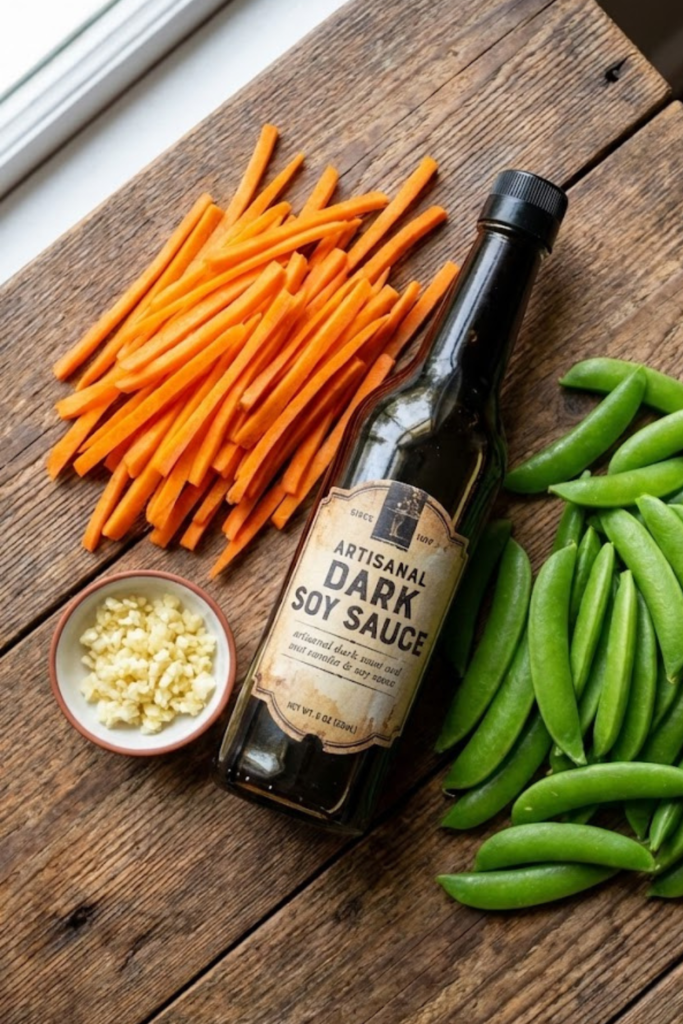
- Snow Peas or Snap Peas: I love the snap they give. I usually throw them in whole or just cut them on a bias.
- Carrots: Here is a pro tip—don’t just chop them into rounds. Julienned carrots (cut into matchsticks) mix so much better with the noodles. It makes every bite consistent.
- Bell Peppers: Red or orange peppers add a pop of sweetness that balances the salty sauce.
- Bok Choy: This is my favorite green to add. The white stems give you crunch, and the green leaves wilt down beautifully.
I used to just throw random frozen veggies in there, but they release too much water. Fresh is always the way to go if you want to avoid a soggy mess.
The Aromatics
If your kitchen doesn’t smell amazing within thirty seconds of starting, you’re missing something. The “holy trinity” for this dish is garlic, ginger, and green onions.
I know it’s tempting to buy that jar of pre-minced garlic or the squeeze tube of ginger. I’ve done it. We’ve all done it. But the flavor just isn’t the same. It tastes… preserved. taking two minutes to chop fresh garlic and grate fresh ginger makes a world of difference. It gives the dish that sharp, spicy kick that cuts through the rich sauce.
The Oil Strategy
This was my biggest mistake for years. I treated sesame oil like cooking oil.
I would pour a bunch of toasted sesame oil into the wok and try to fry my veggies in it. The result? A burnt, bitter taste that ruined the whole dish. Sesame oil flavor is very strong and it burns easily.
Use a neutral oil like canola, vegetable, or grapeseed oil for the actual cooking. Save the toasted sesame oil for the very end. I drizzle about a teaspoon over the finished veggie lo mein right before serving. That way, you get that nutty aroma without the bitterness. It’s a small tweak that makes your home cooking taste like it came from a restaurant kitchen.
The Secret Lo Mein Sauce Recipe
I can’t tell you how many times I ruined a perfectly good stir-fry before I figured this out. For years, my “sauce” strategy was just blindly dumping soy sauce over the pan and hoping for the best.
The result was always the same. The veggies were way too salty, the noodles were pale and sad, and there was a pool of brown water at the bottom of the wok. It was edible, sure, but it definitely wasn’t “takeout quality.” I remember serving it to my partner once, and while they were polite about it, we both knew something was missing. It lacked that sticky, savory richness that coats your mouth when you eat the real deal.
I finally realized that a great easy lo mein sauce isn’t just one ingredient. It’s a balance of salty, sweet, and umami. Once I nailed this ratio, my home cooking went from “meh” to “whoa.”
The Soy Sauce Base: It’s a Duo
Here is the biggest secret that nobody tells you: you need two types of soy sauce.
Most of us just have that one bottle of Kikkoman in the fridge. That is “light” or regular soy sauce, and its main job is to add salt. But if you want your veggie lo mein to look like the restaurant kind, you also need dark soy sauce.
Dark soy sauce uses are totally different. It’s thicker, slightly sweeter, and less salty. But the main reason we use it is for color. It stains the noodles that gorgeous, deep mahogany brown. If you skip this, your noodles will taste fine, but they will look pale and anemic. Mixing the two gives you the perfect balance of flavor and looks.
Adding Depth (Without the Fish)
Authentic lo mein usually relies heavily on oyster sauce for that savory punch. It gives the sauce body and a depth that you just can’t get from soy sauce alone.
Since we are making veggie lo mein, I use vegetarian mushroom sauce instead. honestly? I think I like it better than the real thing. It’s made from shiitake mushrooms, so it is packed with umami flavor but completely plant-based. It’s thick and glossy and smells amazing.
If you can’t find it, hoisin sauce works in a pinch, though it’s a bit sweeter. And speaking of sweet, you need a little bit of sugar or mirin. It sounds weird to add sugar to dinner, but it balances out the high soy sauce sodium so you aren’t just eating a salt lick. If you don’t have mirin, a splash of dry sherry or just brown sugar is a solid mirin substitute.
The Glue That Holds It Together
You know how restaurant sauce clings to the noodles instead of sliding off? That is thanks to cornstarch.
But here is where I used to mess up big time. I would sprinkle the cornstarch directly into the hot pan. Big mistake. It immediately clumped up into these weird, gummy white balls that tasted like raw flour. It was gross.
You have to whisk the cornstarch into the cold sauce ingredients before they hit the heat. This creates a savory noodle sauce that thickens up the second it boils. It turns into a glossy glaze that coats every single snap pea and noodle strand.
Whisk It Before You Wok It
My final tip? Make the sauce in a jar or bowl before you even turn on the stove.
Stir-frying happens fast. Like, really fast. You do not want to be scrambling to find measuring spoons while your garlic is burning in the pan. I like to measure my soy sauces, sesame oil, mushroom sauce, and sugar into a jar and shake it up. Then, when it’s time to toss the noodles, I just pour it in. It makes the whole process stress-free.

Step-by-Step Instructions: How to Stir-Fry Like a Pro
I used to be terrified of my wok. It just seemed so aggressive. The heat was high, the oil was sizzling, and everything happened so fast that I usually ended up with a panic attack and burnt garlic.
For the longest time, my “stir-fry” was basically just “steam-sautéing.” I would throw everything into a cold pan and slowly cook it to death. It wasn’t until I actually watched a chef do it that I realized I was doing it all backwards. Stir-frying is a sprint, not a marathon. It’s intense, quick, and honestly, a little bit of an adrenaline rush once you get the hang of it.
If you want that restaurant-quality veggie lo mein, you have to respect the process. Here is how I finally mastered the art of the wok without setting off my smoke detector (well, mostly).
The Golden Rule: Prep is King
If you take only one thing away from this post, let it be this: Do not turn on the stove until every single thing is chopped, measured, and ready to go.
I learned this the hard way. I once tried to chop my broccoli while the garlic was already sizzling in the pan. By the time I finished cutting the florets, the garlic was black, and the kitchen smelled like burnt tires. It was a disaster.
In the culinary world, they call this “mise en place.” I just call it “saving my sanity.” Have your vegetable chopping tips practiced and done. Your carrots should be julienned, your sauce mixed in a jar, and your aromatics minced. Line them up next to the stove like little soldiers. Once the heat is on, you won’t have time to look for the soy sauce.
Noodle Prep: The Rinse Cycle
Here is a mistake I made for years. I treated egg noodles like Italian pasta. I would boil them, drain them, and then let them sit in the colander while I cooked the veggies.
By the time I needed them, they had glued themselves into a solid, starchy ball. I had to rip them apart with my hands. It wasn’t pretty.
The trick with fresh egg noodles is to boil them just until they are al dente—usually about 2 to 3 minutes. Then, immediately drain them and run them under cold water. This stops the cooking process and washes away the excess starch. Drizzle a tiny bit of sesame oil on them and toss. Now they are loose, slippery, and ready for the main event.
Hard Veggies First, Soft Veggies Last
One of my biggest pet peeves with bad takeout is when the carrots are rock hard, but the bok choy is total mush. That happens when you throw everything in at once.
You have to layer your cooking. I always start with the hard stuff. The carrots and the stems of the bok choy go in first because they need a few minutes to soften up. I let them dance around in the oil until they get a little blistered.
Only then do I add the softer stuff, like the bell peppers and the leafy greens. This way, everything finishes crossing the finish line at the exact same time. It’s a small detail, but it makes your high heat stir frying results so much better.
The Grand Finale: The Toss
This is the fun part. The veggies are crisp-tender. The aromatics are fragrant. Now, you dump in those cooked noodles and pour that savory sauce all over everything.
This is where I like to use chopsticks (or tongs if you aren’t feeling brave). Cooking with chopsticks allows you to lift and separate the noodles so the sauce gets everywhere. You want to toss everything vigorously for about a minute.
You aren’t cooking the noodles anymore; you are just marrying the flavors. You’ll see the sauce thicken up and turn glossy because of the cornstarch. As soon as everything is hot and coated, kill the heat. You did it!

Variations and Protein Add-Ins
One of the things I love most about cooking is that recipes are really just suggestions. They aren’t laws. When I first started making this, I followed the instructions so strictly that if I was missing one red pepper, I wouldn’t make dinner. I’d just give up and eat cereal.
That was silly. Veggie lo mein is basically a blank canvas. It’s the most forgiving meal you will ever meet. Over the years, I’ve tweaked this recipe a hundred different ways depending on who I’m feeding or what is about to rot in my fridge. Sometimes it’s a “clean out the produce drawer” night, and sometimes I’m trying to impress my meat-eating friends.
Here is how I mix it up without ruining the vibe.
The Tofu Situation
I have a love-hate relationship with tofu. When it’s good, it’s amazing. When it’s bad, it’s like eating wet flavorless sponge.
If you want vegan lo mein options that actually fill you up, you need to treat the tofu right. My biggest mistake was throwing soft, wet cubes directly into the wok. They just disintegrated. It was a tragedy.
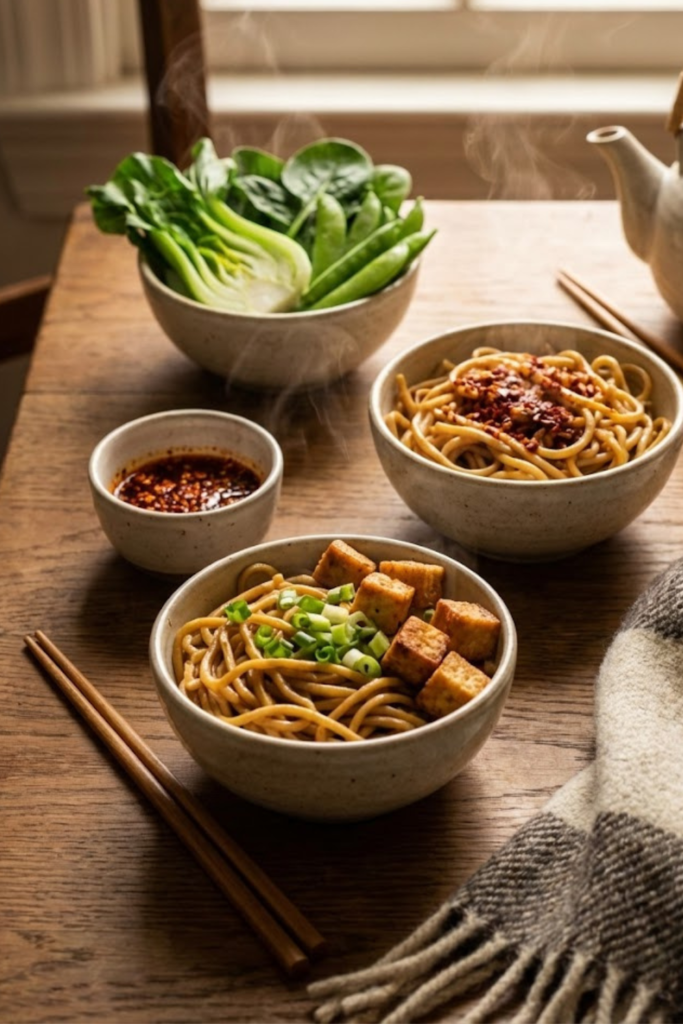
To get that restaurant-style crispy tofu stir fry, you have to press the water out first. I wrap a block of extra firm tofu in a paper towel and put a heavy cast iron skillet on it for twenty minutes. Then, I toss the cubes in cornstarch and fry them separately until they are golden. Add them back in at the very end with the noodles. They stay crunchy and soak up just enough sauce to be delicious.
For the “Where’s the Meat?” Crowd
I have family members who look at a bowl of vegetables and ask, “Okay, but where is the dinner?” It’s annoying, but I get it.
The beauty of this dish is that it’s easy to bulk up. I am all about lazy cooking, so I usually just shred a rotisserie chicken from the grocery store and toss it in. It’s already cooked, so you just need to warm it through with the sauce.
If I’m feeling fancy, I might sear some shrimp or thinly sliced beef flank steak. Just remember to cook your proteins first, remove them from the pan, and then add them back at the end. If you leave them in while the veggies cook, you’ll end up with rubbery shrimp. Nobody wants that.
Turning Up the Heat
I am a total spice wimp, but my partner puts hot sauce on everything. I mean everything.
If you like your noodles to hurt a little bit (in a good way), you have options. I usually keep the base recipe mild so everyone can eat it. Then, I serve it with a jar of spicy chili oil or chili crisp on the table.
For a more integrated heat, you can whisk a tablespoon of Sriracha directly into the sauce. Sriracha noodles have that tangy, garlic heat that is super addictive. Just be careful—once you stir it in, you can’t take it out. I learned that the hard way when I accidentally made a batch so spicy that we had to drink a gallon of milk with dinner.
Making It Gluten-Free
I have a few friends who are gluten-free, and Asian food is usually a minefield for them because of the soy sauce.
Regular soy sauce has wheat in it. Who knew? If you need to make this safe for everyone, swap the soy sauce for Tamari or coconut aminos. They taste almost exactly the same.
For the noodles, you can swap the egg noodles for wide rice noodles. It changes the texture a bit—it becomes more like a Pad See Ew—but it’s still delicious. Just be sure to read the label on your hoisin or mushroom sauce, as sneaky gluten hides everywhere.
Making veggie lo mein at home has totally changed my weeknight routine, proving that you don’t need takeout for a delicious meal. It’s weirdly therapeutic to hear that sizzle in the pan, and this budget friendly dinner gives me total peace of mind knowing exactly what went into the sauce—no hidden MSG, just real food. Plus, as one of those easy cleanup recipes, it saves you time on dishes while delivering a homemade Chinese food fix that tastes like a splurge. So put down the phone, delete the delivery app, and get cooking—it might just be the best thing you cook in 2026!