Let’s be real for a second. There are days when a sandwich just isn’t going to cut it. You know those days? The ones where it’s gray outside, you’re tired, and you need food that feels like a warm hug? That is exactly when Thai red curry noodle soup becomes a non-negotiable necessity in my house. I used to think this was one of those “restaurant only” dishes, something way too complex for a Tuesday night when I’m already exhausted.
I’ll admit, my first attempt at making this was… let’s just call it a “learning experience.” I bought the wrong milk (lite coconut milk is a crime against curry, folks), I didn’t fry the paste, and I ended up with a sad, watery soup that tasted like spicy dishwater. I was so frustrated I almost threw the ladle across the kitchen. But I’m stubborn, and I refused to let the curry win.
Through a lot of trial and error—and maybe a few takeout orders for “research”—I finally cracked the code. It turns out, making an authentic-tasting Thai red curry noodle soup is actually shockingly easy once you stop overthinking it. It’s not about having a culinary degree; it’s about understanding how to wake up those flavors. We’re talking about that perfect, magical balance of spicy, salty, and sweet that makes your tastebuds do a little happy dance.
So, put down the takeout menu. Seriously, put it down. We are going to make something better than takeout right in your own kitchen, and we’re going to do it in about 30 minutes. You’re going to learn from my mistakes, skip the watery disasters, and go straight to the good stuff—a creamy, rich, spicy noodle soup that you’ll want to slurp up every single drop of. Let’s get cooking!
Essential Ingredients for Authentic Thai Flavors
Listen, I used to think I could just grab whatever “Asian-style” ingredients were in the international aisle of my local grocery store and call it a day. Big mistake. My first few pots of Thai red curry noodle soup tasted like spicy water because I was trying to cut corners. If you want that restaurant-quality taste, you have to hunt down the right stuff. It’s not about being a snob; it’s about flavor.
The Curry Paste Dilemma
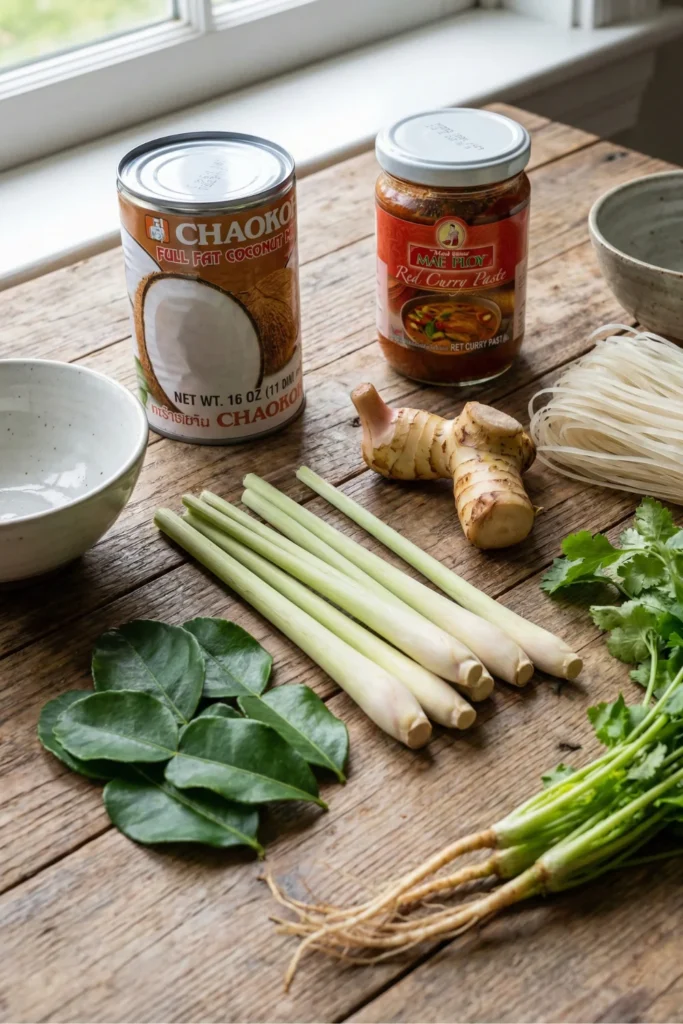
Okay, real talk: do not try to make your own red curry paste from scratch unless you have a lot of time and a really good mortar and pestle. I tried it once, and my arm hurt for two days. But, please, stop buying those tiny glass jars of generic curry paste from the regular supermarket. They are usually mostly salt and lack that punch.
I swear by brands like Maesri or Mae Ploy. They come in little cans or tubs, and the difference is night and day. They pack serious heat and actual flavor. Using the cheap stuff is like trying to make coffee with lukewarm water—it just doesn’t work.
Coconut Milk: The Creamy Truth
Here is a hill I am willing to die on: never, ever use “lite” coconut milk for this soup. I did this once trying to be “healthy,” and the broth was so sad and thin I wanted to cry. You need full-fat coconut milk to get that rich, creamy coconut broth that coats the back of your spoon.
Look for brands like Aroy-D or Chaokoh. If you shake the can and you can’t hear liquid sloshing around, that is a good sign. It means the cream has separated at the top, which is exactly what we want for frying the paste.
Aromatics You Can’t Skip
The secret to those authentic Thai flavors isn’t just the paste; it’s the fresh aromatics.
- Galangal vs. Ginger: Galangal looks like ginger’s smoother cousin. It has a piney, citrusy flavor. If you can’t find it, ginger works in a pinch, but the taste changes slightly.
- Kaffir Lime Leaves: These are non-negotiable for me. They smell like pure citrus magic. I usually buy a big bag at the Asian market and freeze them. They last forever.
- Lemongrass: Fresh is best. Peel off the tough outer layers and smash the stalk with the back of your knife to release the oils. It smells incredible.
Noodles and Proteins
For the rice noodles, I usually go for the medium-width sticks. My biggest fail was boiling them in the soup for twenty minutes. They turned into mush. Now, I soak them in hot water separately and add them at the very end.
As for protein, this recipe is super forgiving. I usually make a chicken curry soup because I always have chicken breast, but shrimp red curry is amazing too if you want something faster. Just don’t overcook the shrimp, or they turn into rubber bullets. Trust me on that one.
How to Build the Perfect Curry Broth
Okay, this is where the magic actually happens. I used to think making the broth just meant dumping a can of milk and some paste into a pot and hoping for the best. Spoiler alert: that is not how you get that deep, restaurant-quality flavor. I made so many batches of Thai red curry noodle soup that tasted flat and boring before I learned the actual technique. It felt like I was missing a secret handshake or something.
“Breaking” the Coconut Cream
The first time I read a recipe that said to “fry the coconut milk,” I thought it was a typo. But this is the most critical step. You don’t start with oil; you start with the thick cream from the top of your coconut milk soup can. Scoop that solid white stuff out and throw it in your wok or pot over medium-high heat.
Here is the scary part: you have to let it bubble until it looks like you ruined it. The water evaporates, and the oil separates from the milk solids. It’ll look curdled and oily. That is exactly what we want! Once that happens, you add your red curry paste and fry it in that coconut oil. This “wakes up” the chilies and herbs in the paste. I used to skip this and just boil the paste, and honestly, the difference is huge. The flavor is ten times bolder when you fry it.
Infusing the Aromatics
Once your kitchen smells spicy enough to make you sneeze (a good sign), you add the rest of the coconut milk and your broth. Now, toss in your bruised lemongrass, slices of galangal, and torn kaffir lime leaves.
Do not—I repeat, do not—just throw them in for two minutes. Let that aromatic soup base simmer on low for at least 10 to 15 minutes. Think of it like making tea; you gotta let it steep. I was always in a rush and would skip this, wondering why my soup lacked punch. Patience is key here.
The 4-Flavor Balance
Thai food is all about the balance of salty, sweet, sour, and spicy. This is where you have to trust your tongue, not just the recipe measurements.
- Salty: This comes from the fish sauce. I know, it smells like old gym socks when you open the bottle. Get over it. It provides that savory umami bomb. If you are vegan, use a soy sauce or a specific fish sauce substitute, but the real stuff is best.
- Sweet: You need palm sugar or brown sugar to cut the heat.
- Sour: Fresh lime juice is essential, but don’t add it while the soup is boiling like crazy, or it can turn bitter. Add it at the end.
Don’t Rubberize the Protein
If you are making chicken curry soup, slice the chicken thin and add it to the bubbling broth. It poaches gently and stays tender. If you throw it in and boil the heck out of it for an hour, you’ll be chewing on rubber bands. For shrimp red curry, they literally need 2 minutes. I learned that the hard way after serving my husband tough, overcooked shrimp that squeaked when he bit them. Totally embarrassing.
Taste your spicy broth constantly. Does it need more salt? Splash of fish sauce. Too spicy? More sugar or coconut milk. You are the chef here, so tweak that flavor balance Thai food until it sings.

Toppings to Elevate Your Noodle Bowl
Here is a lesson I learned the hard way: a bowl of Thai red curry noodle soup without toppings is just… soup. It’s kind of naked. I remember serving this to friends years ago, straight from the pot to the bowl with zero garnish. It tasted okay, but it looked totally beige and boring. I felt like I was serving cafeteria food.
Toppings aren’t just for decoration to make your Instagram photos look good (though they definitely help). They provide texture and freshness that cut through that rich, creamy coconut broth. Without them, the soup can feel a bit heavy after a few spoonfuls. You need that crunch and zing to keep things interesting.
Fresh Herbs Are Mandatory
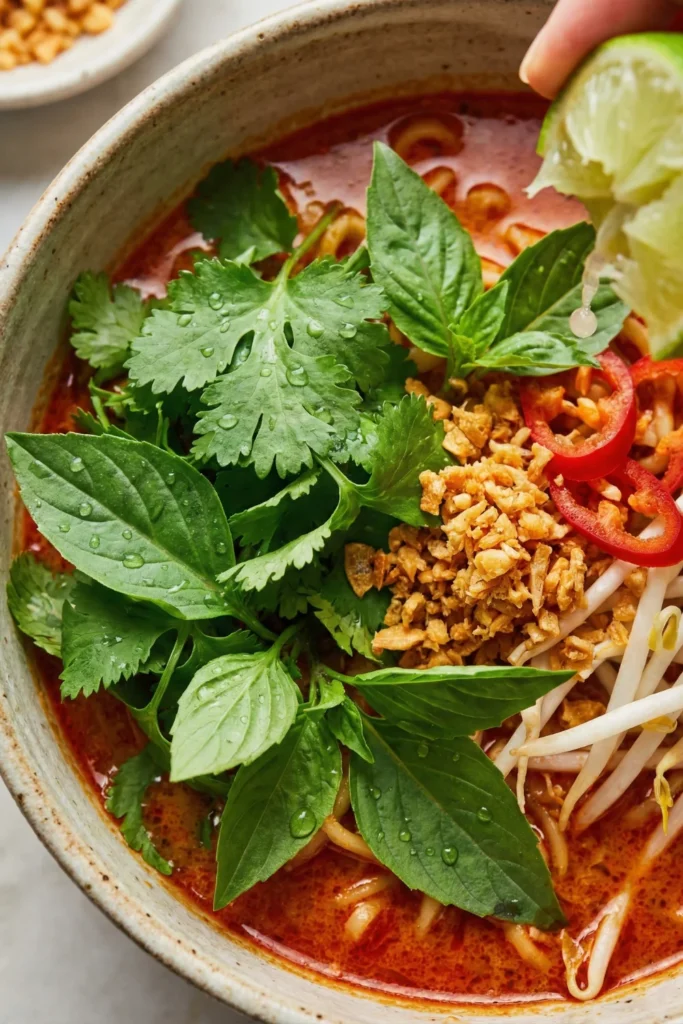
Please, I am begging you, put down the dried parsley. For this recipe, you need fresh herbs. Thai basil is the absolute king here. It has this spicy, anise-like flavor that regular Italian basil just doesn’t have. If you can’t find it, regular basil is better than nothing, but try to hunt down the real stuff at an Asian market.
And let’s talk about the cilantro garnish. I know some of you have that gene that makes cilantro taste like soap. If that’s you, I am so sorry. You can skip it. But for the rest of us, a huge handful of fresh chopped cilantro adds a brightness that wakes the whole dish up.
The Crunch Factor
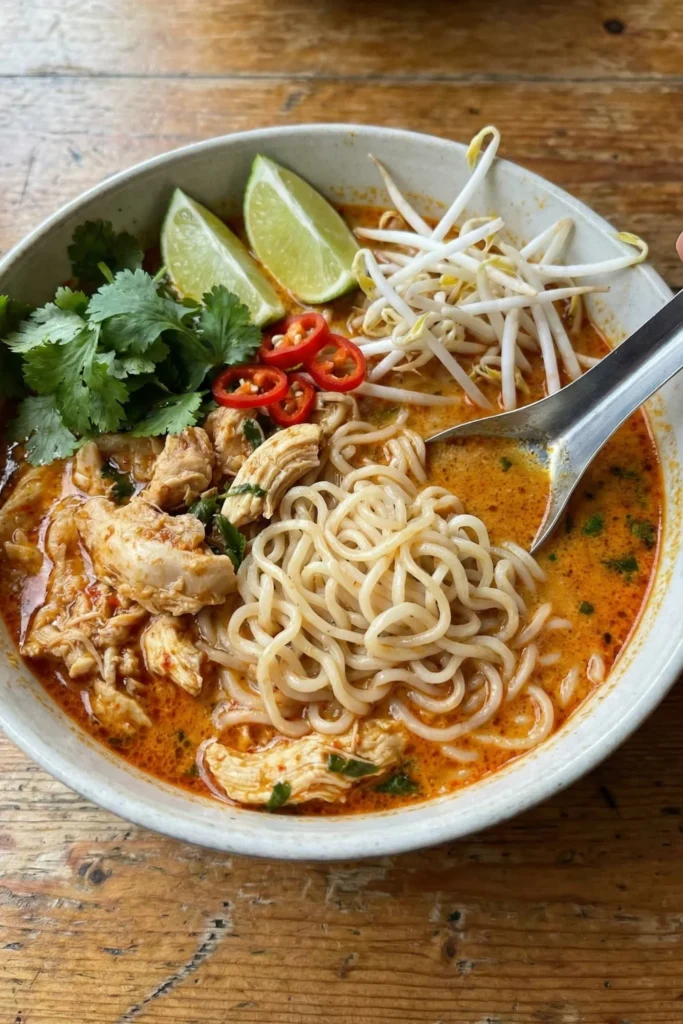
Texture is everything. Since the noodles are soft and the soup is creamy, you need something with a bite. I love adding a handful of fresh bean sprouts right at the end. They wilt slightly in the hot broth but keep that satisfying crunch.
If you want to feel fancy, sprinkle on some crispy shallots topping or fried garlic. You can buy these in jars (I always have a jar in my pantry for emergencies), and they add this savory, salty crunch that is honestly addicting. I have definitely eaten them straight out of the jar as a snack. Don’t judge me.
Acid and Heat Control
I always serve this with lime wedges on the side. Squeezing fresh lime juice right before you eat adds a sour punch that balances the sugar and fat. It’s the final piece of the flavor puzzle.
And for my fellow spice fiends, I put a little saucer of sliced bird’s eye chili or some chili oil on the table. That way, I can make my bowl scorching hot while my family keeps theirs mild. Everyone wins, and nobody is crying at the dinner table (unless it’s tears of joy).
Bulking It Up
Sometimes, if I’m really hungry, I’ll add a soft boiled egg soup style—you know, with that jammy yolk? It makes the meal feel even heartier. You can also toss in some bok choy or spinach during the last minute of cooking just to get some greens in. It makes me feel healthier about eating three bowls of noodles.
Storage and Reheating Tips for Leftovers
I am a huge believer that curry tastes better the next day. Seriously, something magical happens when those spices get to hang out in the fridge overnight. But, I have to be honest with you—my first experience with leftover soup was a total tragedy. I opened the container expecting that delicious Thai red curry noodle soup, and instead, I found a solid, gelatinous block of sadness. There was zero broth left. It was just a gloopy mess of swollen noodles that had sucked up every drop of liquid.
I stood there in my kitchen, staring at my lunch, actually feeling heartbreak. I tried to add water and reheat it, but the texture was just gone. It was mushy and gross. So, learn from my pain: storing this stuff requires a little bit of strategy if you want it to survive until tomorrow.
The Golden Noodle Rule
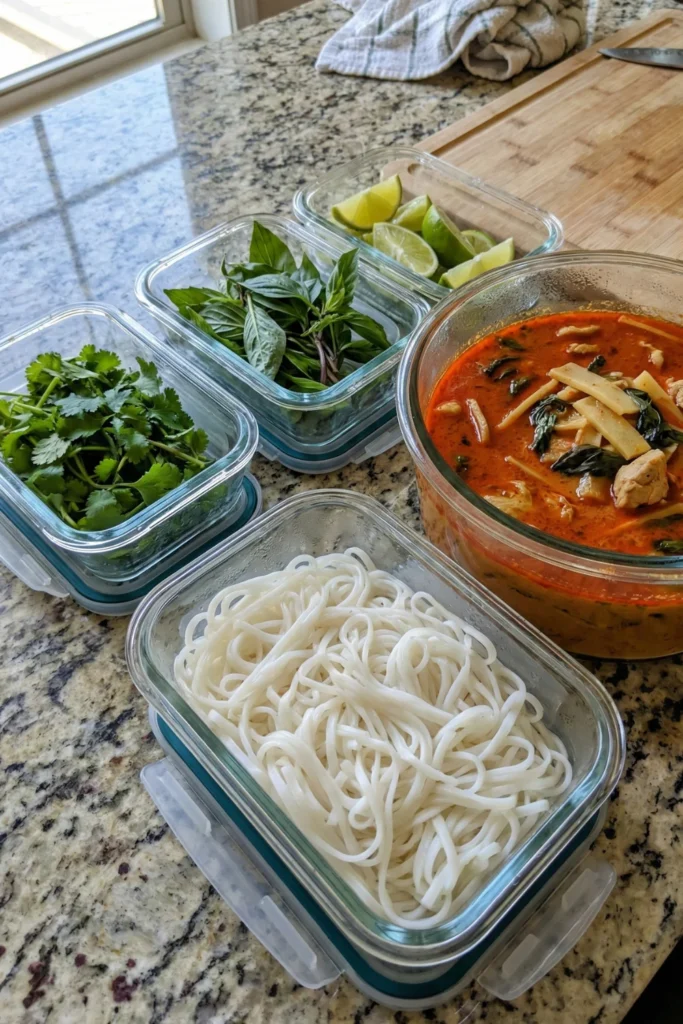
Here is the most important rule of the entire recipe: Keep ’em separated. Never, ever store the cooked rice noodles in the broth. Those noodles are thirsty little sponges. If you leave them in the pot or the Tupperware, they will keep drinking the coconut milk soup until they bloat up to three times their size and disintegrate.
When I’m cleaning up dinner, I store the leftover broth in one container and the plain noodles in a Ziploc bag or a separate bowl. It’s an extra dish to wash, but it saves your lunch. When you are ready to eat, you just combine them. Trust me, it’s worth the hassle.
How to Store Leftover Soup
If you keep the components separate, the broth stays good in the fridge for about 3 to 4 days. I actually use glass containers because plastic ones tend to get stained yellow by the turmeric and red chili oil. I have ruined way too many good Tupperware sets that way.
If you are into meal prep (which I try to be, but usually fail at), you can portion out the broth into individual jars. Just don’t forget to label them. I once mistook a jar of spicy curry for pumpkin soup, and that was a very confusing lunch.
Freezing Curry Broth
Can you freeze it? Yes, absolutely! Freezing curry broth is a total life hack for busy weeknights. I often make a double batch of the base just to freeze half. However, there is a catch. You can freeze the broth with the chicken or shrimp, but do not freeze the noodles or veggies like bean sprouts. They turn into mush when thawed.
Also, just a heads up: when you thaw coconut milk, the texture might look a little weird and separated at first. Don’t panic! It usually comes back together when you heat it up.
Reheating Coconut Curry
When it comes to reheating coconut curry, patience is your friend. I used to just blast it in the microwave on high, and the oil would separate and explode all over the microwave walls. A huge mess to clean up.
The best way is to pour the broth into a small pot and heat it on the stove over medium heat. You want it to simmer gently. If you boil it aggressively, the coconut milk can split and curdle. Once the broth is hot, drop your cold noodles in for just 30 seconds to warm them up. That’s it! You’ve got a bowl that tastes just as fresh as it did the night before.
Honestly, looking back at my journey with this Thai red curry noodle soup, I kind of laugh at how intimidated I used to be. I treated the Asian aisle at the grocery store like it was a foreign country where I didn’t speak the language. But once you get that first pot of simmering, spicy broth right, everything changes. You realize that creating authentic Thai flavors isn’t about magic or secret family bloodlines; it’s just about respecting the ingredients and following the process.
There is a serious sense of victory when you take that first slurp. It’s that moment when you realize, “Holy cow, I made this?” And it actually tastes better than takeout because you put your own heart (and maybe a little bit of sweat) into it. You didn’t just open a plastic container; you built those layers of flavor yourself. You broke the coconut cream, you balanced the fish sauce and sugar, and you created comfort in a bowl that beats anything you can get from a delivery driver.
Make It Your Own
Now that you have the basics down, I want you to play around with it. Cooking shouldn’t be rigid. If you hate shrimp, throw in some tofu or thinly sliced pork. If you want more veggies, load it up with bell peppers and bamboo shoots. This one-pot meal is super forgiving.
The biggest piece of advice I can leave you with is to trust your tongue. Recipes are just roadmaps, but you are the driver. If the soup tastes too salty, add a splash of lime. If it’s too rich, add a little broth. Don’t be afraid to tweak the flavor balance Thai food is famous for until it tastes perfect to you. That is how you go from just following instructions to actually cooking.
Share the Love
I really hope this guide helps you conquer your fear of curry paste and brings a little bit of spicy joy into your kitchen. It’s become a weekly staple in my house, and I have a feeling it might become one in yours too.
If you managed to make this homemade curry without burning the house down (and I know you can!), I would love to see it. And hey, if you found this recipe helpful, please do me a huge favor and share it on Pinterest. It helps other home cooks find us and saves the recipe so you don’t lose it next time that craving hits. Now, go grab a spoon and dig in!