Did you know that nearly 70% of home cooks say brunch is their favorite meal to host, yet most of us worry about serving soggy eggs? I’ve been there—standing in my kitchen with a pan of watery vegetables and a sad, flat omelet-thing. But honestly, once I figured out this specific spring vegetable frittata recipe, my Sunday mornings changed forever! It is all about the “spring” in your step and the “green” in your pan. In this guide, we are going to dive into the best seasonal produce and the tricks to getting that perfect, airy lift every single time.
Selecting the Best Seasonal Greens for Your Skillet
Spring is finally here, and honestly, walking into the produce section feels like a breath of fresh air after a long winter of eating frozen corn and heavy potatoes. If you want your spring vegetable frittata recipe to taste like it came from a fancy café, you have to start with the best greens you can find. I used to just grab whatever was on sale, but my students always reminded me that “trash in equals trash out.” Now, I take my time looking at what is actually in season. The colors are brighter, the snap is louder, and the flavor is just way better. It is the difference between a boring meal and one your family asks for every single weekend. Choosing the right greens is the first step to making something great.
Asparagus: The Star of the Show
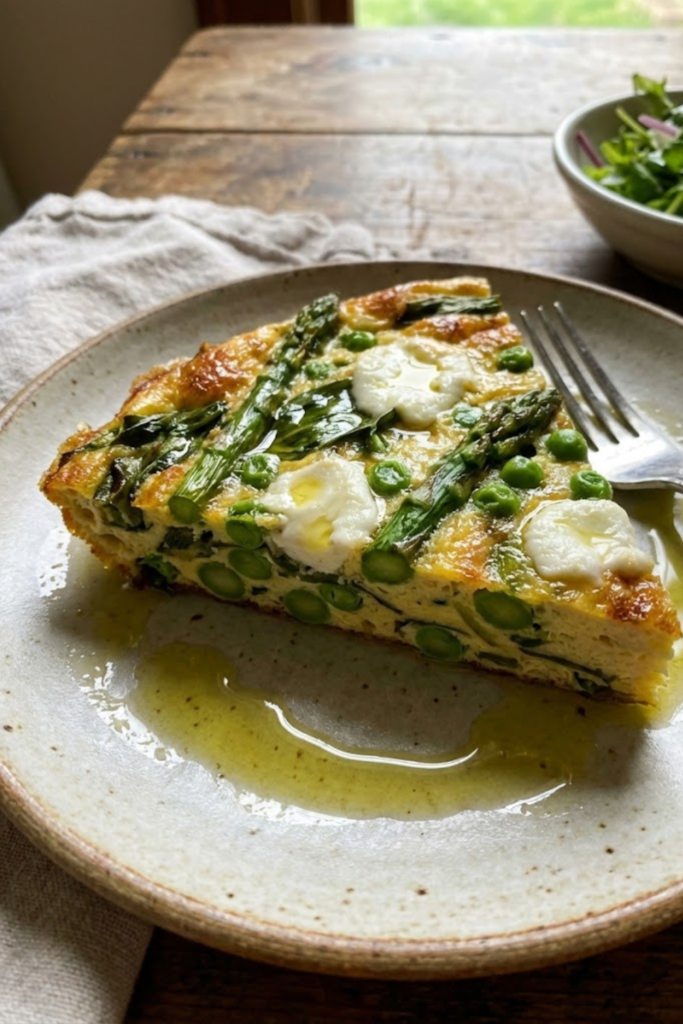
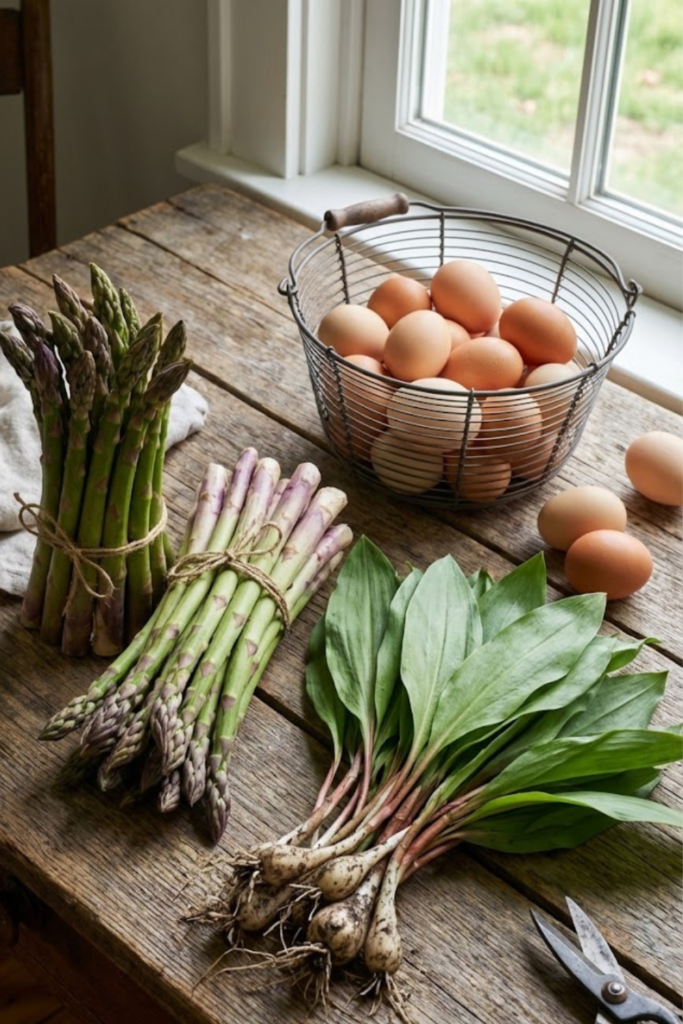
When I am looking for asparagus for my frittata, I look for the thin ones. I know, some people like the thick stalks for grilling, but in a skillet, those thin ones cook way faster and stay tender. You do not want to bite into a tough, woody piece of fiber while you are trying to eat soft eggs! Here is a trick I tell everyone: grab a stalk and try to bend it near the bottom. It should snap right off where the tough part ends. If it just bends like a rubber band, put it back because it is probably old and will taste like cardboard. I always try to buy two bunches because I end up snacking on half of them while I am prepping the rest of the meal.
Don’t Sleep on Ramps and Baby Peas
If you are lucky enough to find ramps at your local market, grab them immediately. They are like a mix between garlic and onions but way more delicate. They add a special kick to a spring vegetable frittata recipe that regular onions just cannot touch. And please, use fresh peas if you can find them. Shucking them is a bit of a pain, I get it, but the sweet pop they give is worth the ten minutes of work. Frozen peas are okay, but they sometimes make the eggs watery, and nobody wants a soggy breakfast. I like to let my kids help shuck the peas; it keeps them busy and teaches them where food comes from.
Getting Your Greens Ready
Before you throw everything in the pan, make sure they are dry. I learned this the hard way when I ended up with a gray, soupy mess instead of a golden frittata. I wash my spinach and asparagus in cold water, then I lay them out on a clean kitchen towel and pat them dry like I am drying off a wet puppy. Getting that extra water off helps the veggies brown up instead of steaming. This makes the final dish look way more professional and keeps the egg texture exactly where you want it. Just remember to chop everything into bite-sized pieces so you get a little bit of every vegetable in every single forkful. It makes the whole eating experience much better when you don’t have to struggle with giant pieces of kale or long asparagus spears.
The Secret Ratio for a Fluffy Frittata Every Time
Listen, I’ve been teaching folks how to cook for a long time, and if there’s one thing I’ve seen people mess up, it’s the “fluff factor.” You want a spring vegetable frittata recipe that feels like biting into a cloud, not a piece of yellow floor tile. I remember back when I first started out, I thought I’d be smart and skip the dairy to save some calories. That was a huge mistake! My frittata came out so dry and rubbery that my dog wouldn’t even look at it, and he eats literally everything. It’s funny how one little missing ingredient can ruin a whole morning. But once you get the ratio down, you’ll never go back to those flat, sad eggs again.
Finding the Magic Numbers
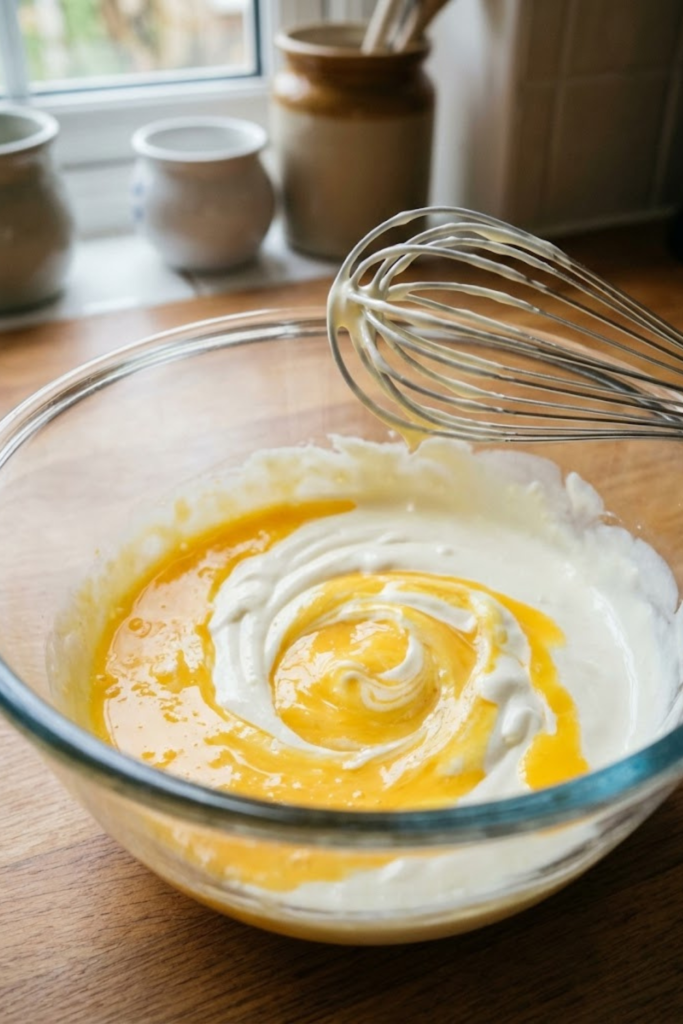
The real secret I learned after years of burnt pans and sad breakfasts is the 12-to-half rule. For every 12 large eggs you use, you need exactly a half-cup of full-fat dairy. I usually grab the heavy cream because it makes things rich, but whole milk works in a pinch if you’re out of the good stuff. Don’t try to use skim milk; it’s basically just white water and it won’t give you that lift you’re looking for. If you are making a smaller one with just 6 eggs, just cut that dairy in half to a quarter cup. It’s pretty simple math, even for a Saturday morning before you’ve had your coffee. Getting this part right makes sure your eggs stay creamy and don’t turn into a rubber sponge.
Whisk Like You Mean It
When you start mixing your spring vegetable frittata recipe, don’t just lazily stir the eggs with a fork. You gotta get some air in there! I use a big balloon whisk and go at it until the top is all frothy and covered in bubbles. This creates little air pockets that expand in the oven, which is how you get that height. Sometimes I get a bit of a workout doing it, but hey, it means I can have an extra slice later without feeling guilty. It is surprising how much a little bit of elbow grease makes such a big difference in how the food turns out. If your arm isn’t a little tired, you probably didn’t whisk long enough.
Adding the Good Stuff
Now, once your eggs are frothy, that’s when you drop in your cheese and herbs. I’m a sucker for goat cheese because it gets all melty and tangy in the heat. My cousin once tried to put American cheese slices in hers, and we still don’t talk about that “incident” at family dinners. Just crumble your cheese right into the bowl before you pour everything into the hot skillet. If you want your spring vegetable frittata recipe to really shine, add a tiny pinch of nutmeg. It sounds weird, I know, but it brings out the flavor of the eggs in a way that’s totally awesome. Just a tiny bit though—don’t go overboard or it’ll taste like a holiday dessert instead of breakfast!
Mastering the Sauté: No More Soggy Veggies
One of the biggest mistakes people make when trying a spring vegetable frittata recipe for the first time is being way too impatient. I get it, you’re hungry on a Saturday morning and you want breakfast on the table now. But if you just throw raw, cold vegetables into a pan with your eggs, you are going to end up with a watery mess. Trust me, I have been there. I once served my neighbors a frittata that was basically an egg soup because I didn’t cook the moisture out of the zucchini first. It was so embarrassing! You have to give those veggies some time in the pan all by themselves before the eggs join the party. This helps the flavors get concentrated and keeps the eggs firm instead of soggy.
The Pre-Cook is Non-Negotiable
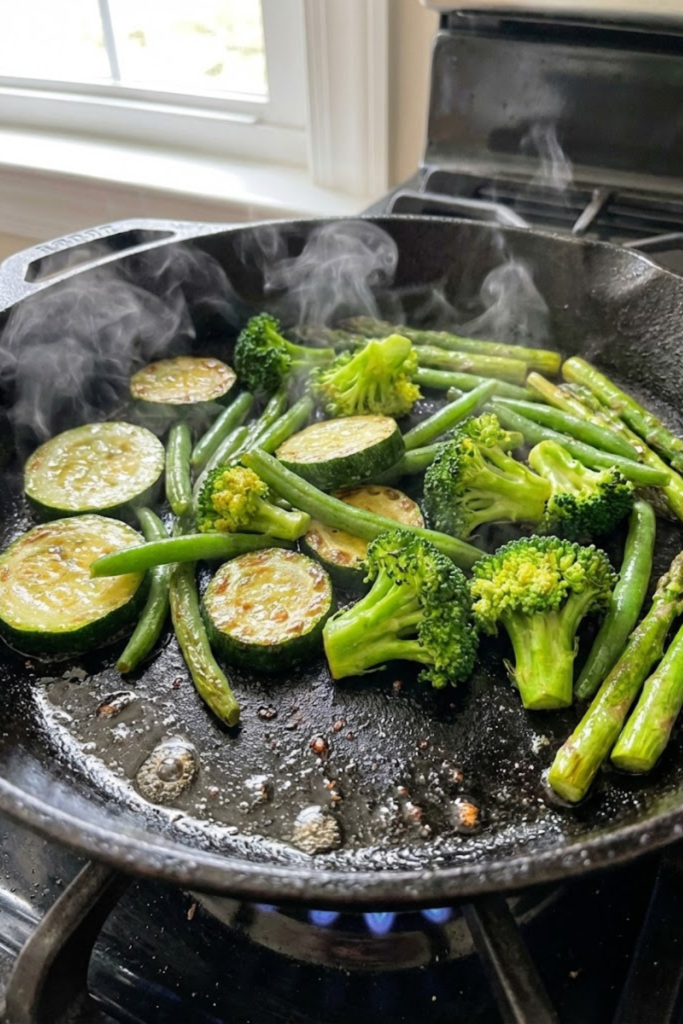
If you are using things like spinach, mushrooms, or zucchini, you have to remember they are basically just little water balloons. When they heat up, they pop and leak all that liquid right into your eggs. To fix this, I always sauté my vegetables in a bit of olive oil or butter first. You want to see the steam leaving the pan—that is the water leaving so it doesn’t ruin your breakfast. I usually cook them until they are just getting soft and maybe a little bit brown on the edges. If you see liquid pooling in the bottom of your skillet, just keep cooking it or even tip the pan and drain it out. It might take an extra five minutes, but it makes the difference between a good meal and a great one.
Why I Only Use Cast Iron
Now, let’s talk about the pan. If you have a cast-iron skillet, please use it. It holds onto heat much better than those thin aluminum pans you buy at the big box stores. When you pour the cold egg mixture into a hot cast-iron pan, it starts cooking the bottom immediately. This creates a really nice crust that holds everything together. Plus, you can put the whole thing right into the oven without worrying about the handle melting or the pan warping. I’ve had my favorite skillet for over fifteen years, and it just gets better every time I use it. If you don’t have one, any heavy oven-safe pan will work, but you won’t get that same golden-brown finish that makes everyone at the table go “wow.”
Layering Your Flavors with Salt
The last thing I want to mention is how you season the dish. Don’t wait until the very end to add your salt! I salt my vegetables while they are sautéing in the pan. This helps pull the extra moisture out and makes sure every bite of your spring vegetable frittata recipe tastes seasoned from the inside out. If you only salt the top at the end, the middle is going to be bland and boring. I also like to add a little bit of chopped garlic or red pepper flakes right at the end of the sauté so they don’t burn. It smells so good in the kitchen when that garlic hits the hot oil. Just be careful not to over-salt, because if you’re adding a salty cheese like feta later, you don’t want to make it hard to eat. Focus on building the flavor slowly.
Creative Variations and Serving Suggestions
Once you have the basics down for your spring vegetable frittata recipe, you can start having some real fun. I always tell my students that a recipe is just a map, but you are the driver of the car. You don’t have to follow every single turn exactly to get where you are going. Sometimes I open my fridge and realize I forgot to buy the goat cheese I wanted, so I just grab some old cheddar or a bit of feta from the back. It usually turns out just fine! Part of being a good cook is learning how to use what you have on hand without stressing out. I remember one time I added some leftover roasted potatoes from the night before, and it was actually one of the best versions I ever made. Don’t be afraid to experiment with your food. Even if it doesn’t look perfect, it will still taste great.
Mixing Up Your Cheeses and Herbs
Cheese is where you can really change the vibe of the whole dish. If you want something sharp and salty, go for feta. If you want it to feel fancy, try some Gruyère or even a little bit of Brie if you’re feeling wild. I personally love using fresh dill and chives in my spring vegetable frittata recipe because they just scream “springtime” to me. If you don’t have fresh herbs, you can use dried ones, but just remember that dried herbs are way stronger than fresh ones. You only need about a third of the amount. I learned that the hard way when I put a whole tablespoon of dried oregano in a dish once. It tasted like a pizza factory! Not exactly the light spring flavor I was going for, but we ate it anyway.
What to Serve on the Side
Even though a frittata is a full meal by itself, I like to put a little something extra on the table to make it feel like a real brunch. A simple arugula salad with some lemon juice and olive oil is perfect. The bitterness of the greens cuts through the richness of the eggs. If you are really hungry, get some crusty sourdough bread and toast it with plenty of butter. My husband likes to put a slice of the frittata right on top of the toast like a weird sandwich. It looks messy, but he says it is the best way to eat it. You could also serve some fresh fruit like sliced strawberries or melon to keep everything feeling light and fresh.
Leftovers and Reheating Tips
The great thing about this meal is that it stays good in the fridge for a few days. I often make a big one on Sunday and then eat slices for breakfast during the week when I am rushing to get to work. Just wrap the pieces in some foil or put them in a plastic container. When you want to reheat it, don’t use the microwave if you can help it. Microwaves make eggs get all rubbery and tough. Instead, pop a slice into a toaster oven for a few minutes. This keeps the edges a little bit crispy while the middle stays soft. If you are in a huge rush, the microwave is okay for 30 seconds, but the texture won’t be quite as good.
Bringing the Taste of Spring to Your Table
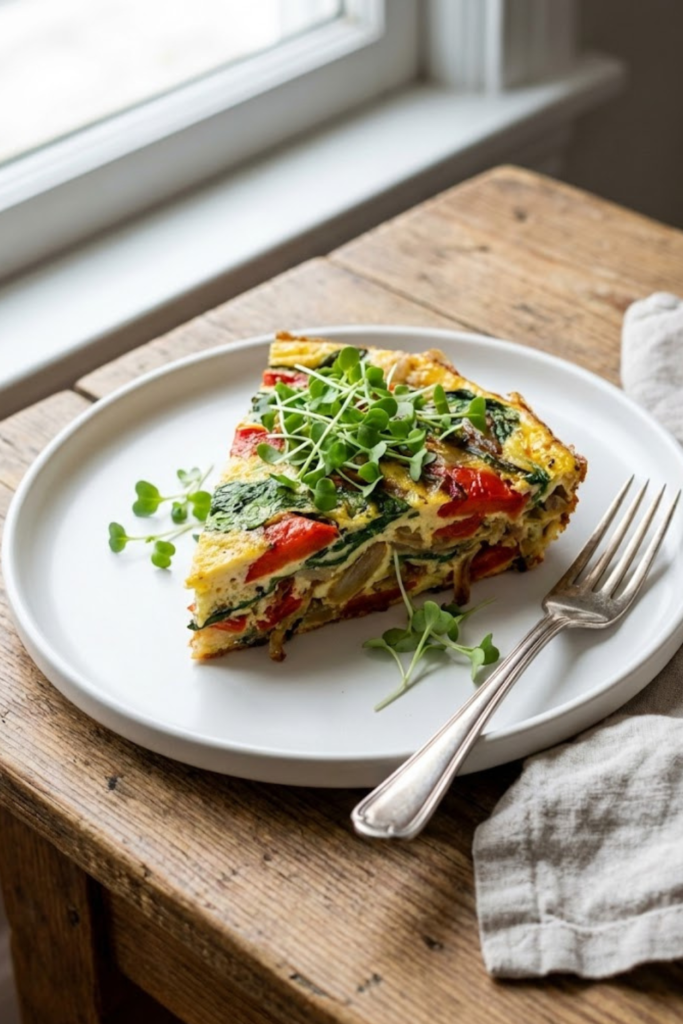
I really hope this guide helps you feel more confident about making a spring vegetable frittata recipe in your own kitchen. Honestly, I used to be so scared of cooking eggs for other people. I thought I would mess it up and everyone would just sit there politely eating dry, overcooked eggs. But after I learned these tricks, like the 12-to-half ratio and the importance of a good cast-iron pan, I actually look forward to hosting brunch! It is such a good feeling when you put a beautiful, golden-brown dish on the table and your friends start reaching for their phones to take pictures. It makes all that chopping and sautéing feel totally worth it. Plus, you get to eat something that tastes like a garden in every bite.
Why You Should Try This Today
There is something about spring that just makes me want to start fresh. Maybe it is the way the sun finally starts hitting the kitchen floor in the morning or how the birds won’t stop chirping outside. Whatever it is, a spring vegetable frittata recipe is the perfect way to celebrate. It is healthy, it is cheap compared to going out to a restaurant, and it uses up all those little bits of vegetables you have in the fridge. I always feel like a bit of a kitchen hero when I can turn a few random stalks of asparagus and a carton of eggs into a meal that looks like it belongs in a magazine. If you are sitting on the fence, just go for it. Even if your first one isn’t perfect, I bet it will still taste better than a bowl of cold cereal.
Final Tips for Success
Just remember to take your time with the vegetables. Don’t rush the sauté! That is the biggest lesson I can give you. If you get the water out of the greens, your eggs will stay fluffy and light. Also, don’t forget to season as you go. Salt and pepper are your best friends here. I usually keep a little bowl of kosher salt right next to the stove so I can grab a pinch whenever I need it. It’s the little things that make a big difference in how the food ends up. If you keep these tips in mind, you are going to do great. Cooking should be fun, not a big stress, so just relax and enjoy the process.
If you found these tips helpful and you’re ready to get cooking, please save this post and share it on Pinterest! It helps more people find my recipes, and I’d love to see photos of your beautiful frittatas.