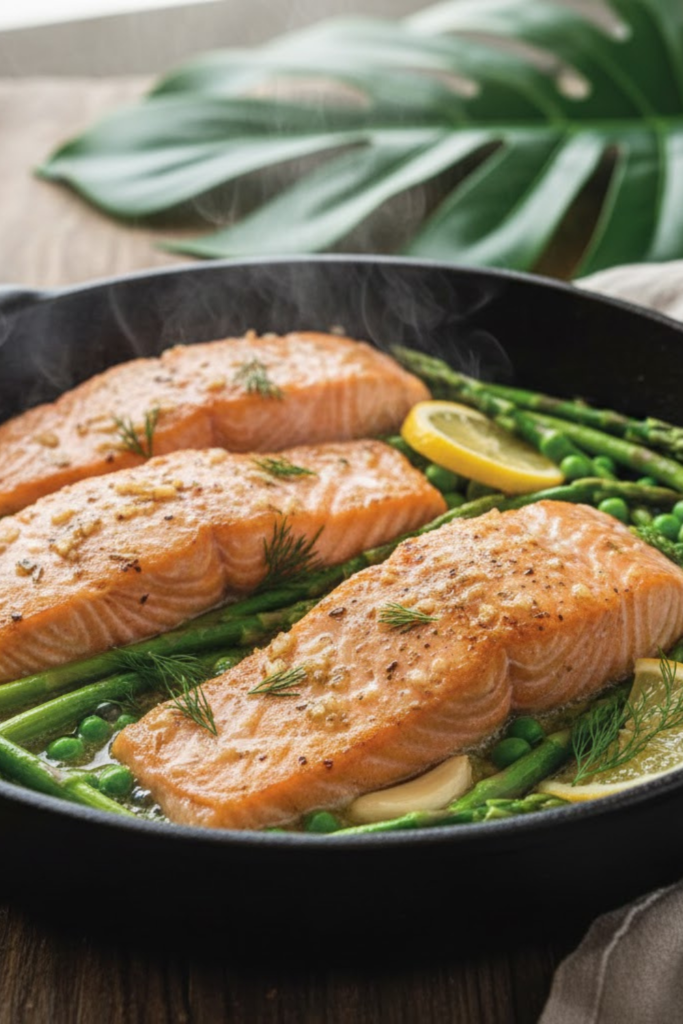
Ever stare at the fridge at 6 PM, wishing a healthy dinner would just magically appear? I remember the first time I made this; I was skeptical that something so fast could taste this good, but this spring skillet salmon recipe completely changed my mind. It isn’t just another fish dish, it is a celebration of the season where we combine crisp seasonal veggies like asparagus and peas with buttery, flaky fish all in one pan. By the end of this post, you’ll master a meal that’s perfect for busy weeknights yet elegant enough for a dinner party, so let’s get cooking!
Why This One-Pan Salmon Dinner Will Be Your New Favorite
I have to be honest with you—I absolutely hate doing dishes. There was a time a few years ago when I made this elaborate fish dinner that used three different pots and a baking sheet. The food was good, but by the time I finished cleaning up, I was exhausted and grumpy. That is exactly why I fell in love with this spring skillet salmon recipe.
It literally saves my sanity on Tuesday nights. You just need one good pan, and you are done.
The Magic of Less Mess
When I say “one pan,” I really mean it. You sear the fish and cook the veggies in the same skillet. This means you aren’t running around the kitchen like a headless chicken trying to time everything perfectly.
I remember the first time I tried to cook salmon and asparagus separately. I burned the vegetables while waiting for the fish to finish. It was a disaster.
With this method, the flavors mingle together beautifully. The juices from the salmon help season the vegetables, and everything finishes at the same time. Plus, wiping down one cast iron skillet takes about two minutes. Who doesn’t love that?
It’s Actually Good For You
We all know we should be eating more fish, right? My doctor is always telling me to get more omega-3s in my diet. But honestly, sometimes healthy food tastes like cardboard.
That’s where this dish surprises you.
It feels indulgent because of the butter and garlic, but it’s packed with nutrition. You get high-quality protein from the salmon and a ton of fiber from the spring greens. It’s light enough that you don’t feel weighed down, but filling enough to keep you satisfied until breakfast.
Tastes Like Spring
There is a huge difference between frozen veggies and fresh ones. I used to think I hated peas until I tried fresh ones in a spring skillet salmon recipe. They pop in your mouth and are actually sweet!
Using seasonal produce like asparagus and radishes adds a crunch you just can’t get from a bag in the freezer.
If you are trying to impress someone without working too hard, this is the ticket. It looks fancy on the plate, full of bright greens and pink fish. I served this to my in-laws last month, and they thought I spent hours cooking. I didn’t have the heart to tell them it only took 20 minutes.
A Note on Pans
One quick tip I learned the hard way: use a big pan. I tried squeezing four fillets into a 10-inch skillet once, and it was a mistake. The fish steamed instead of searing because it was too crowded.
Use a 12-inch skillet if you can. It gives the salmon room to breathe and get that crispy skin we all want. Trust me, nobody likes soggy fish skin.
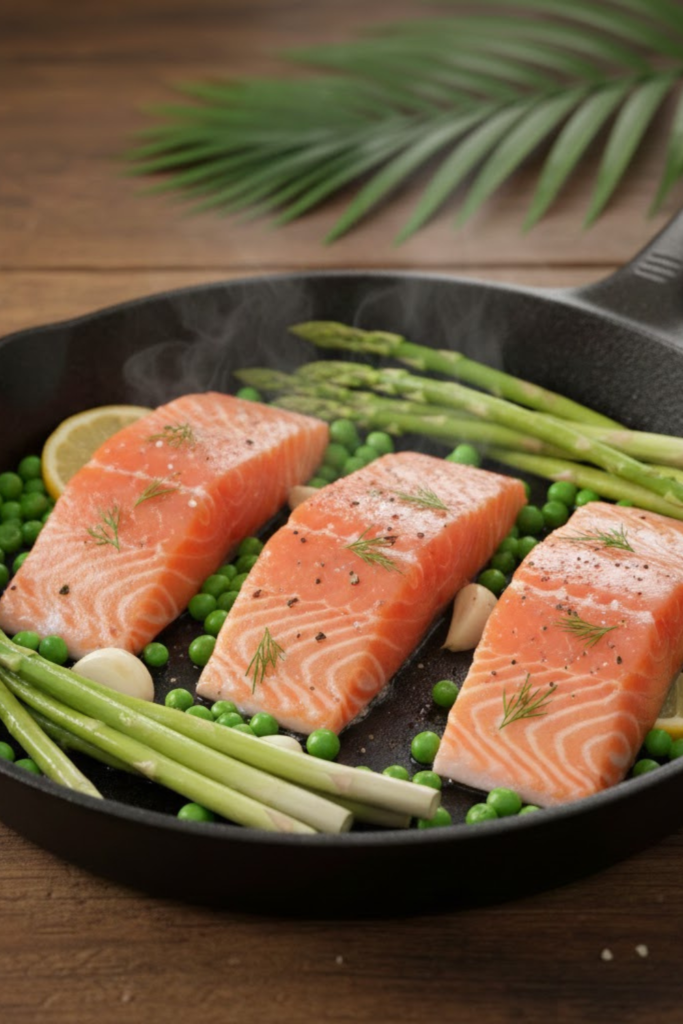
Essential Ingredients for the Perfect Spring Skillet
You can’t build a solid house without good bricks, right? The same rule applies to cooking. Since this recipe has so few ingredients, the ones you use really matter. I’ve made this with lackluster produce before, and it was just… okay. But when you get the good stuff? It sings.
Here is what you need to grab at the store.
The Salmon
This is the main event. I used to be terrified of buying fish. I’d stand at the counter staring at the fillets, having no idea what to pick.
Here is my advice: Get skin-on fillets.
I know, skin can be intimidating if you aren’t used to it. But the skin acts like a little heat shield. It protects the delicate meat from drying out while it sears in the hot pan. Plus, when it gets crispy? It’s the best part.
- Wild vs. Farmed: People argue about this all the time. Wild-caught usually has a deeper red color and stronger flavor. I try to buy it when it’s on sale. But let’s be real, it can get expensive. If farmed Atlantic salmon fits your budget better, buy that. It’s fattier and more forgiving if you accidentally overcook it a little.
The Veggies
This is where the “spring” part comes in. You want vegetables that are tender and cook fast.
- Asparagus: Look for stalks that aren’t too thick or too thin—something right in the middle is perfect. You have to snap the woody ends off. Just bend the stalk near the bottom; it will naturally break where it starts getting tough. It’s kind of satisfying to do.
- Snap Peas: These add a nice crunch. I used to hate peas as a kid, but these are sweet.
- Radishes: Okay, stay with me here. I know eating cooked radishes sounds weird. I thought so too until I tried it. When you sauté them, they lose that spicy, peppery bite and turn sweet and mild. They look like little jewels in the pan.
The Sauce (The Flavor Bomb)
We aren’t making a complex French sauce here. It’s just butter, garlic, and lemon.
- Garlic: Please, I am begging you, chop fresh garlic. I used to use the stuff in the jar to save time, but it just tastes sour. Fresh garlic makes a huge difference.
- Butter: Use salted butter. It just tastes better.
- Fresh Herbs: I love using fresh dill or parsley. Dried herbs are okay in a pinch, but fresh ones make the dish smell amazing. I usually grab a handful from my little garden box, but a store-bought bunch works great.
Don’t overthink it. Just get fresh stuff, and the pan will do the rest of the work.
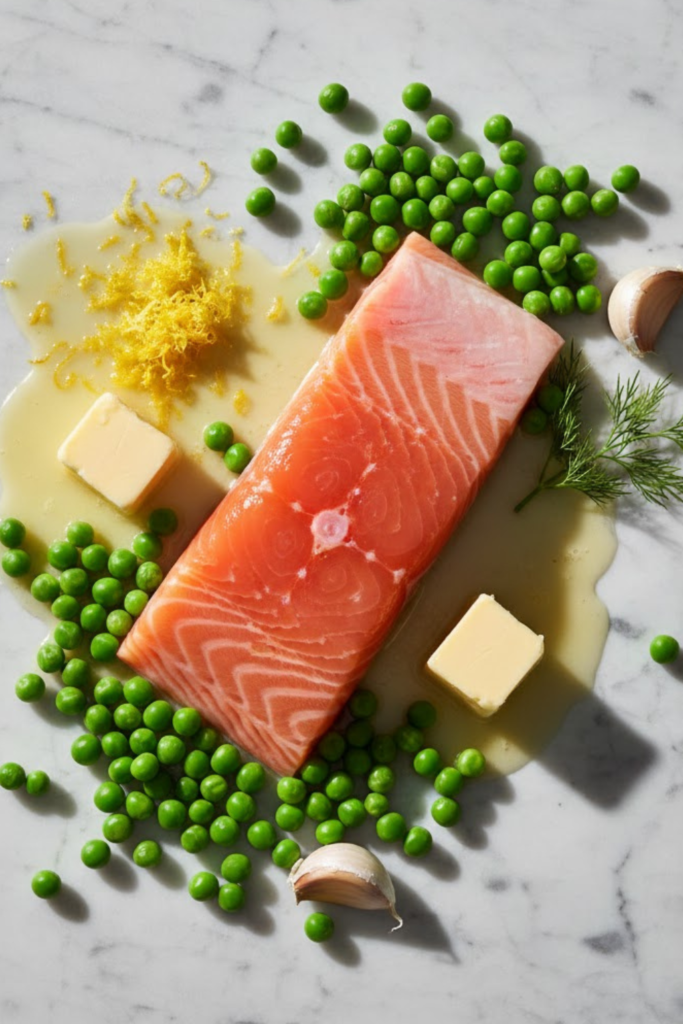
Step-by-Step: How to Cook Salmon in a Skillet Without Sticking
I used to lose half my salmon to the bottom of the pan. It was so frustrating to flip a piece of fish and see the beautiful crust stay stuck to the skillet while I was left with a mangled mess. Over the years, I learned that a few simple tricks make all the difference.
Follow these steps, and you will look like a pro.
1. The Prep Is Key
First off, take your salmon out of the fridge about 15 minutes before you start. If you throw ice-cold fish into a hot pan, it seizes up and cooks unevenly.
Now, grab a paper towel. You need to pat that fish dry. I mean really dry. If the surface is wet, it won’t get crispy. It will just steam and get soggy. I learned this the hard way after serving some very sad, gray fish to my family. Once it’s dry, season it generously with salt and pepper. Don’t be shy with the salt.
2. The Sear (Don’t Touch It!)
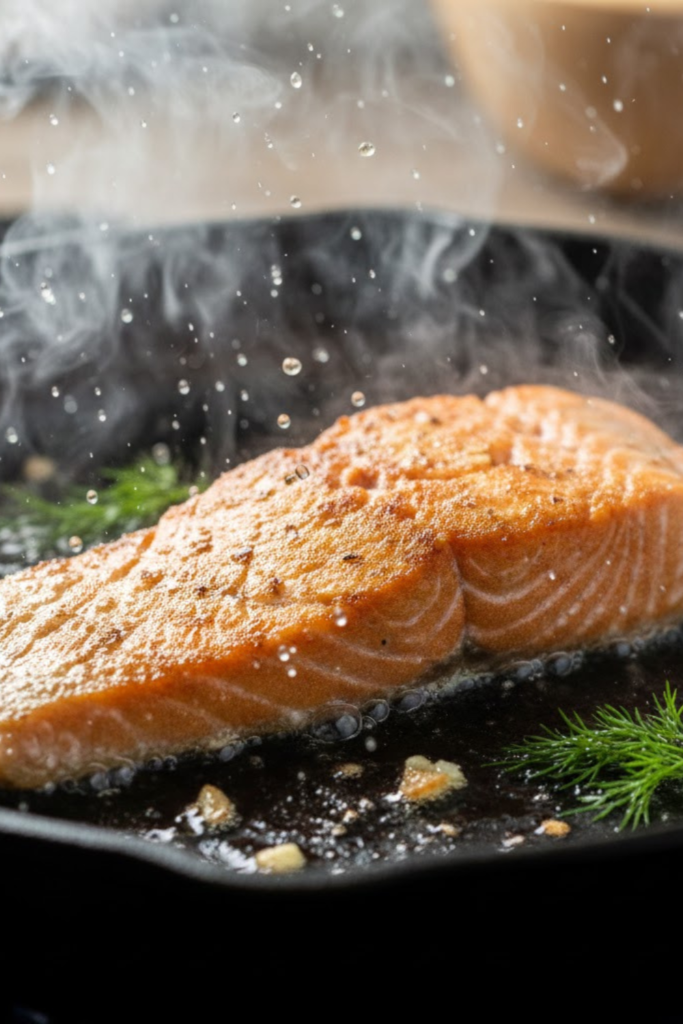
Get your skillet nice and hot over medium-high heat. Add your oil—I like avocado oil because it handles heat well, but olive oil is fine too. Wait until the oil shimmers or starts to smoke just a tiny bit.
Place the salmon in the pan, skin-side down. You should hear a loud sizzle immediately. If you don’t hear it, the pan isn’t hot enough. Take it out and wait.
Here is the hardest part: Do not touch it.
Seriously, put the spatula down. Walk away if you have to. If you try to move the fish too soon, the skin will stick to the metal and rip right off. The fish will naturally release from the pan when the skin is crisp. Give it about 4 or 5 minutes.
3. The Flip and Finish
Watch the side of the fillet. You will see the color change from translucent pink to opaque white as it cooks from the bottom up. When that color change reaches about halfway up the fillet, it is time to flip.
Gently flip it over. Now, turn the heat down a little. This is when I toss in the butter, garlic, and the veggies (asparagus and peas). The fish is almost done, and the vegetables only need a few minutes to get tender.
While the veggies cook, I like to tilt the pan and spoon that garlic butter over the salmon. It makes it incredibly juicy. After about 3 more minutes, everything should be done perfectly at the same time.
Serve it hot right out of the skillet!
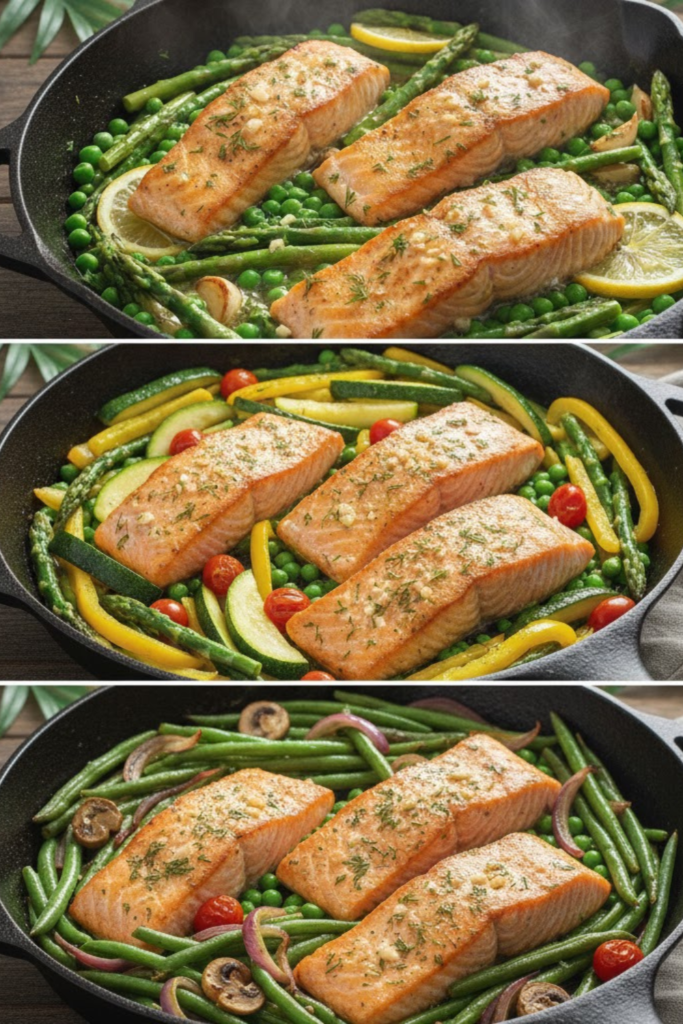
Customizing Your Spring Skillet: Variations and Substitutions
I am a planner, usually. But sometimes I get to the store and they are totally out of asparagus. Or maybe I just forgot to check the fridge before I left the house. It happens to the best of us.
The good news is that this spring skillet salmon recipe is super flexible. You don’t have to follow it exactly to get a good dinner on the table.
Switching Up the Protein
If you can’t find good salmon, or if the price is just too high this week, don’t worry.
- Steelhead Trout: This is my favorite swap. It looks almost exactly like salmon—pink and flaky—but it tastes a little milder. My kids actually prefer it because it’s not as “fishy.” It cooks just like salmon, so you don’t even have to change the timing.
- Shrimp: I’ve made this with big shrimp too. They cook way faster, though. You only need to sear them for maybe 2 minutes on each side. If you use shrimp, throw the veggies in a bit earlier so they are done when the shrimp is.
Vegetable Swaps
Spring veggies are the best, but use what you have.
- Green Beans: These are a classic. Just trim off the ends. They take a little longer to get tender than asparagus, so maybe give them an extra minute in the pan.
- Zucchini: I have a love-hate relationship with zucchini because it can get mushy. If you use it, cut it into thick chunks or “coins” so it holds its shape.
- Spinach: If you want some leafy greens, grab a big handful of spinach. Don’t cook it the whole time, though. Toss it in right at the very end. It wilts in like 30 seconds.
Dairy-Free Options
I love butter. It makes the sauce rich and glossy. But I know a lot of people can’t eat dairy.
If that’s you, just swap the butter for more olive oil or even ghee (clarified butter). Ghee has a nutty flavor that is really good with the lemon. I have a friend who uses coconut oil, and while it gives it a slight tropical taste, she swears by it.
The point is, don’t stress if you are missing one ingredient. Cooking isn’t a science test; you can mess around with it and it will still taste good.
Serving Suggestions to Complete the Meal
You could just eat this salmon straight out of the pan. I have definitely done that before! But if you want a full dinner that actually fills up the family, you need something on the side.
The sauce is the best part, so you want something to soak it up.
What to Serve With It
My favorite thing is rice. Jasmine rice works great because it gets fluffy and absorbs that garlic butter sauce like a sponge. I just put it in the rice cooker before I start chopping vegetables. By the time the fish is done, the rice is ready too.
If I have a little more time, I might roast some baby potatoes. The little red ones are the best. Just cut them in half, toss them with a little oil and salt, and bake them. But remember, they take about 30 minutes, so put them in the oven before you start the fish. Otherwise, you’ll be waiting around hungry.
A Little something to Drink
If you like having a glass of wine with dinner, a white wine is what you want here. I am not a wine expert by any means, but I usually grab a Sauvignon Blanc. It tastes crisp and cold, which goes perfectly with the lemon. It cuts through the rich butter so your mouth doesn’t feel greasy.
Top It Off
For the final touch, I always put out extra lemon slices on the table. My family loves squeezing fresh juice over everything right before they eat. It makes the flavors pop.
Sometimes, if I’m feeling fancy, I sprinkle on some toasted almonds too. It adds a nice crunch that surprises people.
Just keep it simple. The salmon is good enough on its own, so you don’t need to go crazy with complicated sides.
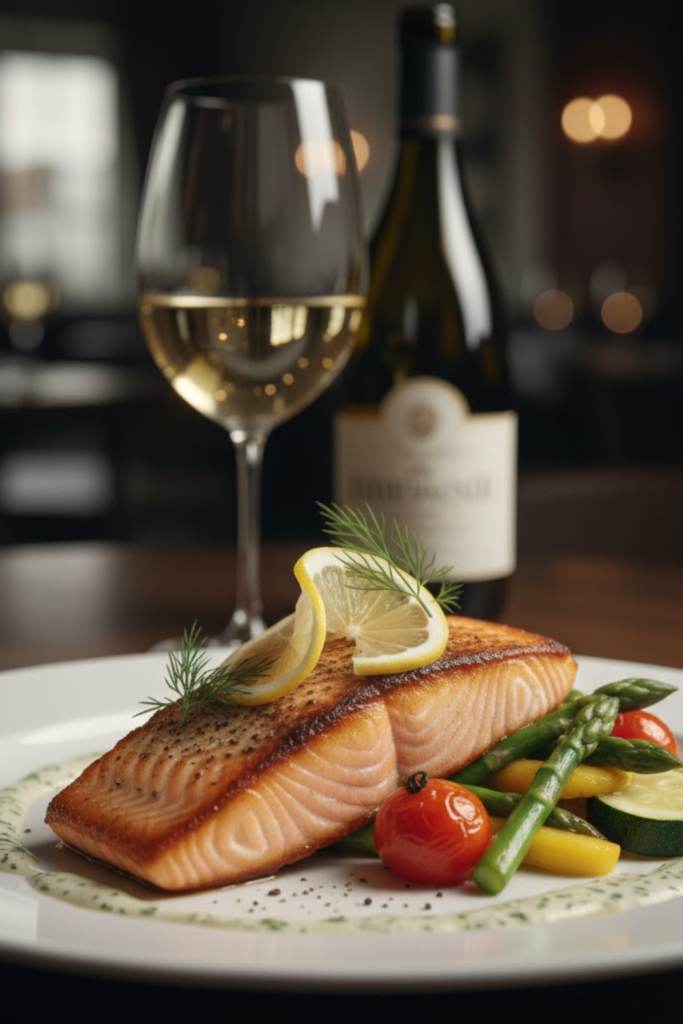
Honestly, I hope you give this a shot. It’s one of those meals that looks like you tried really hard, but you barely lifted a finger.
The spring skillet salmon recipe has saved me on so many busy nights when I just wanted to order pizza. But instead of feeling greasy and tired, I felt great after eating this. The mix of the crispy fish, the tender asparagus, and that bright lemon garlic butter is just unbeatable.
You don’t need to be a master chef to pull this off. Just heat up the pan, watch the timer, and don’t touch the fish until it’s ready. Simple as that.
If you make this, let me know how it goes! I love hearing if you swapped the veggies or added extra garlic (because you can never have too much garlic, right?).
Did this recipe save your weeknight dinner? Pin it to your Healthy Dinners board on Pinterest so you can find it easily next time you’re standing in front of the fridge wondering what to cook!