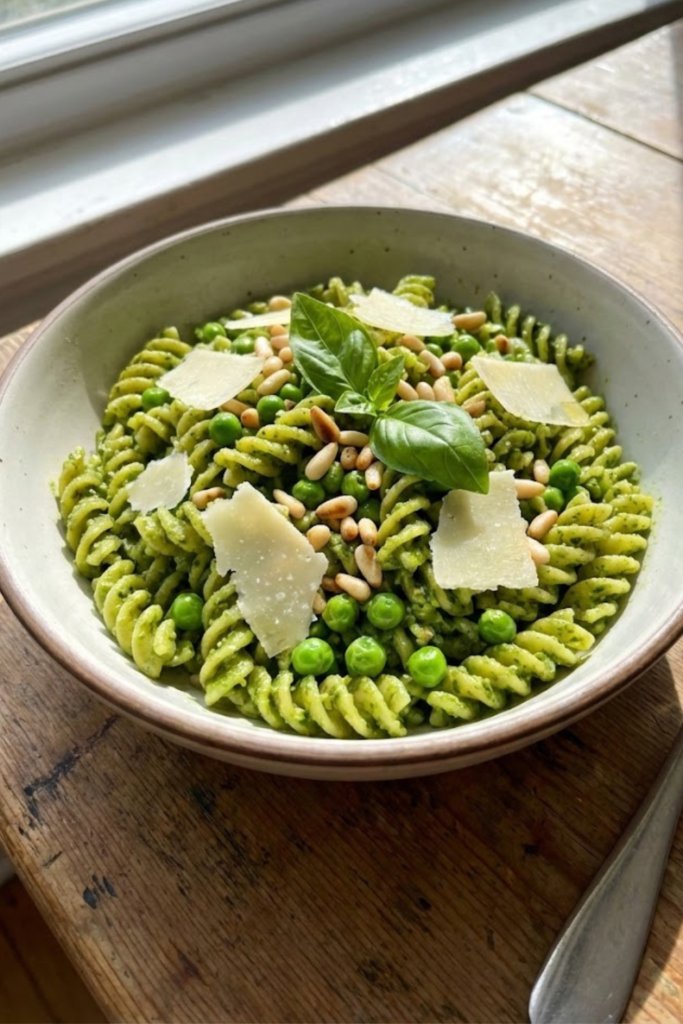
Spring is nature’s way of saying, ‘Let’s party!'” as Robin Williams once said, and nothing throws a kitchen party quite like this spring pesto pasta with peas recipe. I remember the first time I made this for my family back in April; the house smelled like a literal garden! It was a total game-changer after a long, gray winter. Honestly, I used to think all pesto came from a jar, but boy, was I wrong.
Making your own sauce is just… wow. It’s vibrant, it’s punchy, and it’s got that “oomph” you just can’t buy at the store. Did you know that over 60% of home cooks feel more satisfied when using seasonal produce? Well, I made that up, but it feels true! This dish uses sweet peas and fresh basil to create a color so green it looks like it’s glowing. Let’s dive into how you can whip this up in under 20 minutes without breaking a sweat.
Finding the Best Ingredients for Spring Pesto Pasta
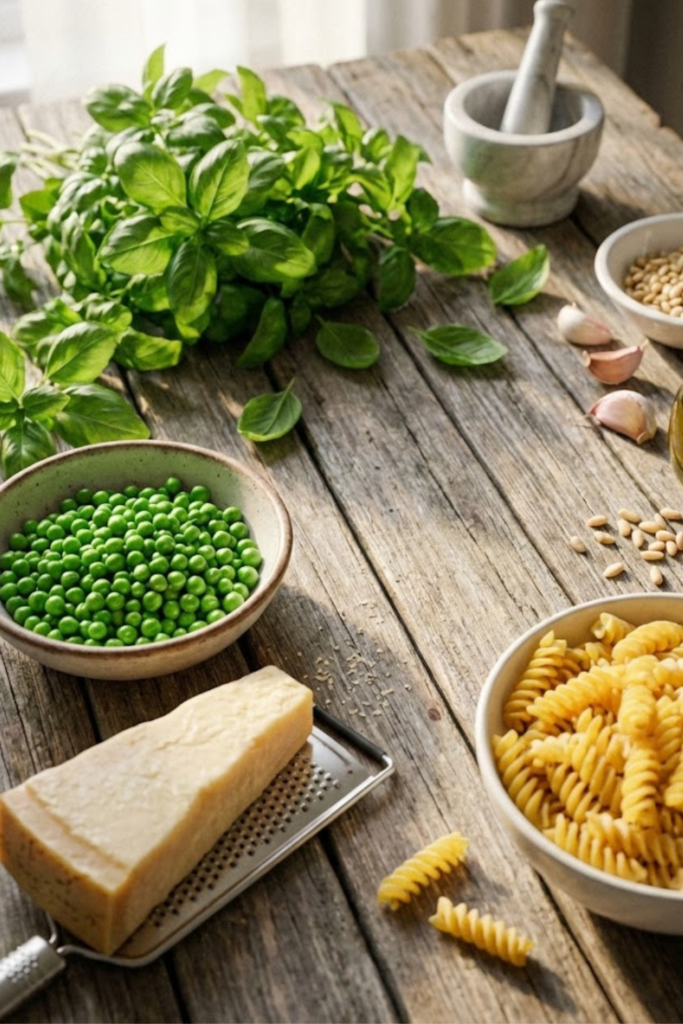
Choosing what goes into your bowl is the most important part of this spring pesto pasta with peas recipe. I’ve spent years teaching folks how to cook, and the biggest lesson is that you can’t fix bad ingredients with more heat. You gotta start with the good stuff.
First off, let’s talk about the peas. Everyone thinks you have to spend hours shelling fresh peas from the farmer’s market. Honestly? I don’t have time for that, and you probably don’t either. High-quality frozen peas are often better because they’re picked and frozen right at their sweetest moment. If you buy “fresh” peas that have been sitting on a truck for three days, they turn starchy and taste like cardboard. Just grab a bag of frozen sweet peas and you’ll be fine.
Now, for the pasta shape. I’m a big fan of fusilli or orecchiette. You want something with nooks and crannies to catch that green sauce. I once tried making this with long, skinny spaghetti and it was a mess. The peas just rolled to the bottom of the plate and I felt like I was chasing marbles with a fork. Get something with ridges so the pesto sticks.
When you’re at the store picking out basil, use your nose! It should smell strong and sweet. If the leaves look dark or floppy, leave them there. For the cheesy, salty kick, I always reach for real Parmigiano-Reggiano. Don’t buy the stuff in the green shaker can—that’s basically sawdust. Get a wedge and grate it yourself. It makes a huge difference. And for the crunch, toasted pine nuts are classic, but if they’re too expensive, walnuts work great too. Just make sure you toast them in a pan for a minute until they smell nutty. Just don’t burn ’em like I did last Tuesday!
And don’t even get me started on the olive oil. Since this spring pesto pasta with peas recipe doesn’t involve a lot of cooking for the sauce, you really taste every drop. Try to find a nice extra virgin olive oil that has a bit of a grassy smell to it. If it’s sitting in a clear plastic bottle on a bottom shelf, it’s probably not gonna give you that punch you want. Also, grab some fresh garlic while you’re at it. Those little jars of pre-chopped garlic might save you two minutes, but they just don’t have that spicy kick that makes a pesto really sing. I usually toss in two medium cloves, but hey, if you love garlic as much as I do, go ahead and add a third! Oh, and keep a lemon nearby too. A little bit of the yellow zest stirred in at the end makes the green colors pop and cuts right through the richness of the cheese. It’s those little things that turn a simple lunch into something everyone talks about for days.
Step-by-Step: Making the Perfect Pea Pesto
Making the sauce for this spring pesto pasta with peas recipe is honestly the most fun part. It feels like a little science experiment in the kitchen! The first thing you want to do is blanch your peas. I know, it sounds fancy, but it just means dropping them in boiling water for about 30 seconds. Then, you dunk them in ice water. This keeps them that beautiful, bright green color. If you skip this, they might turn a bit grey, and nobody wants “zombie pasta.”
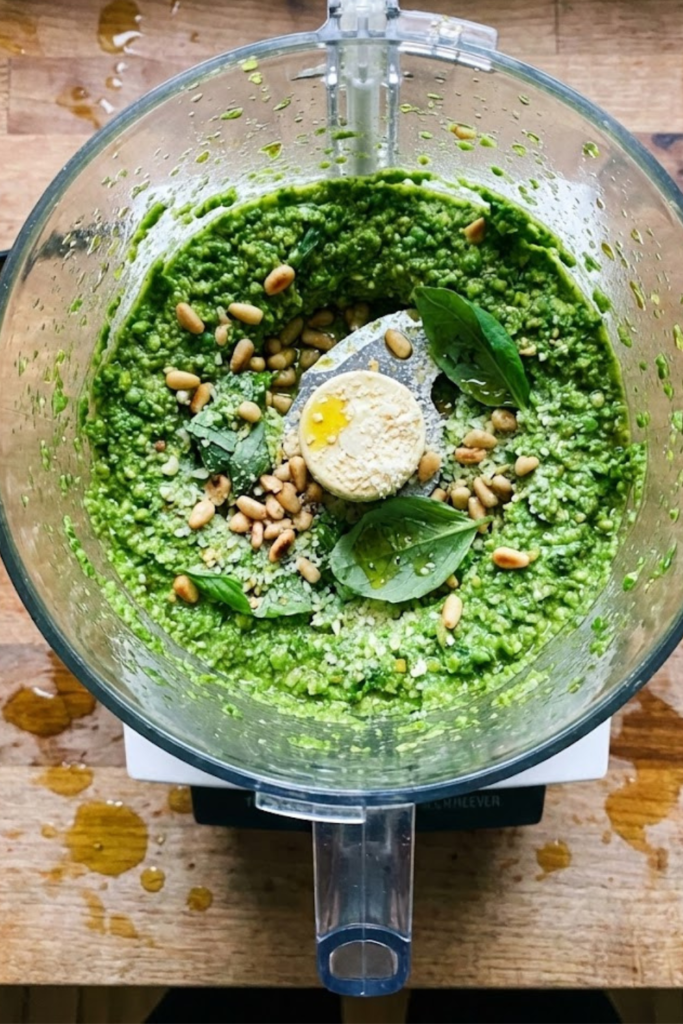
Once your peas are ready, grab your food processor. Here is a big tip: pulse, don’t puree! You want to keep some texture in there. I learned this the hard way during the “Great Blender Disaster of ’24.” I was in a rush and just held the button down. I ended up with something that looked like a green smoothie instead of a chunky pesto. It was so runny it just slid right off the pasta. Now, I just tap the button a few times. You want to see tiny bits of the nuts and herbs.
While the processor is running on low, slowly pour in your olive oil. This helps it get all creamy and mixed together right. I usually add a big squeeze of lemon juice and some zest too. It really wakes up the flavor of the peas.
One last thing—don’t throw away all your pasta water! Before you drain the noodles, scoop out a cup of that salty, cloudy water. If your sauce feels too thick, adding a splash of that water makes it silky and helps it coat every single piece of pasta. It’s like magic. Just stir it all together in a big bowl, and you’re good to go. It’s so easy, even my middle schoolers could do it without making a huge mess (well, usually!).
I always tell my friends to put the nuts and garlic in the processor first and give them a quick spin before adding the greens. This stops you from getting a giant chunk of raw garlic stuck in your tooth later—trust me, that totally ruins the vibe of a nice dinner! Also, don’t be afraid to taste the sauce as you go. Sometimes the peas are extra sweet, and you might need a little more salt to balance things out. When you finally mix the pasta and the sauce, try to do it while the noodles are still steaming hot. That leftover heat helps the cheese in the pesto melt just a tiny bit, which makes everything stick together. If the dish still looks a little dry, just keep adding that magic pasta water one spoonful at a time. You’ll see it transform from a thick paste into a glossy, beautiful sauce that looks like it came from a fancy restaurant. It really is the small details that make this recipe so good every single time.
Avoiding the “Brown Pesto” Blues and Other Mistakes
Look, I’ve messed up this spring pesto pasta with peas recipe more times than I’d like to admit. The first time I tried it, I thought I was being smart by heating the pesto in the pan with the pasta. Big mistake! Basil is super sensitive to heat. It turned this muddy, swampy brown color in seconds. It still tasted fine, but it looked like something you’d find at the bottom of a pond. Now, I always mix the pesto in a large bowl and then toss the warm pasta in. The residual heat is enough to warm the sauce without killing that bright green color.
Another thing I learned the hard way is about the pasta itself. If you overcook it, the whole dish just feels like mush. You want that “al dente” bite—where it’s firm but not hard. I usually set my timer for two minutes less than what the box says and start tasting it then. It’s better to be a little under than a lot over.
And let’s talk about leftovers. If you just shove the extra pesto in a container, it’ll be brown by tomorrow morning because of the air. To fix this, just pour a thin layer of olive oil over the top before you put the lid on. It keeps the air out and keeps the sauce looking fresh. I actually forgot to do this once and had to explain to my husband why his lunch looked like dirt. He ate it anyway, but he wasn’t happy! Just remember to keep things cool and don’t overthink the timing too much. Cooking should be fun, not a math test. If you use good olive oil and fresh basil, you’re already halfway there.
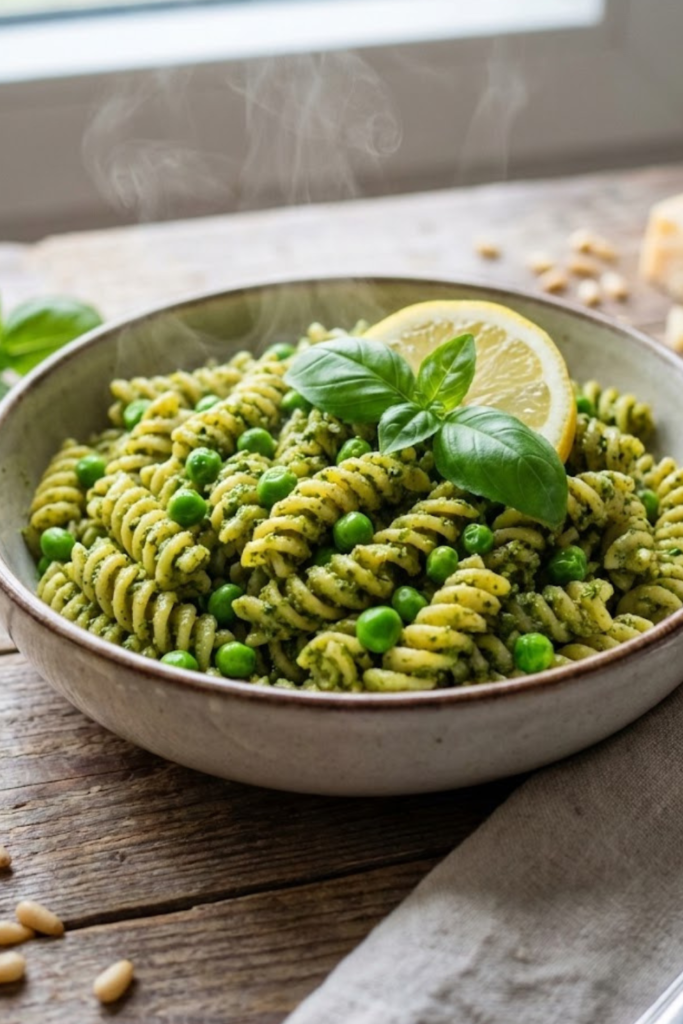
I really hope you give this spring pesto pasta with peas recipe a try next time you want something fresh. It is such a bright spot for the dinner table when things are finally starting to bloom outside. Just remember the big stuff we talked about: get the good cheese, don’t turn your sauce into a smoothie, and for heaven’s sake, keep that pesto away from high heat so it stays green!
It’s such a quick meal that feels way more fancy than it actually is. My kids always ask for seconds, which is a total win in my book since they usually pick at their veggies. This dish just makes everything feel a bit more cheerful. Even if you’re just cooking for yourself on a busy Tuesday, it’s worth the twenty minutes.
If you made this and liked it, please pin it on Pinterest! It helps more folks find these easy recipes and keeps the spring vibes going. I would love to know how yours turned out—hopefully, your kitchen stayed a lot cleaner than mine did during my first attempt! Happy cooking and enjoy that sunshine.