Did you know that salmon is one of the few “superfoods” that actually lives up to the hype, packing enough Omega-3s to boost your brainpower by simply eating dinner? I remember the first time I tried to bake salmon; let’s just say it had the texture of a rubber boot. But after years of kitchen experiments (and a few smoke alarm incidents!), I’ve finally cracked the code. This isn’t just another fish dish; it’s a celebration of spring on a plate! We are going to dive into a method that guarantees buttery, flaky perfection every single time. Get your aprons ready, because this Spring Lemon Herb Salmon recipe is about to become your new weeknight obsession.
Why This Baked Lemon Herb Salmon is the Perfect Spring Dinner
Spring is finally here, and honestly, I am so ready for it. After months of heavy stews and casseroles, my body just craves something light. That is exactly why this baked lemon herb salmon is my go-to when the flowers start blooming. It’s not just about the taste; it’s about how it fits into a crazy busy life.
First off, the freshness is real. When you mix fresh dill and parsley, it smells like a garden in your kitchen. I use to think dried herbs were fine, but trust me, fresh makes a huge difference here. It brightens up the whole dish in a way that dried stuff just can’t.
Then there is the health stuff. We all know salmon is good for us, right? It’s packed with those Omega-3s that are great for your heart and brain. As a teacher, I need all the brain power I can get! Plus, the lemon adds a nice kick of Vitamin C. It feels good to feed my family something that is actually healthy but tastes like a fancy restaurant meal.
But my favorite part? It is fast. Like, really fast. You can have this entire thing ready in under 20 minutes. On nights when I have grading to do or just want to sit on the couch, this saves me. No long prep, no standing over a hot stove for an hour.
Lastly, it goes with everything. I usually throw some asparagus or potatoes on the same pan. Less dishes to wash is always a win in my book. It’s just a solid, easy dinner that works every time.
Essential Ingredients for Zesty Herb Butter Salmon
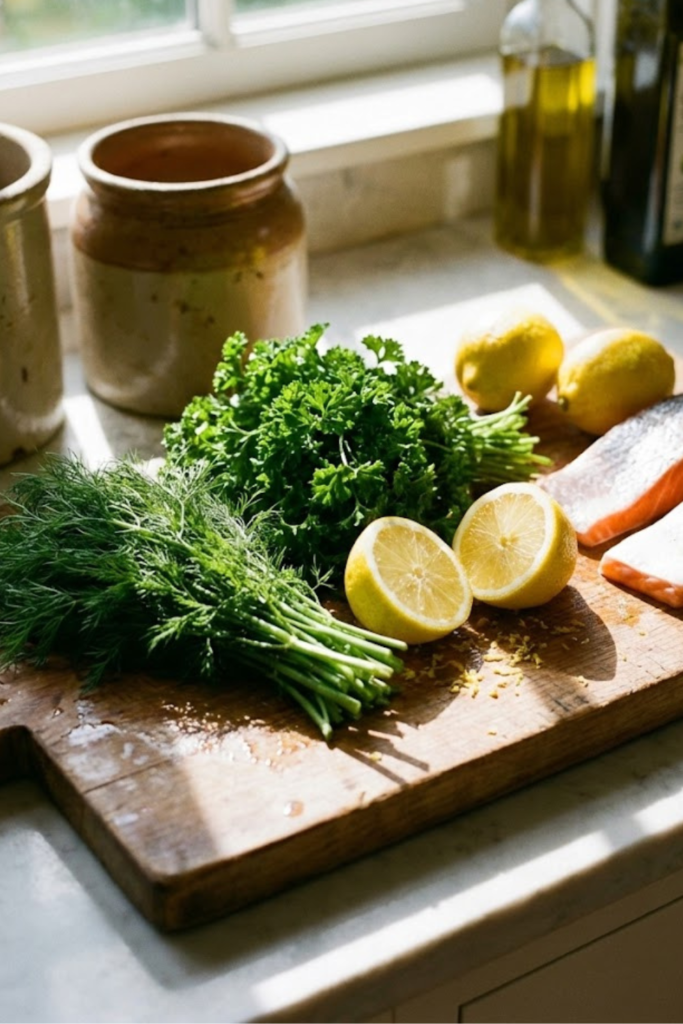
Okay, let’s talk groceries. You don’t need a ton of stuff for this, which is great. But the things you do buy? They kinda matter a lot. Since there isn’t a heavy sauce hiding the fish, you want ingredients that taste real.
The Salmon
I usually grab a center-cut fillet. It cooks way more evenly than the thin tail pieces. If you can swing it, wild-caught is tastier and has that nice deep pink color. But farmed is totally fine too—I use it all the time when budgeting. Just look for fish that isn’t slimy and doesn’t smell “fishy.” It should just smell like the ocean. I prefer skin-on because it holds the fish together better while it bakes, even if you don’t plan on eating the skin.
The Herb Blend
Please, please don’t use the dried stuff from the back of your pantry for this. It just won’t taste the same. You want fresh dill and fresh parsley. Chopping them up makes the kitchen smell amazing. If you have fresh chives, throw those in too. It adds a nice little oniony bite without being too strong for the kids.
The Citrus Factor
You need real lemons here. Not the plastic squeeze bottle. We are gonna use the juice and the zest (that’s the yellow skin). The zest is where all the flavorful oils are, so it gives it a punch that plain juice misses.
Fats: Butter and Oil
I use a mix. Melted butter gives it that rich, restaurant taste we all love. But butter burns easy in a hot oven. So, I mix in a little olive oil. It helps everything roast nicely without getting smoky or burnt.
Garlic
Fresh minced garlic is the way to go. Garlic powder is okay for a dry rub, but here we want those little bits of garlic getting all roasty in the butter. It gets sticky and sweet and just so good.
Step-by-Step Guide: How to Cook Salmon in the Oven
Alright, here is the part where we actually cook. Don’t worry, it is super simple. I used to be scared of overcooking fish, but I found a routine that works perfectly almost every time. Just follow these steps and you will be fine.
Preparation
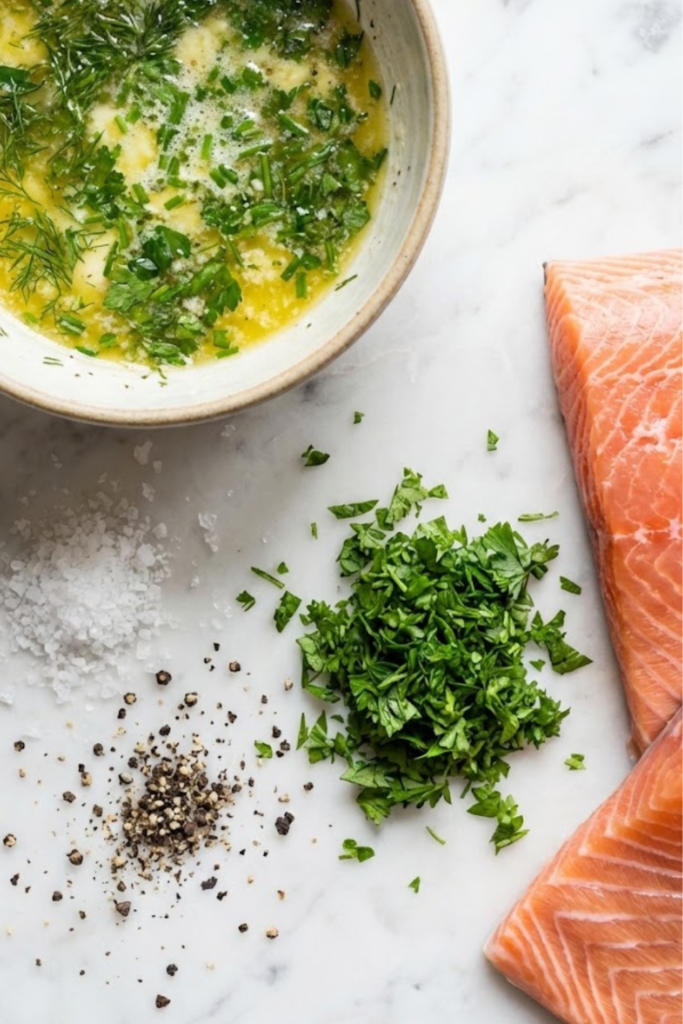
First thing, get that fish dry. I mean really dry. Take a paper towel and pat the salmon fillets down gently. If the fish is wet when it goes in the oven, it basically steams itself and gets kind of mushy. We definitely don’t want mushy. Once it’s dry, sprinkle a good amount of salt and pepper right on the pink meat.
The Slather
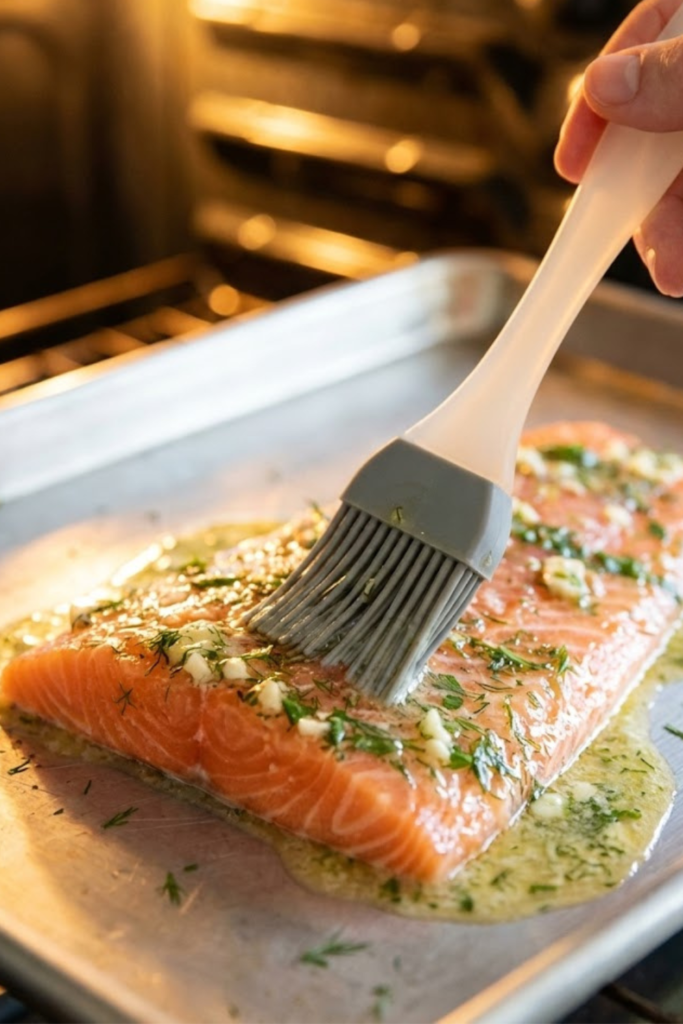
Now, take that butter, lemon juice, garlic, and herb mix we made earlier. You want to smear it all over the top of the salmon. Don’t be shy with it. I use a little pastry brush to get it even, but a spoon works just fine too. Make sure the whole top is covered so the flavor soaks in while it bakes.
Temperature & Timing
Turn your oven to 400°F (that is about 200°C). Let it get hot before you put the pan in. Place your baking sheet in the center. It usually takes about 12 to 15 minutes. This depends on how thick your piece of fish is, though. A good rule is to check it at 12 minutes. Take a fork and gently pull at the thickest part. If it flakes apart easily, it is done.
Broiling Finish
This is my secret trick. If you want it to look like a restaurant meal, switch the oven to “broil” for just the last minute or two. But be careful! Watch it like a hawk because it burns fast. This makes the garlic butter bubble up and gives the edges a nice golden color. It looks fancy and tastes amazing.
Foil Packet vs. Open Baking: Which Method is Best?
I get this question a lot: “Should I wrap the salmon in foil or just put it right on the pan?” It is a totally fair question. I have cooked it both ways more times than I can count, and honestly, they just do different things. It depends on what you are looking for.
The Foil Packet Method
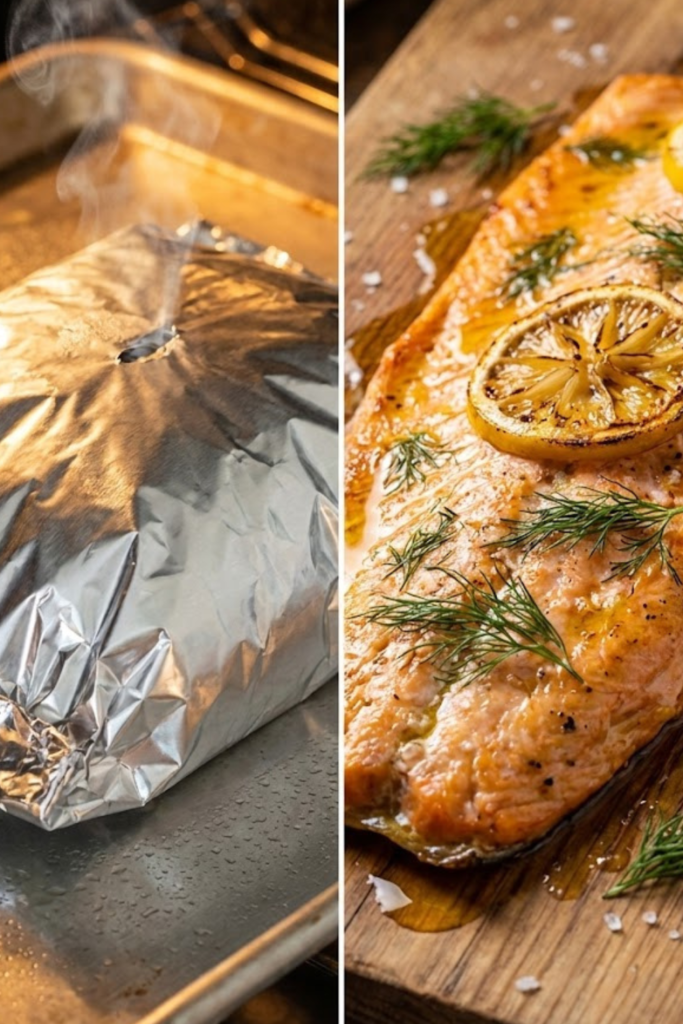
This way is super popular for a reason—cleanup is a breeze. You just wrap the fish and all the ingredients in a foil pouch, bake it, and then toss the foil in the trash. No scrubbing pans! Because it is sealed up, the salmon basically steams in its own juices. It stays very moist, which is great if you are worried about drying it out. But, the texture is kinda soft all over. You miss out on any roasting or crispiness.
Open Roasting
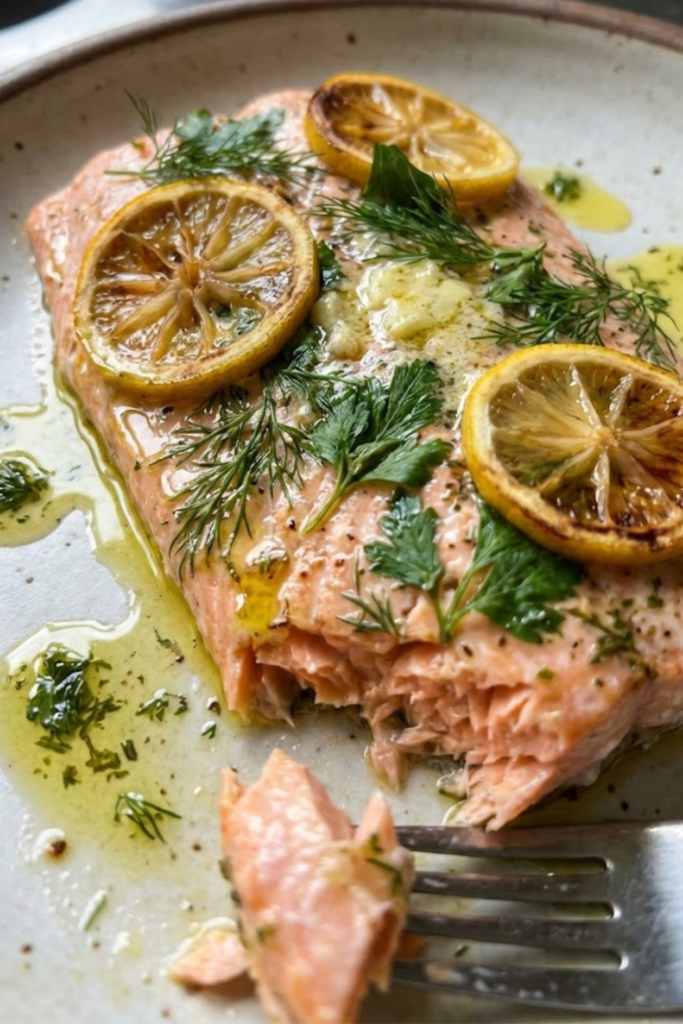
This is what I usually do for this lemon herb recipe. You just lay the fillets right on the baking sheet (I line it with parchment paper so it doesn’t stick). When the hot air hits the fish directly, the butter and herbs roast instead of just steaming. The lemon slices get a little caramelized and brown on the edges, which tastes amazing. You get a much better texture this way.
Pan-Searing Alternative
Now, if you really, really love crispy skin, you might want to use a skillet on the stove. It gets the skin super crunchy. But, let’s be real—it makes a mess. Oil splatters everywhere, and your whole house smells like fish for two days. I usually skip this on weeknights.
My Verdict
For this specific spring recipe, open roasting is the winner. You want those fresh herbs to get a little toasted, not soggy. It gives you the best mix of tender fish and big roasted flavor. Plus, using parchment paper makes cleanup almost as easy as the foil method anyway.
Serving Suggestions and Side Dishes
Now that the main event is in the oven, let’s talk about what goes on the rest of the plate. The salmon is definitely the star here, but it needs some good friends to make it a full meal. Since the fish is rich with all that butter, I like to keep the sides pretty simple and fresh.
Vegetable Pairings
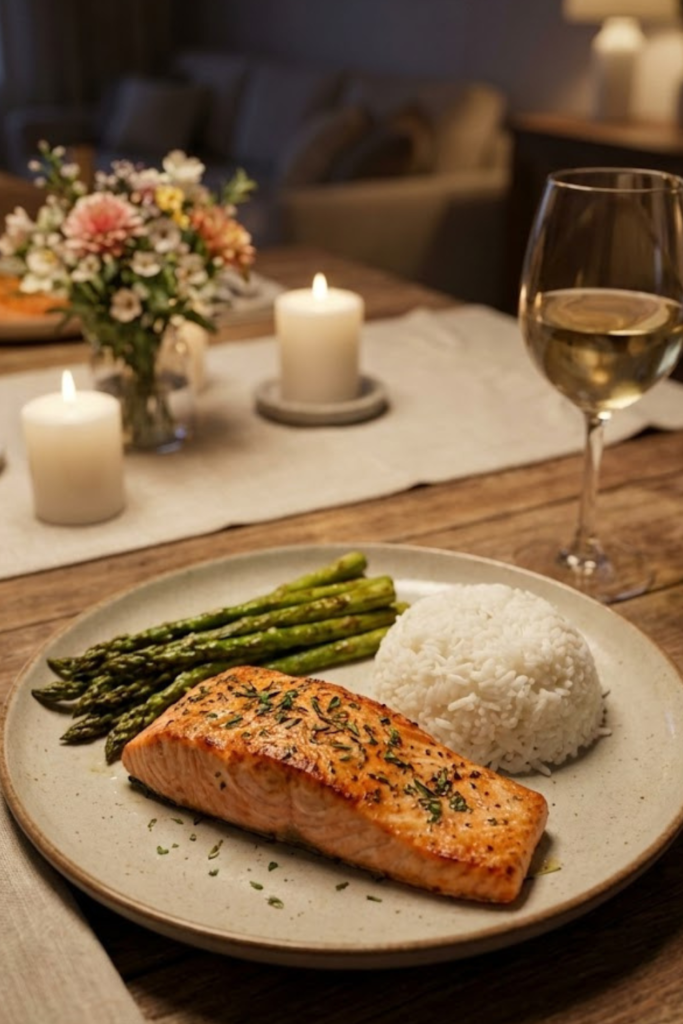
My absolute favorite thing to serve with this is roasted asparagus. Since the oven is already hot, I just toss the asparagus with a little oil and parmesan and stick it on a separate rack for the last 10 minutes. It’s so easy. If asparagus isn’t your thing, garlic green beans are a solid choice too. Or, if you want something cold and crunchy to balance out the hot fish, a quick cucumber salad with vinegar is perfect.
Starch Options
You are going to have extra lemon garlic butter on your plate, and you do not want to waste it. You need something to soak it up. I usually make a pot of fluffy white rice. If I’m feeling fancy, I’ll stir in some fresh herbs to match the salmon. Quinoa is good if you want to be extra healthy, but honestly? A big piece of crusty sourdough bread is the best for dipping in that sauce. My kids fight over the bread every time.
Wine Pairing
Now, I am definitely not a wine expert, but I know what tastes good after a long week of teaching. A nice, cold glass of white wine is perfect with this. I usually grab a Sauvignon Blanc or a Pinot Grigio. They are crisp and kind of tart, which cuts right through the richness of the butter and salmon. It makes the whole dinner feel a little more special.
Storage and Reheating Tips for Leftover Salmon
Okay, let’s be real. Fish is usually best right when you cook it. But sometimes my eyes are bigger than my stomach, or I just cook too much hoping for lunch the next day. If you have leftovers, don’t throw them out! You just have to be careful with how you keep them.
Fridge Life
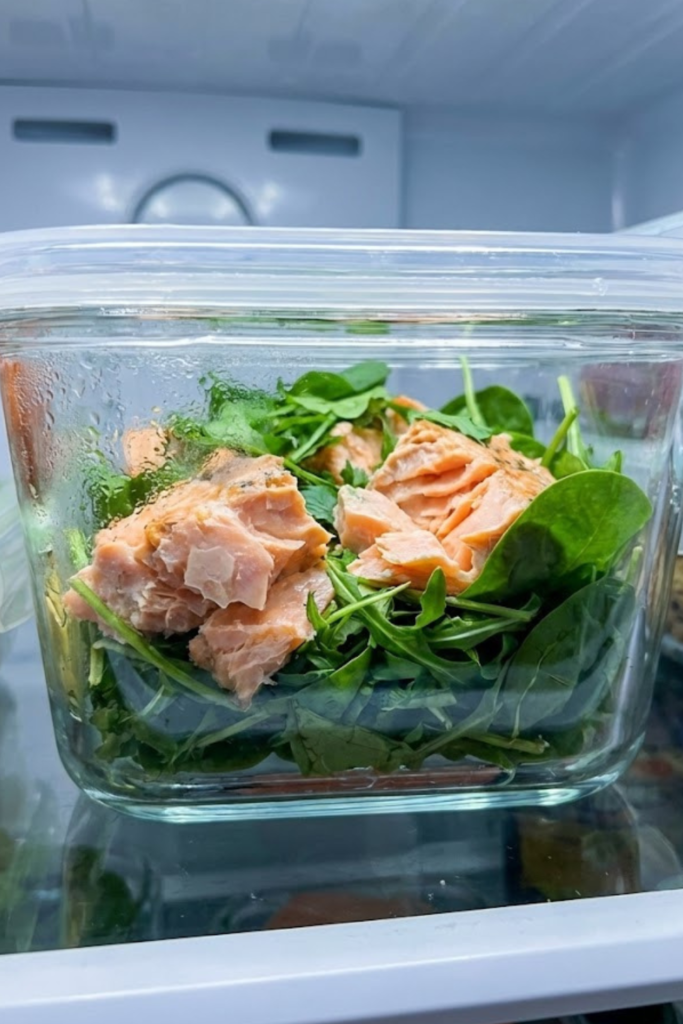
Cooked salmon is good in the fridge for about 3 days. I wouldn’t push it past that. I always put mine in an airtight glass container. If you just leave it on a plate with foil, your whole fridge is gonna smell like the ocean, and nobody wants that. Trust me, I learned that the hard way when my milk tasted like garlic butter.
Reheating Without Drying Out
This is the hardest part. The microwave is the enemy here. It turns your nice, flaky fish into a rubber tire in like 30 seconds. Instead, I put it on a baking sheet and cover it loosely with foil. Pop it in a low oven, like 275°F, for about 10-15 minutes. It warms it up slow so it stays juicy. If you are in a rush and have to use the stove, put a tiny splash of water in the pan and cover it with a lid to steam it warm.
Cold Options
Honestly? I think cold salmon is better than reheated salmon half the time. The next day, I just flake it up cold with a fork. It is amazing on top of a salad or mixed with a little mayo for a wrap. It saves you the trouble of reheating it and keeps the smell down in the lunchroom.
Freezing
I get asked if you can freeze the cooked leftovers. You can, but I wouldn’t really recommend it for this recipe. The fresh herbs get kind of slimy and weird when they thaw out. It just doesn’t taste the same. It is way better to just eat it fresh or keep it in the fridge for a couple of days.
So, that is basically it. In 2026, nobody has time for dry fish that tastes like cardboard. This recipe is honestly a lifesaver for me during the school year. It feels like a fancy cheat code—you do barely any work, but it tastes like you spent hours in the kitchen. Whether it is just a random Tuesday with the kids or you are trying to impress someone, this lemon herb salmon is gonna be a hit. Seriously, give it a shot this week. And hey, if you liked it, pin this recipe to your “Healthy Spring Dinners” board on Pinterest so you don’t lose it in the black hole of the internet!