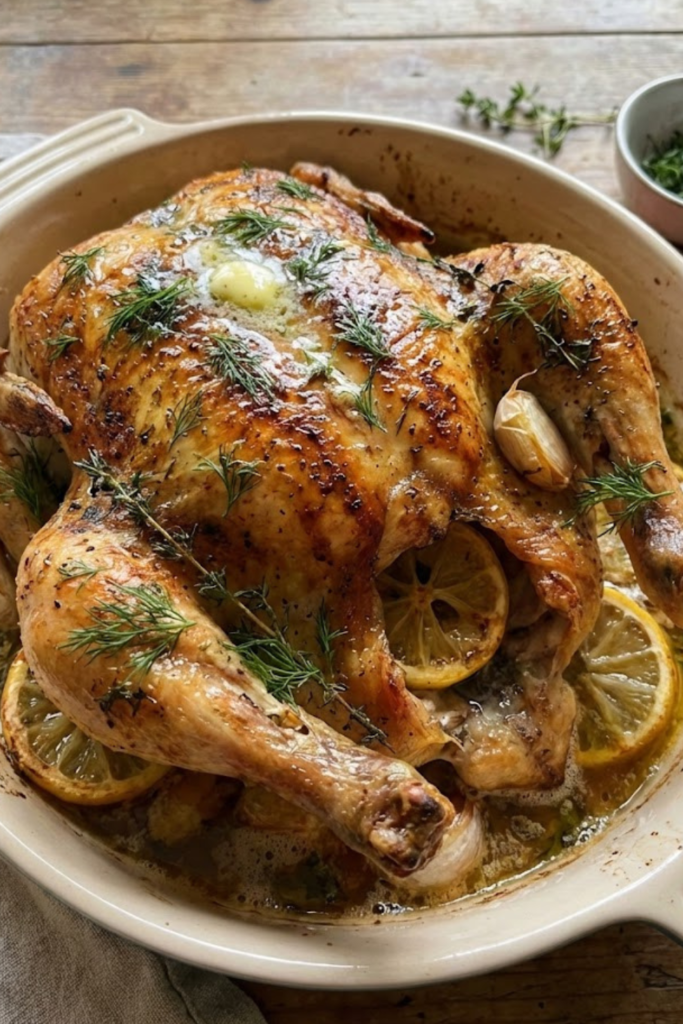
I honestly used to be scared stiff of cooking a whole bird because I was always worried I’d mess it up and serve dry meat to my family. But after a lot of trial and error in my kitchen, I finally nailed this spring herb roasted chicken recipe that is just so juicy and flavorful. It uses a mix of fresh dill, lemon, and garlic butter that makes the house smell amazing while it cooks. It is seriously the best thing to make for a Sunday dinner when you want something nice but don’t want to spend all day standing over the stove, and my kids actually eat it without complaining! Plus, it’s one of those meals that looks way more impressive than it actually is to make. I love how the fresh spring air mixes with the scent of roasting garlic through the open window. It really feels like the seasons are changing when this is in the oven. You don’t need any fancy equipment either, just a simple pan and some basic ingredients from the corner store. I’m going to share some of my favorite tips so you can get that perfect crispy skin without breaking a sweat.
Choosing the Best Chicken and Fresh Spring Herbs
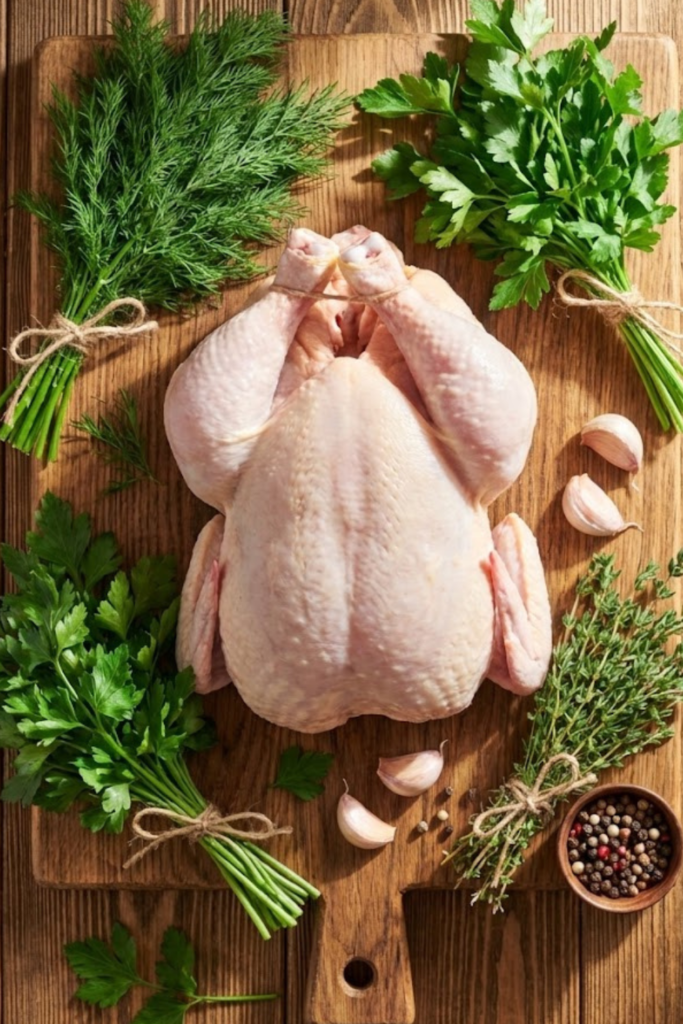
One trick I’ve learned over the years is to smell the herbs before you even buy them; they should have a strong, punchy aroma that hits you immediately. If the dill or parsley looks limp or yellowish, just leave it behind, because those fresh oils are what actually season the meat. I also like to keep the herb stems instead of tossing them in the trash. You can tie them together and stuff them right into the chicken cavity to add an extra layer of flavor from the inside out.
If you are lucky enough to have a little herb garden or a local farmer’s market nearby, that is where you will find the best stuff. Spring chives are especially good right now because they have a mild onion flavor that isn’t too overpowering for the delicate chicken. Also, when you are picking out your bird, try to find one that is around 4 pounds. I’ve found that huge chickens take too long to cook through, and the breast usually gets dry before the legs are even done. Picking a smaller, high-quality bird makes the whole process much smoother and way more delicious for everyone at the table. Just remember, the better the ingredients you start with, the less work you have to do to make it taste like a five-star meal!
Preparing the Lemon Garlic Herb Butter
You know, the secret sauce—literally—to this whole recipe is the butter. You can’t just slap a stick of cold butter on a chicken and hope for the best. I tried that once because I was in a rush, and it was a disaster. The butter didn’t spread right and the flavors just stayed in one spot.
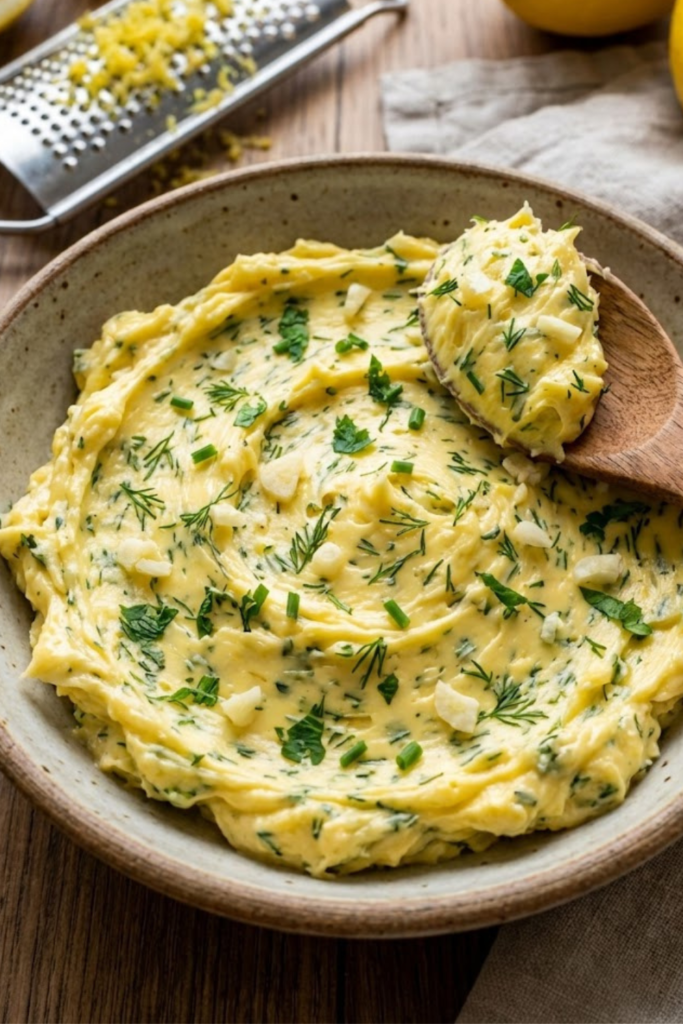
So, here is what you do. Take two sticks of unsalted butter out of the fridge way before you start cooking. It needs to be super soft, like room temperature soft. If you forget (I do this all the time), you can microwave it for like 10 seconds, but watch it close! You don’t want a puddle of melted butter; it just needs to be soft enough to mash with a fork.
Get a medium bowl and dump that soft butter in. Then, take those herbs we chopped up—the dill, parsley, and thyme—and throw them in. I also use a grater to zest two whole lemons right into the bowl. Don’t skip the lemon zest; it adds this fresh zing that balances out the rich butter. Then I mince up like 4 or 5 cloves of garlic. Yes, 5 cloves. We want big flavor here!
Mash it all together until it looks like a green, speckled paste. Oh, and don’t forget the salt. I use Kosher salt because the grains are bigger and it just tastes better than the table stuff. Add a good pinch of that and some cracked black pepper. This mixture is gold. It is what keeps the meat moist and makes the skin taste incredible.
How to Truss and Season Your Spring Chicken
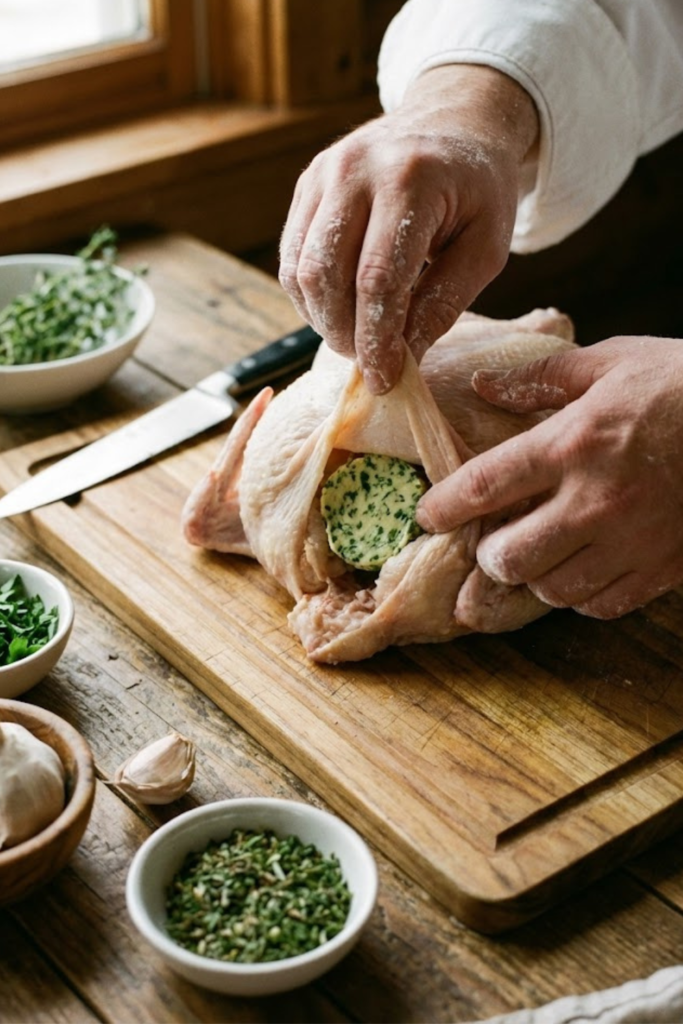
Now comes the part that looks a little messy but is actually pretty easy once you get the hang of it. You want to get that lemon garlic butter directly onto the meat, not just on top of the skin. I usually take my fingers and gently slide them under the skin at the breast, being super careful not to rip it. Once you make those little pockets, grab a handful of your herb butter and stuff it right in there. I use my hands to smooth it out from the outside so it covers the whole breast. It feels a bit weird, but this is how you get that meat so juicy that it practically falls off the bone.
After the butter is in, I take whatever is left and rub it all over the outside of the bird. Then, don’t throw away those leftover lemon halves or the stems from your herbs! I shove the lemons and a whole head of garlic—just cut the top off so the cloves are exposed—right inside the chicken. This creates steam inside the bird that smells like heaven.
Lastly, you’ll want to tie the legs together with some kitchen twine. You don’t need to be an expert at knots; just a simple bow to keep the legs tucked in helps the whole thing cook at the same speed. If the legs are flopping out, they cook too fast while the middle is still cold. Just tuck the wing tips under the body so they don’t burn, and your chicken is ready for the heat!
Roasting Temperatures for Crispy Skin and Juicy Meat
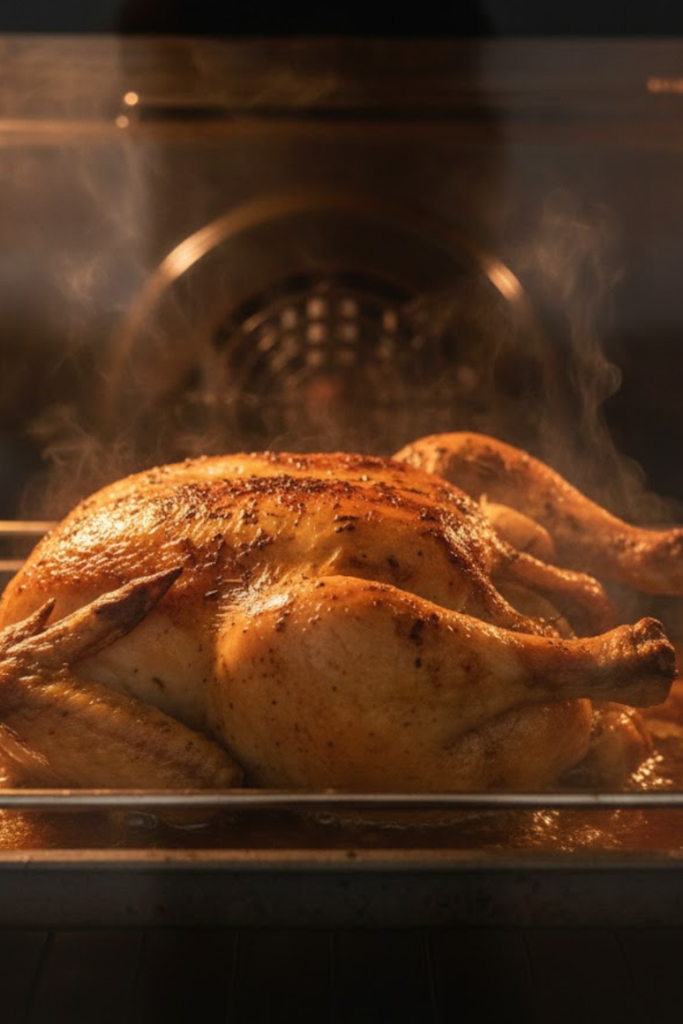
One thing I learned the hard way is that if the skin starts looking too dark before the thermometer hits 165, just take a little piece of tin foil and tent it over the top. It stops the skin from burning while the legs finish up. Also, try to keep that oven door shut! Every time you peek, you lose a ton of heat, and that messes with your timing. I usually wait until the very end to check the juices; they should run clear, not pink, when you poke the thigh.
And don’t forget that the chicken actually keeps cooking a little bit after you pull it out. This is called carry-over cooking, so if you hit 160 and take it out, it usually reaches that perfect 165 while it’s sitting on the counter. Just give it that rest time—I know it’s hard because it smells so good, but it makes a huge difference in how juicy the breast meat stays. I always set a timer on my phone so I don’t get impatient and cut into it too early, because if you rush it, all those tasty juices just run out and leave you with dry meat. Trust me, waiting those 15 minutes is the most important part of the whole process!
Serving Suggestions and Spring Side Dishes
After you’ve let that chicken rest and the kitchen smells like a dream, it’s time to think about what goes on the plate next to it. Since this is a spring meal, I usually try to keep things feeling light and green. My absolute favorite thing to do is roast some thin asparagus spears and baby potatoes. If you have room in the pan, you can actually toss the potatoes right in with the chicken juices while it cooks! They soak up all that lemon and herb flavor and get these crispy edges that are just incredible.
If you want to get a little fancy, you can make a super quick gravy while the chicken is resting. I just take the roasting pan, put it right on the stove over medium heat, and whisk in a little flour and a splash of white wine. It scrapes up all those brown bits at the bottom of the pan—that’s where all the flavor lives!
For drinks, a cold glass of Sauvignon Blanc is my go-to because it has that citrusy kick that matches the lemon in the chicken. But honestly, a cold glass of water with some lemon slices works just fine too. This meal is all about celebrating the fresh flavors of the season, so don’t overthink it. Just put it all in the middle of the table and let everyone dig in!
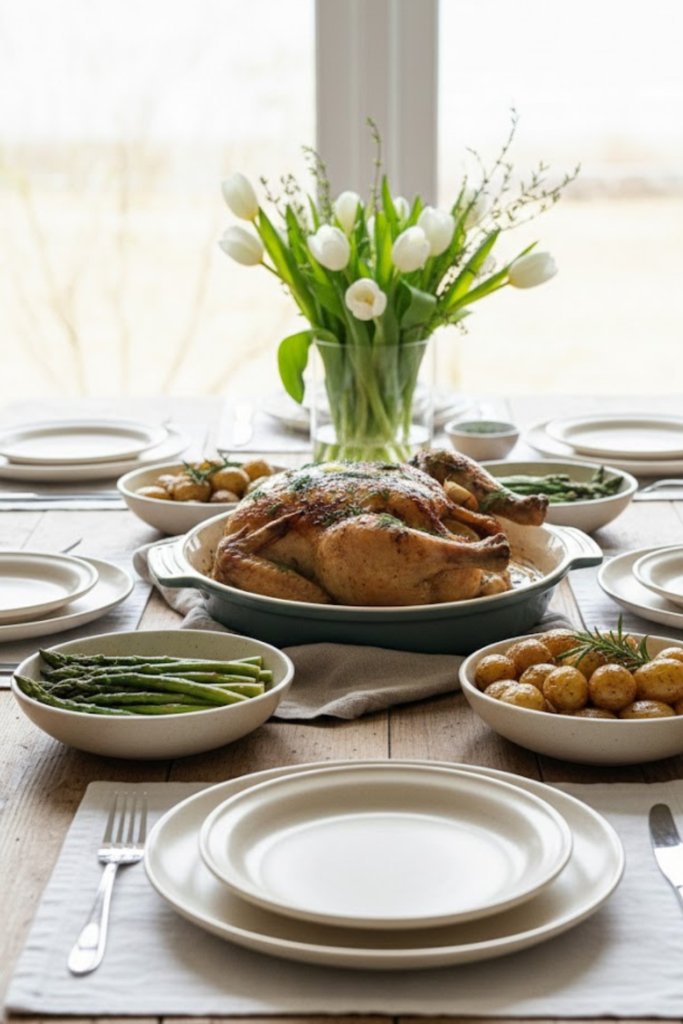
And there you have it! This spring herb roasted chicken recipe is honestly a showstopper that requires way less effort than it looks. The combination of the lemon garlic butter and those fresh herbs makes the house smell incredible. Give it a try this weekend—I promise you won’t regret it!
If you loved this recipe, please save it to your “Sunday Dinner” or “Spring Recipes” board on Pinterest so you can find it later!