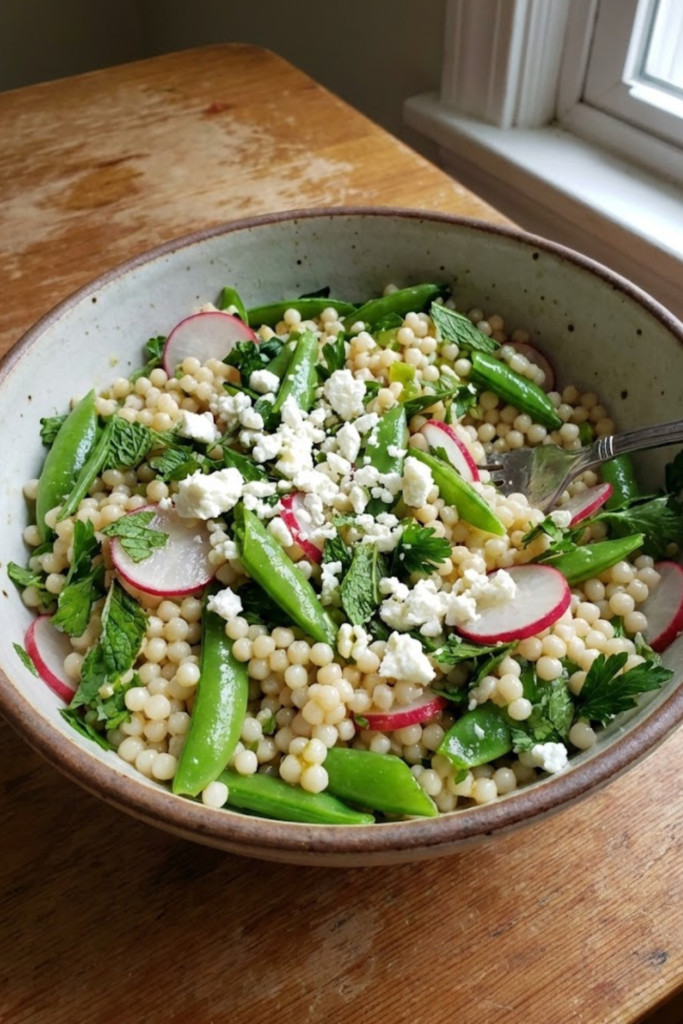
Did you know that over 60% of people crave lighter, plant-forward meals the second the first flower pops up in March? I totally get it! After months of heavy stews and root veggies, my soul is basically screaming for something green and zingy. This Spring Couscous Salad with Fresh Herbs is my absolute go-to when I want a meal that feels like a literal hug from the sun. It’s fast, it’s bright, and honestly, it’s kind of hard to mess up—even if you’re like me and sometimes forget a pot on the stove!
Choosing the Best Couscous for Spring Textures
I remember the first time I tried making a couscous salad for a school potluck years ago. I just grabbed the first box I saw on the shelf, and let me tell you, it ended up looking like soggy oatmeal. It was pretty embarrassing to set that bowl down next to the fancy potato salads! But that’s how we learn, right? For a spring salad, the texture is the most important part. You want something that stands up to the crunchy veggies and doesn’t just turn into a big blob of starch once the dressing hits it.
Tiny Moroccan vs. Chewy Pearl Grains
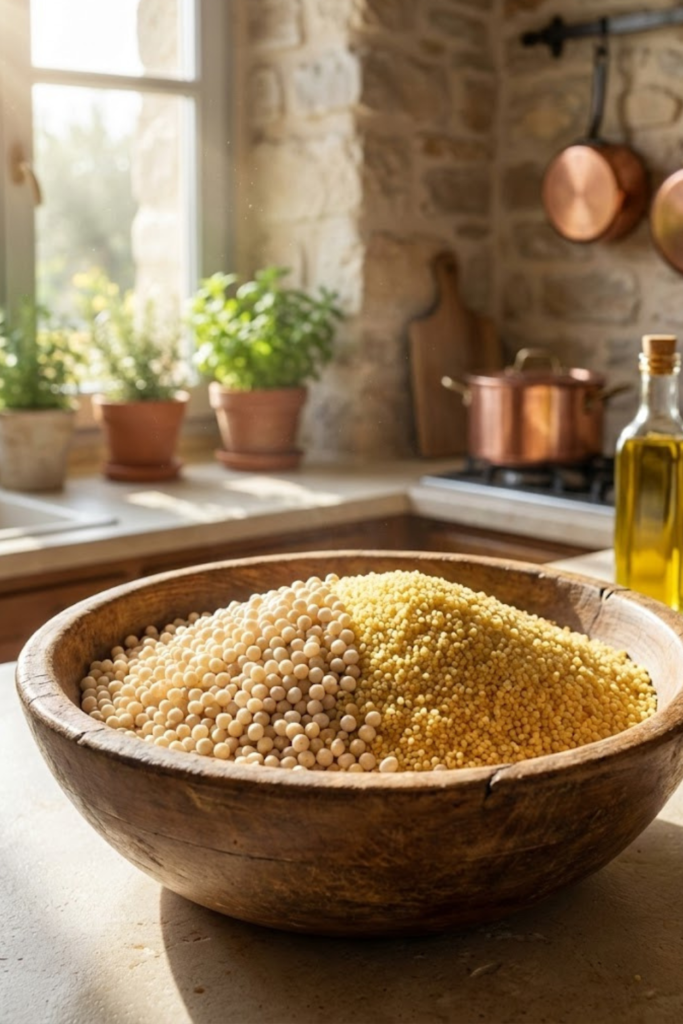
Most grocery stores usually carry two main types of this grain. You have the traditional Moroccan version, which is very small—almost like yellow sand or cornmeal. Then you have Israeli couscous, which most people call pearl couscous. For this specific spring recipe, I really suggest you go with the pearl kind. These are like tiny, toasted pasta balls. They have this wonderful “pop” when you bite into them, which goes so well with fresh snap peas and radishes. If you use the tiny Moroccan stuff, it often gets lost under the heavy herbs and dressing. The pearl grains stay separate and look really nice on the plate.
The Secret Step: Toasting in Olive Oil
Here is a little trick I always tell people who want to level up their cooking: don’t just boil the water and dump the grains in. Instead, grab a skillet and heat up a splash of extra virgin olive oil first. Toss your dry pearl couscous in there for about three or four minutes. You want to watch them closely until they turn a light golden brown and smell a bit nutty. This step adds a deep flavor that makes the whole salad taste much better. It also helps the grains stay firm so they don’t get mushy after sitting in the fridge. It is a small effort that really changes the result.
How to Get a Perfectly Fluffy Finish
To get that perfect al dente texture that isn’t sticky, you have to be careful with the liquid. I usually use about one and a quarter cups of water or broth for every cup of pearl grains. Once the liquid is mostly gone, turn off the stove and put a lid on the pot for five minutes. Then, use a fork to fluff it up gently. Never use a spoon! A spoon tends to smash the delicate grains together, but a fork lets the air in. This keeps the salad light and airy, which is exactly what you want for a refreshing spring lunch. Making sure you don’t overcook it is the key to a happy meal.
The Herb Garden Secret: Mint, Parsley, and Dill
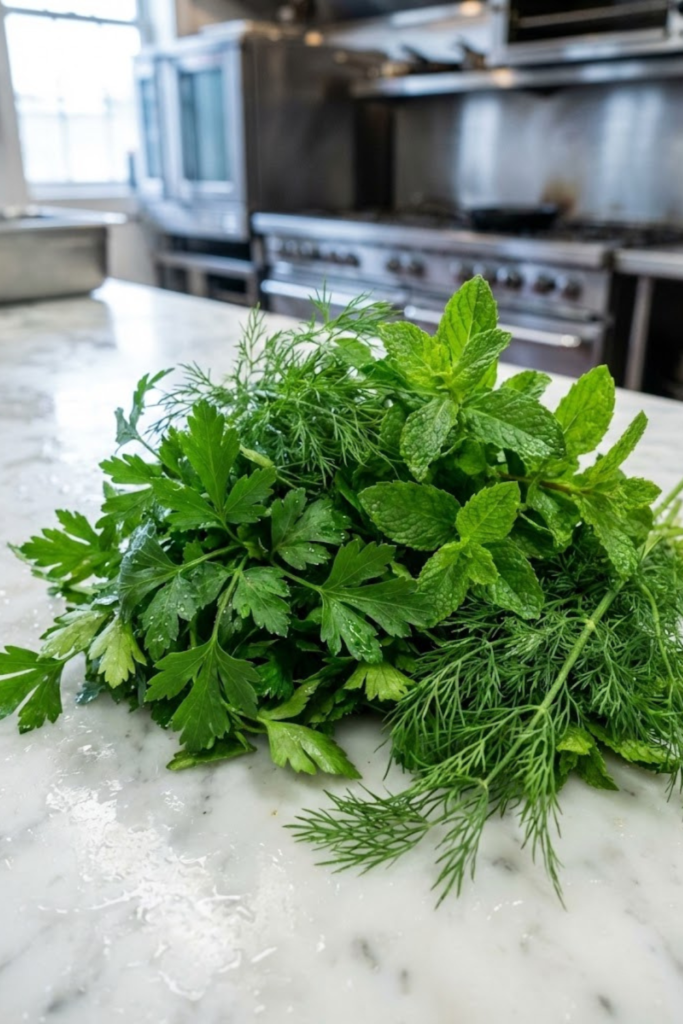
When I first started gardening in my backyard, I used to be so stingy with my herbs. I would pick maybe three or four leaves of mint and act like they were gold nuggets. I didn’t want to “waste” them. But here is the big lesson I learned after years of trial and error: for a spring couscous salad, you have to treat your herbs like they are a main vegetable, not just a tiny garnish on top. If you look at your cutting board and think, “Wow, that is a scary amount of green stuff,” then you are finally on the right track!
Treating Herbs Like a Main Ingredient
The biggest secret to making this dish taste like it came from a professional kitchen is the sheer volume of greenery. I like to use a mix of flat-leaf parsley, fresh mint, and feathery dill. Usually, I aim for about two full cups of chopped herbs for a single batch of couscous. It sounds like a lot, I know! But those herbs provide a burst of flavor that cuts through the starch of the grains. Parsley gives it a clean, earthy base that stays fresh for days. Mint adds a cool finish that feels amazing when the sun starts getting warmer in the afternoon. Dill is the “wild card” ingredient. It has a tangy, almost citrusy kick that makes the whole salad feel way more sophisticated than it actually is.
How to Chop Without Making a Mess
One thing I always tell people is that you have to be gentle with these leaves. If you hack away at them with a dull knife, they turn black and get slimy, which is pretty gross in a salad. I always wash my herbs in very cold water and then let them dry completely on a paper towel. This is a step you shouldn’t skip! If they are wet when you chop them, they just turn into a green paste. Use your sharpest knife and try to slice through the pile just once. We want big, fluffy pieces that look beautiful and stay bright green until you are ready to eat.
Getting the Ratios Just Right
Finding the right balance is really the fun part of cooking. I usually use a lot more parsley than anything else because it is mild and doesn’t take over the bowl. Then I add a good handful of mint and just a smaller amount of dill. Mint can be a bit bossy if you aren’t careful, and you don’t want your lunch to taste like a stick of gum! I suggest starting with a little bit, taking a big bite, and then adding more until it tastes exactly how you like it. This is your salad, so don’t feel like you have to follow a strict rule book. Just keep tasting as you go!
Crunchy Seasonal Add-ins: Radishes and Snap Peas
One of my favorite things about April is finally seeing the grocery store aisles fill up with things that aren’t brown or orange. I love carrots and potatoes as much as anyone, but by the time spring rolls around, I am ready for something that actually has a crunch to it. For this couscous salad, the vegetables are what really bring the whole thing to life. If you just had the grains and the herbs, it would be okay, but adding radishes and snap peas makes it feel like a real celebration of the season. I usually spend a little extra time picking out the best ones at the shop because it really makes a big difference in the final taste of the dish.
Finding the Freshest Veggies at the Market
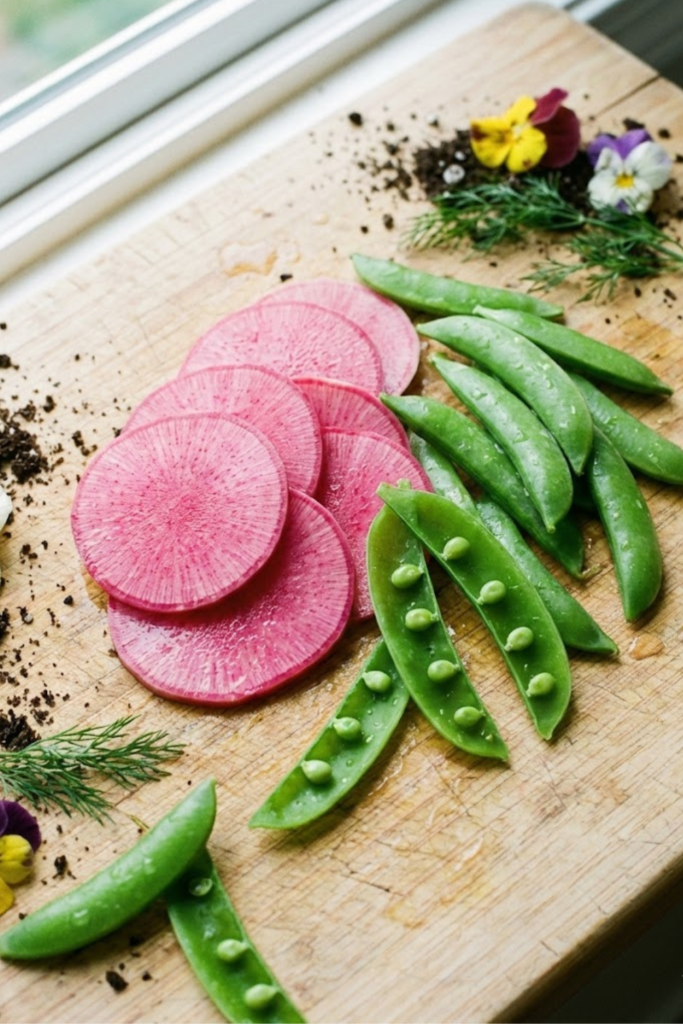
Whenever I head to the farmers market, I always look for the smallest radishes I can find. I’ve noticed that the giant ones sometimes taste a bit “woody” or way too spicy, which can ruin the balance of your bowl. You want them to be firm and bright pink with no soft spots at all. For the snap peas, I always do the “snap test.” If you bend one and it doesn’t make a loud clicking sound, it’s probably been sitting on the shelf for way too long. You want them to be juicy and sweet. I sometimes buy a double bag because I end up eating half of them while I am sitting at the kitchen table prepping the rest of the meal!
The Trick to Keeping Snap Peas Bright Green
I used to just throw raw snap peas into my salads, but they can be a little tough to chew that way. A better way is to give them a quick blanch. It sounds like a fancy word, but it just means dropping them in boiling water for about sixty seconds. As soon as that minute is up, you have to toss them into a bowl of ice water. This stops the cooking right away and locks in that beautiful neon green color. It makes the peas slightly softer but still keeps that satisfying crunch. It’s an easy step that makes your salad look like it came from a high-end cafe instead of just your own kitchen.
Slicing Radishes for the Best Flavor
Radishes can be pretty strong, so I don’t like to just chop them into big chunks. I find that slicing them paper-thin is the way to go. If you have a mandoline slicer, that works great, but honestly, a sharp knife and a little patience are all you really need. When they are sliced thin, they give you a little peppery kick without taking over the whole bite. Plus, they look like little pink jewels scattered through the white couscous. It makes the dish look so pretty, and we all know that food tastes better when it looks good on the plate. Just watch your fingers while you are cutting them!
Whisking the Zesty Lemon Vinaigrette
I’ve seen so many people spend an hour carefully chopping up their veggies just to dump a store-bought bottle of dressing over the top. It honestly breaks my heart a little bit! It’s like buying a fancy car and then putting the cheapest tires you can find on it. A good dressing is what pulls all those fresh herbs and chewy pearl couscous together into one perfect bite. When I was younger, I used to think all salad dressings were just oily and sour, but that’s because I didn’t know how to balance the flavors properly. Once you learn the basic ratio, you’ll never go back to the stuff in the plastic bottle again.
Why Fresh Lemons Win Every Time
If there is one thing you take away from this whole recipe, let it be this: please use a real lemon. Those little plastic yellow squeeze bottles you see in the store are fine for a quick tea, but they have a weird, bitter aftertaste that can ruin a fresh spring salad. I always look for lemons that feel heavy for their size because that usually means they are full of juice. Also, don’t forget the zest! I use a small grater to get that bright yellow skin off before I cut the lemon in half. The zest has all the essential oils that make the salad smell incredible. It’s a small thing that makes a huge difference in how the meal tastes.
The Magic of the Mason Jar
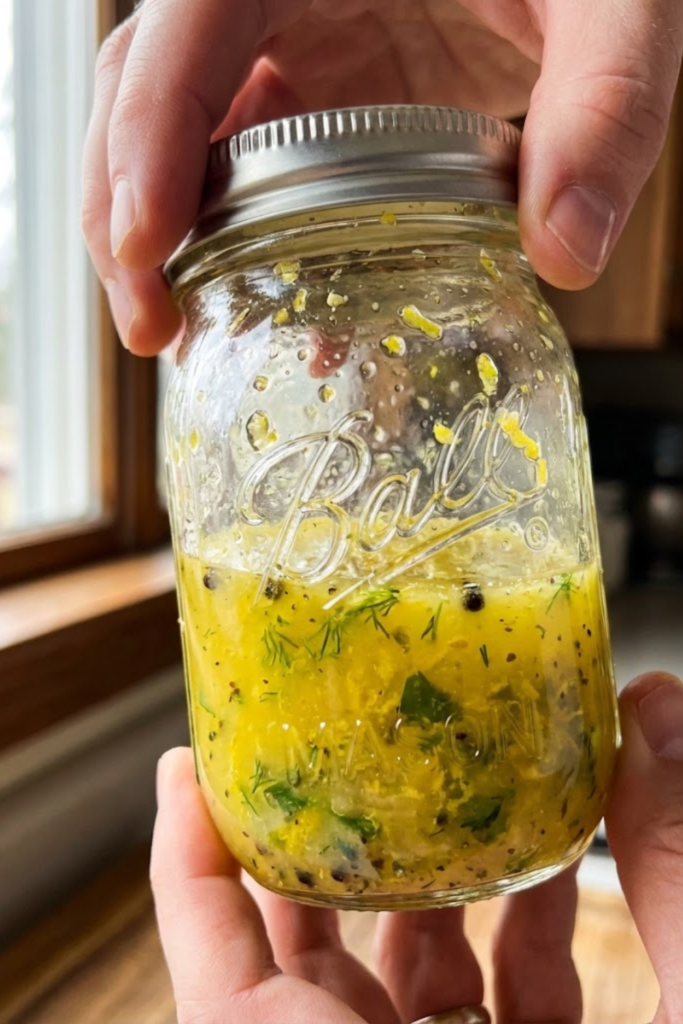
Most people think you need a big whisk and a glass bowl to make a dressing, but I’ve found a much better way that saves on dishes. I just use an old jelly jar or a small mason jar. I pour in the extra virgin olive oil and the lemon juice, then I screw the lid on tight and shake it like I’m playing the maracas! This is the best way to get the oil and juice to mix together properly—this is what we call emulsifying. If you don’t shake it hard enough, the oil will just sit on top of the lemon juice, and you’ll end up with some bites that are way too oily and others that are way too sour. Plus, shaking a jar is just way more fun than whisking.
Finding the Perfect Flavor Balance
The secret to a dressing that makes people want seconds is a tiny bit of sweetness. I usually add about a teaspoon of honey or even a little maple syrup. It doesn’t make the salad taste like dessert, I promise! It just helps to smooth out the sharp edges of the lemon juice. Then, I add a generous pinch of kosher salt and a lot of cracked black pepper. If you feel like getting fancy, you can even add a tiny bit of Dijon mustard. The mustard actually helps the dressing stay mixed together for a long time. Just give it one last taste before you pour it over your couscous to make sure it’s exactly how you like it. If it’s too sour, add a drop more oil; if it’s too bland, add more salt. Trust your taste buds!
I really hope you feel ready to head into your kitchen and give this Spring Couscous Salad a try. It is honestly one of those recipes that makes you feel like a professional chef without needing a fancy degree or expensive tools. As a teacher, I’m always looking for things that are easy to put together but still give you a great result, and this dish hits the mark every single time. We covered a lot today, from picking the right pearl grains to the “jar-shake” method for the dressing, but the most important thing is just to have fun with it. Don’t worry if your radishes aren’t perfectly thin or if you accidentally add a little too much mint. That’s just part of the process!
Why This Recipe is a Total Winner
The reason I keep coming back to this salad every year is the balance. You have that chewy, toasted texture from the Israeli couscous, the sharp crunch from the fresh radishes, and that bright, zingy kick from the lemon. It’s light enough for a hot afternoon but filling enough that you won’t be reaching for a snack an hour later. I’ve brought this to so many school potlucks and family BBQs over the years, and I always end up bringing home an empty bowl. People love it because it feels fresh and healthy, but it doesn’t taste like “diet food.” It just tastes like spring on a plate.
Storing Your Leftovers for Easy Lunches
One of the best parts about this meal is that it actually stays good for a few days. In fact, I think it tastes even better the next day! The lemon juice and the herbs have more time to really soak into the grains, making every bite even more flavorful. If you are a busy person like me, you can make a big batch on Sunday night and have a healthy lunch ready to go for Monday and Tuesday. Just keep it in a sealed container in the fridge. If it looks a little dry the next day, you can just add a tiny splash of olive oil and give it a quick stir with a fork to wake those flavors back up.
Make It Your Own and Share the Love
Feel free to get creative with this! If you want more protein, you can toss in a can of rinsed chickpeas or some shredded grilled chicken. If you don’t like dill, just leave it out and add more parsley. The kitchen is your classroom, so don’t be afraid to experiment a little bit. If you end up making this and loving it as much as I do, please save this recipe to your favorite Pinterest board! It really helps other people find these simple, healthy meal ideas, and I would love to see how your version turns out. Happy cooking, and enjoy that beautiful spring weather!