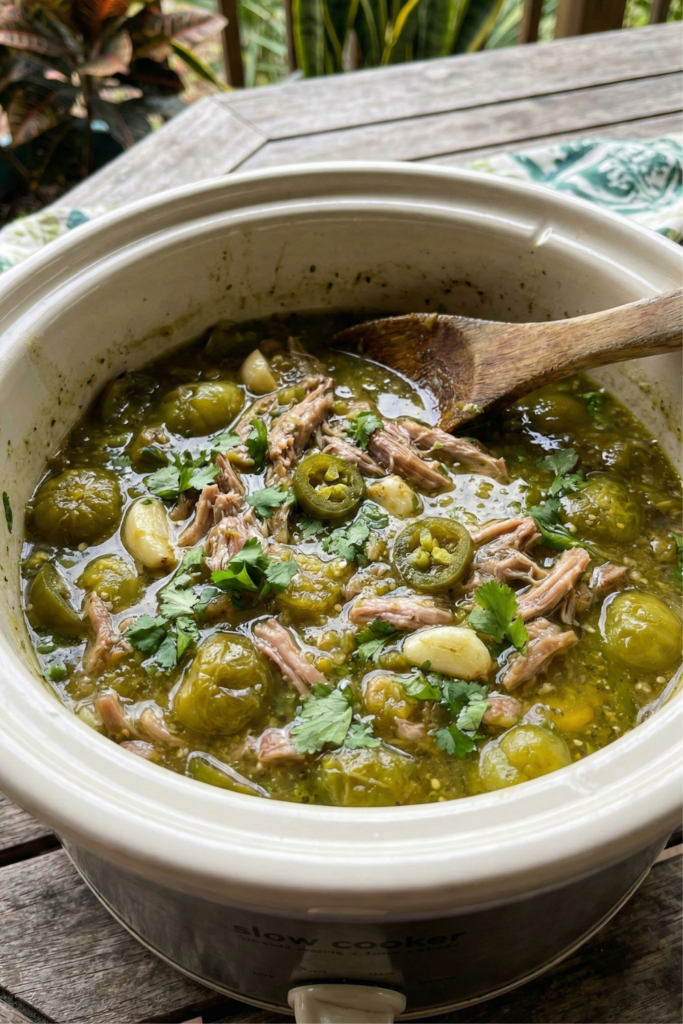
Have you ever walked into a house and been absolutely floored by the smell of dinner? That savory, tangy aroma that just grabs you? That is exactly what happens when you make this! I remember the first time I tried authentic chile verde in a tiny hole-in-the-wall spot in New Mexico; it changed my life forever. Seriously! This isn’t just a stew; it’s a warm hug in a bowl. Whether you are feeding a crowd or just want leftovers for days, this slow cooker chile verde is about to become your new obsession. Let’s dive into the green goodness!
Selecting the Perfect Cuts of Pork for Chile Verde
I still remember the first time I tried to make slow cooker chile verde for a dinner party. I was trying to be “healthy,” so I grabbed a lean pork loin from the grocery store. Big mistake. Huge. After eight hours in the crockpot, I opened the lid expecting magic. Instead, I got gray, tough chunks of meat that tasted like spicy cardboard. I was so embarrassed I ended up ordering pizza while my “stew” went down the garbage disposal.
That was a hard lesson, but I learned it so you don’t have to. The meat you choose is literally the make-or-break factor here. You can have the best sauce in the world, but if the pork is dry, nobody’s gonna ask for seconds.
Why Pork Shoulder is King
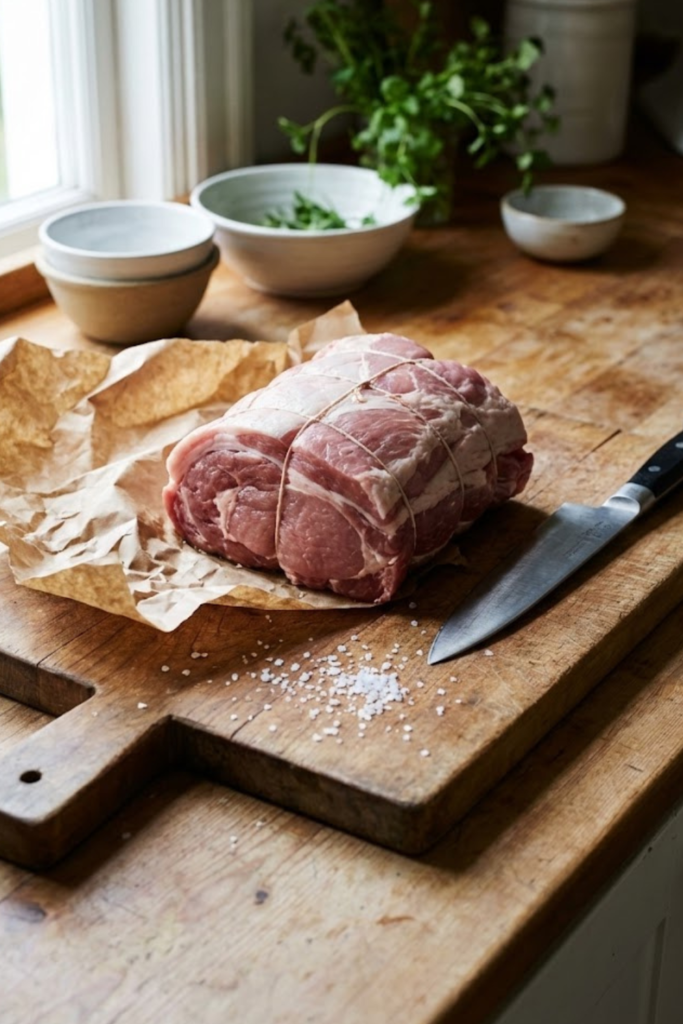
Listen, when you are standing in that meat aisle staring at all the options, there is only one thing you should be reaching for: the pork shoulder. Sometimes it’s labeled as “Boston Butt” or “Pork Butt” (which is actually the shoulder, confusing, right?).
Here is the deal. This cut is loaded with fat and connective tissue. I know, I know—we’ve been trained to fear the fat. But for slow cooker chile verde, that fat is your best friend. Over a long cook time, all that connective tissue breaks down and melts into gelatin. That is what keeps the meat moist and gives the sauce that rich, velvety texture we all crave.
If you try to use a lean cut like a loin or tenderloin, there just isn’t enough fat to protect the meat during the long heat exposure. It seizes up and dries out. Trust me, I’ve been there, and it’s not pretty.
To Trim or Not to Trim?
Okay, so you bought the shoulder. Now what? You’ll usually see a thick layer of fat on one side—the “fat cap.”
Here is where I messed up the second time I made this. I left all the fat on. The meat was tender, sure, but the sauce was swimming in a pool of grease. It was gross.
My advice? Trim the heavy fat cap off the outside, but leave the internal fat alone. You want those streaks of white running through the red meat. That’s the flavor gold mine.
- Get a sharp knife: Seriously, dull knives are dangerous and make this job a nightmare.
- Cut into chunks: Aim for 1.5 to 2-inch cubes. If you cut them too small, they disintegrate into mush. Too big, and they won’t be tender enough in the middle.
- Uniformity is key: Try to get them roughly the same size so they cook evenly.
A Quick Note on “Stew Meat”
Sometimes you’ll see packages labeled just “pork stew meat.” I usually avoid these. Why? Because you don’t know what part of the pig it came from. It’s often a mix of scraps, and some pieces might be lean while others are fatty. This leads to a bowl of slow cooker chile verde where one bite is heaven and the next is tough.
Just buy the roast and cut it yourself. It takes ten extra minutes, but it gives you total control. Plus, it’s usually cheaper per pound!
Getting the right cut is half the battle. Once you have a nice pile of marbled pork shoulder cubes, you are practically guaranteed a winner. It’s satisfying to look at that prepped meat and know you’re about to make something amazing. Alright, let’s get this meat ready for the heat.
The Secret to Flavor: Roasting Your Tomatillos and Peppers
I have a confession to make. The first time I tried to make a green sauce, I boiled everything. I threw the tomatillos and peppers into a pot of water, cooked them until soft, and blended them up. The result? It was okay. Just okay. It tasted kind of flat and watery, like something was missing. I was so frustrated because I had followed the recipe, but it just didn’t taste like the restaurant version I was craving.
Then, a buddy of mine who actually grew up making this stuff watched me in the kitchen one day. He looked at my boiling pot and just laughed. “You gotta roast them,” he said. “That’s where the flavor lives.”
He was right. Roasting your veggies is the absolute game-changer for slow cooker chile verde. It transforms the ingredients from bright and acidic to smoky, deep, and complex.
Fresh vs. Canned Tomatillos
Can you use canned tomatillos? Sure, if you’re in a massive rush. But honestly, fresh is miles better. Canned ones often have this tinny, overly sour taste that’s hard to get rid of.
Working with fresh tomatillos can be a bit weird if you’ve never done it. They come in these papery husks that look like little lanterns.
- The Sticky Situation: When you peel off the husk, the fruit inside is sticky. Like, really sticky. It’s annoying.
- Wash Them Well: You need to rinse that sticky residue off under warm water. Don’t skip this, or your sauce might taste a bit bitter.
The Roasting Ritual
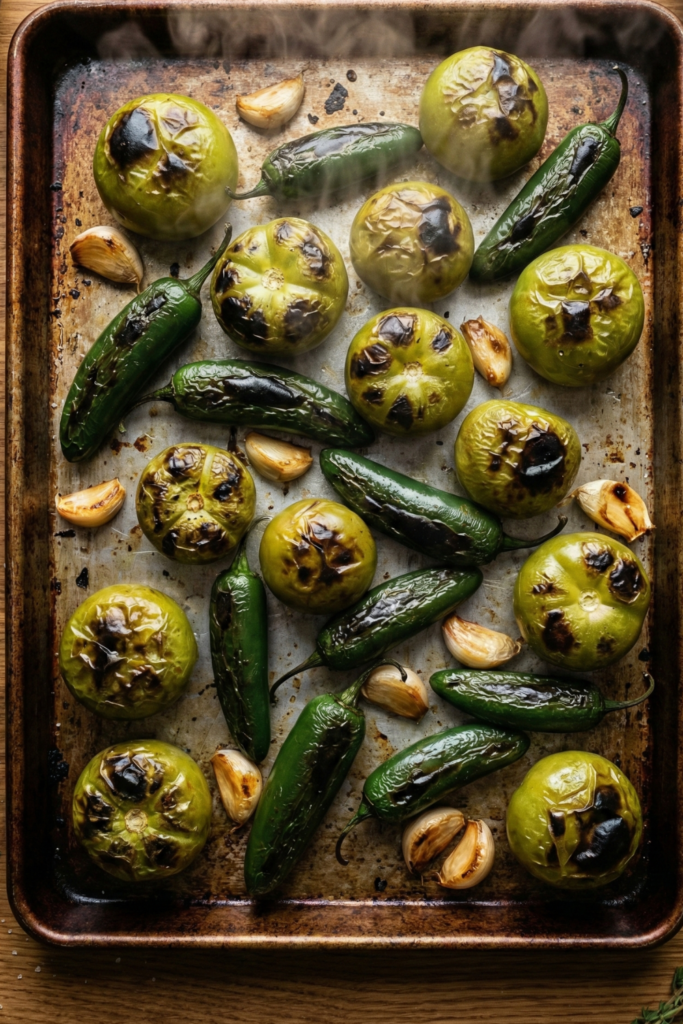
Here is my favorite part, mostly because it smells amazing. Preheat your broiler to high. Line a baking sheet with foil (unless you love scrubbing burnt pans, which I definitely don’t).
Arrange your cleaned tomatillos, jalapeños, and maybe a poblano pepper or two on the sheet. Toss them with a little oil. Shove that pan under the broiler for about 5-10 minutes.
You aren’t looking for “golden brown” here. You want char. You want black spots and blistered skins. The tomatillos will burst and leak some juice—that’s totally fine. That char is what gives the slow cooker chile verde its signature smoky kick without needing liquid smoke.
The “Bag Trick” for Peppers
Once your peppers are looking sufficiently blackened, take them out. But wait! Don’t try to peel them yet. You will burn your fingers off. I learned that the hard way, dancing around the kitchen blowing on my fingertips.
Instead, grab the hot peppers with tongs and throw them into a Ziploc bag or a bowl covered with plastic wrap. Let them steam in their own heat for about 10 minutes. This sweats the skins, making them slide right off.
After they cool, the skins should peel away easily. Remove the seeds if you don’t want it too spicy, or leave them in if you’re brave. Throw those roasted beauties into a blender with garlic, cilantro, and the tomatillos (juices and all). Blitz it until it’s smooth.
That green gold is ready to meet the pork. It takes a little extra effort, but once you smell that roasted goodness, you’ll never go back to boiling.
Step-by-Step Slow Cooker Instructions for Maximum Tenderness
I used to treat my slow cooker like a magic box where I could just dump raw ingredients, walk away, and return to a gourmet meal. I was young and naive. I remember one specific Tuesday where I threw raw, cold pork cubes and a jar of salsa into the crockpot before work. When I came home, the meat was gray and tough, floating in a watery soup. It was a disaster.
That was the day I learned that slow cooker chile verde requires a little bit of love before you hit that “start” button. It’s not about working harder; it’s about working smarter to build flavor layers that usually take days to develop.
The Great Searing Debate
You might be tempted to skip browning the meat. Don’t do it. Seriously, put the tongs down and listen to me. Searing the pork creates the Maillard reaction—that’s fancy chef talk for “browning equals flavor.”
Grab a heavy skillet (cast iron is my go-to) and get it ripping hot with a little oil. Sear the pork chunks in batches. If you crowd the pan, the meat will steam instead of brown, and you’ll miss out on that crusty goodness. You want a deep, golden-brown color on at least two sides of each cube.
Once the meat is browned, transfer it to the slow cooker. But don’t wash that pan yet! Pour a splash of chicken broth or water into the hot skillet and scrape up those brown bits stuck to the bottom. That is liquid gold. Pour that right over the meat.
Layering and Cooking Time
There is actually a strategy to how you load the pot. I like to put a layer of sliced onions on the very bottom. They act as a roasting rack, keeping the meat from direct contact with the heating element, which helps prevent scorching.
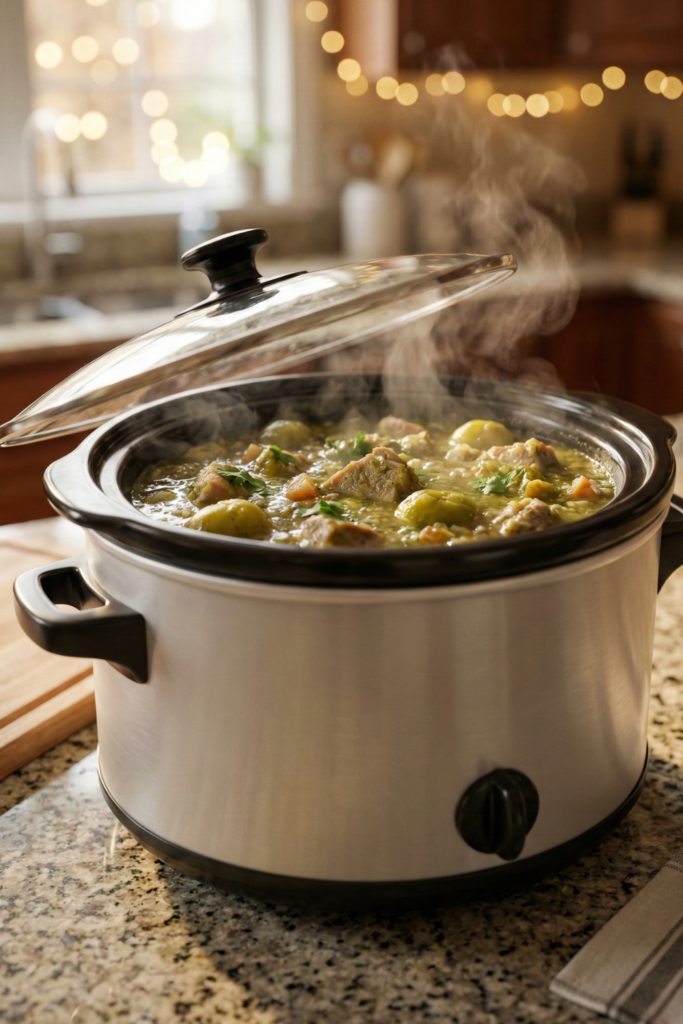
Pile your seared pork on top of the onions, then pour that vibrant green sauce we made earlier over everything. Give it a gentle stir to mix.
Now, the hard part: waiting.
- Low and Slow: Cook on LOW for 6 to 8 hours. This is non-negotiable for pork shoulder. High heat (4 hours) works in an emergency, but the meat won’t be as melt-in-your-mouth tender. The connective tissue needs time to break down properly.
The Final Texture Tweak
When the timer finally goes off, you might open the lid and think, “Uh oh, this is too soupy.” Don’t panic. This happens almost every time because the veggies release water as they cook.
You have two moves here to fix the texture of your slow cooker chile verde:
- ** The Smash Method:** Take a potato masher or a wooden spoon and crush a few pieces of the pork and veggies against the side of the pot. It thickens the stew naturally.
- The Slurry: Mix a tablespoon of cornstarch with equal parts cold water and stir it in. Let it cook on high for another 15 minutes.
My favorite moment is the taste test right at the end. You might need a pinch more salt or a squeeze of fresh lime juice to wake it up. Once that pork falls apart with just a spoon, you know you’ve nailed it.
What to Serve with Chile Verde to Complete the Meal
I used to think that a big bowl of stew was a complete meal on its own. I mean, it’s got meat, it’s got veggies, it’s got broth. What else do you need? Well, I found out the hard way at a family gathering when my uncle looked at his bowl and asked, “Where’s the rest of it?” I was crushed.
It turns out, slow cooker chile verde is rich. Like, really rich. If you don’t have something to cut that richness or soak up that incredible sauce, you’re missing out on half the experience. It’s like peanut butter without jelly—still good, but kinda lonely.
The Great Tortilla Debate
Here is where families get divided. Are you Team Flour or Team Corn?
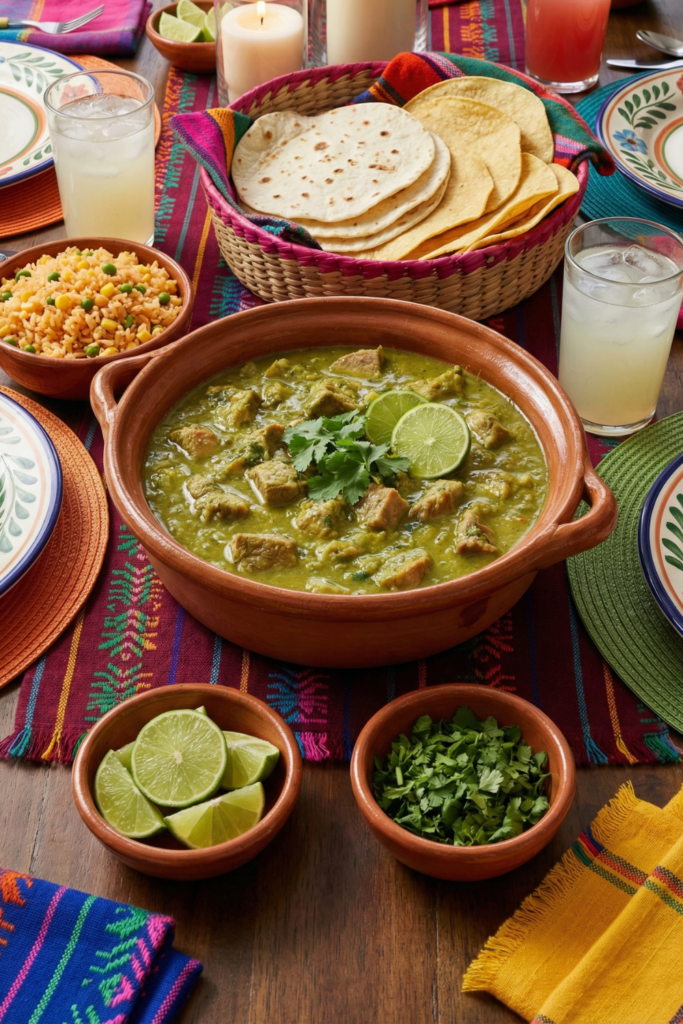
Personally, I am a flour tortilla guy when it comes to this dish. There is just something about a soft, warm flour tortilla that makes it the perfect vessel for dipping. It acts like a sponge for that green gold. But my wife swears by corn tortillas because they add that nice earthy flavor and hold up better if you’re making tacos.
Whatever you choose, please, I beg you—do not serve them cold out of the bag. That is a crime against humanity. Throw them on a hot skillet for 30 seconds or wrap them in foil and toss them in the oven. It makes a huge difference.
Rice is Nice (and Necessary)
You need something to catch the sauce that drips off the pork. I usually whip up a quick batch of cilantro lime rice. It takes like 15 minutes and brightens up the whole plate.
If you want to keep it simple, just plain white rice works too. The slow cooker chile verde has so much flavor that the rice doesn’t need to be fancy. It just needs to be there to do its job.
Toppings That Pop
You’ve spent all day cooking this savory, deep stew. Now you need some crunch and acid to wake it up.
- Radishes: Slice them thin. They add a peppery crunch that cuts right through the fat.
- Lime Wedges: Essential. A squeeze of fresh lime juice at the end hits your tongue and makes all the flavors sing.
- Creamy Stuff: A few slices of avocado or a crumble of queso fresco adds a cooling element if your peppers turned out a little spicier than you planned (which happens to me all the time).
Leftover Magic
Here is the best part. This meal tastes even better the next day. The flavors get to know each other overnight in the fridge.
If you have leftovers, don’t just microwave a bowl. Get creative! I love using the shredded pork for breakfast burritos with scrambled eggs. Or, roll it up inside corn tortillas, cover with the remaining sauce and cheese, and boom—you’ve got green enchiladas. It’s the gift that keeps on giving.
Serving this right turns a simple dinner into a feast. Just don’t forget the napkins. You’re gonna need them.
So, there you have it. You’ve braved the grocery store, wrestled with sticky tomatillos, and waited patiently while your house filled up with that incredible smell. Now comes the best part: digging in. This slow cooker chile verde isn’t just another dinner; it’s a keeper. It’s become one of those family favorite recipes that my kids actually ask for, which is a miracle in itself.
I honestly hope this stew brings some warmth to your kitchen. It’s perfect for weekend meal prep because, let’s be real, who wants to cook a huge meal on a Tuesday night?. I usually try to make a double batch for freezer friendly dinners, but to be honest, it rarely makes it to the freezer. We usually just stand around the kitchen eating cold leftovers right out of the tupperware.
If you make this, I’d love to see it! Snap a messy photo of your bowl (the messier, the better) and tag me. And hey, if you want to save this for a rainy day, go ahead and share this on Pinterest. Your future self will thank you when you’re craving serious comfort food. Happy cooking, friends!.