Have you ever stared at a plain pork chop and thought, “Man, this is going to be dry”? I’ve been there! I used to overcook them until they resembled leather shoe soles. But then, I discovered the magic of Sicilian cooking. It’s not just about the meat; it’s about that bold, salty, tangy sauce that brings everything to life!
Did you know that in Sicily, the combination of “agrodolce” (sour and sweet) notes is a staple that dates back centuries? This recipe brings that history right to your kitchen table. We aren’t just frying meat here; we are building layers of flavor with salty capers, briny olives, and sweet tomatoes. It’s a total flavor bomb! Get your skillet ready, because we are about to make the best dinner you’ve had all year.
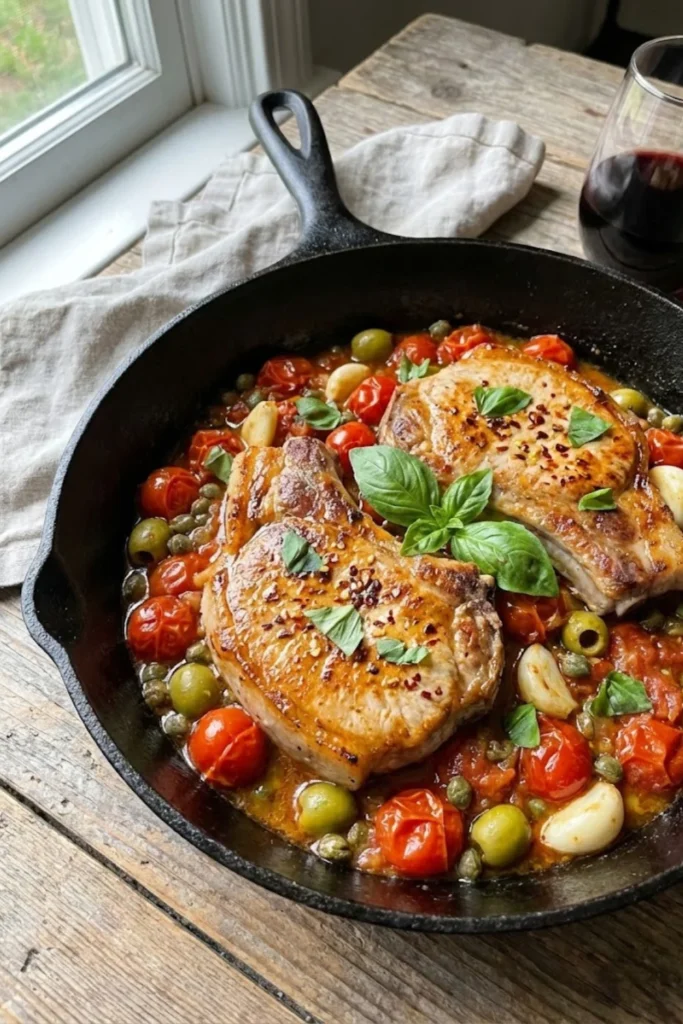
What Makes Sicilian Style Pork Chops So Special?
Listen, I have to be honest with you. For a long time, I was actually scared of cooking pork chops. I know, it sounds silly. But every time I tried, they ended up tough, dry, and frankly, kind of sad. I’d serve them to my family, and we’d all be sawing away at the meat in silence. It wasn’t until I stumbled upon Sicilian pork chops during a trip to my nonna’s village (okay, it was actually just a really good Italian restaurant in Jersey, but let me dream!) that I realized what I was doing wrong.
The magic isn’t just in the meat; it’s in the attitude.
It’s All About the “Agrodolce”
If you’ve never heard of agrodolce, get ready for your tastebuds to wake up. It literally translates to “sour-sweet.” In Sicily, they don’t just dump tomato sauce on meat and call it a day. They master the balance.
I remember the first time I threw vinegar into the pan with the tomatoes. I thought, “Am I ruining this?” But that sharp acidity from the vinegar (or white wine) cuts right through the rich pork fat. When you combine that with the natural sweetness of the tomatoes and the salty punch of capers, you get a flavor profile that is just… wow. It hits every part of your tongue. You aren’t just eating dinner; you’re having an experience.
Fancy Food That’s Actually Lazy
Here is a little secret I keep from my dinner guests: this recipe is incredibly easy. Sicilian cuisine is famous for being “cucina povera” or “peasant cooking.” That means it relies on simple, fresh ingredients rather than complicated techniques.
- You don’t need a sous-vide machine.
- You don’t need to marinate it for 24 hours.
- You just need a good skillet and fresh stuff.
I’ve made this on a Tuesday night when I was totally exhausted from work. I dragged myself to the kitchen, seared the chops, threw in the olives and tomatoes, and fifteen minutes later, it looked like I’d been slaving away all day. The pan fried pork chops simmer right in the sauce, which keeps them moist. It is basically foolproof, which is exactly what I need on a weeknight.
A Lesson in Ingredients
One mistake I used to make was buying the cheapest olives I could find. Don’t do that! In this dish, the specific ingredients do the heavy lifting. The distinctive taste of Castelvetrano olives—those bright green, buttery ones—makes a huge difference compared to the sour jarred martini olives.
When you cook authentic Italian food, you learn that the quality of the little things matters. I once tried using dried basil instead of fresh because I was too lazy to run to the store. It was… fine. But it wasn’t great. The fresh herbs add a brightness that dried stuff just can’t copy.
So, why are these chops special? Because they take a humble, cheap cut of meat and dress it up like royalty without any stress. It’s hearty, it’s healthy (hello, Mediterranean diet), and it’s arguably the best way to eat pork. Trust me, once you try this method, you won’t go back to plain old chops again.
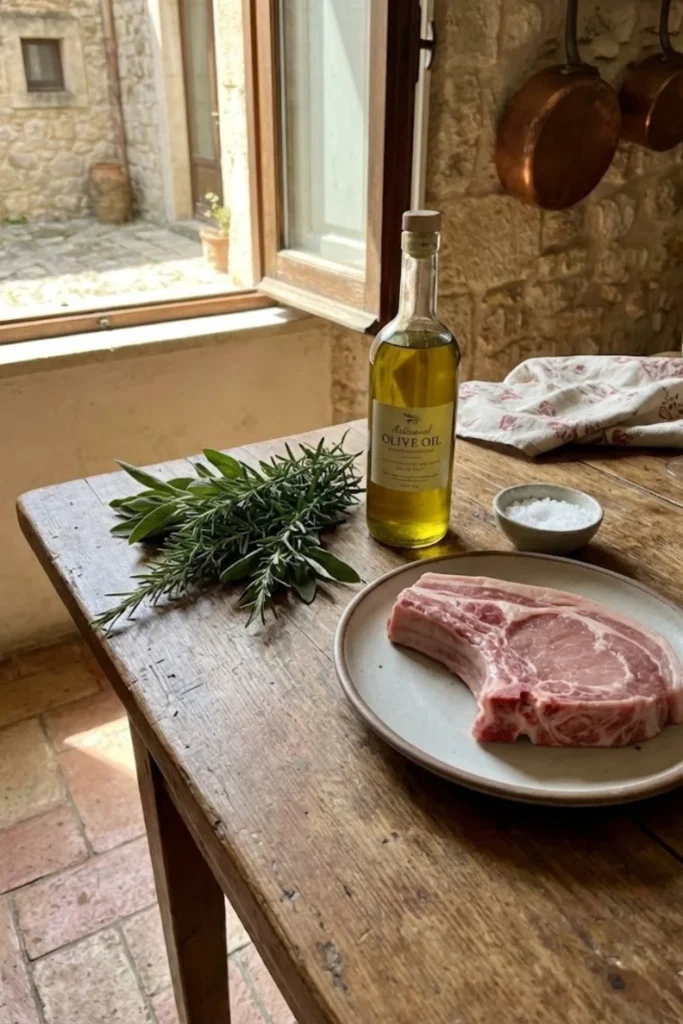
Essential Ingredients for Authentic Sicilian Flavor
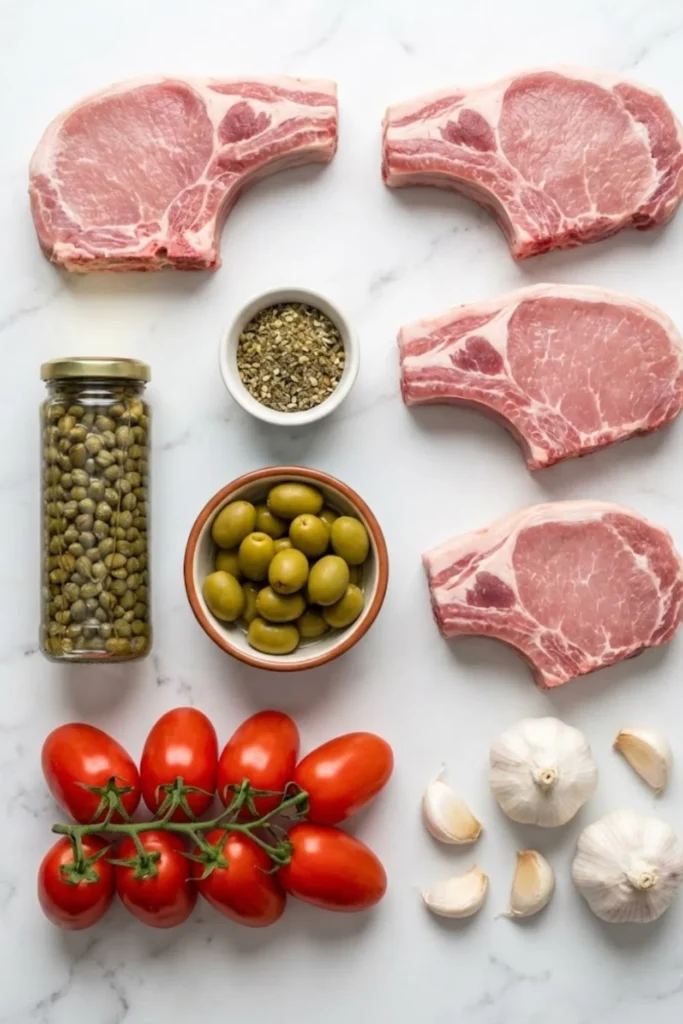
I used to think that making Sicilian pork chops required some secret grandmother magic that you couldn’t buy in a store. Turns out, I was just buying the wrong stuff. I remember standing in the grocery aisle once, staring at twenty different kinds of canned tomatoes, totally overwhelmed. I grabbed the cheapest one, and guess what? My sauce tasted like metal. Lesson learned.
When you are cooking a dish this simple, there is nowhere for low-quality ingredients to hide. Every single element needs to bring its A-game. Let’s break down exactly what you need so you don’t make the same mistakes I did.
The Pork: Bone-in is Best
Let’s talk meat. I know boneless chops are convenient. They cook fast, and they are easy to cut. But if you want that juicy, restaurant-quality result, you really need to grab bone-in pork chops.
Why? The bone acts like an insulator. It protects the meat near it from overcooking, which is usually the death of any pork chop dinner. Plus, the fat cap on a bone-in rib chop renders down and flavors the whole sauce.
I’ve made the mistake of buying those super thin “breakfast chops” before. You know the ones? They are about as thick as a playing card. By the time I got a nice sear on them, they were tough as leather. Do yourself a favor and look for chops that are at least an inch thick. You need that thickness to keep the inside tender while the outside gets crispy.
The “Salty Squad”: Olives and Capers
This is where the real authentic Italian flavor lives. In the past, I’d skip the capers because I thought they looked weird. Big mistake. Those little green buds add a briny punch that cuts right through the heavy pork fat.
And please, step away from the jarred martini olives with the pimentos. They are too sour for this. You want Castelvetrano olives. They are bright green, firm, and have a mild, buttery flavor that is addictive. I usually end up eating half the jar before they even make it into the pan. If you can’t find them, Cerignola olives work too, but the texture of the Castelvetrano is just perfect for this sauce.
The Red Gold: Tomatoes
For the sauce base, you have two solid options depending on the season. If it’s summer and you have a garden exploding with produce, use fresh cherry tomatoes. They burst open in the pan and create a sweet, fresh sauce.
But if it’s the middle of winter, or you just want that deep, rich flavor, go for canned San Marzano tomatoes. These Italian plum tomatoes are less acidic and sweeter than regular ones. I usually crush them by hand (it’s therapeutic, trust me) right into the skillet. They break down into a thick, velvety sauce that clings to the meat perfectly.
The Acid and Aromatics
Finally, you need something to deglaze the pan. After you sear the meat, there are all these brown tasty bits stuck to the bottom. I used to scrub them off in the sink—what a waste! Now, I pour in a splash of dry white wine, like a Pinot Grigio or Sauvignon Blanc.
If you don’t do alcohol, a little chicken broth with a splash of white wine vinegar works too. This acidic kick is crucial for that sweet and sour vibe. Toss in plenty of fresh garlic and maybe a sprig of oregano, and you are golden. Don’t be shy with the garlic; we aren’t vampires, but we are making Italian food!
Step-by-Step Instructions for Pan-Fried Perfection
I used to be terrified of frying meat on the stove. I’m not even joking—I set off my smoke detector so many times that my dog would go hide under the bed as soon as I pulled out the skillet. But over time, I realized that getting that perfect sear isn’t rocket science; it just takes a little patience and the right technique.
If you follow these steps, you’ll avoid the “gray, steamed meat” situation that happens to the best of us. We are going for color, flavor, and texture here.
Prep Work: Dryness is Your Friend
Here is the number one mistake I see people make: throwing wet meat into a hot pan. If your Sicilian pork chops are wet from the package, they won’t sear. They will just steam in their own juices. It’s gross, and you miss out on all that flavor.
So, grab a handful of paper towels and pat those chops down like you are drying off a toddler after a bath. You want them bone-dry. Once they are dry, hit them hard with kosher salt and fresh cracked pepper. Don’t be shy with the salt. I used to under-season everything because I was scared of “overdoing it,” but thick bone-in chops can take a lot of seasoning.
The Sear: Don’t Touch It!
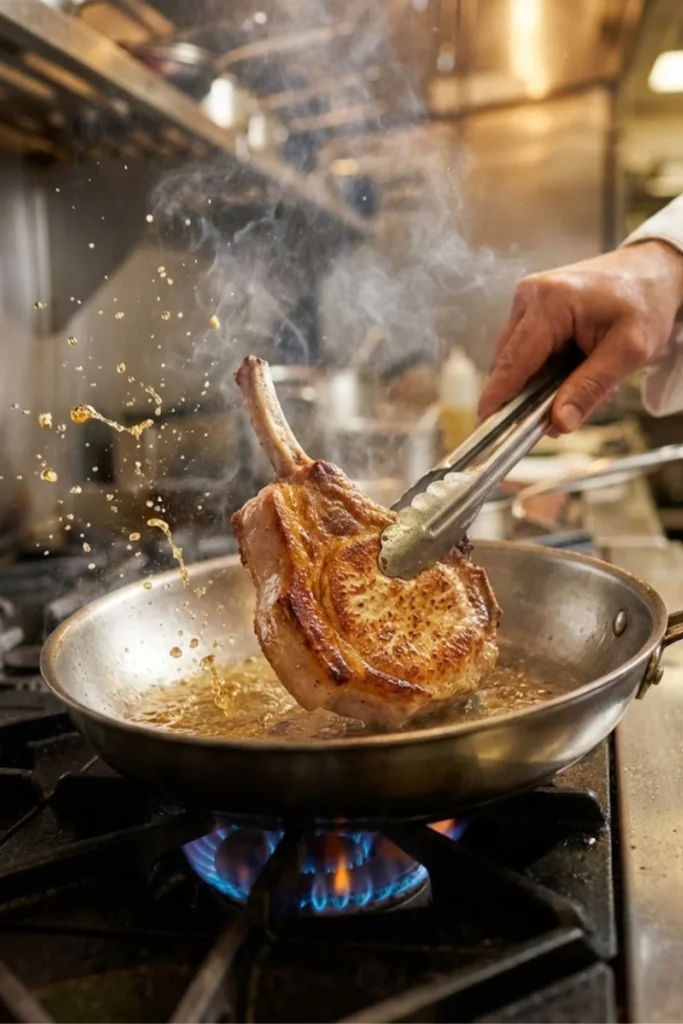
Get your heaviest skillet—cast iron is amazing if you have one—and heat up your olive oil over medium-high heat. You want the oil to be shimmering, maybe even just starting to smoke a tiny bit.
Lay the chops in the pan away from you (so you don’t splash hot oil on your favorite shirt… learned that the hard way). Now, here is the hardest part: Do not touch them.
I know, it’s tempting to peek. You want to see if it’s burning. But you need to let them sit undisturbed for at least 3-4 minutes. This is how you develop that deep, golden-brown crust that makes pan fried pork chops taste like they came from a restaurant. If you try to flip them and they stick to the pan, they aren’t ready. Let them be.
Building the Flavor Base
Once you have a beautiful crust on both sides, take the meat out of the pan. It won’t be cooked all the way through yet, and that’s fine. Set it aside on a plate.
Now look at your pan. See those brown stuck-on bits? That is liquid gold. Toss in your garlic and let it sizzle for thirty seconds until your kitchen smells amazing. Then, pour in your white wine. It’s going to hiss and bubble aggressively—this is called deglazing the pan. Scrape up all those brown bits with a wooden spoon. That stuff adds a depth to the sauce that you just can’t get from a jar.
The Simmer
After the white wine reduction has cooked down by about half, toss in your tomatoes, capers, and olives. Let it bubble into a savory tomato sauce.
Slide the pork chops back into the pan, nestling them right into that sauce. Turn the heat down to low. This is the secret to tender pork chops. By finishing them gently in the liquid, they absorb the flavor and stay incredibly moist. It turns a stressful high-heat cook into a relaxing simmer. Just a few minutes here, and you are ready to eat. One of the best one pan meals you’ll ever make, hands down.
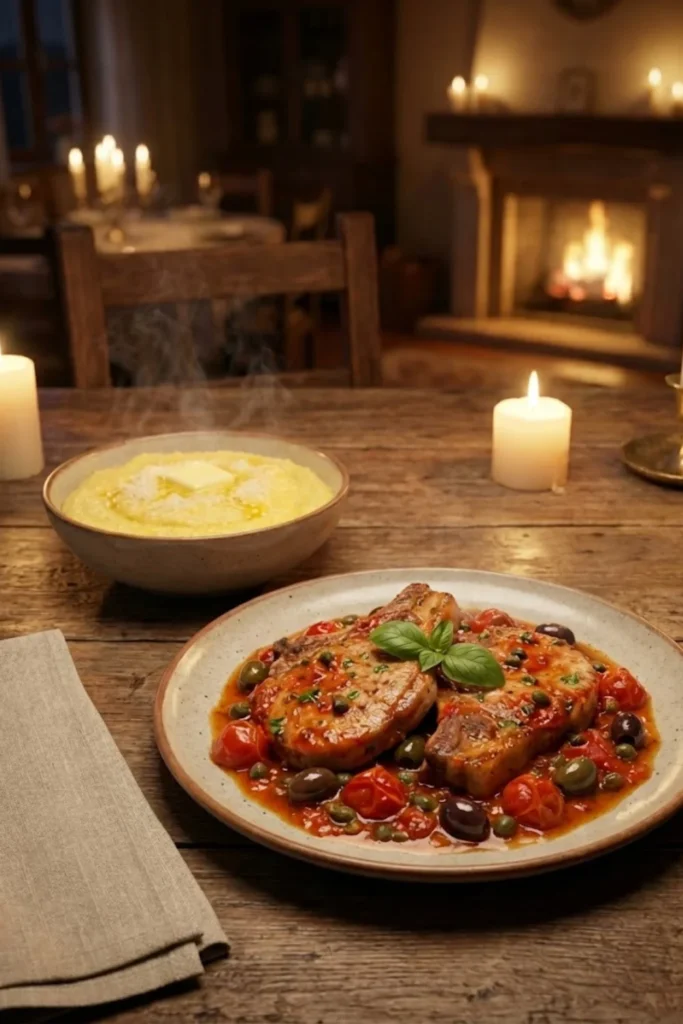
Perfect Side Dishes to Serve with Italian Pork Chops
I have a confession to make. The first time I nailed this recipe, I made a rookie mistake that almost ruined the whole meal. I spent so much energy focusing on the meat that I forgot about the sides entirely. I ended up serving these beautiful, sauce-drenched chops next to… plain white rice.
It was tragic. The rice did absolutely nothing for the dish. It just sat there, looking sad and soggy. My family ate it, but I could tell something was missing. Since then, I’ve learned that the sides aren’t just “extra”; they are the support crew that makes the main event shine.
The Starch Strategy: Sopping Up the Sauce
You absolutely need something to catch that agrodolce sauce. If you leave that liquid gold on the plate, you are wasting the best part of the dinner! My personal favorite is creamy polenta.
For years, I was intimidated by polenta. I thought you had to stir it for an hour or it would be lumpy. Turns out, that’s a myth. I buy the quick-cooking kind (don’t judge me), stir in a hefty knob of butter and some parmesan, and it’s done in five minutes. The creamy texture balances out the acidity of the vinegar and tomatoes perfectly. It’s pure Italian comfort food.
If you aren’t a corn fan, roasted potatoes are a solid backup. I like to toss them in rosemary and olive oil until they are crispy. They act like little sponges for the sauce. Just don’t boil them plain; they need that roasted texture to stand up to the pork.
Go Green or Go Home
Because this dish is pretty rich with the pork fat and the salty olives, you need something fresh to cut through it. I used to serve steamed broccoli, but it was too watery. It watered down my sauce, which is a big no-no.
Now, I almost always go with a sautéed spinach side or bitter broccoli rabe. I throw it in the same pan while the meat rests (less dishes for me!). The bitterness of the greens plays really nicely with the sweet tomatoes. It makes you feel like you are eating a healthy Mediterranean diet dinner, even if you did just eat a giant pork chop.
The “Scarpetta” and Wine
In Italy, there is this beautiful concept called “fare la scarpetta,” which means “make the little shoe.” It refers to using a piece of bread to mop up the last bit of sauce on your plate. You cannot serve Sicilian pork chops without a loaf of crusty bread. It is actually illegal in my house.
As for what to drink? I am no sommelier. I usually just grab whatever is on sale. But I have found that a Nero d’Avola pairing is hard to beat. It’s a Sicilian red wine that is spicy and fruity enough to handle the capers. If you prefer white, a crisp Grillo works too. Just don’t stress about it; the food is the star here.
Expert Tips for Juicy, Tender Pork Chops Every Time
I have a vivid memory from my childhood of my mom cooking pork chops. She was terrified of undercooking them, so she would blast them in the oven until they were basically pork jerky. We had to drown them in apple sauce just to swallow them. For the longest time, I thought that was just how pork tasted—dry, tough, and needing a lot of chewing.
It wasn’t until I started cooking for myself that I realized the problem wasn’t the pig; it was the process. If you follow a few simple rules, you can make pork that is just as tender as a good steak. Here is how I stopped making shoe leather and started making tender pork chops.
The Thermometer is Your Best Friend
If you take only one thing away from this whole post, let it be this: buy a digital meat thermometer. Seriously, stop guessing. I used to poke the meat with my finger and pretend I knew what “medium” felt like. Spoiler alert: I didn’t.
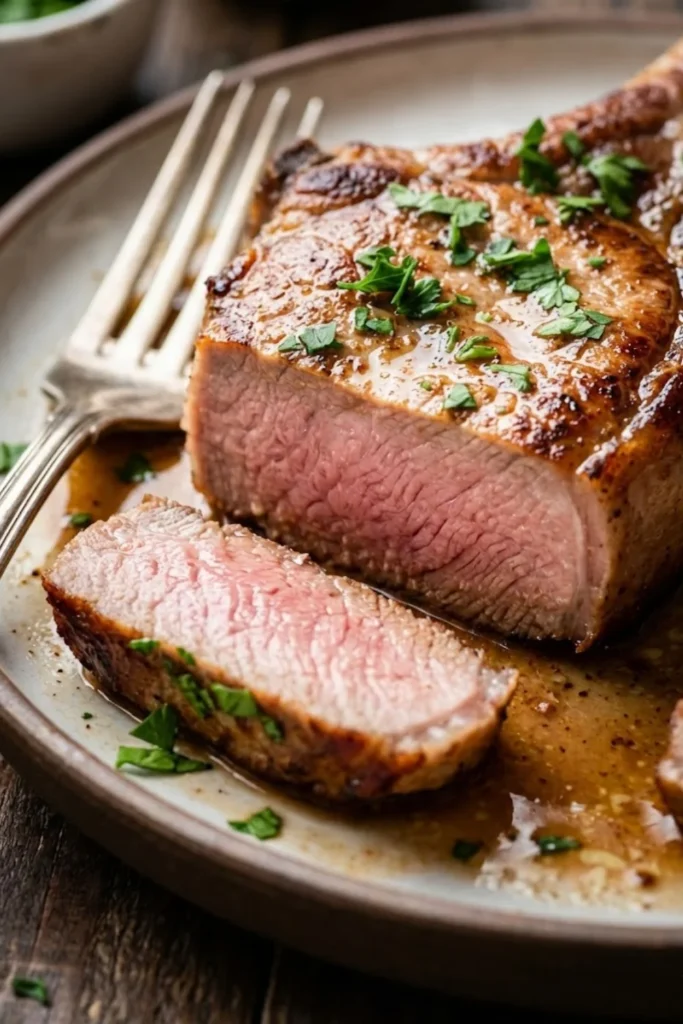
For safe and juicy pork secrets, you want to pull the meat off the heat when it hits 145°F (63°C). I know, I know. It might look a little pink in the middle. My grandmother would have a heart attack seeing pink pork. But modern pork is safe to eat this way, and it is a total game changer.
When you cook it to 165°F or higher, you are squeezing all the moisture out. By using meat thermometer tips and pulling it at 145°F, you keep all those juices inside where they belong. Trust the numbers, not your anxiety!
The Hardest Part: Waiting
This is where I always struggle because I am impatient and usually starving by the time dinner is ready. But you simply cannot cut into the meat right away. If you slice into a chop fresh off the skillet, you will watch a puddle of delicious juice run out onto your cutting board. That is juice that should be in your mouth!
You need a proper resting meat guide. Let the chops sit on a warm plate for at least 5 to 10 minutes before you serve them. During this time, the juices redistribute throughout the meat. It relaxes the fibers. It makes the difference between a dry bite and a melt-in-your-mouth experience. Use this time to yell at your family to set the table or pour yourself a glass of wine.
Don’t Crowd the Dance Floor
I have a bad habit of trying to cook everything at once to save time. I’ll try to jam four big chops into a 10-inch pan like I’m playing Tetris. Don’t be like me.
When you overcrowd the pan, the temperature of the pan drops rapidly. Instead of searing and getting that nice brown crust, the meat starts to release water and steams itself. Steamed pork is gray, rubbery, and sad.
Give the chops some personal space. If they don’t fit comfortably with room to breathe, cook them in batches. It might take an extra ten minutes, but the result is worth it. You want them to fry, not sweat. This simple adjustment is key to getting that restaurant-quality texture at home.
Time to Bring Sicily Home
I still remember the first time I served these Sicilian pork chops to my husband. He looked at the plate, then at me, and asked, “Who are you and what have you done with my wife?” He was so used to my dry, flavorless pork experiments that he couldn’t believe this juicy, salty, tangy masterpiece came out of our kitchen.
It just goes to show that you don’t need a culinary degree or a plane ticket to experience real Sicilian cuisine. You just need to respect the ingredients.
Why This Recipe Stuck
I think the reason this dish became a permanent part of my rotation is because it feels like cheating. Seriously. You are throwing a few simple things into a pan—capers and olives, tomatoes, garlic—and they do all the heavy lifting for you. It transforms a boring piece of meat into a gourmet dinner at home.
I used to stress out about “what’s for dinner” at 4 PM every day. It was a constant headache. But having a recipe like this in my back pocket changed that. It’s quick enough for a Tuesday but fancy enough that I’ve served it to guests on a Saturday. It’s the ultimate family friendly meal because even the kids (who usually pick around “green stuff”) end up dipping their bread in that savory tomato sauce.
Don’t Let It Slip Away
If you are anything like me, you’ll read this, think “that sounds good,” and then completely forget about it by tomorrow morning. Don’t let that happen! This is one of those Italian pork recipes that you will want to come back to again and again.
Pin this mouthwatering dish to your “Italian Dinner Ideas” board on Pinterest.
Trust me, your future self (and your hungry family) will thank you when you’re staring at a package of pork chops and wondering what to do. So, grab a bottle of wine, turn on some Italian music, and give this a shot. If I can turn my “shoe leather” pork chops into this, you definitely can too. Buon appetito!