Did you know that nearly 70% of home cooks say their biggest kitchen frustration is serving dry, rubbery chicken? It’s a total bummer! I’ve been there, staring at a plate of what looks like “chicken” but tastes like a cardboard box. For years, I struggled to get that perfect oven baked garlic butter chicken breast juicy and tender every single time.
But listen, I finally cracked the code, and it’s simpler than you think! You don’t need fancy equipment, just a few tricks and a lot of garlic. We’re going to dive into how to transform a boring piece of meat into a mouthwatering masterpiece. This isn’t just about cooking; it’s about making your family actually want seconds. Let’s get into the kitchen and make some magic happen!
Choosing the Right Bird: Why Thickness Matters
Look, I’ve been there. You’re standing in the frozen aisle, shivering like a leaf, staring at a mountain of plastic-wrapped birds. It’s 2026, and you’d think we’d have robots picking the perfect Roast Turkey for us by now, but nope. We’re still out here playing the guessing game with our holiday dinner.
I used to think that the heaviest bird was the winner. One year, I bought this massive, 25-pound monster that looked more like a prehistoric dinosaur than a dinner. I thought I was being smart, but man, was I wrong! The thing was mostly bone and water weight, and the meat ended up being as dry as a desert.
The Meat-to-Bone Ratio Trick
What you really want is a bird that’s thick and compact. A thick breast means more juicy white meat for everyone to fight over later. When I’m scouting for a Roast Turkey, I actually poke the package—don’t tell the grocery store manager! If the breast feels shallow or flat, I put it right back.
You want a bird that looks like it’s been hitting the gym. Broad shoulders and a deep chest are the signs of a high-quality Roast Turkey. This thickness helps the meat stay moist because it takes longer for the heat to reach the center. It’s like a built-in safety net against overcooking.
Why I Avoid the “Skinny” Birds
A skinny bird is a total recipe for disaster. One time, I grabbed a thin one because it was on sale, and it was a huge mistake. The heat went through those thin layers so fast that the outside was charred before the inside even hit 140 degrees. Me and my family ended up ordering pizza that night, which was super embarrassing for a teacher!
Now, I tell all my students to look for a “double-breasted” variety if they can find one. These birds are bred to have more meat in the places where it counts. When you prepare your Roast Turkey, you’ll notice the difference immediately. The meat pulls away from the bone so easy, and it’s way more satisfying.
Buying Tips for 2026
Check the label for the “Grade A” stamp, but don’t stop there. Sometimes even the top-grade birds can be a bit lanky. Aim for a bird that weighs between 12 and 14 pounds if you want the best texture. If you need more food, it’s actually better to buy two smaller, thick birds than one giant, skinny one.
This approach makes the cooking time way more predictable, too. A thick, mid-sized Roast Turkey usually needs about 13 minutes per pound at 325 degrees. I’ve found that this is the sweet spot for getting that golden skin without turning the inside into cardboard. Trust me, your taste buds will thank you for being picky!
The Secret to Juicy Meat: Why I Never Skip the Brine
Let’s be real for a second. There is nothing more heartbreaking than pulling a gorgeous Roast Turkey out of the oven, carving it up, and realizing it has the texture of a wool sweater. I’ve lived that nightmare more than once, and it’s why I’m now a self-proclaimed brine evangelist. If you want your family to actually finish their plates in 2026, you gotta soak that bird.
The Great Salt Disaster of ’22
A few years back, I thought I could skip the brine because I bought an expensive heritage bird. Big mistake! I spent eighty bucks on this thing, and it ended up so dry we basically had to drink a gallon of gravy just to swallow it. My brother-in-law still brings it up every time I see him, which is totally annoying.
Wet Brining: The Classic Bath
Most folks start with a wet brine, which is basically a big salty bath for your Roast Turkey. I use a clean five-gallon bucket I keep in the garage specifically for this. You mix water, kosher salt, brown sugar, and maybe some peppercorns if you’re feeling fancy.
Just make sure the water is cold before you drop the bird in. One time I didn’t wait, and let’s just say the temperature got into the “danger zone” way too fast. I had to toss the whole thing and start over. Talk about a mood killer.
Why Dry Brining Is My New BFF
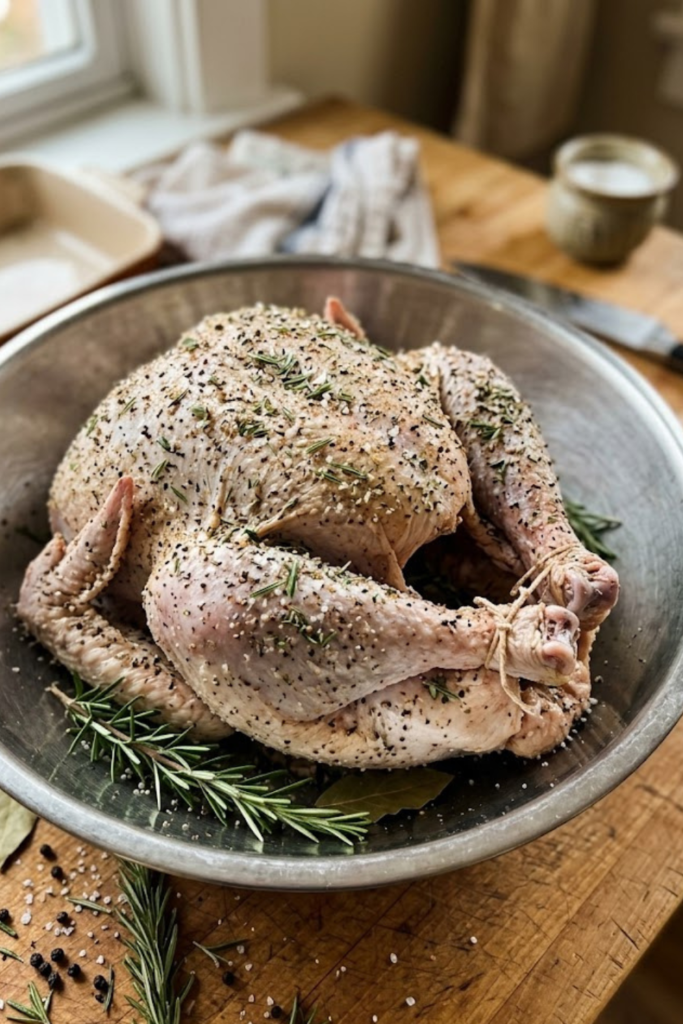
Lately, I’ve been leaning toward dry brining because it’s way less messy. You just rub a heavy amount of salt and herbs all over the skin of the Roast Turkey and let it sit in the fridge. It sounds weird, but the salt pulls the moisture out and then sucks it back in, deep into the muscle.
This method gives you the crispiest skin you’ve ever seen. No soggy bits here! Plus, it doesn’t take up half your fridge like a giant bucket of water does. Just give it at least 24 hours to do its thing.
Practical Tips for the Win
Don’t use table salt for this, or your Roast Turkey will taste like a salt lick. Stick to Kosher salt because the grains are bigger and easier to control. I usually aim for about half a cup of salt for a 14-pounder.
Also, make sure you pat the skin totally dry before it goes in the oven. If the skin is wet, it’ll steam instead of roasting, and nobody wants flabby skin. It’s these little things that make the difference between an okay meal and a legendary one.
The Heat is On: Nailing the Perfect Roasting Temperature
Let’s talk about the oven. This is where the magic happens, but it’s also where things usually go south. I remember my third year teaching, I volunteered to host the whole department. I was so nervous I kept opening the oven door every ten minutes. Big mistake! Every time you peek, you lose about 25 degrees of heat. My Roast Turkey took six hours instead of three. We didn’t eat until 9 PM.
Don’t be like me. You need a plan for the heat. I always set my oven to 325°F. Some people like 350, but I think the lower temp keeps the meat much juicier. It’s about slow and steady winning the race here. I’ve found that higher heat just makes the skin tough before the legs are even cooked through.
Get a Real Thermometer
If you’re still using that plastic pop-up timer, please throw it away. Those things are total lies! They usually don’t pop until the meat is way overcooked. I bought a digital meat thermometer for twenty bucks, and it changed my life. It makes the whole process way less stressful.
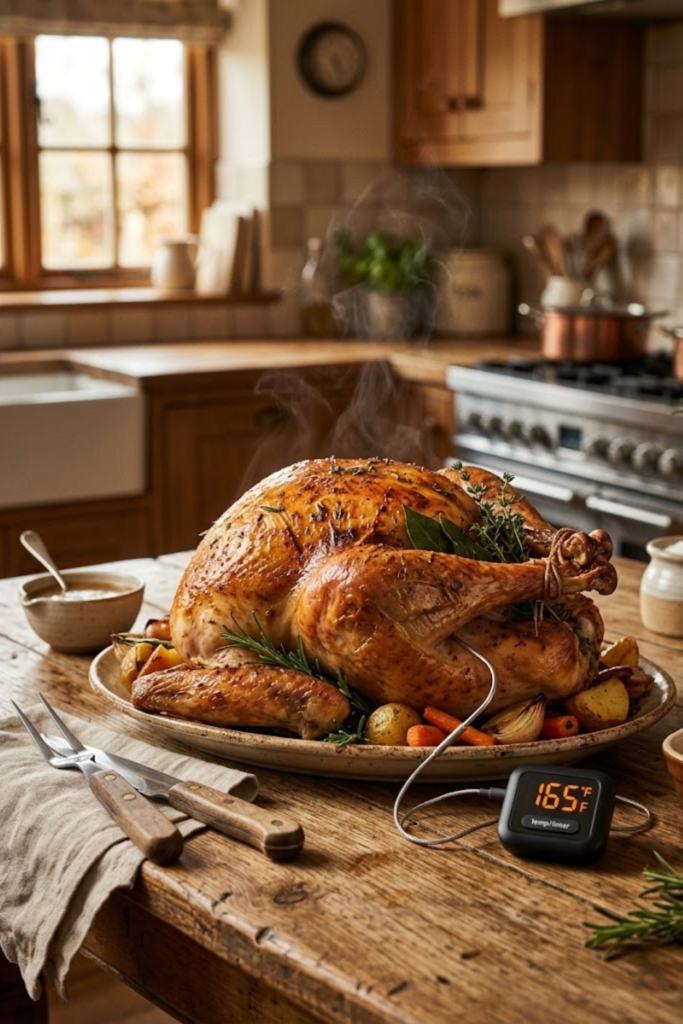
Stick the probe into the thickest part of the thigh. Be careful not to hit the bone. Bone gets hotter than meat, so it’ll give you a fake reading. You’re looking for 165°F. I usually pull my Roast Turkey out at 160°F. The heat keeps rising while it sits on the counter. This is carry-over cooking, and it’s a lifesaver.
The Foil Tent Trick
About halfway through, your bird might start looking a bit too dark. This happened to me last year. The skin was getting real brown, but the inside was still cold. I didn’t panic, though. I knew exactly what to do.
I just grabbed a big piece of aluminum foil. I made a loose “tent” over the breast area. This protects the delicate white meat from the direct heat. Meanwhile, the legs can finish up. It’s like giving your Roast Turkey a little sunshade. This keeps the breast from drying out while the dark meat reaches safety.
Letting It Rest
This is the hardest part for me. I’m always hungry and want to eat right away. But you have to wait! If you cut it too soon, all those juices you worked hard for will just run out on the board. Your plate will be wet, but the meat will be dry.
Give it at least thirty minutes. I usually use that time to make the gravy or finish the potatoes. A well-rested Roast Turkey is much easier to slice. The meat stays together and looks like it was done by a professional. Plus, you won’t burn your fingers while you’re working! This patience really pays off when you take that first bite.
Master the Carve: Slicing Without the Stress
I’ll be honest, the first time I tried to carve a Roast Turkey, it looked like it had been through a wood chipper. I was using a tiny steak knife and a plastic cutting board that kept sliding all over the counter. It was a total mess! My students would have failed me if I had turned in that plate for a grade. But over the years, I’ve learned that carving isn’t about being a surgeon or having super powers. It’s just about knowing where the joints are and having a sharp blade.
Get Your Tools Ready
You don’t need one of those fancy electric saws that sound like a construction site. In fact, those things usually just shred the meat into pieces. A long, thin carving knife is your best bet. And please, sharpen it before you start! A dull knife is actually more dangerous because you have to push harder, and that is how accidents happen. I also like to put a damp paper towel under my cutting board. It stops the board from sliding while you work on the Roast Turkey. This simple trick saves me so much frustration every single year.
Break It Down in Order
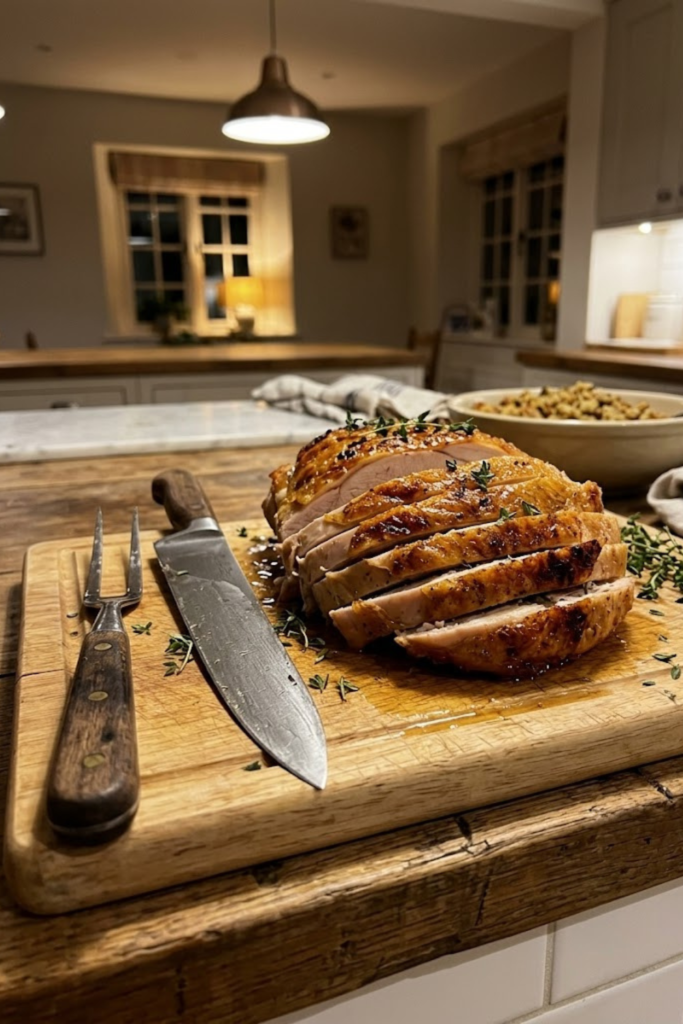
Don’t just start hacking at the breast meat right away. I always take the legs and wings off first. Just pull the leg away from the body and cut through the skin. You’ll feel where the joint is. If you hit bone, don’t try to saw through it; just move the knife a little to the left or right. Once the legs are off, you have a clear path to the breast meat. Instead of slicing thin pieces off while it’s still on the bone, I cut the whole breast off in one big piece. Then, I slice that big piece into thick, juicy rounds on the board. This keeps the skin attached to the meat so every bite of your Roast Turkey is perfect.
Making the Platter Look Good
Arranging the meat on the tray is the fun part. I put the dark meat on one side and the white meat on the other so people can pick what they like. I like to tuck some fresh herbs like parsley or sage around the edges to hide any messy spots. If some pieces crumbled or fell apart, don’t worry about it! Just pour a little warm broth or gravy over the meat right before you bring it to the table. This adds a ton of flavor and makes the Roast Turkey look moist and shiny. Your guests will think you spent hours on the presentation, but it only takes a few minutes if you stay calm.
The Best Part: What to Do with Leftover Roast Turkey
Honestly, as much as I love the big dinner, I think I like the days after even more. There’s something so relaxing about having a fridge full of food and not having to cook a big meal for a while. As a teacher, I’m all about being efficient, and a big Roast Turkey is the ultimate gift that keeps on giving. If you play your cards right, you can get three or four different meals out of one bird. It really helps the grocery budget, too, which is something we are all thinking about these days.
The Ultimate “Day After” Sandwich
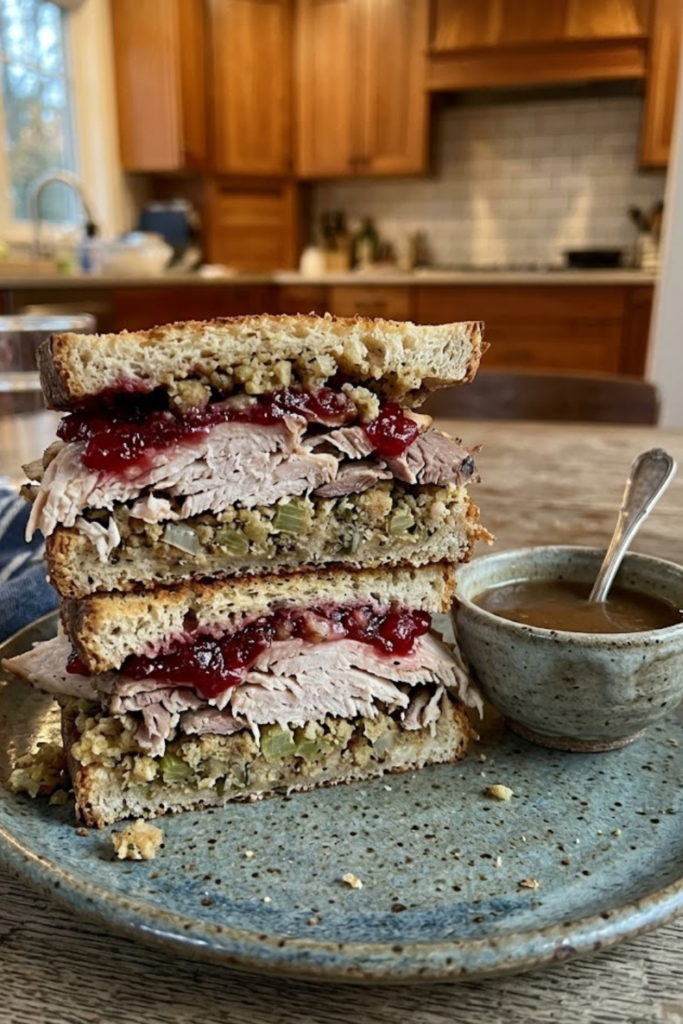
The first thing I do the next morning is make a massive sandwich. I take two thick slices of bread—maybe some of those leftover rolls—and pile on the cold Roast Turkey. I like to add a little bit of stuffing and a big smear of cranberry sauce right on the bread. It sounds like a lot, but the sweetness of the berries with the salty meat is just perfect. I usually eat this while I’m sitting on the couch in my pajamas, finally relaxing after the big kitchen marathon. It’s my favorite tradition.
Why You Must Save the Bones
Whatever you do, please don’t throw that carcass in the trash! I used to do that because I thought making soup was way too much work. But then a friend showed me how easy it is. You just put the bones in a big pot, cover them with water, and let it simmer while you watch a movie. The smell in the house is amazing. This creates a base for a soup that is way better than anything you can buy in a can at the store. I usually throw in some carrots, celery, and the rest of the Roast Turkey bits. It’s like a warm hug in a bowl, especially if the weather is getting chilly outside.
Final Thoughts: You’ve Got This Roast Turkey Thing Down!
Well, we made it to the end of the road. I hope you feel a lot better about tackling that Roast Turkey now. Honestly, I used to get so worked up about holiday cooking that I’d have dreams about the bird coming back to life and chasing me around the school parking lot. It sounds silly, but the pressure to make everything perfect for your family is real. But after years of trial and error in my own kitchen, I’ve learned that a few mistakes don’t ruin the day.
Even if the skin isn’t as crispy as a potato chip or the gravy has a couple of lumps, your people are going to love it because you made it. That’s the real secret ingredient that isn’t in any of my lesson plans. When you put a Roast Turkey on the table, you are really putting out a big sign that says you care about everyone sitting there. It’s about the laughs, the bad jokes from your uncle, and the way the house smells like sage and butter for three days straight.
Practice Makes Perfect (Sort Of)
Don’t expect to be a master chef on your first try. My first five turkeys were basically expensive learning experiences. One was halfway frozen, one was salty like the ocean, and one actually slipped off the platter and landed on the floor! We still ate it, though—don’t tell my students about the five-second rule. Each time you cook a Roast Turkey, you get a little bit faster and a little bit more confident. You start to just “know” when the meat is ready without even checking the clock.
If things go wrong, just laugh it off and pass the wine. People usually remember the fun they had more than they remember if the meat was a tiny bit dry. Just keep that meat thermometer handy and remember to let the bird rest! Those two things alone will put you ahead of 90% of the other cooks out there. You are going to do great, and I am already proud of you for even trying.
Share the Love
I would love to see how your dinner turned out! If you found these tips helpful, please save this guide and share it on Pinterest so other folks don’t have to suffer through dry meat. It helps me out a lot, and it keeps the kitchen fires burning for all of us. Now, go get that bird in the oven and have the best holiday ever! You earned it.
Keeping It Fresh
If you know you won’t eat everything in a couple of days, you should put it in the freezer. I like to chop the meat into bite-sized pieces and put them in small freezer-safe bags. That way, if I want to make a quick pot pie or some turkey tacos in three weeks, I can just grab a bag and go. It makes those busy school nights so much easier when I’m tired from grading papers. Just make sure you label the bags with the date so you don’t find a mystery bag of meat six months from now! Using every bit of your Roast Turkey is just smart, and it makes all that hard work in the kitchen totally worth it.