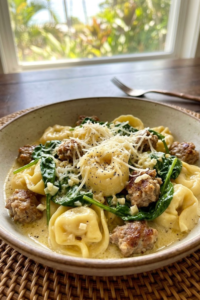
I honestly used to think that “one pot” was just a marketing gimmick for lazy Tuesdays. Boy, was I wrong! Did you know that over 60% of home cooks say cleaning up is the worst part of making dinner? That’s why I’m obsessed with this One Pot Creamy Beef Pasta. It’s not just about saving your sink from a mountain of dishes; it’s about the science of flavor.
When you cook the noodles right in the beef broth and fat, they soak up every bit of savory goodness. I remember the first time I tried this—I actually forgot to drain the fat (oops!) and it turned into a greasy mess. But hey, that’s how we learn, right? Now, I’ve got the technique down to a science, and I’m going to show you how to get that velvety, decadent sauce every single time without the headache. Let’s dive into the most delicious, comforting meal you’ll make this year!
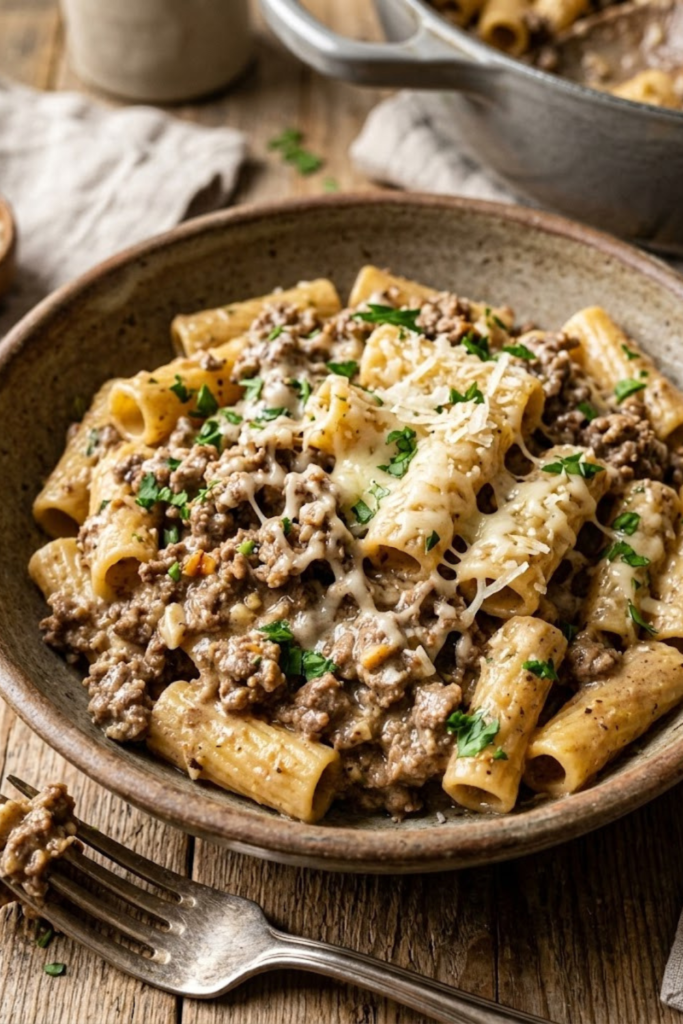
Choosing the Right Beef and Pasta
I’ve spent a lot of my life in front of a chalkboard, but I have also spent a whole lot of time over a hot stove after a long day of grading papers. One thing I’ve noticed is that people often grab whatever is on sale without thinking about how it affects the final dish. If you want this one pot meal to taste like something from a high-end kitchen, you got to start with the right building blocks. It’s a lot like a lesson plan—if the start is messy, the whole class is going to be a struggle. Picking the right meat and noodles is the most important part of the whole process.
The Beef Breakdown: Fat is Flavor
When you are standing in the meat aisle, you’ll see numbers like 80/20 or 93/7. For a creamy pasta, I always tell my friends to go with the 80/20 ground beef. This means it’s 80 percent lean meat and 20 percent fat. Why do we want that fat? Well, that fat melts down and mixes with the beef broth and cream later on. It creates a deep, rich flavor that lean meat just can’t touch. If you go too lean, the beef gets kind of rubbery and dry.
Now, you do have to drain off the extra grease after you brown it. I made the mistake once of leaving it all in because I was in a rush, and let’s just say it was a bit too heavy for anyone to finish their plate! It looked more like a soup of oil than a pasta dinner. Just brown it until it’s nice and dark, then spoon out the extra oil before you add your liquids. This makes sure the sauce stays creamy, not greasy.
Picking Your Pasta Shape
Now, let’s talk about the noodles. You might be tempted to use that half-box of spaghetti sitting in your pantry, but please, don’t do it. Spaghetti is great for thin sauces, but for a thick, creamy beef sauce, you need something with “grip.” I love using rigatoni or penne. These shapes have ridges on the outside and a big hole in the middle. The sauce gets trapped inside the tube, so every single bite is full of flavor.
It’s like trying to hold water in your hands versus a cup. The tubes act like little cups for the sauce. If you use a flat noodle, the sauce just slides off to the bottom of the bowl. Go for the chunky, tubular shapes every time for the best results.
A Quick Tip on Pasta Quality
Don’t be afraid to spend an extra dollar on a better brand of pasta. Cheap pasta often releases too much starch and turns into a big clump of glue in a one-pot recipe. You want a pasta that stays firm even after it sits in the sauce for a few minutes. If you follow these simple steps for your beef and pasta, you’re already halfway to a perfect dinner. Just remember to keep an eye on the pot so nothing sticks!
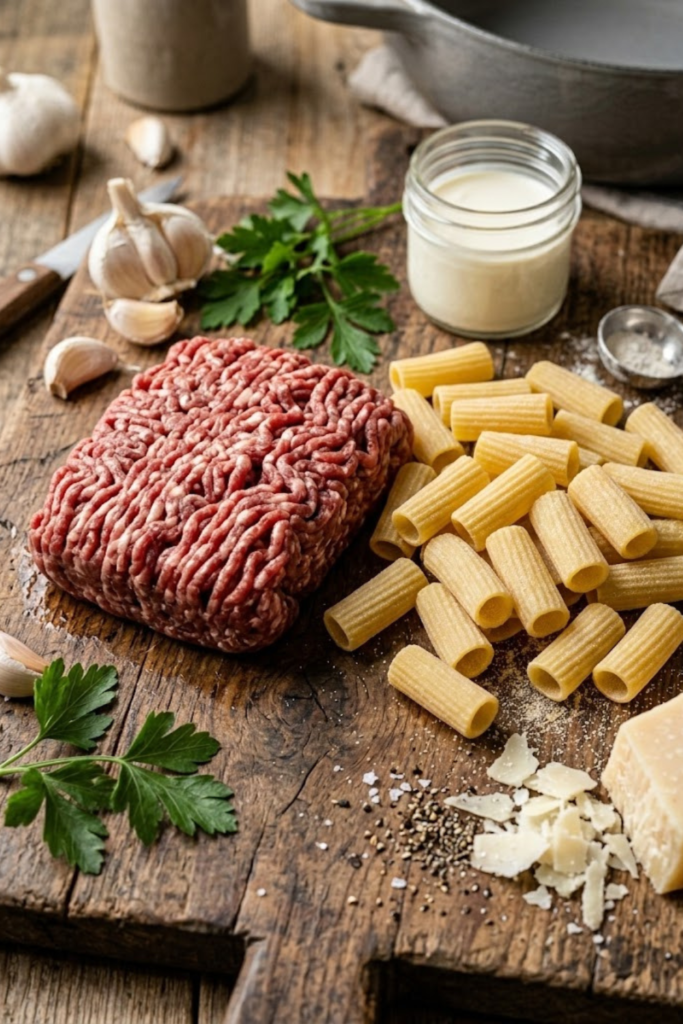
The Secret to the Perfect Creamy Sauce
I’ve seen so many people mess up the sauce because they treat it like a science project where everything has to be perfect. Honestly, it’s more about feeling the food as it cooks. I remember one time I tried to make this for a school potluck and I put in way too much broth. It looked like a beefy cereal by the time I was done. Everyone was nice about it, but I knew I failed. The trick is getting that balance between the broth and the cream so it coats the pasta like a warm blanket.
Getting the Liquid Just Right
Most recipes tell you exactly how much liquid to add, but your stove might be hotter than mine. I usually start with about three cups of beef broth for every pound of pasta. You want enough liquid to cover the noodles, but you don’t want them drowning. As the pasta cooks, it sucks up that broth and releases starch. That starch is what makes the sauce thick and velvety. It’s basically magic happening right in your pot.
Wait to add the heavy cream until the very end. If you boil the cream too long, it can break or get a weird texture. I like to stir in about half a cup of cream once the pasta is almost tender. It turns the dark broth into a beautiful, light brown silk. If it looks too thick, just splash in a little more broth. It’s better to add a bit at a time than to have a soup on your hands. Making sure the noodles are cooked just right helps to ensure the sauce stays thick enough to stick.
Scraping Up the Good Stuff
After you brown your beef, you’ll see these little brown bits stuck to the bottom of the pot. Don’t scrub those away! Some people think the pan is burnt, but that’s where the best flavor is. When you pour in your beef broth, take a wooden spoon and scrape the bottom of the pan really well. This is called deglazing. It mixes all that roasted meat flavor right into the sauce. It’s a small step that makes a huge difference in how “beefy” the whole dish tastes.
Adding the Cheese without the Clumps
The last thing you want is a big ball of melted cheese stuck to your spoon while the rest of the sauce stays thin. To make sure your Parmesan or cheddar melts smoothly, turn off the heat before you dump it in. The leftover heat in the pan is plenty to melt the cheese. Stir it in slowly in small handfuls. This keeps the sauce smooth and prevents that oily separation that happens when cheese gets too hot too fast. It’s the best way to get that restaurant-style finish at home without any stress.
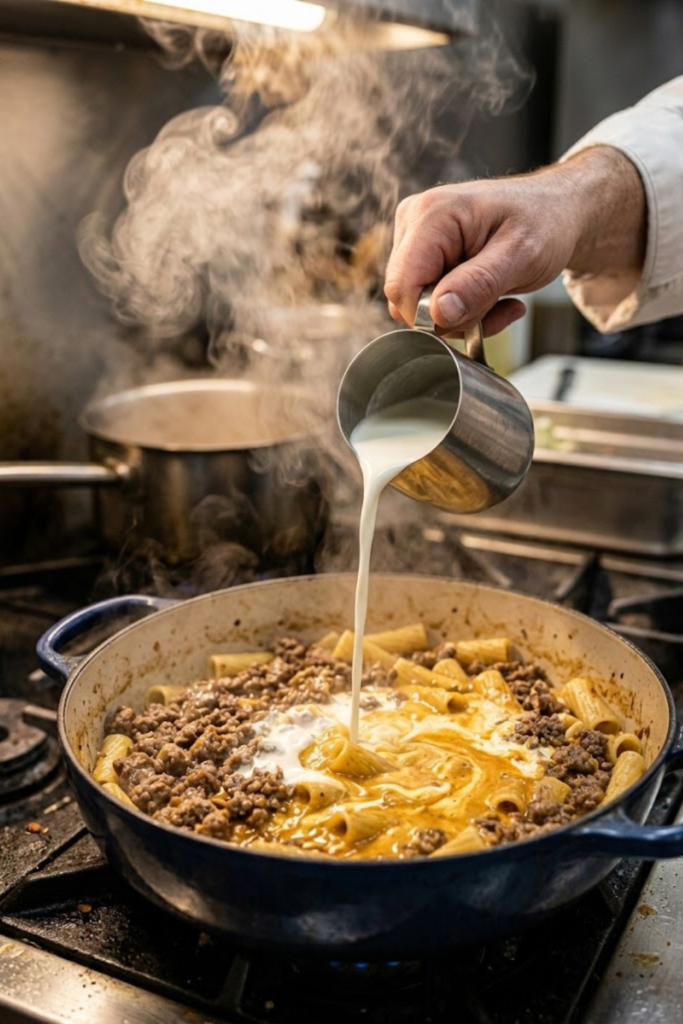
One Pot Mistakes to Avoid
I’ve been a teacher for a long time, and if there is one thing I tell my students, it’s that making mistakes is how we actually learn stuff. Cooking is the same way. I have messed up this creamy beef pasta more times than I’d like to admit before I finally got it right. One time I got distracted by a phone call and by the time I got back to the stove, the pasta had turned into a giant, gummy blob. It was pretty bad. My family still teases me about the “beef paste” incident to this day. To keep your dinner from becoming a disaster, you need to watch out for a few common traps that people often fall into.
The Mushy Pasta Trap
The biggest mistake people make with one-pot meals is overcooking the noodles. Since the pasta is cooking in the sauce and not just plain water, it can go from perfect to mushy in about thirty seconds. I always start checking the texture about two minutes before the box says it should be done. You want it to be “al dente,” which is just a fancy way of saying it still has a little bit of a bite to it.
Remember, the pasta will keep cooking for a minute or two even after you turn the heat off because the sauce is so hot. If you wait until it’s soft to stop the cooking, it’ll be a mess by the time it hits the table. I usually pull a noodle out and bite it; if there is a tiny white dot in the middle, it is almost ready.
Watching Your Liquid Levels
Another big issue is the liquid. If you add too much broth, you end up with a beef soup instead of a pasta dish. If you don’t add enough, the noodles stay crunchy and stick to the bottom of your pot. I usually keep a little extra beef broth on the side just in case. If the pot looks dry but the pasta isn’t done, I pour in a splash more.
But if there’s way too much liquid, just take the lid off and let it simmer for a few minutes. The steam will escape and the sauce will thicken up. It’s all about staying flexible and watching the pot instead of just walking away.
Don’t Forget to Season Early
A lot of folks wait until the very end to add salt and pepper, but that is a mistake. You want to season the beef while it’s browning, then season the broth, and then check it again at the end. If you only salt the top, the inside of the pasta will taste like nothing. Adding a little bit of garlic powder or smoked paprika early on helps the flavor sink deep into the meat. It makes the whole thing taste much more professional. Just be careful with the salt if your beef broth is already really salty—you can always add more, but you can’t really take it out once it’s in there!
Your New Weeknight Favorite
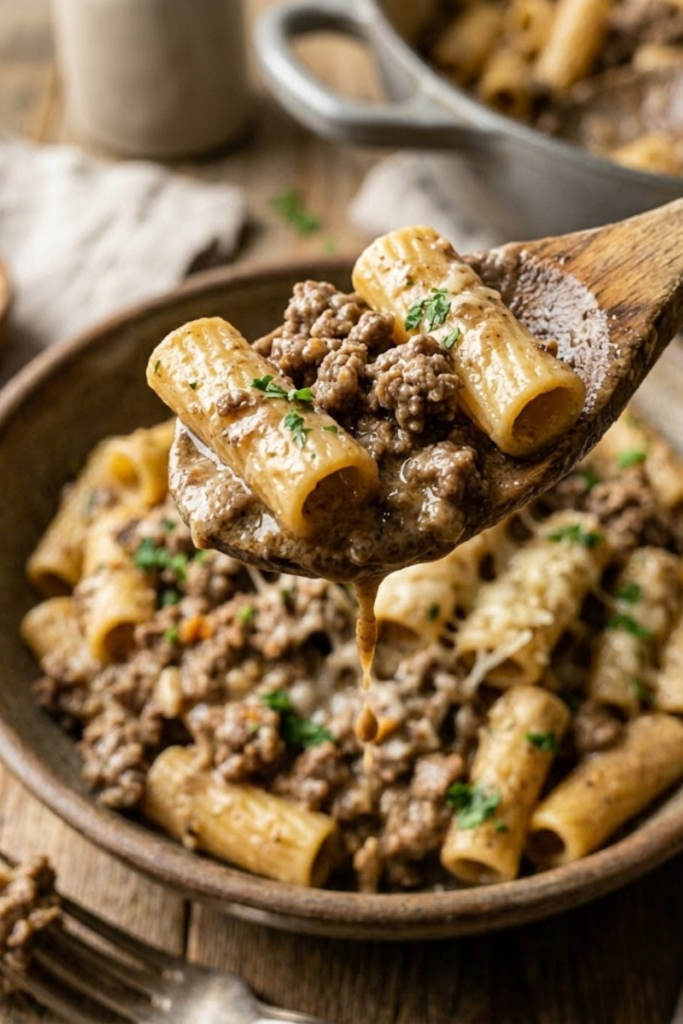
I really think this one pot creamy beef pasta is going to become a staple in your house. As a teacher, my brain is usually fried by 4 PM. The last thing I want to do is stand over a sink washing four different pans. This recipe solves that problem while still making you feel like you actually cooked a real meal. It’s hearty and warm, and it’s basically a hug in a bowl after a long day of dealing with middle schoolers.
One thing I didn’t mention earlier is how great the leftovers are. If you have a small family like mine, you’ll probably have some left for lunch the next day. I actually think it tastes even better the next morning because the pasta has had more time to soak up all those spices. When you go to reheat it, just add a tiny splash of milk or water before you put it in the microwave. This helps the sauce get creamy again instead of staying thick and dry. If you just zap it without the extra liquid, it can get a bit oily, and nobody wants that.
I hope you give this a try soon. Don’t be scared if it doesn’t look perfect the first time you make it. Cooking is a skill just like math or reading; you get better every time you practice. If the sauce is too thin, let it sit for five minutes—it usually thickens up as it cools down a bit. If it’s too thick, add more broth. You are the boss of your kitchen!
I’ve shared this recipe with so many of my fellow teachers during lunch breaks, and they all say their kids actually eat it without complaining. That is the biggest win of all in my book. If you want to sneak some veggies in for your kids, you can toss in some frozen peas or even some chopped spinach right at the end. The heat from the pasta will wilt the spinach perfectly in about thirty seconds. My kids don’t even notice the greens when they are covered in that cheese sauce.
If you enjoyed making this and found my tips helpful, please go ahead and share this on Pinterest! It really helps more people find these easy recipes and makes my day to see people enjoying good food. Happy cooking, and I hope your kitchen smells amazing tonight!