Did you know that nearly 70% of home cooks say “doing the dishes” is their least favorite part of making dinner? I totally get it! My kitchen used to look like a disaster zone every single Tuesday night. I’m telling you, finding the perfect one pan roasted chicken and vegetables recipe changed my life!
It’s all about getting that crispy skin and tender carrots without a mountain of pots in the sink. Seriously, let’s stop making life harder than it needs to be in 2026! Stick with me, and I’ll show you how to nail this meal every single time.
Choosing the Right Produce: Don’t Let Your Veggies Turn to Mush!
I’ve been teaching folks how to cook for a long time now, and one thing I see all the time is people getting frustrated when their one pan roasted chicken and vegetables turns into a soggy mess. It’s so annoying when you’re hungry! I remember this one time I tried to be all fancy and put thinly sliced zucchini right next to big chicken legs. By the time the chicken was safe to eat, that zucchini had basically turned into green water. My husband just looked at the plate and asked if I was making soup. Talk about embarrassing! You really have to think about which plants can handle being in a hot oven for forty minutes without falling apart.
Pick the Tough Guys
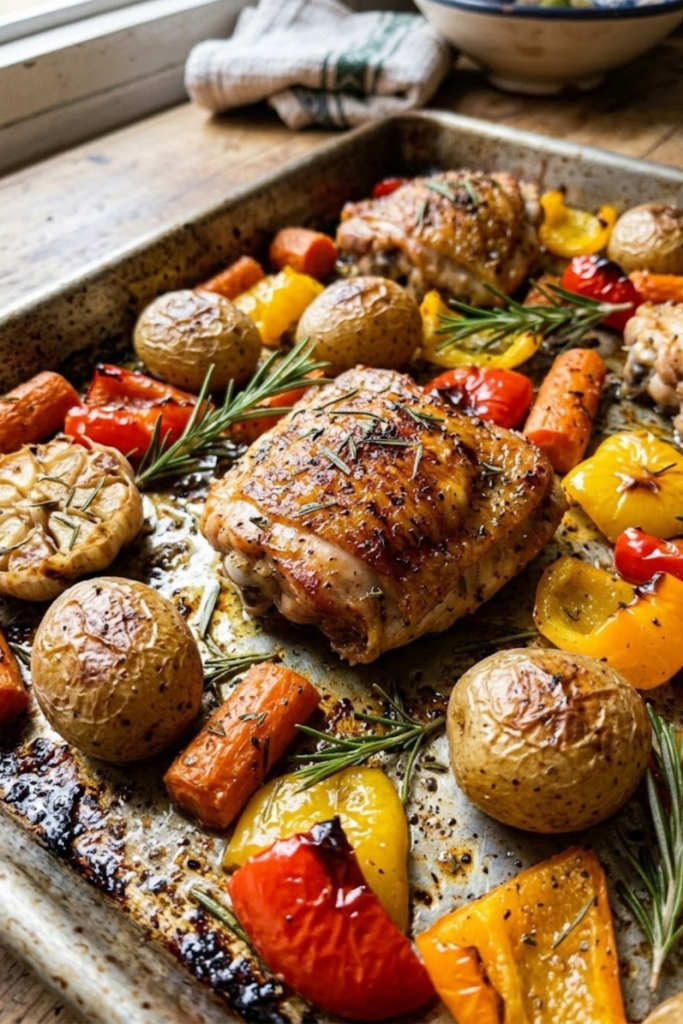
To make this work, you need vegetables that can stand up to the high heat. Root vegetables are your best friends for a tray bake. I’m talking about things like carrots, parsnips, and baby potatoes. These guys take about the same amount of time to get soft as the chicken takes to get crispy. If you use “soft” veggies like asparagus or spinach right at the start, they’ll burn or melt before the meat is even warm. I usually go for Yukon Gold potatoes because they get that nice buttery inside while the outside stays firm. Just give them a good scrub. You don’t even have to peel them if you’re feeling lazy like I usually am on a Tuesday night.
Size Actually Matters
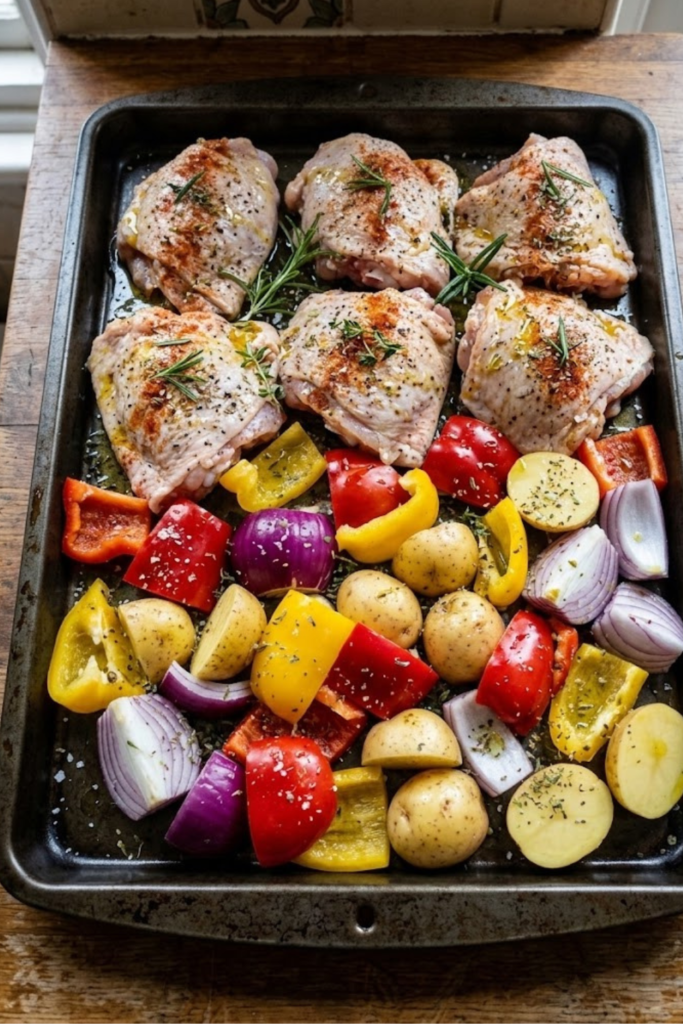
Here is a big tip I give my students: cut your hard veggies small and your “softer” ones big. If you have a giant potato chunk and a tiny piece of onion, one will be raw and the other will be charcoal. I try to keep my potato chunks about an inch wide. If I really want to add something like bell peppers or broccoli, I cut them into very large pieces or wait until the last 15 minutes to throw them on the pan. This way, everything finishes at the exact same time. It’s like a little puzzle, but way more tasty. Don’t worry about being too perfect with the knife. A little bit of rough edges actually helps the oil stick better and gives you those crunchy bits everyone fights over at the table.
Give Them Some Space
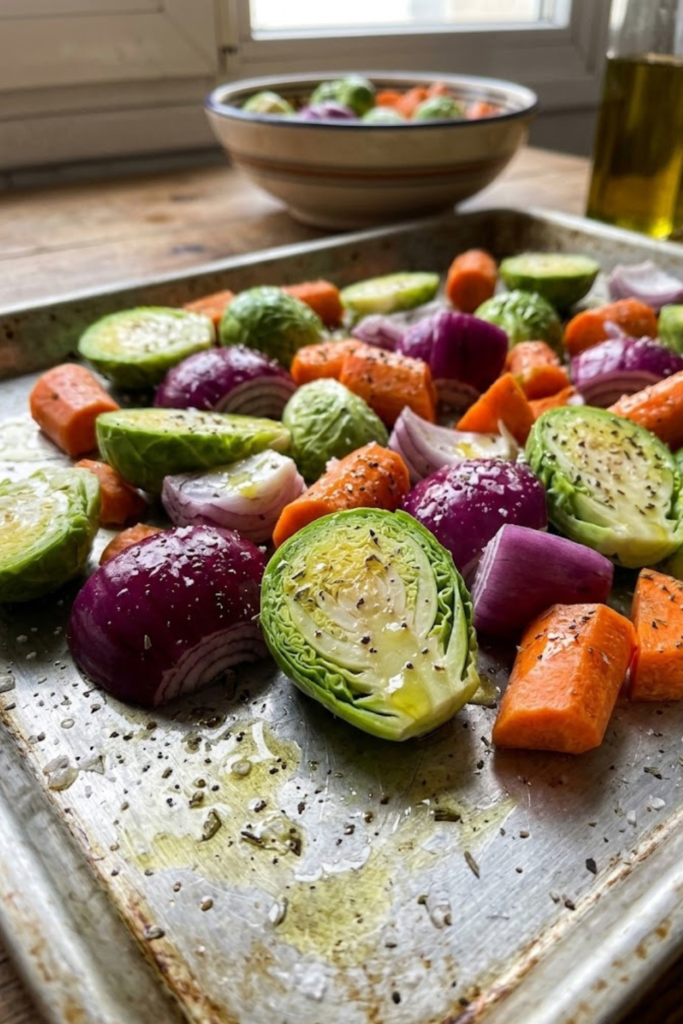
I also like to think about the colors on the tray. A tray of just brown food looks kind of sad, right? I always throw in some red onion or maybe some bright orange carrots. It makes the one pan roasted chicken and vegetables look like something from a fancy magazine. Plus, different colors usually mean different vitamins, so you’re being healthy without even trying that hard. Just make sure you leave enough space on the pan. If you pile the veggies on top of each other, they won’t roast. They will just steam in their own juices and get that mushy texture we’re trying to avoid. Spread them out so they can breathe and get those golden edges!
Seasoning Secrets: Getting That Crispy Skin and Bold Flavor
I used to think that just throwing a little bit of salt on top of everything was enough. Man, was I wrong! My first few attempts at making one pan roasted chicken and vegetables were honestly pretty bland. The chicken skin was rubbery and the carrots just tasted like… well, plain carrots. I realized that if you want your family to actually finish their plates, you have to be brave with your spices. It took some trial and error in my own kitchen to figure out that seasoning isn’t just about the taste—it’s about the texture too. If you do it right, you get that satisfying crunch that makes everyone want seconds.
Dry it Like You Mean It
If you want that perfect crunch, you can’t have any water hanging around. I always tell my students to grab a big stack of paper towels and pat that chicken until it is bone dry. If the skin is even a little bit wet, it just steams in the oven instead of getting crispy. I once tried to skip this step because I was in a huge rush to get dinner on the table, and the chicken came out looking like it had been boiled. Yuck! Nobody wants that. Once it’s dry, then you can rub on your olive oil. The oil helps the heat get into the skin and makes it turn that beautiful golden color we all want to see on our one pan roasted chicken and vegetables.
Don’t Be Scared of Salt
Most home cooks are way too shy with the salt shaker. I was guilty of this for years because I thought I was being healthy, but the food was just boring! Now, I use a big pinch of kosher salt and I make sure it gets everywhere. You really want to rub it under the skin of the chicken too. It sounds a bit messy to stick your fingers in there, but trust me, it is the only way to get the flavor deep into the meat. I also love adding a bit of smoked paprika. It gives the whole dish a nice smoky smell that makes the house feel super cozy. Plus, it adds a bit of dark red color so the chicken doesn’t look pale and sad.
Fresh Herbs vs. Dried Stuff
I usually have a little herb garden on my windowsill, so I love using fresh rosemary or thyme. You just strip the little leaves off the stems and toss them in with the oil. If you only have dried herbs in the pantry, that is totally fine too! Just remember that dried herbs are much stronger, so you don’t need to use as much. I once put three whole tablespoons of dried oregano on a tray and it tasted like a pizza factory had exploded in my kitchen. Use about a teaspoon if you’re going with the dried stuff. Mixing your herbs with the oil before you pour it over the veggies makes sure every single piece gets a little bit of that herbal goodness.
The “Flip and Roast” Method: Timing for Perfection
Timing is the part where I always used to freak out. I would stand by the oven window, staring at the glass like a crazy person, just hoping the food wouldn’t burn. It’s hard to know when things are actually done! But here is the deal with one pan roasted chicken and vegetables: the oven does the hard work for you if you just let it. I usually set mine to 400 degrees. In my experience, it is the magic number. It is hot enough to crisp up the chicken skin but not so hot that it starts smoking and sets off the fire alarm. I learned that the hard way when I tried to roast at 450 degrees—the whole house smelled like a campfire for three days!
The Halfway Hustle
One big lesson I learned is that you can’t just walk away for an hour and expect things to be perfect. I once got distracted by a phone call and forgot to check the pan. Half the chicken was burnt and the other half looked pale and sad. Now, I always set a timer for about 20 minutes. When it goes off, I go in and give the veggies a little toss with a spatula. This helps them get brown on all sides and keeps them from sticking to the metal. If you see the potatoes looking a bit dry, you can even drizzle a tiny bit more oil right then. It’s a simple trick that makes a huge difference in how the meal turns out.
Trust the Tool, Not Your Eyes
Please, if you take one thing away from my class, let it be this: use a meat thermometer. I used to just poke the meat with a fork and guess if it was done. That led to some really awkward “is this still pink?” moments at the dinner table with my neighbors. Now, I just wait until the thermometer hits 165 degrees in the thickest part of the chicken. Once you hit that, you know it’s safe and juicy. If the chicken is done but the potatoes still feel a little hard when you poke them, just take the chicken off to a plate and put the tray back in for five more minutes. It’s not cheating; it’s just being smart so you don’t overcook the meat.
The Secret Broiler Finish
If you reach the end and the skin isn’t as crunchy as you want, don’t panic. I have a little secret I use all the time. Switch the oven over to the “broil” setting for the last two minutes. You have to stay right there and watch it, though! It goes from perfect to burnt in a heartbeat. This little blast of heat bubblies up the skin and gives the veggies those dark, charred edges that taste like candy. Just make sure you give the meat a few minutes to rest before you cut into it. If you cut it too fast, all that delicious juice runs out on the tray, and we want that juice in our mouths!
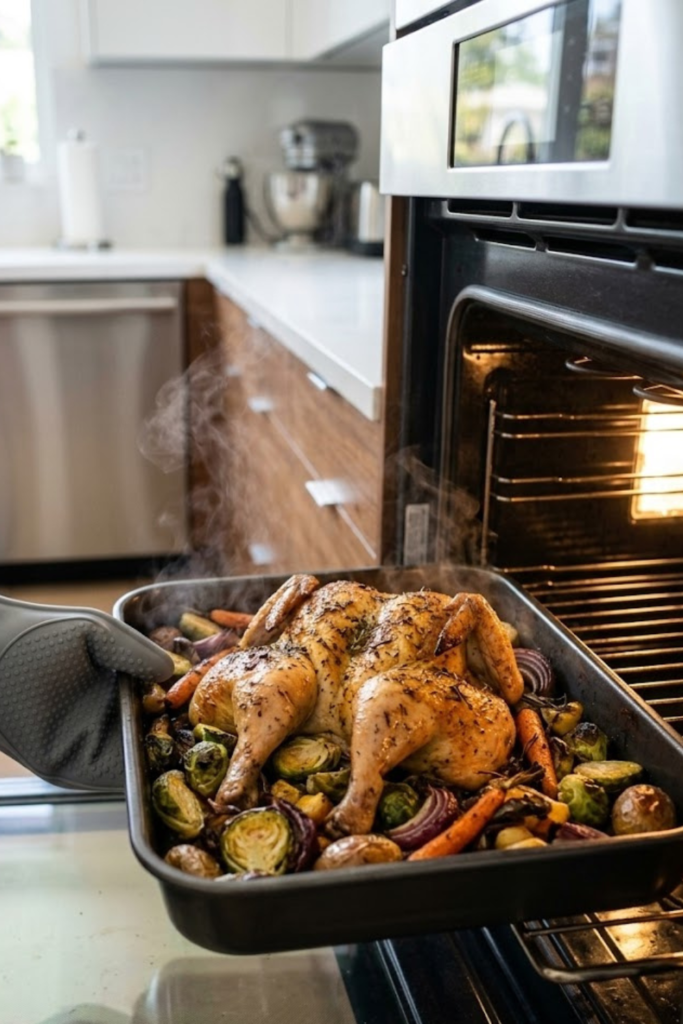
Making a one pan roasted chicken and vegetables dinner is the ultimate win for any busy person in 2026. It’s healthy, super easy to clean up, and honestly tastes better than most of the expensive takeout I’ve had lately. Just remember to choose those hardy veggies, season like you actually mean it, and keep a close eye on that oven timer! You’ve totally got this. If you enjoyed these tips and want to help me out, please share this post on Pinterest so more people can find easy ways to cook at home!