Ever bitten into a piece of chicken so incredibly juicy and packed with garlic that it actually made you stop and close your eyes for a second? That is the power of authentic Lebanese chicken! I still remember the first time I tried Shish Tawook at a tiny family-run spot—it was a total flavor explosion that changed how I grilled forever!
In this guide, we aren’t just tossing meat on a grill; we are diving deep into the tradition of Middle Eastern cuisine. We’re talking bold lemon zest, aromatic spices, and that creamy yogurt marinade that tenderizes the meat like magic. Whether you are planning a summer BBQ or a cozy weeknight dinner, this recipe brings the restaurant experience right to your kitchen. Let’s get cooking!
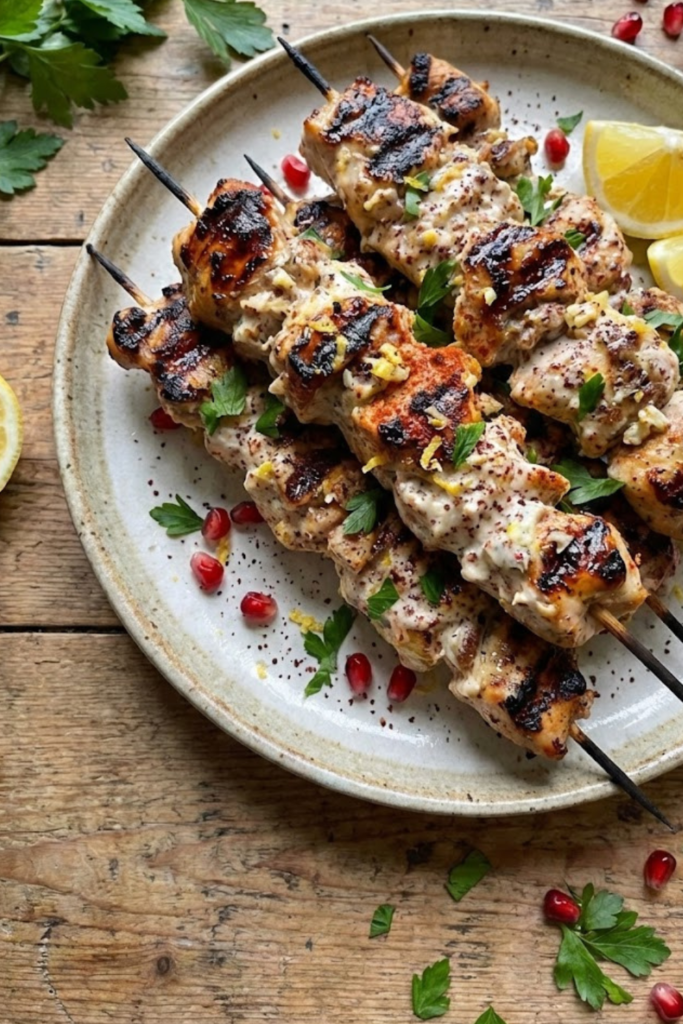
The Secret to Juicy Shish Tawook: The Marinade Breakdown
I have a confession to make. For years, my grilled chicken was essentially poultry-flavored cardboard. I’m serious. I used to throw boneless skinless breasts onto the grill with just a little salt and pepper, hoping for the best. The result? Dry, rubbery meat that my family politely chewed through while chugging water. It was embarrassing.
It wasn’t until I tried making authentic Lebanese chicken at home that I realized where I was going wrong. I was skipping the most important part: the yogurt marinade.
Why Yogurt is Your Best Friend
Here is the thing I learned the hard way. Acidic marinades like vinegar or just lemon juice can actually toughen up chicken if you aren’t careful. They start “cooking” the meat before it even hits the heat. But yogurt? Yogurt is a total game changer.
The enzymes and lactic acid in plain yogurt (or Labneh if you want to be fancy) work differently. They break down the protein fibers gently. It makes the chicken incredibly tender without turning it into mush. Plus, that thick creamy coating hangs onto the meat, creating this beautiful crust when it hits the grill. It acts like a protective barrier against the high heat.
The Flavor Trinity
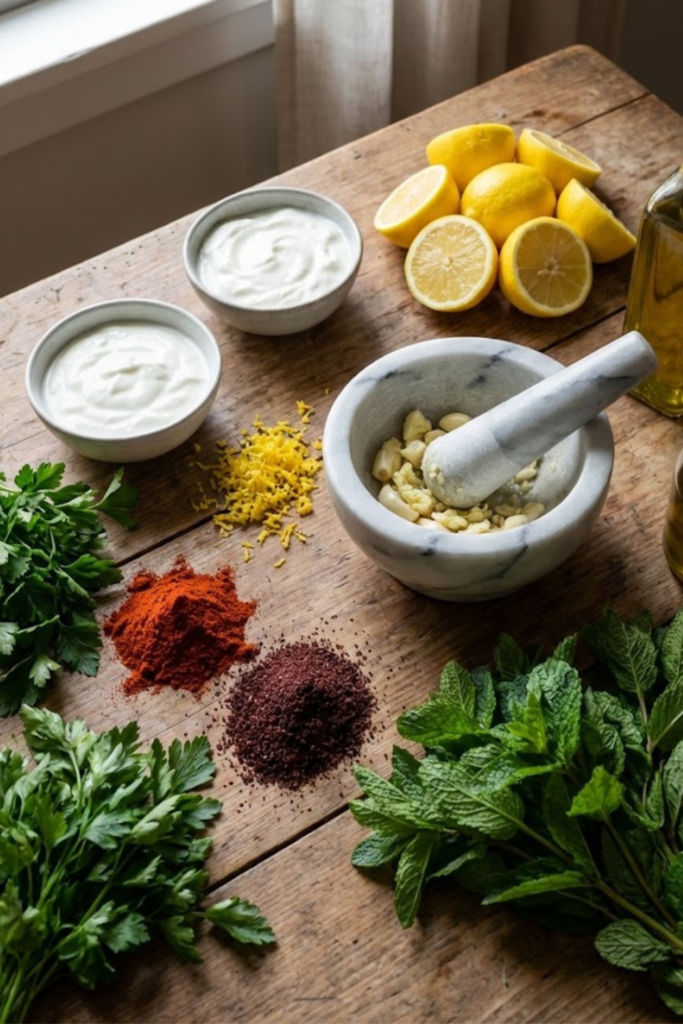
Now, let’s talk flavor. You can’t be shy here. When I first started, I used one clove of garlic. Big mistake. Lebanese food is bold! You need to crush that garlic until it’s basically a paste.
For a proper marinade, I mix:
- Plain whole milk yogurt (don’t use non-fat, you need that fat for flavor).
- Lots of fresh lemon juice.
- Olive oil.
- A generous amount of crushed garlic.
Then come the spices. I usually toss in paprika for color, a little cumin, and sumac. If you haven’t used sumac before, it’s got this tangy, lemony vibe that is just delicious.
Patience is a Virtue (Usually)
I am an impatient cook. I admit it. I once tried to marinate my Lebanese chicken for just 30 minutes because I forgot to prep dinner. It was… okay. But it wasn’t great.
The magic happens after about 4 hours. That is the sweet spot where the flavors really get into the meat. If you can leave it overnight in the fridge, even better. But a word of warning from someone who learned this lesson: don’t go over 24 hours. I did that once, and the texture got a little weird and chalky. The yogurt did its job too well.
So, grab a big bowl, whisk that stuff together, and let the fridge do the work for you. Your grill (and your jaw) will thank you later.
Grilling vs. Oven Roasting: Cooking Your Lebanese Chicken
I have a love-hate relationship with my grill. There, I said it. There is nothing quite like the smell of charcoal smoke hitting marinated meat, but man, have I had some disasters. I remember one specific barbecue where I was so excited to show off my Lebanese chicken. I threw the skewers on high heat, walked away to grab a drink, and came back to find half the wooden sticks incinerated and the chicken coated in black ash.
It was tragic. We ended up ordering pizza.
But through all that trial and error (and a lot of burnt eyebrows), I’ve learned a few things about how to cook this dish properly. Whether you are a charcoal purist or stuck in an apartment with just an oven, you can still get that incredible flavor.
Mastering the Flame (The Charcoal Method)
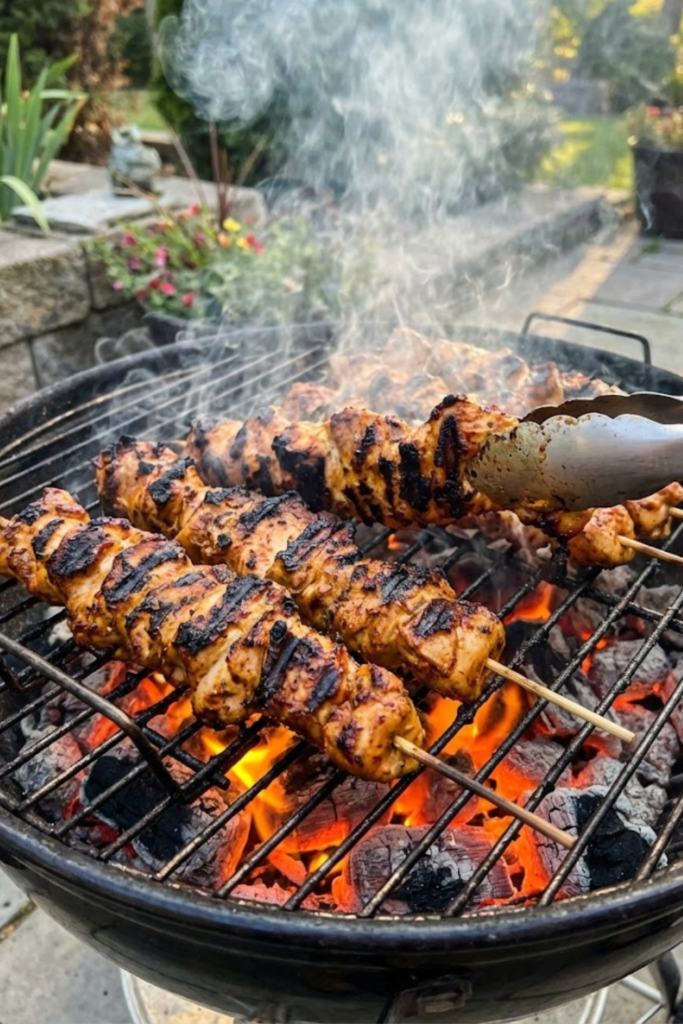
If you want the real deal—that street food taste you get in Beirut—you gotta go with charcoal . The smoke flavor penetrates the meat in a way a gas grill just can’t replicate. However, the yogurt in the marinade is tricky.
Because yogurt has fats and sugars, it burns way faster than a regular oil marinade. If you put it directly over a raging fire, the outside will burn before the inside is cooked. I learned this the hard way.
Here is the fix: create zones. Pile your coals on one side. Sear the chicken quickly over the hot side to get those beautiful char marks, then move them to the cooler side to finish cooking. It’s a bit of a dance, but it works. And please, if you are using bamboo skewers, soak them in water for at least 30 minutes! Don’t be like me and set your dinner on fire.
The Gas Grill Workaround
Look, I get it. Sometimes you just want dinner done fast, and lighting coals feels like a whole project. I use my gas grill for Lebanese chicken all the time during the week .
The trick here is heat management. Preheat your grill to medium-high, not high. You want the grates hot enough to sizzle, but not so hot that the yogurt flares up immediately. Keep the lid closed as much as possible to keep the heat in, creating an oven effect. It usually takes about 5 to 6 minutes per side, depending on how thick your cubes are cut.
No Grill? No Problem (The Oven Method)
For the longest time, I thought you couldn’t make proper Shish Tawook in an oven. I was wrong. When it’s raining or freezing outside, the oven is my go-to.
The secret is the broiler. I line a baking sheet with foil (because scrubbing baked-on yogurt is a nightmare) and place a wire rack on top. This allows the heat to circulate under the meat so it doesn’t get soggy.
- Preheat your oven to 425°F (220°C).
- Roast the chicken for about 15-20 minutes.
- Here is the “cheat code”: turn on the broiler for the last 2-3 minutes.
Keep a close eye on it! The broiler mimics the direct heat of a grill and gives you those little charred bits that taste so good. It’s not exactly the same as charcoal, but it is dangerously close.
Don’t Dry It Out!
The biggest crime you can commit is overcooking the chicken breast. Since we usually use breast meat for this, it goes from juicy to “shoe leather” very fast.
I used to just guess by poking it, but honestly, just buy a meat thermometer. You are looking for an internal temperature of 165°F (74°C). The second it hits that number, pull it off. The residual heat will keep cooking it a little bit while it rests. And yes, let it rest! Give it 5 minutes before you serve it. If you cut into it right away, all those juices run out onto the plate instead of staying in the meat where they belong .
Trust me, getting the cooking method right makes all the difference. It takes a little practice to manage the heat, but once you nail it, you’ll be making this every week.
Toum and Sides: What to Serve with Lebanese Chicken
Okay, let’s be real for a second. The chicken is the star, sure, but if you serve Lebanese chicken without the right sides, you are basically committing a crime . It’s like eating a burger without fries. It just feels wrong. I used to think I could just throw some steamed broccoli on the plate and call it a day. My Lebanese friends looked at me like I had three heads.
The spread is half the fun! It turns a regular dinner into a feast. But be warned: once you start making these sides, you won’t want to stop.
The White Gold: Toum
First and foremost, we have to talk about Toum. If you’ve been to a Middle Eastern restaurant, you know exactly what I’m talking about. It’s that fluffy, white garlic sauce that looks like mayonnaise but tastes like pure, unadulterated garlic heaven.
I have a love-hate relationship with making this stuff. The first time I tried to whip up Toum in my food processor, it was a disaster. I was so impatient! I poured the oil in too fast, and instead of a fluffy cloud, I got a greasy, separated soup. I was so frustrated I almost cried over a bowl of oil.
Here is the trick I learned: you have to add the oil slowly. Like, painfully slowly. Drop by drop at first. It acts as an emulsion. If you rush it, it breaks. But when you get it right? Oh man. It is strong, spicy, and absolutely essential for slathering on your Lebanese chicken. It’s worth the arm workout, I promise.
Carbs on Carbs
You can’t just eat meat and sauce (well, you can, but why would you?). You need a vehicle for all that flavor.
- Vermicelli Rice: This isn’t just plain white rice. You fry little pieces of vermicelli pasta in butter until they are brown, then cook the rice with it. It adds this nutty flavor that pairs perfectly with the lemon marinade .
- Batata Harra: If you are a potato lover like me, you need to try these. They are spicy potatoes tossed with cilantro, chili, and lemon. I’ve definitely burned my tongue eating these right out of the pan because I couldn’t wait.
- Warm Pita: Store-bought is fine, but heating it up on the open flame of your stove for 10 seconds makes it taste ten times better. Use it to scoop up everything.
The Green Stuff
Because the Lebanese chicken and garlic sauce are pretty rich, you need something fresh to cut through the fat. That is where the salads come in.
Most people know Tabbouleh, but a lot of folks make it wrong. I used to make it with way too much bulgur wheat. It turned into a grain salad. Authentic Tabbouleh is a herb salad. It should be mostly chopped parsley with just a sprinkle of bulgur. It’s fresh, zesty, and honestly, a pain to chop all that parsley, but it’s so good.
If you are lazy (like me on a Tuesday), go for Fattoush instead. It’s basically a garden salad with toasted pita chips thrown in. The crunchy bread soaks up the dressing, and it is amazing.
Don’t Forget the Pink Pickles!
Finally, you need the crunch. Have you ever seen those neon pink pickles at shawarma joints? Those are pickled turnips. The pink color comes from beets! They have a sharp, vinegary bite that cleanses your palate between bites of garlic chicken. I buy jars of them because I haven’t mastered pickling yet, and honestly, the jarred ones are delicious.
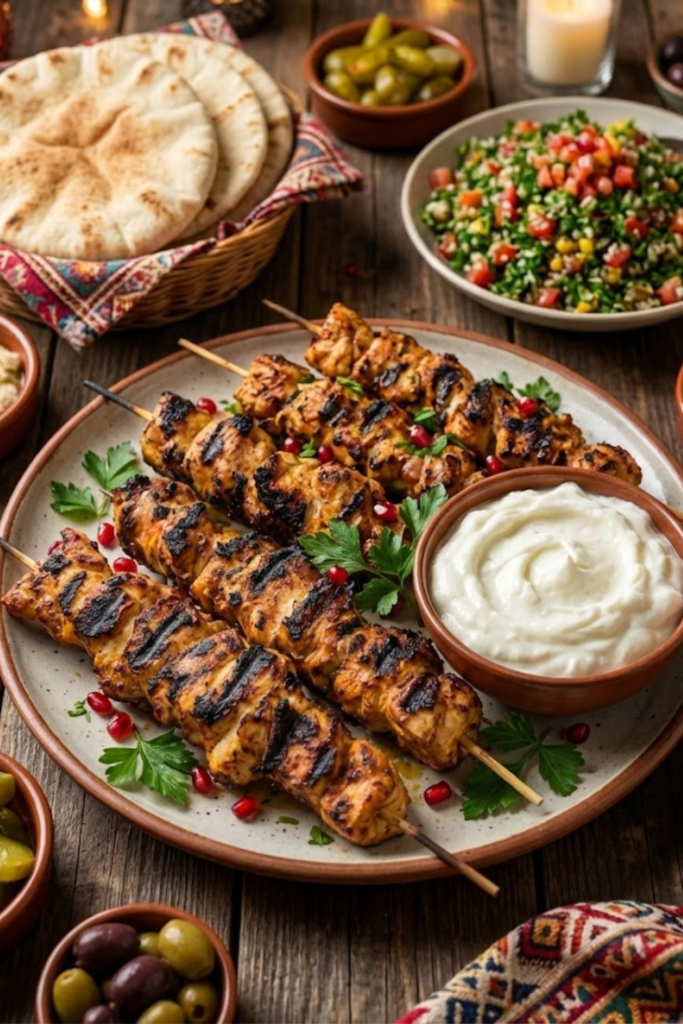
Putting the whole platter together—the hot char-grilled meat, the cool creamy Toum, the spicy potatoes, and the crunchy pickles—is what makes this meal an experience. It’s a lot of flavors hitting you at once, and it is glorious.
Pro Tips for Meal Prep and Leftovers
I am going to be honest with you; during the school week, I am a zombie by 5 PM. The last thing I want to do is start chopping garlic and measuring spices when I’m hungry. That is why I started treating Lebanese chicken as my secret weapon for meal prep.
It saved my sanity more times than I can count.
If you are smart about how you prep this, you can have that restaurant-quality flavor on a random Tuesday with zero stress. But, I had to learn a few things the hard way before I got my system down.
The “Freezer Bag” Hack
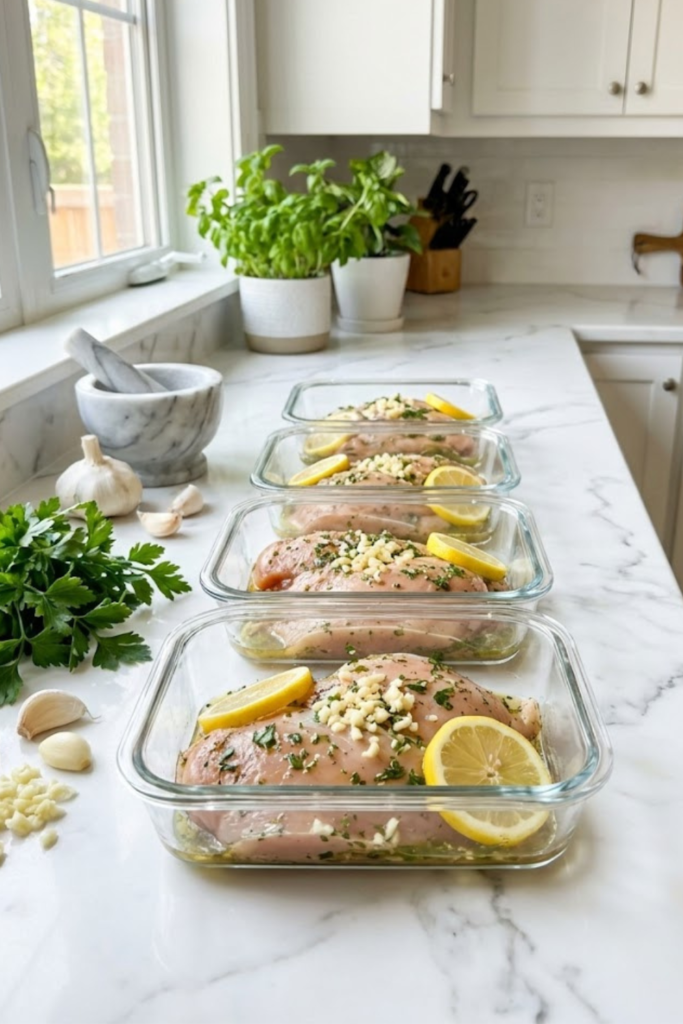
This is my favorite trick in the book. Since the marinade actually protects the meat, you can freeze the chicken in the sauce.
I grab a bunch of gallon-sized freezer bags. I dump the yogurt, garlic, lemon, and spices directly into the bags. Then, I toss in the raw chicken breasts, massage it all around so it is coated, and push all the air out.
Here is where I messed up before: I didn’t label them. I once thawed a bag thinking it was Lebanese chicken, but it turned out to be a sweet teriyaki marinade I forgot about. Serving teriyaki chicken with garlic sauce? Not a great combo.
Write the date and “Shish Tawook” on the bag with a sharpie! These packs stay good for about 3 months. When you want them, just move a bag to the fridge the night before. As it thaws, it marinates. It is literally multi-tasking while you sleep.
The Reheating Struggle
Okay, we need to talk about the microwave. Please, for the love of food, keep your grilled chicken out of the microwave.
I know it is fast. I have done it. But microwaving leftover breast meat turns it into a rubber tire. It zaps all the moisture out, and that beautiful garlic flavor gets weirdly metallic.
If you have leftovers (which is rare in my house), reheat them on the stove or in the oven. I like to slice the cold chicken and toss it in a skillet over medium heat with a tiny splash of water or chicken broth. Cover it with a lid for 2 minutes. The steam warms it up gently without drying it out. It tastes almost as fresh as it did coming off the grill.
Creative Second Lives
Sometimes, I don’t even bother reheating it. Cold Lebanese chicken is actually fantastic if you know how to use it. The flavors seem to get deeper after sitting in the fridge overnight.
My go-to lunch the next day is a “lazy shawarma” bowl. I chop the cold chicken into bite-sized cubes. I throw it on top of some romaine lettuce, cucumbers, and tomatoes.
Then—and this is the best part—I mix a spoonful of leftover hummus with a little lemon juice to make a dressing. It is high protein, super filling, and takes about 3 minutes to assemble.
You can also toss the cold slices into a wrap. I’ve definitely stood in front of the open fridge at midnight eating cold chicken dipped in garlic sauce. Don’t judge me until you try it!
Always Batch Cook
If you are going to get the food processor dirty to make the marinade, you might as well make a lot of it. It takes the same amount of effort to prep 2 pounds of chicken as it does to prep 5 pounds.
I always buy the “family pack” of chicken when it is on sale. I prep half for dinner that night and freeze the other half for a future emergency meal. It feels like a gift to your future self.
Just remember, raw chicken in yogurt marinade is fine in the fridge for up to 24 hours, but after that, the texture gets soft. So if you aren’t cooking it within a day, freeze it immediately.
Mastering Lebanese chicken has totally changed my dinner game, proving that a little patience with a yogurt marinade and a shameless amount of garlic is worth every second of effort. It’s not just about the bold, zesty flavor of Shish Tawook; it’s about that satisfied silence at the table when everyone takes their first bite and the simple joy of sharing a meal that feels like a restaurant feast. Don’t stress if it’s not perfect on your first try—just lean into those spices, embrace the char, and enjoy the process of bringing the taste of Beirut to your backyard. Don’t forget to Pin this recipe to your “Dinner Ideas” board on Pinterest so you can find it for your next BBQ!