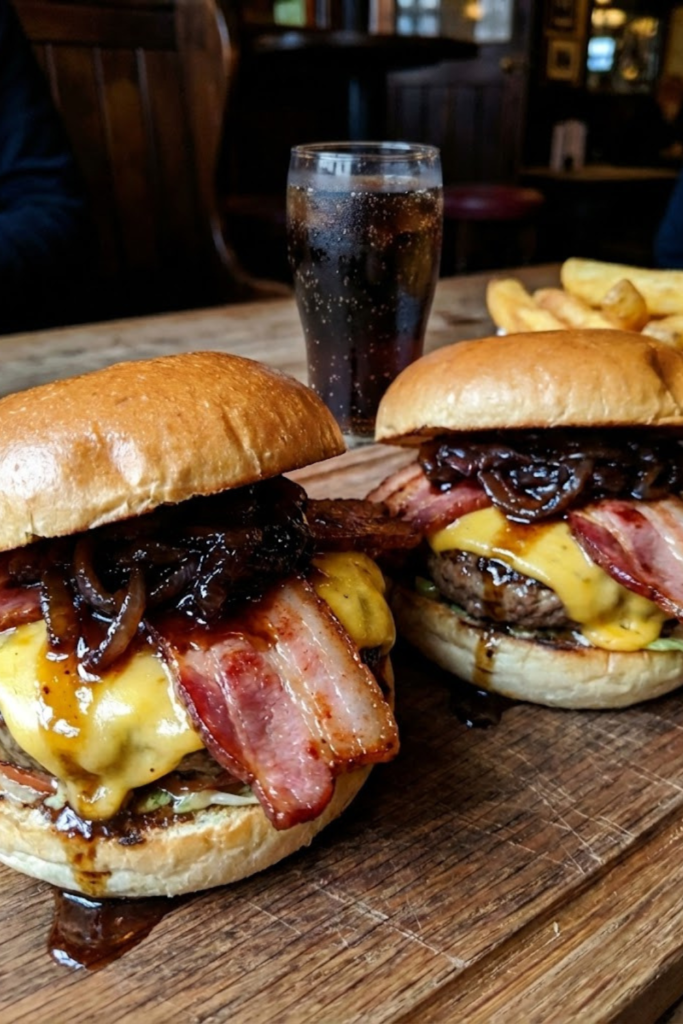
Have you ever sat in a dimly lit, wooden-paneled pub in Dublin, rain lashing against the window, and taken that first, life-changing bite of a burger? I have! It wasn’t just meat on a bun; it was a religious experience. Irish pub burgers are distinctive—they aren’t about being polite. They are big, messy, and absolutely loaded with flavors like sharp Irish cheddar and deep, malty stout.
In this guide, we aren’t just grilling patties; we are recreating that cozy, hearty atmosphere right in your kitchen. Whether you’re a seasoned grill master or just hungry for something real, this recipe will deliver. Let’s get cooking!
Choosing the Best Meat for Authentic Irish Pub Burgers
Look, I’m going to be real with you. I used to think I was being smart by buying that super lean ground beef at the grocery store. You know the stuff—96% lean, practically zero fat? I thought I was making a “healthy choice.”
Spoiler alert: I wasn’t.
I remember inviting a few buddies over for a grill night years ago. I threw those lean patties on the fire, and they shrank into these sad, grey little hockey pucks. They were dry as a bone and tasted like seasoned cardboard. It was embarrassing, honestly. We ended up drowning them in ketchup just to get them down. That was the day I learned the most important lesson of burger making: fat is flavor.
Why Fat is Actually Your Friend
If you want those juicy Irish pub burgers that drip down your arm when you take a bite, you need fat. Period. The sweet spot is an 80/20 ratio—that means 80% lean meat and 20% fat. In the grocery store, this is usually labeled as ground chuck.
Here is why this matters. When you cook the burger, that fat renders down and bastes the meat from the inside out. It keeps the patty moist and creates those little pockets of juice that we all crave. If you go leaner than 85%, you are fighting a losing battle against dryness. Don’t be afraid of the fat; it’s the vehicle for all the goodness.
The Grass-Fed Difference
Now, since we are aiming for an authentic Irish vibe here, let’s talk about the cow itself. In Ireland, the cows are out there roaming green pastures, eating actual grass. It sounds like a marketing gimmick, but grass-fed beef tastes different.
It has a deeper, more mineral-rich flavor compared to the standard grain-fed stuff we get in the US. It’s “beefier,” if that makes sense? Because we are going to be piling on strong flavors later—like sharp cheddar and a stout glaze—you need a meat that can stand up to it. Grain-fed beef is milder and can get lost under all those toppings. If you can swing the extra couple of dollars, grab the grass-fed pack.
The Grind Matters (Don’t Buy the Tube!)
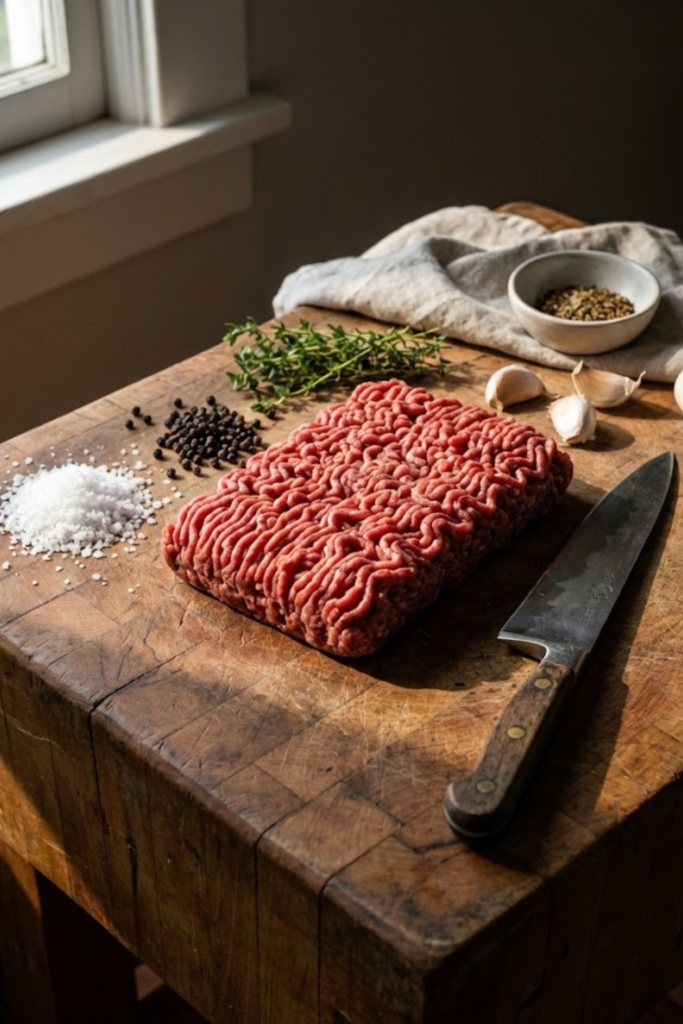
Okay, one last tip that changed my game. Stop buying the meat that comes in those solid plastic tubes. Just don’t do it. That meat is usually ground way too fine, almost like a paste.
When meat is ground into a paste, the fibers are all mashed together. This makes for a rubbery, dense burger that feels tough when you chew it. Instead, walk up to the butcher counter. Ask them for a coarse grind. You want to be able to see the individual little ribbons of fat and red meat. This texture allows the heat to move through the patty evenly, giving you a tender bite and a better crust when searing meat.
It takes an extra five minutes to talk to the butcher, but the difference in texture is night and day. You’re building a masterpiece here, not fast food!
The Secret Stout Glaze: A Guinness Reduction
I have a confession to make. For years, I was a ketchup and mustard guy. I thought that was the peak of burger topping technology. I was wrong.
It wasn’t until I ruined a perfectly good saucepan trying to be fancy that I stumbled onto the holy grail of Irish pub burgers. I was trying to make a red wine reduction, got distracted by the dog barking, and turned it into a sticky, burnt cement that I had to chisel off the bottom of the pot.
But that failure taught me something important about sugar and heat. When I finally decided to try it with beer for a St. Patrick’s Day party, I was nervous. But let me tell you, when you nail this stout beer reduction, it changes everything. It turns a regular backyard burger into something that tastes like you paid $25 for it at a gastropub.
Selecting Your Stout (Don’t Be Cheap!)
You might be tempted to grab whatever leftover beer is sitting in the back of your fridge. Please, don’t do that. I tried this once with a watery, light lager because I was too lazy to go to the store.
The result? A weird, sour syrup that tasted like disappointment.
For this glaze, you need something dark and moody. Guinness Draught is the gold standard here. It has those coffee and chocolate notes that deepen when you cook them down. If you can’t find Guinness, look for any dry Irish stout. You want that roasted barley flavor. It acts as the backbone of the sauce.
The Patience Game: Watching it Simmer
Here is the trick that nobody tells you: this takes time. You can’t rush a reduction.
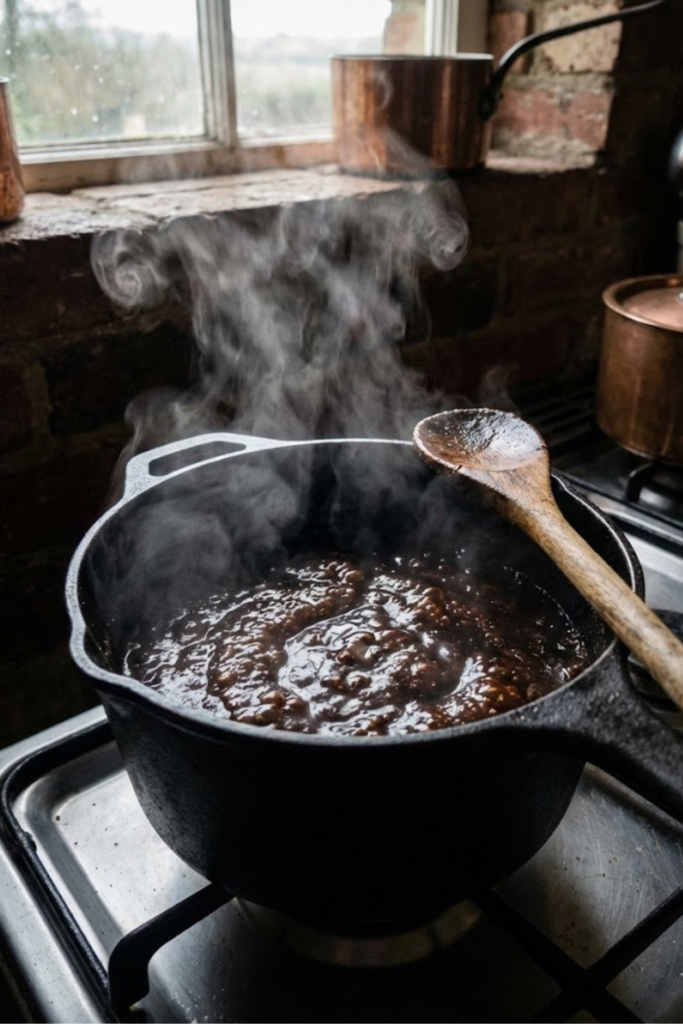
I dump a can of stout into a saucepan, throw in a generous heap of dark brown sugar, and a few dashes of Worcestershire sauce. Then, I turn the heat to medium-low and I walk away. Well, not far. You have to keep an eye on it.
You want it to simmer gently. If you boil it aggressively, you might scorch the sugar (been there, done that). You are looking for the liquid to reduce by about half. It should coat the back of a spoon. If you dip a spoon in and run your finger through the sauce on the back, the line should stay there. That’s when you know it’s ready.
Balancing the Bitter and the Sweet
Stout is naturally bitter. That’s why we love it in a glass, but on a burger, it can be too much if you aren’t careful.
The brown sugar is there to fight that bitterness, but the secret weapon is the Worcestershire sauce. It adds that salty, umami kick that ties the Irish pub burgers together.
I remember the first time I got the balance right. I tasted it and it was sweet, tangy, and had this deep, malty finish. It was sticky and messy in the best way possible. When you drizzle that thick and syrupy glaze over melting cheddar, the flavors just sing. It’s a bit of work, sure, but the look on your friends’ faces when they take that first bite? Totally worth the scrubbing of the pan later.
Iconic Toppings: Irish Cheddar, Bacon, and More
You know what breaks my heart? Seeing a beautiful, perfectly cooked beef patty get slapped with a slice of that plastic-wrapped orange cheese. You know the kind I’m talking about. It tastes like nothing and has the texture of a rubber boot.
I’ll admit, I used to be that guy. I thought all cheese was created equal. Then I tried to make Irish pub burgers for my father-in-law, who actually lived in Cork for a few years. I served him a burger with standard American singles. He didn’t say anything, but the look of quiet disappointment on his face haunts me to this day.
Since then, I’ve learned that the toppings aren’t just extras; they are the co-stars of the show. If you want that pub taste, you have to upgrade your pantry.
The Sharpness of Real Irish Cheddar
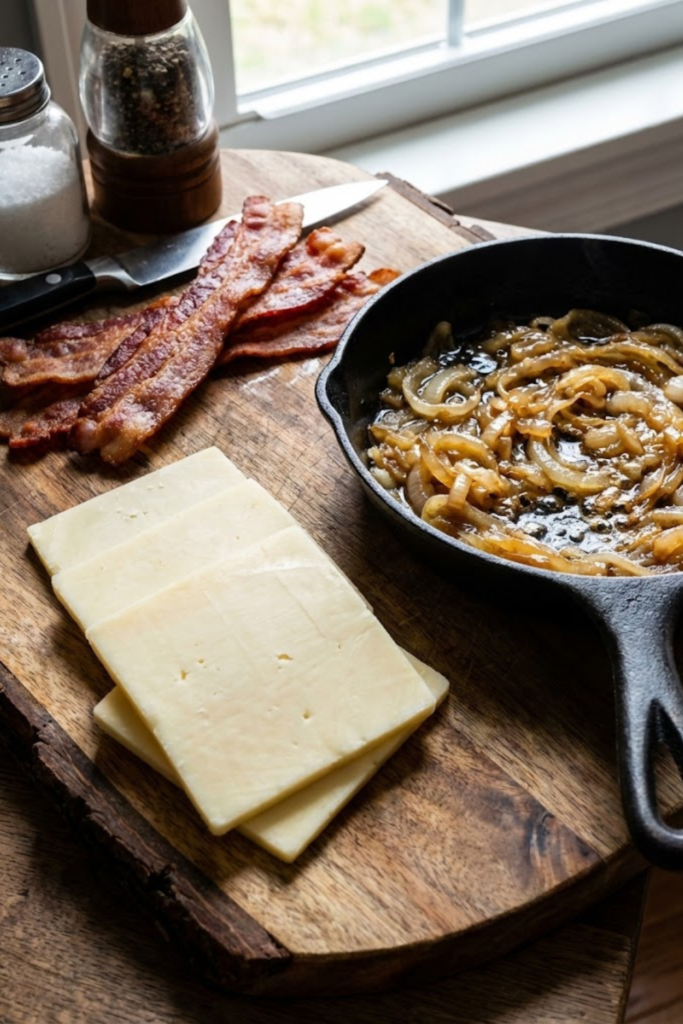
If you are going to call it an Irish burger, the cheese is non-negotiable. You need something with a punch. I strictly use Irish cheddar now—specifically brands like Kerrygold or Dubliner.
Unlike the mild stuff we are used to, this cheese has a crumbly texture and a sharp, nutty flavor. It doesn’t just melt; it transforms. When you put a thick slice of Dubliner on a hot patty, it gets gooey but keeps its bite. It cuts right through the richness of the meat.
A quick tip I learned the hard way: don’t slice it too thin. If it’s too thin, it disappears into the grease. Cut it thick. You want to actually taste that tang in every bite.
Rasher vs. Bacon: The Meaty Debate
Okay, let’s talk about the salty, crispy goodness. In the US, we love our streaky bacon. It’s mostly fat and gets super crunchy. But if you walk into a pub in Dublin, you are more likely to find Irish rashers.
Rashers are more like a slice of ham, taken from the back of the pig. They are way meatier and have a chewy texture that I honestly prefer for burgers. It feels like you are adding another layer of meat rather than just a garnish.
I can’t always find real rashers at my local supermarket, though. If you are in the same boat, thick-cut hickory smoked bacon is a decent substitute. Just make sure you cook it until the fat is rendered but the meat is still a little pliable. You don’t want it shattering into dust when you bite down.
The Patience of Caramelized Onions
I have a love-hate relationship with onions. I love eating them; I hate cooking them.
To get those sweet, jammy caramelized onions that you see on restaurant menus, you cannot rush. It takes 45 minutes, minimum. I used to crank the heat up to “high” to speed it up and just ended up with burnt, bitter onion crispies.
Low and slow is the only way. I slice them thin and let them swim in butter. About halfway through, when I’m bored and wondering if it’s worth it, I splash in a little Irish whiskey. The alcohol cooks off, but it leaves behind a woody, vanilla note that pairs perfectly with the stout glaze. It’s tedious, but when you pile those golden strings on top of the cheese? Absolute magic.
The Bun Needs to Be a Tank
Finally, we need to talk about structural integrity. We are dealing with a juicy patty, heavy cheese, sticky glaze, and onions. A standard white bread bun will disintegrate before you even finish your first bite.
I’ve had burgers fall apart in my hands, resulting in a lap full of beef and regret. To avoid this tragedy, go for a brioche bun or a sturdy potato roll. They are dense enough to soak up the juices without dissolving, but soft enough to squish down when you grab it. Toast the cut sides in the pan with a little butter first—it creates a barrier against the soggy bottom blues.
Step-by-Step Cooking Instructions for the Perfect Sear
I have ruined more cookouts than I care to admit. There was this one Fourth of July where I served burgers that were basically meatball spheres. They were round, tall, and raw in the middle while burnt on the outside. My uncle asked if I was trying to invent a new sport.
It took me a long time to realize that the way you handle the meat before it even hits the heat is just as important as the cooking itself. If you want Irish pub burgers that are tender and actually fit on the bun, you have to treat the beef with a little respect.
Don’t Overwork the Meat (Seriously!)
Here is the golden rule I wish someone told me earlier: stop playing with your food. When you are forming your homemade burger patties, you want to be as gentle as possible.
I used to pack the meat tight, like I was making a snowball to throw at someone. Big mistake. Packing it tight squeezes out the air and mats the proteins together, which guarantees a tough, chewy burger. instead, loosely gather the beef and gently shape it. It should barely hold together.
And here is a pro tip that actually works: press your thumb into the center of each raw patty to make a little dimple. Burgers naturally puff up in the middle when they cook. That little dent keeps them flat so you don’t end up with the dreaded “meat tennis ball” situation.
Cast Iron is King
Look, I love my outdoor grill. There is something primal about cooking over fire. But for a pub-style burger, my beat-up cast iron skillet is the only tool I trust.
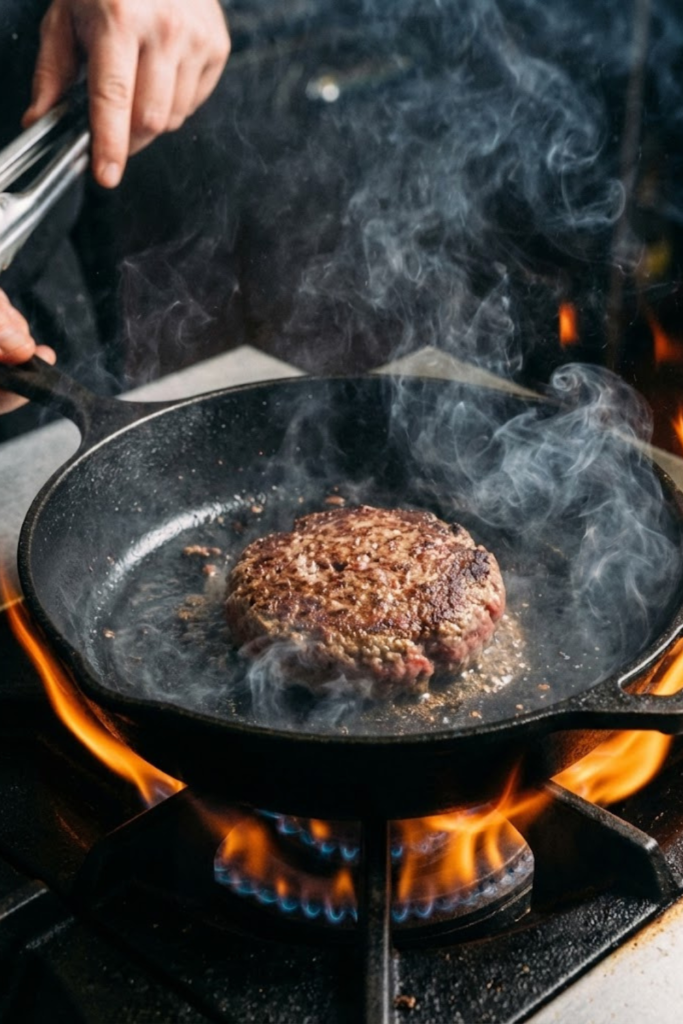
Why? Because you want a consistent, hard sear. A grill has gaps; a skillet is a solid surface of searing power. That solid surface gives you maximum contact with the meat, creating that dark, crusty exterior (fancy chefs call it the Maillard reaction, I just call it delicious).
Get that pan ripping hot. I mean, open-the-windows hot. If you aren’t setting off a smoke detector, are you even cooking? Throw in a little butter or oil, wait for it to shimmer, and drop those patties in. That sizzle should sound like a jet engine taking off.
Timing is Everything
Guessing when meat is done is a fool’s game. I used to poke the meat and say, “Yeah, feels ready.” It was never ready.
Invest in a cheap digital thermometer. It saves lives (and dinner parties). Here is the cheat sheet I tape to my fridge for searing meat techniques:
- Rare: 120°F to 125°F (About 2-3 minutes per side)
- Medium-Rare: 130°F to 135°F (About 3-4 minutes per side)
- Medium: 140°F to 145°F (About 4-5 minutes per side)
For these burgers, I aim for medium-rare. You want that pink center to mix with the stout glaze. If you go well-done, you might as well eat a shoe.
The Hardest Part: The Rest
This is the moment of frustration. You pull the burgers off the heat. They smell amazing. You are starving. You want to eat one right there standing over the stove.
Don’t do it.
You have to let the meat rest for at least 5 minutes. If you cut into it now, all those beautiful juices will run out onto the plate, leaving your burger dry. By letting it sit, the juices redistribute back into the meat. It’s torture to wait, but it’s the difference between a dry burger and one that’s juicy down to the last bite.
Serving Suggestions and Pairings
You know what’s sadder than a rainy day without an umbrella? A glorious, juice-dripping burger sitting all alone on a plate.
I used to be lazy about sides. I’d spend an hour perfecting the meat and then just toss a bag of stale potato chips on the table. It felt like wearing a tuxedo with flip-flops. If you want the full Irish pub burgers experience, you have to commit to the whole plate. You aren’t just eating dinner; you are building a mood.
Fries or Rings? The Eternal Question
If I had to pick a hill to die on, it would be that oven-baked fries are usually a lie. They never get crispy enough.
For this meal, I go all in on garlic parmesan fries. I don’t own a deep fryer (my wife won’t let me, for safety reasons), so I use the air fryer. Toss frozen fries with a little oil, blast them until they are golden, and then immediately hit them with minced garlic, grated parm, and parsley while they are hot. The heat melts the cheese and takes the raw bite out of the garlic.
If you are feeling ambitious, beer battered onion rings are the move. Since you already opened a can of stout for the glaze, use the leftovers for the batter. The carbonation makes the coating light and airy. Just don’t do what I did and crowd the pan, or you’ll end up with a soggy onion cake.
What to Drink: Don’t Ruin It with Water
Pairing a drink with this heavy, savory meal is crucial. I once drank a diet citrus soda with a stout burger. It was a flavor clash that I still regret.
The obvious choice here is a pint of the black stuff. A cold stout echoes the flavors in the glaze and stands up to the sharp cheddar. But if a heavy beer feels like too much “bread in a glass” for you, try an Irish red ale pairing. It has a bit of caramel sweetness but is lighter and cleaner on the palate.
And if it’s been a long week? A small glass of Irish whiskey—neat—is the perfect closer. It cuts through the fat and warms you up.
The “Secret” Pub Sauce
Let me let you in on a little industry secret. That fancy “house sauce” you pay extra for at restaurants? It’s usually just three things mixed together.
I make a quick pub style sauce to smear on the bun or dip the fries in. It’s not rocket science. I mix half a cup of mayonnaise, a tablespoon of whole-grain mustard, and a teaspoon of horseradish.
The horseradish is the key. It clears your sinuses just enough to wake up your taste buds. I whipped this up for a neighborhood potluck once, and people kept asking me for the recipe like I was a culinary genius. I didn’t have the heart to tell them it took me thirty seconds to make.
It’s these little details—the crispy side, the right drink, the tangy sauce—that turn a comfort food dinner into something you’ll talk about until the next time you fire up the skillet.
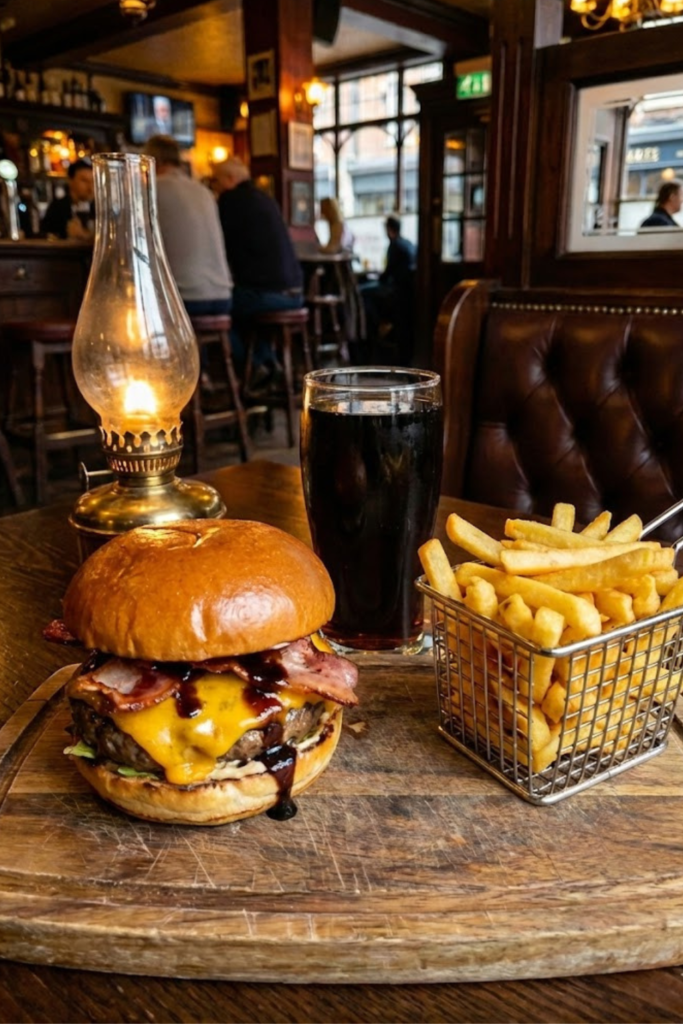
So, there you have it. We’ve been through the grinder together—literally.
Making real Irish pub burgers at home isn’t just about feeding your face; it’s about creating a vibe. It’s about taking that extra twenty minutes to make the Guinness glaze when you could have just squeezed a bottle of ketchup. It’s about buying the good Kerrygold cheddar instead of the cheap stuff.
I hope your kitchen smells as good as mine does right now. My dog is currently staring at me with those puppy eyes, hoping a piece of bacon falls on the floor. (Spoiler: It won’t. I worked too hard on it.)
If you followed along, you should have a plate of food that looks like it came out of a kitchen in Dublin, not a drive-thru window. Be proud of that! Cooking this kind of comfort food dinner is a labor of love, but the silence at the table when everyone takes that first bite? That is the best compliment you can get.
Share the Love (and the Calories)
If this recipe made your weekend better, don’t keep it a secret.
Pin this to your “Best Dinner Recipes” or “St. Patrick’s Day” board on Pinterest.
It helps other hungry folks find the recipe, and honestly, it helps me keep the lights on so I can keep burning onions and learning lessons for you. Now, go grab a napkin—you’re going to need it. Sláinte!