I’ll be the first to admit it—I used to be a total carrot skeptic. You know the kind I’m talking about? Those sad, boiled, mushy orange discs that seemed to appear at every family gathering in the 90s. Gross! But then, I discovered the magic of high heat and a little bit of patience.
Did you know that roasting vegetables actually changes their chemical structure? It breaks down cell walls and concentrates natural sugars. When you add the tang of balsamic and the floral sweetness of honey, something incredible happens. These aren’t just a side dish; they are the star of the show! Whether you’re prepping for a holiday feast or a Tuesday night dinner, this recipe is a total game-changer. Let’s get roasting.
Choosing the Perfect Carrots for Roasting
I have spent a ton of time in my kitchen over the years, and if there is one thing I’ve learned, it is that you can’t make a five-star dish if you start with one-star ingredients. When I first started making roasted veggies, I used to just grab those cheap bags of baby carrots. You know the ones that come in a plastic bag with all that extra water? That was a big mistake. They never get that crispy edge we want. If you want your honey balsamic roasted carrots to be the best thing on the table, you have to start with the right produce.
Look for the Green Tops (Heirloom and Rainbow)
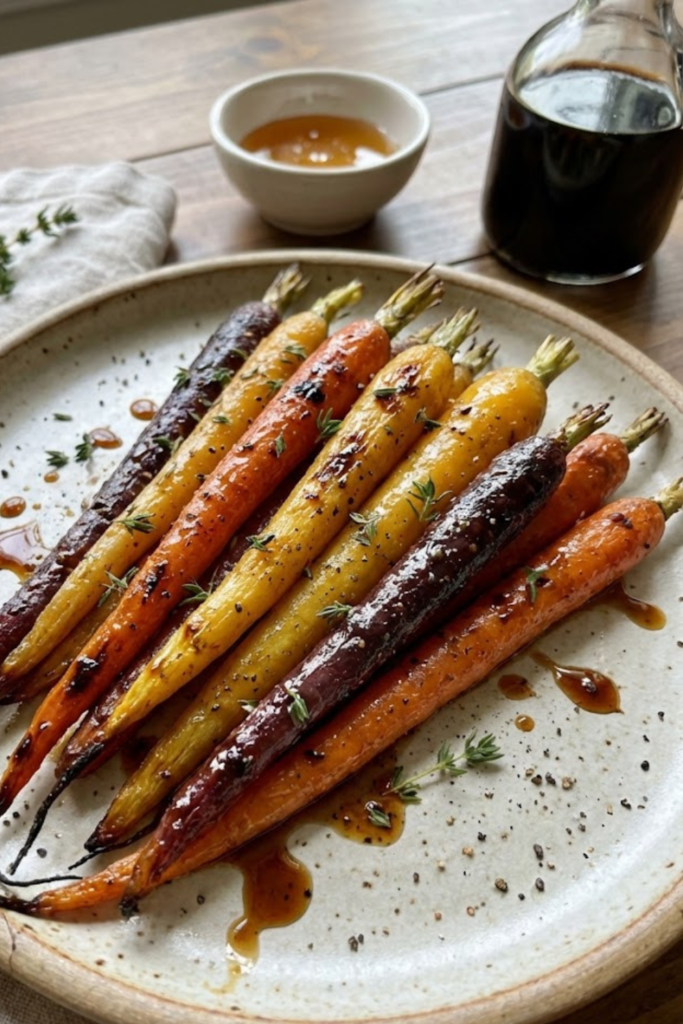
One of my favorite things to do is walk through the farmers market on Saturday mornings. It is much better than the grocery store. If you see carrots with the long green leafy tops still attached, those are the ones you want. Those greens are a sign that the carrot is fresh. If the tops look wilted or brown, the carrots are probably old and won’t taste as sweet. I really like using rainbow carrots for this recipe. You get those deep purples, bright yellows, and classic oranges. It makes the plate look amazing, but they actually taste different too. The purple ones usually have a bit more of an earthy flavor, while the yellow ones are super sweet.
Size Matters for Even Cooking
You should try to pick carrots that are about the same size. This is a tip I tell my students in class all the time. If you have one carrot that is as thick as a fat cucumber and another one that is thin like a pencil, they won’t cook at the same speed. The skinny one will turn into a burnt stick while the big one is still hard in the middle. I usually look for medium-sized ones. They handle the high heat of the oven really well and get those perfect caramelized edges without turning into a pile of mush.
Should You Buy Organic Carrots?
I am not someone who says every single thing in your cart has to be organic, but for root vegetables, it is a really good idea. Carrots grow right in the dirt, so they can soak up whatever chemicals are in the soil. Plus, if you buy organic, you can just give them a good scrub with a brush instead of peeling them. The skin has a lot of flavor and vitamins, and it gets a great texture when it hits the heat. If you buy the regular ones, I usually peel them just to be safe. Just make sure you dry them off after washing so they roast instead of steaming in the oven! Keeping them dry helps that glaze stick much better.

The Secret Sauce: Balancing Honey and Balsamic
I always tell my students that the sauce is what really makes the meal. You can have the best produce in the state, but if your glaze is off, the whole dish feels a bit flat. For these carrots, the glaze is definitely the star of the show. It is what turns a regular vegetable into something that tastes like a treat. I’ve spent a lot of years messing around with different amounts of ingredients to find the right mix, and I think I finally got it down.
The Magic Ratio of Sweet and Tangy
Let’s talk about the science of flavor for a second. If you just put honey on carrots, they end up being way too sweet. If you just use balsamic, they are way too sour and acidic. You have to find that middle ground. My go-to rule is two parts honey for every one part balsamic vinegar. This gives you enough sugar to get that sticky, dark caramelization we all love, but the vinegar provides a little zing that cuts through all that sugar. I usually add a big splash of olive oil into the mix too. The oil helps the glaze actually stick to the carrot instead of just sliding off onto the pan and burning.
Why You Should Buy the Good Vinegar
When you are walking down the aisle at the store, you will see a lot of different balsamic vinegars. Some are very cheap and thin, almost like water. Others are thicker and cost a bit more. For roasting, you don’t need the most expensive bottle on the shelf, but try to find one that says it is “aged.” Cheap balsamic is often just regular white vinegar with some food coloring and extra sugar added in. It won’t have that deep, rich taste that makes your mouth water. A good balsamic should have a little bit of thickness to it. It makes a huge difference in how the carrots look and taste once they come out of the oven.
Making It Vegan and Mixing it Right
Sometimes I have friends over who don’t eat honey. That is totally fine! You can swap the honey out for maple syrup. Just don’t use that fake pancake syrup—it really has to be the real stuff from a tree. It gives the carrots a slightly different, woodsy flavor that is also really delicious. Whatever you decide to use, make sure you whisk the sauce really well in a small bowl before you pour it over the veggies. If you don’t mix it first, you might end up with some carrots that are just sour and some that are just sweet. You want every single bite to have a little bit of both. I also like to add a pinch of salt and some cracked pepper right into the glaze to help the flavors pop. It’s funny how a little salt actually makes things taste sweeter, right? Trust me on this. It is these little things that make people ask you for the recipe every time.

Prep Like a Pro: Peeling, Cutting, and Tossing
I’m going to be honest—prep work is usually my least favorite part of cooking. I’d much rather be at the stove watching the magic happen than standing at the sink with a pile of veggies. But I have learned that taking five extra minutes to get your carrots ready properly changes everything. It is the real difference between a side dish that looks “okay” and one that looks like it came from a fancy restaurant. Plus, it makes the whole cooking process go way smoother.
To Peel or Not to Peel?
There is always a big debate about this in my house. Some people like them peeled so they look super clean and bright. I sometimes like to leave the skins on because it feels more rustic and healthy. If you are using those beautiful rainbow carrots I talked about, I usually say skip the peeler. Just give them a really good scrub with a brush to get any dirt off. The skin gets a nice texture in the high heat. However, if you are using regular grocery store carrots with thick, tough skins, go ahead and peel them. It makes the final dish look a lot more polished for your guests.
Cutting for Success
How you cut your carrots matters a lot. I see people just hack them into random chunks all the time. Don’t do that! If you want them to finish cooking at the same time, you need pieces that are mostly the same size. Like, exactly the same. My favorite way is the “bias cut.” That just means you cut them at an angle instead of straight across. It gives you more surface area for that sticky honey glaze to grab onto. If your carrots are really thick, I usually slice them down the middle first. You want pieces that are about two or three inches long. It makes them easy to eat and they look great.
The Secret is in the Towel
This is a mistake I see constantly. People wash their veggies and throw them into the bowl while they are still dripping wet. Water is the enemy here. If your carrots are wet, they will steam instead of roasting. You won’t get those crispy, dark edges we want. I always lay my carrots out on a kitchen towel and pat them dry. It feels like an extra step, but I promise it’s worth it for the crunch. Trust me on that one.
Tossing Like a Boss
Once they are dry, put them in a big mixing bowl. Don’t try to mix them on the roasting pan because it’s too messy and you’ll miss spots. Pour that glaze over them and use your hands to toss them. You want to make sure every single inch of every carrot is shiny and coated. This makes sure the flavor is everywhere, not just on some of them. It also keeps them from drying out too fast in the oven.

Mastering the Roast: Temperature and Timing
I have spent a ton of time standing in front of my oven door, just watching things cook. It sounds a bit boring, but that is how you really learn how heat works. When I first started roasting root vegetables, I was always so worried about burning the honey that I kept the temperature too low. I thought 325 degrees was safe. Well, let me tell you, safe is another word for “mushy.” If you want those carrots to have that bite and that deep, dark color, you have to be a little brave with the heat.
The 400-Degree Sweet Spot
After a lot of trial and error in my kitchen, I found that 400°F (about 200°C) is the magic number. This is where the magic happens. At this heat, the natural sugars in the carrots and the added honey start to caramelize. This is a fancy way of saying they turn brown and delicious. If the oven is too cold, the carrots just bake and get soft without ever getting those crispy edges. But at 400, the outside gets sticky and dark while the inside stays nice and tender. Just keep an eye on them toward the end, because every oven is a little bit different.
The ‘One Layer’ Rule
This is probably the most important thing I can teach you about roasting. You have to give your carrots some space! I see people all the time who try to cram two pounds of carrots onto one tiny little baking sheet. If the carrots are touching or piled on top of each other, they are going to steam. Steam makes things soggy. You want the hot air to be able to move all the way around each piece of carrot. I always use my biggest pan, and if I’m cooking for a big crowd, I’ll use two separate pans. It makes a huge difference in the crunch.
Timing and the Fork Test
Usually, it takes about 20 to 25 minutes for the carrots to get perfect. I like to set my timer for 12 minutes, then I open the oven and give the pan a good shake or use some tongs to flip them over. This makes sure they get brown on all sides. You’ll know they are ready when the glaze looks like it’s bubbling and sticking to the carrots. To be sure, I use the “fork test.” Just poke the thickest part of a carrot with a fork. It should go in easily, but the carrot shouldn’t fall apart like mashed potatoes. You want them to have a little bit of a “snap” left in them. Once they look glossy and smell like heaven, get them out of there! They will keep cooking for a minute or two on the hot pan even after you pull them out.

Serving Suggestions and Flavor Variations
When those carrots finally come out of the oven, they are going to look beautiful. They’ll be all shiny and dark from that honey balsamic glaze. But I always feel like the “finishing touches” are what make people really go crazy for a dish. I like to think of garnishes as the accessories for your food. You can serve them just as they are, and they will be great, but adding a little something extra on top makes it look like you spent way more time in the kitchen than you actually did.
Adding Some Crunch and Color
I really love adding some texture to these. Since the carrots are soft and sticky, adding something crunchy is a great move. I usually grab a handful of pecans or walnuts and toast them in a dry pan for a few minutes. If you sprinkle those over the top right before you serve, it adds a nice earthy flavor. If you are making these for a holiday like Thanksgiving or Christmas, I highly suggest throwing on some pomegranate seeds. They look like little red jewels against the orange carrots, and they give you a little burst of tart juice when you bite into them. It’s a very pretty look that always gets a lot of compliments.
The Cheese Factor
If you want to make these feel a bit more like a main event, you should definitely try adding some cheese. My favorite is crumbled feta. The saltiness of the feta is a perfect match for that sweet honey. If you want something a bit more fancy, goat cheese is another winner. It gets a little bit melty from the heat of the carrots and creates a sort of creamy sauce. I usually wait about two minutes after I pull the pan out of the oven to add the cheese. If you add it too soon, it just disappears, but if you wait a second, it stays in nice little chunks.
What to Serve Them With
These carrots go with almost anything. I usually make them when I’m roasting a chicken or some pork chops. The balsamic vinegar in the glaze helps cut through the richness of the meat. They are also amazing on top of a big green salad. I’ll take the leftover carrots the next day, chop them up a bit, and toss them with some spinach and a little extra olive oil. It is a super easy lunch. If you have any leftovers, just keep them in a sealed container in the fridge. They stay good for about three days. When you want to eat them again, I’d say put them back in the oven for five minutes instead of using the microwave. The microwave makes them a bit too soft, but the oven helps them get that sticky texture back.
Fresh Herbs Make a Difference
Don’t forget the greens! A little bit of fresh parsley or some more thyme leaves right at the end makes the dish look fresh. Dried herbs are okay for the cooking part, but for the topping, you really want the fresh stuff. It adds a bright pop of color that makes the whole plate look professional. I usually just rip the leaves off with my hands and scatter them over the pile. It doesn’t have to be perfect to be delicious. Giving people these different flavor options is what keeps them coming back for seconds.

Bringing it All Together
Wrapping things up here, I really want to say that cooking doesn’t have to be some big, scary thing. I know some of you might be thinking that roasting vegetables is just too much work after a long day at the office or at school, but honestly, once you get the hang of it, it is so simple. I’ve seen so many people—both in my classroom and at my own dinner table—turn their noses up at a plate of vegetables, but then they try these and their eyes just light up. It’s that perfect mix of the honey and the vinegar that does it every time. It’s like a little reward for eating your veggies!
To recap the most important things we talked about, remember that the quality of your carrots is where it all starts. If you can find those fresh ones with the green tops, grab them! And don’t forget to make sure they are totally dry before you toss them in that glaze. If there is one thing I’ve learned from years of making mistakes in the kitchen, it’s that moisture is the enemy of a good roast. Then, crank that oven up to 400 degrees. Don’t be afraid of the high heat. That is how you get those beautiful, sticky edges that everyone fights over.
I really love hearing from people who try out these recipes. It makes all the time I spend writing this feel worth it. If you have a different way of doing things, or maybe you tried a different kind of cheese on top, let me know! I’m always looking for new ideas to try out myself. Cooking is a journey, and we are all learning as we go. There is no such thing as a perfect cook, just a cook who keeps trying.
If you enjoyed this recipe and think your friends or family would love it too, please do me a huge favor. Take a second to pin this recipe to your favorite board on Pinterest. It really helps me out and helps other people find these easy, healthy meal ideas. I put a lot of heart into these posts, and seeing them shared makes me so happy. Now, go get some carrots and get roasting! I can’t wait to hear how yours turn out.