Did you know that nearly 75% of home cooks reach for ground beef when they want a “hug in a bowl” dinner? I’ve spent years tinkering with my oven settings and potato-to-meat ratios to get this just right! There’s something so special about pulling a bubbling ground beef shepherd’s pie out of the oven on a rainy Tuesday. It’s a meal that feels like home, even if you’re just learning your way around a skillet. Let’s get cooking because your kitchen is about to smell amazing!
The Foundations: Choosing Your Ingredients
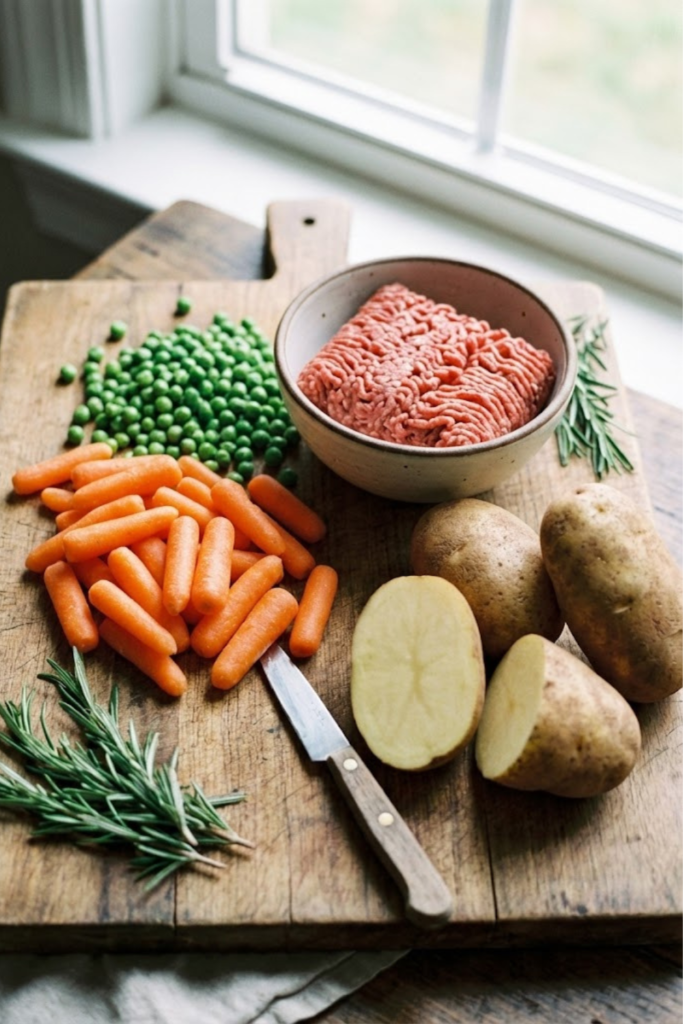
I used to think that making a good ground beef shepherd’s pie was just about throwing whatever I had in the fridge into a pan and hoping for the best. One time, I bought the cheapest ground beef I could find—it was like 70% fat. By the time I finished browning it, the pan looked like a swimming pool of yellow oil. My poor pie was so greasy we could barely eat it! That was a big lesson for me. Now, I am much more careful about what goes into my shopping cart because the quality of your ingredients really dictates the final taste.
The Ground Beef Ratio
I usually grab the 90/10 or 85/15 lean ground beef at the store. You want a little bit of fat for flavor, but too much fat makes the bottom of the pie soggy and heavy. Since this is a ground beef version—which some people call a “cottage pie”—the meat is the star. If you use good meat, the whole dish tastes way better. Sometimes I even mix in a tiny bit of ground pork if I want it extra juicy, but straight beef is the classic way to go for my family.
Fresh vs Frozen Veggies
For the vegetables, I always start with the basics: onions, carrots, and peas. I like to chop my carrots really small so they cook at the same speed as the onions. Now, for the peas, don’t worry about getting fresh ones from the pod. Frozen peas are actually better here because they keep their bright green color and don’t turn into brown mush in the oven. I add them right at the end so they stay snappy. If you have some celery in the back of the fridge, toss that in too! It adds a nice little crunch that people don’t expect.
The Liquids and Herbs
The sauce is what holds everything together. You need a good beef broth that actually tastes like beef. I prefer the low-sodium kind because I like to control the salt myself. And you definitely need Worcestershire sauce. It gives that deep, savory flavor that everyone loves. For herbs, I stick to thyme and rosemary. Fresh is great if you have a little garden, but dried works just fine if you’re in a hurry. Just rub the dried herbs between your palms before dropping them in the pan to wake up the oils. I also love using a bit of garlic—never skip the garlic!
Mastering the Beef Filling
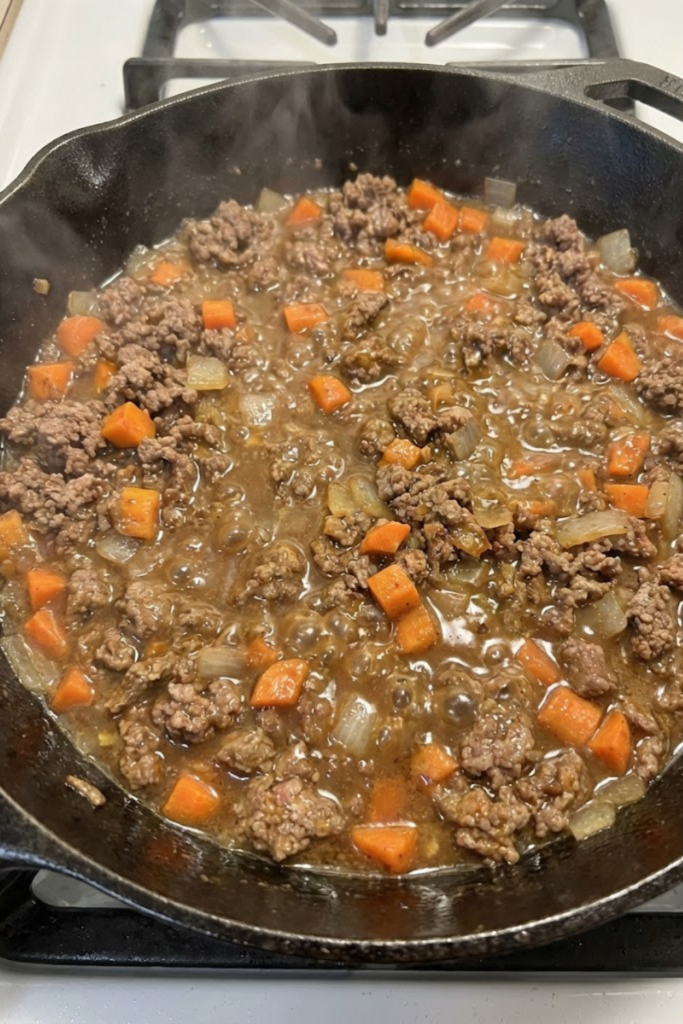
The filling is really the heart of the whole dish, so you gotta get it right if you want people asking for seconds. I used to just toss the ground beef in a skillet and stir it around until it wasn’t pink anymore, but that’s just not enough. To get that deep, rich taste for your ground beef shepherd’s pie, you really need to let the meat brown properly. If you rush this part, the meat ends up tasting kind of boiled and bland, which is a total bummer after all that work.
Browning for Better Flavor
Don’t crowd the pan! This is the biggest mistake I see. If you put two pounds of beef in a small skillet, it just steams in its own juices and turns gray. I usually do it in batches or use my biggest cast iron. You want to see those crispy brown edges because that’s where all the savory goodness lives. I like to let it sit for a minute without touching it so it gets a good sear. Trust me, your family will notice the difference in the flavor depth.
Deglazing the Pan
Once the beef is browned and you’ve drained off most of the grease, you’ll see these dark brown bits stuck to the bottom of the pan. Don’t you dare scrub those away or pour them down the sink! That stuff is flavor gold. I usually pour in a little bit of my beef broth while the pan is still hot and use a wooden spoon to scrape it all up. This makes the sauce taste like it’s been simmering for hours even when you’re just making a quick dinner after work.
Thickening the Gravy
Nobody wants a watery pie. I’ve made that mistake before, and the potatoes just sink right into the meat like it’s quicksand. It looks a mess when you try to serve it on a plate. To fix this, I sprinkle a little flour over the meat and veggies before I add the rest of the liquid. Let the flour cook for a minute so it doesn’t taste like raw dough. Then, as you stir in the broth and a big squeeze of tomato paste, it thickens up into a nice gravy that holds everything together.
Seasoning as You Go
Finally, make sure you season as you go. I add a bit of salt and pepper at every step instead of just at the end. A big splash of Worcestershire sauce is my secret weapon—it gives it a little tang that cuts through the richness of the beef. I also throw in a couple cloves of minced garlic right at the end of the browning so it doesn’t burn and get bitter. It’s simple stuff, but these little layers of flavor make the meal feel special.
The Secret to the Best Mashed Potato Topping
I have a confession to make: I used to be a total failure at making potatoes. For real, my first attempt at a ground beef shepherd’s pie ended up looking like a bowl of meat soup with white glue on top. I was so embarrassed because I had invited my neighbors over to eat! I learned the hard way that you can’t just throw everything in a bowl and hope it works out. It took me a few tries to figure out that the topping is just as important as the meat underneath if you want that perfect comfort food feeling.
Choosing Your Spuds Wisely
You gotta pick the right potato or you’re doomed from the start. I always go for Russets because they are super starchy and get really fluffy when you mash them. Yukon Golds are okay too because they have a natural buttery taste, but they can get a bit heavy if you aren’t careful. I stay away from those little waxy red potatoes for this specific dish. They just don’t mash well enough to sit on top of the beef properly. If you use the wrong ones, your topping will be lumpy and weird, and nobody wants that.
Don’t Overwork the Mash
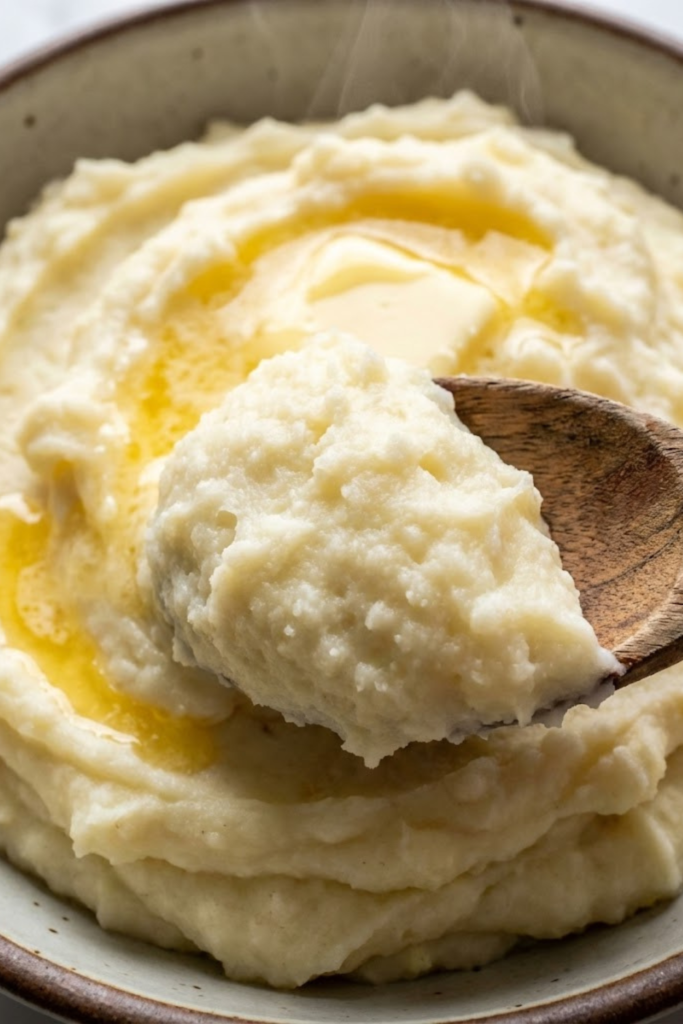
One time, I thought I’d be smart and use a food processor to save time. Biggest mistake ever! The blades turned my beautiful potatoes into a sticky, gummy mess that tasted like literal paste. Now, I only use a hand masher or a ricer. It takes a bit more elbow grease, but the texture is worth it. You want them light and airy so they soak up some of that beef juice from below without turning into mush. Just mash them until the big chunks are gone, then stop.
The Temperature Trick
Here is a pro tip I learned from a chef friend of mine years ago. Always warm up your milk and butter before you pour them into the pot. If you dump cold milk into hot potatoes, it shocks them. They won’t absorb the fat the right way, and you’ll get clumps. I just pop the butter and milk in the microwave for about 45 seconds. It makes the ground beef shepherd’s pie topping way smoother and easier to spread over the meat.
Getting Those Crispy Ridges
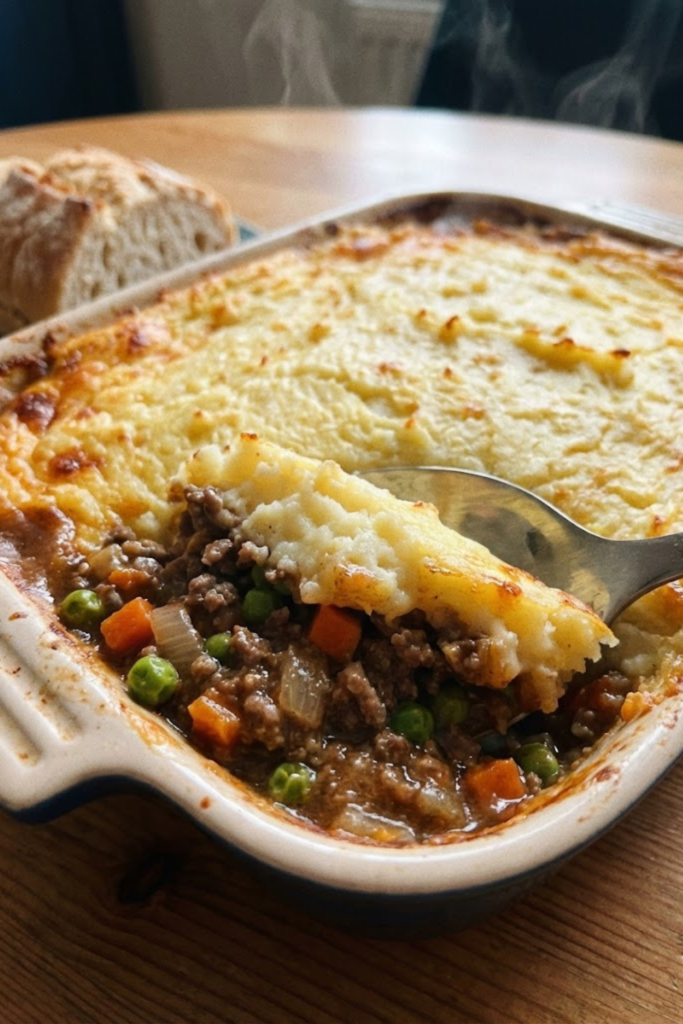
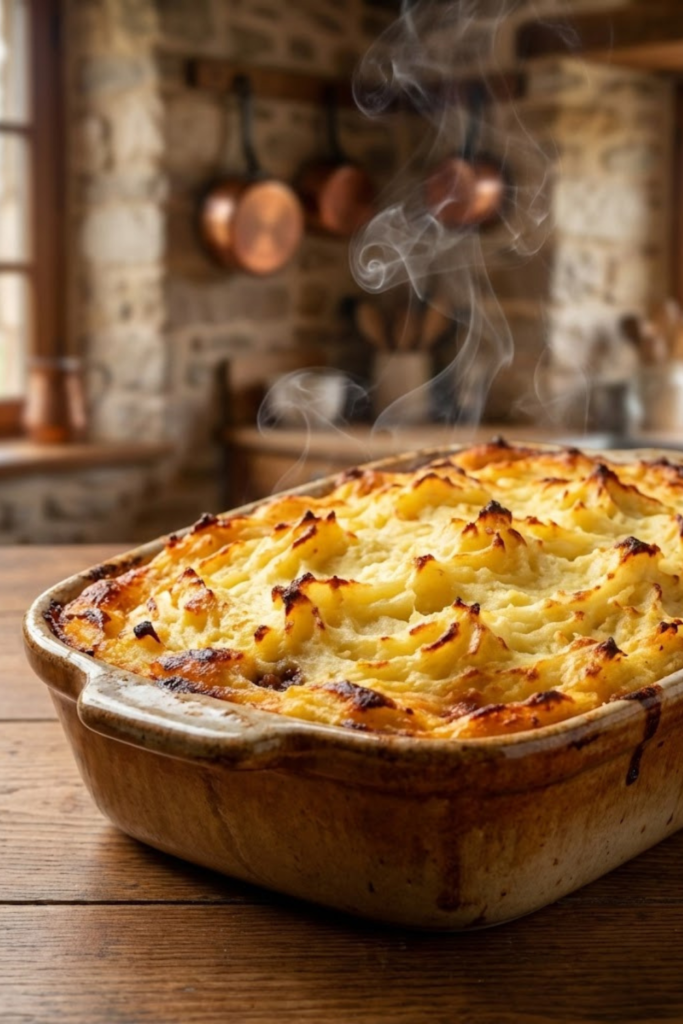
When you spread the mash over the meat, don’t make it perfectly flat. Use a fork to rake little lines across the top. Those ridges catch the heat in the oven and turn into crispy, golden bits. It is the best part of the whole meal! My kids literally fight over the “crunchy parts” every time I make this. Just be careful not to burn them while you’re waiting for the gravy to bubble up around the edges. It’s a small detail, but it makes the dish look like it came from a fancy restaurant.
Assembly and Baking Excellence
Putting the pie together is the part where I always start to feel really hungry. The kitchen smells like onions and savory beef, and I know we are close to the finish line. But you can’t just slap it all together and throw it in. There is a bit of a technique to making sure your ground beef shepherd’s pie looks as good as it tastes. I’ve had many nights where I rushed this part and ended up with a total mess, so take your time here. It’s the final stretch!
The Layering Trick
I used to just dump all the mashed potatoes right in the center of the meat. When I tried to spread them out, the beef would mix into the potatoes, and it looked like a gray disaster. Now, I do what I call the “dollop method.” I take small spoonfuls of the mash and drop them all over the surface of the meat filling. Once the whole top is covered in little clouds of potato, I use a fork to gently smooth them over. This makes a clean layer and makes sure every bite has the right amount of meat and potato.
Getting the Heat Right
I usually set my oven to 400 degrees. You want it hot enough to make the gravy bubble up around the edges, but not so hot that you burn the top before the middle is warm. If the potatoes aren’t getting as brown as I want, I’ll turn on the broiler for the last two minutes. But you have to watch it like a hawk! I’ve burned more than one dinner because I walked away to check my email for “just a second.” Keep your eyes on those potato peaks so they stay golden and don’t turn black.
The Importance of Resting
This is the hardest part of the whole recipe. When you take that bubbling dish out of the oven, you’re going to want to scoop it out immediately. Don’t do it! If you cut into it right away, the gravy will be too thin and it will run all over the plate. I always set a timer for ten minutes before anyone is allowed to touch it. This lets the sauce thicken up and “set.” It makes it much easier to serve nice, clean squares that actually stay together on the plate.
Preparing for Busy Nights
If you know you have a crazy week ahead, you can actually put the whole thing together a day early. Just cover it with foil and stick it in the fridge. When you’re ready for dinner, just pop it in the oven. It might need an extra ten minutes of baking time since it’s cold from the fridge, but it’s a lifesaver on soccer nights! You can even freeze it for a month if you wrap it really well. Just thaw it in the fridge the night before you want to eat it.
Final Thoughts and Serving Suggestions
So, we have gone through all the steps to make a really great ground beef shepherd’s pie, and I hope you feel ready to get in the kitchen. It’s one of those recipes that might seem like a lot of work because of the different layers, but once you get the hang of it, it becomes second nature. I remember being so nervous the first few times I made it for my family, worried the meat would be too dry or the potatoes would be lumpy. But honestly, even if it isn’t “perfect,” it always tastes good because it’s made with love and real ingredients. That’s the most important thing to remember when you’re cooking for people you care about.
Making it a Full Meal
While this pie is pretty much a whole meal in one dish, I usually like to serve it with a little something on the side. A simple green salad with a tart vinaigrette is a great choice because it cuts through the richness of the beef and the buttery potatoes. If I’m feeling extra hungry, I’ll even make some crusty bread to soak up any extra gravy that might be left on the plate. My husband loves it when I steam some extra green beans or broccoli too. It adds some color to the table and makes me feel a bit better about all that cheese I usually sprinkle on top!
Troubleshooting Common Issues
If your pie comes out a bit too salty, don’t panic. Next time, just cut back on the salt in the potatoes since the beef broth already has a lot of it. If you find the filling is too runny, you can try adding a bit more tomato paste or letting it simmer for a few extra minutes before you put the potatoes on. And if the potatoes are looking a bit dry after baking, a tiny pat of butter on top while it rests will fix that right up. Cooking is all about learning as you go, so don’t be afraid to make mistakes. Each time you make this ground beef shepherd’s pie, it will get better and better.
Sharing the Love
There is something so rewarding about seeing a clean plate at the end of dinner. This dish is a true crowd-pleaser and it’s great for leftovers the next day—sometimes I think it tastes even better after a night in the fridge! If you enjoyed this guide and found it helpful for your weeknight dinner planning, please share it on Pinterest! It helps other home cooks find easy, comforting recipes that their families will actually eat. Thanks for sticking with me through this recipe journey, and happy cooking!