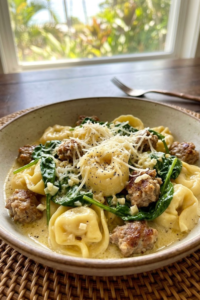
You know that “dinner paralysis” where you stare at the fridge for 20 minutes? That was me last Tuesday, looking at some meat and wondering what to do. I decided to whip up a ground beef potatoes casserole, but my first attempt was a total disaster—the potatoes were crunchy, the sauce was watery, and my daughter actually cried because the food “bit her back.” I realized I had to stop guessing and start learning, specifically about potato thickness and draining the grease properly to avoid that soup-like mess. After a lot of trial and error, I finally nailed this recipe; it’s budget-friendly, tastes like a warm hug, and I promise to walk you through it so you don’t make the same rookie mistakes I did.

Choosing the Right Potatoes for the Perfect Texture
Okay, folks, let’s talk taters. You might think grabbing any old bag from the pantry will work for a ground beef potatoes casserole, but let me tell you, that is a rookie move I have made way too many times.
I remember one specific Sunday dinner where I used red potatoes because they were on sale. I thought I was being thrifty. Turns out, I was just setting myself up for a watery, sad dinner. The potatoes didn’t soak up any of the delicious sauce, and they had this weird, slippery texture that nobody liked. My husband ate it to be nice, but I saw him sneaking a sandwich later.
Starchy vs. Waxy: The Showdown
Here is what I learned after that disaster. You really need to stick with Russet potatoes or Yukon Gold potatoes.
Russets are my personal favorite for this. They are high in starch, which means they act like a sponge. They drink up all that savory beef juice and cream, and the starch helps thicken the casserole so it isn’t soup. If you want that classic, soft texture like you get in au gratin potatoes, go with Russets.
Yukon Golds are a solid runner-up. They have a natural buttery flavor that is honestly delicious. However, they are a bit waxier than Russets. This means they hold their shape better and won’t fall apart as much. If you like distinct sliced potatoes with a bit of bite, choose these. Just avoid the waxy red ones unless you want a potato salad vibe in your hot dish.
The Slicing Situation
Another mistake I made for years? hand-slicing the potatoes with a dull knife. I’d end up with some slices paper-thin and others thick as a doorstop.
The result was a casserole where half the potatoes were mush and the other half were raw and crunchy. It was a texture nightmare.
- Invest in a tool: I finally bought a mandoline slicer. It’s a total game changer.
- Watch your fingers: Seriously, use the guard. I learned that the hard way and needed a band-aid.
- Thickness matters: Aim for about 1/8 inch thick.
If the slices are consistent, the whole dish bakes evenly. Also, do not rinse your potatoes after you slice them! I used to do this thinking I was being clean. But for this recipe, you want that starch on the surface. It helps bind the layers together so when you scoop it out, it doesn’t slide all over the plate. A little starch is our friend here.

Preparing the Savory Beef Mixture
Now, let’s get to the heart of the operation. You might think cooking ground beef is as easy as tossing it in a pan and walking away, but for this ground beef potatoes casserole, the meat is where the flavor lives or dies. I used to treat the meat as just a “filler,” and boy, was that a mistake. I’d end up with gray, sad-looking crumbles that tasted like absolutely nothing.
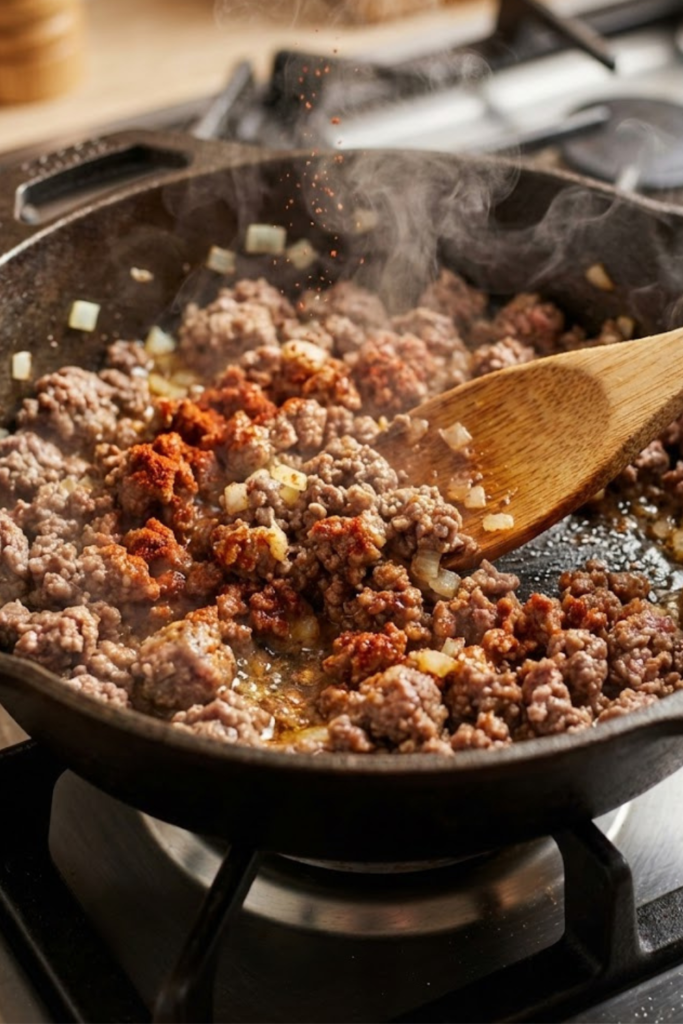
My biggest flop happened when I was in a huge rush. I threw a block of frozen meat into a cold pan and turned the heat up high. Instead of browning, the meat just sat there and boiled in its own juices. It was rubbery and gross. I learned that you have to let your pan get hot first. I swear by my cast iron skillet now. It holds heat like a champ and gives you that nice, brown crust on the meat that equals flavor.
Fat is Flavor (But Don’t Go Crazy)
When I’m at the store, I usually reach for 80/20 beef. I know, I know, lean ground beef is healthier, and if you are watching calories, go for it. But I’ve found that the 90/10 stuff dries out way too fast in the oven. The 80/20 mix keeps things juicy.
However, there is a catch. You have to drain it.
- The Grease Trap: If you don’t drain the fat, your casserole will have an oil slick on top. I served a greasy casserole to my mother-in-law once. She didn’t say anything, but she dabbed her potatoes with a napkin. I was mortified.
- My Trick: I tilt the pan and use a turkey baster to suck out the extra grease if I’m feeling lazy. Otherwise, just spoon it into a jar.
Seasoning Layers
Here is where I used to mess up big time. I would wait until the end to add salt. No! You have to season the meat while it cooks. I like to throw in my diced onions right when the beef is halfway brown. That way, the onions soften up in the beef fat.
Once the pink is gone, I hit it hard with the spices. We aren’t building a rocket here, but we are building flavor.
- Garlic Powder & Onion Powder: These are non-negotiables for me.
- Red Paprika: It gives the meat a nice color so it doesn’t look gray.
- Worcestershire Sauce: I add a few splashes of this. It adds that savory “umami” punch.
I also learned to add minced garlic at the very last minute. If you put fresh garlic in too early, it burns and tastes bitter. I did that on a date night dinner once—acrid burnt garlic is not romantic, let me tell you. Just toss it in for the last 30 seconds until you can smell it, then take it off the heat. This seasoned beef base is going to soak into those potato slices we talked about earlier, making every bite perfect.
The Secret Cheese Sauce and Assembly
Alright, this is where the magic happens. We have the potatoes, we have the beef, but without the right glue to hold it all together, you just have a pile of ingredients. For the longest time, my “secret sauce” was a can of cream of mushroom soup.
Don’t get me wrong, I still have a soft spot for the canned stuff when I’m in a rush. But I remember bringing a ground beef potatoes casserole to a potluck once, and it had this weird, gelatinous texture. It was gloopy. I realized that if I wanted that restaurant-quality, creamy texture, I had to stop being lazy and make a real sauce.
Don’t Be Scared of the Roux
I used to be terrified of making a roux. It sounded fancy and French, and I barely passed French class in high school. But it is actually super simple.
- The Base: Just melt some butter and whisk in flour.
- The Liquid: Slowly pour in your milk or heavy cream.
- The Trick: Whisk it like you mean it so you don’t get lumps.
If you really want to cheat (and I won’t judge you), you can doctor up that canned soup with some sour cream and beef broth to thin it out. But making your own white sauce takes five minutes and tastes a million times better.
The Cheese Trap
Here is a hill I am willing to die on: grate your own cheese.
I know, the bag of pre-shredded cheese is convenient. I’ve bought hundreds of them. But those bags are coated in a white powder (cellulose) to keep the cheese from sticking together in the bag.
Guess what? It also keeps the cheese from melting together in your oven.
I used bagged cheddar for years and couldn’t figure out why my casserole looked grainy instead of smooth. Grab a block of sharp cheddar cheese and a box grater. It melts into a gooey, dreamy layer that bagged stuff just can’t compete with.
Layering Like a Pro
Assembly is where I used to rush and mess everything up. I’d just dump everything in a bowl, mix it, and bake. It tasted okay, but it looked like a wreck.
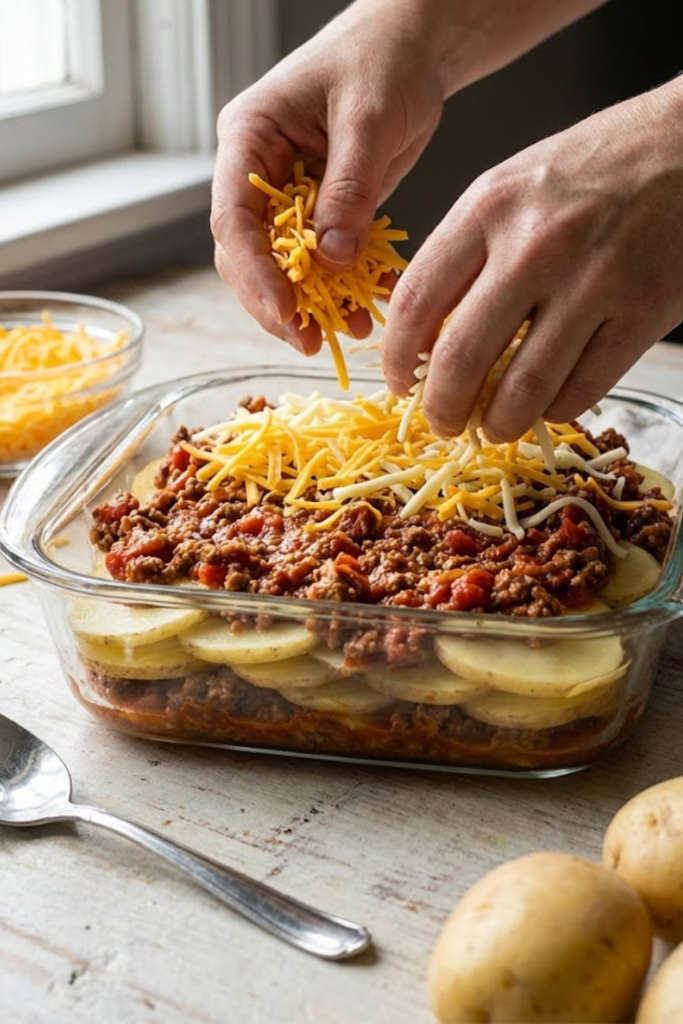
Treat this like a lasagna.
- Layer 1: Start with a layer of those sliced potatoes on the bottom of your baking dish.
- Layer 2: Spoon over half the meat mixture.
- Layer 3: Pour some sauce and sprinkle cheese.
- Repeat: Do it all again.
By layering, you make sure that every scoop has a bit of everything. There is nothing worse than digging into a casserole and getting a spoonful of plain potato. We want every bite of this ground beef potatoes casserole to be perfect. Take the extra two minutes to layer it; your tastebuds will thank you.
Baking Times and Temperature Guide
We are in the home stretch now! But let me warn you: the oven is where good casseroles go to die if you aren’t paying attention. I have ruined more dinners than I care to admit by getting distracted by Netflix while my food was burning to a crisp.
The biggest mistake I made when I first started cooking this ground beef potatoes casserole was impatience. I cranked the oven up to 450°F thinking, “Higher heat means it cooks faster, right?” Wrong. So wrong. I pulled it out, and the cheese was black, but the potatoes in the middle were still rock hard. It was inedible.
The Sweet Spot
You want to stick to 375°F (190°C). This is the Goldilocks temperature—not too hot, not too cool. It allows the potatoes to soften slowly without incinerating your cheese topping. Also, please, I beg you, preheat your oven. I used to just throw the dish in while the oven was warming up. It messes up the timing completely. If the recipe says bake for an hour, it means an hour at temperature, not an hour starting from zero.
The Foil Tent Strategy
Here is the secret I learned after serving “crunchy” potatoes to guests (so embarrassing): You have to cover it. For the first 45 minutes to an hour, cover your baking dish tightly with aluminum foil.+1
- Why? This traps the steam. The steam is what actually cooks the potatoes through.
- The Spray Trick: Spray the underside of the foil with cooking spray so the cheese doesn’t stick to it. I’ve lost half my cheese topping to a piece of foil before, and it was a tragedy.
After about 45 minutes, rip that foil off. This is the fun part. You want to bake it uncovered for another 15-20 minutes. This lets the steam escape so the sauce thickens up, and it gives you that beautiful, golden brown, bubbling cheese crust that everyone fights over.
The Fork Test and The “Cool Down”
How do you know it’s actually done? Do not trust the timer. Trust your fork. Take a fork and poke it into the center of the casserole. If it slides through the potatoes like butter, you are golden. If there is any resistance, cover it back up and give it ten more minutes.
Finally, the hardest step of all: The Rest. When you pull that bubbling masterpiece out of the oven, do not cut into it immediately. I know, it smells amazing. You are hungry. But if you cut it now, the sauce will be like lava and run all over the place. Let it sit on the counter for 10 to 15 minutes. It lets the sauce set up so you get nice, clean squares when you serve it. Plus, you won’t burn the roof of your mouth, which is a lesson I learn over and over again.

So there you have it, friends. We have gone from the fear of a watery, crunchy disaster to a bubbling, golden pan of comfort food. I truly hope this ground beef potatoes casserole becomes a staple in your kitchen just like it is in mine.
It’s funny how a few simple tweaks—like picking the right potato or actually draining the grease—can turn a “meh” meal into something your family begs for. I used to dread making casseroles because of my past failures, but now, seeing my kids scrape their plates clean makes all those trial runs worth it. This dish is hearty, it’s cheesy, and it’s the perfect answer to a busy weeknight.
Don’t just take my word for it, though. Give it a try next time you are staring at a package of ground beef and feeling uninspired. And hey, if you make it, I’d love to see it! Pin this recipe to your “Comfort Food” or “Dinner Ideas” board on Pinterest so you don’t lose it! Trust me, you are going to want to find this one again when the craving hits.