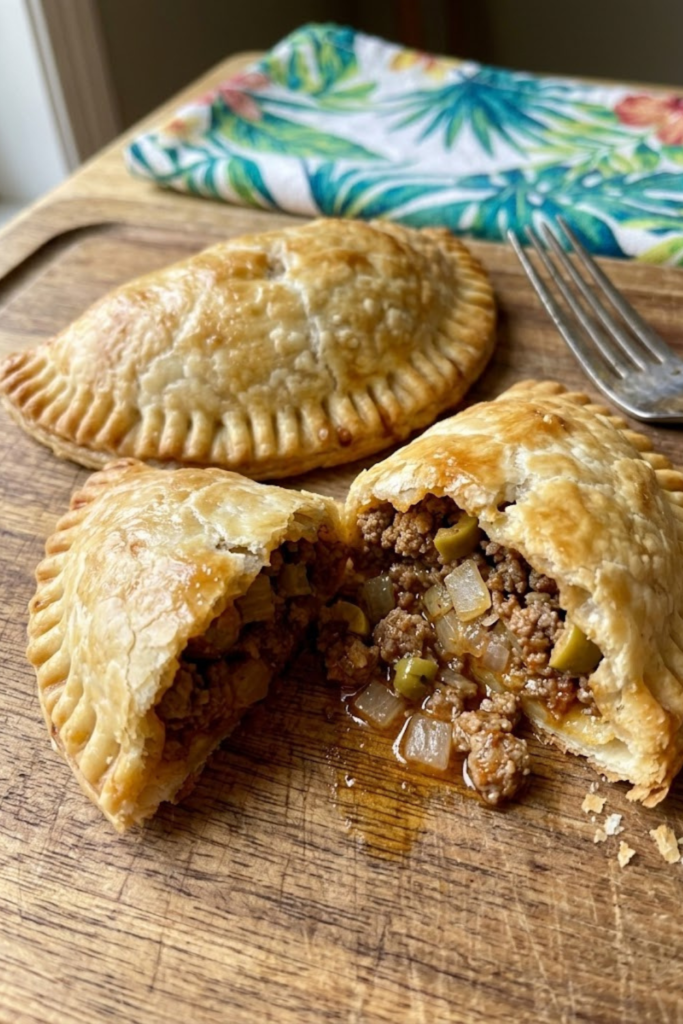
I still remember my first batch of ground beef empanadas. They looked more like sad, leaky tacos than the golden, crescent-shaped pockets of joy I was dreaming of. Seriously, it was a mess! I had beef grease running down my arms and the dough was as tough as a rubber band.
But here is the thing: did you know that in some parts of South America, empanadas are so popular that they have dedicated festivals where thousands of people compete for the “best fold”? That is a lot of pressure for a little pastry! Over the years, I’ve realized that making a killer empanada isn’t about being a professional chef; it’s about understanding how the fat hits the flour and how the spices wake up the meat.
In this guide, I’m going to share exactly how I fixed my soggy-bottomed disasters so you can skip the frustration and go straight to the triumph of that first crunchy, savory bite.
The Secret to a Flaky, Homemade Empanada Crust
I used to think making dough was just about mixing stuff in a bowl and hoping for the best. I was so wrong. My first few tries were basically like eating cardboard or a dry cracker. If you want that crunch that shatters when you bite in, you have to treat your ingredients like they are in a winter storm. It isn’t hard once you know the trick, but most people rush the process. I’ve taught enough baking classes to know that patience is the biggest ingredient you’ll need here. Let me tell you, once you get this right, you will never buy those pre-made frozen discs from the store again.
Why Temperature is Your Best Friend
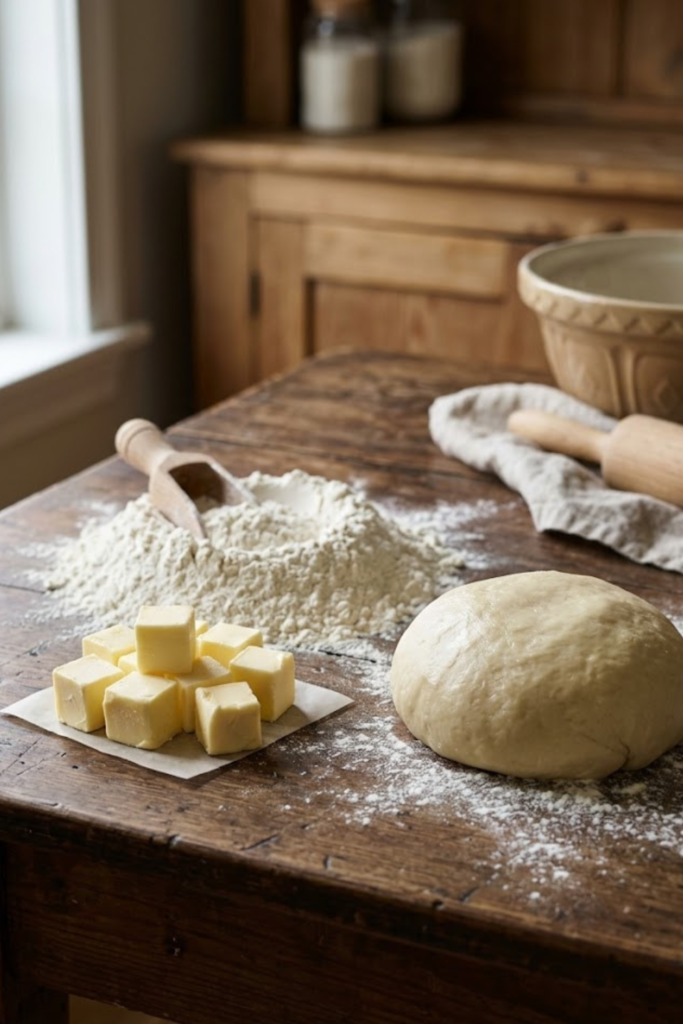
The biggest mistake I see is using warm or even room-temperature butter. If your butter is soft, it just blends into the flour like a paste. You do not want a paste. You want tiny little chunks of solid fat scattered throughout the flour. When that cold fat hits the hot oven, it melts and creates steam. That steam is what pushes the layers of dough apart to make it flaky. I like to cut my butter into small cubes and put them back in the freezer for ten minutes before I even start. I also use ice water—literally water with ice cubes floating in it. It keeps the dough from getting too warm while you work with it. If the dough starts feeling sticky or soft, just stop what you are doing. Put it back in the fridge for a bit.
Stop Squeezing the Dough!
We all want to be like those TV chefs who knead dough like they are giving a massage, but for empanadas, you have to be a bit lazy. If you work the dough too much, you develop gluten. Gluten is great for chewy bread, but it is the enemy of a flaky crust. I usually just use a fork or my fingertips to mix things. You want to stop as soon as the dough barely stays together. It should look a little messy and shaggy. If it looks perfectly smooth, you probably overdid it and it is going to be tough. Just get it into a ball and leave it alone.
Give it a Good Nap
This is the part most people skip because they are hungry and want to eat right now. Don’t do that! The dough needs to rest in the fridge for at least an hour. This lets the flour soak up the moisture and relaxes the gluten. It makes the dough way easier to roll out later so it doesn’t snap back like a rubber band. I usually make my dough the night before. It is one less thing to worry about when I am actually ready to cook the beef and get dinner on the table. Trust me, the wait is worth it for that perfect golden crunch.
Crafting the Ultimate Ground Beef Filling
I have messed up a lot of meat fillings in my time. One time, I made a big batch for a school potluck and they were so dry that people were reaching for their water after every single bite. It was pretty embarrassing! I learned the hard way that ground beef on its own just isn’t enough to make a good empanada. You have to build flavor and moisture so that when you take a bite, it actually tastes like something special and doesn’t just crumble apart. It took me years to figure out the right balance, but now I have it down to a science.
The Secret is in the Onions
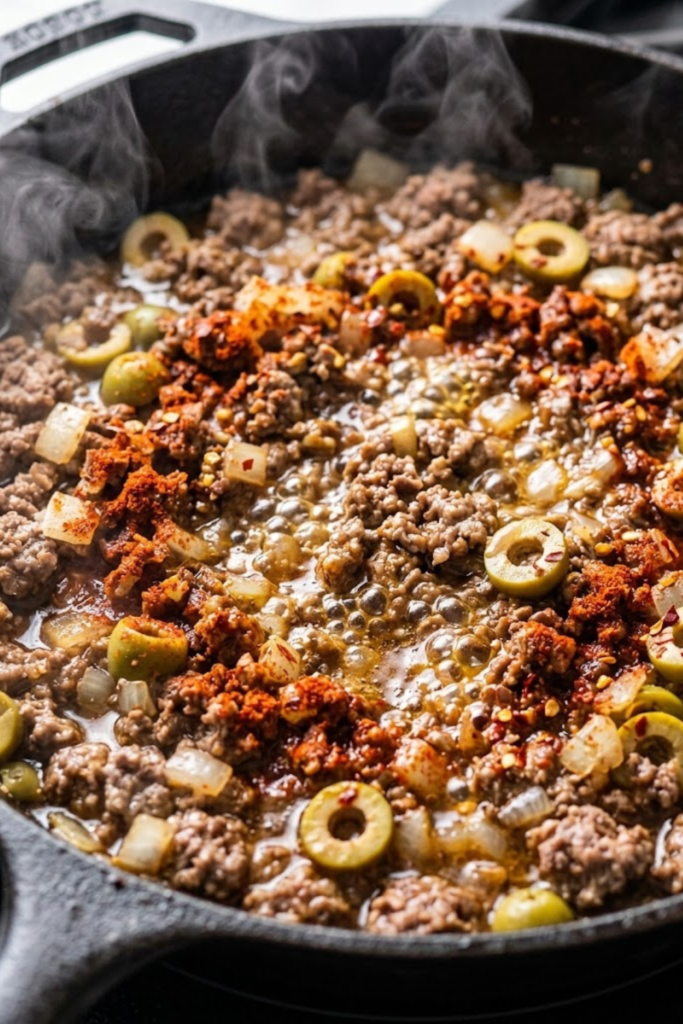
Most people think a pound of meat needs maybe half an onion. That is exactly where they go wrong. If you want juicy empanadas, you need a lot of onions. I usually use almost as much onion as I do beef by weight. When you cook them down slowly in a pan, they turn sweet and very soft. They release all this liquid that mixes with the beef fat to make a natural kind of sauce. This keeps the meat from turning into a hard little rock inside the pastry. I also like to add a tiny bit of beef broth or even just a splash of water if the pan looks too dry while I am cooking. It makes a huge difference in the final result.
Getting the Spices Right
Don’t be shy with your spice rack. Salt and pepper are just the start, but they won’t get you very far. For that classic taste, you really need a good amount of cumin and smoked paprika. I like the smoked kind of paprika because it adds a deep flavor that makes it taste like the meat was cooked over an open fire. Some people like to add raisins for sweetness or green olives for a salty kick. I used to hate olives when I was a kid, but in an empanada? They are amazing. Just chop them up small so you get a little bit in every bite. It helps balance out the richness of the beef perfectly.
The Golden Rule: Keep it Cold
This is the most important part of the whole process, so listen close. You cannot put hot meat onto your cold dough. If you do that, the heat from the beef will melt the butter or fat in the crust immediately. Everything will turn into a greasy, sticky mess before it even hits the oven. I always make my filling a few hours ahead of time or even the day before. I put it in a container and stick it in the fridge until it is cold and firm. This also makes it much easier to scoop and fold the dough later. If you try to rush this part, you’re going to have a bad time in the kitchen.
How to Fold and Seal (The “Repulgue” Struggle)
I remember sitting at my kitchen table for two hours one Sunday trying to get the edges of my empanadas to look right. I had flour on my face, dough under my fingernails, and I was just about ready to give up. My first batch looked like they had been run over by a truck! But honestly, the fold is about more than just looking pretty for a photo. It is what keeps all that juicy meat inside where it belongs. If you don’t seal it right, you’ll just end up with a tray of baked meat and empty bread. Let’s talk about how to get it done without losing your mind.
The Magic of a Wet Finger
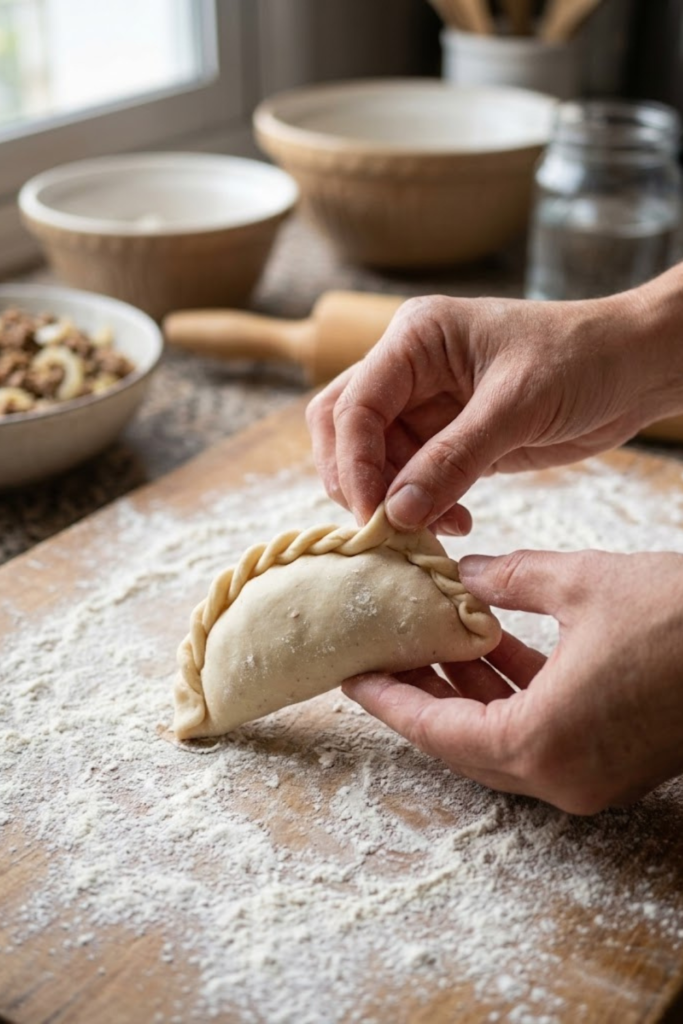
Before you even think about the fancy braid, you have to make sure the dough actually sticks to itself. I keep a little bowl of warm water right next to me while I work. I dip one finger in and run it along the edge of the dough circle. You don’t want it soaking wet, just a little tacky. If there is too much flour on the surface, the dough won’t bond, and it will pull apart as it cooks. I learned this the hard way when all my empanadas popped open in the hot oil. It was a total mess! Just a light touch of water is all you need to make sure those edges stay put.
Fork Crimp vs. The Traditional Twist
Look, we all want that beautiful “repulgue” or rope-like braid. It looks so professional and fancy! But if you are just starting out, please do not stress over it. My grandma used a fork for forty years and nobody ever complained about how her food looked. You just take the tines of the fork and press down hard all along the edge. It makes a cute pattern and it is very secure. If you do want to try the twist, think of it like a “fold and pinch” motion. You fold a little piece over, pinch it down, and repeat. It takes a lot of practice to get the rhythm. I still mess it up sometimes when I am in a hurry.
Don’t Trap the Air
This is a big tip that people forget. When you fold the dough over the meat, you have to gently press out the air. If you leave a big air pocket inside, that air will expand in the heat and cause the empanada to explode like a little balloon. I usually use the side of my hand to lightly flatten the mound of meat and then smooth the dough over it from the center out to the edges. It is like putting a screen protector on your phone, you gotta push those bubbles out. Once the air is gone, then you do your final seal. This helps make sure your empanadas come out looking full and perfect every single time.
Baking vs. Frying: Which Way is Better?
I have had many arguments with my friends about this over the years. One of my buddies swears that if an empanada isn’t fried, it isn’t a “real” empanada. But then my sister, who is always trying to eat healthier, thinks baking is the only way to go. I’ve tried them both ways more times than I can count. To be honest, I think it just depends on how much of a mess you want to clean up in your kitchen. I remember one time I tried deep-frying thirty of these for a birthday party. By the end of the night, my whole house smelled like a fast-food joint and I had oil splatters on my favorite shirt. It was a total nightmare!
The Classic Fried Crunch
There is no denying that frying gives you a texture you just can’t get anywhere else. When you drop that cold dough into the hot oil, it puffs up almost instantly. You get those tiny, crispy bubbles on the surface that just shatter when you take a bite. It’s really amazing. If you want to fry them, you have to make sure your oil is hot enough. If the oil is too cool, the dough will just soak up the grease like a sponge. You’ll end up with a soggy, heavy mess that feels like a lead weight in your stomach. I usually use a deep pot so the oil doesn’t splash everywhere, but even then, it’s a lot of work. You have to stand there and watch them every second so they don’t burn.
The Easy Baked Route
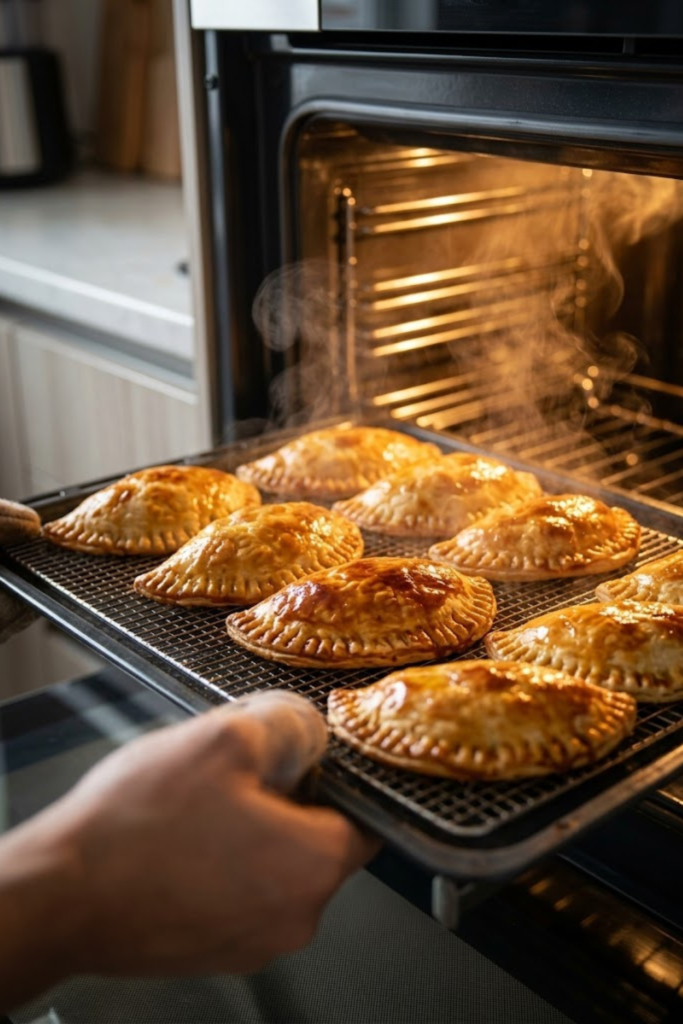
These days, I usually stick to the oven. It is way less stressful and you can cook a whole bunch at the same time. The trick to making baked empanadas look good is the egg wash. I used to skip this step because I was being lazy, but they always came out looking pale and sad. Now, I always brush them with a beaten egg. It gives them that shiny, golden-brown color that makes people think you bought them at a fancy bakery. I also like to poke a tiny hole in the top with a toothpick to let some of the steam out. This helps keep the bottom from getting soggy while they bake.
The New Way to Cook
Since it’s 2026, I have to mention the air fryer. It has quickly become my favorite tool for making small batches. It’s like a mix between baking and frying. You get a lot of that crunch without using a gallon of oil. I just spray them with a little bit of avocado oil and pop them in. They cook really fast, usually in about ten minutes. I find this is the best way to reheat leftovers too. If you put a cold empanada in the microwave, it turns into a gummy, gross mess. But in the air fryer? It tastes like you just made it fresh. Just be careful not to crowd them, or they won’t get crispy all the way around.
Wrapping Up Your Empanada Adventure
I really hope this guide helps you feel more confident about getting into the kitchen and making these ground beef empanadas. I know it can seem like a lot of steps, but once you get that first tray out of the oven and see everyone’s faces when they take a bite, you’ll know it was worth every minute. I used to be so scared of making dough from scratch, but now it’s one of my favorite things to do on a rainy Sunday afternoon. There’s just something so peaceful about working with your hands and creating something that makes people happy.
I’ve made plenty of mistakes over the years—soggy bottoms, bland meat, and folds that looked more like blobs—but each of those failures taught me something new. That’s the beauty of cooking. You don’t have to be perfect to make something delicious. Even the empanadas that leak a little bit of juice or have a wonky edge still taste incredible because you made them yourself with fresh ingredients. My kids actually prefer the “ugly” ones because they say they have more character!
If you are just starting out, my biggest piece of advice is to just have fun with it. Invite a friend over, put on some music, and turn it into a little party. You can experiment with different fillings once you master the beef version. I’ve tried chicken, spinach and cheese, and even sweet apple cinnamon versions for dessert. The possibilities are pretty much endless once you have that flaky crust technique down.
I’d love to hear how your empanadas turned out! Did you go for the traditional braid or stick with the trusty fork crimp? Did you brave the deep fryer or keep it simple with the oven or air fryer? Every kitchen is different, and I love learning about the little tweaks people make to suit their own tastes. Cooking is a journey, and I’m just glad I could be a small part of yours today.
If you found these tips helpful and want to save this recipe for your next family gathering, please make sure to pin this to your “Comfort Food” or “Easy Dinner Ideas” board on Pinterest! It really helps me out and lets other people find these tips too. Happy cooking, and I’ll see you in the next recipe!