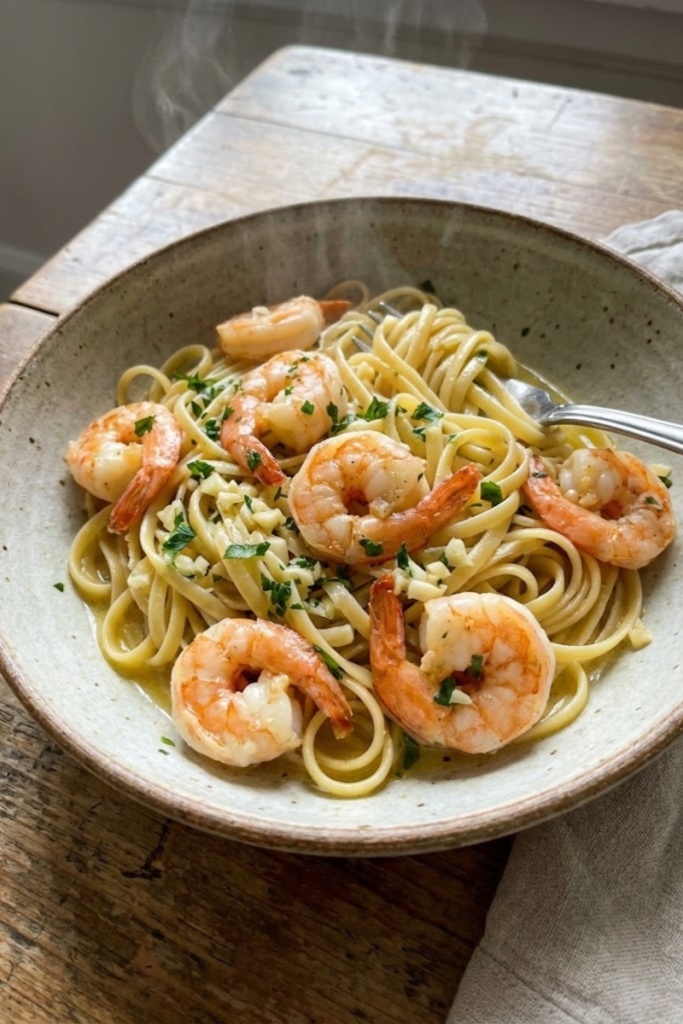
Did you know that Americans eat over 5 pounds of shrimp per person every year? It’s the king of seafood for a reason! I remember the first time I tried making garlic butter shrimp pasta at home; I actually burnt the garlic so bad the whole kitchen smelled like a campfire. It was a disaster! But after years of teaching cooking classes and making this for my family on busy Tuesday nights, I’ve finally mastered the balance of zesty lemon, rich butter, and perfectly snappy shrimp. This recipe is fast, simple, and honestly better than what you’ll find at most fancy bistros. Let’s get into how you can make this delicious meal without making the same mistakes I did.
Essential Ingredients for Garlic Butter Shrimp Pasta
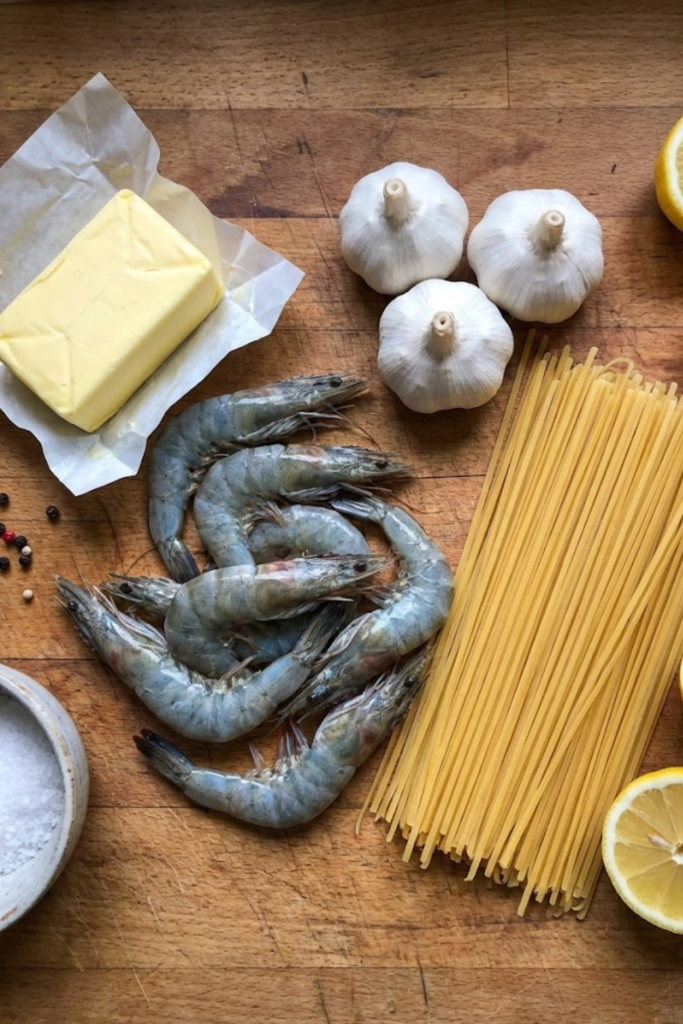
Starting a meal with the right parts is half the battle. I can’t tell you how many times I’ve messed up a simple dinner because I tried to use a substitute that didn’t work. When I first started making garlic butter shrimp pasta, I thought I could just use whatever was in the back of the fridge. I found out quickly that if you want that restaurant taste, you have to be picky about what goes in the skillet. My family has become my biggest critics over the years, so I had to get these ingredients just right.
Real Butter vs. Margarine
You really need real butter for this. I once tried using that fake margarine spread because it was on sale, and it was a total disaster. It turned into a greasy mess that tasted like chemicals. Use unsalted butter so you can decide how much salt you want later. I also like to add a tiny bit of olive oil. The oil helps keep the butter from burning too fast when the pan gets hot. If the butter burns, it tastes bitter, and your whole house will smell like smoke for days.
The Fresh Garlic Rule
Peeling garlic is my least favorite chore. I used to buy the jars of pre-chopped garlic to save time. But I realized that the jar stuff has a weird sour taste because of the liquids they keep it in. For this pasta, you need fresh cloves. I usually grab about five or six big ones. I just smash them with the flat side of my big knife to get the skin off easily. It’s a bit messy, but the smell of fresh garlic hitting that warm butter is the best part of the whole process.
Picking the Best Shrimp
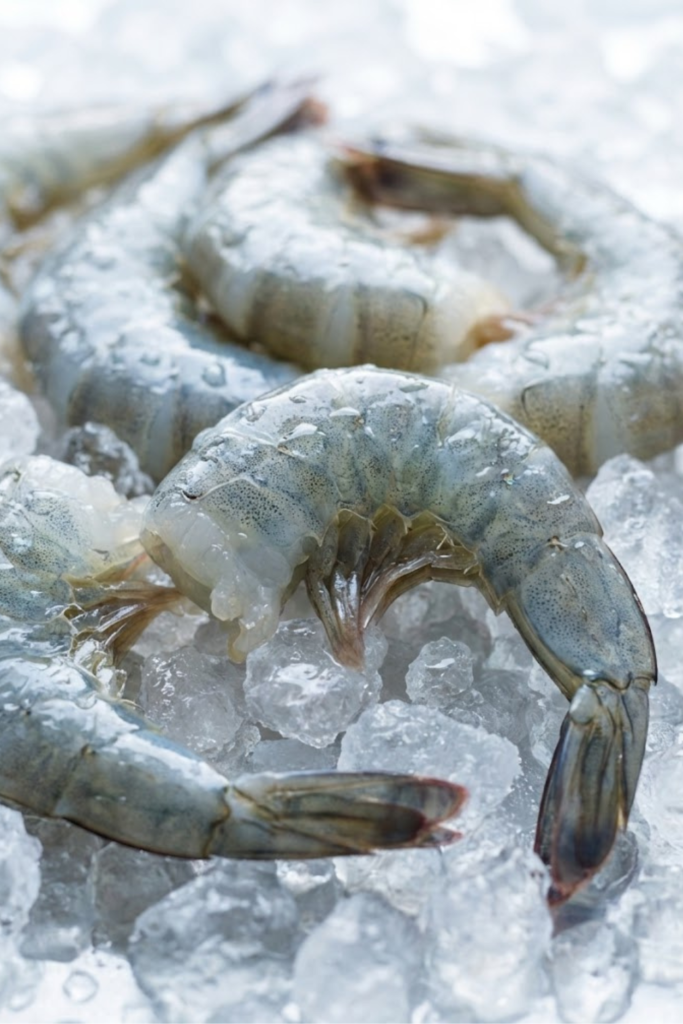
I always look for the bags labeled “Large” or “Jumbo.” If the shrimp are too small, they cook in like thirty seconds and get real tough. You want them to stay juicy. Also, make sure they are raw. Pre-cooked shrimp are okay for a cold salad, but in a hot pasta, they turn into little rubber balls. I buy them frozen and just thaw them in a bowl of cool water for ten minutes. It’s way cheaper than buying the “fresh” ones at the counter which were probably frozen yesterday anyway.
That Final Pop of Flavor
A fresh lemon is a must. I don’t use the juice from those little plastic lemons. It’s too acidic and doesn’t have the right oils. You need the juice and a little zest from a real lemon to make the flavors wake up. Then, I finish it with a handful of fresh parsley. It makes the dish look like I actually know what I’m doing. Plus, it adds a bit of freshness that cuts through all that rich butter. Just chop it up roughly; it doesn’t have to be perfect.
Choosing the Right Shrimp: Fresh vs. Frozen
Walking up to the seafood counter at the grocery store can feel like a test you didn’t study for. I remember standing there for ten minutes just staring at all the different labels. I felt so silly asking the guy behind the glass what the difference was between the “fresh” ones and the ones in the freezer aisle. It turns out, my fear of picking the “wrong” shrimp was holding me back from making a great meal. After years of cooking for my students and my kids, I finally learned that the labels can be a bit tricky.
The Truth About the Seafood Counter
Here is a secret that most people don’t know: those “fresh” shrimp sitting on the ice at the counter were probably frozen just a few hours ago. Most shrimp are caught way out in the ocean and frozen right on the boat so they don’t go bad. The store just thaws them out so they look pretty behind the glass. I stopped buying those because you don’t actually know how long they have been sitting there thawed. If they stay out too long, they start to get a bit mushy or smell like old fish. Now, I just head straight to the freezer section.
Why Frozen is Actually Better
I always keep a bag of frozen shrimp in my freezer for those nights when I’m too tired to think about a big dinner. Frozen shrimp are usually flash-frozen within minutes of being caught. This locks in the flavor and keeps the texture snappy. When you thaw them at home right before you cook, they taste much better than the ones that have been sitting in the store’s display case all day. Plus, it’s usually cheaper to buy the big bag. I just put them in a bowl of cool water for about fifteen minutes while I’m boiling the water for my pasta, and they are ready to go.
Tails On or Tails Off?
This is a big debate in my house. I personally like to leave the tails on for my garlic butter shrimp pasta. It makes the plate look like something you’d get at a fancy bistro. Also, the shells and tails have a lot of flavor that seeps into the butter sauce while they cook. However, if you have little kids who don’t want to get their fingers messy, go ahead and buy them peeled and deveined. It saves you a lot of work, and you won’t have to worry about anyone choking on a tail. Just make sure you get the raw ones, as I mentioned before, so they don’t get tough when you sear them.
The Secret to a Glossy Garlic Butter Sauce
Making a sauce that actually sticks to your noodles is the part that usually scares people, but it’s actually pretty simple once you know the trick. I used to just toss the butter and shrimp together and hope for the best, but the sauce always ended up at the bottom of the bowl instead of on the pasta. It took me a few tries to figure out how to get that silky, restaurant-style finish. In my classroom, I always tell my students that cooking is just as much about timing as it is about the ingredients you use.
Saving the Liquid Gold
The biggest mistake I ever made was pouring all the pasta water down the drain. My grandma saw me do it once and almost had a heart attack! She taught me that the water you boil the noodles in is full of starch. This starch is what helps the butter and oil stick to the pasta. Before you drain your noodles, take a coffee mug and scoop out about a cup of that cloudy water. When you add a splash of it to your pan at the end, it turns the melted butter into a thick, glossy sauce. It’s like magic. If I forget to save the water, the pasta usually ends up dry and boring.
Don’t Walk Away from the Pan
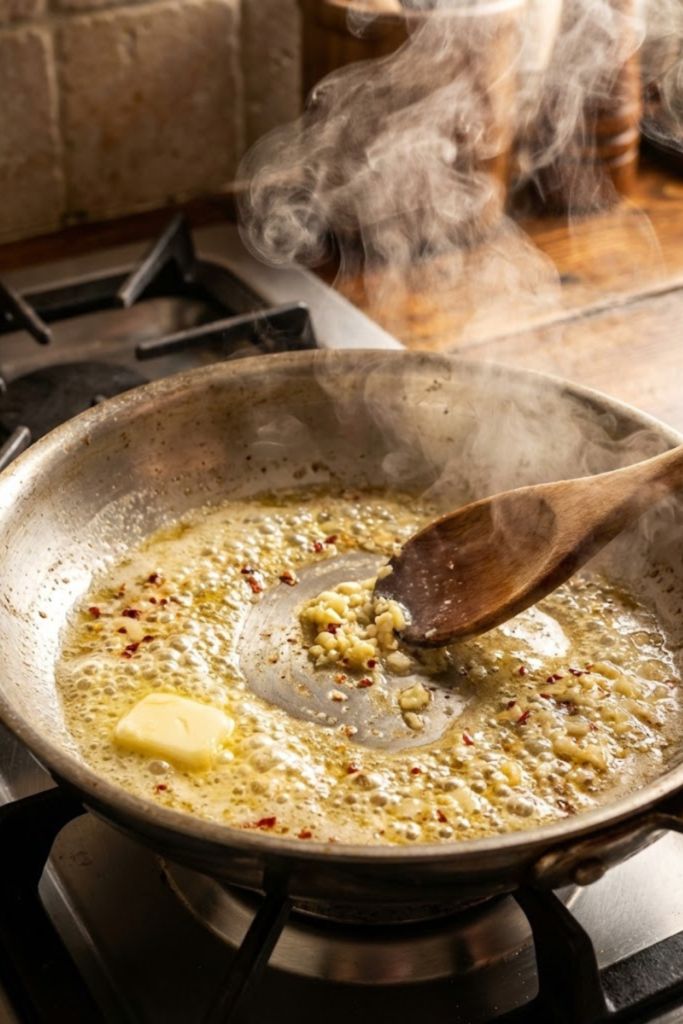
When you start cooking the garlic and butter, you have to stay right there. Butter can go from perfect to burnt in a second. I usually keep my stove on medium heat. If it’s too hot, the garlic gets brown and bitter, and it ruins the whole meal. You want the garlic to just get soft and smell amazing. I also like to add a pinch of red pepper flakes during this part. It doesn’t make it super spicy, but it adds a little warmth that my kids actually don’t mind. Just a tiny bit goes a long way.
Perfect Shrimp Timing
Shrimp cook so fast it’s almost annoying. I used to put them in way too early, and they would shrink up into little tough bits. Now, I wait until the sauce is almost done. Once the shrimp turn pink and curl into a “C” shape, they are finished. If they curl into an “O” shape, you went too far and they’re overcooked. I usually toss the pasta right in as soon as the shrimp look ready. Everything finishes together in the pan, soaking up that garlic goodness. It really is the best way to make sure every bite is flavorful.
Bringing it All Together
So, there you have it. Making this garlic butter shrimp pasta isn’t as scary as it looks when you see it on a fancy menu. I’ve spent a lot of years in the classroom teaching people that cooking is just about being prepared and not panicking when the butter starts to sizzle. My kids usually know when I’m making this because the whole house smells like a dream, and honestly, it’s one of the few meals where they actually finish everything on their plates without complaining about the “green bits” (that’s the parsley, by the way).
How to Serve Your Masterpiece
When I put this on the table, I usually serve it right out of the big skillet. It feels more homey that way, and it keeps the food warmer for longer. I always put a big bowl of extra parmesan cheese and some lemon wedges on the side. Some people like it extra zingy, and some people want it buried under a mountain of cheese. I’m definitely a cheese person myself! Also, don’t forget to have some crusty bread nearby. You’re going to want to soak up every last drop of that garlic butter sauce from the bottom of your bowl. It’s too good to let it go to waste.
Dealing with Leftovers
If you actually have leftovers—which doesn’t happen often at my house—you have to be careful when you warm them up the next day. If you just throw it in the microwave for three minutes, the shrimp will turn into little rocks. I usually put it back in a pan with a tiny splash of water or a little extra pat of butter. Heat it up slow and low just until it’s warm. It’s a great lunch for work the next day, and my coworkers are always jealous when they smell the garlic in the breakroom.
Final Thoughts
I really hope you give this a try tonight. It’s fast enough for a Tuesday but feels special enough for a date night or a birthday dinner. Just remember the three big rules: use fresh garlic, save that pasta water, and don’t overcook your shrimp! If you keep those in mind, you’ll do great. If you enjoyed this recipe and it helped you make a great dinner, please save the pin below to your favorite Pinterest board so your friends can see it too! It really helps me out when you share my stuff. Happy cooking!