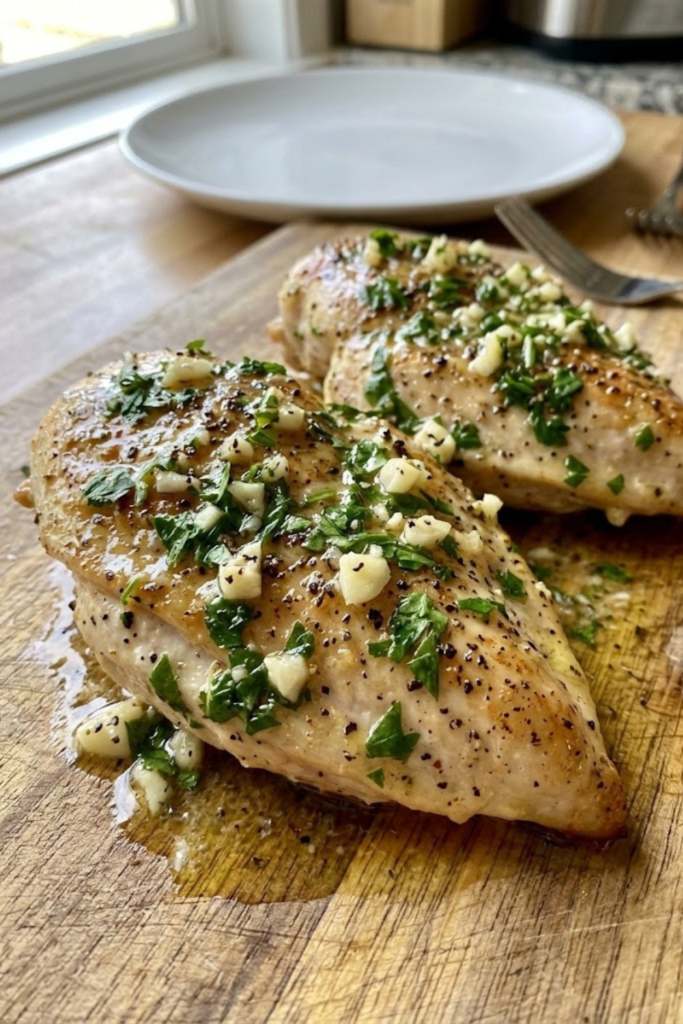
I used to think chicken breast was the most boring thing on the planet. Honestly, I’d rather eat a cardboard box than another dry, rubbery piece of meat! But then I discovered the magic of a real garlic butter chicken breast. Did you know that according to 2025 kitchen surveys, over 60% of home cooks struggle with overcooking poultry? It’s a tragedy! I’ve spent years in my own kitchen messing this up so you don’t have to. Today, we’re going to fix that. We are talking about gold-standard, melt-in-your-mouth goodness that actually tastes like something. Get ready to level up your dinner game with a recipe that’s fast, easy, and seriously delicious!
Choosing the Right Cut for Maximum Juiciness
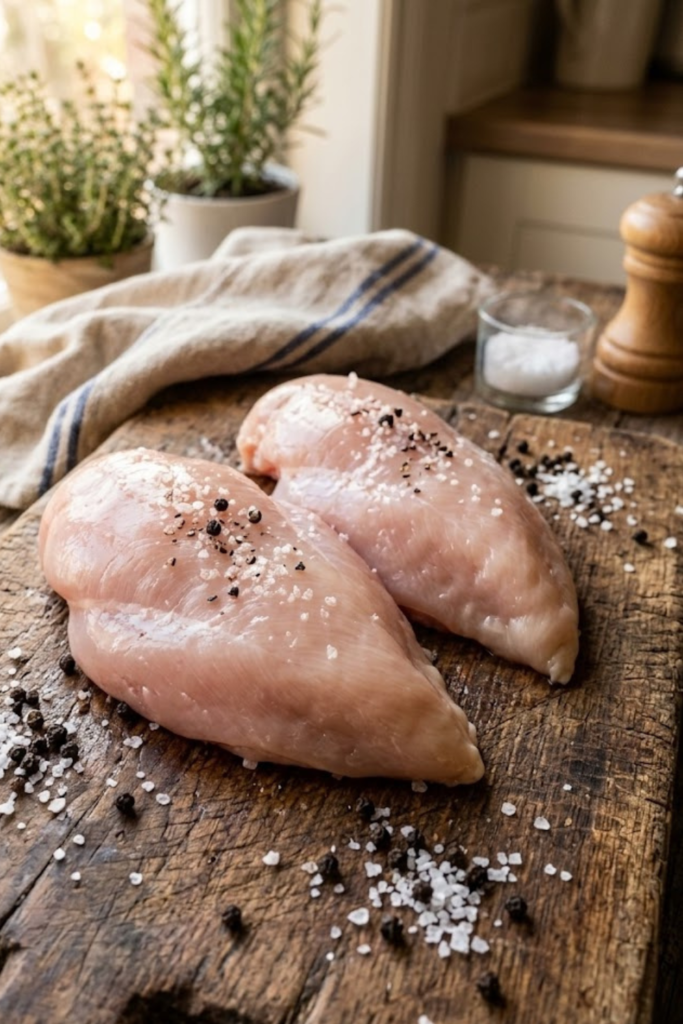
I honestly spent years thinking that all chicken was created equal. I’d walk into the grocery store after a long day of grading papers, grab the first pack of meat I saw, and head home. But let me tell you, that is exactly why my dinners used to taste like dry sponges! If you want a truly great garlic butter chicken breast, you have to start with the right piece of meat. It’s like picking out a good book for my 8th graders; if the foundation isn’t good, nobody is going to enjoy the rest of the story. You want to look for meat that looks fresh and has a nice pink color. Avoid anything that looks a bit grey or has a lot of liquid sitting in the bottom of the tray. That liquid means the chicken is losing its moisture before it even hits your pan.
Why Even Thickness is Your Best Friend
The biggest mistake I ever made was trying to cook chicken breasts that were shaped like a wedge—fat on one side and skinny on the other. What happens is the skinny tail gets cooked into a piece of leather while the fat part is still raw in the middle. It’s a total mess. Now, I always try to pick pieces that are roughly the same size. If I get home and they look uneven, I just put them under some plastic wrap and give them a gentle whack with a heavy pan or a rolling pin. You don’t have to go crazy on it, just make it even. This makes sure that every single bite of your garlic butter chicken breast stays soft and tender because the heat hits everything at the same rate.
Stop Cooking Cold Meat
I used to be so impatient. I’d rip the chicken out of the fridge and throw it straight into a hot skillet. Don’t do that! Cold meat causes the pan temperature to drop fast, and it makes the muscle fibers tighten up. I’ve found that letting the chicken sit on the counter for about 15 or 20 minutes makes a huge difference. It lets the meat relax. It’s a simple trick that helps the heat get to the center without burning the outside.
The Secret of the Paper Towel
If your chicken is wet when it hits the oil, it’s going to steam, not sear. I used to wonder why my chicken never looked like the photos in magazines. It’s because I wasn’t drying it off! Now, I use a couple of paper towels and pat both sides until they are totally dry. Getting rid of that surface moisture is how you get that beautiful golden-brown color. It might seem like a small thing, but for this recipe, it’s the difference between “okay” food and “wow” food. Trust me, your family will notice if you take these extra few minutes to do it right. Plus, it makes the seasoning stick way better so you get all that flavor in every mouthful.
The Garlic Butter Sauce: The Heart of the Dish
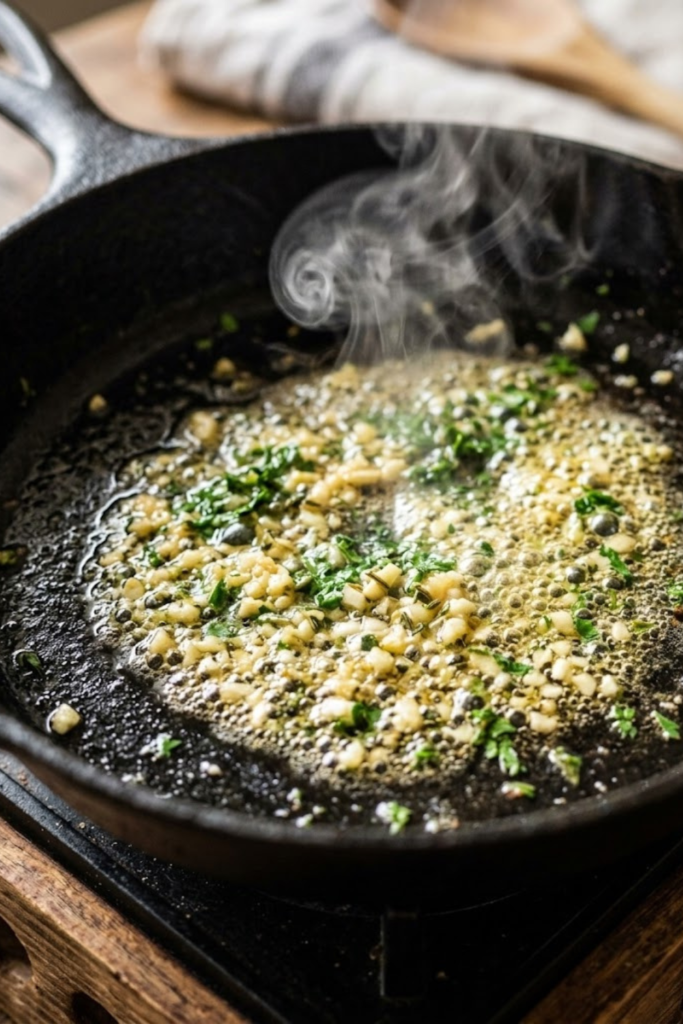
I used to think that a sauce was just something you slapped on at the end to hide the fact that the meat was dry. Boy, was I wrong! In my house, the sauce is actually the star of the show. If you get the garlic butter chicken breast sauce right, your family will probably try to lick the plate clean—I’ve actually seen my youngest try to do it once! It’s the difference between a boring Tuesday night meal and something that feels like you actually know what you’re doing in the kitchen. I remember one time I tried to make this with just some margarine and garlic salt because I was too tired to go to the store. It was a disaster. It tasted like movie theater popcorn gone wrong.
Why You Should Ditch the Jarred Garlic
I know, I know. We are all busy. Between grading math tests and running to soccer practice, that little jar of pre-minced garlic looks like a lifesaver. But let me tell you a secret: that stuff tastes like vinegar and sadness. For a really good garlic butter chicken breast, you have to use the fresh cloves. I usually buy a big head of garlic and just smash it with the side of my knife. It’s actually a great way to get out some frustration after a long day at school! Fresh garlic has this sweet, spicy kick that the jarred stuff just can’t touch. When it hits that warm butter, the smell alone is enough to bring everyone running to the kitchen.
Picking a Butter That Actually Tastes Good
Since butter is literally half the name of this dish, you shouldn’t just grab the cheapest tub you see. I started buying the European-style butter—the kind that comes in the gold foil—and it changed my life. It has more fat and less water, which means it gets really creamy and doesn’t just evaporate in the pan. You want that sauce to be thick enough to coat the back of a spoon. If you use cheap stuff, it can sometimes get oily and separate, which doesn’t look very appetizing.
The Herb Finish
I used to throw my parsley in right at the start, and it would turn black and bitter. Now, I wait until the very last second. Adding fresh parsley or a little bit of thyme right before you take the pan off the heat keeps the flavor bright. It adds a bit of “green” freshness that cuts through all that rich butter. It’s a small step, but it makes the whole meal look like it came from a fancy bistro instead of my messy kitchen! Just chop it up roughly; it doesn’t need to be perfect. In fact, I think the little rough bits make it look more “authentic” anyway.
Mastering the Pan-Sear Technique
I used to be terrified of my stove. I’d stand there with my tongs like I was going into battle, worried that I’d either undercook the meat and get everyone sick or overcook it until it was like chewing on a pencil eraser. For a long time, I thought the goal was to just get the garlic butter chicken breast in and out of the pan as fast as possible. But I’ve learned that the “sear” is where all that deep, savory flavor actually lives. If you don’t get that golden crust, you’re basically just eating boiled meat, and nobody wants that for dinner. It took me a few smoky kitchens and one very loud fire alarm to realize that heat control is everything.
The Magic of the Right Skillet
I spent years using those cheap, thin non-stick pans because they were easy to clean. But here’s the thing: they don’t hold heat worth a lick. When you drop a piece of chicken in, the temperature of the pan crashes, and you end up with grey, soggy meat. Now, I swear by my heavy cast iron skillet. It’s heavy as a lead weight and a pain to wash, but it stays hot! If you don’t have one, a good stainless steel pan works too. You want something with a thick bottom that won’t warp. This helps the garlic butter chicken breast get that beautiful, crispy exterior while keeping the middle soft and juicy.
Finding the Sweet Spot with Heat
I used to think “sear” meant “turn the dial to ten and pray.” That’s a one-way ticket to burnt garlic and raw chicken. Now, I start on medium-high to get the initial color. Once I flip the breast over, I actually turn the heat down a bit. This is when the butter and garlic go in. If the pan is too hot, the butter will burn and turn black in seconds, which tastes bitter. You want the butter to foam and bubble, not smoke. It should sound like a gentle sizzle, like a nice summer rain on a tin roof, not like a crackling campfire.
The Basting Secret
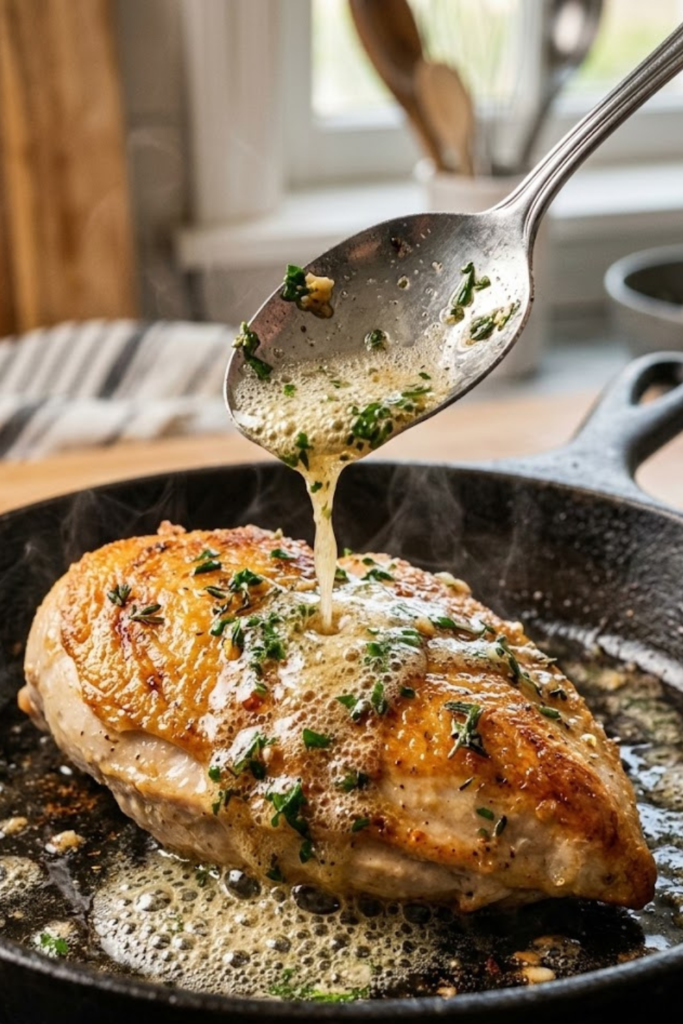
This is the part that makes me feel like a real chef in my own kitchen. Once the butter is melted and the garlic is smelling amazing, I tilt the pan slightly. I use a big spoon to scoop up that liquid gold and pour it right over the top of the chicken. I do this over and over for the last few minutes of cooking. It’s called “basting,” and it’s a total game changer for a garlic butter chicken breast. It keeps the top of the meat from drying out and forces all that garlic flavor into every little crack. Plus, it just looks really cool when you’re doing it! Your family will think you took a secret cooking class over the weekend.
Resting and Serving Suggestions
I used to be so hungry by the time the chicken was done that I’d just grab a fork and go to town right away. Big mistake! I learned that even if you follow every step perfectly, you can still ruin a garlic butter chicken breast at the very last second. It’s like when I tell my students to check their work before handing in a test; if you rush the end, you lose all the hard work you put in at the start. I remember one Tuesday night, I was so tired from a parent-teacher conference that I sliced the chicken the second it left the pan. All that beautiful garlic butter juice just ran across the plate like a river, and the meat ended up being as dry as a piece of chalk. I actually sat there and felt like crying!
The Five-Minute Wait Rule
Now, I have a strict “no touching” rule in my kitchen. Once that chicken is golden and cooked through, I move it to a clean plate or a cutting board and I just let it sit there. You need to give it at least five minutes. I usually set a timer on my phone so I’m not tempted to poke at it. During this time, the juices that were all pushed to the center by the heat start to move back out to the edges. This is what makes the meat stay juicy. If you cut it too fast, those juices just leave, and you’re left with a sad, tough dinner. Use those five minutes to set the table or finally get the kids to put their phones away.
What to Put on the Side
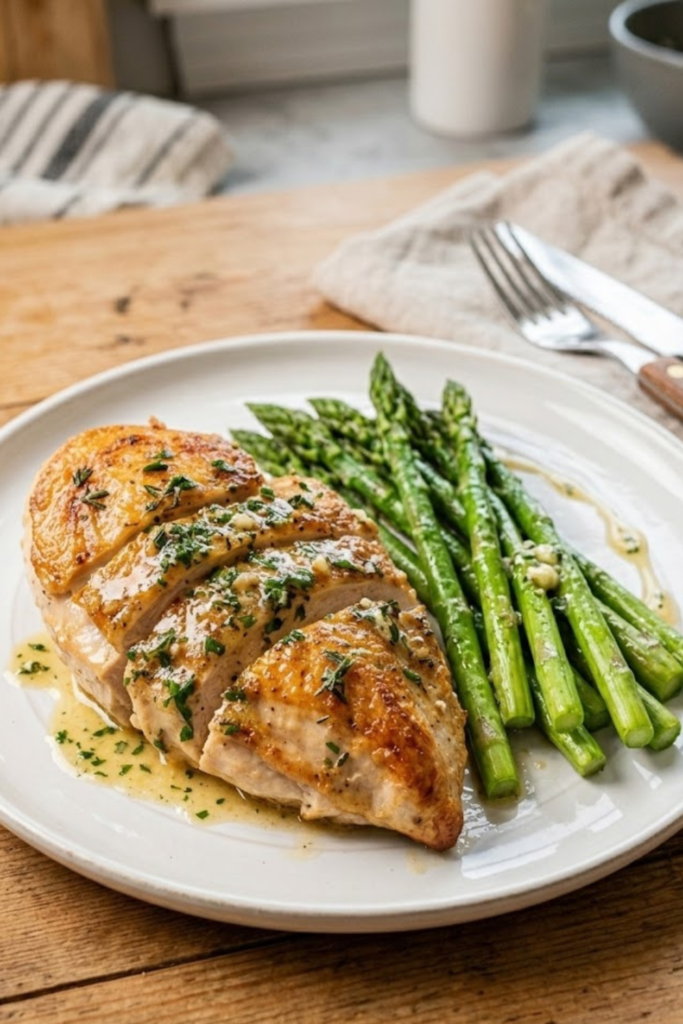
When I’m thinking about what to serve with a garlic butter chicken breast, I like to keep it simple but filling. My go-to is usually some roasted asparagus because you can just throw it in the oven while the chicken is cooking. The tips get all crispy and soak up any extra butter from the plate. If I’ve had a really long day and need some comfort food, I’ll make a big pile of creamy mashed potatoes. There is nothing better than mixing a bit of that garlic butter sauce into the potatoes. It’s heaven on a plate! A simple side salad with a lemon dressing also works great to cut through the richness of the butter.
Handling the Leftovers
If you actually have any chicken left—which doesn’t happen often at my house—you have to be careful how you warm it up the next day. I used to just throw it in the microwave on high, and it would turn into a rubber ball. Now, I slice it up cold and put it on top of a salad, or I reheat it very slowly in a pan with a tiny bit of water or more butter. You want to just warm it, not cook it all over again. This keeps it from getting that weird “leftover” taste. It makes a great lunch for work the next day, and my fellow teachers are always jealous when they smell that garlic in the breakroom!
My Personal Chicken Disasters and Wins
I’ve been teaching for nearly twenty years now, and if there is one thing I’ve learned from my middle schoolers, it’s that you have to be able to laugh at your own mistakes. If I didn’t have a sense of humor, I probably would have quit after the first week! Cooking is a lot like my classroom; sometimes you have a great lesson plan, but then everything goes sideways. For a long time, my attempts at making a garlic butter chicken breast were exactly like a lesson plan that flops. I had the ingredients, and I had the stove, but I just didn’t have the “vibe” right yet. Looking back, those disasters were actually the best teachers I ever had.
The Great Rubber Chicken Incident
One of my most embarrassing memories happened about six years ago. I had invited a few of the other teachers over for a small end-of-the-year dinner. I wanted to impress them because I was still the “new” teacher in the department. I decided to make what I thought would be a fancy garlic butter chicken breast. I was so nervous that I kept opening the oven door to check on them, and then I panicked and left them in for an extra ten minutes “just to be safe.” By the time we sat down to eat, the chicken was so tough that we actually had to use steak knives and a lot of muscle just to get a bite off. One of the history teachers joked that if we ran out of erasers at school, we could just use my leftovers. I laughed, but inside I was so bummed out!
Learning the Hard Way
After that night, I went on a mission to figure out what I was doing wrong. I realized that I was treating the meat like it was a piece of wood instead of something delicate. I used to think that “done” meant “hard.” It took me a lot of burnt garlic and a few very smoky afternoons to realize that heat is something you have to work with, not against. I started paying attention to how the meat felt when I pressed it with my tongs. I learned that if it feels like the tip of your nose, it’s probably perfect. If it feels like your forehead, you’ve gone too far. It was like a lightbulb went off in my head, just like when a student finally understands a tricky math problem.
The “Aha!” Moment in My Kitchen
The big win finally came on a random Tuesday night when I wasn’t even trying to be fancy. I was just tired and hungry. I followed the steps I told you about earlier—patting the meat dry and letting it sit out for a bit. When I put that garlic butter chicken breast in the pan, it didn’t stick, and it turned the most beautiful golden color. When I finally took a bite, it was actually juicy! I didn’t need a gallon of water to wash it down. That was the moment I realized that good cooking isn’t about being a genius; it’s just about being patient and paying attention to the little things. Now, this is the meal I make when I want to feel like a winner after a long day of grading essays. It’s my “gold star” recipe, and I’m so happy I can share these mistakes so you don’t have to make them yourself.

Making a really good garlic butter chicken breast is one of those skills that makes you feel like a total pro in the kitchen. It’s fast, it’s easy on the wallet, and it tastes like something you’d get at a nice restaurant. Just remember the big rules: pick the right cut, don’t burn the garlic, and for the love of everything, let the meat rest! If you can do those three things, you are going to have a dinner that everyone loves. I hope this guide helps you skip the “rubber chicken” phase that I had to go through. If you enjoyed these tips and want to save them for later, please share this post on Pinterest! It really helps me out and lets other home cooks find these simple tricks too. Happy cooking, and I hope your next dinner is a total A+!