Did you know that Americans eat about three pounds of mushrooms per person every year? Honestly, I think I eat that much in a single month! I’ve spent years tinkering with this recipe in my own kitchen. I’m a teacher by day, but by night? I’m the “Mushroom Whisperer” of my household.
I remember the first time I tried to make creamy mushroom pasta. It was a total mess! I washed the mushrooms in a bowl of water like they were apples. Big mistake. They turned into little grey sponges that tasted like nothing. But after twenty years of cooking, I’ve figured out the tricks that make this dish restaurant-quality. This isn’t just a recipe; it’s a hug in a bowl.
Choosing the Right Mushrooms for Maximum Flavor
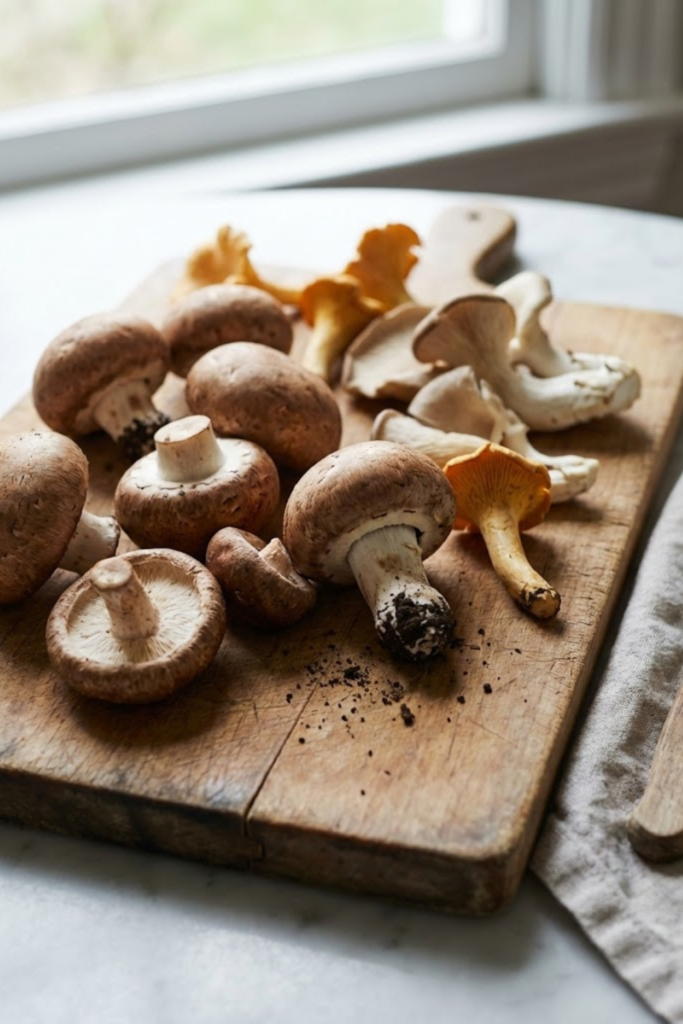
I used to think a mushroom was just a mushroom. Back when I started cooking, I’d just grab the cheapest white ones in the plastic wrap and call it a day. But after making creamy mushroom pasta for my family for nearly twenty years, I’ve learned that the mushroom you pick is the most important part of the whole meal. If you get the wrong ones, your sauce ends up watery or, even worse, it just tastes like nothing. You want something that can stand up to the heavy cream and garlic without disappearing into the noodles.
Why Cremini is My Secret Weapon
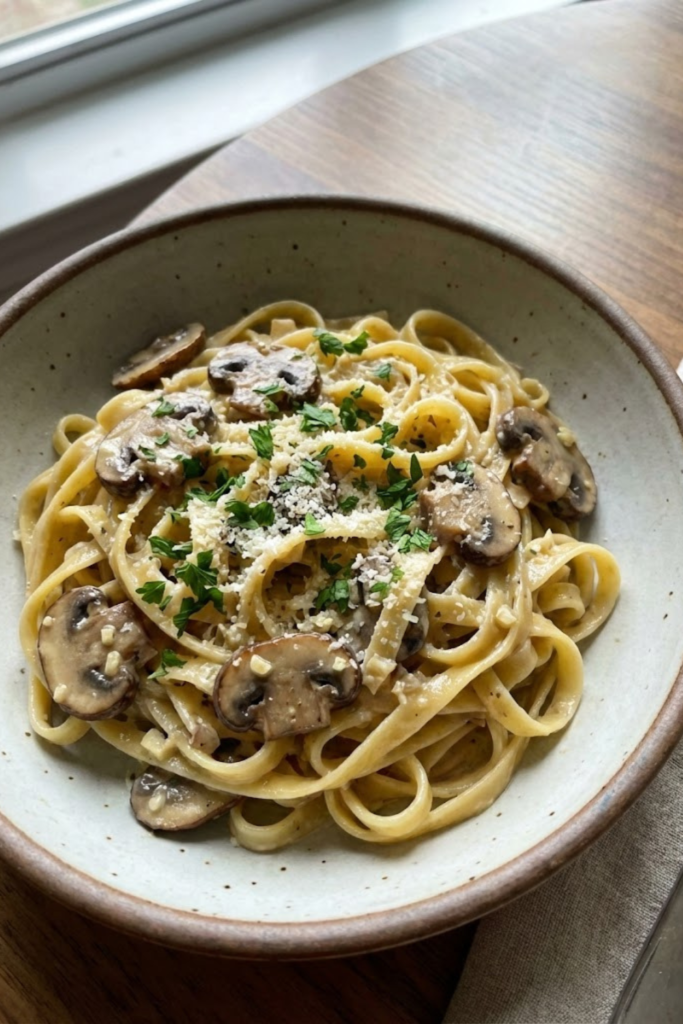
Creminis are basically my best friends in the kitchen. They look like those white button mushrooms but they have a brown top. Some people call them “Baby Bellas.” They have a lot more flavor and they’re much “meatier” than the white ones. When I’ve been on my feet teaching all day, I want a dinner that feels filling. These don’t shrink away into tiny bits when you cook them. They stay nice and chewy and they really soak up that heavy cream. I usually buy two big packs because they do shrink a little bit, and there is nothing worse than a pasta dish with no veggies left in it.
Mixing It Up for Better Texture
If I want to feel a little fancy on a Friday night, I’ll grab a mix. I really love adding some Shiitakes. You have to be careful though—take the stems off because they’re tough like wood. I learned that the hard way! The first time I used them, I left the stems on and we were all chewing for what felt like hours. It was pretty embarrassing. Oyster mushrooms are another great choice because they’re very soft and they cook super fast. Using three or four different kinds of mushrooms gives you different textures in every single bite. It makes the whole meal feel special and much better than a basic recipe.
Stop Washing Your Mushrooms in the Sink
This is the biggest mistake I see people make. Please, don’t soak them in a bowl of water! Mushrooms are like little sponges. If they get wet, they’ll hold onto that water. When you put them in the hot pan, they won’t get that pretty brown color; they’ll just boil in their own juice and get rubbery. I just use a dry paper towel or a soft brush to wipe the dirt off. It takes a few extra minutes, but it makes a huge difference. If you want a perfect creamy mushroom pasta, you need that golden sear. Keeping them dry is the only way to get that deep, earthy flavor we all want.
The Secret to a Silky Smooth Creamy Sauce
Making a sauce for creamy mushroom pasta can feel like a science experiment gone wrong. I remember one time I tried to rush it because my kids were starving after soccer practice. I dumped the cream in while the pan was way too hot and it split immediately. It looked like grainy soup with noodles. I almost cried right there over the stove! But over the years, I’ve figured out that a perfect sauce isn’t about being fancy. It’s about a few small steps that change everything.
Deglazing Is Not Just for Chefs
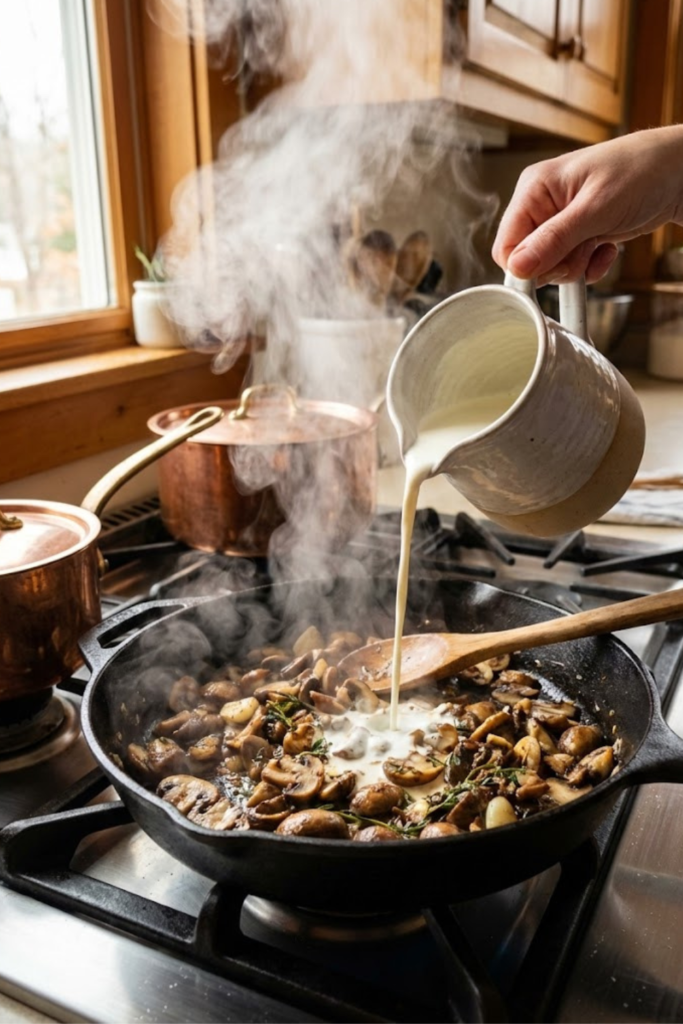
Once your mushrooms are nice and brown, you’ll see these dark bits stuck to the bottom of your pan. Don’t you dare scrub those off! That’s where all the savory flavor is hiding. I like to pour in a little bit of dry white wine or even some chicken broth while the pan is still hot. It makes a sizzling sound that I love. Use a wooden spoon to scrape those bits up. This step is what makes your creamy mushroom pasta taste like it came from a restaurant instead of a box. It adds a little bit of tang that cuts through all that heavy dairy and makes the flavor much deeper.
Don’t Toss the Liquid Gold
This trick changed my life. I used to dump my pasta water down the drain every single time. I read that the cloudy water is a secret ingredient. Now, I keep a measuring cup right by the sink so I don’t forget. Before I drain the noodles, I scoop out about a cup of that water. If your sauce feels too thick or looks a bit dry, you just splash a little of that water in. It helps the sauce get silky and sticks to the pasta instead of just sliding off. It makes a huge difference in the texture. Just make sure you don’t use it all at once; a little goes a long way.
The Right Temperature Matters
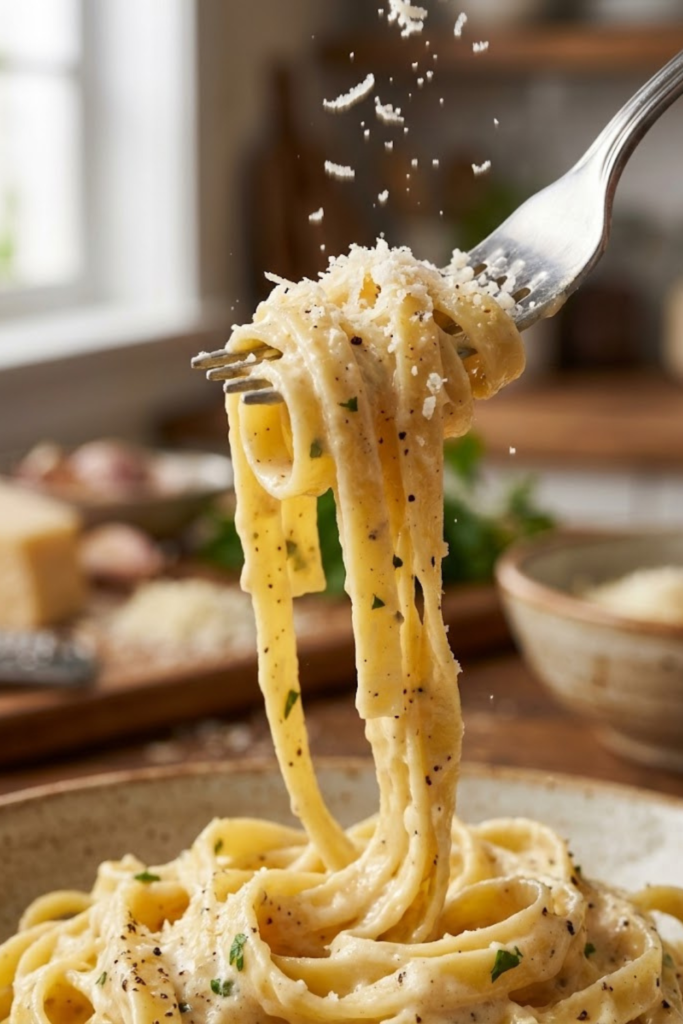
When you finally add the heavy cream, turn the heat down. You want it to gently simmer. If it boils too hard, it might break or get a weird texture. I usually use full-fat heavy cream because it tastes the best. If you use half-and-half, be careful with the heat. I also stir in some parmesan at the end. Let it melt slowly so it stays smooth. If you follow these steps, your sauce will be perfect every time and won’t turn into a greasy mess on the plate.
Avoiding Common Pasta Mistakes
I’m a teacher by trade, so I’m a big fan of following directions. But when I’m in my own kitchen, I’ve definitely had my fair share of “oops” moments. I’ve probably made every mistake in the book while trying to get my creamy mushroom pasta just right. There was one time I was so distracted by grading math tests at the kitchen table that I let the pasta boil for way too long. It turned into a big, mushy clump that looked more like mashed potatoes than Italian food! My kids still tease me about the “pasta paste” night. Learning what not to do is honestly just as important as the recipe itself.
Salt Your Water Like You Mean It
The biggest mistake I see people make—and I used to do this too—is being stingy with the salt in the pasta water. I used to just do a tiny pinch because I was worried about my blood pressure. But here is the thing: most of that salt stays in the water and goes down the drain. You want that water to taste like the ocean. If the pasta itself has no flavor, your whole creamy mushroom pasta will taste flat, no matter how much garlic you put in the sauce. It’s the only chance you get to season the actual noodle. Now, I use a big palmful of kosher salt, and it makes the mushrooms taste so much better.
Please Step Away From the Faucet
Another thing that drives me crazy is when I see people rinsing their cooked pasta under cold water. I get why they do it; they don’t want the noodles to stick together while they finish the sauce. But when you rinse it, you’re washing away all that beautiful starch. That starch is what helps your cream sauce grab onto the noodles. Without it, the sauce just slides right off and ends up in a puddle at the bottom of your bowl. Just drain the pasta and toss it straight into the pan. If the sauce isn’t ready yet, just save a little of that water and stir it in later.
Pull it Out Early for the Best Bite
Lastly, don’t trust the timer on the back of the pasta box. I always set my timer for two minutes less than what the package says. You want the pasta to be “al dente,” which just means it still has a little bit of a firm bite to it. Remember, the noodles are going to keep cooking for a minute or two once you throw them into that hot, bubbly mushroom sauce. If you cook them all the way in the water, they’ll turn into mush by the time you sit down to eat. I like to taste a noodle about three minutes before the timer goes off just to be safe. It’s better to have it a little firm than way too soft!
Final Thoughts on Making the Perfect Meal
I really hope this guide helps you feel more confident in your kitchen. Making a creamy mushroom pasta used to be something that stressed me out, but now it’s my favorite way to unwind after a long day of grading papers. I’ve realized over the years that cooking isn’t about being perfect or having a kitchen that looks like a magazine cover. It’s about the smells that fill up your house and the way your family actually wants to sit at the table together. Even if you mess up the sauce once or twice, don’t let it get you down. I’ve burned more garlic than I can count, and we still survived!
When you get ready to make this, just remember the big three things we talked about. First, treat your mushrooms with respect—keep them dry and give them plenty of space in the pan to get brown. Second, don’t be afraid of that pasta water. It really is the magic trick that turns a plain dinner into something that feels like it cost forty dollars at a bistro. And third, keep an eye on that timer so your noodles don’t turn into a mushy mess. If you keep those simple things in mind, you are going to do great.
I always tell my students that the best way to learn is by doing, and the same thing is true for cooking. Maybe next time you try adding a little bit of fresh lemon zest at the very end to brighten things up, or toss in some spinach if you want to get some extra greens in. There are so many ways to make this dish your own. I love seeing how other people take a basic idea and turn it into a favorite family tradition. It’s one of those meals that just feels like a big, warm hug in a bowl, especially on a chilly evening.
If you tried this recipe and liked it, please do me a huge favor and share it on Pinterest! I love seeing photos of what you all are cooking up in your own homes. It makes all my trial and error feel worth it when I know it’s helping someone else avoid a “pasta paste” disaster. Go ahead and pin this so you can find it the next time you have a craving for something earthy, cheesy, and totally delicious. Happy cooking, everyone!