Did you know that Chicken Marsala is one of the most ordered dishes in Italian-American restaurants, yet it’s surprisingly simple to master at home? I still remember the first time I tried to make this dish; I was terrified of burning the wine reduction! But trust me, once you smell that savory aroma filling your kitchen, there is no going back. This recipe takes the classic chicken marsala and turns it into a hearty pasta dish that feels like a warm hug. We are going to cover everything you need to know to get that sauce perfectly creamy and the chicken juicy!
Selecting the Best Ingredients for Authentic Flavor
Honest truth time? I used to think all wine was the same when I first started cooking. I remember standing in the grocery store aisle, totally lost, and grabbing a bottle labeled “Cooking Wine.” I thought I was being smart and saving money. Big mistake. That stuff is loaded with salt and preservatives that made my first attempt at chicken marsala pasta taste like a salt lick. It was a total dinner disaster, and we ended up ordering pizza.
The Wine Situation
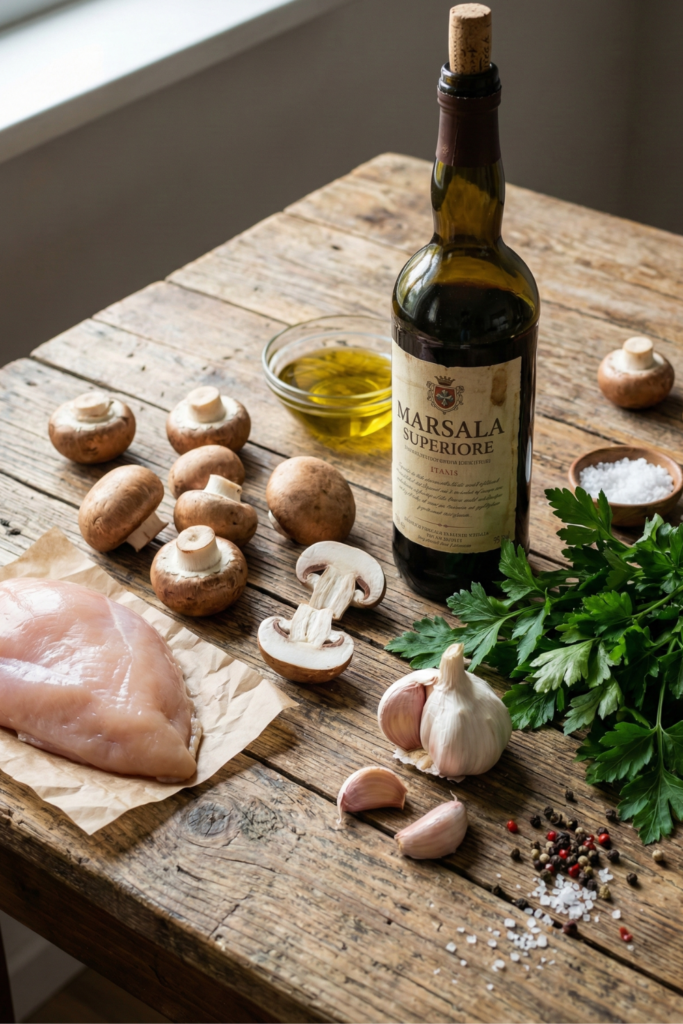
You absolutely need real, drinkable wine for this. Do not grab the stuff near the vinegar. You want a bottle of Dry Marsala wine. There is a “Sweet” version too, but that is usually for desserts like Tiramisu, and it will make your savory dinner taste weirdly sugary.
I usually look for a bottle that costs around 10 or 15 bucks. It doesn’t need to be fancy, but if you wouldn’t drink a glass of it, don’t pour it in your pan. The depth of flavor you get from the real deal is just wild compared to the fake stuff.
Let’s Talk Mushrooms
For the longest time, I just bought those white button mushrooms because they were cheap. They are okay, I guess. But if you want that deep, restaurant-style taste, grab the Cremini mushrooms (sometimes called Baby Bellas).
They have a much earthier flavor and a firmer texture that holds up better in the sauce. Also, a quick tip I learned after ruining a few batches: don’t wash them under the sink! They act like sponges and soak up water, which makes them rubbery when you cook them. Just wipe the dirt off with a damp paper towel. It’s tedious, I know, but it makes a huge difference.
The Chicken and Herbs
For the meat, I stick with boneless, skinless chicken breast. The trick is that you have to pound it thin. If you leave the breasts thick, the outside gets tough before the inside cooks, which is super frustrating. You can also use tenderloins if you want to skip the pounding part.
Finally, please don’t use that dried parsley from the back of your spice cabinet. It tastes like dust. Fresh flat-leaf parsley adds a pop of color and a fresh bite that cuts through the heavy cream. It really wakes the whole dish up.
Preparing the Chicken and Pasta: A Step-by-Step Guide
Okay, let’s get our hands dirty. This is the part of the recipe where things start moving fast, and if I’m being honest, this is also where I used to mess up the most. There is a rhythm to making chicken marsala pasta, and once you get it down, you feel like a total pro. But until then? It can feel a bit chaotic.
I remember one time I was trying to impress some guests, and I threw cold chicken into a cold pan. It was a disaster. The meat turned gray and rubbery instead of getting that nice crust. I wanted to cry. So, let’s avoid my tears and get you set up for success.
The Dredging Drama
First up, we have to coat the chicken. I used to skip this step because I’m lazy and hate cleaning up flour that somehow gets everywhere. Seriously, how does it end up on the floor? But you can’t skip it.
Dredging the chicken in seasoned flour does two huge things. First, it protects the meat so it stays juicy inside. Second, and this is the science-y part, that leftover flour on the chicken helps thicken our sauce later on.
I grab a shallow bowl and mix my flour with salt, pepper, and garlic powder. Don’t be shy with the seasoning here; plain flour tastes like paste. Pat your chicken dry before you dip it. If the chicken is too wet, the flour clumps up and falls off in the pan, leaving you with bald spots on your cutlets. We want a nice, even coat. Shake off the excess like you’re shaking a Polaroid picture (do people still say that?).
Getting That Golden Sear
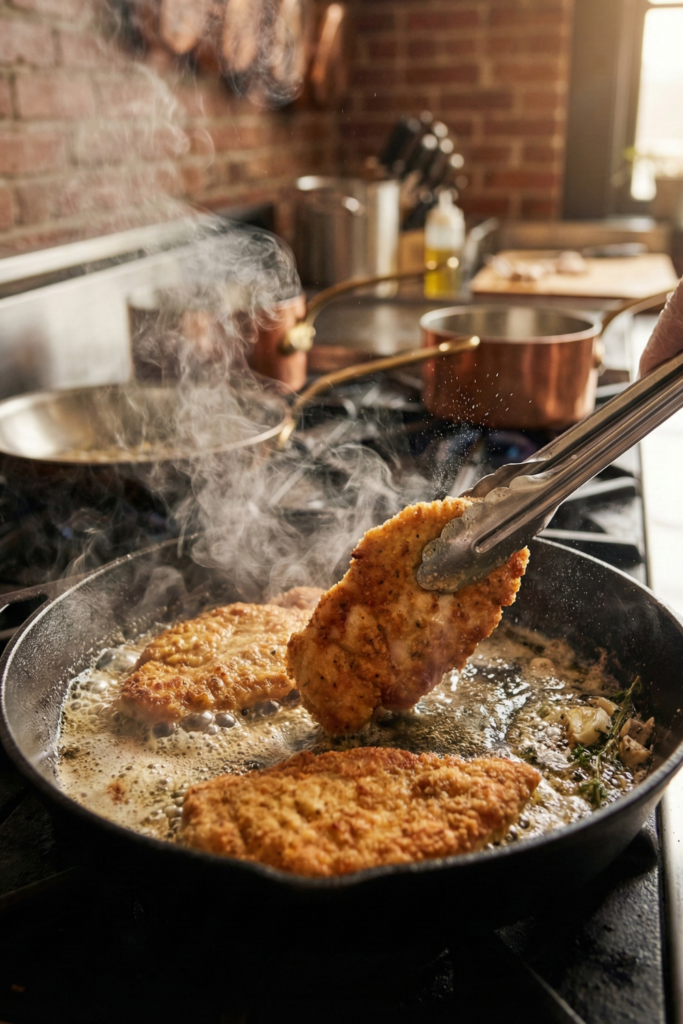
Now, grab your biggest skillet. I prefer a large stainless steel pan or a cast iron skillet for this because they hold heat really well.
Here is a trick I learned after burning about a pound of butter: use a mix of butter and olive oil. Butter gives you that rich flavor we all love, but it burns way too fast on its own. The olive oil raises the smoke point so you can get the pan hot enough to sear without setting off the smoke alarm.
Heat that mix over medium-high heat until it shimmers. When you put the chicken in, it should sizzle immediately. If it doesn’t sizzle, take it out and wait. And please, for the love of food, do not crowd the pan.
I used to jam as many pieces in as possible to save time. Big mistake. When you crowd the pan, the temperature drops, and the chicken steams in its own juices instead of searing. You end up with soggy, gray meat. Cook in batches if you have to. It takes longer, but that golden brown crust is worth it.
The Pasta Timing Game
While the chicken is doing its thing, get your water boiling. I usually go for penne or fettuccine for this dish because they hold onto the thick sauce really well.
You want to salt your pasta water until it tastes like the ocean. I’m serious. It’s the only chance you have to flavor the actual noodle. Throw the pasta in, but keep an eye on the clock. We want to cook it to al dente, which basically means it still has a little bite to it.
Why? Because we are going to finish cooking it in the sauce later. If you boil it until it’s totally soft now, it’ll turn into mush when we toss everything together. Mushy pasta is a texture nightmare.
The Liquid Gold
Before you drain that pasta, stop! Grab a mug and scoop out about a cup of that cloudy, starchy cooking water.
My grandmother used to scream at me if I poured it all down the sink. That water is “liquid gold.” It’s full of starch from the pasta, and it is the secret ingredient that helps the oil and cream bind together into a smooth, silky sauce. If your sauce looks too thick or greasy later, a splash of this water fixes everything.
Set it aside, drain the noodles, and toss them with a tiny bit of oil so they don’t stick together while they wait for their bath in the marsala sauce.
Mastering the Creamy Marsala Mushroom Sauce
This is my absolute favorite part of the entire process. Honestly, the sauce is the soul of this dish, and getting it right is the difference between a “meh” dinner and one where you want to lick the plate clean. I used to be intimidated by making pan sauces, thinking they were only for fancy French chefs. I was wrong. It’s actually pretty forgiving if you just pay attention to a few little details.
The Magic of the “Fond”
Okay, look at your pan after taking the chicken out. You see those brown, crusty bits stuck to the bottom? Do not—I repeat, do not—scrub them out!
In the cooking world, that stuff is called “fond,” and it is literally concentrated flavor. We are going to lift that up using the wine, a technique called deglazing the pan.
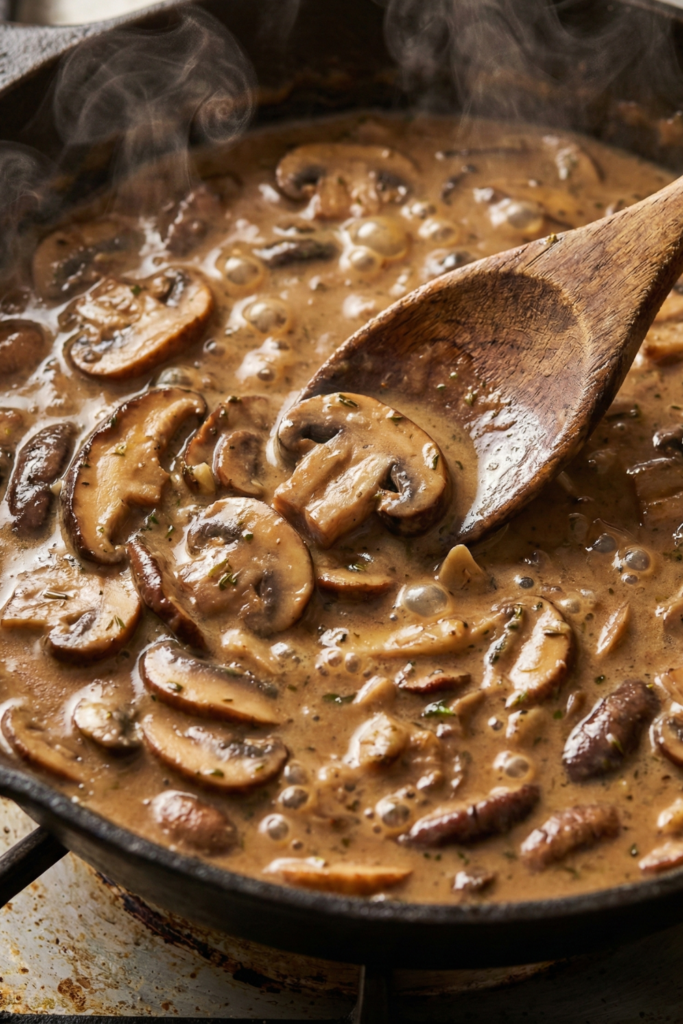
Toss your sliced cremini mushrooms into the hot fat left in the pan. If the pan looks dry, add a tiny sliver of butter. You want to sauté these until they get nice and brown.
I used to rush this and ended up with pale, rubbery mushrooms. Let them sit for a minute without touching them so they get some color. Once they are browned, throw in your minced garlic. Be careful here; garlic burns in like 30 seconds, and burnt garlic tastes bitter and awful. As soon as you smell it, it’s time for the wine.
The Reduction (Patience Required!)
Pour in about a cup of your dry Marsala wine. It’s going to hiss and steam aggressively, which is totally normal. Use a wooden spoon to scrape up all those brown bits we talked about.
Now, you have to wait. This is where I used to mess up by being impatient. You need to let the wine simmer hard. We are looking for a marsala reduction here. You want the liquid to reduce by about half.
Why? Two reasons. First, it concentrates the flavor. Second, and most importantly, it burns off the harsh alcohol taste. If you don’t let it reduce enough, your sauce will taste like straight booze, and nobody wants that. It usually takes about 3 to 5 minutes.
Making it Creamy
Once the wine has reduced and looks slightly syrupy, turn the heat down to low. We don’t want to boil the cream, or it might curdle and look grainy.
Stir in your heavy cream and let it warm through gently. The sauce should turn a beautiful, light caramel color. This is the moment I usually sneak a taste with a spoon (don’t tell anyone).
Finally, stir in a handful of grated parmesan cheese. This helps thicken the savory mushroom sauce and adds a salty kick. If it feels too thick, remember that mug of pasta water we saved? Splash a little bit in there until it reaches the perfect consistency. It should coat the back of a spoon without running off like water.
Serving Suggestions and Wine Pairings
You have done the hard part. The sauce is bubbling, the chicken is golden, and your kitchen smells like an Italian grandmother lives there. Now, we have to stick the landing. I used to think plating didn’t matter—I’d just dump everything into a big bowl and call it a day. But honestly, we eat with our eyes first, right?
Taking an extra two minutes to make it look nice makes the whole meal feel special. Plus, it makes for a way better Instagram photo if you are into that sort of thing.
Plating Like a Pro
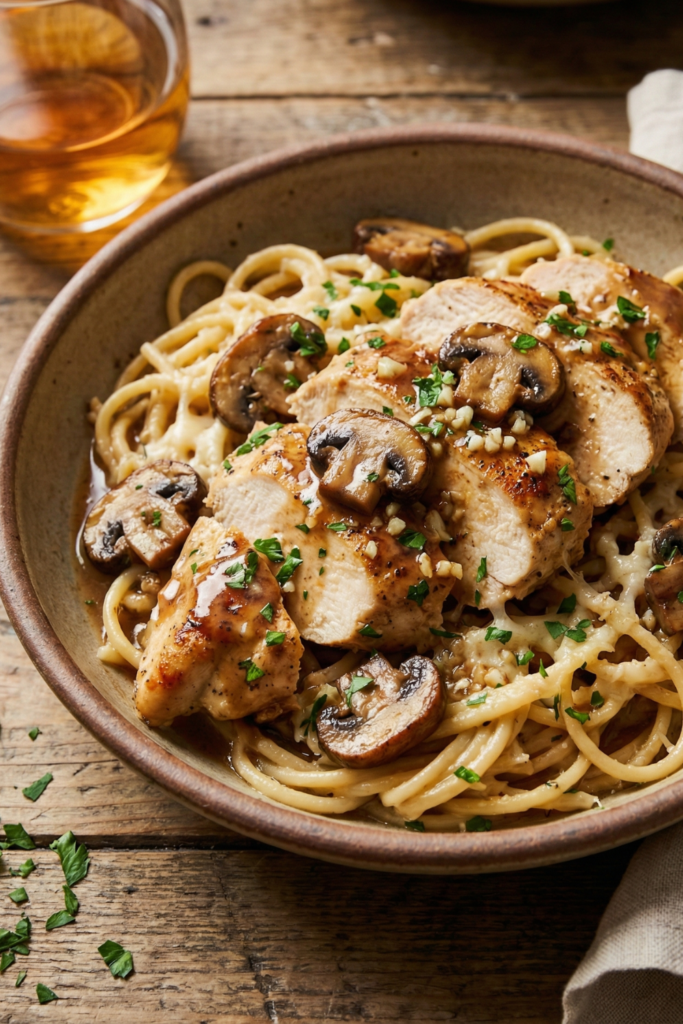
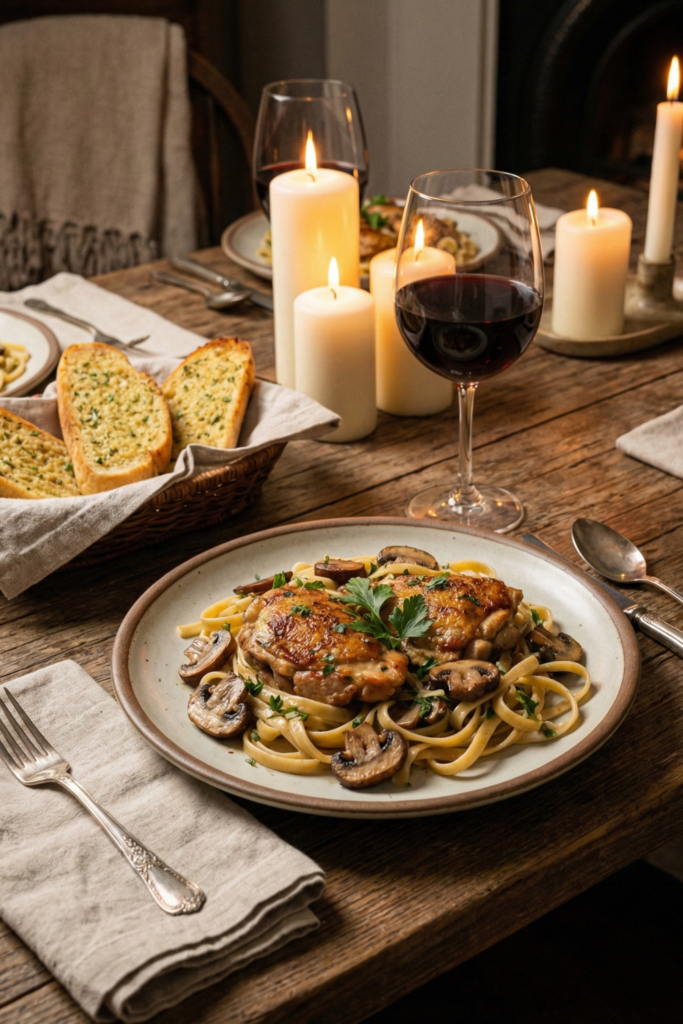
Here is how I like to do it. I toss the pasta directly into the skillet with the sauce to get every noodle coated. Then, I use tongs to twirl the pasta onto the plates.
I place the sliced chicken on top rather than mixing it in. This keeps the breading from getting soggy too fast. Spoon a generous amount of that mushroom pasta sauce over the chicken, and hit it with some fresh parsley. It looks restaurant-quality instantly.
What Goes on the Side?
Let’s be real, this is a rich dish. Between the butter, cream, and cheese, it is heavy. You need something to balance that out.
My go-to is always roasted asparagus or broccolini with a squeeze of lemon. The acidity cuts through the richness perfectly. And obviously, you need carbs on carbs. A crusty piece of garlic bread is mandatory in my house. You need something to mop up that leftover sauce at the bottom of the bowl. Leaving that sauce behind should be a crime.
Wine Pairings That Don’t Break the Bank
I am no sommelier, but I have learned a few things about pairing wine with chicken marsala pasta. Since we cooked with Marsala, you might think you should drink it too. Please don’t. Marsala is for cooking (or dessert), not for sipping with dinner.
You want a red wine that is light enough not to overpower the chicken but has enough acidity to match the tomato-less sauce. A Pinot Noir is my absolute favorite here. It has these earthy notes that go so well with the cremini mushrooms. If you are a white wine person, a full-bodied Chardonnay works great too because it can stand up to the creamy sauce.
The Leftover Dilemma
If you are lucky enough to have leftovers, listen up. Cream-based sauces are tricky to reheat. If you just blast this in the microwave, the sauce will “break.” That means the oil separates from the cream, and you end up with a greasy, clumpy mess. I have done it, and it is heartbreaking.
The best way to reheat creamy chicken marsala is on the stove. Put it in a pan over low heat and add a splash of water or milk. Stir it gently until it comes together again. It takes five minutes, but it brings the creamy texture back to life.
This Chicken Marsala Pasta recipe is truly a game-changer for weeknight dinners that need to feel a little special. I remember being so scared of screwing up the sauce the first time I made it, but now it is my secret weapon when I want to impress someone.
The combination of tender chicken, earthy mushrooms, and that glossy, rich wine sauce is something you will want to make again and again! It’s comfort food at its finest, without needing a reservation.