I honestly used to dread 5:00 PM. You know that feeling? The “stare into the open fridge hoping dinner magically appears” feeling. We’ve all been there! But then I stumbled upon the magic of one-pot meals, and specifically, this cheesy ground beef pasta skillet. It literally changed my weeknight game.
Did you know that 60% of home cooks say cleaning up is the worst part of cooking? That’s why this recipe is a lifesaver—it’s just one pan! No mountain of dishes to scrub later. This isn’t just another pasta dish; it’s a creamy, savory hug in a bowl that comes together faster than you can order delivery. Whether you’re feeding picky eaters or just want something hearty after a long day, this skillet dinner hits the spot every single time. Let’s get cooking!
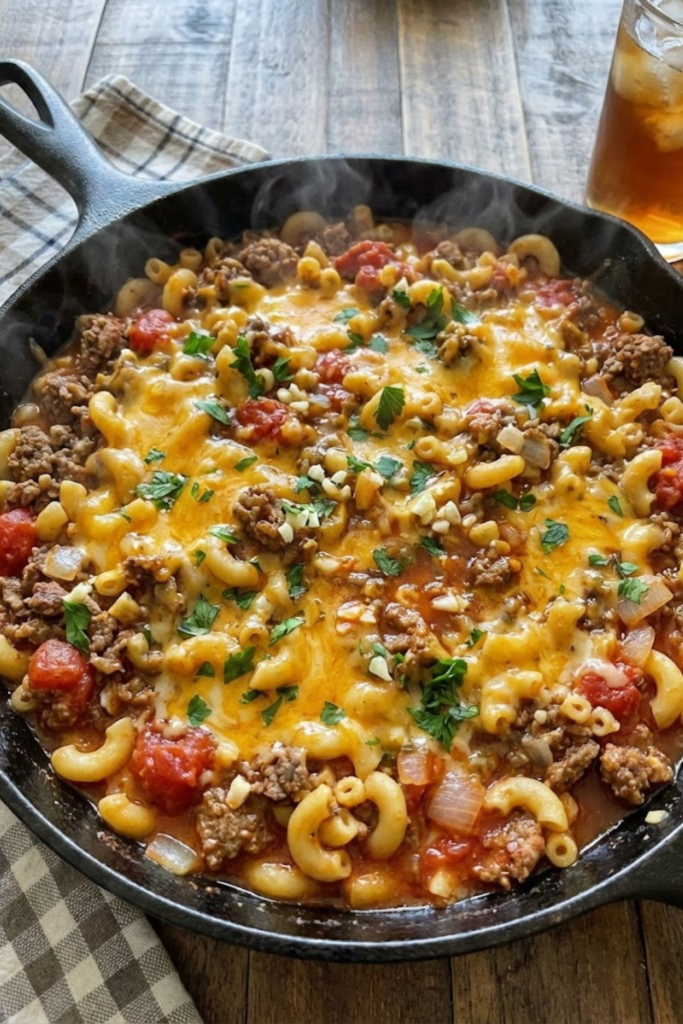
Why This One-Pot Beef Pasta Works
Honestly, I used to be the person who used every single pot in the kitchen just to make a simple spaghetti dinner. I’m talking a pot for boiling water, a colander for draining, a skillet for the sauce, and somehow three spoons would get dirty in the process. It was a disaster zone.
But then I discovered the absolute magic of a cheesy ground beef pasta skillet.
If you hate washing dishes as much as I do, this recipe is going to be your new best friend. The beauty of this method is that everything happens in one pan. You don’t need to carry a heavy pot of boiling water across the kitchen to the sink, risking a steam burn while tripping over the dog. I’ve done that, and I don’t recommend it!
The Starch Secret
Here is the cool part about cooking the pasta directly in the sauce. Usually, when we boil pasta water, we pour all that starchy liquid down the drain. That’s a huge mistake!
In this cheesy ground beef pasta skillet, the pasta releases its starch right into the pan. This naturally thickens the liquid, creating a glossy, rich texture that coats every noodle. You get that creamy sauce consistency without needing to add a ton of heavy cream. It creates a texture you just can’t get by boiling noodles separately.
Budget-Friendly and Filling
Let’s be real, grocery prices aren’t getting any lower. I’m always on the hunt for budget-friendly ingredients that can actually fill up my hungry teenagers.
This recipe relies on staples you probably already have: dried pasta, canned tomato sauce, and ground beef. It stretches a single pound of meat into a massive meal that feeds the whole crew. You can even swap in ground turkey if that’s what’s on sale. It’s practical, cheap, and tastes like a million bucks.
The “Hamburger Helper” Nostalgia
Does anyone else remember those box meals from the 90s? My kids love that hamburger helper style flavor, but I hate the massive sodium bomb that comes with the powdered packet.
This cheesy ground beef pasta skillet scratches that nostalgic itch but uses real cheese and fresh onions. You control exactly what goes into it. I once added way too much salt to a batch because I wasn’t paying attention, so learn from my fail—taste as you go!
Done in a Flash
We are all busy. Some days, I look at the clock and realize it’s 5:30 PM and I haven’t started anything. This is a true 30-minute meal.
Because you aren’t waiting for a massive pot of water to boil, the cooking time is cut in half. You just brown the meat, dump the rest in, and let it simmer. It gives you just enough time to chop a side salad or, let’s be honest, sit down and scroll on your phone for ten minutes. It’s low stress and high reward.
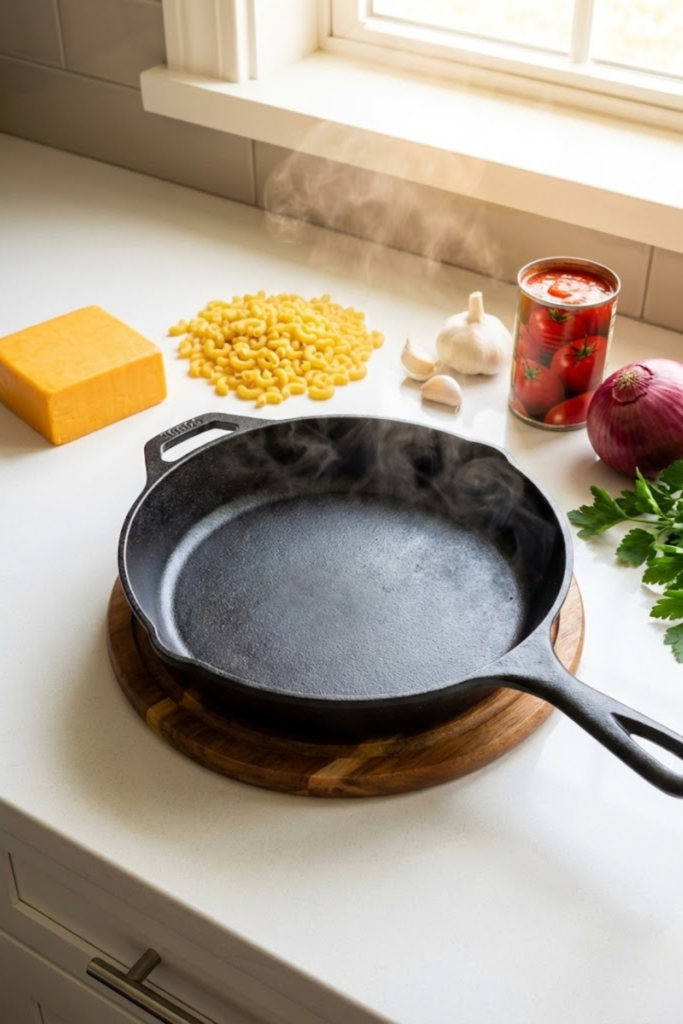
Essential Ingredients for Cheesy Beef Skillet
You know the saying, “garbage in, garbage out”? It definitely applies to cooking. I learned this the hard way when I tried to make a cheesy ground beef pasta skillet using whatever random stuff I found in the back of my pantry. Let’s just say the result was… interesting.
To get that restaurant-quality taste at home, you need to pay attention to a few specific things. It’s not about buying fancy, expensive items. It’s about picking the right versions of the basics.
Picking Your Protein
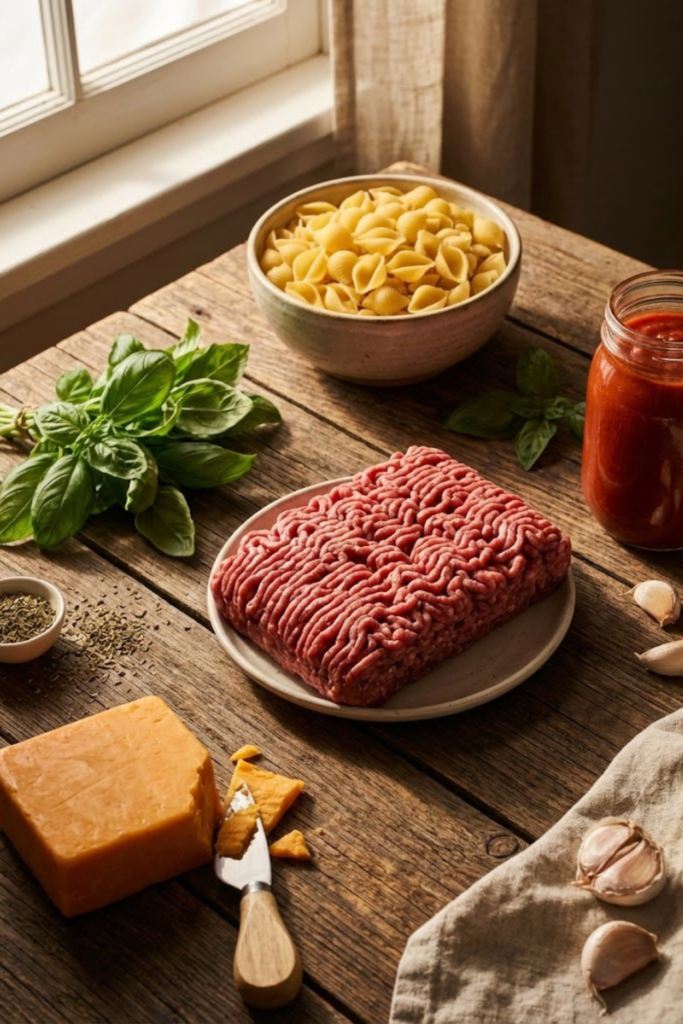
I usually grab ground beef for this recipe because it has that classic comfort food flavor. But here is the trick: go for lean ground beef, specifically the 85/15 blend.
One time, I grabbed the 73/27 stuff because it was on sale. Big mistake. My skillet turned into a grease swimming pool, and I had to spend ten minutes spooning fat out of the pan. It was gross. On the flip side, if you use super lean beef (like 96/4), it can end up dry and crumbly. The 85/15 blend hits the sweet spot for flavor without the mess. You can totally swap this for ground turkey if you want to be healthier, just add a little olive oil so it doesn’t dry out.
The Pasta Shape Matters
You might think noodles are noodles, but physics is a thing in cooking! For a skillet meal, you want short shapes that have nooks and crannies to catch the sauce.
My go-to is classic elbow macaroni or medium shells. I once tried this with spaghetti noodles broken in half. It was a disaster. The long noodles clumped together and didn’t cook evenly in the small amount of liquid. Stick to shapes like rotini, penne, or elbows that hold onto that cheese sauce.
The Cheese Rule (Do Not Skip This!)
Okay, I need you to listen to me on this one. Put down the bag of pre-shredded cheese. I know it’s easier. I know I’m asking you to do extra work. But please, buy a block of sharp cheddar and grate it yourself.
Here is the science-y part: bagged cheese is coated in cellulose (potato starch) to keep it from clumping in the bag. That powder stops the cheese from melting into a smooth sauce. It makes your sauce grainy and weird. When you grate your own block, it melts instantly into that gooey, velvety texture we all dream about. It takes two minutes and makes a massive difference.
Liquid Ratios
Since we are ditching the colander, the liquid balance is everything. You need enough fluid to cook the pasta but not so much that you make soup.
I use a mix of beef broth and tomato sauce. The broth gives it a savory depth that water just can’t provide. If you run out of broth, you can use water with a bouillon cube, but don’t just use plain water or your pasta will taste bland. Trust me, I’ve tried cutting corners there and the family noticed immediately!
Step-by-Step: How to Make Skillet Pasta
So, you’ve gathered your goods. Now let’s turn them into dinner without burning the house down. I used to be intimidated by cooking pasta in the sauce because I was terrified of gummy noodles. But once you get the rhythm down, this cheesy ground beef pasta skillet is practically foolproof.
Here is exactly how I tackle it, including a few stumbling blocks I hit when I first started making this.
The Browning Phase
First up, get your largest skillet on the stove over medium-high heat. You want to hear a serious sizzle when the meat hits the pan. If it’s silent, your pan isn’t hot enough, and you’ll end up steaming the meat instead of browning it.
Toss in your ground beef and break it up with a wooden spoon. Once the pink is mostly gone, I like to drain the excess fat. I usually just tilt the pan and spoon it into an old tin can—don’t pour that stuff down the sink unless you want a visit from the plumber!
After draining, add your diced onions. This is where the magic happens. Let them cook until they soften up, usually about 5 minutes. Sautéing onions in the leftover beef fat gives them flavor you just can’t get with oil. Add your garlic in the last minute so it doesn’t burn. Burnt garlic tastes bitter and nasty, so watch it like a hawk.
The “Trust the Process” Simmer
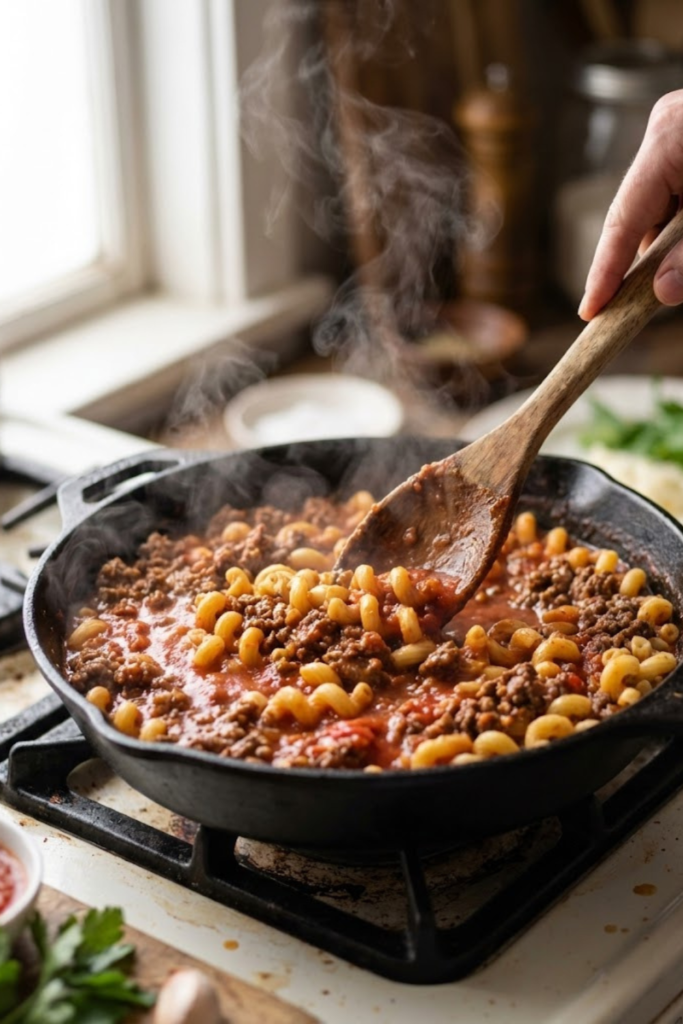
Now, pour in your tomato sauce, beef broth, and seasonings. Stir it all up and scrape the brown bits off the bottom of the pan—that stuff is pure flavor gold.
Here is the part where I used to panic. You dump the uncooked dry pasta right into the liquid, and it looks like a watery mess. You’re going to look at it and think, “There is no way this turns into a sauce.” Just breathe and trust me.
Bring the whole thing to a boil, then immediately turn the heat down to low. You want a gentle simmer, not a violent boil. Cover the pan with a lid. If you don’t have a lid that fits (I used a baking sheet for years), just use foil.
The Texture Check
Set a timer for about 10 to 12 minutes. But don’t just walk away and watch TV! You need to stir this bad boy every few minutes.
Because the starch stays in the pan, the pasta likes to stick to the bottom if you ignore it. I learned that the hard way when I scraped up a layer of burnt charcoal noodles one night. Gross.
Start tasting a noodle around the 10-minute mark. You are looking for al dente—cooked, but with a little bit of a bite. If the liquid is gone but the pasta is still crunchy, add a splash more broth or water. If it’s too soupy, take the lid off and let it cook for another minute or two.
The Melt
Okay, this is the victory lap. Once the pasta is tender and the sauce has thickened up, kill the heat. Seriously, turn the stove completely off.
If you add the cheese while the sauce is boiling, the oil will separate, and you’ll get a greasy, stringy mess instead of a creamy sauce. Remove the pan from the burner. Sprinkle your freshly shredded cheddar over the top and stir it in gently.
The residual heat is plenty to melt the cheese. Give it a minute to rest. The sauce will continue to thicken as it cools, transforming into that perfect cheesy ground beef pasta skillet texture. Garnish with a little parsley if you’re feeling fancy, or just dig in straight from the pan. I won’t judge.
Variations and Hidden Veggies
I’ll be honest, as much as I love this recipe as written, sometimes I get bored. Or, more accurately, sometimes I look in the crisper drawer and see a bunch of vegetables that are about to go bad and need to be used immediately.
The great thing about this cheesy ground beef pasta skillet is that it’s incredibly forgiving. You can basically throw whatever you want into the pan, and the cheese will bond it all together. It’s a great way to clean out the fridge without anyone complaining.
The “I swear there are no veggies” Trick
If you have picky eaters, this section is for you. My youngest went through a phase where if she saw anything green, dinner was over.
I learned that if you dice bell peppers or zucchini super small—I’m talking tiny squares—and sauté them right along with the onions, they basically dissolve into the sauce. You get the nutrition, but the texture disappears.
My favorite hack, though, is spinach. You can grab a huge handful of fresh spinach and toss it in right before you add the cheese. It looks like a mountain of greens, but it wilts down to almost nothing in seconds. It adds a nice pop of color, and honestly, covered in cheese, it creates a total kid-friendly dinner that even my picky eater devours.
Tex-Mex Twist
Sometimes I want something with a bit more kick. If I’m feeling spicy, I completely pivot the flavor profile to make a Tex-Mex pasta version.
Instead of Italian seasoning, I’ll dump in a packet of taco seasoning (or just a mix of cumin and chili powder) when I brown the meat. Then, I swap the cheddar for a Mexican cheese blend or Pepper Jack. I’ve even thrown in a can of black beans and corn. It’s like a taco and pasta had a baby, and it is glorious. Top it with some crushed tortilla chips if you want a crunch.
Making it Ultra-Rich
Okay, this isn’t for the diet days, but sometimes you just need comfort food that hugs your soul.
If I want the sauce to be extra luxurious, I’ll stir in a few tablespoons of cream cheese or a splash of heavy cream right at the end. It changes the acidity of the tomato sauce and makes it incredibly velvety. It reminds me of those fancy vodka sauces you get at Italian restaurants, but for a fraction of the price.
The Gluten-Free Struggle
I have a good friend who is gluten-intolerant, so I’ve tried adapting this for her. I’m going to be real with you: gluten-free pasta is tricky in a skillet meal.
The first time I tried it, the pasta turned to mush before the liquid absorbed. It was gross. If you are using gluten-free noodles, check them about 3 minutes before the package says they are done. They absorb water differently and break down faster. You might need to use a little less broth, too. It takes a bit of practice, but it’s totally doable.

Storing and Reheating Leftovers
One of the best things about making a huge skillet of pasta is the lunch situation for the next day. I literally fight my husband for the last container of this stuff. It’s the kind of meal that makes your coworkers jealous when they smell it heating up in the breakroom.
But there is a right way and a wrong way to handle the leftovers. I’ve ruined perfectly good pasta by being lazy, so learn from my mistakes!
The Fridge Strategy
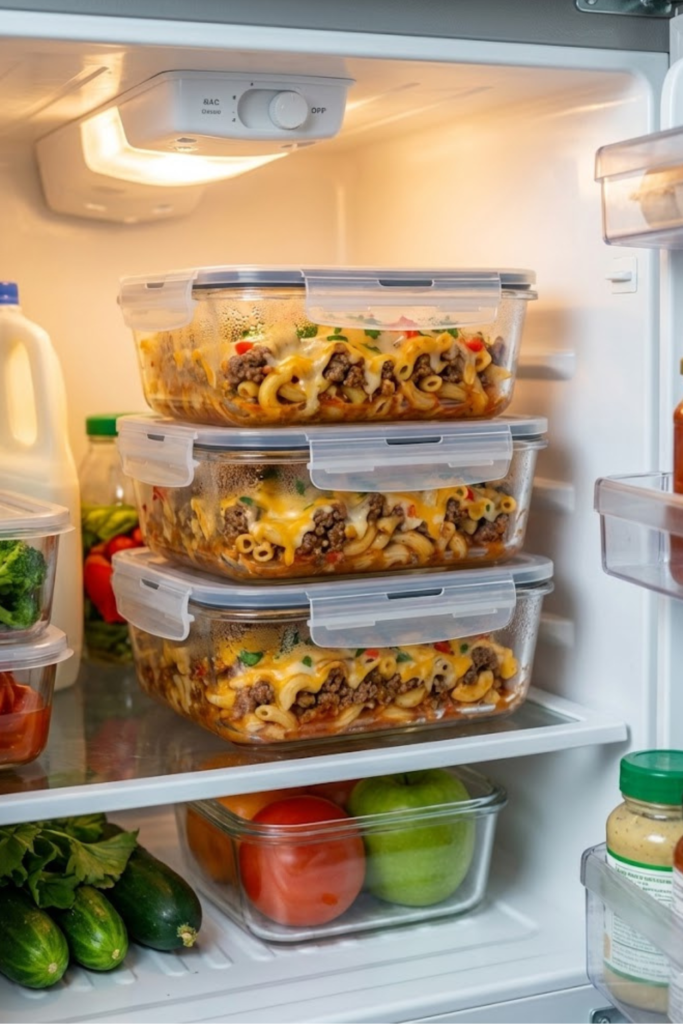
If you manage to have any left, getting it into the fridge is the first step. I strictly use glass snap-lock containers now because they don’t stain red like my plastic ones used to. RIP to all my Tupperware from 2015 that turned permanently orange.
This dish keeps really well for about 3 to 4 days. It’s actually one of my favorite meal prep ideas because the flavors seem to marry together even better overnight. Just make sure the pasta has cooled down a bit before you seal the lid. If you trap the steam, you’ll get condensation that drips back down and makes your sauce watery. Nobody wants that.
To Freeze or Not to Freeze?
Now, let’s talk about the freezer. I’m going to be straight with you: I don’t love freezing this dish. I’ve done it in a pinch, and it’s edible, but the texture just isn’t the same.
Pasta tends to absorb moisture like a sponge when it sits. So, when you thaw it out after freezing, the noodles can get a bit mushy and soft. If you absolutely have to freeze it, I’d recommend slightly undercooking the pasta initially so it has some structure left. But honestly? It’s way better fresh or from the fridge.
The Reheating Secret
Here is the secret to reheating that took me years to figure out. If you just nuke this in the microwave as is, you’re going to be disappointed.
The starch and cheese solidify in the fridge, turning your beautiful pasta into a solid brick of sadness. I remember trying to stir a cold bowl of this once and I literally bent a fork. It was ridiculous. You have to add moisture back in.
Before I pop it in the microwave or back on the stove, I splash in a tablespoon of water or beef broth. It looks weird and watery at first, but as it heats up, stir it around vigorously. That extra liquid revitalizes the creamy sauce and makes it glossy again. Without it, the oil separates and you get dry, greasy pasta. Don’t skip this step!
There you have it—a cheesy ground beef pasta skillet that honestly checks every single box for a perfect weeknight dinner.
We covered a lot, from choosing the right lean ground beef to the magic of grating your own cheese. But really, the best part of this recipe is the freedom it gives you. It frees you from a sink full of dishes, it frees you from the stress of complicated cooking, and it frees up your evening to actually relax.
I’ve made this dish probably a hundred times, and it never gets old. Whether you stick to the classic recipe or throw in some hidden veggies to trick the kids, it’s a comfort food staple that just works. Seriously, give it a try tonight. I promise, once you take that first bite of gooey, cheesy noodles, you’ll wonder why you ever cooked pasta any other way.
Did this recipe save your dinner tonight? If you loved it, please share it! Pin this image to your “Easy Weeknight Dinners” board on Pinterest so you never lose it.