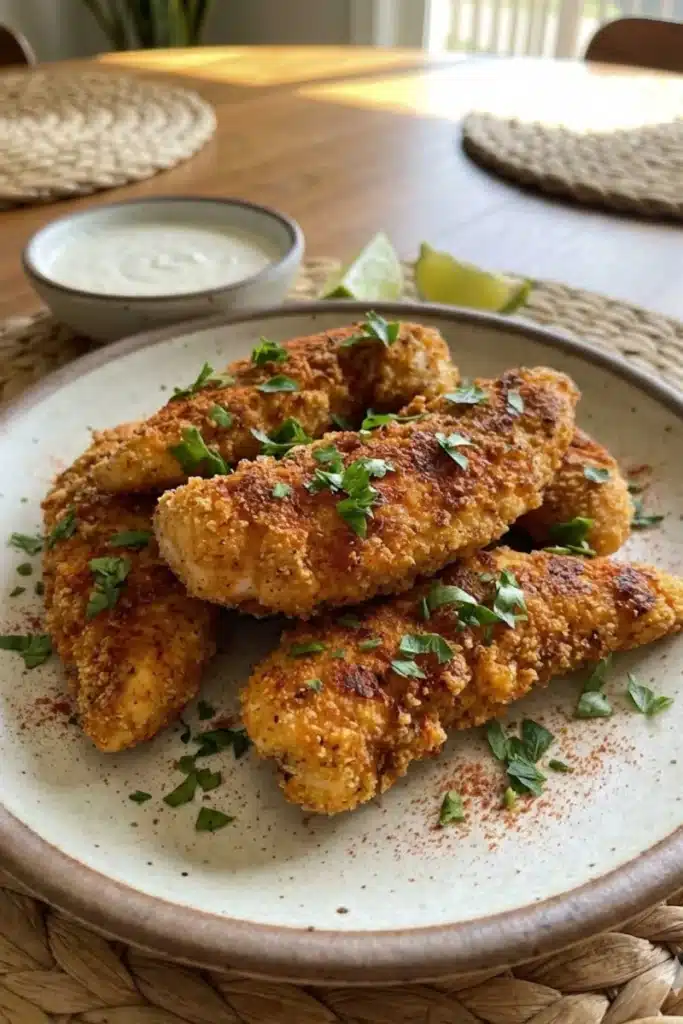
Have you ever bitten into a chicken tender that looked amazing but tasted like… absolutely nothing? I have, and it’s heartbreaking! But let me tell you, these Cajun chicken tenders are the total opposite. They are an explosion of flavor! We are talking juicy, tender meat on the inside and a shatteringly crisp, spicy coating on the outside.
Did you know that “chicken tenders” are essentially a universally loved comfort food, yet so many of us rely on the frozen bag variety? Big mistake. Making them from scratch changes the game entirely. I remember the first time I tried to wing a Cajun spice blend; I nearly burned my taste buds off! But after years of tweaking, I’ve found the perfect balance of heat and savory goodness. Get ready to turn your kitchen into the best spot in town. Let’s get cooking!
Essential Ingredients for Authentic Cajun Flavor
Look, I used to think “Cajun” just meant pouring a ton of red powder on chicken and hoping for the best. Big mistake. I remember specifically serving these so-called Cajun chicken tenders to my friends back in the day, and they were just… hot. No flavor, just pure, unadulterated pain. I felt so bad I actually ordered pizza halfway through the meal. It was a total disaster, but hey, mistakes were made and lessons were learned.
If you want your tenders to taste like they actually came from a kitchen in Louisiana—and not just a sad attempt at “spicy chicken”—you have to get the ingredients right. It’s not about having a fancy pantry; it’s about having the right stuff.
The Protein: Don’t Be a Hero
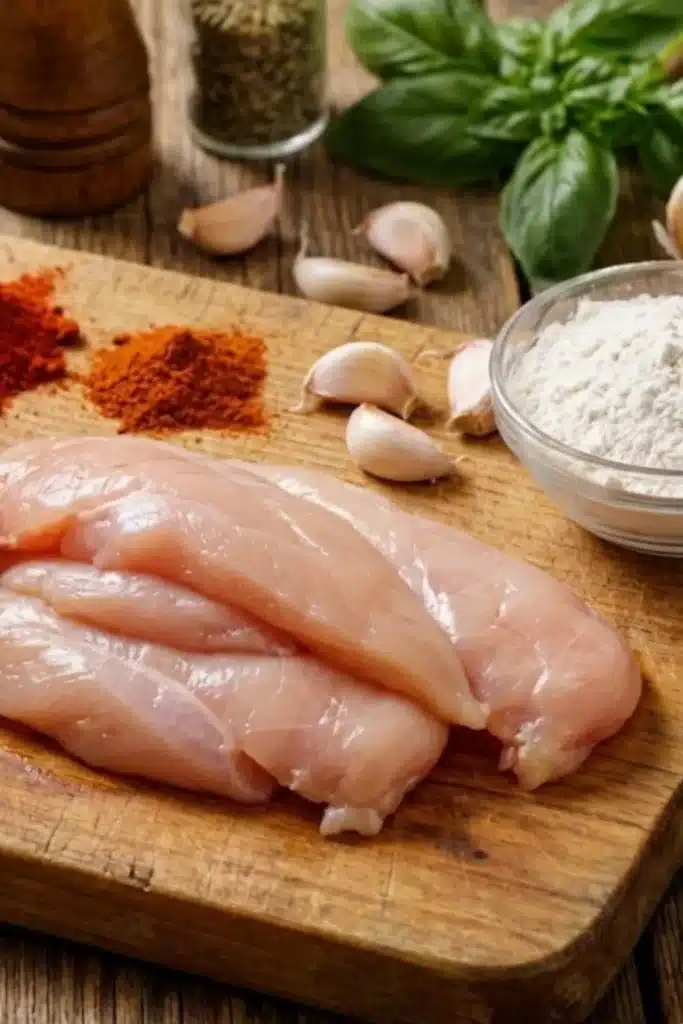
Here is a piece of advice I learned the hard way: stop buying chicken breasts and trying to slice them into strips yourself. Just don’t do it. I spent years fighting with slippery chicken breasts, trying to get even cuts, and ending up with weird, uneven chunks that cooked at different rates.
Go to the store and buy the actual chicken tenderloins. They are naturally more tender (hence the name) and they stay juicier. The only annoying part is that little white tendon hanging out at the top. You can pull it out with a fork and a paper towel—it’s kinda satisfying, actually. Using the right cut is half the battle when making Cajun chicken tenders.
The Marinade: The Secret Weapon
You might think you can skip the marinade if you are in a rush. I’m telling you right now, please don’t. I’ve tried the “dip and fry” method, and the chicken tastes like cardboard. You need buttermilk.
The acid in the buttermilk breaks down the meat fibers, which makes it incredibly soft. If you don’t have buttermilk, don’t freak out. I’ve definitely used the old “milk mixed with a tablespoon of vinegar” trick more times than I can count. It works in a pinch. Also, throw some hot sauce directly into this wet mix. It helps the flavor penetrate deep into the meat so the spice isn’t just on the crust.
The Spice Blend: More Than Just Heat
This is where I messed up for years. I thought Cayenne pepper was the only thing that mattered. Wrong. While Cayenne brings the heat, it doesn’t bring the soul.
You need Smoked Paprika. Not regular paprika—that stuff is basically red dust with no flavor. Smoked paprika smells like a campfire and gives you that savory, deep flavor profile. You also need a heavy hand with garlic powder and onion powder. If a recipe says “one teaspoon,” my heart usually says “two.”
A good Cajun chicken tenders recipe relies on layers of flavor, not just burning your tongue off. Mix these spices into your flour and your marinade. We want flavor in every single bite.
The Breading: The Crunch Factor
Okay, here is a weird tip that changed my life. Don’t just use plain flour. Mix in some cornstarch. I know, it sounds random, but just trust me on this one.
I read about this on a forum years ago when I was frustrated that my chicken was getting soggy ten minutes after frying. Cornstarch prevents gluten development, which makes the coating shatteringly crisp rather than chewy. A ratio of about 1 cup of flour to 1/4 cup of cornstarch is the sweet spot. It makes the breading light, airy, and super crunchy.
Get these basics sorted, and you are already winning. It’s not rocket science, it’s just paying attention to the little things.
How to Make the Perfect Buttermilk Marinade
I used to be the most impatient cook on the planet. I’d buy the meat, toss it in some flour, fry it immediately, and then wonder why my Cajun chicken tenders were tough as shoe leather. It was frustrating! I just wanted to eat, you know? But eventually, I learned that good food—like, actually good food—can’t be rushed.
If you skip the marinade, you are basically setting yourself up for failure. It’s the difference between “meh” chicken and the kind of meal where you accidentally eat five tenders before they even hit the dinner table.
Give It Time to Soak
Here is the deal: you need to plan ahead. I know, I hate planning dinner too, but this step is non-negotiable. You want to soak those tenders in the buttermilk marinade for at least 30 minutes. That is the bare minimum.
If you have the time, let them swim in that liquid gold overnight. The first time I actually had the patience to wait 24 hours, my mind was blown. The chicken was so tender it practically fell apart in my hands. It absorbs so much moisture that even if you slightly overcook it (which happens to the best of us), it stays juicy.
The Science Part (It’s Simple, I Promise)
Why buttermilk? Why not just water or regular milk? It’s all about the acid.
The acidity in buttermilk works to break down the tough protein structures in the chicken. Think of it as pre-chewing the meat for you, but in a much less gross way. It relaxes the fibers. Regular milk just doesn’t have the same tang or thickness to coat the meat properly.
If you are out of buttermilk, don’t panic. I’ve totally made a substitute by mixing a cup of milk with a tablespoon of white vinegar or lemon juice. Let it sit for five minutes until it curdles a bit. It’s not perfect, but it gets the job done when you are in a pinch.
Injecting Serious Flavor
A lot of people just use plain buttermilk, and that is a wasted opportunity. The marinade is your first chance to introduce flavor deep into the meat.
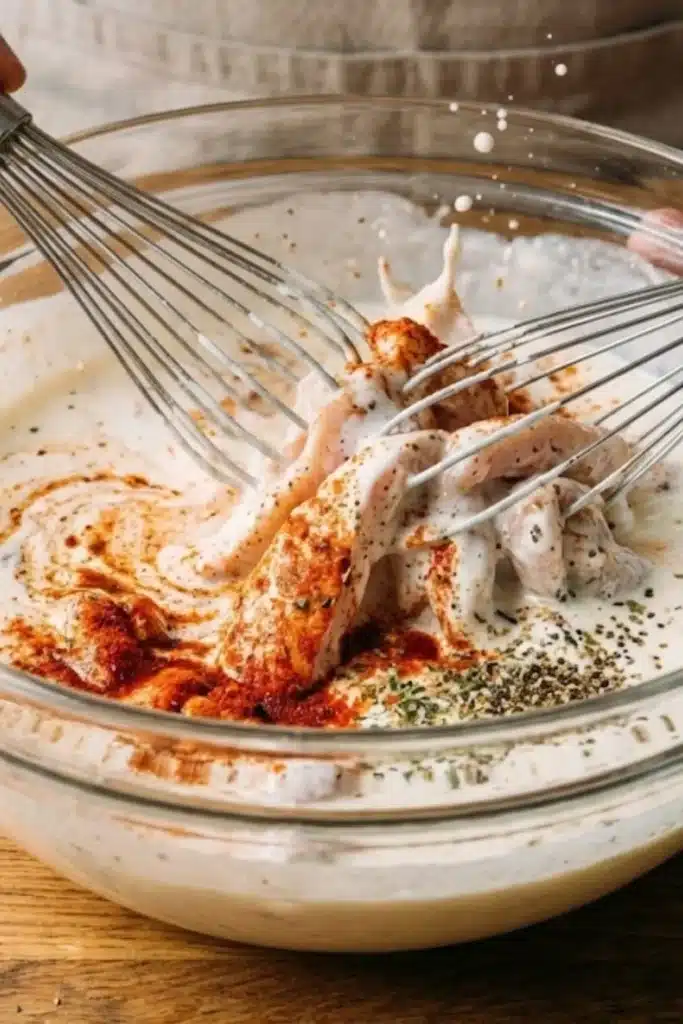
I always whisk in a solid tablespoon of my Cajun spice blend right into the wet mix. But here is my secret weapon: pickle juice. Yep, just tip the jar and pour a splash right in there. It adds a salty, briny kick that balances out the heat perfectly.
I learned this trick after wondering why certain fast-food chicken sandwiches were so addictive. It’s the brine! So, whisk in your hot sauce, your spices, and that pickle juice. Your nose should tickle a bit when you smell the bowl. That’s how you know it’s ready.
Mastering the Breading Station for Maximum Crunch
Is there anything sadder than biting into a piece of fried chicken and having the entire crust slide off in one piece? It’s like the chicken is undressing itself. I used to have this problem constantly. I would serve my “famous” Cajun chicken tenders to friends, and they would politely eat the naked chicken with a side of soggy fried dough. It was embarrassing!
I eventually realized I was treating the breading process like an afterthought. I was just rolling the meat around in flour and tossing it in the pan. Big mistake. The breading station is where the magic happens, and if you rush it, you ruin it.
The Double Dip Method
If you want that super thick, craggy crust that you see in restaurants, doing it once isn’t enough. You have to commit to the double dip.
Here is how I set up my assembly line to avoid a total mess. You need three bowls: one with plain flour, one with your egg wash (or leftover buttermilk), and the final one with your seasoned flour mixture.
- Take the chicken out of the marinade and shake off the excess.
- Dredge it in the first flour bowl.
- Dip it into the egg wash.
- Toss it into the seasoned flour for the final coat.
This method builds a sturdy wall of crunch. Just a heads-up: your fingers are going to get messy. I try to use the “one hand wet, one hand dry” rule, but honestly? In the heat of the moment, I usually end up with “dough clubs” for fingers. It happens to the best of us.
Don’t Just Roll—Press It!
This was a game-changer for me. For years, I gently rolled the chicken in the flour like I was tucking it into bed. That doesn’t work. You need to be aggressive with your Cajun chicken tenders.
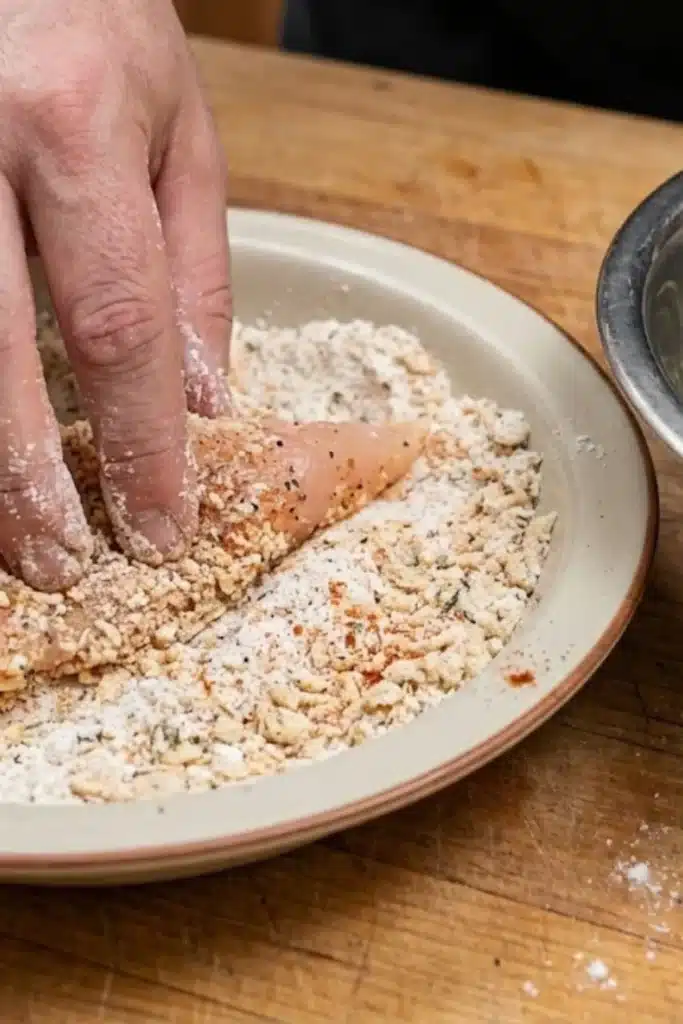
When the chicken is in that final bowl of seasoned flour, bury it. Then, take the heel of your hand and press down hard. You want to force the flour into the nooks and crannies of the meat. This helps the coating adhere to the protein so it doesn’t flake off later. When you lift it up, give it a little shake. You should see little craggy bits hanging off—those are going to become the extra crispy parts everyone fights over.
The Most Important Step: The Rest
If you take nothing else away from this, please listen to this part. Do not throw your breaded chicken straight into the hot oil.
I know, you are hungry. The oil is hot. You want to eat. But you have to wait. Once you’ve breaded all your tenders, lay them out on a wire rack and let them sit for about 10 to 15 minutes.
Why? The flour needs time to hydrate. It absorbs the moisture from the egg and the chicken, forming a glue-like bond. If you fry it immediately, the moisture tries to escape as steam and blows the crust right off. Giving it that 10-minute rest makes sure the breading stays put. It’s a small step that makes a massive difference in the final product.
Frying vs. Baking: Achieving the Best Texture
I have a love-hate relationship with deep frying. On one hand, nothing beats that golden, shatteringly crisp crust. On the other hand, I have definitely set off my smoke detector more times than I care to admit. My neighbors probably think I’m running a chemistry lab in here. But over the years, I’ve realized that how you cook your Cajun chicken tenders is just as important as how you season them.
You have options, and honestly, the “best” method depends on how much cleanup you are willing to deal with. I’ve tried them all—frying, baking, and air frying—and I have plenty of grease burns to prove it.
Respect the Thermometer
If you are going to fry, you can’t guess the temperature. I used to just throw a piece of bread in the oil and see if it sizzled. That is a terrible method. If the oil is too cold, the chicken acts like a sponge and soaks up all the grease. I once served tenders that were so oily they were practically leaking. It was gross.
You need a candy thermometer. Clip it to the side of your pot and keep that oil steady at 350°F (175°C). If it drops too low, crank the heat. If it gets too hot, the outside will burn before the inside is cooked. It takes a little practice to babysit the stove, but the result is golden brown chicken that isn’t greasy at all.
The Cast Iron Skillet Advantage
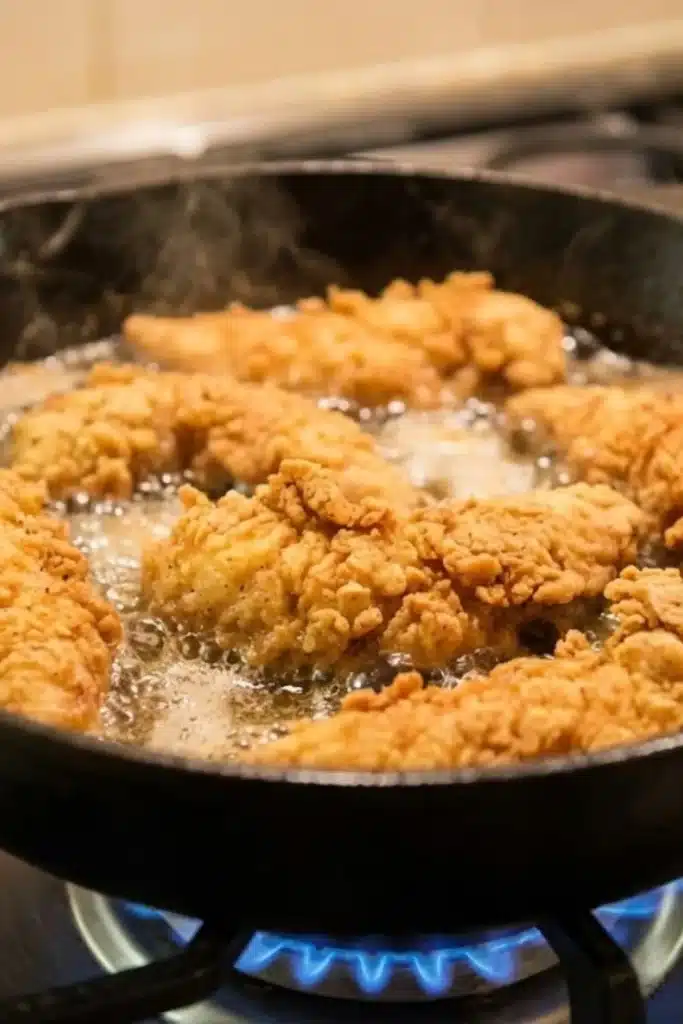
For a long time, I didn’t own a deep fryer, so I used my grandmother’s cast iron skillet. To be honest, I still prefer it. Cast iron holds heat incredibly well, which helps keep the temperature stable when you drop the cold chicken in.
Plus, you don’t need gallons of oil. You can do a shallow fry with just an inch of oil. It’s less wasteful and easier to clean up. Just don’t overcrowd the pan! I’ve made the mistake of jamming too many pieces in at once, and they ended up steaming instead of frying. Give them personal space.
Oven Baked: The “Healthy” Cheat
Sometimes, I just don’t have the energy to deal with hot oil. That’s when oven baked spicy chicken comes in handy. But here is the problem: oven-fried chicken often comes out pale and sad.
I learned a trick to fix this. Toast your breadcrumbs or panko in a pan with a little butter before you bread the chicken. It sounds like extra work, but it guarantees that golden color. Bake them at a high heat—I usually go for 400°F—on a wire rack set over a baking sheet. The rack allows air to circulate so the bottom doesn’t get soggy. It’s not quite the same as deep frying, but it’s a solid 9/10.
The Air Fryer Revolution
Okay, I was late to the air fryer party, but now I’m obsessed. It’s the perfect middle ground. You get the crunch without the oil bath.
For air fryer chicken tenders, I spray them generously with cooking oil spray to help the crust crisp up. Cook them for about 10-12 minutes at 375°F, flipping halfway through. It’s fast, the cleanup is a breeze, and you don’t have to worry about burning your house down. It’s my go-to for a quick weeknight dinner when I need that Cajun fix immediately.
The Best Dipping Sauces to Pair with Cajun Chicken
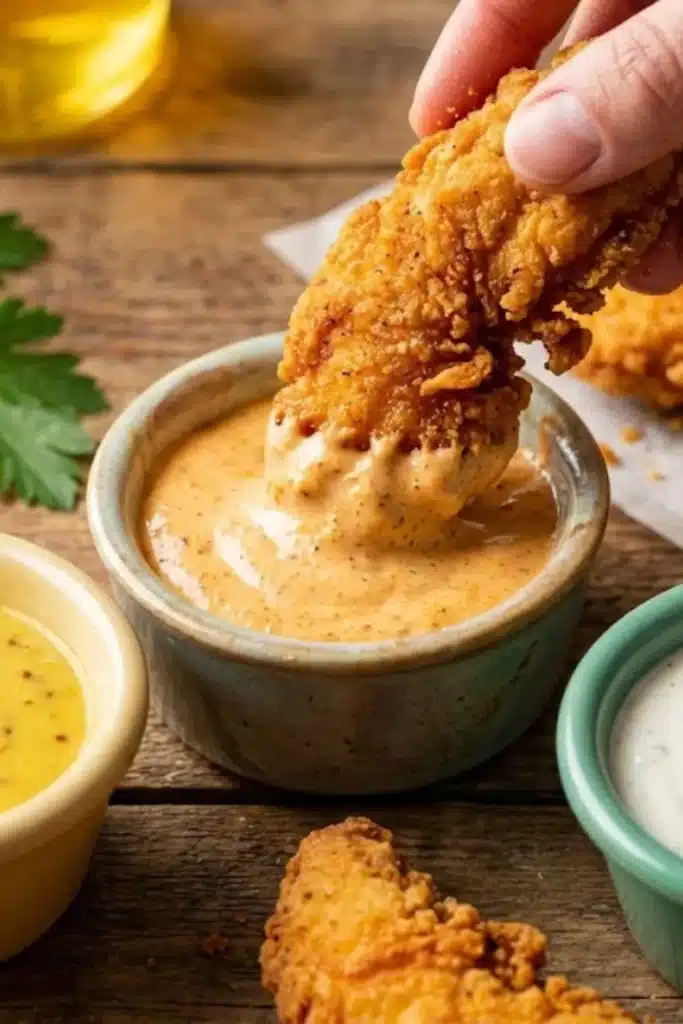
I’m going to be real with you for a second: eating naked chicken is boring. Even if you have nailed the perfect crispy crust on your Cajun chicken tenders, the experience just isn’t complete without a solid dip. I used to be that person who just squirted some ketchup on the plate and called it a day. My friends would look at me like I had committed a crime against food.
And they were right. A bold, spicy tender needs a sauce that can stand up to it. Over the years, I’ve ruined plenty of batches of sauce—too salty, too runny, or just weird tasting—so you don’t have to. Here are the ones that actually work.
Creamy Remoulade: The Real Deal
If you want to feel like you are actually sitting in a diner in New Orleans, you have to make a remoulade. It sounds fancy, and honestly, I used to be intimidated by the name. I thought I needed a culinary degree to make it.
Turns out, it’s basically just spicy mayonnaise’s cool cousin. I mix mayonnaise, a rough grain mustard (Creole mustard is best if you can find it), a splash of hot sauce, and a little horseradish. The first time I made this, I went way too heavy on the horseradish and cleared my sinuses for a week. Don’t do that. Start small. The creamy richness cuts right through the grease of the fried chicken, and the little kick at the end ties everything together. It is hands down my favorite dipping sauce for chicken.
Honey Mustard: Sweet Meets Heat
Sometimes the Cajun spice can be a little aggressive. I’ve definitely had moments where I was sweating while eating dinner. That is where honey mustard comes in to save the day.
The sweetness of the honey balances out the cayenne pepper perfectly. I don’t buy the bottled stuff anymore because it tastes like corn syrup to me. I just whisk together equal parts yellow mustard and honey, then add a tiny dollop of mayo to make it smooth. It takes thirty seconds to make. It’s sticky, sweet, and tangy. If you have kids who are skeptical about the spice level, this sauce is the bridge that gets them to eat it.
Ranch Dressing: The Cool Down
Look, I know it’s basic. I know food snobs hate on ranch. But let’s be honest—nothing cools down a spicy mouth fire like buttermilk ranch.
I used to buy the shelf-stable bottles, but once I started making it with fresh herbs, I couldn’t go back. I chop up fresh dill and chives, mix them with buttermilk and mayo, and add a ton of black pepper. It’s refreshing. When you dunk a hot, crunchy Cajun chicken tender into cold, creamy ranch, it’s just pure comfort. Don’t let anyone shame you for loving ranch; it’s a classic for a reason.
Serving Suggestions and Side Dishes
Let’s be honest, I have definitely eaten these Cajun chicken tenders standing up in the kitchen, right over the stove, burning my mouth because I couldn’t wait. We have all been there. But if you are trying to be a civilized human being and actually serve this as a meal—say, for a family dinner ideas 2026 board on Pinterest—you need some solid sides.
I used to spend so much energy on the main dish that I’d totally forget about the sides until the last minute. I’d end up serving gourmet chicken with a side of plain toast. It was tragic. Over time, I realized that the sides are what turn a snack into a proper Southern feast.
The Classics: Slaw and Fries
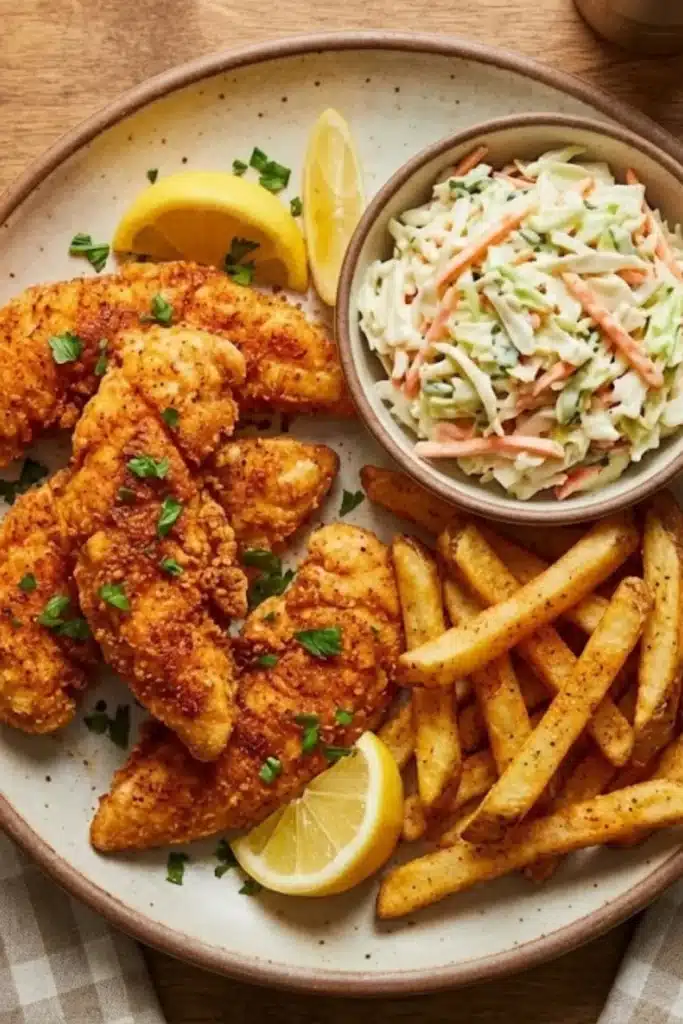
If you want the full experience, you have to lean into the fried food theme. I love serving these with seasoned french fries, but if you want to be authentic, you need a good creamy coleslaw recipe.
I used to hate coleslaw. It was always too sweet or too watery at the picnics I went to growing up. But a homemade slaw with plenty of crunch? It’s a game changer. The cold, creamy cabbage is the perfect fire extinguisher for the spicy chicken. Just don’t dress the salad until right before you eat it, or it turns into soup. Nobody wants soup salad.
Rice is Nice (and Essential)
Since we are doing the Cajun thing, you can’t go wrong with rice. I usually whip up a quick dirty rice side dish. If you haven’t had it, it’s basically rice cooked with spices, onions, peppers, and sometimes bits of sausage or ground meat.
It’s hearty and fills you up. Sometimes, if I am feeling lazy (which is often), I’ll just do a simple yellow rice with turmeric. The chicken is so flavorful that the rice can just be a neutral base to soak up any extra sauce.
Lighten It Up
If you are feeling guilty about the fried food, just throw some greens on the plate. I like to do corn on the cob—it feels festive and summery. Or, just a simple green salad with a vinaigrette.
The Final Touch: Presentation
Okay, I am not a food stylist. My plates usually look like a chaotic mess. But one thing I always do is add lemon wedges for chicken.
It sounds like a garnish you just ignore, but squeezing fresh lemon juice over the hot, fried breading wakes the whole dish up. It cuts through the grease and makes the spices pop. Also, sprinkle some fresh parsley garnish on top. It makes it look like you tried really hard, even if you are wearing sweatpants.
Look, I’m not gonna lie to you. By the time you are done making these Cajun chicken tenders, your kitchen counter is probably going to be covered in flour. Mine always is, and there is likely a splatter of oil on the stove that you’ll have to deal with later. But honestly? It is so worth it.
We’ve gone through the whole process together, from picking the right meat to the final fry. We talked about why the buttermilk marinade is the hill I’m willing to die on for juicy meat. We covered the double-dip strategy that guarantees that crispy fried chicken crust actually stays on the bird and doesn’t fall off in sad clumps. And hopefully, I convinced you to step up your game with a homemade remoulade sauce recipe instead of just grabbing the ketchup bottle.
Cooking this kind of southern style chicken isn’t just about feeding yourself. It’s about that moment when you put the platter down and everyone goes silent because they are too busy eating. That’s the win. Don’t worry if your first batch gets a little too dark or if your fingers get breaded more than the chicken. It’s all part of the learning curve.
If you found this guide helpful (or if you just enjoyed my rambling about soggy chicken trauma), do me a huge favor. Pin this Cajun chicken tenders recipe to your “Family Dinner Ideas 2026” board on Pinterest. It helps more people find the recipe, and it helps me keep buying flour. Now, go make a mess and enjoy every bite!