Have you ever bitten into a piece of chicken that was so bland it actually made you sad? Me too, and frankly, life is too short for boring poultry! I remember the first time I visited New Orleans—the humidity hit me like a wall, but the smell of spices wafting from a street vendor’s grill pulled me in immediately. That first bite of authentic Cajun chicken changed my life. It was smoky, spicy, and incredibly juicy.
In this article, we aren’t just tossing some pepper on a breast and calling it a day. I’m going to show you how to master the art of the perfect Cajun spice blend and sear your chicken to perfection. Whether you are a heat-seeker or just looking to spice up your weeknight rotation, this recipe is going to be your new obsession. Let’s get cooking!
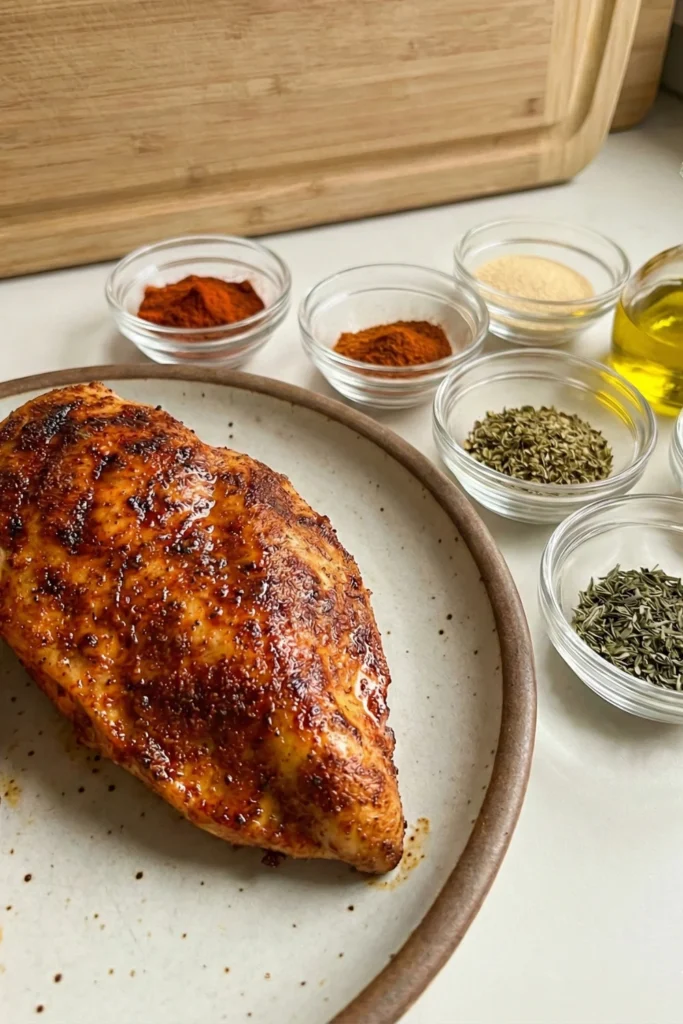
Essential Ingredients for the Perfect Cajun Spice Blend
I used to be the person who just grabbed that little red shaker from the grocery store aisle. You know the one I’m talking about. I thought I was making legit Cajun chicken, but honestly? My food tasted like a straight-up salt lick. It was so frustrating! I remember one Tuesday night specifically, I served dinner to my family, and we were all chugging water after every bite. I felt terrible, like I’d failed at something simple.
That was the moment I decided to ditch the pre-made stuff. I learned that making your own Cajun spice blend isn’t just fancy chef talk; it’s actually necessary if you want flavor rather than just sodium. Plus, mixing it up makes you feel like a wizard in the kitchen.
The Holy Trinity of Spices (And Then Some)
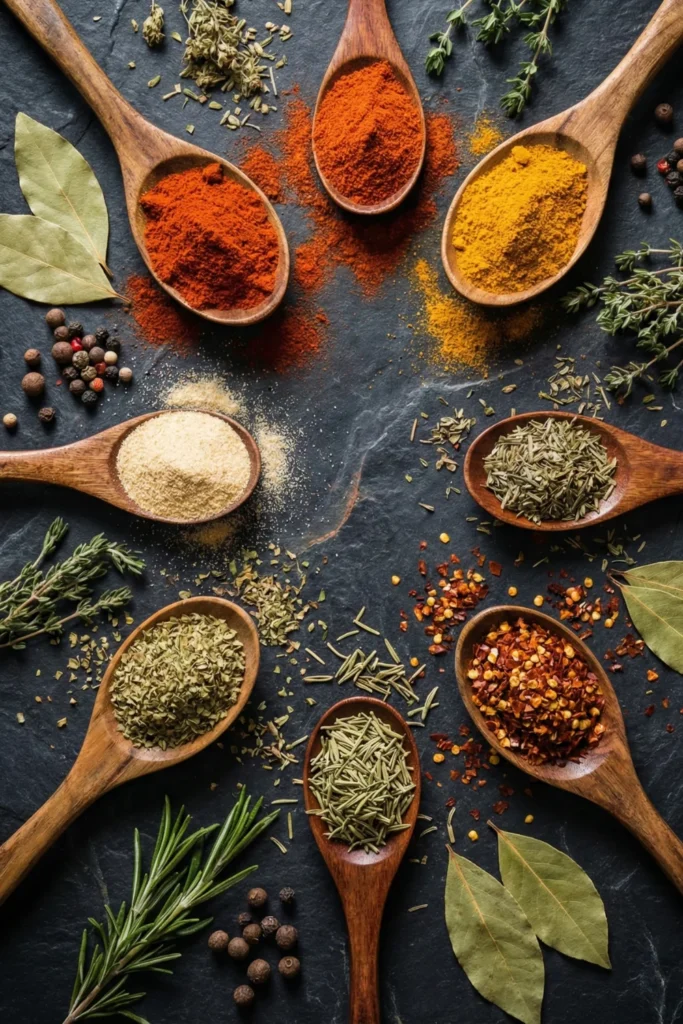
First things first, let’s talk about the base. You can’t have Cajun cuisine without paprika. But here is where I made a mistake for years: I used sweet paprika. Don’t do that. You really want smoked paprika. It gives that “cooked over an open fire” vibe even if you are just using an electric stove.
Next up is the heat. Cayenne pepper is the engine here. I learned the hard way that a little goes a long way. I once dumped a tablespoon in when the recipe called for a teaspoon. Let’s just say we ended up ordering pizza that night because the chicken was inedible. Start with a teaspoon for every pound of meat. You can always add more, but you can’t take it out!
You also need garlic powder and onion powder. Please, use the fresh powders, not the stuff that’s been sitting in the back of your cupboard since 2018. Old spices lose their punch, and we want this to smack your tastebuds.
Herbs That Actually Sing
For the longest time, I ignored the green stuff in the mix. Big mistake. Dried oregano and thyme are non-negotiable. They add this earthy background note that balances out the spicy cayenne.
Rub the dried herbs between your fingers before dropping them in the bowl. It wakes them up. My grandma told me that trick, and it works every time.
The Salt Trap
Here is the biggest secret to a great Cajun spice blend: You control the salt. Most store brands are primarily salt because it’s cheap filler. By mixing it yourself, you can keep the sodium low and the flavor high. I usually stick to a 1:4 ratio of salt to other spices.
Also, a quick tip on the oil. The spices are going to get hot. If you use butter or olive oil right at the start of searing, those delicate spices might burn and turn bitter. I prefer avocado oil because it can take the heat. It keeps the Cajun chicken tasting amazing without that acrid, burnt flavor.
So, get your measuring spoons out. It takes about five minutes to mix this up, and I promise, you’ll never go back to the store-bought jar again.
Preparing Your Chicken for Maximum Flavor Absorption
You know, I used to think the secret to good food was just dumping a ton of seasoning on top and hoping for the best. I was wrong. The way you handle the meat before it even hits the heat is actually more important. I learned this the hard way after serving my husband a piece of Cajun chicken that was burnt on the outside and raw in the middle. It was embarrassing, and we ended up microwaving it. Yuck.
Here is how to prep your bird so it actually tastes like something you’d get at a restaurant.
The Great Debate: Breasts vs. Thighs
Let’s be real for a second. Chicken thighs are just better. I said it. They have more fat, which means they stay juicy even if you accidentally leave them in the pan a minute too long. When I’m rushing to get dinner on the table on a Wednesday, I almost always grab thighs because they are forgiving.
However, I know a lot of you prefer chicken breasts because they are leaner. That’s fine! But you have to treat them right. If you use breasts, don’t expect them to stay moist without a little extra love. This Cajun chicken recipe works for both, but thighs will give you that melt-in-your-mouth texture with way less effort.
Pound It Out (Seriously)
If there is one tool in my kitchen I can’t live without, it’s my meat mallet. Have you ever noticed that chicken breasts are shaped like a teardrop? One end is thick and fat, and the other is thin. If you cook them like that, the thin end dries out before the thick end is safe to eat.
I used to skip this step because I was lazy. Don’t be like me. Place your chicken between two pieces of plastic wrap (unless you want raw chicken juice flying around your kitchen—been there, cleaned that) and pound it until it’s even. It makes the meat tender and helps it cook fast.
The Waiting Game
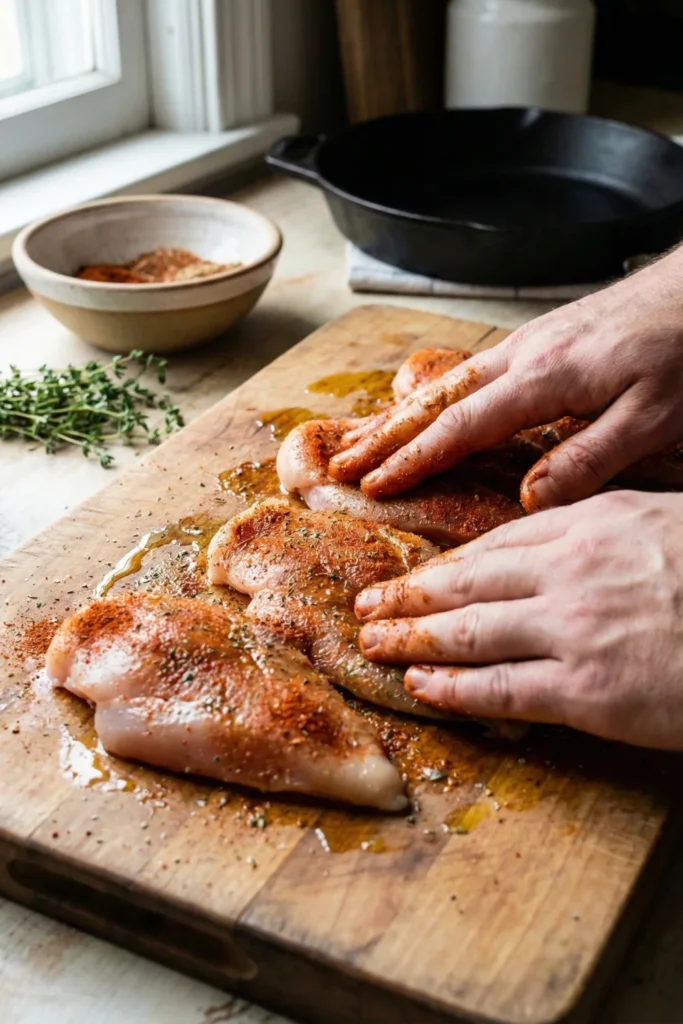
Here is a mistake I see all the time. People sprinkle the dry rub on and immediately throw the meat into the skillet. Stop doing that! The salt in your Cajun spice blend needs time to do its magic. It draws moisture out and then pulls the flavor back in.
I try to season my meat at least 15 minutes before cooking. If I’m really on top of my game, I’ll do it in the morning. This allows the flavor penetration to go deep into the meat fibers, so it tastes good all the way through, not just on the surface.
Take the Chill Off
Okay, last tip, and it’s a big one. Never take meat straight from the fridge to the hot pan. Cold meat hits hot metal and seizes up. It makes the muscle fibers tough. I usually let my seasoned chicken sit on the counter for about 20 minutes to come up to room temperature.
It seems like a small thing, but it helps the chicken cook evenly. Plus, you get a better sear because the pan temperature doesn’t drop as drastically. Trust me, these little steps add up to a much better dinner.
Mastering the Pan-Sear: Getting that Blackened Crust
Okay, confession time. The first few times I tried to make this recipe, I set off the smoke alarm. My poor dog hid under the bed, and I was standing on a chair fanning the detector with a magazine while coughing. I was trying so hard to get that restaurant-style char on my Cajun chicken, but I just ended up with burnt spices and a kitchen full of haze. It was a disaster.
It took me a while to realize there is a fine line between “blackened” and “burnt.” It is super frustrating when you ruin a good piece of meat after prepping it so well. But after a lot of trial and error (and a few takeout orders when I failed), I’ve figured out the sweet spot.
The Heavy Metal Solution
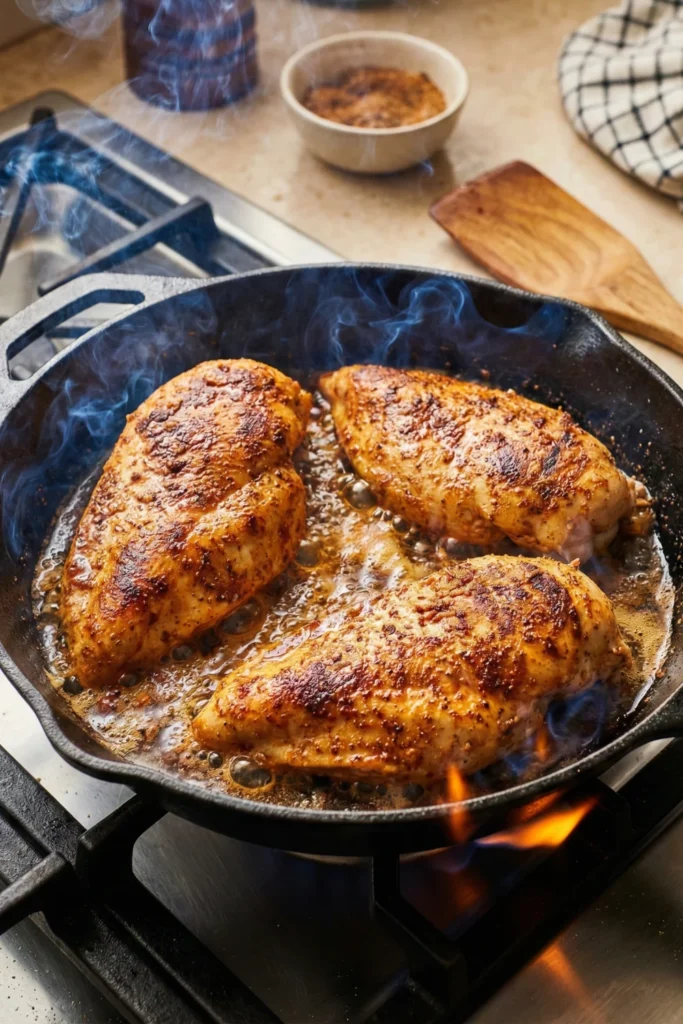
If you are using a flimsy non-stick pan for this, please put it away. To get a real crust, you need a cast iron skillet. It holds heat better than anything else in your cupboard. I love my old cast iron; it is heavy as a brick and kind of a pain to clean, but it works miracles for this dish.
When you drop the chicken in, you want to hear a serious sizzle—like a loud hiss. If it just kind of whines or bubbles gently, your pan isn’t hot enough yet. But be careful, because cast iron gets hotter than you think.
Watch That Heat
Here is where I messed up before. I thought “sear” meant “turn the burner dial all the way to High.” Nope. That is a rookie mistake. If the heat is too high, the paprika and garlic in your spice rub will burn instantly. Burnt garlic tastes bitter and nasty, and it will ruin the whole meal.
I keep my stove on medium-high. It gets the oil hot enough to sear the meat, but it doesn’t scorch the spices before the chicken is actually cooked through. It’s a balancing act, for sure, but medium-high is usually the safe zone.
The Golden Rule: Hands Off!
I am a fidgety cook. I like to poke things, flip them, and check underneath constantly. Do not do this. When you put the chicken in the pan, leave it alone. Seriously, step away from the stove if you have to.
The chicken needs to sit undisturbed to form that crust. If you try to lift it and it sticks to the pan, it’s telling you it’s not ready. It’s holding on for dear life. Wait another minute. When it releases naturally, that means you have a beautiful, crispy blackened chicken crust waiting for you.
A Little Chef Secret
I learned this trick from watching way too many cooking shows late at night. Right when the chicken is almost done—I’m talking the last 60 seconds—I drop a tablespoon of butter into the pan.
As it melts and foams up, I take a spoon and pour that frothy, spicy butter over the chicken. This is called butter basting. It adds a glossy finish and keeps the meat incredibly moist. It’s probably not the healthiest move in the world, but man, it makes the dish taste like a million bucks.
Pairing Sides with Spicy Cajun Chicken
I remember hosting a dinner party a few years back where I was so focused on the main dish that I completely forgot about the sides. I served this beautiful, spicy Cajun chicken on a plate next to… nothing. It looked lonely. And honestly, after three bites, my guests were looking for something to cool their mouths down. I felt like such a rookie!
You can’t just serve spicy meat by itself. You need a supporting cast to balance out the heat and make it a full meal. Through many trial-and-error dinners (and some complaints from my kids), I’ve found the best things to serve alongside this dish.
Cooling Counterparts
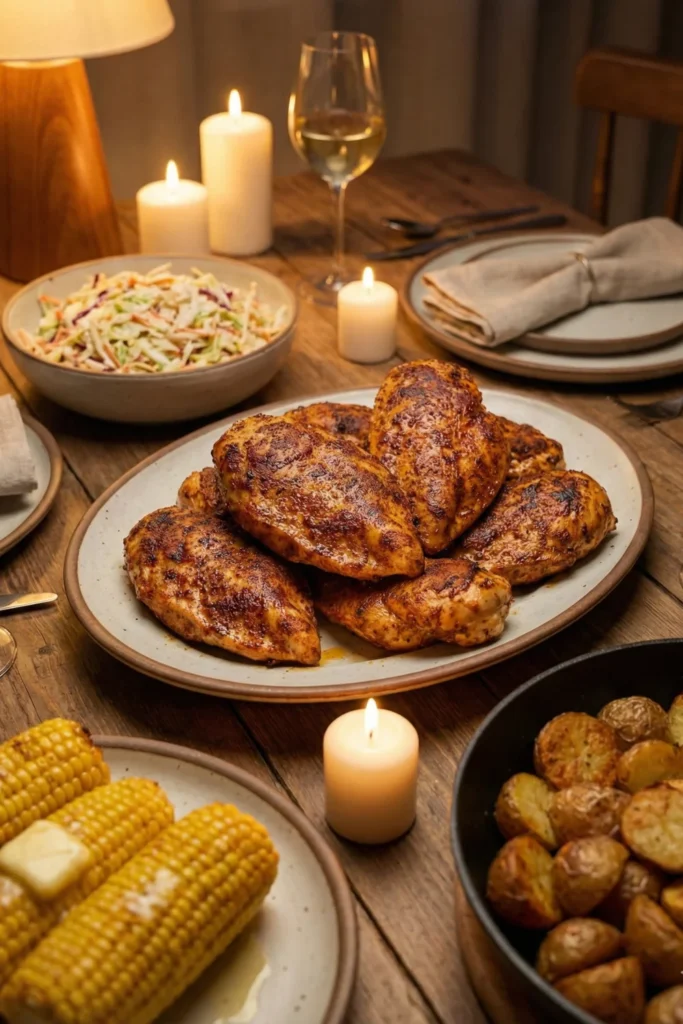
If you made the spice blend right, your mouth should be tingling. My favorite way to balance that fire is with something cold and creamy. Coleslaw is the absolute MVP here. The crunch of the cabbage and the creaminess of the dressing cuts right through the spice.
I used to hate coleslaw because I thought it was just soggy mayonnaise. But if you make it fresh with a vinegar-based dressing, it is a game changer. Potato salad is another solid option. Just don’t add too much paprika to it, or you’ll have spice on spice. You want the side dish to be the “fire extinguisher” for the palate.
Classic Carbs
If I am feeling ambitious and want the full Louisiana experience, I’ll whip up some dirty rice. It absorbs the pot juices perfectly. But let’s be real, on a Tuesday night after work, I am tired. I usually don’t have the energy for a complex side dish.
So, here is my cheat code: garlic butter noodles. They take ten minutes. They are simple, buttery, and kids love them. They soak up the extra sauce from the chicken skillet beautifully. Jambalaya is a classic choice too, but that’s a whole other project. Keep the starch simple so the chicken remains the star of the show.
Vegetable Options
You have to eat your greens, right? Or in this case, yellows and reds. Roasted corn on the cob is my go-to vegetable pairing. The natural sweetness of the corn pairs so well with the savory, salty rub on the meat.
I also like doing sautéed bell peppers and onions. It gives the meal a bit of a fajita vibe, but with a Southern twist. Just toss them in the same skillet while the meat rests to pick up all those leftover flavorful bits stuck to the bottom of the pan.
The Sauce Factor
Okay, I admit it. I am a sauce person. I dip everything. For Cajun chicken, you need a good dipping sauce. I used to think remoulade sauce was some fancy chef thing I couldn’t make. Turns out, it’s basically just mayonnaise, mustard, and spices mixed together.
If that sounds like too much work, a cool ranch dressing works in a pinch. Don’t judge me! It cools down the heat and tastes great. Having a little sauce on the side makes the meal feel finished and keeps everyone happy, especially if the chicken turned out a little spicier than you planned.
Making restaurant-quality Cajun chicken at home is easier than you think. Honestly, once you nail that homemade spice blend, you are basically unstoppable in the kitchen. I know it can feel a little intimidating to mess with high heat and cast iron skillets at first—I was definitely nervous about burning the house down my first time! But trust me, the payoff is so worth it.
Your house is going to smell amazing, and your family might actually believe you ordered takeout from a spot in New Orleans. It’s a fast, high-protein dinner that shakes up the boring weekly rotation. So, grab that skillet, don’t be afraid of the cayenne, and get cooking tonight. You’ve got this!