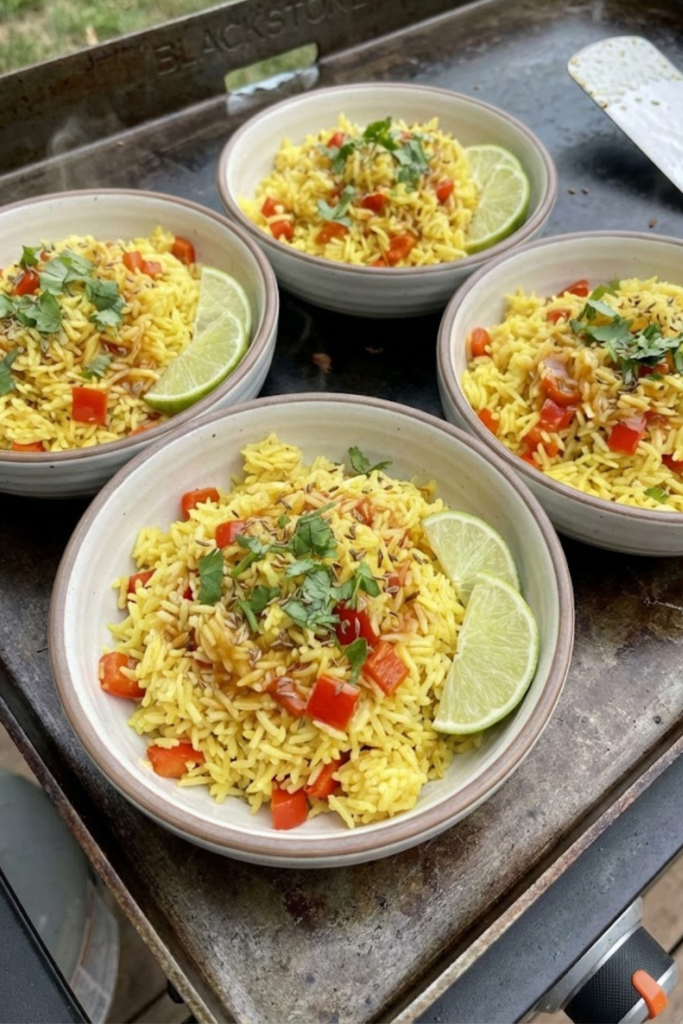
I’ll never forget the first time I threw whole cumin seeds onto my hot griddle—the aroma was instantly intoxicating! If you are tired of the same old stir-fry routine, these Blackstone Indian Spiced Rice Bowls are going to absolutely blow your mind. Seriously, it’s a total game-changer for weeknight dinners. Did you know that cooking rice on a flat top creates a texture similar to authentic “Tawa Pulao” that you just can’t replicate in a standard frying pan? We are talking about golden, turmeric-infused basmati rice, crisp veggies, and aromatic spices all searing together in harmony. Let’s fire up the griddle and dive into this culinary adventure!
Why Blackstone Griddle Cooking Elevates Indian Cuisine
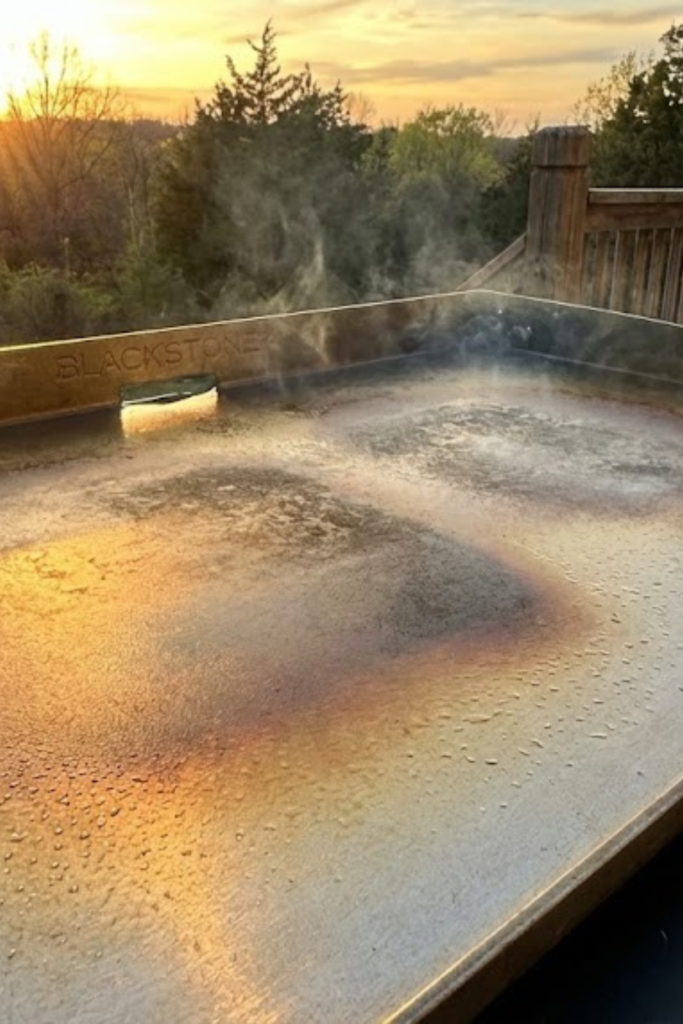
Look, I’ll be honest with you. The first time I tried to make authentic Indian spiced rice bowls in my tiny kitchen, I set off the smoke alarm. My wife wasn’t happy, and the dog was barking at the beeping. It was a total mess. But that’s exactly why taking this operation outside to the Blackstone griddle changed my life.
It’s not just about keeping the kitchen cool, though that’s a huge plus when you are searing peppers in July. It is about the flavor profile you just can’t get on a stove.
The Magic of the “Tawa”
In India, street vendors use these massive flat pans called Tawas to make dishes like Tawa Pulao. Does that sound familiar? It should, because it’s basically what we have in our backyards! When I finally realized my griddle was essentially a traditional Indian cooking tool, everything clicked.
You can’t get that same “wok hei” or smoky flavor in a regular pot. The high heat on the flat top toasts the spices instantly. It releases oils in the cumin and mustard seeds that you just miss out on with lower temps. I remember tasting my first batch off the flat top and thinking, “Okay, this is what it’s supposed to taste like.”
No More Mushy Rice
Here is a mistake I made for years: I overcrowded my frying pan. When you pile too much rice and veggies into a skillet, they steam instead of fry. The result? A soggy, sad bowl of mush. Gross, right?
On the Blackstone, you have acres of space to work with.
- Spread it out: You can spread that rice out into a thin layer.
- The Crunch: Let it get those crispy, golden bits on the bottom.
- The Mix: Fold it back in for that perfect texture contrast.
This creates a texture that is nutty and distinct. It’s a texture I never thought I’d pull off at home until I ditched the skillet.
Controlling the Heat Zones
One thing that drove me crazy inside was burning my garlic while waiting for the onions to soften. I’ve ruined more dinners than I care to admit that way. On the griddle, I use different heat zones to save my sanity.
I keep one side ripping hot for the veggies to get that char, and a cooler side for the delicate spices and garlic. It took me a few tries to get the timing right, believe me. I definitely turned some garlic into charcoal a few times before I mastered the slide. But once you get the hang of sliding ingredients across the surface, you feel like a pro chef. It makes the whole process of making Indian spiced rice bowls feel like a dance rather than a chore.
And let’s be real, cleaning one flat surface is way better than scrubbing three different pots. That alone makes the food taste better in my opinion!
Essential Ingredients for Authentic Spiced Rice
You can’t just throw random pantry staples on a hot griddle and expect magic to happen. Believe me, I’ve tried, and the result was a bland, sticky disaster that my kids refused to eat. To get those restaurant-quality Blackstone Indian Spiced Rice Bowls, you have to respect the ingredients. It’s not about being fancy; it’s about using the right tools for the job.
I learned the hard way that Indian cooking relies heavily on specific textures and distinct flavor profiles. If you sub out the wrong thing, you lose the soul of the dish.
The Rice Dilemma: Cold is Gold
Here is the biggest rookie mistake I made when I started: using fresh, hot rice. I cooked a fresh pot of rice, threw it on the Blackstone, and within thirty seconds, I had a giant pile of glue. It was heartbreaking.
For the best Basmati rice recipes on a flat top, your rice needs to be old.
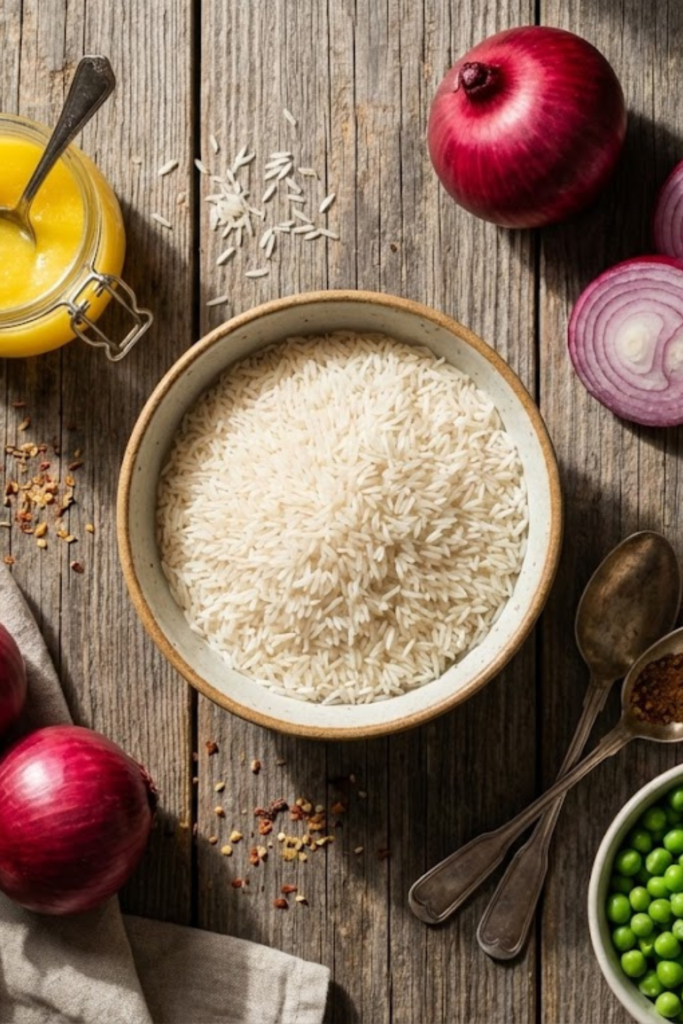
- Day-Old is Best: Cook your Basmati rice the day before and put it in the fridge.
- The Science: Cold rice dries out slightly, allowing the grains to separate when they hit the hot oil.
- Basmati vs. Jasmine: Stick to Basmati for Indian dishes; the grains are longer and nuttier than Jasmine.
If you try this with warm rice, you will end up with mush. I’ve scraped enough gummy rice off my griddle to know it’s just not worth the shortcut.
Liquid Gold: Why You Need Ghee
I used to cook everything with olive oil or regular butter. Bad idea for this recipe. Regular butter burns way too fast at the high temps we are using, and olive oil just tastes wrong here.
You need Ghee. Ghee is just clarified butter, meaning the milk solids are removed so it can withstand high heat without burning. It gives the dish that authentic, rich, nutty aroma that screams Indian street food.
- Flavor: It adds a richness that oil just can’t match.
- Performance: It coats the rice grains perfectly, helping them fry rather than steam.
If you can’t find Ghee, use a neutral oil like avocado oil, but honestly, buy the Ghee. It’s a total game-changer.
The Holy Trinity of Veggies
When I’m prepping for vegetarian griddle meals, I look for color and crunch. You don’t want vegetables that turn into water.
- Red Onions: They are sweeter and look better than yellow onions when charred.
- Bell Peppers: I use red and green for a pop of color.
- Green Peas: This is non-negotiable for me; the sweetness of the peas cuts through the spicy heat.
I usually chop these pretty small so they cook fast and mix evenly with the rice.
Protein Add-ons
While I love a veggie bowl, sometimes you need a bit more bulk. I’ve experimented with a lot of Paneer recipes on the griddle. Paneer is a firm Indian cheese that doesn’t melt; it just gets crispy and golden. It is absolutely delicious when seared in the spiced oil.
If cheese isn’t your thing, diced chicken breast or firm tofu works great too. Just make sure you marinate them a bit first so they aren’t bland on the inside.
Don’t Skimp on Freshness
Finally, do not skip the fresh stuff at the end. I used to serve the bowls right off the griddle without any garnish, and they felt “heavy.”
- Cilantro: A huge handful of chopped cilantro wakes the whole dish up.
- Lime: A squeeze of lime juice cuts the fat and brightness the spices.
- Ginger-Garlic: Use fresh paste if you can; the jarred stuff often tastes metallic.
These little details are the difference between “meh” leftovers and a meal you want to make every week.
Mastering the Indian Spice Blend for the Flat Top
I used to be absolutely terrified of the spice aisle in the grocery store. There are so many jars, colors, and smells that I just stuck to salt and pepper for the longest time. But once I started cooking on the Blackstone, I realized that Indian spices list wasn’t a warning label; it was an invitation.
However, I learned a harsh lesson my first time trying to bloom spices on a 500-degree griddle. I threw a teaspoon of cumin seeds onto the hot steel, turned around to grab my spatula, and by the time I looked back, they were black little cinders. It smelled like burnt popcorn.
Whole Spices: The “Tadka” Technique
In Indian cooking, there is this technique called “Tadka” or tempering. It’s where you fry whole spices in hot oil to release their essential oils. It sounds fancy, but it’s really just heating up seeds.
- Start Cool-ish: Don’t have your griddle on maximum heat for this part. Medium is fine.
- The Sizzle: When you toss in cumin seeds or mustard seeds, they should sizzle immediately.
- The Pop: Wait for them to pop or dance a little. That’s when the flavor is released.
If you skip this and just dump raw seeds into the rice later, you’ll be crunching on hard, flavorless bits. Nobody wants that.
The Pre-Mix Strategy
Here is the best advice I can give you: Do not try to sprinkle spices from individual jars while cooking outdoors. I tried this once. I was fumbling with the lid of the red chili powder, the wind blew, and I ended up seasoning the grass instead of the rice. Plus, while I was messing with the jars, my onions burned.
Now, I always make a “Masala Mix” in a small bowl before I even step outside.
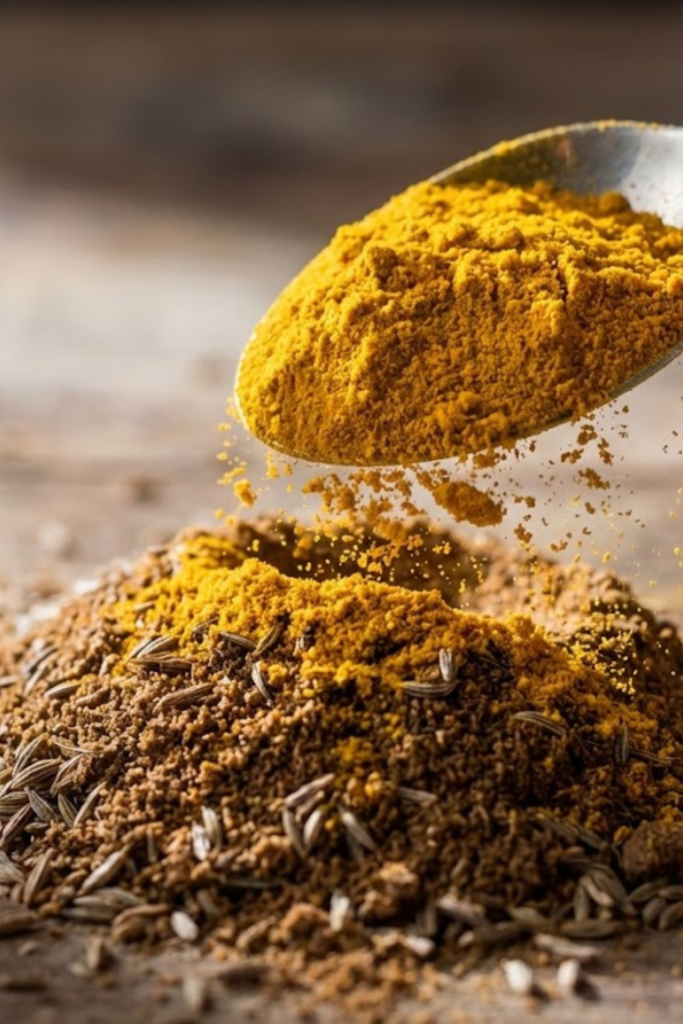
- Turmeric: This is what gives turmeric rice that iconic yellow glow. A little goes a long way.
- Garam Masala: This is a warming spice blend. It’s the heart of the dish.
- Coriander Powder: It adds a citrusy, earthy note.
- Red Chili Powder: Be careful here.
Mix them all together in a small ramekin. When it’s time to spice the veggies, you just dump the whole bowl in at once. It’s faster, cleaner, and prevents panic.
The “Pepper Spray” Effect
Speaking of chili powder, I have to warn you about something nobody told me. When you throw hot chili powder onto a smoking hot griddle, you are basically making mild pepper spray.
The first time I did this, I leaned in to smell the aroma and nearly coughed a lung up. The heat vaporizes the capsaicin in the chili. It is intense! Now, I stand back a bit when I toss the spices in, or I mix the spices into the wet ginger garlic paste first to form a sludge. This keeps the powder from flying into the air and into my eyes.
Fresh Aromatics Matter
Powder is great, but you need fresh wet aromatics to ground the flavor. I’m talking about ginger and garlic. I used to chop it myself, but honestly, buying a jar of ginger garlic paste is a valid shortcut for busy weeknights.
Just make sure you cook it long enough. If you don’t cook the raw smell out of the garlic paste (about 30-60 seconds), the whole dish tastes harsh. You want it to turn slightly golden and smell sweet. It’s a small detail, but it makes the difference between “okay” food and “wow” food.
Step-by-Step Guide to Cooking Indian Spiced Rice Bowls
Alright, take a deep breath. We are about to move fast. The number one lesson I’ve learned about high heat cooking on a griddle is that once you start, you cannot stop.
I’ll never forget the disaster of ’23. I had the oil hot, the onions sizzling, and then I realized the rice was still inside on the kitchen counter. By the time I sprinted back outside, my onions were basically charcoal briquettes.
So, rule number one: have everything within arm’s reach.
Preheat and Prep Like a Pro
Before you even think about turning a knob, get your “mise en place” ready. That’s just fancy chef talk for “put everything on a tray.”
I set my Blackstone to medium-high heat. You don’t need screaming high heat here; we aren’t searing a steak.
- Let it preheat for about 10 minutes.
- Check your surface temperature if you have an IR gun (aim for 400°F).
- Have your bowl of spice mix, your cold rice, and your veggies right there on the side shelf.
If you don’t prep, you will panic. I guarantee it.
Searing the Aromatics
Now for the fun part. Drop a generous dollop of Ghee onto the hot surface. It’s going to melt instantly.
Toss in your cumin seeds first and let them dance for 10 seconds. Then, slide your onions and peppers into that pool of gold.
- Spread them out.
- Let them sit for a minute to get some color.
- Searing vegetables is key to that smoky flavor, so don’t stir them constantly.
Once the onions are translucent, add your ginger-garlic paste and your spice blend. Stir it constantly now! If you stop, the spices will burn. This stage smells absolutely incredible—like your favorite takeout spot, but better.
The Two-Spatula Fold
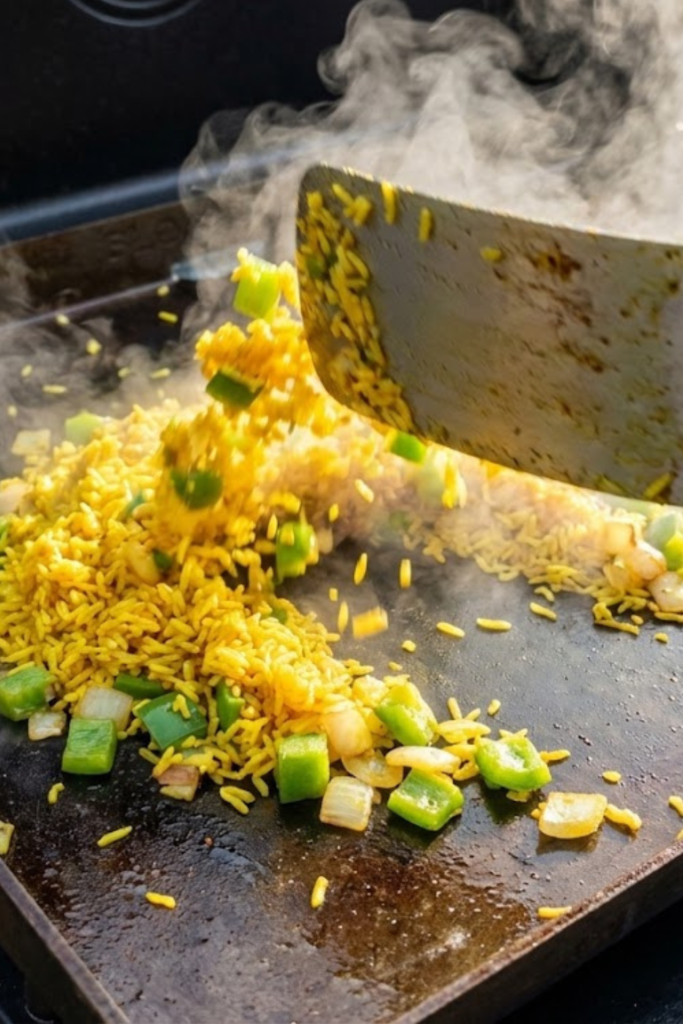
Here is where I feel like a hibachi chef. Dump your cold rice right on top of the spiced veggie mixture.
Now, use two spatulas to mix. I used to try doing this with one spatula and just ended up chasing rice grains off the edge of the griddle into the grease trap.
- Chop down into the rice to break up clumps.
- Fold the veggies over the rice.
- Repeat until every single grain is coated yellow.
This process, mixing the rice with the spices and oil, is what transforms plain white rice into authentic Blackstone griddle recipes magic.
The Final Steam
Sometimes, the rice can feel a little dry after sitting in the fridge. If that happens, I cheat a little.
I splash maybe a tablespoon of water onto the griddle (not directly on the rice, but next to it) and quickly cover the rice with a dome. The steam trapped inside fluff’s everything up in about 30 seconds.
Uncover it, give it one last toss, and kill the heat. You just survived the cook!
Serving Suggestions and Cooling Accompaniments
I love spicy food. I really do. But there was this one time I got a little too excited with the red chili powder while making these bowls. My friends were sweating, I was hiccups-level spicy, and we had nothing to cool the fire down. It was a disaster.
That’s when I learned that Indian fusion food isn’t just about the heat; it’s about the balance. If you serve these Blackstone Indian Spiced Rice Bowls straight up, they can be intense. You need cooling elements to make the meal enjoyable rather than an endurance test.
The Fire Extinguisher: Raita
If you haven’t made Raita before, you are missing out. It is basically a cooling yogurt sauce that acts as a fire extinguisher for your tongue.
I used to just buy a tub of plain Greek yogurt and plop it on the side. It was fine, but it wasn’t great. Now, I take five minutes to make a proper Raita recipe.
- Grate it: I grate a fresh cucumber and squeeze out the water (don’t skip the squeezing, or your sauce gets watery).
- Mix it: Stir it into plain yogurt with a pinch of salt and roasted cumin powder.
- Chill it: Keep it in the fridge until the rice comes off the griddle.
The contrast between the hot, spicy rice and the cold, creamy yogurt is honestly the best part of the meal. It makes the spices pop without burning your taste buds off.
Adding the Crunch Factor
Texture is huge for me. Mushy food makes me sad. Since the rice is soft and the veggies are tender, you need something crunchy on top to keep things interesting.
I usually sprinkle on “Sev.” If you aren’t familiar with it, Sev consists of tiny, crispy chickpea noodles you can find at Indian grocery stores or sometimes in the international aisle. It adds a salty crunch that reminds me of putting chips on a sandwich.
If you can’t find Sev, pomegranate seeds are a fantastic alternative.
- Sweet bursts: They add little bursts of sweetness that cut through the savory spice.
- Visuals: They look like little jewels on top of the yellow rice.
The Fresh Finish
I mentioned this before, but I need to hammer it home: the coriander garnish. I had a guest once who said they hated cilantro (it’s a genetic thing, I get it). But for everyone else, fresh cilantro is non-negotiable. The heat of the rice wilts the herbs slightly, releasing that fresh aroma.
And don’t forget the lime. I always slice up a few limes and toss them on the griddle for 30 seconds to char the cut side. Squeezing warm, charred lime juice over the finished bowl adds a smoky acidity that ties everything together.
What to Drink?
Finally, you need something to wash it all down. If I’m feeling fancy or the kids are asking for a treat, I’ll blend up a quick Mango Lassi (mango pulp, yogurt, milk, and sugar). It’s like a milkshake that cools you down.
But let’s be real—most weekends, I’m cracking open a cold lager. The crisp carbonation of a beer cuts through the rich Ghee and spices perfectly. Whatever you choose, make sure it’s ice cold. You’re going to need it!
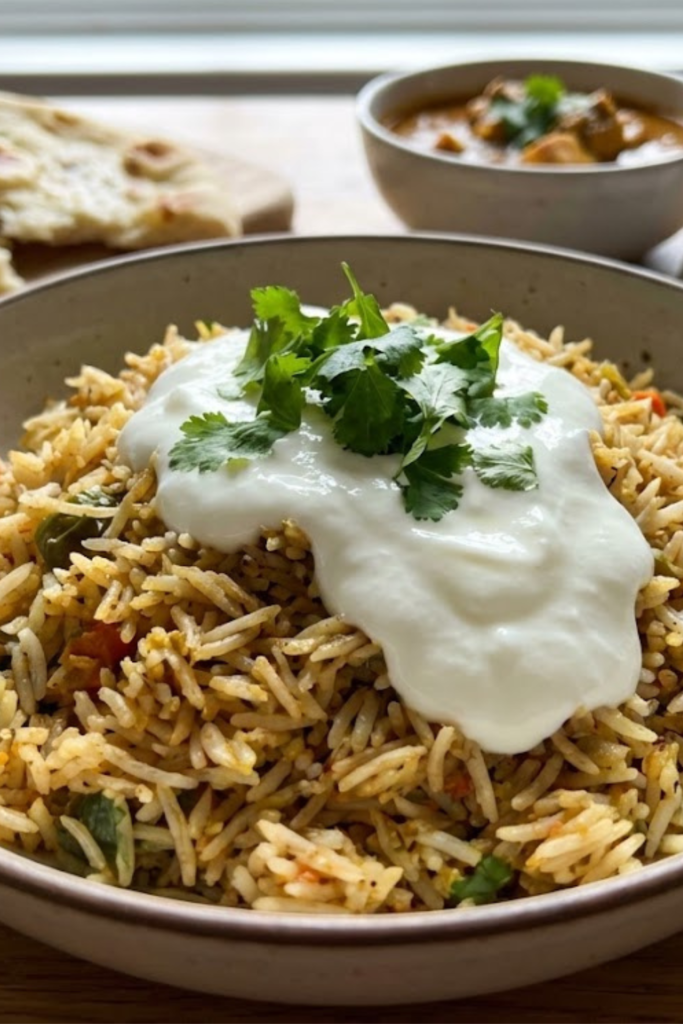
Honestly, once you start making these Blackstone Indian Spiced Rice Bowls, it is really hard to go back to the stovetop method. I remember standing in my kitchen last week, looking at my regular frying pan, and just thinking, “Nah, not today.” There is something addictive about the process—the open air, the sizzling sounds, and that incredible aroma drifting through the backyard.
It’s not just about the food, though the food is fantastic. It is about breaking out of the boring dinner rut. We all get stuck making the same three meals because they are easy. But this recipe proves that easy dinner ideas don’t have to be boring. You can have complex, restaurant-quality flavors in about 20 minutes flat. Plus, let’s be real, scraping one griddle clean is infinitely better than soaking three different pots and pans in the sink. That alone is a victory in my book.
If you are worried about the spice level or messing it up, don’t be.
- Start small: You can always add more chili powder later.
- Prep first: Just get your ingredients ready before you light the fire.
- Have fun: If the rice gets a little too crispy? Call it “Tahdig” and pretend you meant to do it.
Cooking should be fun, not stressful. This meal brings that joy back for me every single time. It’s warm, it’s comforting, and it feeds a crowd without breaking the bank.
So, go fire up that outdoor cooking station. Throw some cumin seeds on there and watch what happens. I promise you, your neighbors are going to be peeking over the fence wondering what smells so good.
If you enjoyed this guide and want to save it for your next cookout, please pin this recipe to your Blackstone or Dinner Ideas board on Pinterest! It helps me out a ton and keeps the recipe safe for when you’re craving that spice.