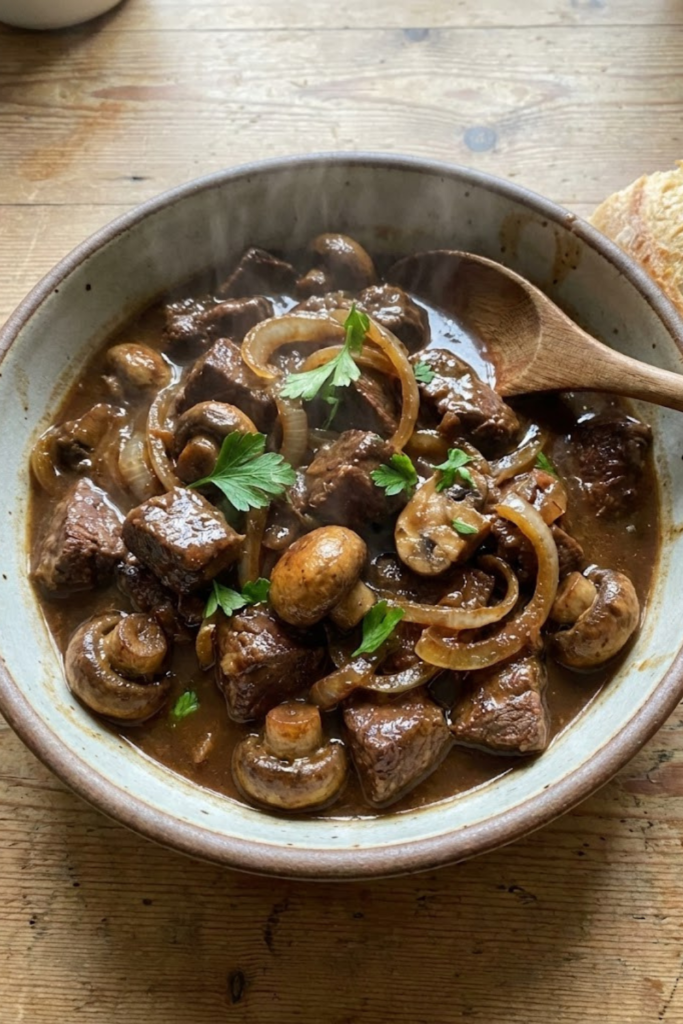
You know, there is nothing quite like a plate of hot, saucy beef tips to fix a bad day. But let me be real with you for a second. My first attempt at this classic comfort food was… let’s just call it a jaw workout. I stood there stirring a gray, watery mess, wondering why my “quick dinner” tasted like shoe leather. It was super frustrating! I wanted those tender, juicy bites I’d had at restaurants, but I just couldn’t crack the code.
I spent years tweaking my method. I burned onions. I made gravy that was basically glue. I made plenty of mistakes so you don’t have to! Eventually, I learned that the best ever beef tips don’t come from a fancy culinary degree. They come from using the right cut of beef—usually sirloin—and not overcrowding your pan. It sounds simple, but it changes everything.
When you finally nail that rich, brown gravy and the meat is falling apart, you feel like a rockstar. This recipe is my pride and joy. It’s got that deep, savory flavor that feels like a hug in a bowl. I’m going to walk you through exactly how to get that perfect sear and silky sauce without losing your mind. Trust me, if I can turn my kitchen disasters into this masterpiece, you can too. Grab your skillet, and let’s get cooking!
The Secret to Selecting the Right Beef
I used to think beef was beef. I’d walk into the grocery store, grab whatever package of red cubes was on sale, and toss it in my cart. Stew meat? Sure, why not. It all looks the same, right?
Boy, was I wrong. I remember this one Tuesday night vividly. I was trying to whip up a quick dinner, and I used a cheap package of generic stew meat for a quick pan-sear recipe. The result was absolutely tragic. We were chewing for what felt like hours. My jaw actually started to hurt! It was like trying to eat a rubber eraser that had been soaked in gravy.
I learned the hard way that not all cuts are created equal, especially for this beef tips recipe.
Why Sirloin is King Here
If you want the best ever beef tips that actually melt in your mouth, you have to be picky at the meat counter. Since this recipe cooks pretty fast—we aren’t braising it for six hours—you need a cut that is naturally tender.
My go-to is always sirloin tips or top sirloin. It’s the perfect balance of flavor and tenderness without costing as much as a filet mignon. If you are feeling fancy and the budget allows, beef tenderloin is incredible, but honestly, a good sirloin does the trick perfectly.
Please, I beg you, avoid the packages labeled just “stew meat” or “chuck” for this specific version. Those cuts come from the shoulder and need a long, slow cook time to break down the connective tissue. If you flash fry them in a skillet, they seize up and get tough. Save the chuck roast for your slow cooker Sundays!
Look for the Marbling
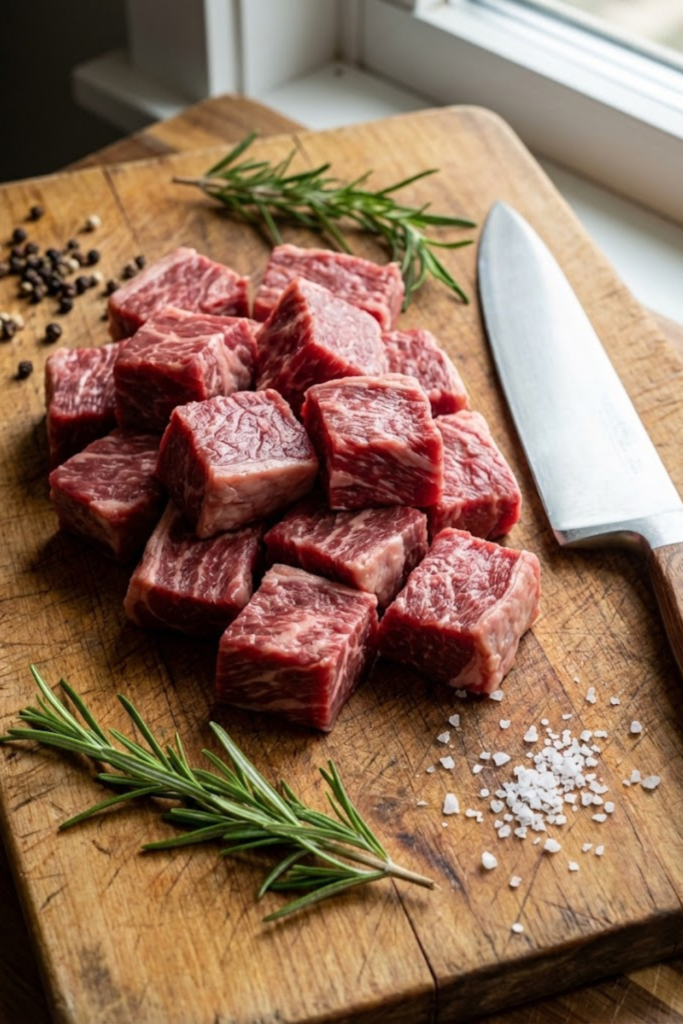
When you are staring at the steaks, look for the white flecks of fat inside the meat. That is called marbling, and it is basically flavor insurance. As the beef cooks, that fat renders down and keeps the tender beef bites juicy.
If the meat is totally lean and red, it might dry out faster than you can say “dinner’s ready.” I usually try to find a piece that has nice, even webbing of white fat throughout. It makes a huge difference in the final taste.
The Knife Work Matters
Once you get that beautiful steak home, don’t just hack at it. I made that mistake for years, too. You want to cut your cubes into bite-sized pieces, roughly the same size, so they cook evenly.
Here is a pro tip I picked up: cut against the grain. Look at the direction the muscle fibers run and slice perpendicular to them. This shortens the fibers and makes the meat feel even more tender when you chew it. It sounds like a small detail, but it really changes the texture.
Also, trim off any big, hard chunks of gristle on the outside. Nobody wants to bite into that! taking a few extra minutes to prep your sirloin steak properly means you won’t be fighting your food later. It turns a “meh” meal into something your family will actually ask for again.
Mastering the Sear for Maximum Flavor
I have a confession to make. For a long time, my beef tips looked like they were boiled in dirty water. They were gray, sad, and had absolutely zero texture. I used to dump the whole pile of meat into the pan at once because, honestly, I was usually in a rush to get dinner on the table.
That was a huge mistake.
I didn’t realize that by crowding the pan, I was trapping all the moisture. Instead of searing, the meat was steaming in its own juices. It was super frustrating because the smell was okay, but the taste was just… blah. I learned that if you want that deep, savory flavor, you have to respect the sear.
The Maillard Reaction is Real
You might have heard fancy chefs talk about the Maillard reaction. It sounds complicated, but it’s just a science-y way of saying “browning equals flavor.” That golden-brown crust that forms on the outside of the steak? That is where all the magic happens.
If you skip this step or rush it, you are missing out on the best part of the dish. It adds a richness that you just can’t get from the gravy alone. So, crank up the heat! You want that oil shimmering before the meat even touches the surface.
Choose Your Weapon: The Pan
Let’s talk equipment for a second. I used to use a flimsy non-stick skillet for everything. It was easy to clean, sure, but it was terrible for searing meat. It just couldn’t hold the heat well enough.
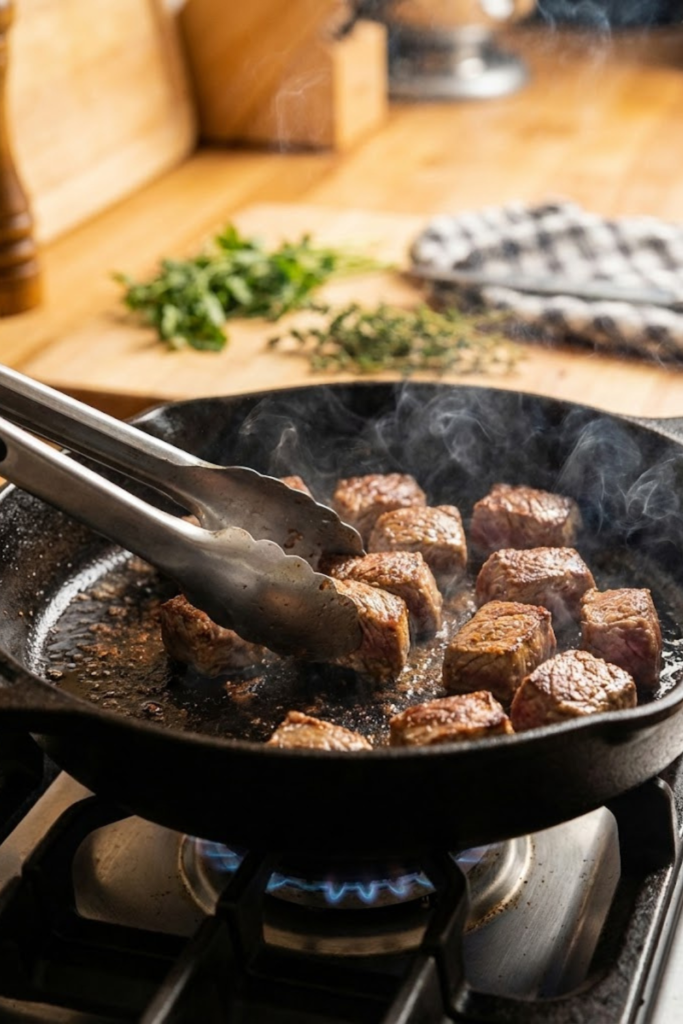
Now, I swear by my cast iron skillet. If you don’t have one, a heavy-bottomed Dutch oven works great too. These pans get hot and stay hot. When you drop the beef in, you want to hear an aggressive sizzle. If it’s a polite little hiss, your pan isn’t hot enough yet. Wait another minute. Trust me, it’s worth the wait.
Don’t Crowd the Party
This is the hardest part for me because I’m impatient. You have to cook the beef in batches. I usually do it in two or three rounds, depending on how much sirloin steak I have.
Leave some space between the cubes. They need room to breathe so the moisture can escape and the crust can form. If they are touching, they will steam.
I let them sit undisturbed for a minute or two. Don’t touch them! Let that crust build. When you flip them, they should release easily from the pan. If they stick, they might need a few more seconds.
Once a batch is browned, I move it to a plate and start the next one. It takes a little extra time, I know. But when you bite into that caramelized goodness later, you’ll be so glad you didn’t rush. Plus, all those little brown bits stuck to the bottom of the pan? That is liquid gold for our gravy later.
Creating the Perfect Brown Gravy
I used to be absolutely terrified of making gravy from scratch. For years, I relied on those little paper packets you buy at the store. You know the ones—you just add water and whisk. They were okay, I guess. But they always had this weird, salty aftertaste that I just couldn’t shake.
Then there was the “wallpaper paste incident” of 2018. I tried to make gravy with flour and got the ratios all wrong. It was thick, lumpy, and tasted like raw dough. My kids still tease me about it! But once I figured out the real trick to a rich brown gravy, I never looked back. It is so much easier than it looks, and the flavor? It’s on a whole other level.
It Starts with the “Fond”
Remember those brown bits stuck to the bottom of your cast iron skillet after searing the meat? Do not—I repeat, do not—wash them away! That stuff is called “fond,” and it is pure flavor concentrate.
After I take the beef out, I toss a little butter into that same pan. Then come the onions and mushrooms. As they cook down, they release water that helps lift those tasty brown bits off the bottom. It’s amazing how much flavor is hiding right there. If you skip this and use a clean pan, your mushroom gravy will taste flat. We want depth!
Building the Liquid Gold
Once the veggies are soft and smelling amazing, it’s time for the liquid. I usually go with a good quality beef broth. If I’m feeling fancy or have an open bottle, I’ll splash in a little red wine first to deglaze the pan. It makes the sauce taste like something from a high-end steakhouse.
But here is my secret weapon: Worcestershire sauce. Just a tablespoon or so adds that savory umami flavor that makes people go, “What is in this?” It cuts through the richness and balances everything out. Sometimes I even add a pinch of garlic powder or fresh thyme if I have it.
The Thickening Trick
Here is where I used to mess up. I would dump flour straight into the hot liquid. Big mistake. instant lumps.
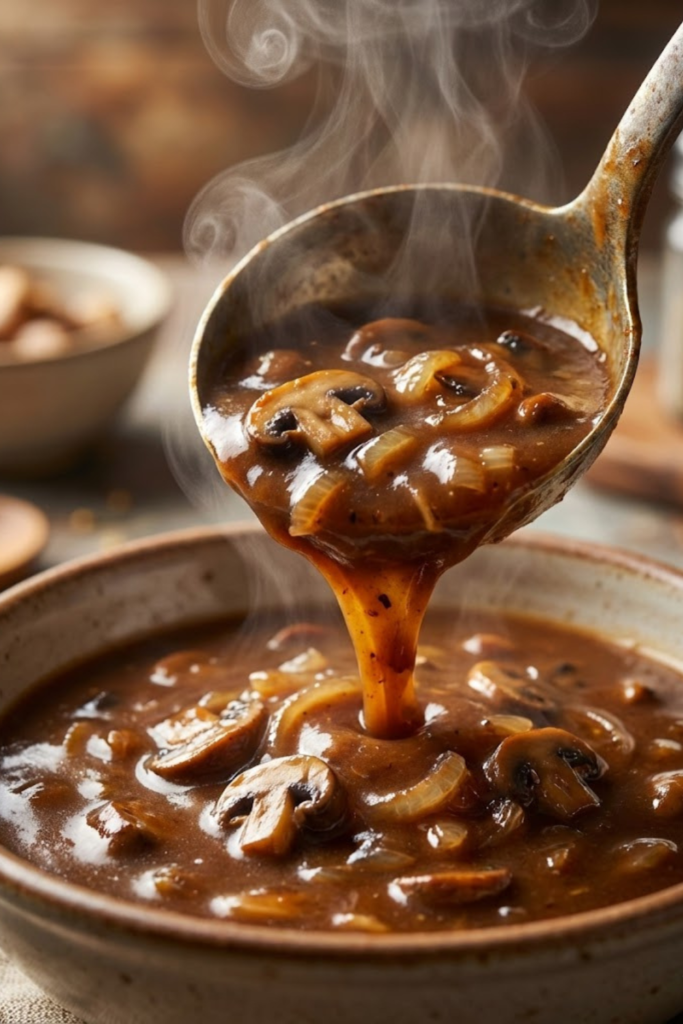
Now, I always make a cornstarch slurry. It sounds technical, but it’s just mixing cornstarch with a little cold water in a cup until it’s smooth. Then, you pour that into the bubbling broth while whisking. It thickens up almost instantly and stays glossy and smooth.
You want the sauce to coat the back of a spoon. If it’s too thick, add a splash more broth. Too thin? Let it bubble a bit longer. When you toss that seared tender beef back into this savory sauce, it coats every single piece perfectly. It is honestly the best part of the meal.
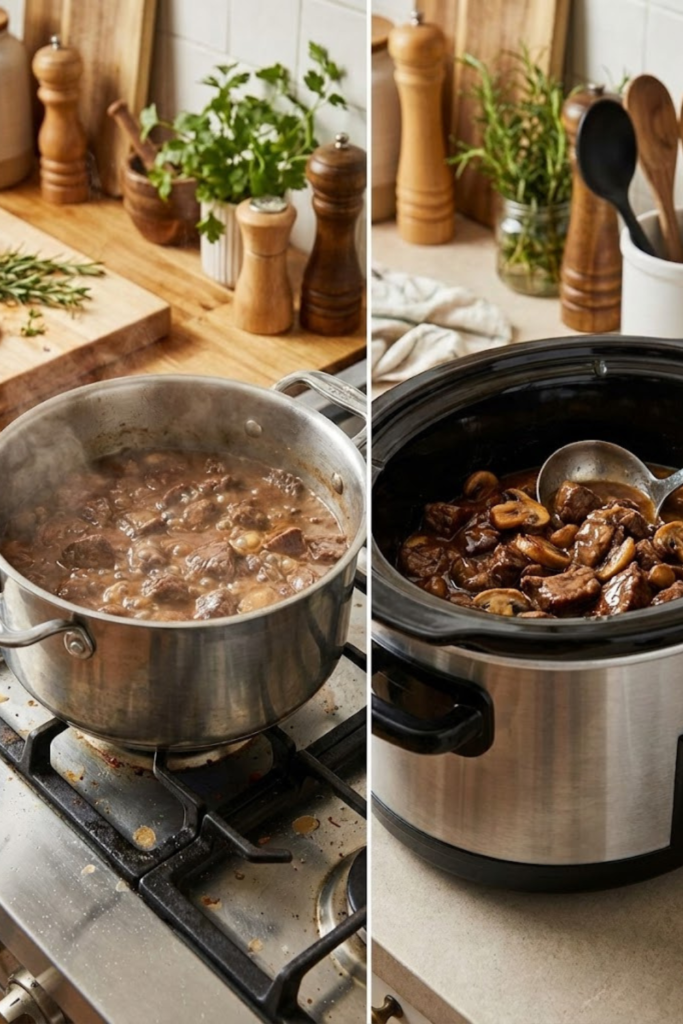
Slow Cooker vs. Stovetop: Which is Better?
This is the million-dollar question in my house. I have had days where my slow cooker was the only reason we didn’t eat cereal for dinner. But I’ve also had days where I completely forgot to set it up in the morning (we’ve all been there, right?) and needed food now.
I used to try and force the same recipe into both methods without changing anything. Big mistake. I once threw expensive sirloin tips into the crockpot for eight hours. When I came home, the meat was dry and stringy, not the juicy bites I was dreaming of. I was so bummed out! It turns out, the method you choose totally changes how you should shop and prep.
The Stovetop Sprint
If you are like me and often staring at the fridge at 5:00 PM wondering what to make, the stovetop method is your best friend. It is honestly the king of fast weeknight dinners. You can go from raw meat to “dinner is served” in about 30 minutes.
The best part about the stovetop is the control. You get that amazing crust from the sear that we talked about earlier. Since it cooks so fast, you have to use a tender cut like sirloin. If you try this with cheap stew meat, you will be chewing until next Tuesday.
The “Set It and Forget It” Ease
On the flip side, slow cooker beef tips are perfect for those crazy days when you know you won’t have time to cook later. There is something magical about walking into the house and smelling dinner already done. It feels like a gift from your past self.
For the crockpot, you actually want the tougher, cheaper cuts like chuck roast. Over 6 to 8 hours on low, that tough connective tissue breaks down and turns into jelly. It becomes incredibly soft. But here is a tip I learned the hard way: do not add as much liquid!
In a skillet, the broth evaporates and thickens. In a slow cooker, that liquid has nowhere to go. If you use the same amount of beef broth, you will end up with beef soup, not gravy. I usually cut the liquid by about half when I’m using the slow cooker.
What About the Instant Pot?
I know some of you love your pressure cookers. Instant Pot beef tips are kind of the middle ground. You can use the tough meat but cook it in an hour instead of eight. It’s great, but honestly? I still think the gravy tastes better on the stovetop.
So, which is better? It really depends on your schedule. If you have time to chop and sauté right before eating, stick to the skillet. It’s my personal favorite because of the texture. But if you need to feed a crowd without standing over a hot stove, the slow cooker wins every time. Just make sure you match the meat to the method!
Serving Suggestions: The Perfect Pairings
You have spent the last thirty minutes making the most incredible beef, so please, do not fumble the ball at the goal line with boring sides! I used to treat side dishes as an afterthought. I’d just throw some plain white bread on the table and call it a day. Honestly, it was a total disservice to the meal.
I quickly realized that for beef recipes like this, the “vehicle” you choose for the sauce is just as important as the meat itself. You need something that can stand up to that rich, savory gravy without getting lost.
The Undisputed Champion: Mashed Potatoes
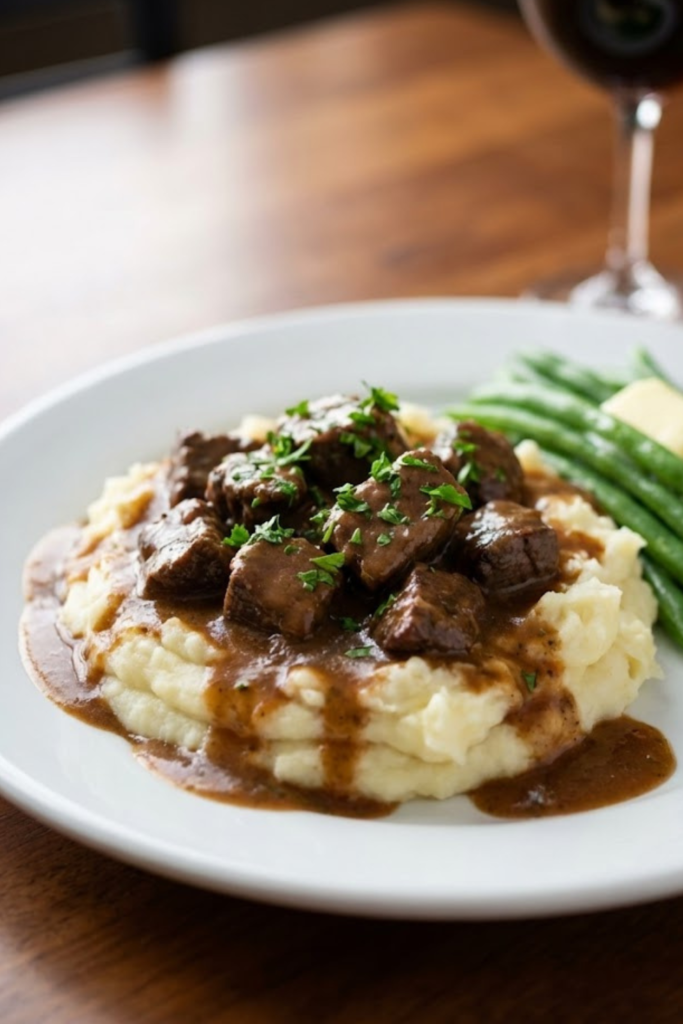
Let’s be real. Is there anything better than a crater of mashed potatoes side filled with hot gravy? I don’t think so. It is the ultimate comfort food combo.
I tried to use those boxed instant potatoes once when I was in a rush. My family ate them, but the look of disappointment on their faces was real. The texture was just… gritty. Since then, I always take the time to boil actual potatoes. It doesn’t have to be fancy! Just smash them with plenty of butter and a splash of milk.
When you scoop a spoonful of those creamy potatoes mixed with the tender beef and salty sauce, it’s pure magic. It turns a regular dinner into something that feels like a holiday meal.
The Noodle Alternative
If I am not in the mood to peel potatoes (which happens more often than I’d like to admit), egg noodles are my backup plan. They are super cheap and cook in like six minutes.
There is something about those wide, curly noodles that just grabs onto the sauce perfectly. My grandmother used to serve her beef tips this way, so it always tastes like nostalgia to me. Just make sure you don’t overcook them, or they turn into mush. I like to toss them with a little butter and parsley before serving so they don’t stick together.
Don’t Forget the Green Stuff
Okay, we have meat, gravy, and carbs. It’s a lot of brown and white on the plate. To avoid the “beige dinner” syndrome, I always add something green. It helps cut through the richness of the brown gravy.
My go-to is roasted green beans with a little garlic salt. They add a nice crunch that balances out the soft meat and potatoes. A simple garden salad with a vinaigrette works great too. It makes me feel a little better about eating a second helping of steak!
Rice Pilaf for a Change
Sometimes, I want to switch it up and serve this over rice pilaf. The rice soaks up the beef broth flavor really well. It’s a nice change of pace if you are burned out on potatoes. Plus, it’s great for soaking up every last drop of that liquid gold so nothing goes to waste.
Look, making restaurant-quality food at home doesn’t have to be scary . I know I talked a lot about technique, but at the end of the day, it’s just meat and gravy. Once you get that sear right and stop crowding the pan, the rest is a cakewalk.
These beef tips have saved my bacon on so many busy nights when I needed easy dinner ideas . It’s one of those family meals where everyone actually clears their plate without arguing. No more complaining about chewy meat or bland sauce! It feels pretty good to serve something that tastes this expensive but costs a fraction of the price .
I really hope you give this a shot. Even if you’ve messed it up before (like I did many times), this method works. You are going to love having this comfort food classic in your rotation . You got this!
Did this recipe make your mouth water? Don’t lose it! Pin this image to your Dinner Ideas board on Pinterest so you have it for later!