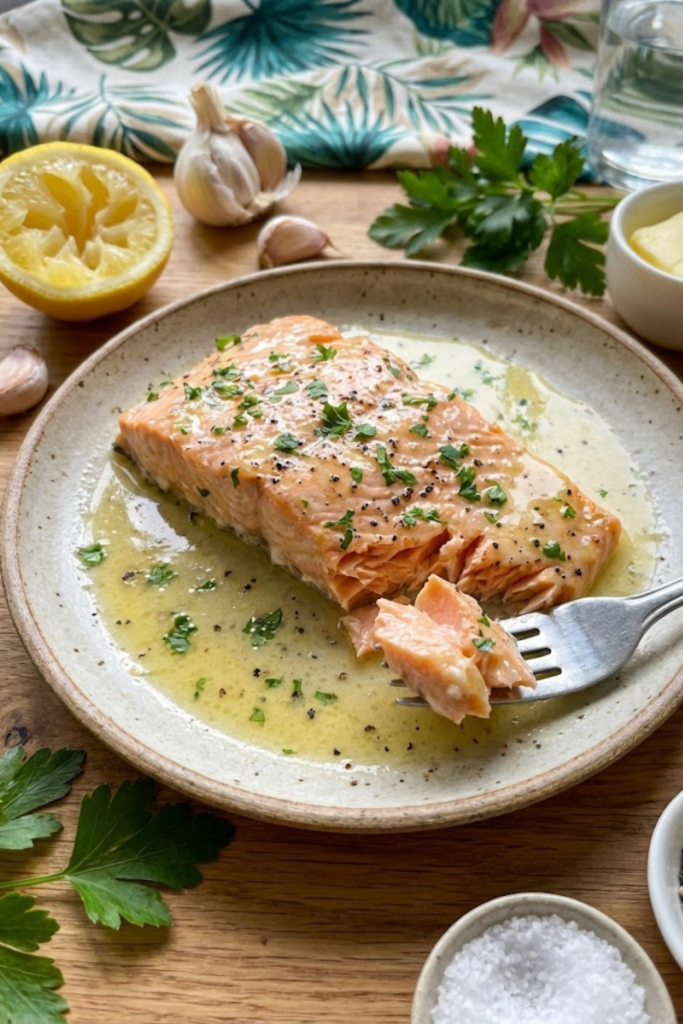
Did you know that salmon is now the second most popular seafood in America, only trailing behind shrimp? I honestly used to be terrified of cooking it. I’d always end up with something dry and sad that looked more like a pink eraser than a meal! But after years of trial and error in my own kitchen, I finally cracked the code to the most succulent baked salmon with lemon butter sauce. It’s fast. It’s vibrant. It’s basically a hug on a plate. Today, I’m sharing everything I know so you can skip the “eraser” phase and go straight to chef-level status.
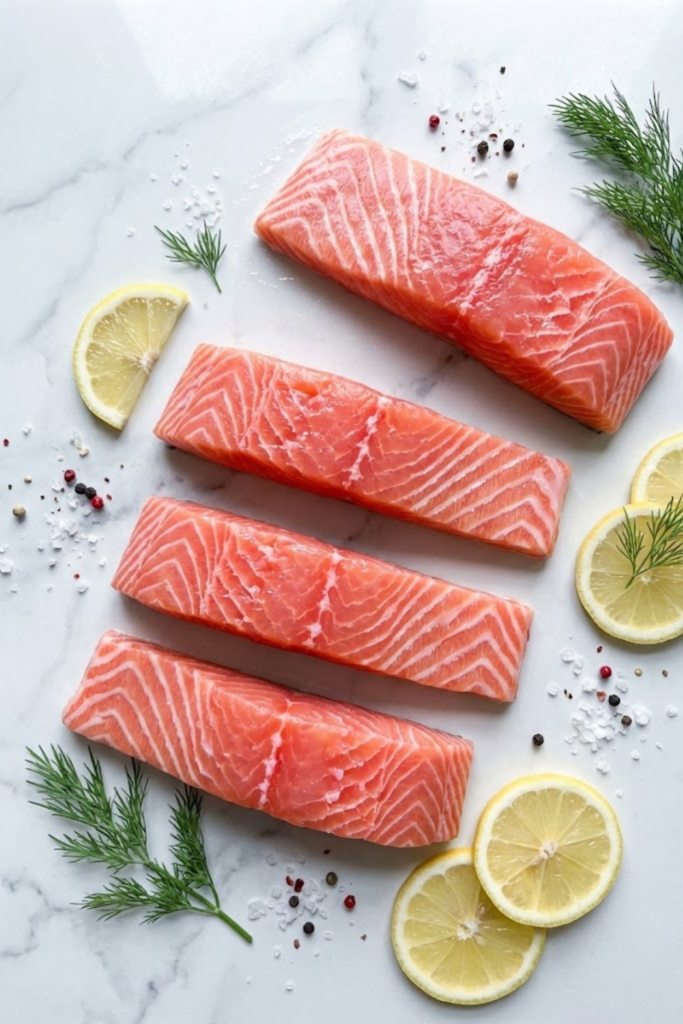
Choosing the Best Salmon Fillets for Baking
Picking out the right fish at the grocery store is where most people mess up before they even turn on the stove. I remember this one time I went to a discount shop and bought what I thought was a total “steal.” The fillet looked a bit pale, but I figured my lemon butter sauce would save it. Huge mistake. That fish ended up tasting like absolutely nothing and had the texture of wet cardboard. It didn’t matter how much butter I poured on it! Since then, I’ve learned that the quality of your salmon is about 80% of the battle. If you start with bad fish, you’re gonna have a bad dinner, no matter how good of a cook you are.
Wild vs. Farmed: Which One Wins?
You’ll see a lot of debate about this, but here is my honest take for home cooks. If you’re just starting out, farmed Atlantic salmon is actually a lot easier to cook. It has more fat, which means it stays juicy even if you accidentally leave it in the oven a minute too long. Wild-caught fish like Sockeye or Coho have a way better flavor—real deep and rich—but they are much leaner. If you blink, they’re overcooked and dry. For this specific recipe, I usually grab a nice piece of King salmon if I can find it because it has the best of both worlds, but it can be a bit pricey for a Tuesday night.
Don’t Be Afraid of the Freezer
A lot of folks think “fresh” is always better, but that’s a bit of a trick. Unless you live right on the coast, that “fresh” fish in the glass case was probably frozen and thawed out anyway. I actually prefer buying the vacuum-sealed frozen fillets. They are usually flash-frozen right on the boat as soon as they’re caught. This keeps them tasting way better than something that’s been sitting in a display case for three days. Just make sure you thaw them out in the fridge the night before you want to eat.
The “Nose Test” and Other Tips
When you are looking at the fish, it should be bright in color and look “tight,” not like the flakes are already pulling apart. And don’t be shy—give it a sniff! Fresh fish should barely smell like anything, maybe a little bit like the ocean. If it smells “fishy” or like ammonia, put it back. Also, try to get pieces that are the same thickness. This helps make sure they all finish cooking at the same time so nobody gets a raw piece.
Prepping Your Salmon for Maximum Flavor
Prepping the fish is something I used to think was a waste of time. I would just grab the salmon out of the package and throw it right in the pan. I thought the heat would do all the work for me! But I learned the hard way that a few minutes of work before the oven makes a huge difference. One night, I was in a big rush and skipped the drying part. The salmon basically boiled in its own juices and the skin was slimy. It was pretty gross. If you want that perfect texture, you have to follow these simple steps first.
Dry Your Salmon Like a Pro
This is the most important step that people skip. You need to get some paper towels and pat those fillets until they are bone dry. I mean really dry. Moisture is the enemy of a good bake. If there is water on the surface, it turns into steam in the oven. Steam makes your fish mushy instead of flaky. I usually use about three paper towels per piece of fish. I press down gently to make sure I get all the liquid off the skin and the top. It takes an extra minute, but it is the difference between a boring dinner and a great one.
Don’t Cook It Straight From the Fridge
Another thing I learned from a friend who is a great cook is to let the fish sit on the counter for a bit. If you put a cold piece of fish in a hot oven, the outside gets done way faster than the inside. I usually pull my salmon out about 15 or 20 minutes before I am ready to cook. This lets it get closer to room temperature. It makes the cooking way more even so you do not end up with a burnt crust and a raw middle.
Simple Seasoning Goes a Long Way
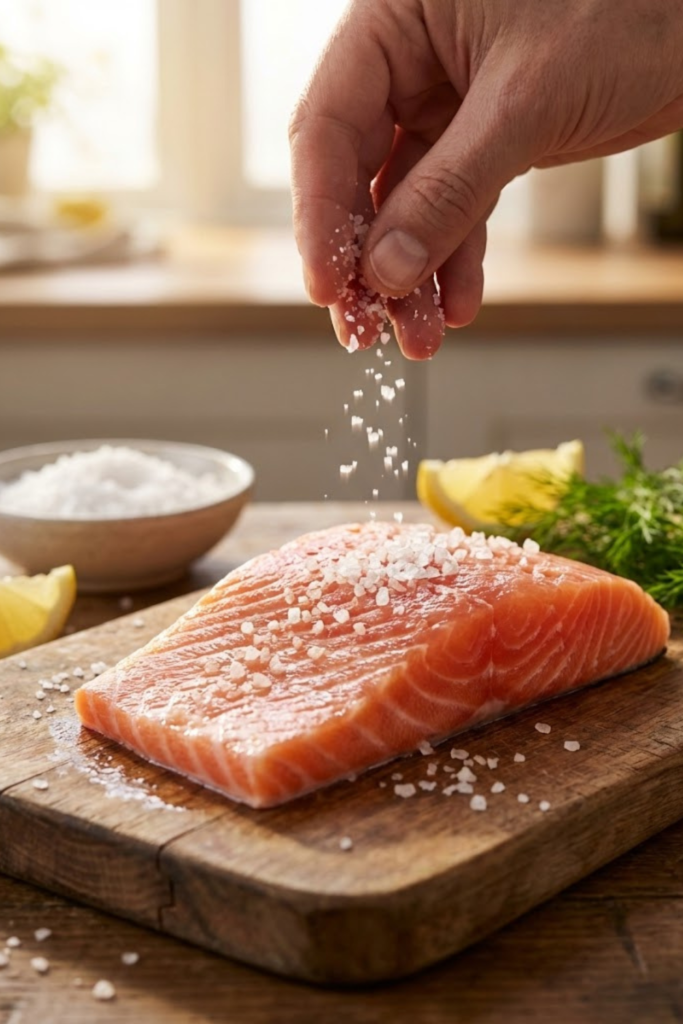
I used to try and use twenty different spices, but honestly, salt and pepper are the best. I use kosher salt because the flakes are bigger and easier to see as you sprinkle. Be generous! You want to season both sides. I also like to use plenty of cracked black pepper. The lemon butter sauce adds so much flavor later that you do not want to crowd the fish with too many other dried herbs right now. Just keep it simple and let the salmon shine. It helps the sauce taste even better at the end.
Crafting the Silky Lemon Butter Sauce
If I’m being totally real with you, the sauce is the part that used to stress me out the most. I’ve probably made a hundred sauces that ended up looking like a greasy mess or just tasting like straight vinegar. One time, I tried to make this for my parents, and I accidentally used salted butter and then added way too much extra salt. It was like eating a salt lick! I felt so bad. But after a lot of practice, I found out that a good lemon butter sauce doesn’t need to be fancy or hard. It just needs a little bit of patience and the right ingredients.
The Magic of Real Butter and Fresh Lemons
First off, please do not use that lemon juice that comes in the little plastic yellow squeeze bottle. Just don’t do it. It has this weird chemical aftertaste that stays in your mouth way too long. Go to the store and buy two or three real lemons. You want that bright, zingy flavor that only comes from the real thing. Also, I always tell people to use unsalted butter if they can find it. It lets you control exactly how much salt goes in. If you use the cheap salted stuff, you might end up with a sauce that’s way too salty, and you can’t really fix that once it is melted and mixed.
Why You Must Watch the Garlic
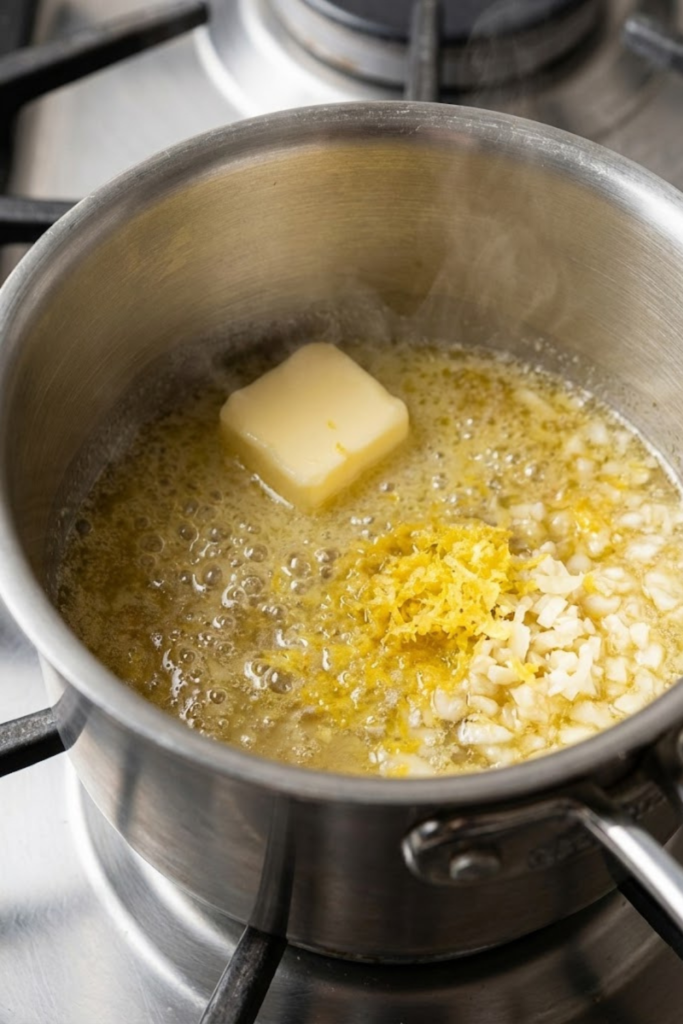
I love garlic. I think I would put it on cereal if I could! But garlic is super sensitive. If you have your pan too hot, the garlic turns brown and bitter in about ten seconds. I’ve ruined so many pans of sauce because I walked away to check my phone or help with my kids’ homework. You want to melt the butter on low heat and just let the garlic hang out in there until it smells amazing. It shouldn’t change color much. If it turns dark brown, just throw it out and start over. It is worth the five minutes to do it right so your salmon doesn’t taste like burnt toast.
Whisking it All Together
Once your butter is melted and the garlic is soft, you slowly add your lemon juice. I like to use a little whisk to keep everything moving. If you just dump it in and leave it, the fat and the juice might stay separate. You want them to get along and become one smooth liquid! I usually add a pinch of fresh parsley at the very end just to make it look pretty. It’s a simple sauce, but it makes that salmon taste like you spent all day in the kitchen. Just remember to keep the heat low and you will be just fine.
Baking Instructions and Internal Temperatures
Listen, I’ve messed up more pieces of fish than I care to admit. One time, I got so distracted by a phone call that I left my fillets in the oven for thirty minutes. They came out looking like pieces of driftwood! It was a total disaster. My kids wouldn’t even touch it, and honestly, I don’t blame them. Since then, I’ve become a bit of a stickler for timing. When you’re making baked salmon with lemon butter sauce, the oven temp is your best friend or your worst enemy. I like to crank mine up to 400 degrees. Some people say go lower, but I think the high heat helps lock in those juices. You want that “sizzle” the moment the pan hits the rack.
Why High Heat Works Better
I used to think that “low and slow” was the way to go for everything. Boy, was I wrong about fish. If you cook salmon at a low temperature, it takes forever, and the white stuff—which is called albumin—starts leaking out everywhere. It looks like white goo and makes the fish look kinda unappetizing. When you use 400 degrees, the outside gets a nice little crust and the inside stays tender. Just make sure you put your rack in the middle of the oven so the top doesn’t burn before the middle is cooked through. If you put it too high, you’re gonna have a smoky kitchen and a raw dinner.
Trust the Thermometer, Not Your Eyes
I used to think I could just “feel” when it was done by poking it with my finger. Big mistake! Now, I always use a meat thermometer because it’s the only way to be 100% sure. You want to pull that fish out when it hits 135 degrees. Most folks think 145 is the goal because that’s what the government says, but the fish keeps cooking after you take it out. If you wait until 145 in the oven, it’ll be dry by the time you sit down to eat. Just let it rest for five minutes on the counter and it will reach that perfect temperature on its own.
The Easy Flake Test
If you don’t have a gadget to measure the temp, don’t panic. You can use a fork. Just gently poke the thickest part of the salmon and twist it a little bit. If it flakes apart easily, it is probably ready to go. If it feels rubbery or resists the fork, it needs another minute or two. Just don’t walk away to fold laundry or something! A single minute can be the difference between a juicy meal and a dry one. It’s better to check it early than to realize you’ve turned your expensive dinner into fish jerky.
Bringing it All Together for the Perfect Meal
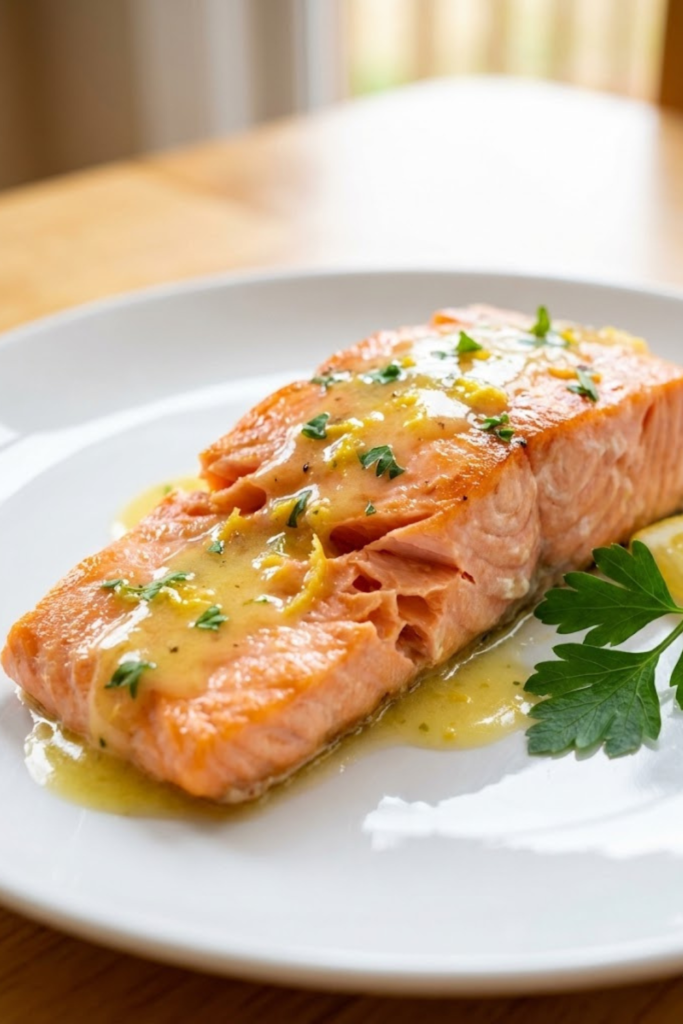
Honestly, after years of trying to figure out the “secret” to a good dinner, I’ve realized it isn’t about having fancy tools or expensive spices. It is just about paying attention to the small things. This baked salmon with lemon butter sauce has become my go-to move whenever I have friends coming over or when my family has had a really long day. It’s funny because I used to be so scared of fish, but now it’s the easiest thing I make. Once you get the hang of it, you’ll be able to get this whole meal on the table in less than twenty minutes. That is faster than you can get a pizza delivered!
Don’t Sweat the Small Stuff
If your first try isn’t 100% perfect, don’t worry about it. Maybe you left it in the oven thirty seconds too long or you used a bit too much lemon. It’s still going to taste better than something from a box. My kids always tell me that the best part is the sauce anyway, so as long as you have that butter and garlic going, you are winning. I usually serve mine with some simple steamed broccoli or maybe some rice to soak up all that extra sauce. There’s nothing worse than seeing good lemon butter go to waste on the bottom of a plate!
Why This Recipe Stays in My Rotation
I think the reason I keep coming back to this is because it feels healthy but it still tastes like a treat. You get all those good fats from the salmon, but the butter makes it feel like you are eating at a five-star restaurant. It’s one of those rare meals where I don’t have to argue with anyone to eat their protein. If you are looking for a way to start eating more seafood without it feeling like a chore, this is definitely the place to start. Just keep your thermometer handy and remember to pat that fish dry!
I really hope this guide helps you feel more confident in the kitchen. Cooking shouldn’t be stressful; it should be a way to show some love to the people around you. If you give this a try and love it, please let me know! And hey, if you want to save this for later or show your friends, please save the image below and share it on Pinterest! It really helps me out and helps other people find these easy recipes too. Happy cooking!