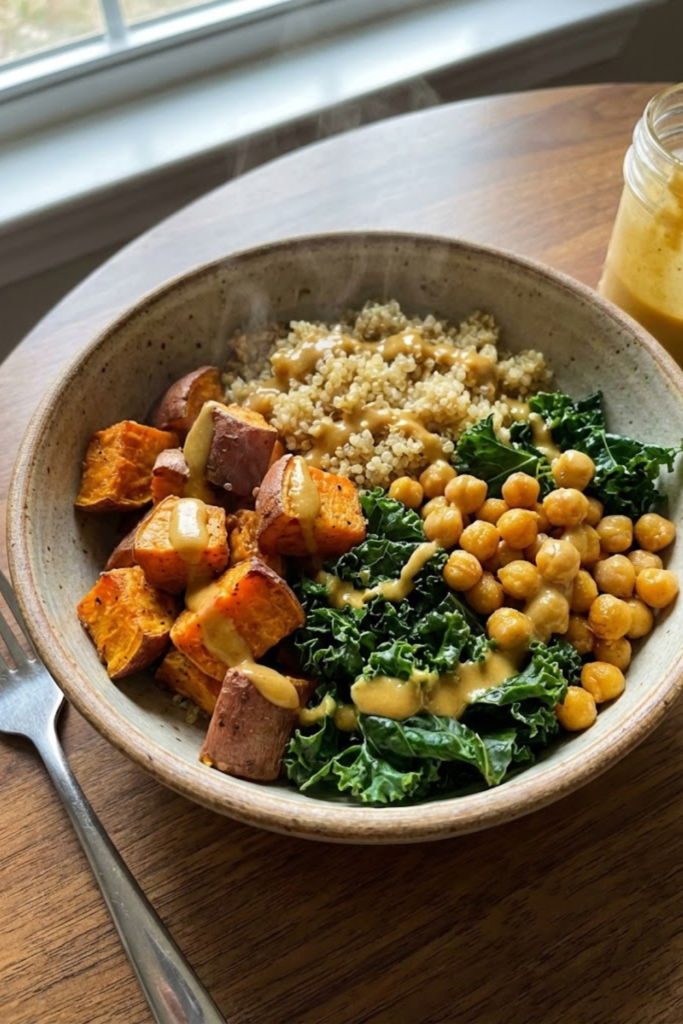
You know that specific feeling when the air turns crisp and you suddenly want to wear oversized sweaters? That is exactly when I start craving these bowls! There is something magical about combining the earthiness of quinoa with the sweetness of roasted fall vegetables. Did you know that quinoa is one of the few plant foods that offer a complete protein profile, containing all nine essential amino acids? It’s true!
We are going to dive deep into making these Autumn Glow Quinoa Bowls today. It is not just a salad; it is a warm hug in a bowl. I’ve made this recipe a hundred times, and it never fails to impress at dinner parties or just for a quiet lunch alone. Let’s get cooking!
Why You’ll Love These Plant-Based Autumn Bowls
Look, I have to be honest with you. For the longest time, I thought “grain bowls” were just glorified bird food. I’d see people eating them and think, “There is no way that is actually filling.” Boy, was I wrong.
The first time I tried to make a vegan harvest bowl, I made a huge rookie mistake. I didn’t season the quinoa. It tasted like wet cardboard, and I almost swore off the whole concept right then and there. But after tweaking this recipe and actually roasting the veggies until they got those crispy, caramelized edges? Total game changer.
Now, this recipe is in my weekly rotation, especially when the weather starts cooling down. It’s not just about the taste; it’s about how it makes you feel. You aren’t just eating a salad; you are fueling your body with some serious goodness.
Serious Nutrient Density Without the Crash
We all know that feeling after eating a heavy pasta dish where you just want to nap for three hours. This isn’t that. When you combine fluffy quinoa with kale and sweet potatoes, you are getting a massive hit of Vitamins A, C, and K.
It’s like a natural energy drink but without the jitters. I noticed that when I eat these nutrient-dense meals for lunch, I don’t get that 3 PM slump. The complex carbs keep you full, but light on your feet. It’s actually kind of wild how much difference a good lunch makes.
A Meal Prep Life Saver
I am not the type of person who enjoys cooking a full meal every single night. Who has time for that? The beauty of these superfood grain bowls is that they are practically designed for meal prep.
I usually roast a huge tray of veggies on Sunday afternoon while listening to a podcast. The ingredients hold up incredibly well in the fridge for about 4 to 5 days. In fact, I think the kale actually tastes better after sitting in the dressing for a bit—it gets softer and less… aggressive. If you are looking for meal prep lunch bowls that don’t get soggy and sad by Wednesday, this is it.
Totally Customizable to Your Fridge
Let’s be real, sometimes you open the fridge and realize you forgot to buy the specific squash the recipe calls for. Don’t sweat it. This recipe is super forgiving.
I’ve made this with butternut squash, carrots, and even roasted beets when I was feeling adventurous (though fair warning, beets will turn your whole bowl pink). It’s one of those healthy fall dinner ideas that works with whatever you have on hand. It’s a great way to reduce food waste, too. Just toss in whatever root veggies are looking a little lonely in the crisper drawer.
The Texture is Everything
The problem with a lot of healthy food is that it’s all one texture. Mushy. But here? You get the soft, sweet potato, the fluffy grain, and then—my favorite part—the crunch.
Please, do not skip the toasted seeds or nuts on top. I usually throw on some pumpkin seeds (pepitas) or walnuts. It gives it that necessary crunch that tells your brain, “Hey, we are eating real food here!” It’s a texture party, and everyone’s invited.
Essential Ingredients for the Perfect Fall Harvest Bowl
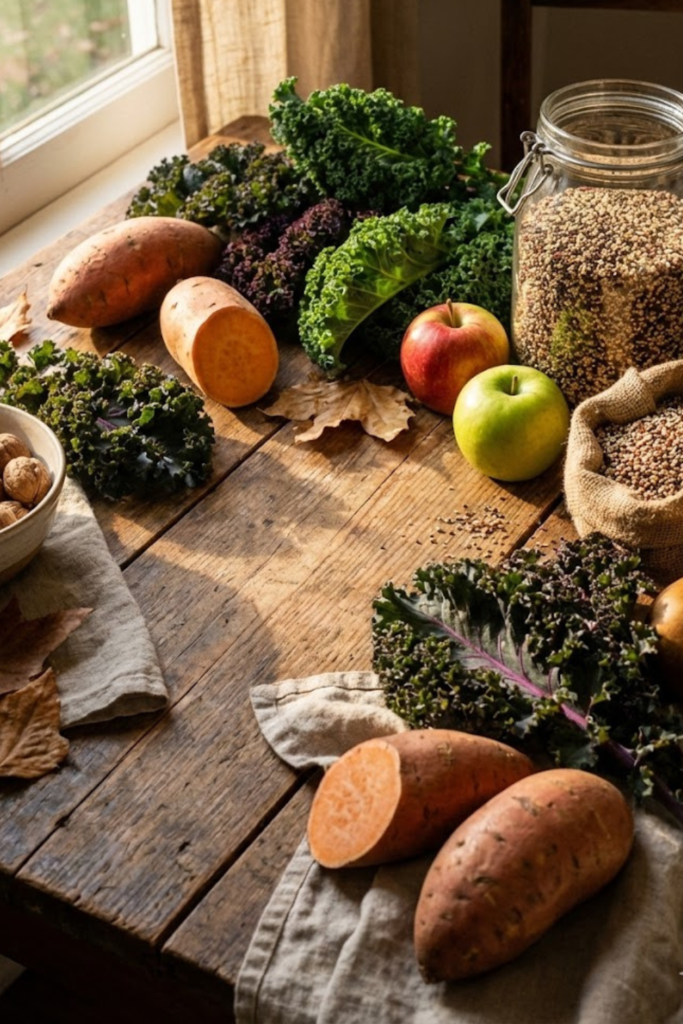
Okay, let’s talk groceries. I used to be that person who would just grab whatever looked okay in the produce aisle, but I learned the hard way that quality ingredients actually matter here. You don’t need to buy the most expensive stuff, but picking the right varieties makes a huge difference.
When I first started making healthy grain bowls, I didn’t pay attention to the details. I used the wrong kale, didn’t rinse my grains, and honestly? The result was pretty mediocre. Here is exactly what you need to grab to make this actually taste good.
The Base: It’s All About the Quinoa
You might think all quinoa is created equal, but it’s really not. For this recipe, I strictly use tri-color or red quinoa. Why? Because white quinoa tends to get a bit mushy if you overcook it even by a minute.
The darker varieties hold their shape better and have a nuttier flavor that stands up to the roasting. Also, please listen to me on this one: rinse your quinoa! I once skipped this step because I was lazy. The whole dish tasted bitter because of the saponin coating.
It was a total dinner fail. Now, I always rinse it in a fine-mesh strainer until the water runs clear. It’s one of the best quinoa cooking methods to guarantee a good flavor.
The Roasted Veggies
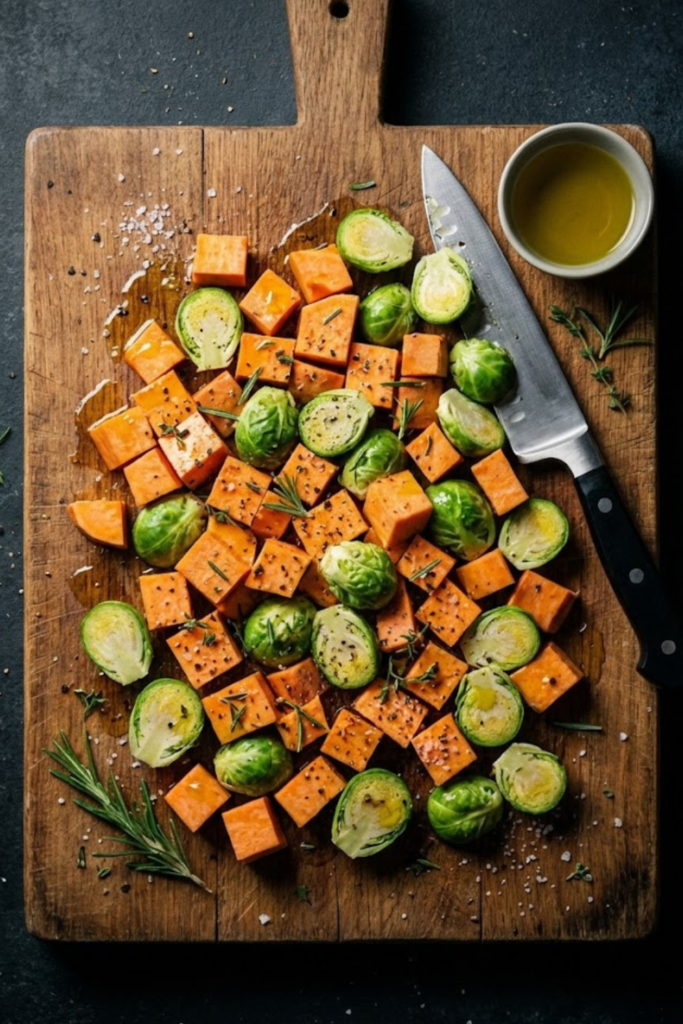
Sweet potatoes are the MVP of this dish. I’ve tried regular potatoes, but they just don’t give you that “autumn” vibe. You want the sweetness to contrast with the savory dressing.
When chopping your fall harvest ingredients, try to keep the cubes the same size, roughly one inch. I used to chop them haphazardly, and I’d end up with some burnt crispies and some raw, hard chunks. Not fun to eat. If you aren’t a fan of sweet potatoes, butternut squash is a solid backup, though it’s a pain to peel.
The Greens: Massage Your Kale
Yes, I know how weird “massaging kale” sounds. I rolled my eyes at it for years. But if you are using raw kale in a massaged kale salad, you have to break down those tough fibers.
I usually strip the leaves off the thick stems (throw those stems in a smoothie or compost them) and rub the leaves with a tiny bit of olive oil and salt. If you skip this, it feels like you are chewing on leather. If you absolutely hate kale, spinach works, but it gets soggy way faster if you plan to keep leftovers.
The Protein Boost
To keep these high protein vegan meals filling, I rely heavily on chickpeas. Canned is totally fine—I barely ever soak my own beans. Just make sure you drain and rinse them really well to get rid of that metallic can taste.
If you are cooking for meat-eaters, shredded rotisserie chicken is an easy add-in. But honestly, even my husband, who usually asks “where’s the meat?”, is totally satisfied with the chickpeas in this. They get nice and crispy in the oven.
Mastering the Maple Tahini Dressing
I used to be the person who had five different bottles of expired salad dressing in the fridge door. You know, the ones that are mostly preservatives and sugar? But once I realized how easy it is to make a maple tahini dressing recipe at home, I stopped buying the bottled stuff completely.
This dressing is honestly “liquid gold.” It ties the whole bowl together. However, I have definitely messed this up a few times, so let me save you the trouble.
The Tahini Struggle is Real
Not all tahini is created equal. The first time I bought it, I just grabbed the cheapest jar I could find. It was rock hard at the bottom and separated at the top.
I literally bent a spoon trying to stir it. It was a disaster. If you can, look for “creamy” or “pourable” tahini, usually found in the international aisle or health food section. If you do get stuck with the hard stuff, you really have to put some muscle into stirring it before you measure it out. Otherwise, your dressing will be gritty, and nobody wants that.
Finding the Balance
This sauce needs to be the perfect mix of sweet, savory, and acidic. I use pure maple syrup—please don’t use the fake pancake syrup, it just tastes like chemicals here—and fresh lemon juice.
When I first started making dairy-free creamy dressing, I was too heavy-handed with the lemon. It was so sour it made my eyes water. Start with less than you think you need. You can always add more acid, but you can’t take it out. I usually stick to a 2:1 ratio of fat (tahini) to acid (lemon).
The Magic Trick: Emulsification
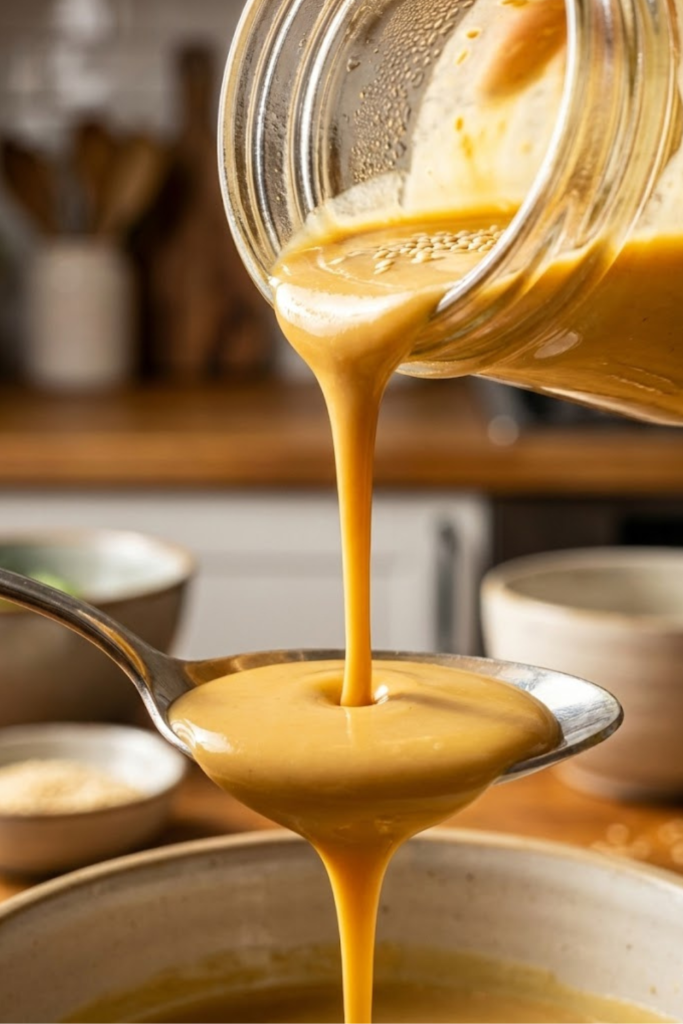
Okay, this is the part where everyone panics. When you first mix the lemon juice into the tahini, it’s going to seize up. It turns into this thick, clumpy paste that looks ruined.
Do not throw it away! I almost did this once, thinking the tahini had gone bad. The secret to a smooth lemon garlic tahini is ice-cold water. Add the water one tablespoon at a time while whisking like crazy. Suddenly, it will relax and turn into a smooth, creamy sauce that looks like dairy. It’s actually pretty satisfying to watch.
Flavor Boosters
While the basic recipe is great, I like to jazz it up sometimes. Since we are doing an autumn theme, adding a pinch of turmeric is a great move. It turns the dressing a beautiful golden color and makes it a perfect addition to anti-inflammatory diet recipes.
Just be careful with turmeric; I have stained more than one white t-shirt while whisking this turmeric tahini sauce. Fresh grated ginger is also amazing here if you want a little bit of heat. It really wakes up the roasted vegetables.
Step-by-Step: Roasting Vegetables for Maximum Flavor
I have set off my smoke detector more times than I care to admit trying to get the perfect roast. For years, my veggies were either burnt to a crisp or sadly soggy. I just couldn’t figure out the middle ground.
Roasting seems simple, right? You just throw stuff in the oven. But there is actually a bit of a science to getting that perfect roasted vegetable medley without turning your kitchen into a smokehouse.
The Temperature Sweet Spot
Here is the biggest mistake I see people make: roasting at too low of a temperature. If you set your oven to 350°F, you are basically just baking the vegetables slowly. They get soft, but they don’t get caramelized.
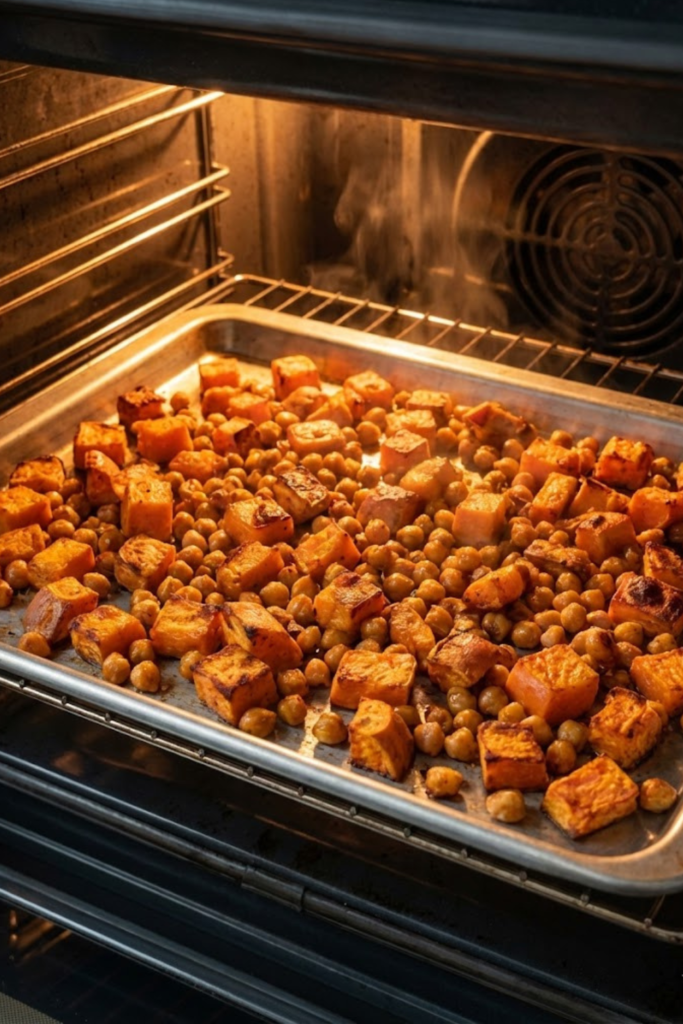
You need to hit 400°F (200°C). That is the magic number. At this heat, the natural sugars in the sweet potatoes and squash start to brown and get delicious. This turns simple ingredients into healthy comfort food. Trust me, crank that dial up.
Give Them Personal Space
I used to dump everything onto one tiny baking sheet because I hate doing dishes. Big mistake. When you pile roasted root vegetables on top of each other, they release water as they cook.
Instead of roasting, they steam in their own juices. The result is mushy, wet vegetables. Not appetizing. I learned to spread them out in a single layer. If you need two baking sheets, use two baking sheets. It’s worth the extra scrubbing later to get those crispy edges.
Seasoning is More Than Salt
Salt and pepper are fine, but we are making autumn bowls here. We need flavor! I love using warming spices to really lean into the season.
Try tossing your sweet potatoes in a little cinnamon and cumin. It sounds weird, but cinnamon roasted veggies are incredible in this bowl. The savory cumin balances out the sweet cinnamon, so it doesn’t taste like dessert. Smoked paprika is another favorite of mine for a little bit of a “meaty” depth without the meat.
The Patience Game
Don’t just put them in and walk away for an hour. I’ve burned way too many trays doing that. You usually need about 25 to 30 minutes total.
Halfway through, around the 15-minute mark, open the oven and give the pan a shake or use a spatula to flip the veggies. This helps them cook evenly on all sides. It’s annoying to interrupt your Netflix show to do this, I know. But it’s the difference between “meh” veggies and restaurant-quality food.
Assembling Your Autumn Glow Bowl
I have to admit something embarrassing. When I first started making these, I would just dump everything into a big bowl and stir it aggressively. It ended up looking like brown mush.
It still tasted good, but let’s be real—we eat with our eyes first. My family looked at it suspiciously, like I was serving them compost. I realized that taking thirty extra seconds to actually arrange the autumn glow quinoa bowls makes them taste better. It’s a psychological thing, I swear.
The Layering Technique
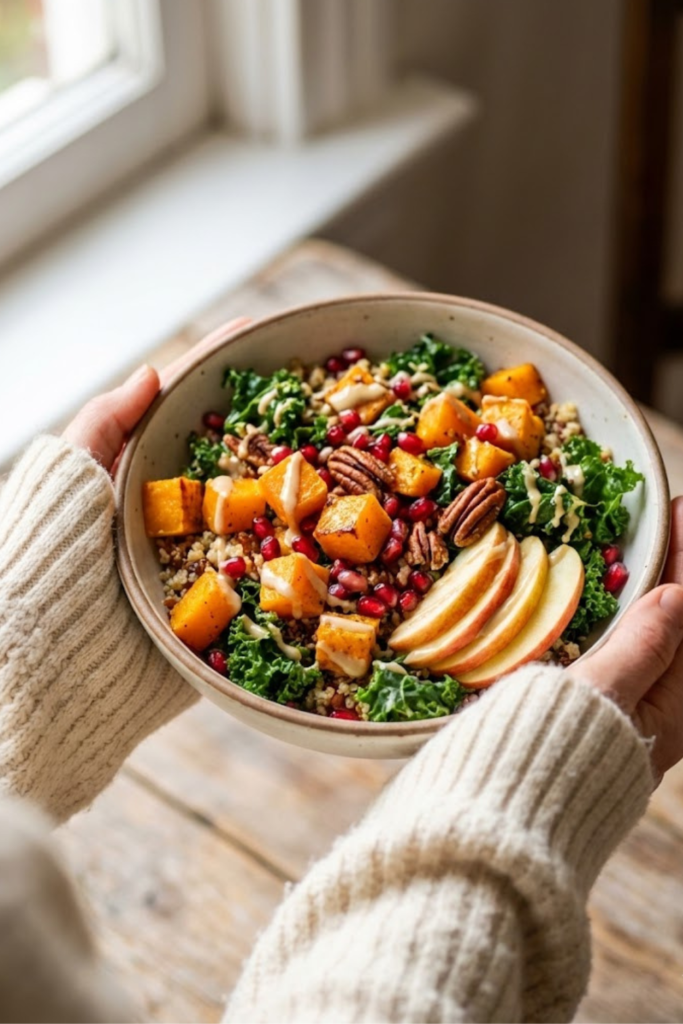
I like to start with a bed of greens at the bottom. If you put the warm quinoa directly on top of the raw kale, it helps wilt it slightly without cooking it completely. It’s a nice little trick I picked up.
Next, I spoon the quinoa to one side, not all over. Then I pile the roasted veggies next to it. You get to see every ingredient this way. It looks colorful and vibrant instead of a mixed-up mess. It makes you feel like you are eating at a fancy cafe, even if you are just sitting at your kitchen table in sweatpants.
The Crunch Factor is Mandatory
Please do not skip the toppings. This was my biggest mistake for years. I would just eat soft veggies and soft grains and wonder why I was bored halfway through.
You need texture! I always keep a jar of seeds handy for this. Adding a toasted pepitas recipe to your rotation is smart because they add a perfect snap. If I’m feeling fancy, I’ll slice up a crisp apple or throw in some pecans. It turns the dish into a sort of pecan and apple salad hybrid that is just delightful. The sweetness of the apple cuts through the savory tahini perfectly.
Fresh Herbs Wake It Up
Roasted food can be heavy. To lift the whole dish up, I scatter fresh herbs on top right at the end. Parsley is my go-to because it’s cheap and I usually have it rotting in my fridge anyway.
Cilantro works too if you aren’t one of those people who thinks it tastes like soap. Just a little bit of green makes the orange sweet potatoes pop visually. It adds a freshness that dried herbs just can’t compete with.
The Dressing Dilemma
Here is a rule I learned the hard way: do not dress the salad until you are ready to eat. If you are meal prepping these for the week, keep the autumn salad vinaigrette in a separate little container.
If you pour it on on Sunday, by Tuesday your beautiful bowl will be a soggy disaster. I usually drizzle it right over the top just before serving. That way, you get that creamy hit of tahini in every bite without drowning the fresh ingredients. It keeps everything distinct and delicious.
So, are you ready to actually look forward to lunch? I hope you give these bowls a real shot. Honestly, once you nail the roasting technique and get comfortable making that dressing, you will wonder how you lived without it.
It feels genuinely good to eat something that tastes this rich but is actually doing your body a favor. It’s warm, it’s cozy, and it fits perfectly into that seasonal eating guide we all try to follow when the leaves start changing. Plus, your kitchen is going to smell amazing.
If you enjoyed this recipe or found my mistakes helpful, do me a huge favor. Please save this to your “Healthy Fall Recipes” or “Dinner Ideas” board on Pinterest!
It really helps other home cooks find these recipes, and it helps me keep the lights on around here. If you try swapping the sweet potatoes for butternut squash or add a crazy topping I didn’t think of, leave a comment below. I’d love to hear how you made it your own. Happy cooking!