Did you know that nearly 70% of home cooks say “taco night” is their most successful stress-free dinner? I’ve been there, staring at a pound of meat and wondering how to make it not boring. I used to just toss it in a bowl with some salt. That was a big mistake!
One Tuesday, I decided to try something different with ground beef stuffed tortillas. I wanted that crunch you get at a fancy food truck. My first try was a total mess. The meat fell out, and the kitchen smelled like smoke. But man, when I finally got it right, my family went wild!
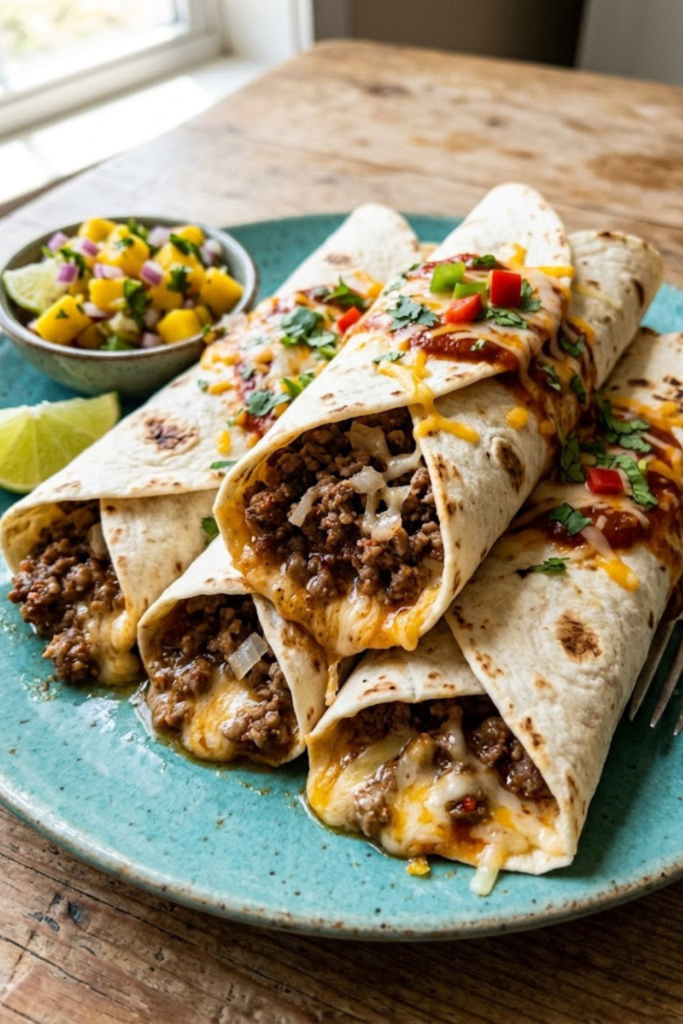
These ground beef stuffed tortillas are basically like a hug in a crispy shell. They are fast, cheap, and way better than the soggy tacos I used to make. If you want a meal that makes you feel like a kitchen hero, this is it! Let’s get into how to make these bad boys.
Choosing the Best Meat for Your Stuffing
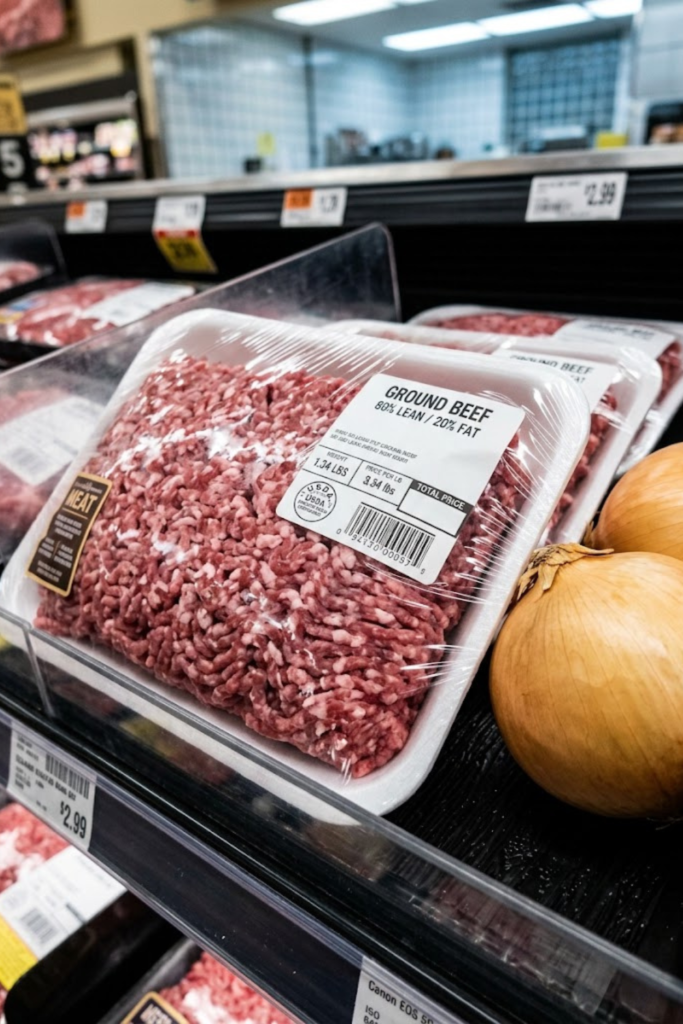
When I first started making ground beef stuffed tortillas, I really thought any pack of meat would do. I’d just grab whatever was on sale at the local shop and hope for the best. Big mistake! I learned pretty fast that the meat you pick is actually the most important part of the whole dinner. If you start with bad beef, even the most expensive spices won’t save your meal. I’ve spent plenty of nights eating dry, flavorless tacos because I tried to save a dollar or two on the wrong cut.
The Magic of 80/20 Ground Beef
Most folks see the fat percentage on the package and get a bit worried. They see “80/20” and think it is going to be way too greasy. I used to buy the 93% lean stuff because I thought I was being a bit healthier for my family. But let me tell you, lean meat makes for some very dry tortillas. For this specific recipe, you really need that 20% fat. That fat carries all the flavor from your cumin and chili powder. It keeps the meat juicy while you fry the tortillas later on. It also helps the beef brown up nicely in the pan. Without that little bit of grease, you just get dry crumbles that fall out of the shell every time you take a bite.
Checking for Freshness at the Store
I tell my students all the time: use your eyes and your nose. When you are standing in the meat aisle, look for a bright cherry-red color. If you see any gray or brown spots on the edges, just put it back. That meat is starting to get old and won’t taste right. I also like to press on the plastic package a little bit. It should feel firm, not mushy. If it feels too soft, it might have too much water added to it by the factory. Sometimes the store puts the older meat right in the front, so I always reach way back into the cooler to find the freshest pack.
Why You Shouldn’t Crowd the Skillet
Here is a trick I learned after years of making soggy tacos. When you put the meat in the pan, don’t just dump a giant cold block in there. Break it up with your hands or a big wooden spoon first. And whatever you do, don’t fill the pan all the way to the edges. If you have too much meat in there at once, it won’t sear. It will just steam in its own juices and turn a sad gray color. You want to hear a loud sizzle as soon as the beef hits the hot surface. If the pan isn’t screaming at you, it isn’t hot enough yet! Keep the heat medium-high so you get those crispy brown bits on the bottom.
The Secret Spice Mix for Ground Beef Stuffed Tortillas
I used to be the person who just grabbed those little yellow paper packets from the grocery store. You know the ones with the picture of a taco on the front? They aren’t terrible, but after a while, every dinner started tasting exactly the same. It was like a salt bomb went off in my mouth. One Tuesday night, I realized I was totally out of those packets, and I had a pan of meat already sizzling. I had to raid my spice cabinet and hope for the best. That was the day I figured out the “secret sauce” for my ground beef stuffed tortillas. Making your own mix is way cheaper and tastes a thousand times better because you can control what goes in it.
Using Pantry Staples for Big Flavor
The base of a good beef filling usually starts with three big players: cumin, chili powder, and garlic powder. Cumin is the one that gives it that “Mexican restaurant” smell that wafts through the house. I like to use a lot of it because it has such an earthy, warm vibe. Chili powder adds that nice deep red color and a bit of smoke. If you want a little extra kick, I always suggest adding a pinch of smoked paprika. It makes the beef taste like it was cooked over a campfire instead of just on your stove. I also toss in some onion powder and a good pinch of salt. You don’t need fancy, expensive jars from a boutique shop; the generic stuff from the baking aisle works just fine for this.
Adjusting the Heat for the Whole Family
Since I usually cook for a crowd, I have to be careful with the spice levels. My youngest can’t handle much heat, but my husband wants everything to burn his tongue off. For these ground beef stuffed tortillas, I keep the main batch pretty mild. I use a “mild” chili powder and stay away from the cayenne pepper while the meat is in the pan. If you want more heat, you can add red pepper flakes to your own plate later. Another trick is to use a tiny bit of brown sugar. It sounds weird, I know! But that little bit of sweetness balances out the spices and makes the beef taste much richer.
When to Add Your Spices to the Pan
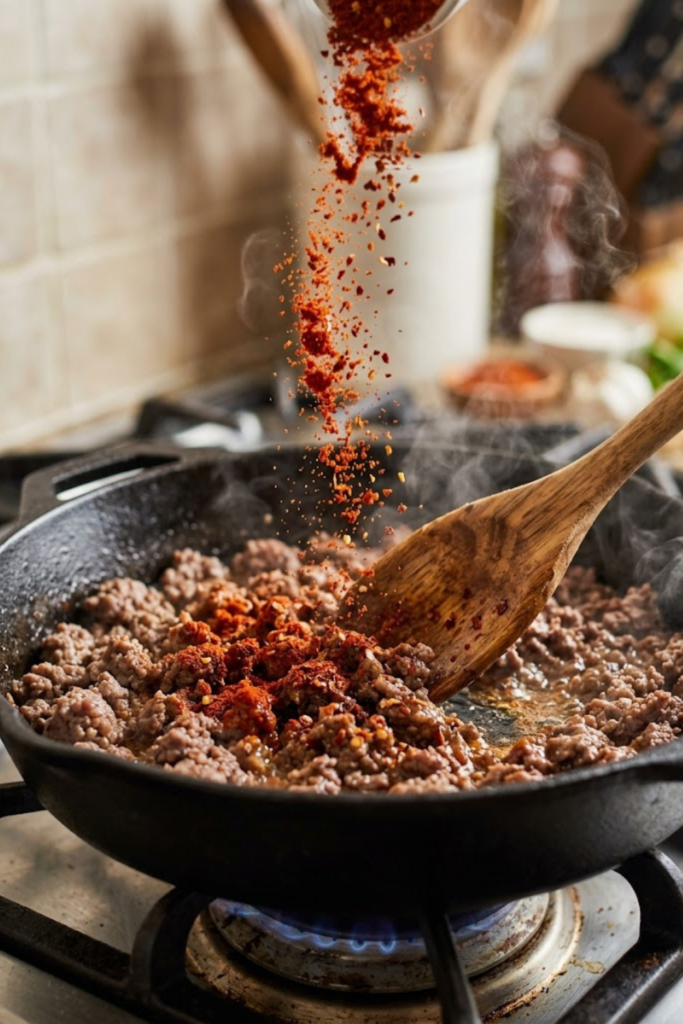
This is the part where most people mess up. They wait until the meat is fully cooked and drained before they throw the spices in. If you do that, the powder just sits on top of the meat like dust. I like to add my spices when the beef is about halfway browned. There is still enough fat in the pan to help the spices “bloom.” This is a teacher term I use to describe how the heat and oil wake up the flavors in the dried herbs. When those spices hit the hot grease, they turn into a sort of paste that coats every single bit of the beef. It makes the filling for your ground beef stuffed tortillas taste like it has been simmering for hours even if it only took ten minutes.
Folding Techniques That Actually Work
If you’ve ever tried to fold a cold tortilla, you know exactly what I’m talking about. It snaps right down the middle, and then you have beef falling all over your counter. It’s frustrating! I used to think I just wasn’t good at it, but then I realized I was just missing a few basic steps. To get your ground beef stuffed tortillas to stay shut, you have to treat the tortilla like it’s a piece of fabric that needs to be softened first. I’ve seen it a hundred times in my own kitchen where I’m in a rush and skip the warming part, and every single time, I regret it.
The Warming Trick for Better Bending
The biggest mistake people make is trying to fold a tortilla straight out of the fridge. Tortillas have starch and gluten in them, and when they are cold, they are stiff. I always take a stack of five or six and wrap them in a damp paper towel. Then, I pop them in the microwave for about fifteen or twenty seconds. This little bit of steam makes them super soft and stretchy. If you don’t have a microwave, you can toss them on a hot dry pan for ten seconds on each side. Once they are warm, they won’t crack when you start rolling them up. It makes the whole process so much easier.
Stuffing Limits: Why Less is More
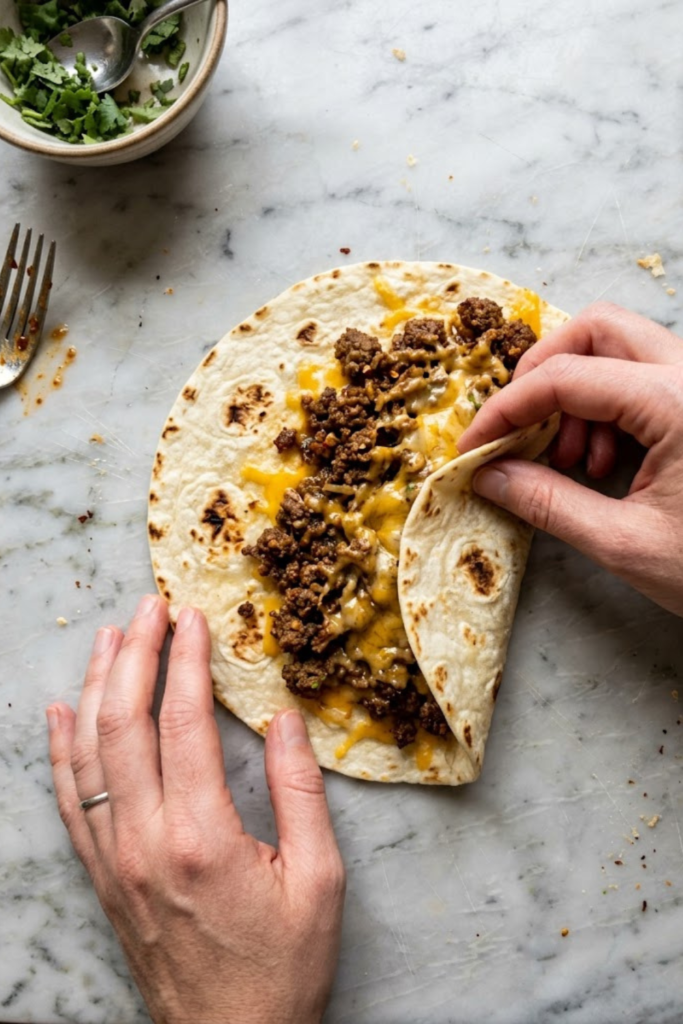
I know you want to pack as much of that delicious beef in there as possible. I do too! But if you overfill the tortilla, it’s going to explode the second it hits the oil. For a standard medium-sized tortilla, I usually only use about two big spoonfuls of the meat mixture. I leave about an inch of space all the way around the edge. Then, I sprinkle a good amount of shredded cheese right on top of the beef and near the edges. The cheese is the secret! When it starts to heat up, it acts like a sticky glue that holds the flap of the tortilla down so it doesn’t pop open while you are frying it.
The “Seam-Down” Strategy
When it’s time to actually fold, I bring the sides in first, just a little bit. Then I grab the bottom and roll it over the meat, tucking it in tight as I go. It’s kind of like making a tiny burrito. The most important thing is to keep the “seam”—that’s the part where the flap ends—facing down on your plate while you finish the rest. When you move them to the frying pan, make sure that seam side hits the hot oil first. This seals the tortilla shut immediately so you don’t have to worry about it unrolling. It’s not rocket science, but it takes a bit of practice to get it right every time.
Cooking to Golden Perfection
I’ve spent many years trying to get that perfect crunch on my ground beef stuffed tortillas. There is nothing worse than a soft, oily tortilla that feels like a wet paper bag. I remember one time I tried to “fry” them in a dry pan because I was trying to be healthy. They didn’t brown at all, and they just tasted like warm flour. Then I tried deep frying them, but they got so heavy with oil that nobody wanted to eat more than one. Finally, I figured out the middle ground. You need just enough oil to cover the bottom of the pan, and you need the right temperature to make sure they get that beautiful golden color without burning.
The Best Oil for the Job
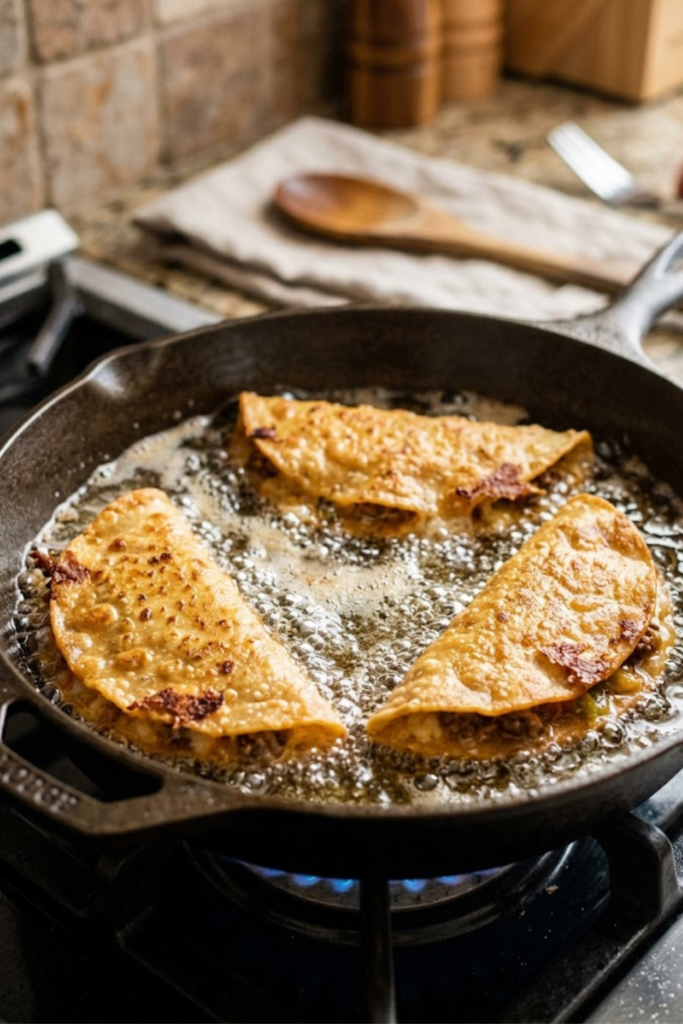
I used to just grab whatever vegetable oil was under the kitchen sink. It worked okay, but sometimes the house would get really smoky and the kids would start coughing. Now, I always reach for avocado oil. It has a high smoke point, which just means it can get really hot without turning into a big cloud of smoke in your kitchen. If you don’t have that, canola oil or vegetable oil is fine too. Just stay away from butter or olive oil for this part. Butter burns way too fast, and olive oil can give it a weird taste that doesn’t really go with the beef and cheese. You only need about a quarter-inch of oil in the skillet. You aren’t making donuts; you are just giving the tortillas a nice crisp coat.
Timing the Perfect Crunch
The “crunch factor” is what makes or breaks this meal. Once your oil is shimmering—that’s how you know it is hot enough—carefully lay your stuffed tortillas in the pan. I usually do two at a time so the pan doesn’t cool down too much. I let them sit there for about two or three minutes on the first side. Don’t poke at them or move them around! Let the heat do its thing. When you see the edges turning brown, flip them over. The second side usually takes a bit less time, maybe just ninety seconds. You are looking for a deep golden brown color. If they look pale, they won’t be crunchy. If they look black, well, you’ve gone too far and need to start over!
Getting Rid of the Extra Grease
Once they are done, don’t just put them straight on a plate. If you do, the bottom will get soggy from the leftover oil and all your hard work will be for nothing. I always have a plate ready with a few thick layers of paper towels. I stand the tortillas up against each other or lay them down for just a minute to let the extra grease soak into the paper. This keeps them crispy for much longer. I also like to sprinkle a tiny bit of extra salt on the outside while they are still hot. It makes the flavor pop and gives it that professional touch. By the time you get the salsa and sour cream on the table, they will be the perfect temperature to eat without burning your tongue.
Time to Eat!
Well, you made it to the best part of the whole process. Your kitchen probably smells amazing right now, and if you followed my advice, you have a stack of crispy ground beef stuffed tortillas waiting on a plate. I remember the first time I got these exactly right. I sat down at the table, took that first bite, and the crunch was so loud that my kids actually stopped talking for a second. That is how you know you did a good job! It’s such a great feeling when a simple dinner turns out better than something you’d pay twenty dollars for at a restaurant.
The Best Toppings and Sides
Even though the beef and cheese are the stars of the show, you really need some cool toppings to balance out the heat and the oil. I always put out a big bowl of sour cream. Sometimes I stir a little lime juice into the sour cream to make it more of a “crema” style. It really cuts through the richness of the beef. I also like to chop up some fresh cilantro and white onions. If you want to keep it easy, just buy a jar of your favorite salsa. My husband likes the extra chunky kind, but I prefer the smooth restaurant-style sauce. If you have an extra five minutes, mashing up an avocado with some salt and lemon makes a quick guacamole that takes this meal to a whole new level.
How to Store and Reheat
If you actually have leftovers—which doesn’t happen often in my house—you want to make sure you store them the right way. Don’t just throw them in a plastic bag while they are still warm, or they will get soggy and gross by tomorrow. Let them cool down completely on the counter first. Then, put them in a container with a piece of parchment paper between the layers. When you want to eat them the next day, please stay away from the microwave! The microwave will turn your crispy tortilla into a rubbery mess. I usually put them in the air fryer for three minutes or back in a dry skillet for a minute on each side. It brings that crunch right back.
Share the Love!
I really hope your family enjoys these as much as mine does. It’s one of those recipes that stays in your rotation for years because it’s just so reliable. If you tried this and liked it, please share this post on Pinterest! It helps me out a lot, and I love seeing photos of how your tortillas turned out. Maybe you added something different to the meat or found a new favorite dipping sauce. Either way, thanks for cooking along with me today. Now, go grab a napkin and enjoy your hard work before someone else eats your share!