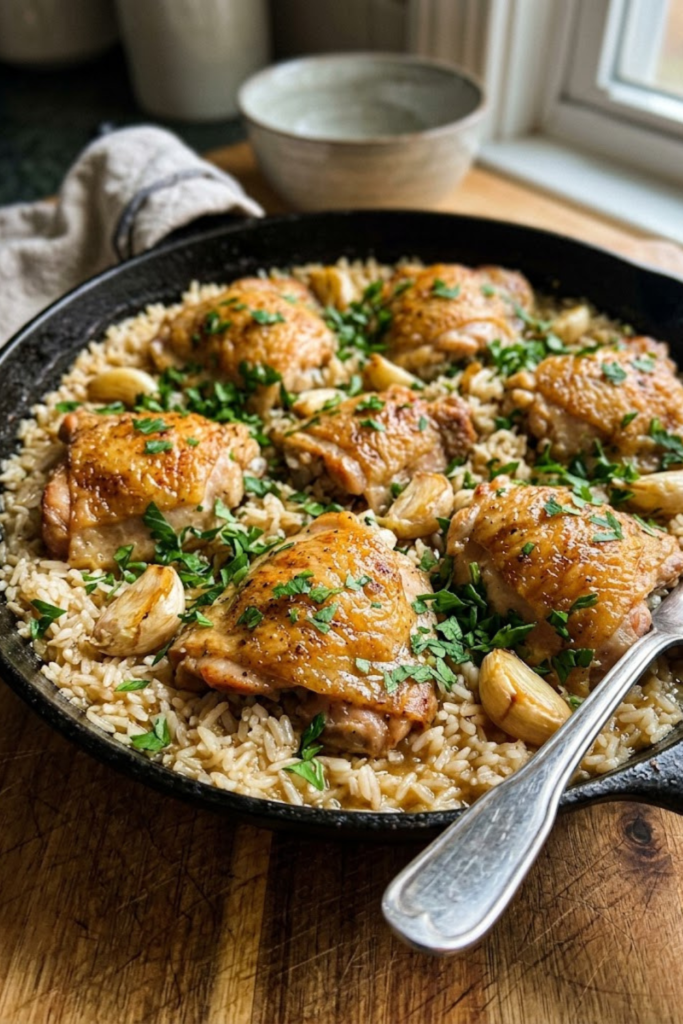
Listen, I’ve had those nights where the kitchen sink looks like a leaning tower of greasy pots. It is 2026, and honestly, we should have robots doing this by now, right? But until then, we have the “one pan wonder.” Did you know that the average person spends over 300 hours a year just doing dishes? That is way too much time away from the couch! I remember one rainy Tuesday when I was so tired I almost ordered lukewarm takeout for the third time that week. Instead, I threw some thighs and grains into my favorite heavy skillet. The smell of searing garlic filled the house, and suddenly, my mood shifted from “leave me alone” to “let’s eat!” This one pan garlic chicken and rice isn’t just a meal; it’s a sanity saver that tastes like you spent hours over the stove.
Choosing the Right Chicken and Rice
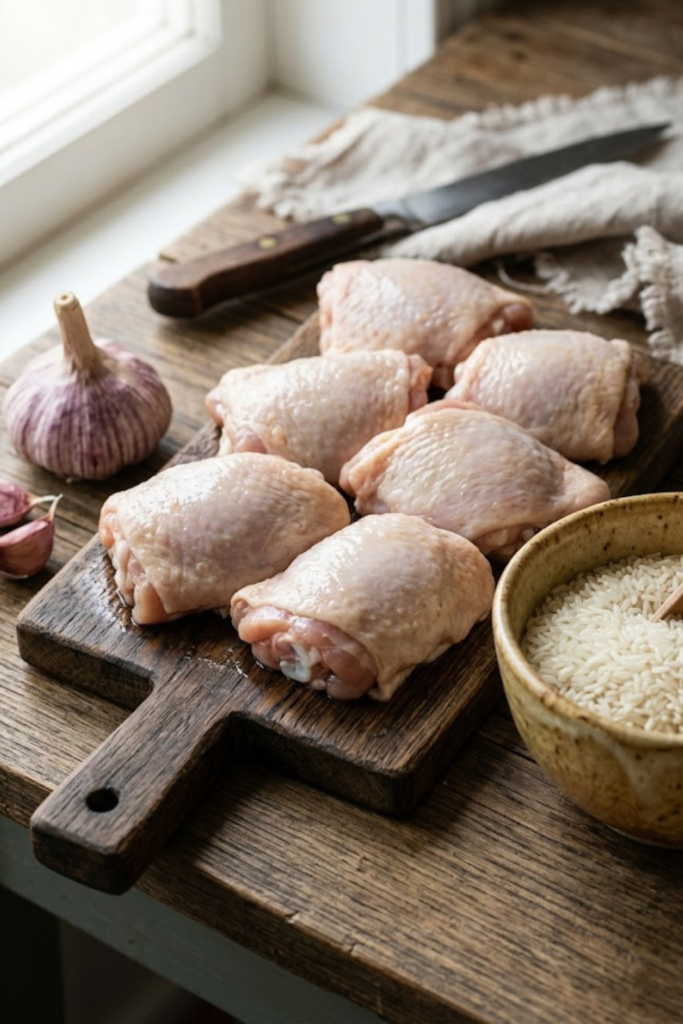
Choosing the right parts for this meal is the difference between a dinner people ask for again and a dinner that ends up in the trash. I learned this the hard way. One time, I tried making this with chicken breasts because they were on sale. It was a total disaster. The meat was so dry it felt like I was chewing on a sponge. If you want that juicy, melt-in-your-mouth feeling, you have to go with chicken thighs. I prefer the bone-in, skin-on kind. The skin gets all crispy and the bone helps keep the meat tender while the rice cooks underneath it. When you’re standing in the grocery aisle, don’t be afraid of the fat on the thighs. That is where all the flavor lives.
Why Thighs are the MVP
Chicken thighs are just more forgiving than other cuts. If you leave them in the pan for five extra minutes because you got distracted by a phone call or a kid needing help with homework, they don’t turn into cardboard. Breasts are very tricky. They have almost no fat, so they dry out fast. In a one-pan setup, the chicken has to sit there while the rice absorbs all the liquid. Thighs can handle that heat and stay moist. Plus, the fat that renders out of the skin drips right into the rice. It gives the grain a rich flavor that water or broth alone just can’t match. It makes the whole dish feel much more expensive than it actually is.
Picking Your Grain
Now, let’s talk about the rice. Not all rice is the same, and picking the wrong one can ruin your night. I once tried using arborio rice—the kind you use for risotto—and it turned into a giant, sticky glob. It tasted okay, but the texture was all wrong for this dish. For a perfect one-pan garlic chicken, I always grab Jasmine rice. It has a nice smell and stays separate even after cooking. Basmati is another good choice if you like a longer, fluffier grain. Just stay away from “instant” or “minute” rice. That stuff is pre-cooked and it will turn into mush before your chicken is even halfway done. You want a grain that can stand up to the simmer.
Prepping for the Pan
Before you throw everything in, you gotta do a little prep work. I always pat my chicken dry with a paper towel. If the skin is wet, it won’t brown; it will just steam. And let’s be honest, nobody likes soggy chicken skin! I also like to season the meat really well with salt and pepper before it hits the heat. This helps create a crust that locks in those juices. If you have time, let the chicken sit on the counter for ten minutes to take the chill off. It helps it cook more evenly so you don’t end up with a burnt outside and a raw middle.
The Magic of Fresh Garlic and Aromatics
Garlic is really the soul of this whole pan. If you don’t use enough, it just tastes like plain chicken and rice, and nobody wants that for dinner. I always tell my friends that if your kitchen doesn’t smell like a garlic factory, you are doing something wrong! I used to be a bit lazy and buy those little jars of pre-minced garlic from the store. It seemed like a great idea at the time to save five minutes, but the taste was just off. It was sort of sour and weird. Now, I only use fresh cloves for my one pan garlic chicken and rice. It makes a huge difference in the final flavor and honestly, it’s worth the sticky fingers.
Ditch the Jar and Go Fresh
Peeling garlic can be a real pain, but I found a trick that works every single time. Just lay the clove on your cutting board and whack it with the flat side of a big knife. The skin just slides right off. I usually use about five or six big cloves for this recipe. Some people like to mince it really tiny so it disappears into the rice, but I actually like to slice mine thin. Those little golden bits of garlic are like hidden treasures when you’re eating. I remember one time I got a bit carried away and used a whole bulb of garlic. My breath was so strong the next day that even my students at school were giving me some extra space! But the rice was so good, I didn’t even care.
Building Layers of Flavor
It isn’t just about the garlic, though. You need other aromatics to make the dish taste deep and rich. I always start with a diced yellow onion. You want to cook it in the chicken fat until it gets soft and see-through. This creates a base of flavor that ties the meat and the grain together. Then, I throw in some fresh herbs. Thyme and rosemary are my favorites for this. If you use dried herbs, they can sometimes taste like dust if you aren’t careful. Fresh ones bring a brightness that wakes up the whole meal. I like to toss them in right before I add the broth so the heat releases all those good smelling oils.
The Secret Butter Finish
Right before you put the lid on to let the rice simmer, I have one more secret tip. I drop a big tablespoon of unsalted butter right in the middle of the pan. As the rice cooks, that butter melts and coats every single grain. It gives the dish a creamy, restaurant-quality feel without needing a bunch of heavy cream. My family always notices when I forget the butter. It just adds that little bit of extra love that makes a simple weeknight dinner feel special. Don’t worry too much about it being perfect. Just get it in the pan and let the heat do the work for you.
Common Mistakes I Made (So You Don’t Have To)
I have messed up this recipe more times than I want to admit. You’d think a teacher like me would follow the rules, but sometimes I get ahead of myself. The thing about a one-pan meal is that it looks so simple, you think you can just wing it. But there are a few traps that will turn your dinner into a soggy mess if you aren’t careful. I’ve had nights where the rice was still crunchy and the chicken looked like it had been boiled in a bag. It was pretty bad. My husband usually eats anything I cook, but even he had to reach for the cereal box those nights. Here is how you can avoid those same headaches.
The “Under-Searing” Trap
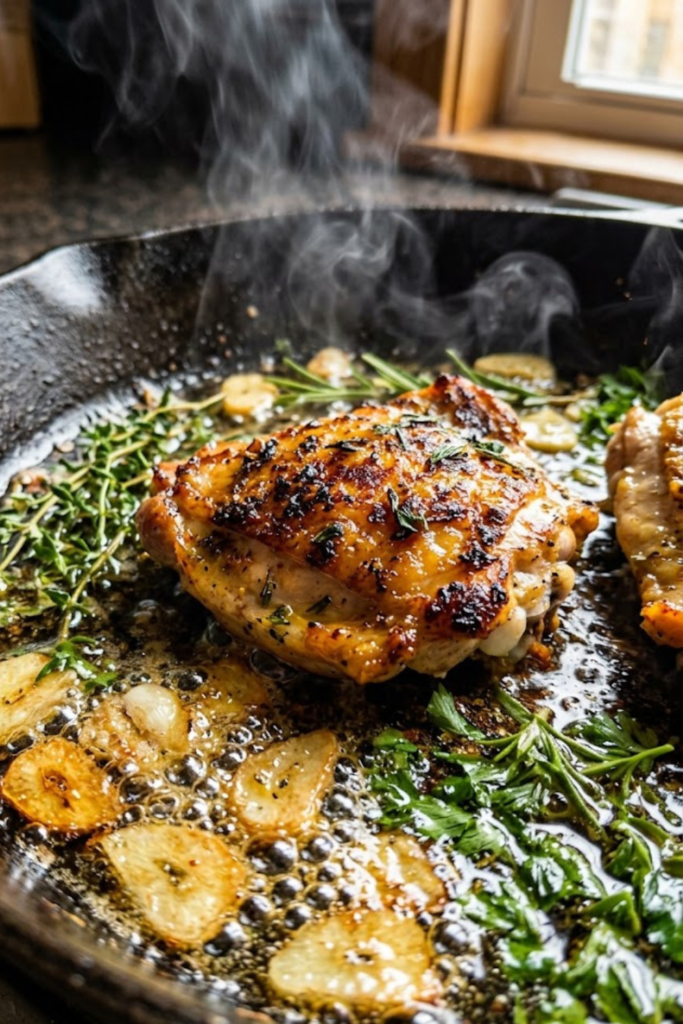
The biggest mistake I ever made was skipping the sear. I was in a rush—grading papers and trying to feed the dog at the same time—so I just tossed the raw chicken right on top of the wet rice and broth. Big mistake. The skin ended up being this rubbery, grey texture that was just gross to look at. To get that golden, crispy top, you have to sear the chicken in a hot pan first. You want to see that beautiful brown color before you take the meat out to start the rice. That brown stuff left in the pan? That is flavor gold. If you skip this, you’re missing out on the best part of the meal.
The Broth Ratio Disaster
Another thing that tripped me up was the amount of liquid. I used to think that more broth meant more flavor, so I’d just pour it in until the pan looked full. Well, rice is like a sponge. If you give it too much water, it just keeps growing until it turns into a paste. I call it “rice pudding surprise,” and trust me, it’s not a good surprise. You really have to stick to that 1:1.5 ratio. For every cup of rice, use a cup and a half of broth. If you use too much, you’ll end up with a swamp in your skillet. If you realize you added too much, you can try to simmer it with the lid off for a few minutes, but it’s hard to save once it goes soft.
The Peeking Problem
The hardest part of this recipe is just leaving it alone. I am naturally a “peeker.” I want to lift the lid every two minutes to see if the rice is done. But every time you lift that lid, the steam escapes. That steam is what actually cooks the rice and keeps the chicken juicy. If you let it out, the temperature drops and the rice takes twice as long to cook. I finally learned to just set a timer on my phone and walk away. Go fold some laundry or watch a show for twenty minutes. Just don’t touch the lid! Your patience will be rewarded with the fluffiest rice you’ve ever had.
Serving Suggestions and Leftover Magic
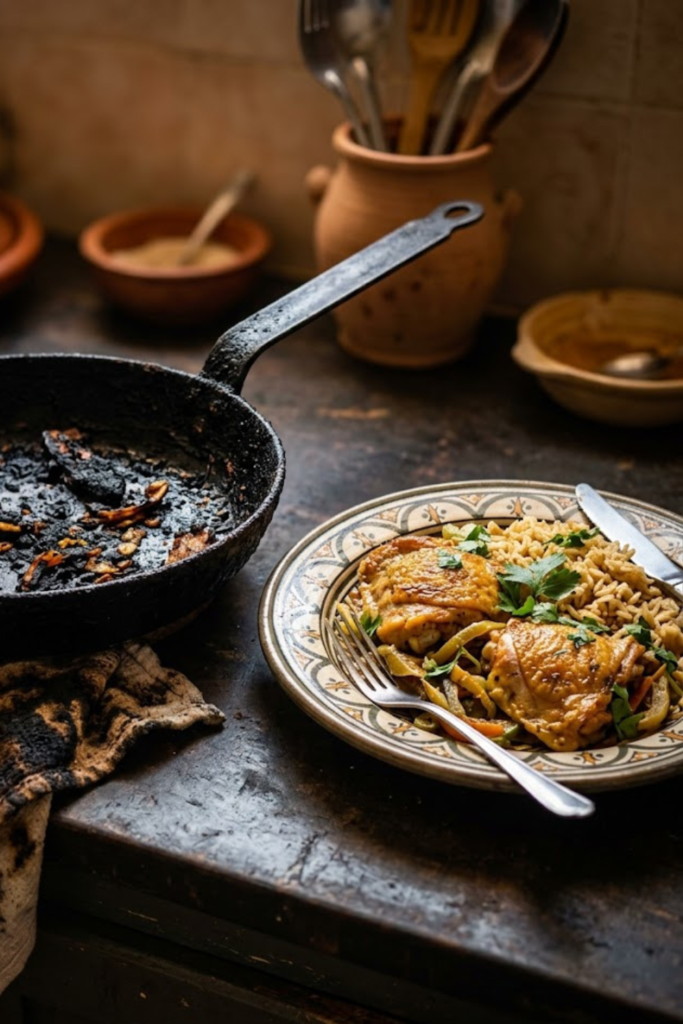
Once that timer goes off and you finally pull the lid back, you are going to be met with a cloud of garlic-scented steam that is just incredible. But don’t just start digging in right away! I know it’s hard when you’re hungry, but you need to let the pan sit for about five minutes. I tell my students all the time that patience is a virtue, and it really applies to rice. Letting it rest allows the last bit of moisture to distribute evenly so you don’t end up with a soggy bottom and a dry top. After those few minutes are up, take a fork and gently fluff the grains. You’ll see the rice pull away from the chicken, and that is when you know you’ve nailed it.
Sides That Make It a Full Meal
Even though this is a “one pan” deal, I usually like to add something green on the side to balance out the richness of the chicken. My go-to is almost always roasted broccoli or some simple green beans. I just toss them in some olive oil and salt and throw them in the oven while the chicken is simmering. If I’m feeling really lazy—which happens a lot on Thursdays—I’ll just grab a bag of pre-mixed salad from the fridge. The crisp, cold lettuce goes really well with the warm, savory rice. My kids actually like it when I mix some peas directly into the rice at the very end. The heat from the pan warms the peas up in seconds, and it adds a little pop of color that makes the plate look a lot better.
Garnishing Like a Pro
You don’t have to be a fancy chef to make your food look good. I used to just scoop the food onto a plate and call it a day, but I’ve found that a little bit of green on top makes a huge difference. I always keep a bunch of fresh parsley in a glass of water in my fridge. Just a quick chop and a sprinkle over the chicken makes it look like something you’d get at a bistro. If you want a little bit of a kick, a squeeze of fresh lemon juice over the whole pan right before serving is a total game changer. It cuts through the fat of the chicken and makes the garlic flavor really stand out.
Why Leftovers are Better the Next Day
If you are lucky enough to have leftovers, you are in for a treat. I actually think the rice tastes better the next day because it has had more time to soak up all that garlic and chicken juice. I usually take a container of this for my lunch at school. Instead of using the microwave, which can make the chicken a bit rubbery, I like to toss the leftovers back into a small frying pan with a tiny splash of water. It helps steam the rice back to life and keeps the chicken skin from getting too soft. It’s way better than any cafeteria food I’ve ever had, and my coworkers are always asking me for the recipe!
Final Thoughts on the One Pan Life
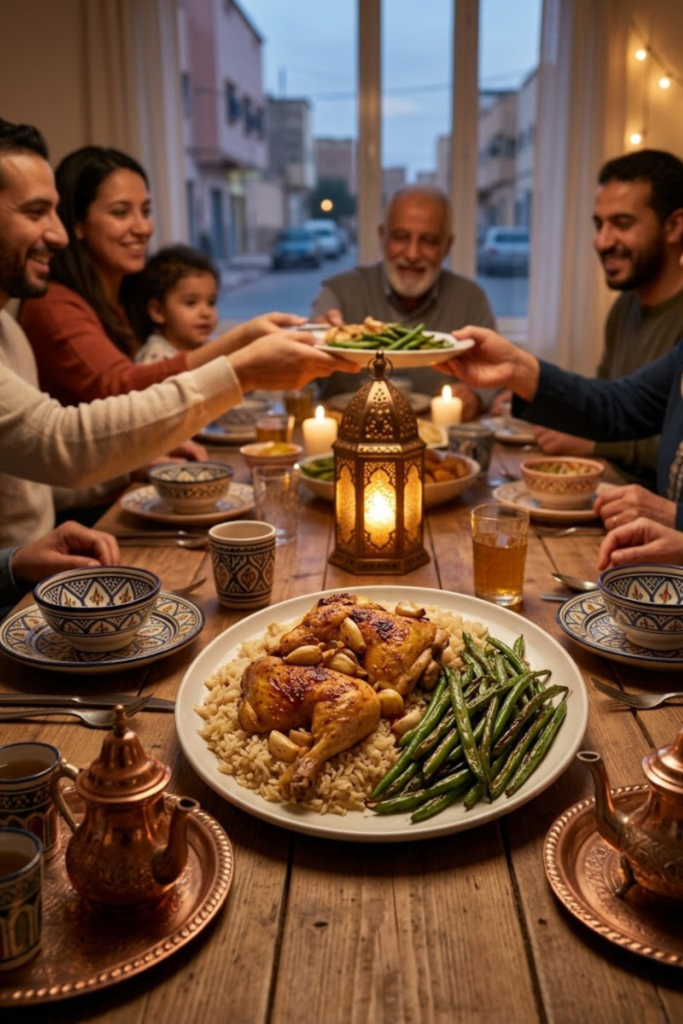
Look, I know life gets messy and fast-paced. It is 2026, and somehow we are all busier than we were five years ago. We have gadgets for everything, yet we still struggle to find twenty minutes to sit down and eat a real meal that didn’t come out of a plastic crinkly bag. That is why I love this one pan garlic chicken and rice so much. It is not some fancy, over-complicated thing that requires a million tools. It is just honest, good food that fills your house with a smell that makes everyone wander into the kitchen to ask, “Is it ready yet?” For me, that is the best part of cooking—seeing people actually excited to eat something I made.
Saving Your Sanity One Pan at a Time
As a teacher, my brain is usually pretty fried by 4 PM. The last thing I want to do is stare at a recipe that has fifteen steps and uses every pot in the cupboard. When I first started making this, I realized that the “one pan” thing wasn’t just a gimmick. It actually changed how I felt about my evenings. Instead of standing at the sink scrubbing burnt rice for an hour, I can actually sit on the porch or talk to my family. That extra time is worth its weight in gold. I think a lot of people feel like they have to be a master chef to put a good dinner on the table, but that just isn’t true. You just need a heavy pan and a little bit of patience.
Why You Should Share the Love
If you’ve read this far, you are probably ready to get in the kitchen and start searing some chicken. I really hope you give it a try. Cooking is a skill that gets better every time you do it, even if you burn a few cloves of garlic along the way. Don’t be too hard on yourself if the rice isn’t perfect the first time. Just learn from it and try again next week! If this recipe helps you get through a long Tuesday, please do me a favor and save it to your favorite Pinterest board. It helps other busy people find easy dinner ideas, and I’d love to see how your version turns out.
Wrapping It Up for Good
Dinner doesn’t have to be a chore. With a bit of fresh garlic, some juicy thighs, and the right rice, you can turn a boring night into something special. I’ve spent years trying to find the “perfect” meal, and I always come back to this one because it’s reliable. It’s like that one student who always turns their homework in on time—it just works. So, go ahead and clear off the stove, get your skillet hot, and enjoy the process. You’ve got this!