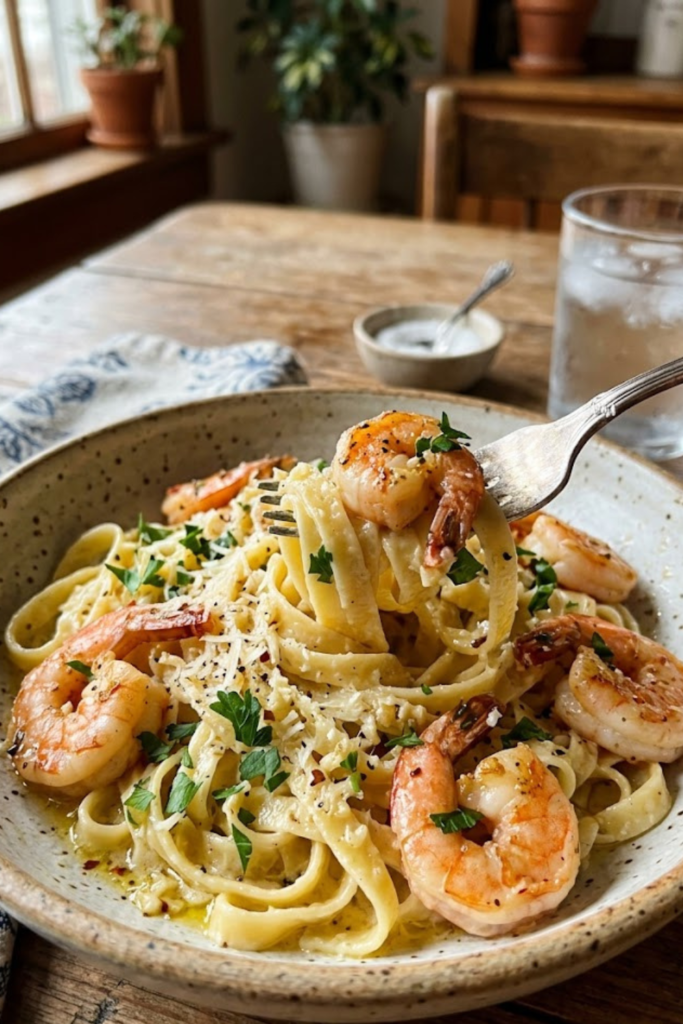
Did you know that nearly 80% of home cooks admit they are terrified of overcooking seafood? It’s true! I used to be one of them, staring at a pan of expensive shrimp like they were ticking time bombs. But listen, once you master this garlic parmesan shrimp pasta, you’re going to feel like a total kitchen rockstar. This dish is the perfect blend of buttery, garlicky goodness and that sharp, salty kick from the parmesan that we all crave. It’s fast, it’s fancy enough for a date night in 2026, and it’s about to become your new Wednesday night obsession! Let’s get cooking!
Master the Creamy Garlic Parmesan Sauce
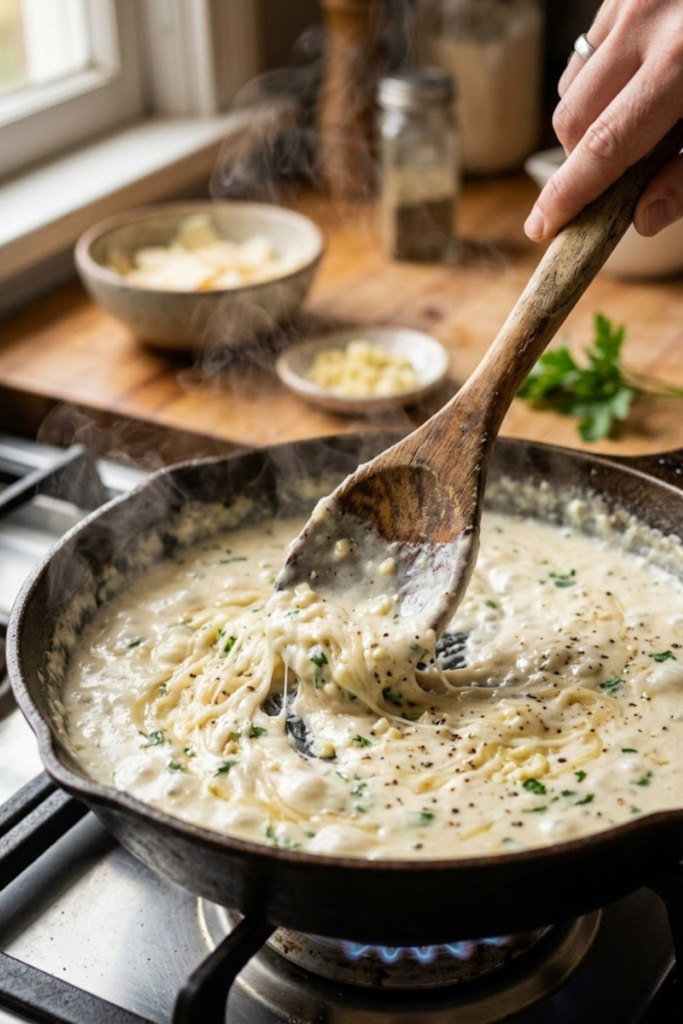
The sauce is the real star of the show here, folks. If the sauce is thin and watery, you just end up with wet noodles that don’t taste like much. If it’s too thick, it feels like you’re eating a bowl of heavy paste. I’ve made both mistakes more times than I can count. When I first started cooking this for my family, I thought I could just throw regular milk and a slice of American cheese in there. Let me tell you, that was a dark day in my kitchen. Nobody even finished their plates! You want a sauce that coats the back of a spoon and makes you want to lick the bowl clean after the shrimp is gone.
Choosing Your Fat Wisely
You really want to use heavy cream here. I know some people try to save calories with 2% milk or half-and-half, but the sauce just won’t stay together as well. The high fat in heavy cream helps it stay smooth and velvety when you add the heat. Start by melting a good chunk of unsalted butter in your skillet. I like to use unsalted so I can control the salt myself later. When the butter starts to bubble and look foamy, that’s your cue to move to the next step. If you use salted butter, just be careful not to add too much extra salt later on.
The Garlic Sauté Trick
Now, here is where a lot of my students get into trouble. They turn the heat way too high and the garlic turns black in seconds. Burnt garlic is bitter and it will ruin the whole meal. You want to cook the minced garlic on medium-low heat. It should just smell amazing and look soft and translucent. If it starts turning dark brown, you’ve gone too far. If that happens, just toss it and start over—it’s worth the five minutes of extra work. Once the garlic is fragrant, pour in your cream slowly and let it simmer for a bit.
The Parmesan and Water Secret
This is the best part. Please, do not use the cheese from the green shaker can. That stuff has fillers in it to keep it from clumping, and it simply won’t melt into a smooth sauce. Get a block of real Parmesan and grate it yourself. Turn the heat down to low before you stir the cheese in. If the sauce is boiling hard, the cheese can get stringy and oily. And don’t forget the pasta water! I always scoop out a cup of that cloudy, starchy water before I drain the noodles. Adding a splash of it to the sauce makes everything stick to the pasta. It acts like a bridge that brings the cream and cheese together for a perfect finish.
The Secret to Perfectly Seared Shrimp
Listen, if I can save just one person from eating rubbery, sad seafood, my job as a teacher is done. I remember this one time I was trying to impress my mother-in-law with a fancy garlic parmesan shrimp pasta. I just dumped a whole bag of frozen shrimp into a lukewarm pan because I was in a rush. It was a total disaster, y’all. They turned into these tiny, gray, bouncy balls that tasted like a garden hose. My mother-in-law was very polite, but I could tell she wanted to use them as pencil erasers instead of dinner. I felt so bad! I learned that day that you can’t just treat shrimp like any old piece of meat. You gotta be careful if you want them to taste good.
Get Them Bone Dry
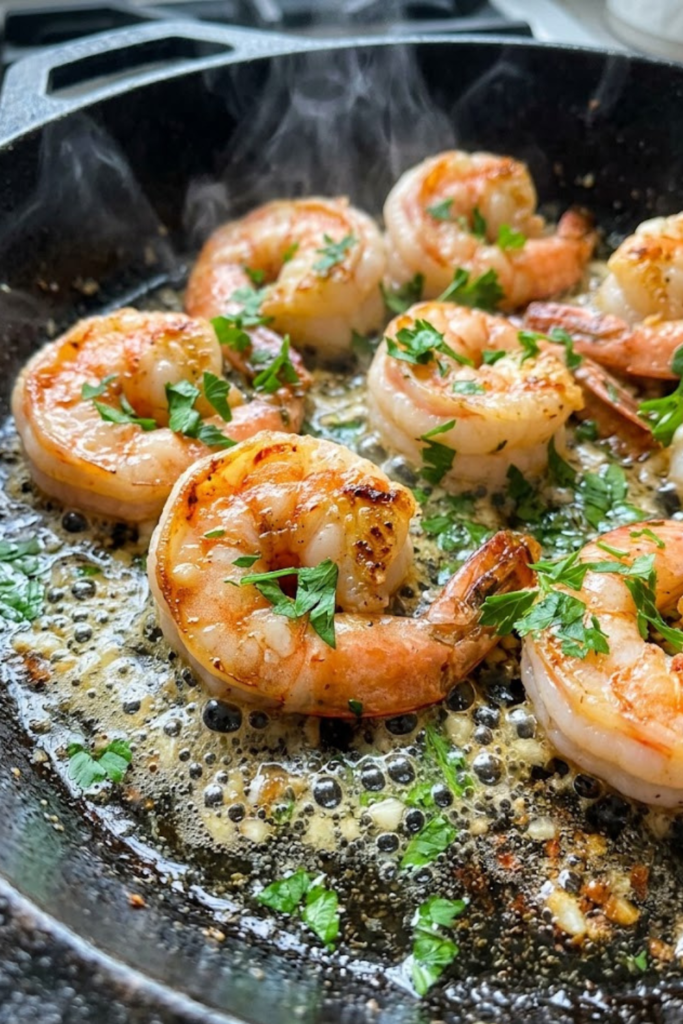
The first big thing you have to do is get those shrimp bone-dry. I mean it! Grab a bunch of paper towels and pat them down until they aren’t slick anymore. If they are wet when they hit the pan, they just steam in their own juice. You’ll never get that beautiful golden crust that makes them taste like a restaurant meal. It’s a lot like trying to get a tan while you are wearing a raincoat; it just ain’t gonna happen. Lay them out on a few paper towels and press down on them. You want that surface to be dry so the heat hits the shrimp directly. This is the only way to get that crunch.
High Heat and Proper Timing
You also need to crank the heat up. Don’t be scared of a little sizzle in the kitchen! I use a mix of butter and olive oil because the oil stops the butter from burning too fast. Drop the shrimp in and do not touch them for at least two minutes. I know, the urge to poke them or move them around is real strong, but you have to resist it. Once they have a nice pink color on the bottom and a bit of a brown char, flip them over. They only need about 2 or 3 minutes total to be done. If they curl into a tight “O” shape, you’ve gone too far and they’re gonna be tough. You want them in a nice “C” shape.
Don’t Crowd the Pan
One last tip is to not crowd the pan. If you put too many shrimp in at once, the pan gets cold and the shrimp get soggy. It’s better to cook them in two groups if you have to. I also like to add a little paprika and black pepper right before they hit the pan. The paprika gives them a lovely red color that makes the final garlic parmesan shrimp pasta look like something out of a magazine. Don’t put the garlic in yet, though! The pan is way too hot for garlic at this stage. Cook the shrimp first, take them out, and then lower the heat for your sauce. Your family will thank you!
Choosing the Right Pasta Shape
Choosing the right pasta shape for your garlic parmesan shrimp pasta is way more important than most folks realize. I remember one time I tried to make this dish with those tiny little star-shaped noodles—pastina, I think they call it. I thought it would be cute for the kids, but it was a total disaster. The shrimp were huge and the pasta was so small they just didn’t go together at all. It felt like I was eating a bowl of sand with some seafood on top. You really need a noodle that can act as a good partner for that heavy, creamy sauce we just made. If the noodle is too thin, the sauce just slides off and pools at the bottom of the plate, which is a real shame.
Why Long Noodles Are Kings
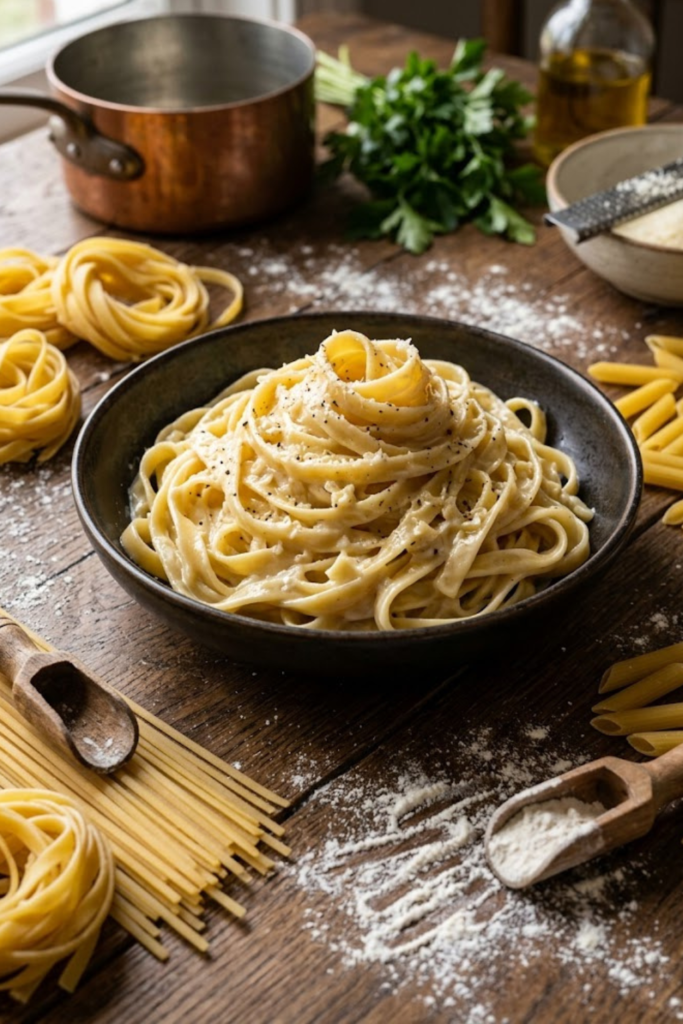
Most of the time, I reach for a box of fettuccine or linguine when I’m making this. These long, flat noodles have a lot of surface area. That’s just a fancy way of saying there is plenty of room for the sauce to grab onto. When you twirl a forkful of fettuccine, it picks up all that garlic and parmesan goodness in every single twist. Spaghetti works okay in a pinch, but it’s a little bit thin for a really thick and hearty cream sauce. If you want to change things up, you could use a short pasta like penne or fusilli. Those little tubes and spirals are great because the sauce gets trapped inside the holes. It’s like a little surprise burst of flavor in every bite!
The Al Dente Rule
I always tell my students that the biggest mistake you can make in the kitchen is overcooking your pasta. If the noodles are mushy, the whole meal feels heavy and sad. I usually set my kitchen timer for two minutes less than what the box says. You want the pasta to have a little bit of a “bite” to it. This is what people call ‘al dente.’ Since we are going to toss the noodles into the hot sauce at the end, they actually finish cooking right there in the pan. This helps the pasta soak up the flavor of the sauce instead of just sitting on top of it like a stranger.
Stop Rinsing Your Noodles
One last thing—please, I am begging you, do not rinse your pasta! I see people doing this in the sink all the time and it makes me want to pull my hair out. When you rinse the noodles with cold water, you wash away all the natural starch. That starch is like a natural glue that helps the sauce stay on the noodle. If you rinse them, the sauce will just slide right off like water off a duck’s back. Just drain the noodles, save a little bit of that cloudy pasta water like I mentioned before, and put them straight into the sauce. It’s a simple trick that makes a huge difference in how the meal tastes.
Common Mistakes to Avoid (And How I Learned Them)
Let me tell you, I have messed up more dinners than I care to admit. As a teacher, I always tell my students that mistakes are just proof that you are trying, and the kitchen is no different. My first few tries at this garlic parmesan shrimp pasta were… well, they were pretty rough. My husband once said my shrimp looked like they had been through a heavy car wash because they were so pale and soggy. It’s okay to fail, as long as you learn why things went sideways. Most of the time, the fix is actually really simple and doesn’t require any fancy tools or weird ingredients. You just have to pay attention to the little things.
The Dreaded Sauce Curdle
One big mistake is adding your cheese while the cream is boiling like a volcano. I remember doing this for a big holiday dinner once. I was in a huge hurry, the sauce was bubbling hard, and I dumped in all that beautiful parmesan. Instead of a smooth sauce, the cheese clumped together into these weird, rubbery balls and the oil separated. It looked awful! Now, I always make sure to turn the burner down to the lowest setting or even turn it off completely before I stir in the cheese. This lets the cheese melt slowly and stay silky. If you see your sauce starting to look grainy, just pull it off the heat immediately.
Crowding Your Shrimp
Another thing I used to do was try to cook all the shrimp at once in a small pan. I thought I was being efficient, but I was wrong. When you put too many cold shrimp in the pan, the temperature of the metal drops fast. Instead of searing and getting that pretty brown color, the shrimp just sit there and leak water. They end up boiling in their own juices! Now, I make sure to leave plenty of space between each shrimp. If I have a lot of seafood to cook, I just do it in two different batches. It takes five extra minutes, but the taste is ten times better.
Forgetting the Lemon Finish
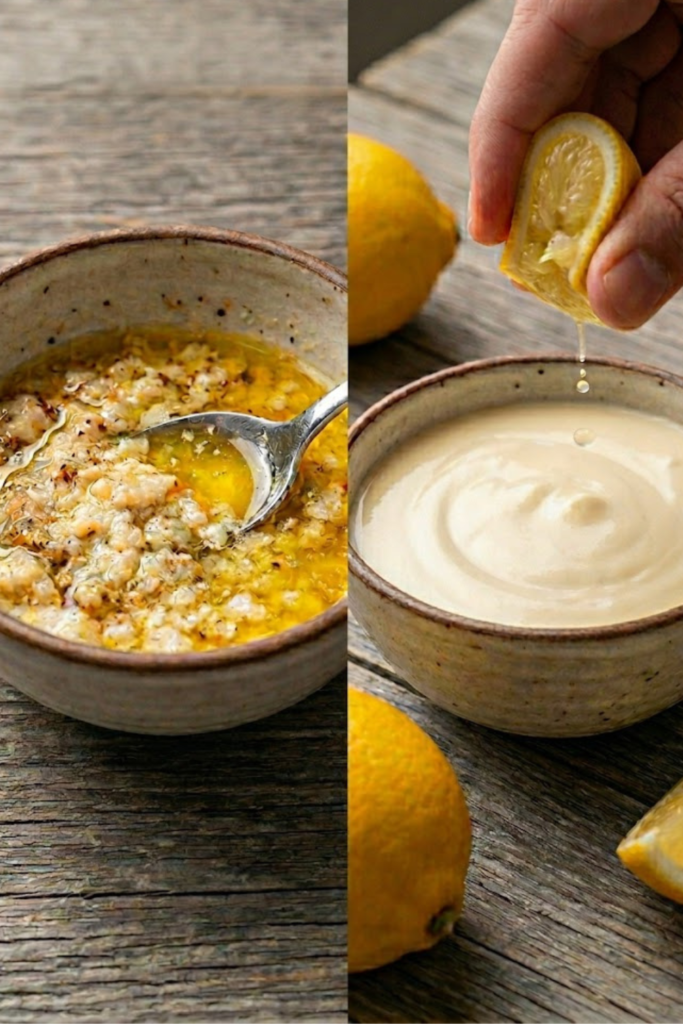
Lastly, don’t forget to add a little splash of lemon juice or some zest right at the end. Because this dish has so much butter, cream, and cheese, it can start to feel a bit heavy on your tongue after a few bites. A tiny bit of acid from a lemon wakes up all those other flavors. It’s like turning the lights on in a dark room. I used to think the lemon was just for looks, but it actually changes how the whole meal feels. Just a quick squeeze before you serve it makes a massive difference!
Final Thoughts on Making the Best Shrimp Pasta
Well, we have covered a lot of ground today! I really hope you feel ready to head into your kitchen and whip up this garlic parmesan shrimp pasta. When I first started teaching my students how to cook, I noticed that people often get scared of recipes with fancy-sounding names. But as we’ve seen, this is just a simple, delicious meal that uses basic ingredients in a smart way. Cooking is a skill that gets better every single time you do it. Even if your first batch isn’t perfect, your family is going to love that you made something from scratch with your own two hands. There is just something special about a home-cooked meal that you can’t get from a takeout box.
Bringing It All Together
The most important thing to remember is to keep your eyes on the pan. Since this whole meal cooks so fast, you want to have everything ready before you even turn on the stove. I like to call this “getting your ducks in a row.” Have your cheese grated, your shrimp dried off, and your pasta water boiling before you start the sauce. This helps you stay calm and prevents anything from burning while you are looking for a wooden spoon. When you finally toss those noodles into that creamy, garlicky sauce, you’ll see all your hard work pay off. The smell alone is enough to bring everyone running to the dinner table without you having to yell for them!
Sharing the Love and Leftovers
If you happen to have any leftovers, they make a great lunch the next day. I usually tell my friends to add a tiny splash of milk or water when they reheat it. This helps the sauce get creamy again because the pasta tends to soak up the liquid while it sits in the fridge. Just heat it up slowly on the stove or in the microwave. This recipe is also great because you can change it up. If you don’t like shrimp, you can use chicken. If you want some veggies, throw in some baby spinach at the very end. The possibilities are endless once you know the basics of making a good cream sauce.
I would love to hear how your dinner turned out! Did your shrimp get that perfect golden crust? Did your sauce stay smooth and silky? I truly believe that anyone can be a great cook with a little bit of practice and a lot of heart. If you enjoyed this recipe and want to save it for later, please pin this post to your favorite Pinterest board! It helps other home cooks find easy, helpful recipes that actually work. Thank you so much for spending some time in the kitchen with me today. Happy cooking!