Did you know that nearly 72% of home cooks in 2026 reach for a casserole dish when they need a “mental hug”? Honestly, I totally get it! Life gets messy, but a creamy ground beef pasta bake is the kind of dinner that just makes everything feel alright again. I remember the first time I tried making this; I was so tired I almost put the milk in the cabinet instead of the sauce! But once that bubbly, cheesy goodness hit the table, all that stress just melted away. This recipe is your new secret weapon for those nights when you need something fast, filling, and incredibly delicious.
Choosing the Right Pasta Shape
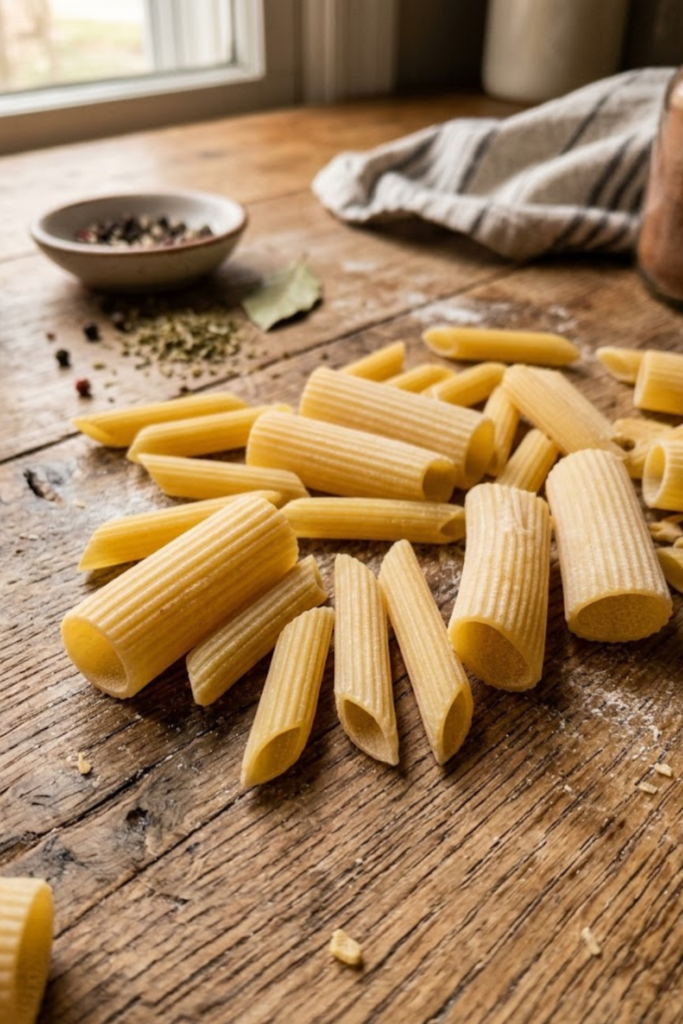
I used to think all pasta was basically the same thing just in different costumes. Boy, was I wrong! When you are getting ready to whip up a creamy ground beef pasta bake, the shape you pick is basically the foundation of your whole dinner. If you pick the wrong one, the whole thing just falls apart or gets super mushy. I remember one time back in the day, I tried using spaghetti for a bake because it was all I had left in my pantry. It was a total disaster! It turned into one giant, sticky brick of noodles that I had to cut with a steak knife. My family looked at me like I had totally lost my mind.
The Magic of Ridges and Holes
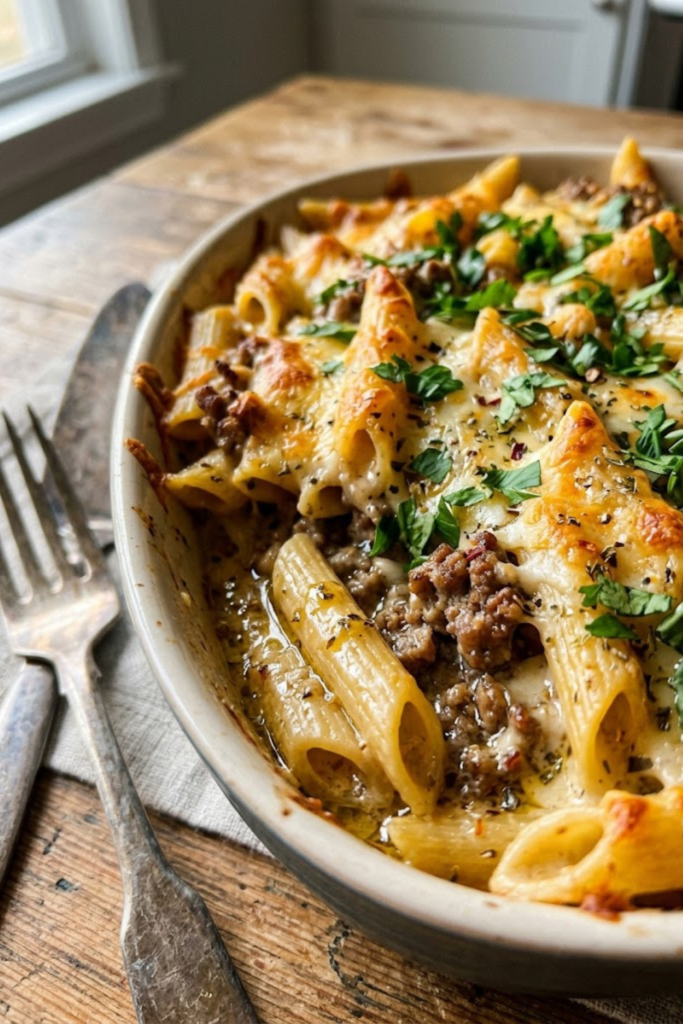
So, why do we love Penne or Rigatoni so much for this specific dish? It is because they are built like little pipes. When you pour that heavy cream sauce over the savory ground beef, the sauce actually crawls inside the pasta tubes. Every single bite becomes a little surprise of flavor. I always tell people that you want a pasta with “grip.”
Look for the boxes that say “rigate” on them. That is just a fancy word for ridges. Those little lines on the outside of the noodle act like tiny fingers that hold onto the cheese sauce so it does not all just slide off and pool at the bottom of your casserole dish. Rigatoni is probably my top pick because the holes are bigger, which means even more meat and sauce get trapped inside.
Spirals vs. Flat Noodles
If you can’t find penne, Rotini is a solid backup plan. Those spirals are great because the small bits of ground beef get trapped in the twists. It makes the texture really interesting to eat. I would stay away from stuff like fettuccine or bowties for this. Bowties look cute, but the middle part where they are pinched together usually stays too hard, while the edges get way too soft in the oven. It is just annoying to eat when the textures are all over the place.
The “Al Dente” Secret
This is the most important part of the whole process, so listen close! You have to boil your water with plenty of salt—it should taste like the ocean. But, you must take the pasta out about two or three minutes before the box says it is actually done. This is what we call “al dente.”
Since the pasta is going to sit in a hot oven with that wet sauce for a while, it is going to keep cooking. If you cook it all the way on the stove, it will turn into mushy baby food in the oven. I suggest undercooking it just enough so it still has a little bit of a tough snap when you bite it. Trust me, it will finish perfectly while the cheese is bubbling away!
Searing the Ground Beef for Maximum Flavor
I have a confession: for a long time, I thought browning meat just meant making it look “not pink.” I would throw a big cold block of beef into a lukewarm pan and just stir it around until it turned a sad, muddy gray. It tasted like absolutely nothing! If you want your creamy ground beef pasta bake to actually taste like a restaurant meal, you have to treat the meat with a bit of respect. It is the star of the show, after all.
Start with a Smoking Hot Pan
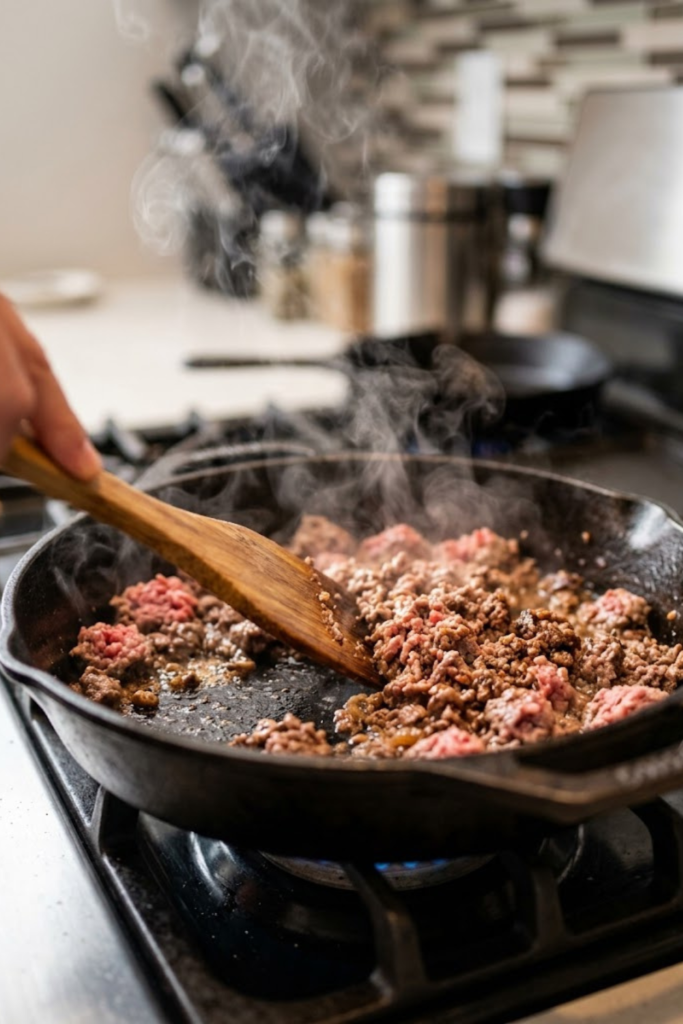
The biggest mistake I see people make is being too impatient. You have to let that skillet get hot—I mean really hot—before the meat even touches the surface. If you don’t hear a loud sizzle the second the beef hits the metal, take it out and wait! That sizzle is the sound of the “Maillard Reaction.” That is just a fancy science word for the meat turning brown and crispy. That brown crust is where all the deep, savory flavor lives. If you just boil the meat in its own juices because the pan was too cold, you lose all that goodness. Use a heavy pan if you have one, like a cast iron skillet, because it holds heat much better.
Pick the Right Beef-to-Fat Ratio
When you are at the grocery store, you might be tempted to grab the leanest beef possible. I used to do that because I thought it was healthier, but my pasta bakes always ended up tasting like cardboard. Now, I always go for 85/15 or 80/20 ground beef. You need that little bit of fat to keep the meat juicy while it bakes in the oven. If the meat is too lean, it gets crumbly and dry, which totally ruins the vibe of a creamy sauce. The fat also helps the spices stick to the meat better.
The Great Grease Drain
One thing that used to drive me crazy was a greasy film on top of my cheese. To avoid this, you have to drain the excess liquid after browning. But please, don’t wash the meat in the sink! Just tilt the pan and spoon out most of the grease into an old jar, or use a paper towel to soak it up. I like to leave just a tiny bit of the fat in the pan because it helps the garlic and onions soften up later. Just remember: don’t crowd the pan! If you put too much meat in at once, it won’t sear properly. Do it in batches if you have to so every piece gets that golden color.
Crafting the Silky Cheese Sauce
This is the part where the magic happens! If the beef is the soul of the creamy ground beef pasta bake, then the cheese sauce is definitely the heart. I’ve seen so many people just throw a jar of store-bought sauce in and call it a day, but once you make your own, you’ll never go back. I remember my first attempt at a homemade cheese sauce—I didn’t whisk it enough, and it ended up looking like lumpy oatmeal. It was so embarrassing that I almost ordered pizza instead! But don’t worry, I’ve made all the mistakes so you don’t have to.
The Secret to a Smooth Base
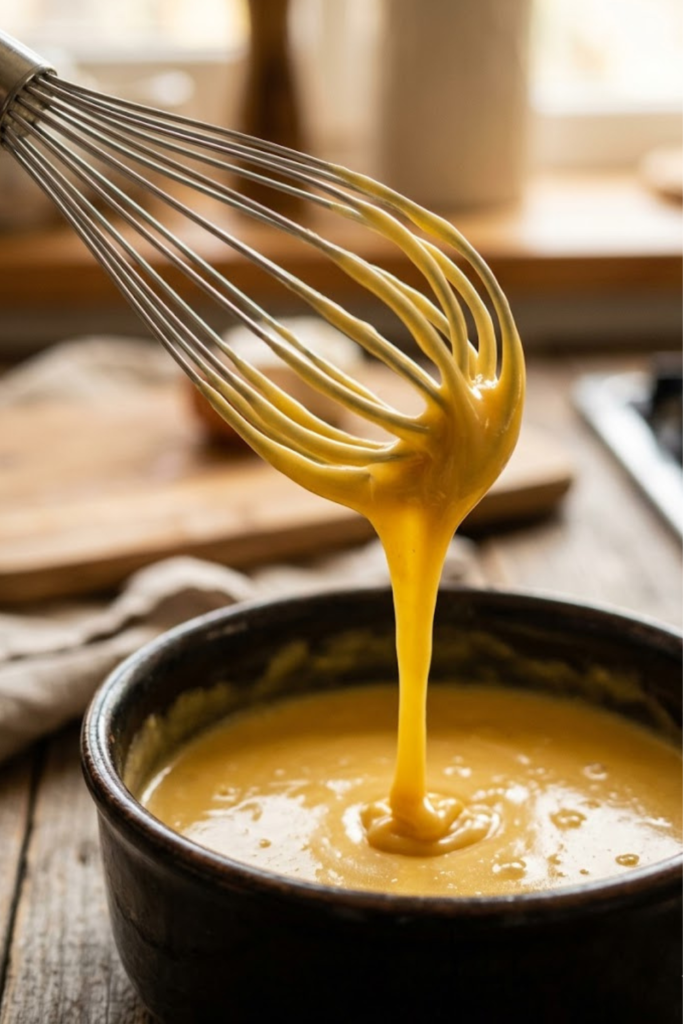
To get that perfect texture, you need to start with a good base. I usually like to use a mix of heavy cream and a little bit of whole milk. Some people use a roux—which is just flour and butter—but I find that for this specific bake, using heavy cream keeps it much richer and easier to manage. You want to heat the cream slowly on medium-low heat. If you crank the heat up too high, the milk will scald and give the whole dish a weird, burnt taste. I usually add my spices right into the liquid while it’s warming up. A little garlic powder, some onion powder, and a pinch of smoked paprika really make the flavors pop.
Choosing the Right Cheeses
Now, let’s talk about the cheese. This is where most people get confused. You want a mix of “melters” and “flavor-makers.” I always use a sharp cheddar for that classic “zing” and some mozzarella for that stretchy, gooey pull that kids love. If you want to feel a bit fancy, grating some fresh parmesan into the mix adds a nice salty bite. Please, whatever you do, grate the cheese yourself! The pre-shredded stuff in bags is coated in potato starch to keep it from sticking together in the bag, but that starch makes your sauce grainy and weird when it melts.
Avoiding the Dreaded Clumps
The biggest tip I can give you as a teacher is to add the cheese slowly. Don’t just dump the whole bowl in at once! If you do that, the temperature of the sauce drops too fast, and the cheese just turns into one big, oily ball. Add a handful, whisk until it’s totally gone, and then add the next one. It takes an extra two minutes, but the result is a sauce so smooth it looks like yellow silk. If it gets too thick, just splash in a little bit of the pasta water you saved. It’s the best way to get everything to stick to the noodles perfectly.
Assembling and Baking for a Golden Top
Finally, we get to the best part! Putting everything together is like the grand finale of a school play. You have your noodles, your perfectly seared meat, and that liquid gold cheese sauce all ready to go. Now you just have to get them into the pan and into the oven. I always get a little giddy at this stage because the kitchen already smells like a five-star restaurant, and I know I’m only about twenty minutes away from a real treat. Making a creamy ground beef pasta bake is all about the finish, and if you follow these steps, your family will be asking for seconds before they even finish their first plate.
To Mix or Not to Mix?
One question I get asked all the time is whether you should layer the ingredients like a lasagna or just toss them all together in a big bowl. In my early cooking days, I tried layering them, thinking it would look fancier. Big mistake! The middle layers stayed dry, and the top got way too crunchy. Now, I’m a firm believer in the “big toss.” I put the cooked pasta and the browned beef into a huge mixing bowl and pour about three-quarters of the sauce over it. I give it a good stir until every single noodle is coated. Then, I dump it into my favorite 9×13 baking dish and pour the rest of the sauce on top. This makes sure every bite is juicy and full of flavor.
The Right Oven Temperature
I usually set my oven to 375 degrees. You don’t want it too low, or the pasta will sit there and soak up all the moisture until it turns into a gummy mess. You want it hot enough to make the sauce bubble and the cheese on top stretch out. I usually bake mine for about 20 to 25 minutes. If you are using a glass dish, keep an eye on it! Glass holds heat differently than metal, and I’ve definitely had a few times where the bottom got a little too brown because I wasn’t paying attention. I like to cover it with foil for the first ten minutes and then take it off to let the cheese get melty.
The Broiler Trick for That Perfect Crunch
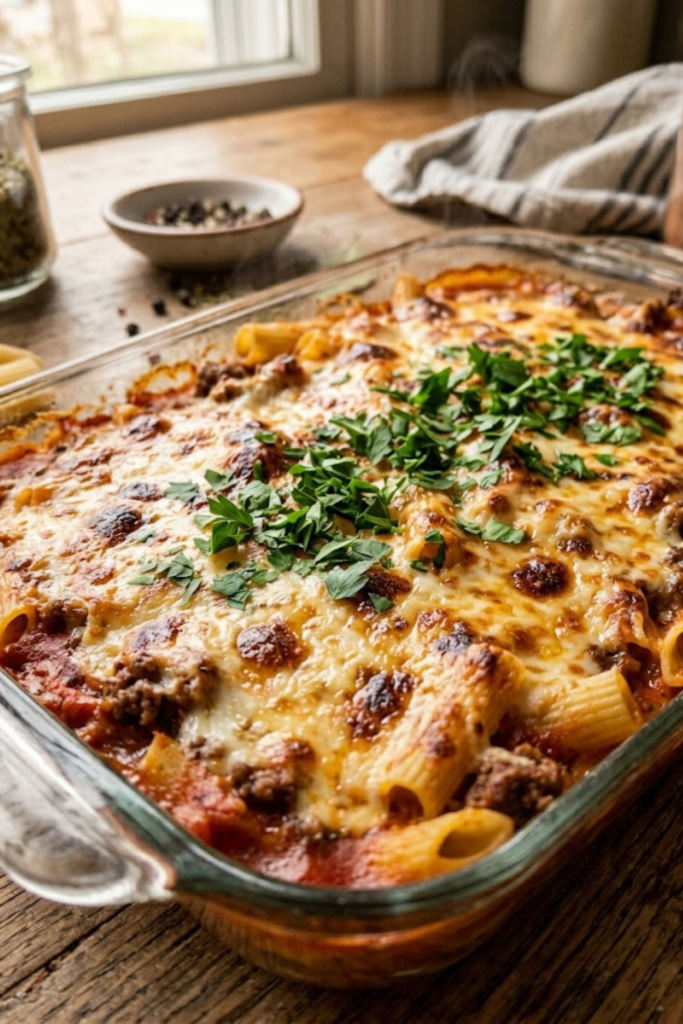
If you want that “Pinterest-perfect” look with the little brown spots on the cheese, you have to use the broiler. But be careful! The broiler is like a temperamental teenager—one second it’s fine, and the next it’s blowing up. I turn it on for just the last two minutes. I actually stand right there with the oven door cracked open so I can watch it. Once the cheese starts to pop and turn golden brown, pull it out immediately! It adds such a great texture to the top of your bake. Let it sit for five minutes before you dig in, even though it’s hard to wait. It helps the sauce set up so it doesn’t run all over the plate when you serve it.
Storing, Reheating, and Making it Your Own
One of the best things about making a big creamy ground beef pasta bake is that you usually have plenty of food for the next day. As a teacher, I am a huge fan of “planned leftovers.” There is nothing better than knowing my lunch is already packed and waiting for me in the fridge! But I have learned that if you don’t store it the right way, that creamy sauce can disappear, leaving you with a container of dry, sad noodles.
How to Keep it Fresh
Once your dinner is over, let the dish cool down for a bit on the counter. You don’t want to put a steaming hot tray right into the fridge because it makes the plastic wrap get all sweaty, which makes the cheese soggy. I usually put mine in airtight glass containers. They stay fresh for about three to four days. If you want to keep it longer, you can actually freeze this bake! Just make sure it is wrapped really tight in foil and then a freezer bag. It stays good for about two months. When you’re ready to eat it, let it thaw in the fridge overnight.
The Trick to Perfect Reheating
When you go to reheat your pasta, don’t just throw it in the microwave and walk away. The microwave tends to “break” the sauce, making it oily. I like to add a tiny splash of milk or a little bit of water to the bowl before I heat it up. This helps bring the creaminess back to life. Cover the bowl with a damp paper towel so the steam stays inside. If you have the time, reheating a bigger portion in the oven at 350 degrees for about fifteen minutes is the way to go. It makes the cheese get that nice stretch again.
Variations to Try Next Time
Once you master the basic recipe, you can start getting creative! I sometimes toss in a bag of fresh spinach right before I mix the sauce and pasta. The heat from the noodles wilts the spinach perfectly, and it is an easy way to get some veggies into the meal without the kids complaining. You could also swap the ground beef for ground turkey or even spicy sausage if you want a little more kick. I’ve even tried adding a layer of fried onions on top for a little extra crunch. It’s a great way to use up whatever you have in the pantry! If you enjoyed these tips, make sure to save this recipe and share it on Pinterest!