Did you know that nearly 60% of home cooks complain that their homemade meatballs turn out too dry or “rubbery”? I’ve been there, and honestly, it’s a total buzzkill when you’ve spent an hour in the kitchen! Making the perfect ground beef meatballs isn’t just about mixing meat and throwing it in a pan; it’s about the chemistry of the bind and the heat of the sear. Today, I’m sharing my updated 2026 secrets to ensure your dinner is a hit. Let’s get cooking!
Selecting the Right Meat and Binders
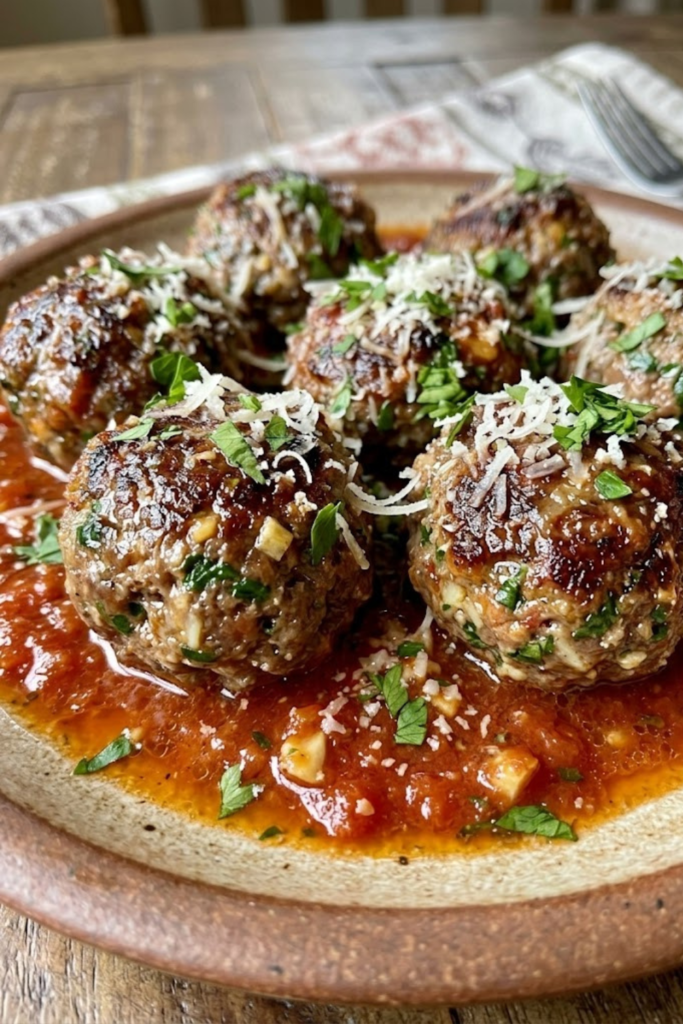
When I first started making ground beef meatballs, I thought I was being really smart by buying the leanest meat I could find. I would grab that 93/7 pack at the store because I thought it was “healthier,” but man, those meatballs always came out like little hockey pucks. My kids actually joked that they could bounce them off the kitchen floor! I learned pretty fast that if you want a juicy result, you can’t be afraid of a little bit of fat. Choosing your ingredients is the most important part of the whole process, and it really starts with that meat-to-fat ratio.
The Magic Ratio for Beef
Now, I always tell people to go for 80/20 ground beef. That 20 percent fat is what melts down and keeps the inside of the meatball moist while it cooks in the pan or the oven. If you use meat that’s too lean, there is nothing to protect the proteins from tightening up and getting tough. It is kind of like trying to bake a soft cake without using any oil or butter—it just doesn’t work out. I also try to make sure the meat stays cold while I’m working with it. If the beef gets too warm from your hands or the room, the fat can start to get greasy, and that ruins the texture.
Why Breadcrumbs Need a Bath
This is the part where most folks make a mistake. They just dump dry breadcrumbs right into the bowl with the meat and call it a day. I used to do that too, and the dry crumbs would just suck all the moisture out of the beef like a sponge. One of my old neighbors showed me the “panade” trick, and it changed my life. Basically, you soak your breadcrumbs in a little bit of milk or even heavy cream for about five minutes before you even touch the meat. It turns into a thick paste that creates a barrier between the meat fibers. This stops them from shrinking up too much. I prefer using Panko because it keeps things light, but regular crumbs work fine if that is what you have in the pantry.
The Glue and The Flavor
You have to have an egg in there to act as the glue. Without it, your ground beef meatballs might just fall apart in the sauce, and nobody wants meat sauce when they were expecting a solid meal! I also throw in a big handful of freshly grated Parmesan cheese. The cheese adds a salty kick that plain salt just can’t do. I usually add about half a cup for every pound of meat I use. It is also a great idea to add your herbs now, like fresh parsley or some dried oregano. Just be careful not to overwork the mix. If you squeeze the meat too hard while mixing, you are headed straight back to hockey puck territory! Keep it light and loose.
The Secret to the Perfect Sear
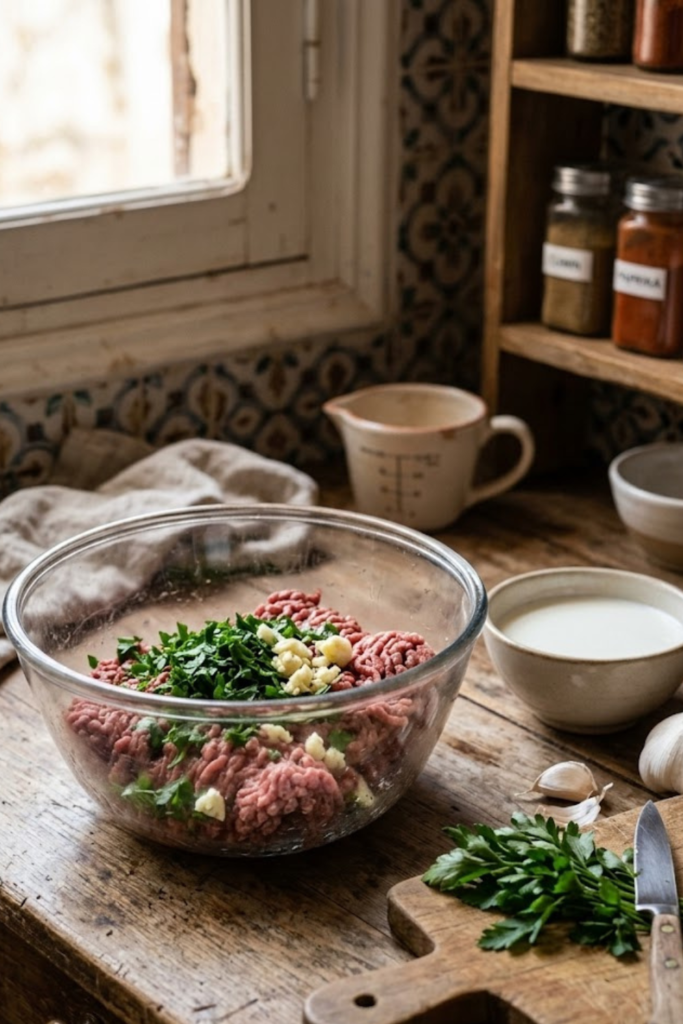
I’ll be the first to admit that I used to be very impatient in the kitchen. I would get my ground beef meatballs all rolled up and ready to go, and then I would just dump them into a cold pan. I thought that heating them up slowly would be better, but I was so wrong. All that did was make the meat stick to the bottom and turn a weird shade of grey. If you want that deep, savory flavor, you have to master the sear. It’s the difference between a boring dinner and one that everyone asks for seconds of. Getting a good crust is where the real magic happens.
Let the Pan Get Hot First
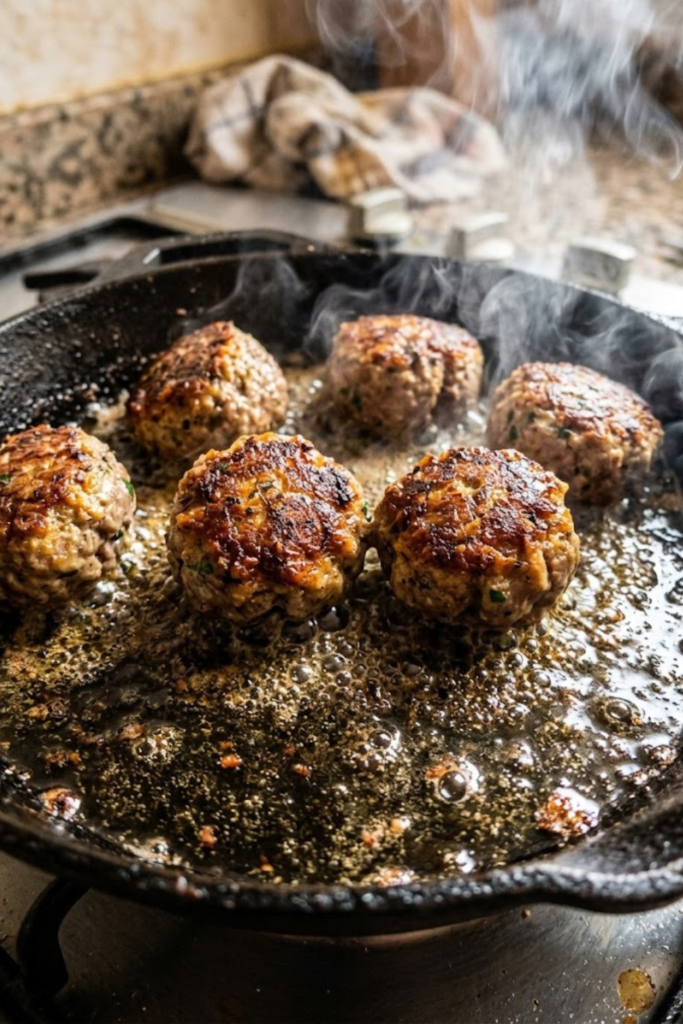
One thing I tell all my friends is to let the skillet sit on the burner for at least three or four minutes before you add any oil. I usually use a cast iron pan because it holds onto heat so well. You want the pan to be hot enough that a drop of water will bounce around like a marble. Once it is hot, add an oil that won’t burn easily. I stay away from butter for this part because it turns black too fast. Instead, I use avocado oil or a bit of vegetable oil. If you see a tiny bit of smoke, you are in the right spot to start browning.
Give Each Ball Some Space
The biggest mistake I see people make is trying to cook all twenty meatballs at the exact same time. If the pan is too full, the temperature drops and the meat starts to release its juices. Instead of searing, your ground beef meatballs will basically boil in a pool of liquid. This makes them tough and flavorless. I usually cook mine in two or three different batches. It takes a little more time, but the crust you get is worth it. Plus, it makes it much easier to flip them without breaking them apart.
The No-Touch Rule
When you first put the meat in the pan, leave it alone! I know it’s hard not to poke at them, but they need a minute to build up that crust. If you try to move them too soon, they will stick and rip. I usually wait about two minutes on each side. When they are ready to flip, they will naturally let go of the pan. I use a small pair of tongs to gently turn them so I don’t squeeze out any of the juices I worked so hard to keep inside. Just be patient and let the heat do its job.
Slow Simmering vs. Oven Baking
After you get that nice brown crust on your ground beef meatballs, you have a big choice to make. You can either finish them in a pot of sauce or slide them into the oven. I’ve done both ways about a hundred times, and honestly, it depends on how much time I have and what I’m in the mood for. Both ways have their pros and cons, but you want to make sure you don’t overcook them. There is nothing worse than a dry meatball that tastes like sawdust because it sat in the heat too long. I’ve learned that the “low and slow” rule is usually the winner here.
The Sauce Method for Flavor
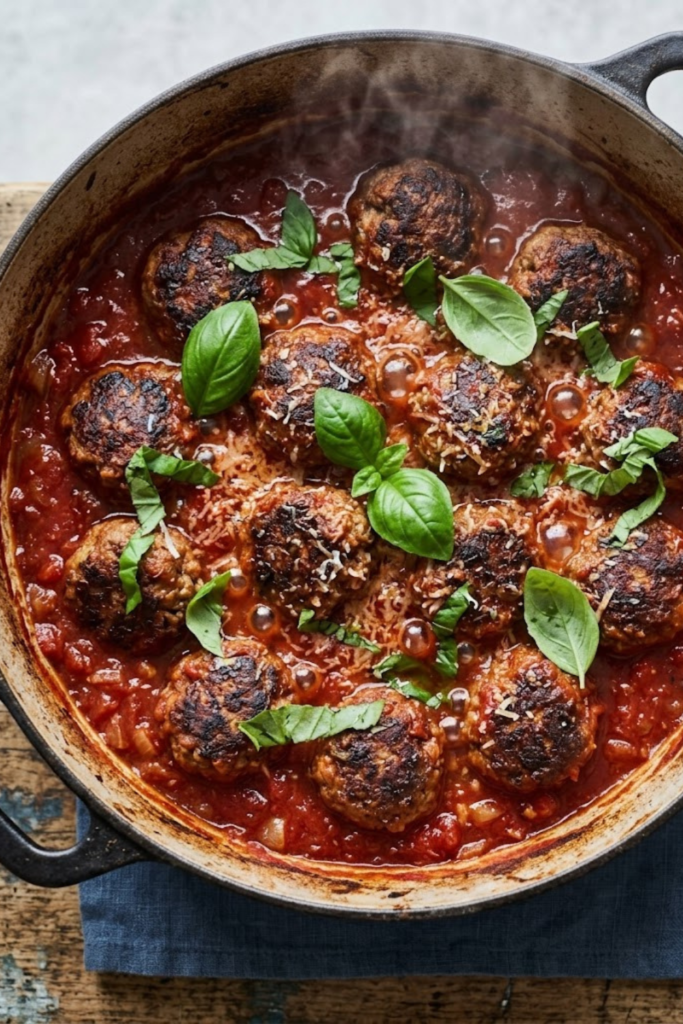
My favorite way to finish ground beef meatballs is to drop them right into a bubbling pot of marinara. This is what my grandma used to do, and the smell is just incredible. When you simmer them in the sauce, the meat stays incredibly tender because it is basically taking a bath in tomato juice. The sauce gets better, too! All those juices from the beef and the spices from the sear mix into the tomato sauce and give it a deep, rich flavor that you just can’t get any other way. I usually let them sit in there on low heat for about 20 minutes. You don’t want it boiling hard, just a tiny bubble here and there so you don’t break them apart.
Baking for the Busy Cook
Now, if I am making a huge batch of fifty meatballs for a party, I usually go with the oven. It is way faster and you don’t have to stand over the stove. I just line a big baking sheet with parchment paper and space them out. I usually set my oven to 375 degrees. The cool thing about baking is that the meatballs stay perfectly round and keep their shape. Sometimes in the sauce, they can get a little bit squished if you aren’t careful when you stir the pot. If you bake them, you can also freeze them easier later on. I just pop the whole tray in the freezer for an hour before putting them in freezer bags.
Knowing When They Are Done
No matter which way you choose, you have to check the middle. I use a cheap digital thermometer because I don’t like guessing with my family’s dinner. You are looking for an internal temperature of 160 degrees. If you go much higher than that, the fat starts to leak out and they get tough. I always pull mine out just a degree or two early because they keep cooking for a minute while they rest. Just give them a five-minute break before you serve them, and I promise they will be the juiciest meatballs you’ve ever had. This little rest helps the juices stay inside the meat instead of running out on your plate.
Best Ways to Serve and Store Meatballs
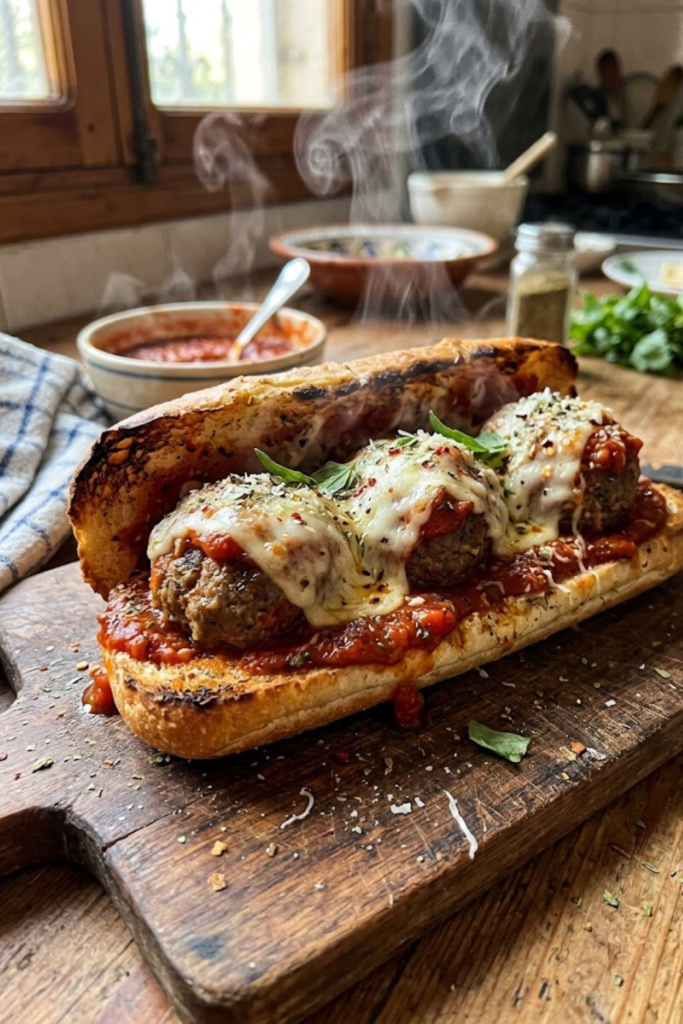
After you have put in all that work to make the best ground beef meatballs, you have to decide how you are going to eat them. Most people just think about spaghetti, but I have found so many other ways to enjoy these that my family never gets bored. One of my favorite things to do on a Friday night is to make meatball subs. I buy those long, soft hoagie rolls and toast them with a little bit of garlic butter first. Then I tuck three or four big meatballs inside, cover them with extra sauce, and pile on the provolone cheese. I put them under the broiler for just a second until the cheese is all bubbly and brown. It is way better than anything you can buy at a sandwich shop, and it is a lot cheaper too!
If you are trying to be a bit healthier, I also love serving these over a big pile of roasted vegetables or even some zucchini noodles. My husband actually prefers them with a side of creamy mashed potatoes, which sounds a bit strange if you are used to Italian style, but the sauce over potatoes is really delicious. We always have a side of garlic bread on the table no matter what. I like to use the bread to swipe up every last drop of sauce left on the plate. It is the best part of the meal if you ask me!
I also make sure to cook extra because ground beef meatballs are one of the best things to have as leftovers. They actually taste better the next day because the flavors have more time to sit together. I just put them in a sealed container in the fridge, and they stay good for about four days. If you want to keep them longer, you can freeze them for up to three months. I usually freeze them on a flat tray first so they don’t stick together into one big giant meat-brick. Once they are frozen solid, I toss them into a freezer bag. When I need a quick dinner, I just pull out a few and heat them up.
For reheating, please try to avoid the microwave if you can. It tends to make the meat rubbery and tough. I usually put mine back in a small pan with a little bit of sauce or a splash of water and cover it with a lid. Heating them up slowly on the stove keeps them just as juicy as the day you made them. It takes five extra minutes, but your taste buds will thank you for not rushing it.
Final Tips for Meatball Success
Looking back at my early days in the kitchen, I really wish someone had sat me down and explained all these little tricks years ago. I spent way too much time making dinner that was just “okay,” instead of making dinner that was truly great. If you stick to the basics we talked about today, you are going to see a huge difference in your cooking. First off, remember that the beef you pick is the main foundation. If you start with meat that is too lean, you are going to end up with a dry meal. Always look for that 80/20 blend at the store. It might look like it has a lot of fat, but most of that fat cooks off in the pan, leaving behind just the flavor and the moisture you need to make the meatballs soft.
And please, whatever you do, do not skip the part where you soak your breadcrumbs in milk. I know it feels like just one more bowl to wash at the end of the night, but it really is the secret to a soft texture. If you are in a big rush, just do it for two or three minutes while you chop your garlic. It still helps a lot! Also, keep your hands off the pan once you put the meat in. Let the heat do the work for you. If you try to flip them too early, they will stick and fall apart, and you will be left with a big mess. I have been there many times, and it is no fun trying to fix a broken meatball while your family is sitting at the table waiting to eat.
I hope these tips help you feel more confident when you stand at the stove tonight. Cooking should not be a scary thing; it should be a fun way to show your family you care about them. Once you get the hang of this basic recipe, you can start trying new things, like adding different spices or even mixing in some ground pork. But for now, just focus on getting that perfect sear and keeping the meat juicy. If you found this guide helpful, please head over to Pinterest and share it with your friends so they can make better dinners too! I would love to hear how yours turned out.