I’ve been roasting chickens for over twenty years, and honestly, my first one was a total disaster! It was so dry it felt like I was eating a wool sweater. Did you know that nearly 60% of home cooks struggle with dry white meat when roasting a whole bird? It’s a common bummer, but I finally cracked the code! In 2026, we aren’t settling for “okay” chicken anymore.
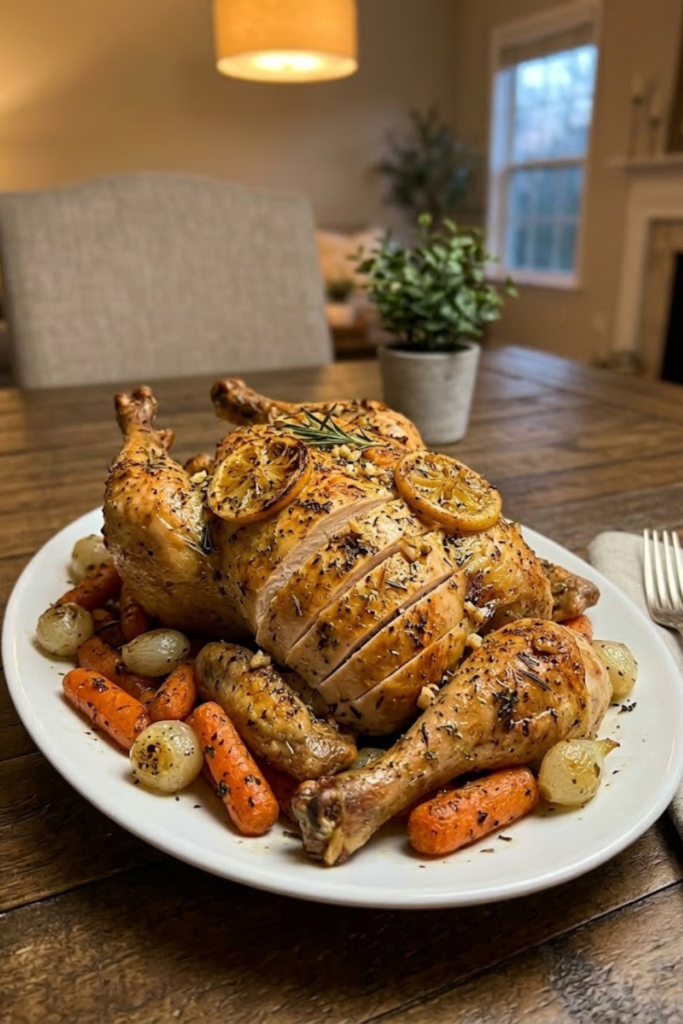
This lemon herb roasted chicken is my absolute favorite because it makes the whole house smell like a fancy bistro. I remember one Sunday I forgot to set the timer and thought I ruined dinner, but the lemon juice kept everything so moist. It was a total triumph! You’re going to love how the citrus and fresh herbs work together. Let’s get cooking!
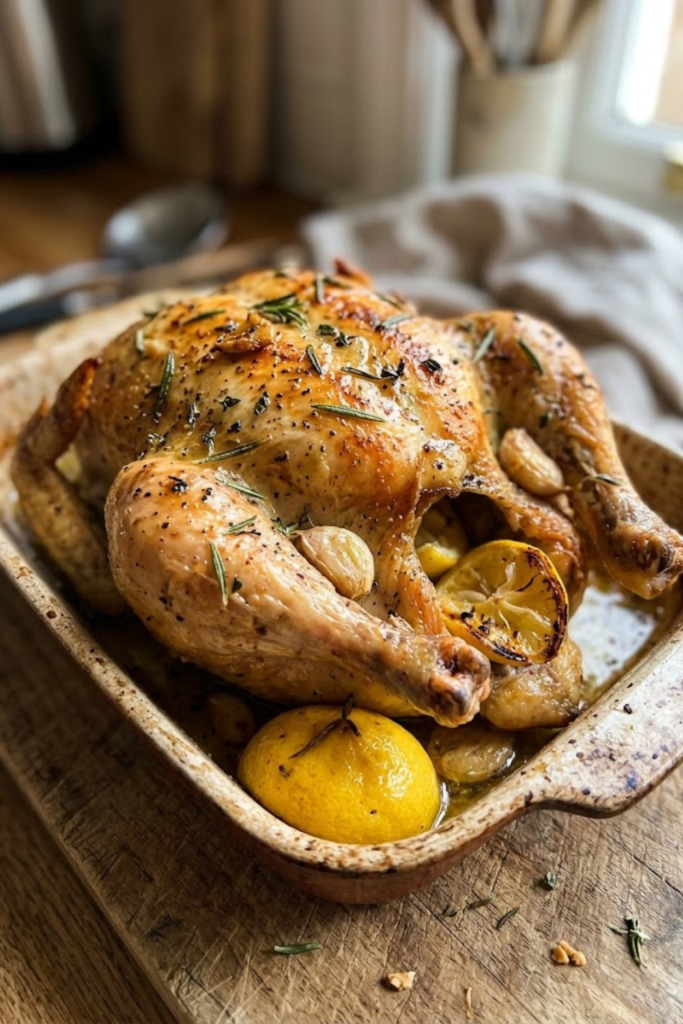
Picking the Best Bird for Roasting
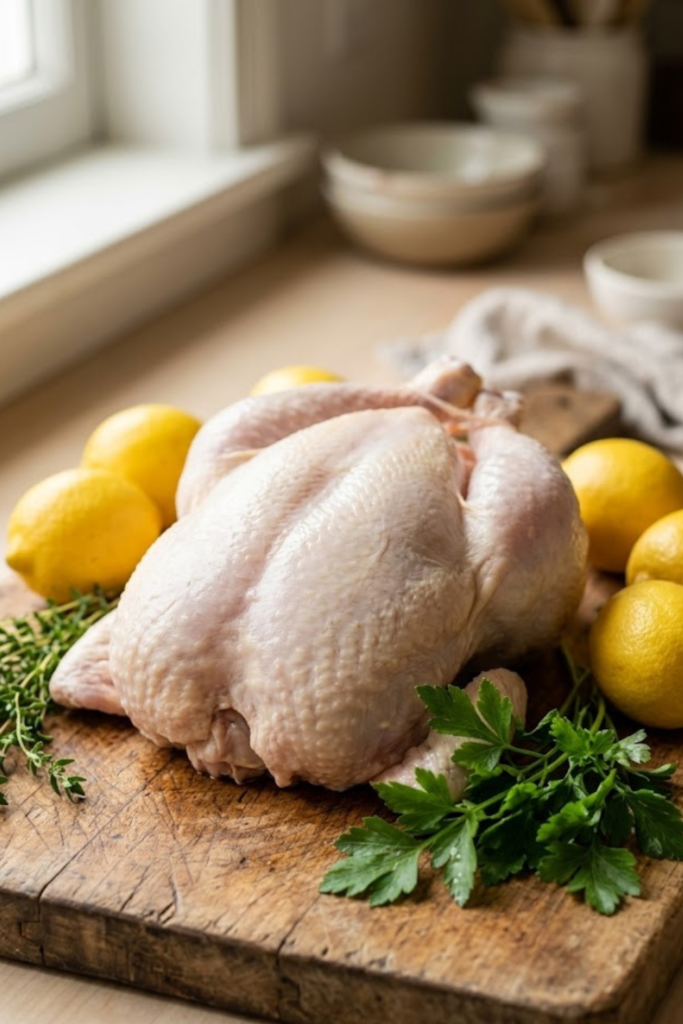
I’ve spent years standing in the meat aisle, just staring at all those plastic-wrapped birds. It can be confusing! My first time roasting, I just grabbed the biggest one I could find because I thought “more chicken is better.” That was a big mistake. That huge bird took forever to cook, and by the time the legs were safe to eat, the breast meat was like eating a dry sponge. Now, I follow a few simple rules that make sure my lemon herb roasted chicken comes out perfect every single time. It all starts with picking the right bird from the start.
Why I Pick Organic and Air-Chilled
If you can swing the extra few dollars, go for the organic chicken. I noticed a huge difference in how the skin browns and how the meat tastes. Most cheap chickens are cooled in big tubs of cold water. They soak up that water like a sponge. When you roast them, all that water leaks out into the bottom of the pan. This causes the meat to steam instead of roast, which makes the skin soggy and gross.
I always look for the words “air-chilled” on the label. These chickens are cooled with cold air instead of water. This means the meat has a much deeper flavor and the skin gets way crispier in the oven. It also helps the herb butter stay in place instead of sliding off. I used to buy the cheapest stuff possible, but once I tasted an air-chilled bird, I never went back. It’s an easy way to make your dinner taste like it came from a fancy bistro.
Aim for the Four-Pound Sweet Spot
Size really does matter here. I always try to find a chicken that is right around 4 pounds. Why? Because a 4-pound bird cooks very evenly. If you get those massive 6-pound “roasters,” the outside gets way too dark before the middle is even warm. Plus, a medium bird fits much better in a standard cast iron skillet or a small roasting pan. I once tried to squeeze a giant chicken into my favorite pan and the juices overflowed into the bottom of my oven. My smoke alarm went off for twenty minutes! Learn from my fail—stay around 4 pounds for the best results.
Check the Skin Before You Buy
Before you put that chicken in your cart, give it a good look through the plastic. I check for any big rips or tears in the skin. The skin acts like a little jacket that keeps all the lemon juices and butter inside. If there are huge holes, the meat underneath will dry out while it’s in the oven. Also, look at the color. You want the skin to look healthy and creamy, not grey or bruised. If I see a lot of purple bruising on the wings, I put it back and find a better one. Taking an extra minute to pick the right bird makes the whole cooking process much easier and more fun!
The Secret is in the Herb Butter Rub
Let’s talk about the rub. I used to think that just shaking some salt and pepper on the top of the chicken was enough to make it taste good. I was so wrong! The skin on a bird is actually quite thick, and the flavor from spices doesn’t always soak through to the meat underneath. One time, I made a chicken that looked beautiful and dark brown on the outside, but when we cut into it, the meat tasted like absolutely nothing. It was such a letdown after waiting an hour for dinner. That was the day I learned that the real trick to a great lemon herb roasted chicken is making a thick herb butter and putting it exactly where it needs to go.
Mixing Your Flavor-Packed Butter
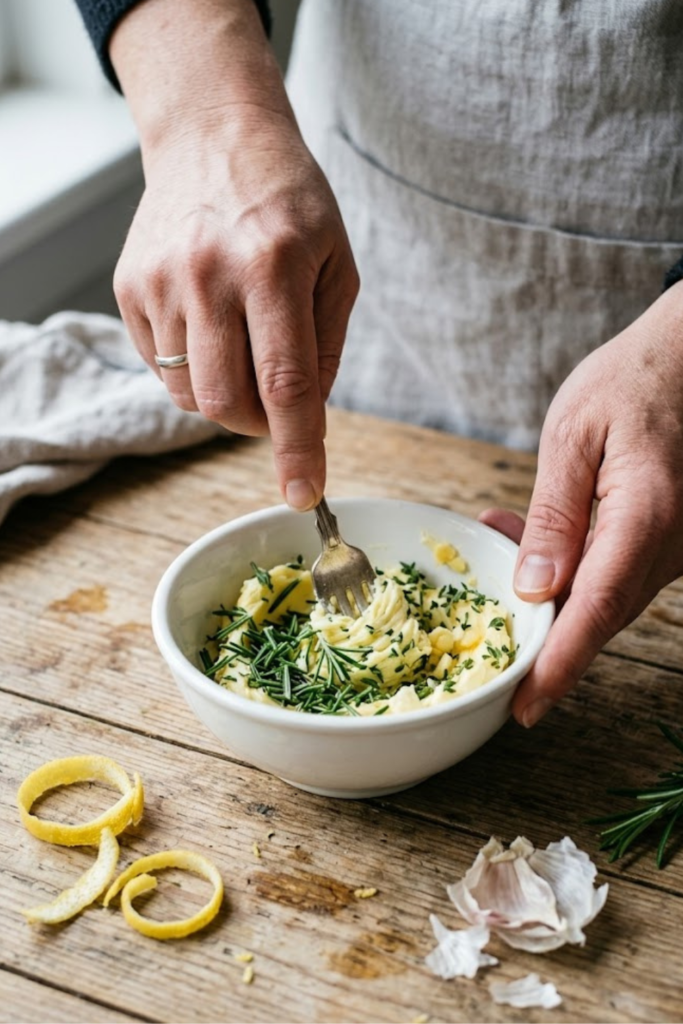
I always start with about half a cup of unsalted butter. The most important thing is to make sure it is soft! If it is too cold, you won’t be able to mix anything into it, and you’ll just end up with chunks of plain butter. I usually leave mine on the counter for a few hours before I start. I mash the butter with a fork and then add at least five cloves of minced garlic. My family always jokes that I use too much garlic, but in my experience, you can never have too much when you’re roasting a whole bird.
After the garlic, I stir in a big handful of chopped fresh rosemary and thyme. Smelling those fresh herbs always makes me feel like a professional chef, even if I’m just in my pajamas in my own kitchen. The smell is just wonderful. I also add a little bit of lemon zest into the butter mix to really pull that citrus flavor through every bite of the meat.
The Under-the-Skin Technique
This part feels a little bit gross the first time you do it, but stay with me! You have to gently slide your fingers between the breast meat and the skin. I remember being so nervous the first time I tried this because I didn’t want to rip the skin. If you rip it, the butter just leaks out into the pan and the meat gets dry.
Just go slow and use a light touch. Once you have made a little pocket, grab a big glob of that herb butter and push it right in there. Use your hands on the outside of the skin to massage the butter all the way down toward the legs. This is what keeps the breast meat so juicy while it’s in the hot oven. It’s like giving the chicken a little flavor spa treatment before it cooks.
Don’t Forget the Salt Crust
Once you have the butter tucked under the skin, I rub whatever is left over the very top of the bird. This is when I get out my kosher salt. Please don’t use regular fine table salt for this part; it’s way too salty and doesn’t give you the right texture. Kosher salt has big, chunky flakes that help create that crunch we all love.
I sprinkle a very heavy layer of salt and a lot of cracked black pepper all over the outside. It might look like a lot of seasoning, but keep in mind that a good portion of it will drip off into the pan as the fat melts. You want to be generous here so every bite of skin is perfectly seasoned and crispy.
Roasting Tips for the Perfect 2026 Dinner
I used to think roasting was the easiest part of the whole process. You just throw the bird in the oven and wait, right? Well, that’s what I thought until I served a chicken that was burnt on the outside and totally pink on the inside for a big family dinner. Talk about embarrassing! Everyone had to wait another thirty minutes while I tried to fix it, and by then, the side dishes were cold. It was a total mess. Since then, I’ve learned that roasting is all about controlling the heat and being really patient. Even with all the fancy kitchen gadgets we have in 2026, the basics of heat haven’t changed much.
425°F for a Better Crunch
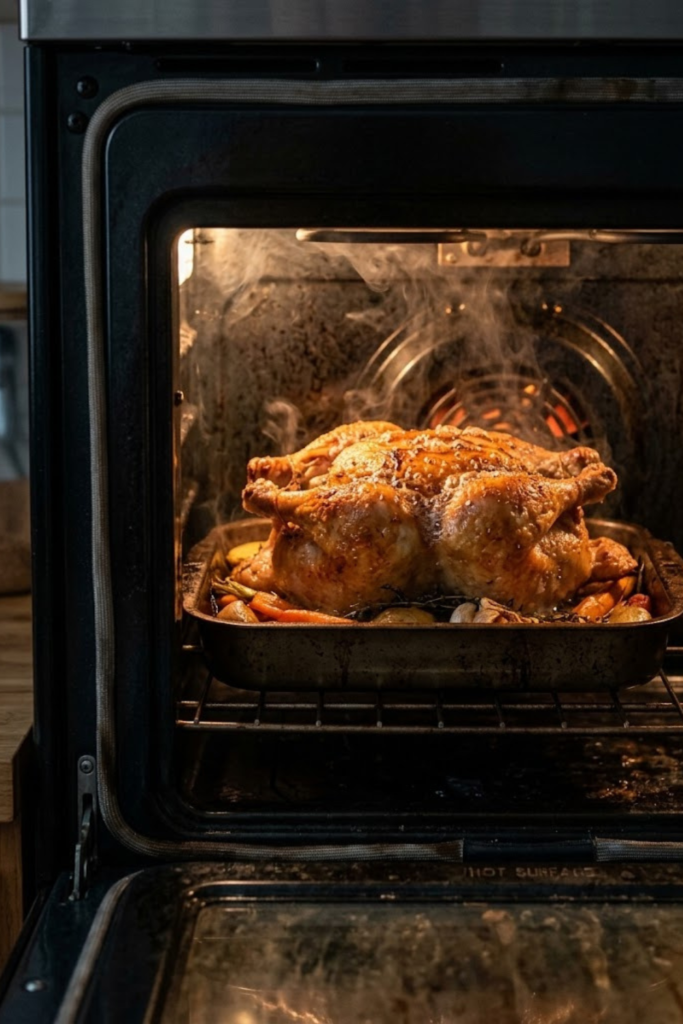
A lot of old-school recipes tell you to cook a chicken at 325°F or 350°F. I’m telling you right now, don’t do it! If you want that skin to be crispy and golden, you need high heat. I always set my oven to 425°F. This high temperature sears the skin almost immediately. It locks in the lemon juices and creates that beautiful dark brown color that makes everyone’s mouth water when you bring it to the table.
I usually put some sliced onions and extra lemon wedges in the bottom of the pan too. They caramelize in the high heat and soak up the chicken fat, making the best little side snack. Just a heads up—watch out for your smoke alarm if your oven is a bit dirty. Mine always goes off because of the high heat, but the chicken is so worth the noise! Using a high temp is the best way to make sure the meat stays moist while the skin gets that perfect “snap.”
The Magic of the Meat Thermometer
Stop guessing if the chicken is done by poking it with a fork or looking at the color of the juices. I did that for years and I usually ended up with dry meat because I was so scared of undercooking it. Now, I use a digital meat thermometer every single time. It is honestly the most helpful tool in my kitchen drawer.
You want to stick the probe into the thickest part of the thigh, but be careful not to hit the bone. If you hit the bone, the reading will be wrong. You are looking for the temperature to reach exactly 165°F. As soon as it hits that number, get it out of the heat! If you let it go much higher, you’re going to have a bad time and dry meat. Trust the numbers on the screen more than your own eyes. It takes all the stress out of the “is it done yet?” game.
The Importance of the 15-Minute Wait
This is the part where almost everyone fails. The chicken smells amazing, the herbs are fragrant, and your family is probably starving. But if you cut that chicken as soon as it comes out of the oven, all the juice will run out on your cutting board. It’s like a little river of flavor just escaping.
I always set a timer for 15 minutes and move the chicken to a clean board. I don’t even touch it! This resting time lets the meat relax and soak those juices back into the fibers. It makes the meat so much more tender and easy to slice. While it rests, I usually make a quick gravy from the pan drippings or just finish up the salad. Those fifteen minutes are the secret to a professional-tasting dinner.
Bringing it All Together for Your Best Sunday Roast
So, there you have it! That is my whole system for making a lemon herb roasted chicken that actually tastes like something special. I know it seems like a lot of steps when you first read it, but once you do it once or twice, it just becomes second nature. I remember being so scared to even touch a raw chicken when I first started cooking. I used to use tongs because I didn’t want to get my hands messy! Now, I just dive right in there with the herb butter because I know how much better it’s going to taste. There is something really nice about spending a Sunday afternoon in the kitchen, knowing that your house is going to smell like fresh rosemary and garlic for the next few hours.
To recap the big points, always try to find that air-chilled bird if you can find one at your local store. It really does make the skin crunchier, which is the best part of the whole meal if you ask me. Don’t forget to be brave and get that butter under the skin! It’s the difference between a dry chicken and one that everyone asks for the recipe for. And please, use that meat thermometer. It’s the only way to be 100% sure that you aren’t going to serve someone a raw leg or a dry breast. If you pull it at 165°F and let it rest for those fifteen minutes, I promise you will have the juiciest chicken you’ve ever made in your life.
I also love this recipe because the leftovers are just as good as the main meal. If we have any chicken left over—which doesn’t happen often—I usually shred it up for a quick chicken salad or throw the bones in a pot to make a really good soup the next day. It makes me feel like I’m getting my money’s worth out of that organic bird. Cooking for your friends or family should be fun, not stressful. This recipe is my “old reliable” because it works every time, even when I’m tired or having a bad day. I hope it becomes a favorite in your house too!
If you enjoyed this guide and want to save it for later, please share it on Pinterest! It really helps me out, and it lets other home cooks find these tips so they can stop eating dry chicken too. Happy roasting, and I hope your dinner is absolutely delicious!