Listen, I’ve had my fair share of kitchen disasters, but nothing beats the time I tried to make a “quick” fancy dinner and ended up with a house that smelled like a burnt garlic factory for a week!. It was a total mess, and my dog wouldn’t even come into the kitchen. Did you know that over 75% of home cooks say that pasta is their go-to comfort meal when they’re stressed?. I totally get it. There’s just something about tortellini with roasted garlic sauce that feels like a big, warm hug for your stomach.
I remember sitting on my kitchen floor, staring at a pot of mushy pasta and thinking, “There has to be a better way”. I spent months trying to get that garlic just right—sweet, mellow, and spreadable like butter—without turning it into charcoal. It took a lot of trial and error, but I finally cracked the code. If you’re looking for a meal that tastes like it came from a five-star bistro but actually lets you stay in your sweatpants, you’re in the right place!.
My Big Mistake Roasting Garlic the Right Way
Man, I used to think I could just throw garlic in the oven at 400 degrees and call it a day. Boy, was I wrong! I ended up with these little bitter rocks that ruined my entire batch of tortellini with roasted garlic sauce. It was a total mess, and my house smelled like a burnt tire for three days. My kids actually asked if we were having “charcoal pasta” for dinner. I learned the hard way that garlic is very delicate. If you treat it like a baked potato, you are going to have a bad time. You want the cloves to be sweet and soft, not hard and angry.
Why High Heat is Your Enemy
I used to crank the heat up high because I was always in a rush and wanted to eat fast. But garlic has a lot of natural sugar in it. When those sugars hit high heat too fast, they turn bitter instead of sweet. It is a lot like making caramel; one second it is fine, and the next it is ruined. Now, I keep my oven around 325 or 350 degrees at the most. It takes longer—usually about 45 minutes to an hour—but the result is worth the wait. The cloves turn into a paste that is so mild you could almost eat it with a spoon. If you see dark black spots on the cloves when you open the foil, you probably went too hot. You are looking for a light tan or a deep golden color.
The Olive Oil and Foil Trick
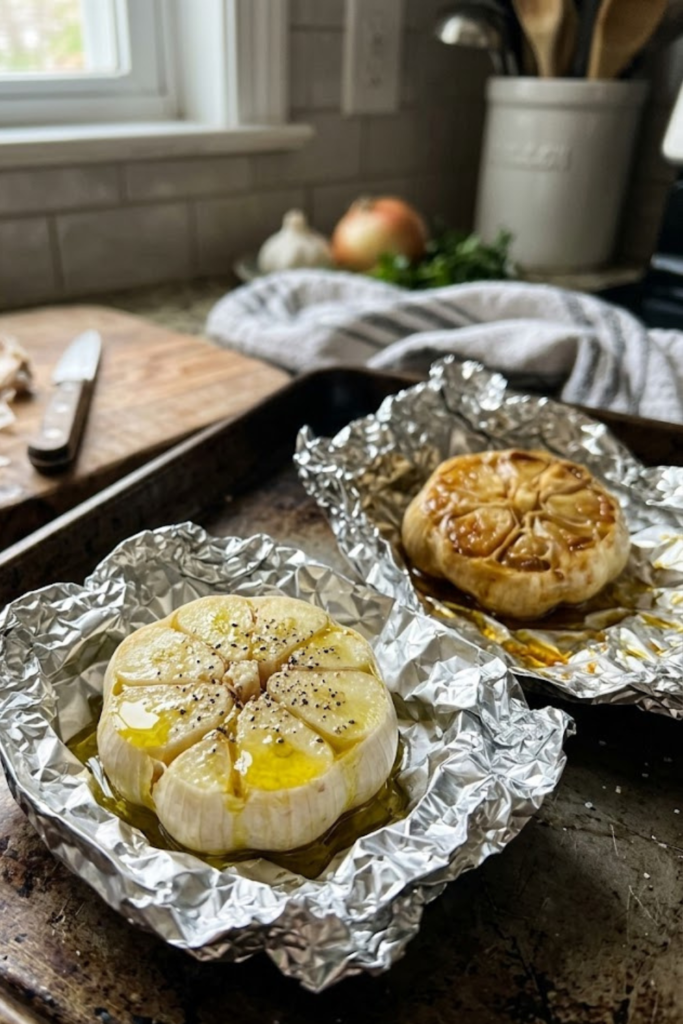
You can’t just put the garlic in the oven dry. You have to cut the top off the whole bulb so the individual cloves are peeking out. Then, you drizzle a good amount of olive oil over them. I mean really let it soak in there! I usually add a little salt and maybe a tiny bit of pepper too. Then, you have to wrap it in aluminum foil. Make sure the seal is tight! This creates a little steam room for the garlic. It cooks in its own juices and the oil. If the foil is loose, the moisture escapes and you get dry, chewy cloves instead of that buttery texture we want for our sauce.
How to Tell When It’s Perfect
How do you know it is done? I use a pair of tongs to gently squeeze the bulb through the foil. If it feels like a soft marshmallow, it is ready. If it still feels firm, give it another ten minutes. Once it is cool enough to touch, you just squeeze the bottom of the bulb and the roasted garlic pops right out. It is kind of messy, but it’s the best part of the process. This is the foundation of the whole meal, so don’t rush it. Taking your time here makes the tortellini with roasted garlic sauce taste like it came from a fancy restaurant.
Picking the Best Pasta for Your Sauce
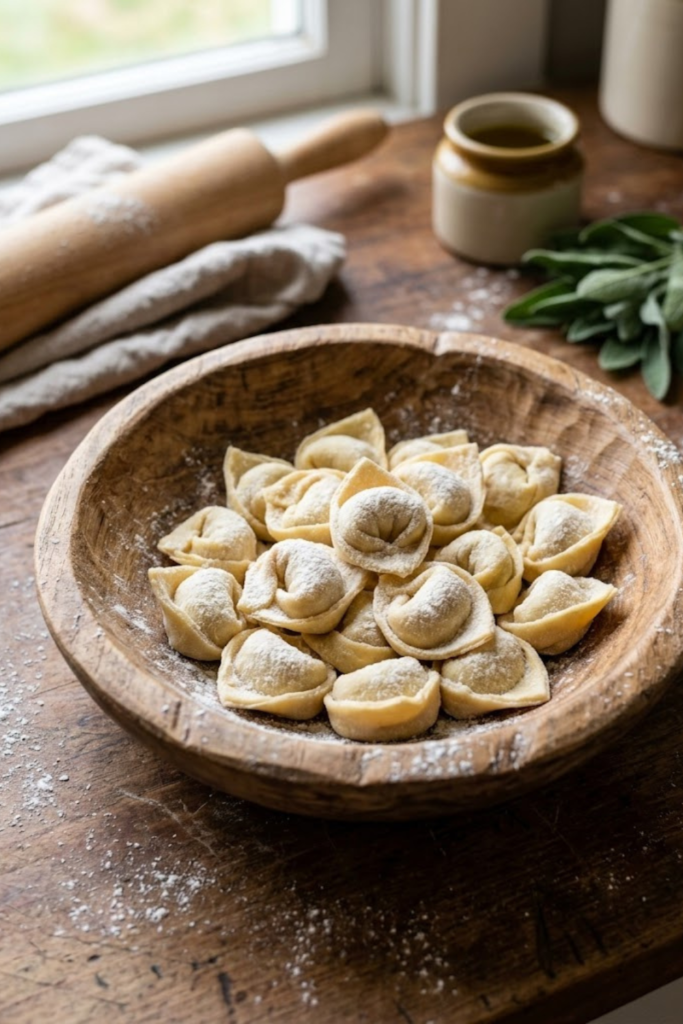
I used to be a total snob about only using fresh pasta from the refrigerated section. But then I had a Tuesday night where I was exhausted and all I had was a bag of frozen cheese tortellini in the back of the freezer. Honestly? It was still amazing. The tortellini with roasted garlic sauce doesn’t care if the pasta was frozen or fresh, as long as you don’t overcook it. The biggest mistake people make is boiling it for too long. For frozen, I usually take it out a minute before the box says. It keeps that “al dente” bite that feels professional. If it’s too soft, the whole dish feels like baby food, and nobody wants that. I once made a batch that was so mushy I had to turn it into a weird pasta bake just to save face.
Fresh vs. Frozen Tortellini
When you go to the store, you see the expensive stuff in the plastic tubs and the cheaper bags in the freezer. I have tried both many times. The fresh ones are faster—they cook in like three minutes. But they can also fall apart if you look at them wrong. Frozen tortellini is a bit more sturdy. I like to keep a bag in the freezer for emergencies. One thing I learned is to never just trust the timer on the bag. I always pull one out with a spoon and bite into it. If the middle is still a bit hard, it needs another thirty seconds. You want it to be firm but easy to chew. Also, don’t forget to salt your water! It should taste like the ocean. This is the only chance you get to season the actual pasta. If you skip the salt, the whole meal tastes flat.
Why Stuffing Matters
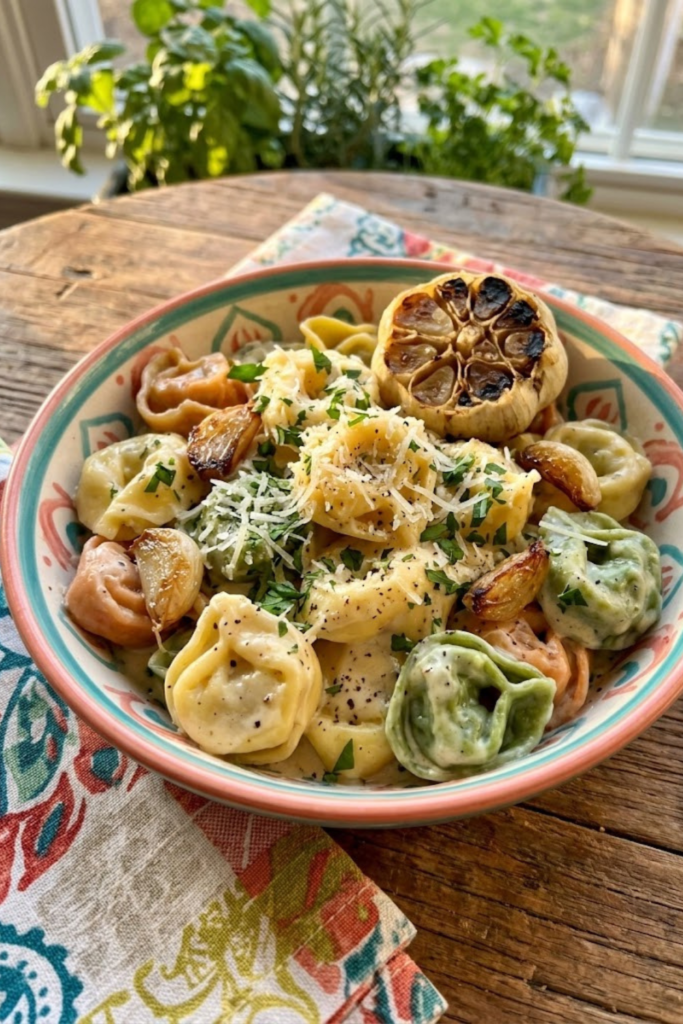
I’ve tried every filling under the sun. Meat, spinach, mushroom… you name it. But for a heavy, creamy roasted garlic sauce, I think plain three-cheese or spinach and ricotta works best. If the stuffing is too busy, it fights with the garlic. You want the sauce to be the star of the show, not some aggressive sausage filling. Sometimes I’ll get the multi-colored ones just to make the plate look pretty for pictures. It makes me feel like I actually know what I’m doing in the kitchen. Also, make sure you save about half a cup of that salty pasta water before you drain it. That water is liquid gold for thinning out your sauce if it gets too thick. I forgot to do that once and my sauce turned into a brick of cheese by the time it hit the table. Stick to the simple fillings and you will be much happier.
How I Make the Sauce Extra Creamy
The base of this sauce is where the magic really happens, and it is honestly my favorite part of the whole process. I start by getting a large skillet and melting a good chunk of butter over medium-low heat. Whatever you do, please don’t use margarine. It just doesn’t have that rich flavor you need for a meal like this. Once the butter is bubbling a little, I take those roasted garlic cloves we made earlier and squeeze them straight into the pan. I use a fork to mash them up into a smooth paste right in the butter. It smells so good at this point that my neighbors usually start knocking on the door asking what’s for dinner! I love how the garlic just disappears into the butter.
The Dairy Secret
After the garlic and butter are mixed, I pour in the heavy cream. Now, I’ve tried using milk or half-and-half before to try and save some calories, but it just isn’t the same. If you want that restaurant-quality thickness, you really need the heavy stuff. I stir it constantly so it doesn’t burn. This is where you have to be patient. If you crank the heat too high, the cream might curdle, and then you have a chunky mess on your hands. I once tried to rush this because I was starving after a long day at work, and I ended up having to throw the whole batch out. It was a sad night for my stomach. Keep it low and slow, and you’ll see it start to thicken up naturally.
Why Real Cheese is Mandatory
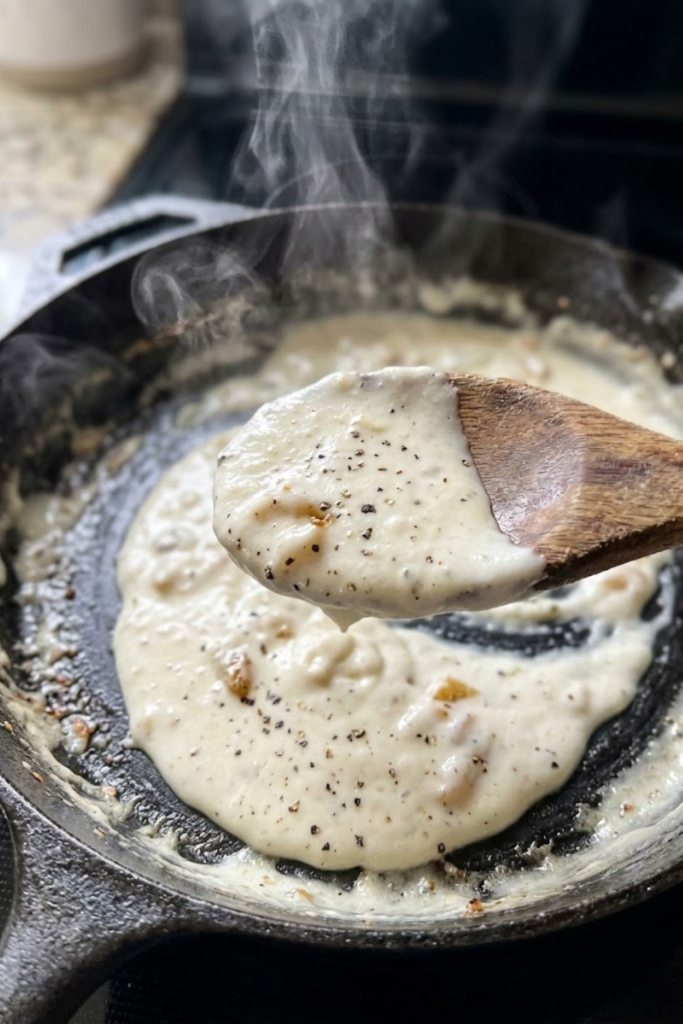
Next comes the Parmesan. I am very strict about this part: buy a block of cheese and grate it yourself. The stuff in the green shaker bottle has stuff in it to keep it from clumping. That stuff will not melt into a smooth sauce; it stays grainy and weird. I remember making this for a potluck once and using the cheap stuff to save time. The sauce looked like it had sand in it! It was so embarrassing. Now, I always grate my own. As the cheese melts into the cream and garlic, the sauce gets this glossy, velvet look that is just beautiful. It should coat the back of your spoon perfectly.
Adjusting the Thickness
If the sauce looks too thick, don’t panic. This is why we saved that pasta water! I add a splash at a time until it’s exactly how I want it. The starch in that water helps the sauce stick to the tortellini instead of just sliding off. If it feels too thin, just let it simmer for another minute or two. I also add a little pinch of nutmeg. It sounds weird, but it makes the cream taste so much better. Just a tiny bit! This part of the cooking is all about how it feels and tastes to you, so don’t be afraid to poke around and adjust things as you go. Making tortellini with roasted garlic sauce is more of an art than a science, so trust your gut.
Final Thoughts on This Dinner
Making tortellini with roasted garlic sauce is honestly one of my favorite ways to spend a rainy afternoon. It fills the house with such a cozy vibe, and it is way better than anything you’d get in a jar from the store. I remember when I first started cooking, I was so scared of making a mess or ruining the food. But honestly, if you mess up a little, it still usually tastes pretty good. The more you do it, the better you get. I’ve probably made this specific pasta fifty times now, and every time I learn something new. Like last week, I added a bit of fresh basil at the end, and it was a total game changer for the flavor.
Whether you are a pro in the kitchen or just starting out for the first time, you can totally do this. Just remember the big rules I talked about earlier. Roast that garlic slow so it doesn’t get bitter and hard. Save your pasta water like it’s gold! And for the love of all things tasty, please grate your own cheese. These little things are what make the difference between a “meh” dinner and a meal your family will talk about for weeks. I love seeing my kids actually finish their plates without me having to beg them to eat. It makes all that time peeling garlic worth it in the end.
I really think the best part about this whole process is how much you can change it once you get the basics down. Sometimes I throw in some frozen peas at the very end just to feel like I’m eating something green. Or if I have some leftover chicken in the fridge, I’ll shred that up and toss it in too. The roasted garlic sauce is like a blank canvas that goes with almost anything. I’ve even tried it with cheese ravioli when the store was out of tortellini, and it was just as delicious.
I really hope you give this a try this weekend. Don’t worry if it isn’t perfect the first time. My first few tries were pretty rough, but I kept at it and now it’s my signature dish. If you liked this recipe and found my tips helpful, please share it on Pinterest so your friends can enjoy some carb-heavy goodness too! It really helps me out when you share my stuff. Also, let me know if you tried any different fillings for your pasta. I’m always looking for new ideas to try out next time. Happy cooking!