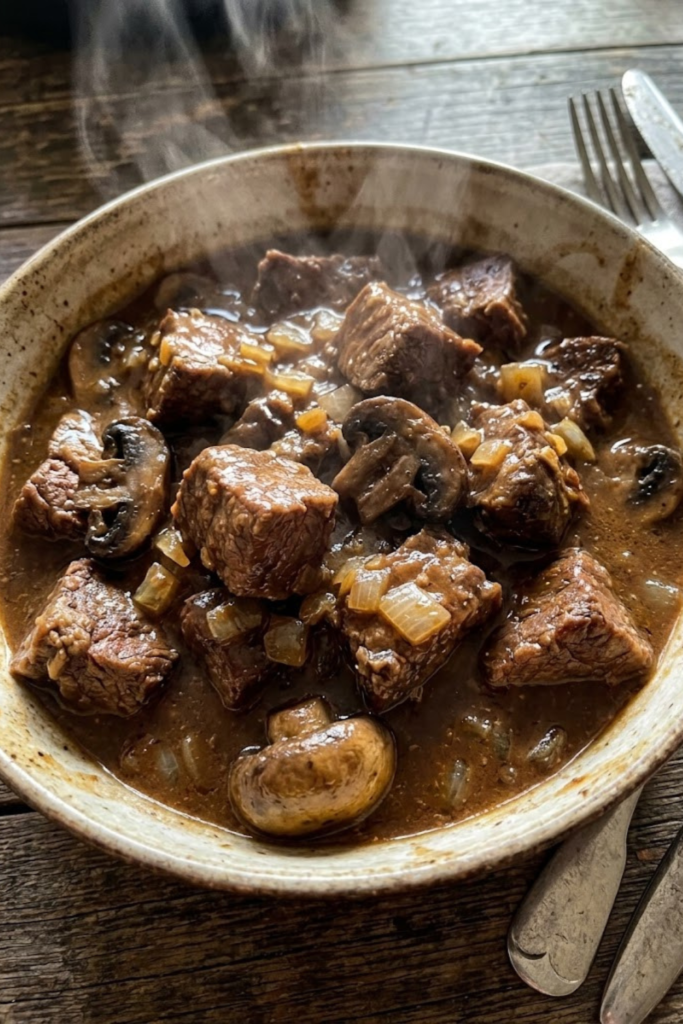
Did you know that over 60% of home cooks prefer slow cooking for weeknight meals because it’s a total lifesaver? I honestly can’t count how many times I’ve walked through the door after a long day at school, exhausted and hungry, only to be greeted by the smell of savory beef. It’s like a warm hug in a bowl! Learning to make crockpot beef tips and gravy was a game-changer for me because it’s cheap, easy, and tastes like a fancy Sunday dinner without all the fuss. Whether you use a classic slow cooker or a modern multi-cooker, getting that melt-in-your-mouth texture is easier than you think.
The Best Beef Cuts for Tender Results
I’ve spent plenty of years trying to figure out the best way to make dinner without spending a fortune. One thing I learned the hard way is that the most expensive meat isn’t always the best for your slow cooker. I remember this one time I bought a really nice sirloin steak thinking I was being fancy. I cut it up into little pieces for my crockpot beef tips and gravy, thinking it would be the most tender meal ever. Boy, was I wrong! It came out dry and tough like a piece of old leather. My kids could barely chew it. It turns out, lean meat just doesn’t like the long, slow heat of a crockpot. You need something with a bit more “junk” in it to get that melt-in-your-mouth feel we all want.
Why Chuck Roast is Usually Your Best Bet
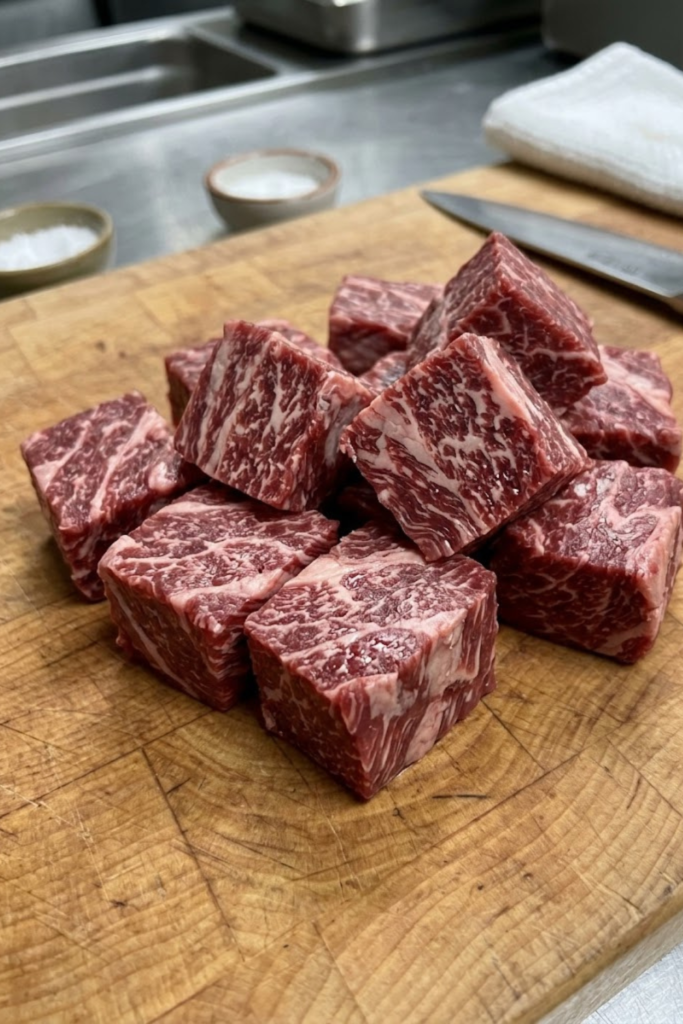
If you want that meat that literally falls apart when your fork touches it, you have to look for a chuck roast. It’s got all those little white lines of fat running through it, which people call marbling. In a slow cooker, that fat melts down and keeps the beef moist while it cooks for hours. Plus, it’s way cheaper than those fancy steaks! I usually buy a big three-pound roast and cut it up myself. It takes a few extra minutes, but the flavor you get is way better than anything else.
The Problem with Pre-Cut Stew Meat
I know it’s tempting to just grab that package labeled “stew meat” at the store to save time. I’ve done it plenty of times when I’m tired after a long day at the school. But the thing is, those packages are often a mix of different scraps. Some pieces might be tender, but others will stay tough no matter how long they cook. When you cut your own beef tips from a single roast, everything cooks at the same speed. This helps you get a consistent texture in every single bite.
Getting the Size Just Right
When you are cutting your meat, try to keep the chunks about an inch and a half wide. If they are too small, they will just disappear into the gravy. If they are too big, the middle might not get as soft as you want. It’s a simple trick, but it makes a huge difference in how the final dish looks and tastes on the plate. Taking the time to prep the meat right is the first step to a perfect meal.
The Secret is in the Sear: Building Deep Flavor
I’ll be honest with you—there were years where I just dumped everything into the crockpot and walked away. I thought the whole point of a slow cooker was to save time, so why would I want to dirty another pan? I’d just put the raw beef in there with some water and gravy mix and hope for the best. But the truth is, the meat always looked kind of gray and sad when it was done. It tasted okay, sure, but it didn’t have that deep, rich taste you get at a good diner. Then I finally tried searing the meat first, and it changed my whole cooking game.
What is the Maillard Reaction Anyway?
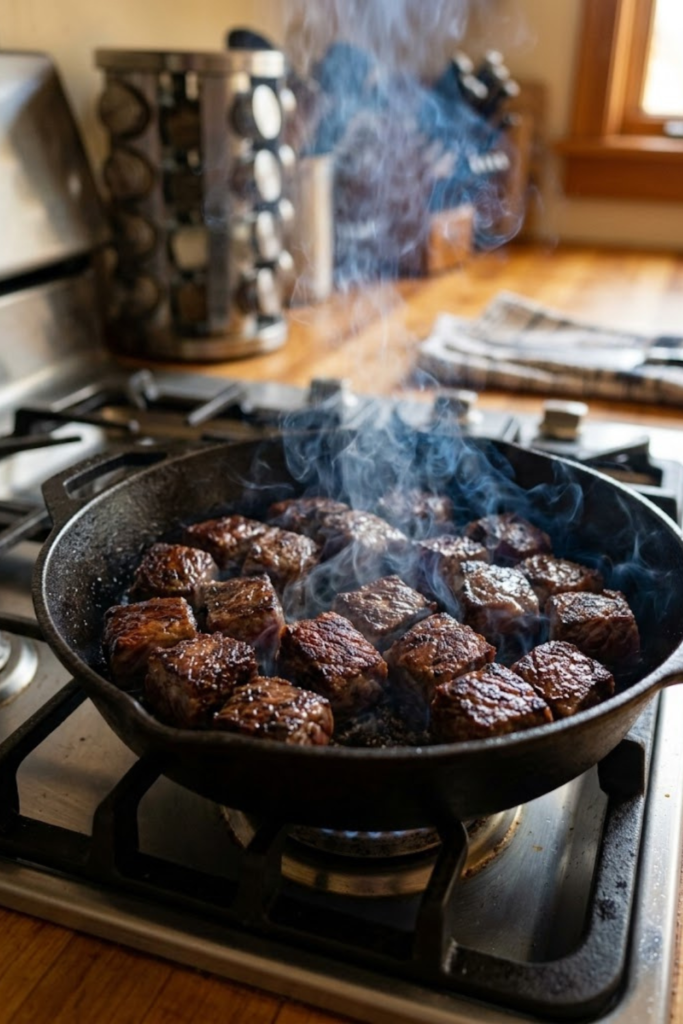
Since I’m a teacher, I like to understand the “why” behind things. There is this scientific process called the Maillard reaction. Basically, when you hit meat with high heat in a skillet, the proteins and sugars on the outside change. They turn brown and create a ton of flavor that you just can’t get from boiling or slow cooking alone. If you skip this step, you’re missing out on about half the flavor of your crockpot beef tips and gravy. You don’t need to cook the meat all the way through in the pan; you just want a nice, dark crust on the outside of those beef chunks.
Don’t Leave the Good Stuff in the Pan
After you brown the meat and move it to the slow cooker, you’ll see all these little crusty brown bits stuck to the bottom of your frying pan. Don’t you dare wash that pan yet! Those bits are like flavor gold. I usually pour a little bit of my beef broth right into the hot skillet while it’s still on the stove. This is called deglazing. I use a wooden spoon to scrape all those tasty bits loose until the liquid turns dark. Then, I pour that entire liquid mix right into the crockpot over the beef. It makes the gravy much darker and gives it a savory punch that a packet of mix just can’t do on its own.
Layering Your Seasonings Early
I also found that it helps to season the meat right before it hits the hot skillet. I sprinkle on a good amount of salt, black pepper, and maybe some onion powder. When that seasoning hits the hot oil, it really sticks to the meat and toasts it. It’s way better than just stirring spices into a big pot of liquid later on. It helps build layers of taste so that every bite of the beef tips has its own kick. It might take an extra ten minutes in the morning, but I promise your family will notice the difference. It turns a “meh” dinner into something people actually ask for seconds of, and that makes the extra dishes worth it.
How to Make the Perfect Rich Gravy
I’ve had my fair share of dinner disasters, especially regarding the gravy part of my crockpot beef tips and gravy. There is nothing more disappointing than lifting the lid of the slow cooker after eight hours and seeing a thin, watery mess. It’s like a soup instead of that thick, brown sauce you get at a nice family restaurant. I used to just dump in more flour and hope for the best, but that usually left me with weird white lumps that looked like tiny marshmallows. It took me a few years of trial and error to figure out how to get that glossy, rich texture every single time without losing my mind. Being a teacher, I don’t have time for a science project in my kitchen; I just want it to work.
The Magic of the Cornstarch Slurry
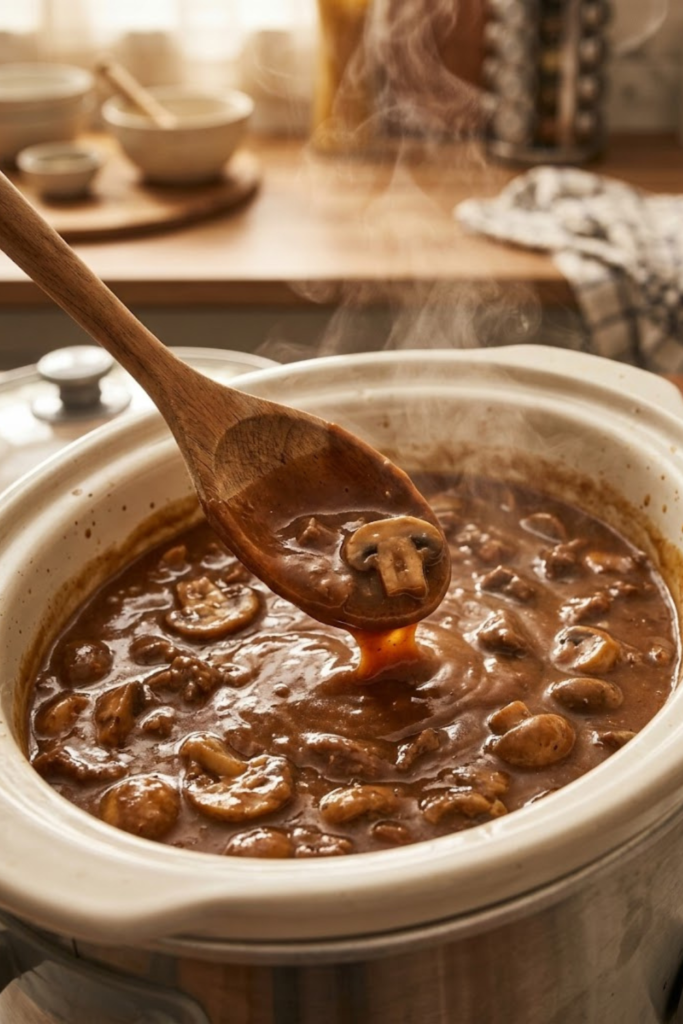
In my classroom, I tell my students that sometimes the simplest tools are the best ones. For gravy, that tool is a cornstarch slurry. Instead of tossing flour straight into the pot, I take a small bowl and mix two tablespoons of cornstarch with two tablespoons of cold water. You have to use cold water, or it won’t work right! Once it’s smooth, I pour it into the crockpot about 30 minutes before we are ready to eat. I turn the heat up to high, and suddenly, the liquid starts to thicken up into a beautiful sauce. It’s way easier than making a roux on the stove and it keeps the gravy looking clear and pretty instead of cloudy and gray.
Boosting the Flavor Profile
Getting the thickness right is a big deal, but you also want that gravy to taste like it’s been simmering on a stove for days. I’ve found that a splash of Worcestershire sauce or even a tiny bit of soy sauce adds a lot of “oomph.” It gives it that dark color and a salty, savory kick. Sometimes, if I’m feeling extra lazy after a long day of grading papers, I’ll stir in a packet of onion soup mix right at the beginning. It has all the salt and herbs already in there, which saves me from digging through my spice cabinet for twenty minutes. I also like to add a few sliced mushrooms if I have them in the fridge. They soak up all that beefy juice and make the whole meal feel much more substantial.
How to Fix it if it’s Still Too Thin
If you get to the end of the cooking time and the gravy still looks a bit too much like water, don’t panic. Just take the lid off and let it cook on high for another twenty minutes. This lets some of the steam escape, which naturally thickens things up. You can also take a few pieces of the beef out, mash them up a little, and put them back in. The tiny bits of meat help bulk up the sauce. I’ve had to do this more than once when I was in a hurry to get food on the table before a school play or a football game. It always works out, and honestly, nobody ever complains when there’s plenty of extra gravy to pour over their mashed potatoes.
Serving Suggestions: What Goes Best with Beef Tips?
I always tell my students that a good presentation matters, whether they are working on a science poster or setting the dinner table. After a long day at school, I just want a meal that feels like a big hug. But you can’t just serve a bowl of meat and gravy by itself—well, you could, but it’s much better when you have a sidekick to help it shine. Finding the right base for your crockpot beef tips and gravy is the key to making it a full meal that keeps everyone full until breakfast.
The Famous Mashed Potato “Lake”
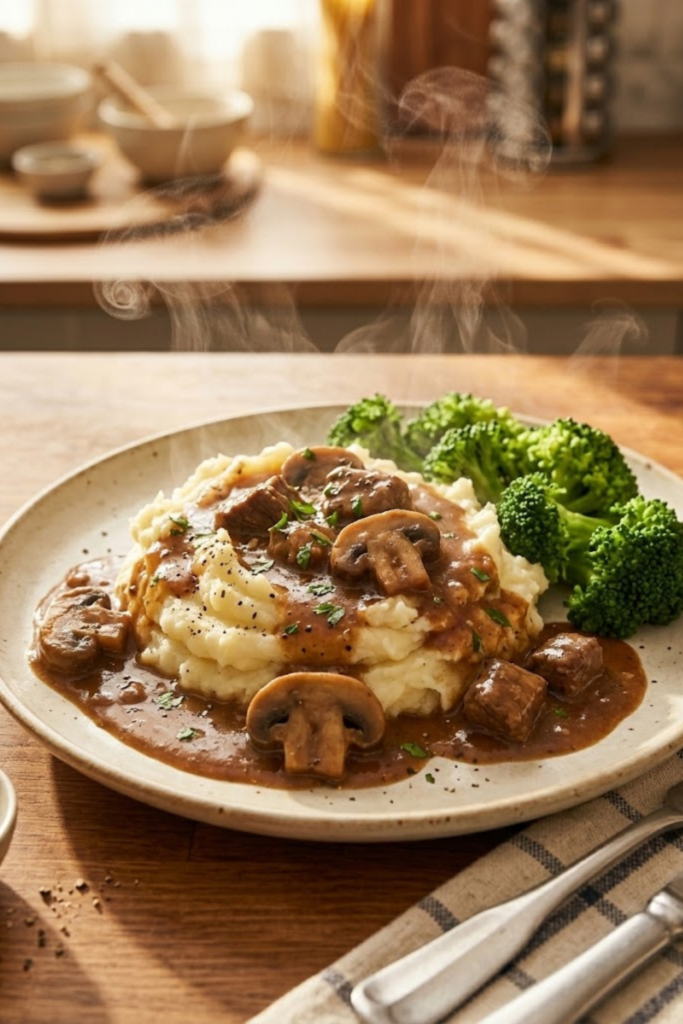
For me, the gold standard will always be garlic mashed potatoes. There is something so satisfying about making a little “well” in the middle of a pile of fluffy potatoes and filling it up with that rich, savory gravy. It’s like a little lake of flavor on your plate! I usually add a bit of extra butter and a splash of milk to my potatoes to make them extra creamy. If I’m having a really busy week and don’t have time to peel and boil five pounds of potatoes, I’ll just use the refrigerated kind from the store. Honestly, once you pour that homemade gravy over them, nobody even knows the difference. It’s one of those little “teacher secrets” for a stress-free Tuesday night.
Switching it Up with Noodles or Rice
If my family had potatoes earlier in the week, I usually switch things up and use wide egg noodles. These are great because the gravy sticks to the curls of the pasta perfectly. It reminds me of the beef stroganoff my grandma used to make back in the day, but it’s way less work. My kids also really like it served over a bed of white rice. The rice acts like a sponge and soaks up every single drop of the sauce so that nothing goes to waste. It’s a smart way to make the meal stretch a bit further if you have extra people showing up for dinner last minute.
Adding a Pop of Green
Since I try to be at least a little bit healthy, I always make sure to put something green on the side. Steamed broccoli or some roasted green beans are my favorites. The crunch of a fresh vegetable really helps balance out the heavy, salty meat. I also think honey-glazed carrots are a great choice because the sweetness goes really well with the beef. Sometimes, if I’m feeling really lazy, I just toss a bag of frozen peas directly into the crockpot during the last ten minutes of cooking. It saves me from cleaning another pot, and it adds a nice bit of color to the dish. Just make sure you have some crusty bread on the table to wipe your plate clean!
Making Memories One Slow Cooker Meal at a Time
I really hope this guide helps you get a delicious dinner on the table without all the stress. As a teacher, my days are usually filled with loud hallways and grading stacks of papers, so coming home to a house that smells like crockpot beef tips and gravy is the highlight of my afternoon. It’s one of those rare meals that everyone in the family actually likes, and it doesn’t require me to stand over a hot stove for an hour when I’m already tired. Cooking doesn’t have to be hard or fancy to be good. Sometimes, the most basic ingredients—like a good piece of beef and some simple spices—make the best memories.
Storing Your Leftovers Like a Pro
If you happen to have any leftovers, you are in luck. In my house, we rarely have any meat left, but the gravy is a different story. I usually put everything in a sealed container and stick it in the fridge. The flavors actually get better after sitting for a day! When I want to eat it for lunch the next day at school, I just pop it in the microwave for a minute or two. If the gravy got too thick while it was cold, I just add a tiny splash of water or broth to loosen it up. It tastes just as fresh as it did the night before. You can also freeze this meal for up to three months. I like to freeze it in individual portions so I can grab a quick meal whenever I don’t feel like cooking at all.
Why This Dish Stays on My Menu
I keep this recipe in my rotation because it’s reliable. I don’t have to worry about “messing it up” because the slow cooker does all the heavy lifting for me. Whether it’s a cold winter night or a rainy spring afternoon, this dish just fits the mood. It’s also a great way to save money since we are using cheaper cuts of meat that taste like a million bucks after they’ve simmered all day. It makes me feel good knowing I’m feeding my family something hearty and homemade instead of just picking up fast food on the way home.
Don’t Forget to Share the Love!
If you tried this recipe and liked it, I would love to hear how it turned out for you! Did you use potatoes or noodles? Did you add any extra spices? Please save this post to your “Easy Dinners” board on Pinterest and share it with your friends. It really helps others find these simple, helpful tips so they can enjoy a great meal too. I’m always looking for ways to make life a little easier for fellow busy parents and teachers, and sharing is the best way to do that. Happy cooking!