Did you know that over 60% of home cooks reach for a casserole recipe when they need a “hug in a bowl” after a long day? I’ve been there—staring at a pound of ground beef, wondering how to make it special. This creamy ground beef casserole with potatoes is my absolute go-to because it’s simple, hearty, and honestly, the leftovers might even be better than the first night! We’re using fresh ingredients to create a dish that feels like home but tastes like a five-star comfort meal.
Choosing the Right Potatoes for a Velvety Texture
I remember one time I tried making this dish with some old Russet potatoes I found in the back of my pantry. It was a total mess. The flavor was okay, but the texture felt like I was eating wet sand. If you want a casserole that actually holds its shape while still melting in your mouth, you really have to pick the right spud. It is the foundation of the whole meal, and getting it wrong can ruin a perfectly good dinner. I’ve learned that the potato you choose changes everything about how the sauce behaves in the pan.
The Magic of Yukon Golds
Yukon Golds are my favorite for a reason. They have this natural buttery flavor that works so well with the savory ground beef. They are what we call “all-purpose” potatoes. They have a medium starch level, which is exactly what you need here. This means they don’t fall apart like a snowflake in a furnace, but they also aren’t as hard as a rock. When they soak up that creamy sauce, they get incredibly soft and velvety. If you use red potatoes, they usually stay too firm and waxy. Yukon Golds are that “just right” choice that makes the dish feel high-quality without much extra work.
Avoiding the Mushy Mess
A lot of my students think a potato is just a potato, but that’s just not true. Russets are great for baking or making fluffy mashed potatoes because they have tons of starch. But in a casserole? That starch releases and turns your beautiful sauce into a thick, pasty glob. Plus, the slices often break down into little bits. You end up with a bowl of meat and potato mush instead of nice, distinct layers. I’ve learned the hard way that saving a few cents on a bag of cheap Russets isn’t worth ruining a whole pan of food.
Slicing for Even Cooking
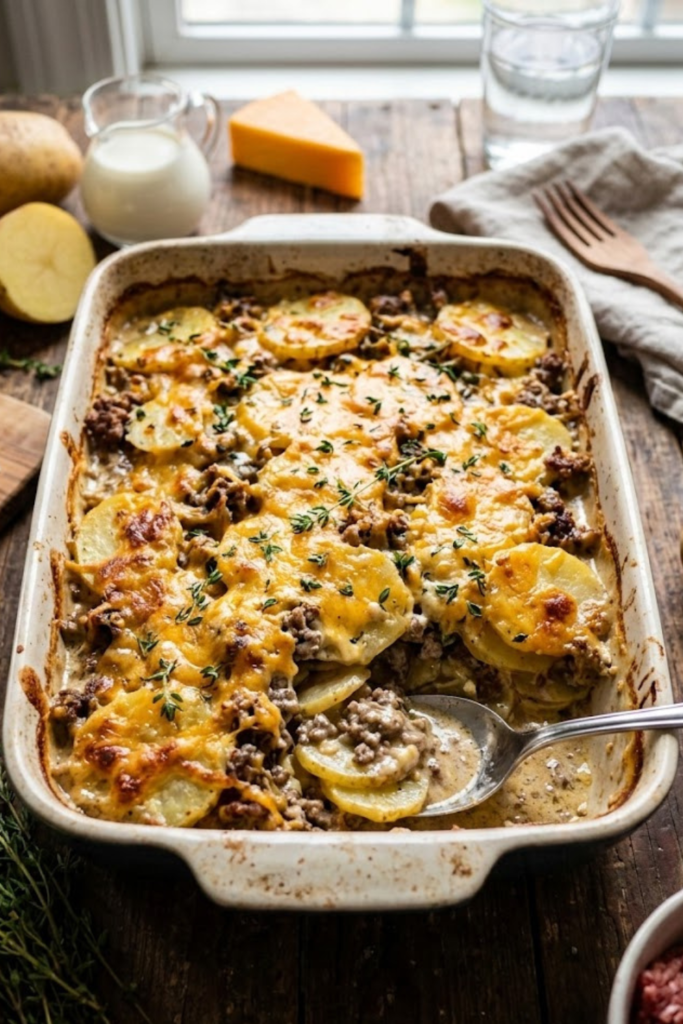
Once you have your Yukon Golds, don’t just hack away at them with a dull knife. I like to peel mine, though you can leave the skin on if you are busy—it has good vitamins. The real secret is how thick you cut them. I aim for about an eighth of an inch. If they are too thick, the beef will be overcooked and the potatoes will still be crunchy. Nobody likes a crunchy potato in a creamy bake! If you have a mandoline slicer, use it to keep things even. Just be very careful with your fingers! I always use the safety guard because I’ve had some scary close calls. Keeping the slices the same size makes sure every piece is fork-tender at the exact same time.
Perfecting the Ground Beef and Savory Base
When I first started cooking for my family, I used to just toss the ground beef into the skillet and wait for it to turn grey. I thought that was enough. But let me tell you, once I learned how to actually brown the meat, the whole dish changed. It’s like the difference between a plain piece of bread and a perfectly toasted slice. That golden-brown crust on the beef is where all the savory goodness lives. If you skip this part, your casserole will taste okay, but it won’t have that “wow” factor that makes people ask for seconds. You want to build layers of flavor right from the start.
Why the Brown Bits Matter
In the cooking world, we talk about the Maillard reaction. That’s just a fancy way of saying that heat changes the sugars and proteins in the meat to make it taste better. To get this right, you need your pan to be nice and hot before the meat even touches it. I usually go for medium-high heat. When you put the beef in, don’t start chopping it up right away. Let it sit for a minute or two so it can develop a nice sear. If you move it around too much, the meat just releases its water and ends up steaming instead of frying. You’ll know it’s working when you see those little dark bits sticking to the bottom of the pan—that is where the real flavor is!
Managing the Grease
One question I get a lot is about the fat. I usually buy 85% lean ground beef. It has enough fat to stay juicy but isn’t so greasy that your casserole turns into an oil slick. Once the meat is browned, I always drain off the extra liquid. I just push the meat to one side and use a big spoon to scoop the grease into an old tin can. Don’t pour it down your sink unless you want a visit from a plumber! Leaving just a tiny bit of fat in the pan is actually good because it helps cook the vegetables we’re adding next.
Adding the Aromatics
Once the meat is ready, I toss in my diced onions. I like to cook them until they are soft and look a little bit see-through. This usually takes about five minutes. I save the minced garlic for the very last minute. Garlic is a bit finicky and burns really fast. If it turns black, it gets bitter, and that bitterness will ruin your whole creamy sauce. Just thirty seconds of heat is all the garlic needs to smell amazing and flavor the whole batch of beef. Making sure you time this right is a simple trick that makes a huge difference.
The Secret to a Lump-Free Creamy Sauce
I’ll be honest with you—nothing ruins a good dinner faster than a sauce that has little white lumps of flour floating in it. It’s pretty gross, right? I used to be so scared of making a cheese sauce from scratch that I’d just buy the canned stuff from the store. But once I figured out the trick to it, I realized it’s actually pretty easy. You just have to be patient. You can’t rush a good sauce, or it’ll bite you back. This sauce is what ties the beef and the potatoes together, so we want it to be silky and rich, like something you’d get at a fancy diner.
Starting with a Simple Roux
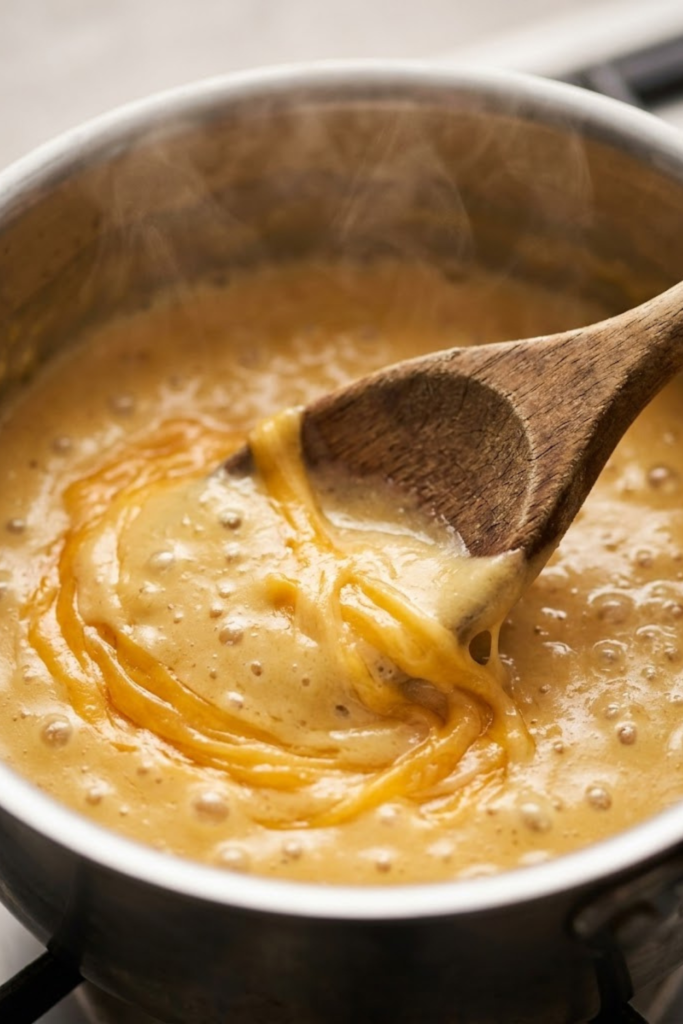
To get that thick, creamy texture, you have to start with a roux. That’s just a fancy French word for mixing fat and flour together. I use a big chunk of butter and melt it down in a saucepan until it starts to bubble up. Then, I whisk in an equal amount of all-purpose flour. You want to cook this for about two minutes. If you don’t cook it long enough, your sauce will taste like raw dough, and that’s no good. It should start to smell a little bit nutty. This step is what makes the sauce thick enough to coat the back of a spoon. If your roux looks too dry, just add a tiny bit more butter. It should look like a smooth, thick paste before you move on.
The Slow Pour Technique
This is where most people mess up. If you dump all your milk or heavy cream in at once, you’re going to get lumps. I promise you. The trick I tell everyone is to add just a tiny splash of liquid at first. Whisk it until it turns into a thick, heavy paste. Then add another splash and keep whisking. Do this until the mixture starts to look like a smooth liquid. Only then can you pour in the rest of the cream. I like using heavy cream because it makes the dish feel way more special, but whole milk works too if you want to save a few pennies. Keep whisking the whole time! Your arm might get a little tired, but the results are worth the work.
Adding the Cheesy Goodness
Once the sauce is hot and thick, I take the pan off the burner. If you keep boiling it after the cheese goes in, the cheese can “break” and get all oily and weird. I love using sharp cheddar because it has a strong kick that stands up to the flavor of the beef. I also throw in some parmesan for a bit of a salty bite. I usually add a pinch of nutmeg too. It sounds weird for a beef dish, but nutmeg is the secret ingredient that makes cream sauces taste like they were made by a pro. Stir it all together until it’s a big pot of liquid gold. Now you’re ready to pour it over those potatoes and get baking!
Assembly and Baking for a Golden Crust
This is the part where it all finally comes together! You have your sliced potatoes, your savory beef, and that pot of liquid gold cheese sauce just waiting to be used. I always feel a little like a kid building a tower when I start layering everything into the pan. It’s honestly pretty satisfying to see all that hard work turn into a real meal. But don’t just throw it in there haphazardly. There is a bit of a trick to making sure every single bite has a perfect balance of potato, meat, and cream.
Layering for Maximum Flavor
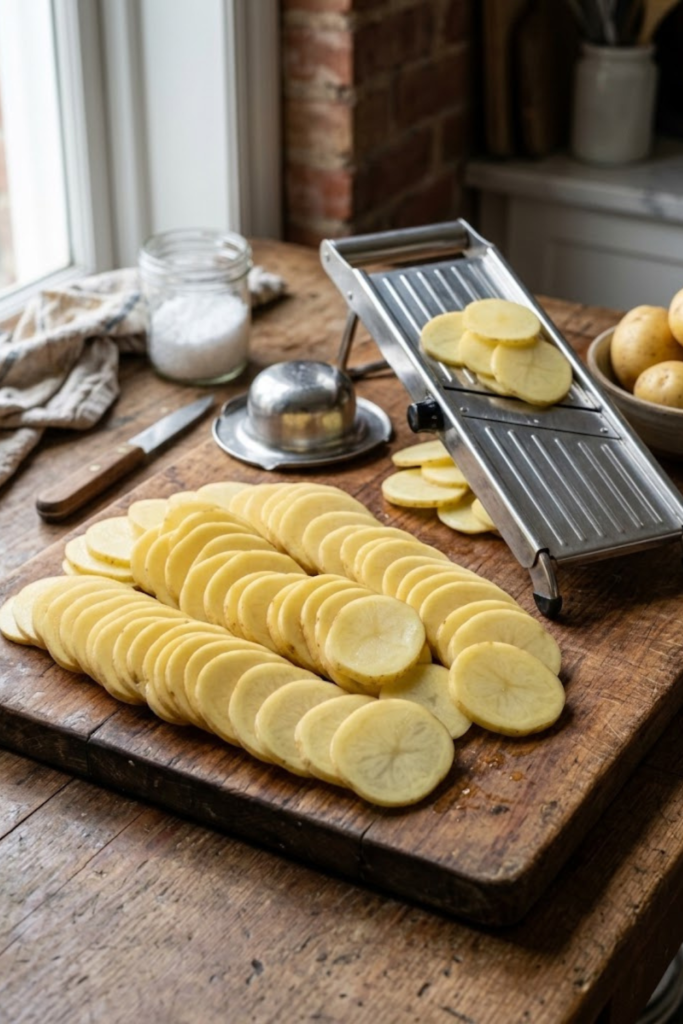
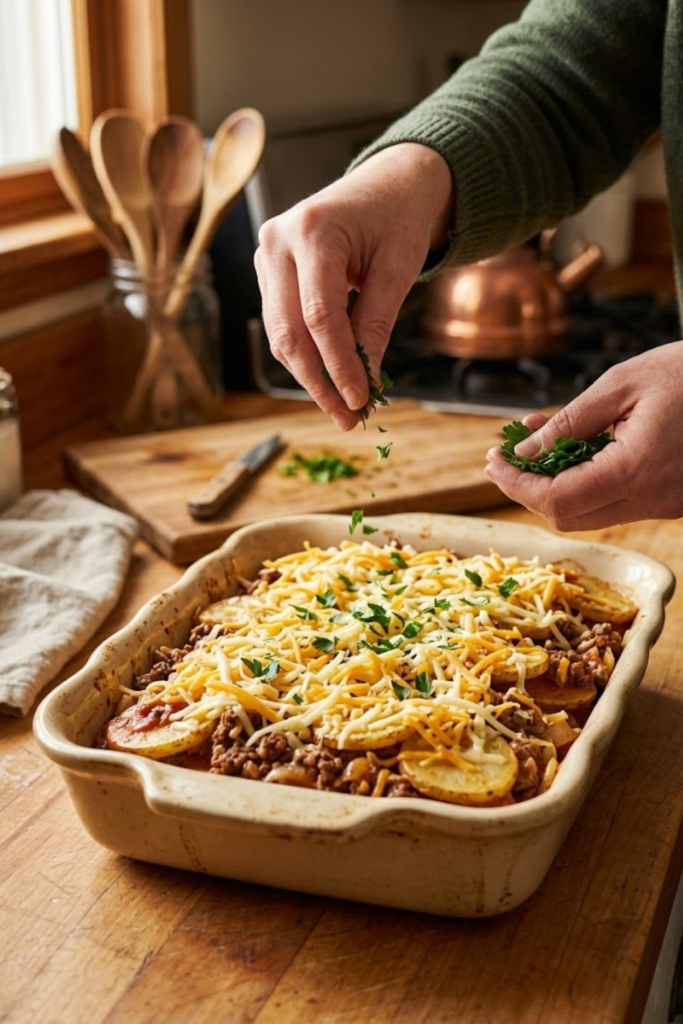
First things first, you have to grease your baking dish. I usually use a 9×13 inch pan and rub a bit of butter all over the inside. If you forget this, you’ll be scrubbing stuck-on cheese for an hour, and nobody has time for that! I like to start with a layer of potatoes on the bottom. I lay them down so they overlap just a little bit, kind of like shingles on a roof. Then, I spread about half of the beef and onion mixture over the top. Pour a good portion of that creamy sauce over the beef, then repeat the layers. By doing it this way, the sauce seeps down through every crack while it’s in the oven. It keeps the whole thing moist and makes sure the potatoes on the bottom aren’t dry and sad.
Topping it Off for the Crunch
Now, we have to talk about the top. Some people really like to use crushed Ritz crackers or Panko breadcrumbs for a big crunch. I’m a total cheese person, so I usually save an extra handful of shredded cheddar to sprinkle all over the top right before it goes into the heat. If you want that really pretty, bubbly golden-brown look, you can even turn the broiler on for the last two minutes of cooking. But you have to watch it like a hawk! I’ve burned more than a few dinners because I got distracted by a text message or the dog. That burnt cheese smell is really hard to get out of the kitchen!
The Fork Test and Resting
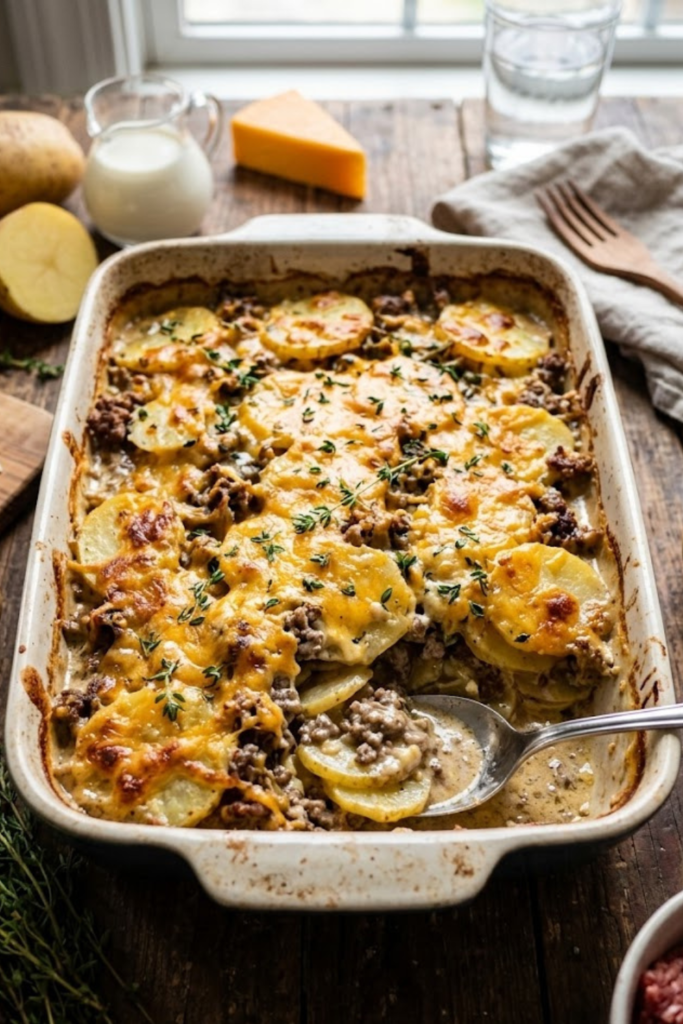
I set my oven to 375 degrees. I’ve found that is the “sweet spot” where the potatoes cook all the way through without the sauce drying up too much. It usually takes about 45 to 50 minutes total. I always cover the dish with aluminum foil for the first half hour. This traps the steam inside and helps those Yukon Golds get soft and tender. Then, take the foil off for the last 15 or 20 minutes so the top can get crispy. The best way to tell if it’s truly done is the “fork test.” Just poke a fork into the middle of the pan. If it slides into a potato like it’s hitting soft butter, you are good to go. If there is any resistance at all, give it five more minutes. One last tip: let it sit on the counter for ten minutes before you scoop it out. This lets the sauce set up so it doesn’t just run all over the plate like soup. It’s hard to wait when it smells this good, but it’s worth it!
Wrapping Up This Family Favorite Comfort Meal
I really hope you give this creamy ground beef casserole with potatoes a shot in your own kitchen soon. It is one of those recipes that I keep tucked away in my head because I have made it so many times I do not even need to look at a piece of paper anymore. There is just something about that mix of soft potatoes and savory beef that hits the spot every single time. It is not fancy, and it is definitely not a health food, but it is honest-to-goodness comfort that makes a boring Tuesday night feel a little bit more special. I always tell my friends that you don’t need a lot of money to make a meal that feels like a big warm hug, and this dish is the perfect example of that.
One thing I have learned over the years is that leftovers are often the best part of the whole process. I usually put any extra in a plastic container and stick it in the fridge right away. It stays good for about three or four days, which is great for work lunches the next day. If you find that the cheese sauce has thickened up a lot after sitting in the cold, just add a tiny splash of milk or a little bit of water before you heat it up. It helps loosen things up so it does not get too dry in the microwave. Sometimes I even make a double batch and freeze one of the pans before I even put it in the oven. If you do that, just make sure you let it thaw out in the fridge for a whole day before you try to bake it. It is a total lifesaver on those nights when you are just too tired to even think about what to make for dinner.
The best part about this recipe is how much kids seem to love it. My own kids usually pick out the onions in everything else I make, but in this casserole, they do not even notice them. Everything is covered in that thick cheese sauce, so they just gobble it right up without any complaints. It is a win-win for everyone at the table. If you want to change things up, you can always swap the ground beef for ground turkey or even some sliced smoked sausage if that’s what you have on hand. Cooking should not be a stressful thing, so feel free to play around with the ingredients you have in your kitchen. If you end up trying this and loving it as much as we do, please save this recipe to your favorite Pinterest board! It helps me out a lot, and it helps other people find a good, warm meal to share with their families. Happy cooking!