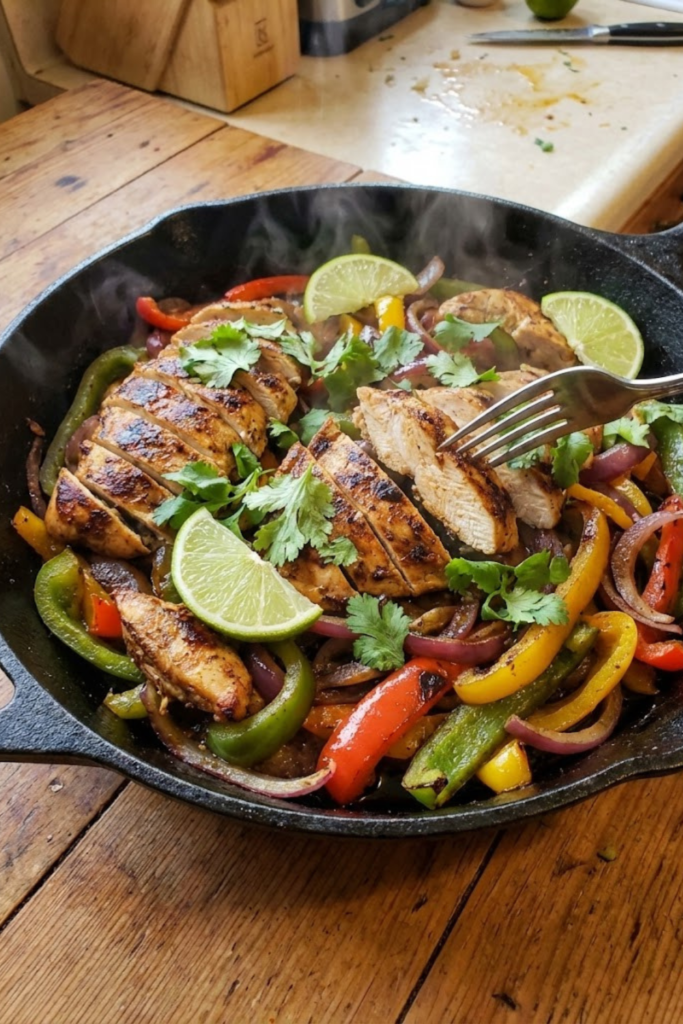
Did you know that nearly 80% of home cooks admit to being “completely bored” with their weeknight dinner rotation? Honestly, I’ve been there too! There were so many nights where I just stared at a pack of chicken breasts like they were a math problem I couldn’t solve. Then, I rediscovered the magic of the chicken fajita skillet. It is fast, it is loud, and the sizzle makes you feel like a pro chef even if you’re just wearing pajamas! This recipe is all about high heat and big flavor, using simple ingredients like bell peppers, onions, and a zesty lime marinade to bring that restaurant energy right to your kitchen table. Let’s get cooking!
Choosing the Best Chicken for Your Fajita Skillet
Listen, I’ve spent years in the kitchen, and I’ve messed up more chicken than I’d like to admit. I used to think any old piece of meat would work for a chicken fajita skillet, but I was so wrong. One time I used these huge, thick chunks and it was like chewing on a rubber tire. My kids just looked at me like I was serving them pieces of a gym mat for dinner. It was pretty embarrassing! If you want that perfect bite, you have to start with the right chicken and treat it right before it even touches the pan.
The Great Debate: Breasts or Thighs?
Most people go straight for the boneless, skinless chicken breast. It’s what you see in the restaurant photos, and it’s a great lean protein. It slices into those nice, long strips that look so good on a plate. But here is the thing: chicken breast dries out faster than a chalkboard in July if you aren’t careful. If you want that super juicy flavor that makes your mouth water, don’t be afraid to try chicken thighs. They have a little more fat, which means they stay moist even under that high heat. I usually stick with breasts for my family because that’s what they like, but I have to watch the clock like a hawk so they don’t get dry.
Why Slicing against the Grain Matters
This is where my teacher brain kicks in, because there is a right way and a wrong way to do this. You have to cut against the grain. If you look closely at the meat, you’ll see lines running through it. Those are the muscle fibers. If you cut the same way those lines go, you’re going to be chewing forever. If you cut across them, you’re shortening those fibers, which makes every bite tender. I like to slice them about half an inch thick. If they are too thin, they just turn into little crispy bits. If they are too thick, the middle stays raw while the outside burns.
A Little Trick for Easy Slicing
One little trick I’ve picked up over the years is to slice the chicken while it’s still just a tiny bit frozen. It makes the meat firmer, so you can get those even strips without it sliding all over the cutting board. It saves a lot of time and frustration! Once it’s sliced, toss it in your spices right away. You want that chicken to go from the cold fridge straight into that hot pan to get a good sear. It’s a simple step, but it makes a huge difference in how your dinner turns out. Make sure you don’t skip the seasoning part!
Homemade Fajita Seasoning That Beats the Packet
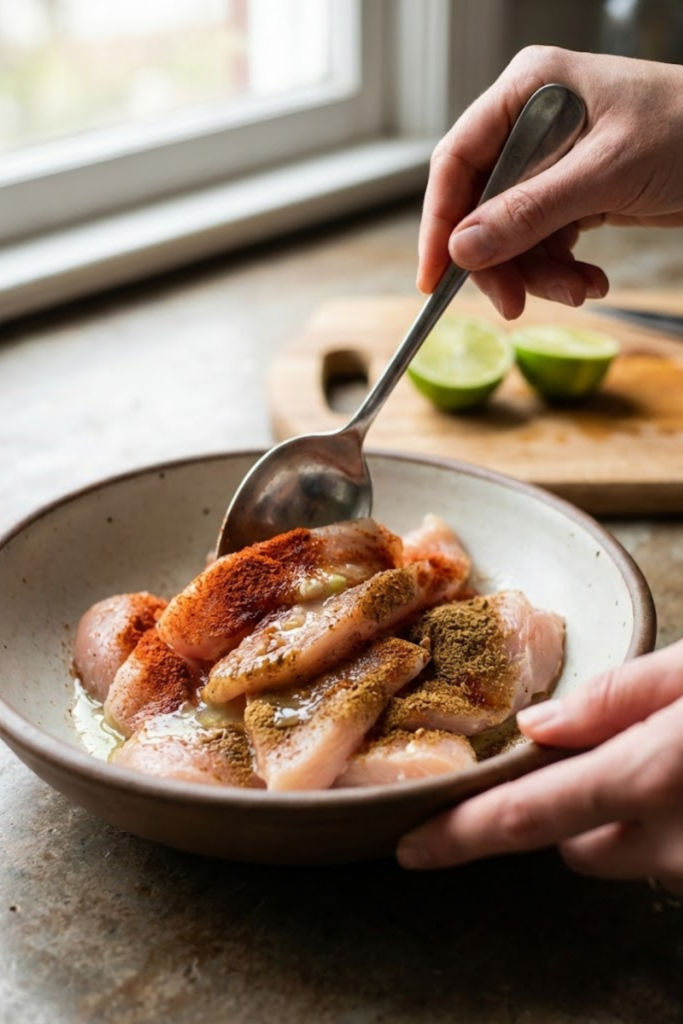
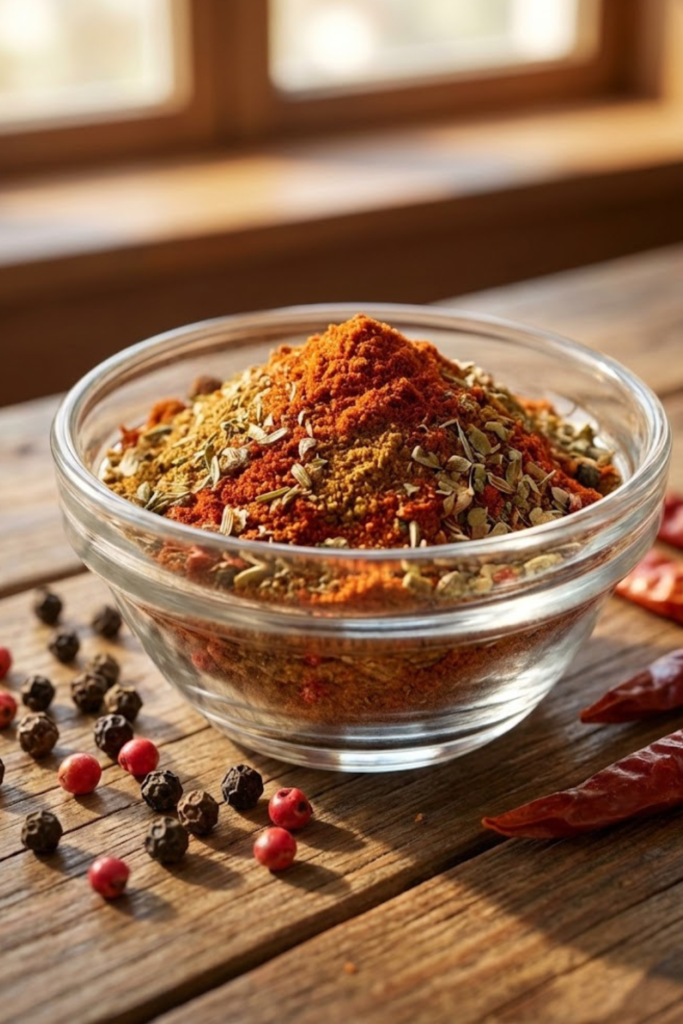
I remember standing in the spice aisle a few years ago, looking at those little paper packets that cost nearly two dollars each. I started reading the back and saw things like “corn starch” and “anti-caking agents.” It felt like I was paying for a science experiment instead of actual flavor. That was the day I decided to stop wasting money and start mixing my own spices for my chicken fajita skillet. Honestly, it is so much better because you can change the heat levels to fit what your family likes. Plus, you probably already have everything you need sitting in your pantry right now!
The Big Three: Cumin, Chili Powder, and Paprika
The base of any good fajita mix starts with the “Big Three.” First, you need a lot of cumin. To me, cumin is the smell of a good Mexican dinner—it is earthy, warm, and a little nutty. Then you add chili powder for that classic taco-style kick. But my personal favorite addition is smoked paprika. Regular paprika is okay for color, but the smoked kind gives the chicken a deep flavor that makes it taste like it was cooked over a real wood fire. I usually do two parts chili powder to one part cumin and one part paprika. It creates a beautiful dark red coating on the meat that looks incredible once it hits the pan.
The Secret Pinch of Sugar
Here is a little trick I tell my students when we talk about cooking: add a tiny bit of brown sugar to your spice mix. I’m talking maybe a teaspoon at most. It won’t make your dinner taste like dessert, I promise! What it does is help with the “browning” process in the skillet. When that sugar hits the high heat, it melts and helps the spices stick to the chicken, creating those dark, delicious charred spots. It makes the meat look like it came out of a professional restaurant kitchen instead of just a regular old frying pan.
Why Fresh Garlic is a Game Changer
While the dry spices do most of the work, I always throw in some fresh garlic right at the very end. If you put garlic in at the start, it will burn and get bitter because the pan is so hot. But if you toss it in during the last minute of cooking, it gets soft and fragrant. It mixes with the lime juice and the dry spices to create a thick, savory sauce that coats every single strip of chicken. Once you taste how fresh and bright this homemade blend is, you will never want to go back to those salty little store packets again. It makes the whole house smell like a five-star cantina!
The Secret to Sizzling Peppers and Onions
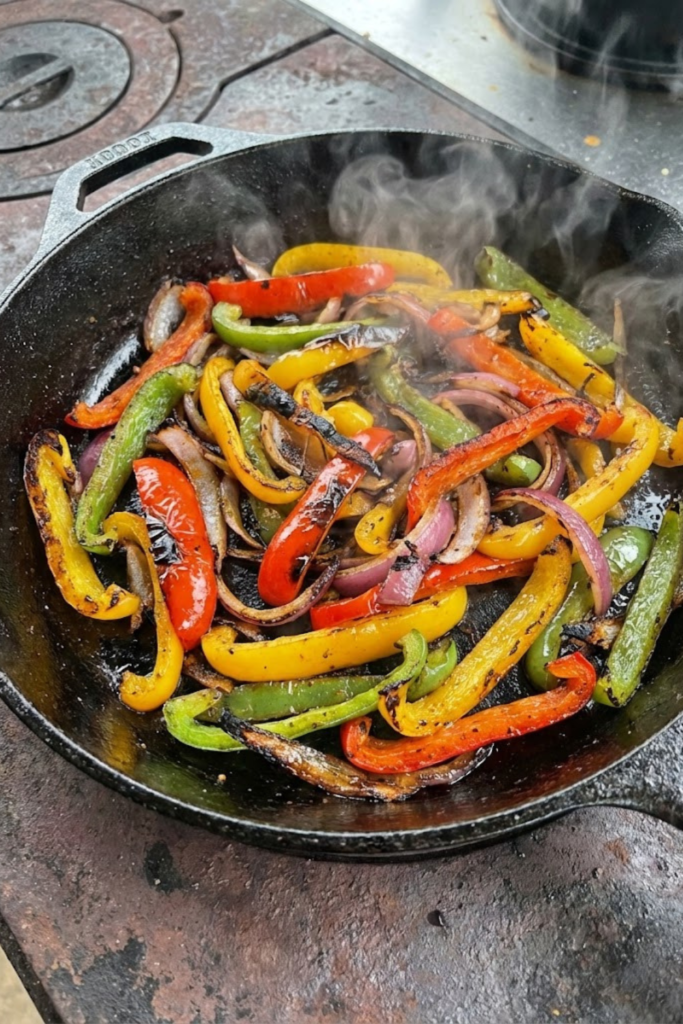
I have to be honest with you guys. For a long time, I was absolutely failing at making a chicken fajita skillet. I would throw my veggies in the pan, and instead of that beautiful, charred restaurant look, they would turn into a soggy, limp mess. It was so frustrating! I felt like I was steaming my vegetables rather than frying them, and nobody wants a sad, wet onion. My family would just sort of move them to the side of their plate, and as a teacher, I felt like I was getting a failing grade on dinner. I finally realized that the problem wasn’t the vegetables—it was me being too scared of the stove!
Crank Up the Heat
The big mistake I was making was being afraid of the flame. I used to cook on medium because I didn’t want to burn anything or make a mess. But look, for a real chicken fajita skillet, you need that pan screaming hot. I use a cast iron skillet because it holds heat like a champ, but any heavy pan will work if you let it get hot enough. You want to wait until you see a tiny bit of smoke rising from the oil before you even think about dropping a pepper in there. If it doesn’t make a loud tsss sound immediately, the pan just isn’t ready. That high heat is what gives you those dark, “burnt” edges that taste so sweet and smoky.
Don’t Crowd the Pan
Another tip I learned the hard way? Stop putting too much stuff in the pan at once! If you dump three peppers and two big onions in a small skillet, the temperature drops way too fast. Instead of searing, the water from the veggies comes out and they just boil in their own juice. Now, I cook my veggies in two different batches. It takes five extra minutes, but the charred edges are totally worth it. I love seeing those little black marks on the yellow peppers. It’s the difference between a “blah” dinner and something everyone asks for seconds of.
The Five-Minute Snap Test
I like my peppers to have a bit of a “snap” when I bite into them. Most people overcook them until they are mushy, which is a real shame. I usually cook them for only 4 or 5 minutes on high heat. They should look blistered on the outside but still be bright and firm on the inside. Also, right at the end, I like to add a tiny splash of water or lime juice to the pan. It creates a huge cloud of steam that picks up all the brown bits from the bottom of the pan and sticks them right to the onions. It makes everything taste like a professional chef made it! Give it a try next time you’re at the stove; you’ll see exactly what I mean.
How to Serve and Save Your Fajita Masterpiece
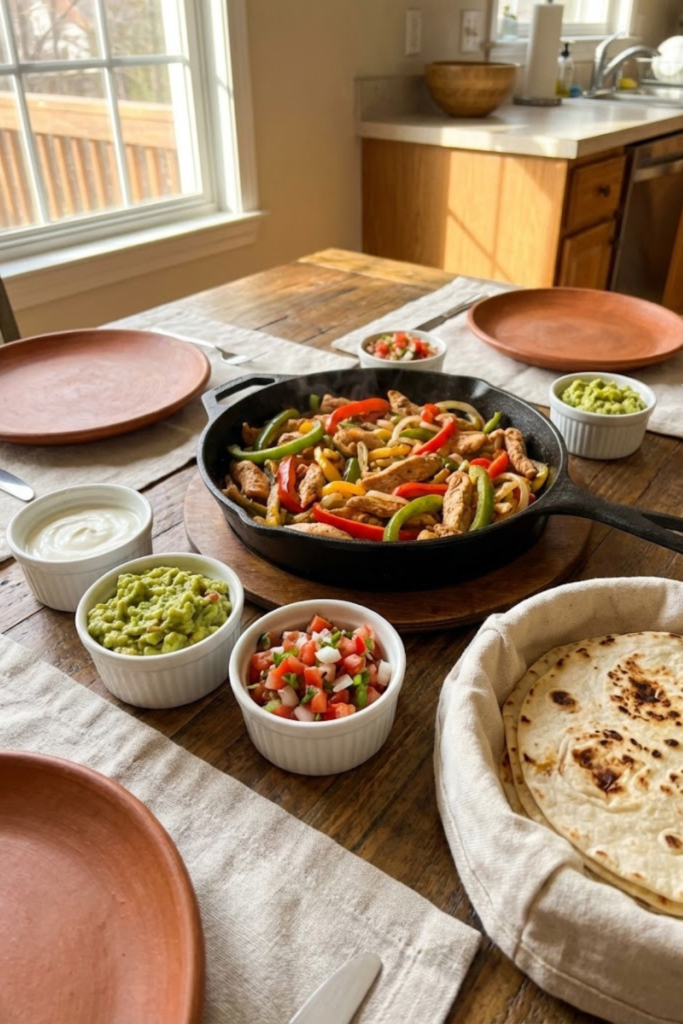
Well, we’ve made it to the finish line! Honestly, once you pull that chicken fajita skillet off the stove, the hard part is over. But I’ve noticed over the years that how you put everything on the table is just as important as how you cooked it. I used to just put the pan in the middle of the table and tell everyone to dig in, but then I realized that half the fun is the “fixings.” As a teacher, I like to think of this part as the extra credit—it’s not required, but it sure makes the final grade a lot better!
The Perfect Toppings for Your Skillet
I always tell people that a fajita is only as good as what you put on top of it. In my house, we have a “topping bar” because it makes dinner feel like a party. You definitely need some cool sour cream to balance out that spicy heat from the chili powder. I also like to mash up a quick guacamole with just some lime and salt. If you have time, some fresh cilantro and a bowl of pico de gallo really brightens up the whole plate. I’ve found that even my picky eaters will eat their peppers if they get to cover them in enough shredded cheese!
Dealing with Leftovers (If There Are Any!)
If you actually have food left over, you are luckier than I am! Usually, my family clears the pan before I can even get my own plate. But if you do have extra chicken and veggies, they make the best lunch the next day. I usually put them in a sealed container and then just heat them up in a small pan for a minute or two. Don’t use the microwave if you can help it, because it makes the peppers a bit soggy. Sometimes I even chop up the leftover chicken and throw it on top of a big salad for work. It’s a great way to feel like you’re eating a fancy meal even when you’re just sitting in the breakroom.
Final Thoughts and Sharing
I really hope this helps you feel more confident about making a chicken fajita skillet for your next dinner. It’s a fast, healthy, and fun way to get everyone around the table. Don’t worry if your first try isn’t perfect; cooking is all about practicing and learning what you like best. If you enjoyed these tips and want to help me out, please share this post on Pinterest! It helps other home cooks find these easy recipes and keeps the kitchen fires burning. Now, go grab your tortillas and enjoy that sizzle!