Did you know that eating seasonally isn’t just a trendy buzzword—it’s actually the secret to better flavor and lower grocery bills? I absolutely love this time of year! The markets are finally bursting with color after a long, grey winter, and I can’t wait to get these fresh veggies onto my roasting pan. This spring vegetable tray bake recipe is my go-to “I’m exhausted but want to eat healthy” meal. It’s crispy, it’s colorful, and honestly? It saves me from a mountain of dishes. We’re talking tender asparagus, sweet carrots, and earthy new potatoes, all tossed in a zesty lemon-herb dressing that ties everything together. Let’s dive into this celebration of spring produce!
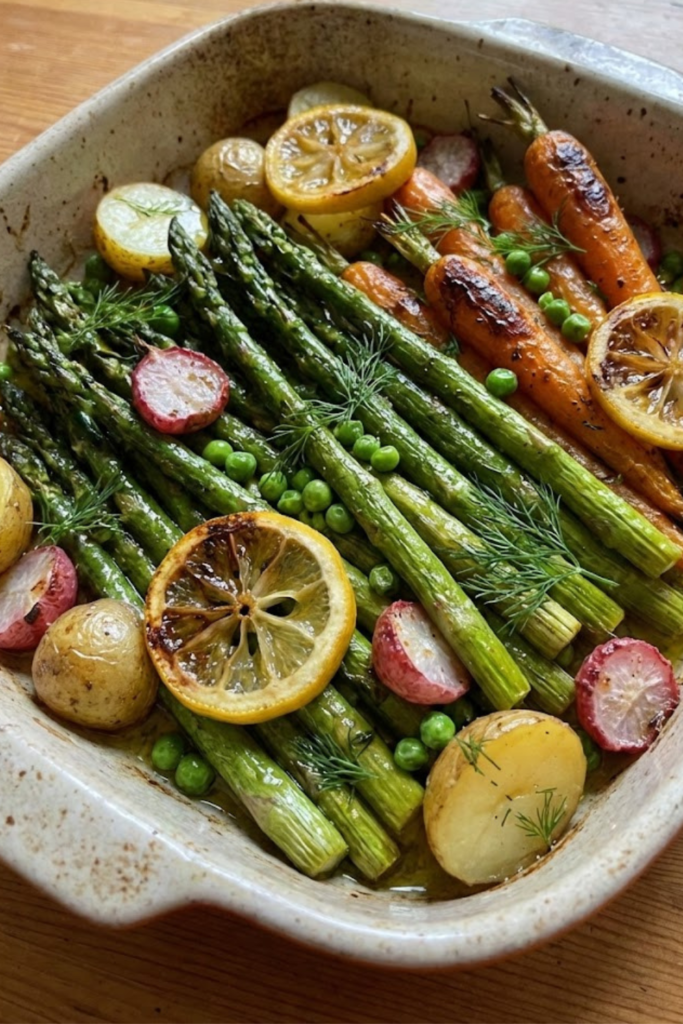
Selecting the Best Seasonal Produce for Your Vegetable Roast
You know, I used to just grab whatever looked halfway decent at the grocery store without giving it a second thought. I’d toss some old, rubbery carrots in with delicate greens and wonder why my dinner tasted like cardboard. It took me a few disastrous meals to realize that for a really good spring vegetable tray bake recipe, the produce you pick actually matters more than the seasoning you use. There was this one time I tried to roast woody, late-winter parsnips with brand new, thin asparagus spears. Let’s just say the asparagus turned to mush while the parsnips were still rock hard. It was a total mess, and my kids definitely let me know about it.
Understanding Seasonality
The thing about spring vegetables is that they are generally more tender and have a higher water content than the heavy root veggies we eat all winter. When you are shopping, you gotta look for things that scream “fresh.” I learned that eating seasonally isn’t just some fancy chef talk; it’s about flavor.
Spring produce like baby artichokes, radishes, and new potatoes have this sweetness that you just don’t get from storage crops. If you try to force a winter vegetable into a spring dish, it just feels clunky. I stick to what’s popping up in the garden or the front of the produce section now. It makes the spring vegetable tray bake recipe come together so much easier because the ingredients are meant to be eaten together.
Selecting Freshness
Here is a trick I learned the hard way. When you are buying asparagus, don’t just look at the tips. Look at the bottoms. If they are dried out and cracking, put ‘em back. You want stalks that are firm and snap if you were to bend them.
For radishes, give them a little squeeze. They should be hard as a rock, not squishy. If the leaves are attached, make sure they aren’t slimy. I once bought a bunch of radishes with wilted tops thinking “I’m just roasting the bulbs anyway,” but the bulbs ended up being hollow inside. Gross.
Also, check your new potatoes. They should have skin so thin you can scrape it off with your fingernail. If they have thick skins, they aren’t “new” and they won’t get that creamy texture we want.
Fun Variations to Try
Sometimes the store is out of what you planned, and that is okay. I’ve swapped in sugar snap peas when the green beans looked sad. They roast up surprisingly well if you don’t leave them in too long. Fennel is another one people sleep on.
I used to hate fennel because of the licorice thing, but when you roast it, it gets sweet and caramelized. It’s a game changer in a spring vegetable tray bake recipe. Just don’t be afraid to smell the produce. If it doesn’t smell like anything, it probably won’t taste like anything either. Trust your nose, it usually knows better than your eyes.
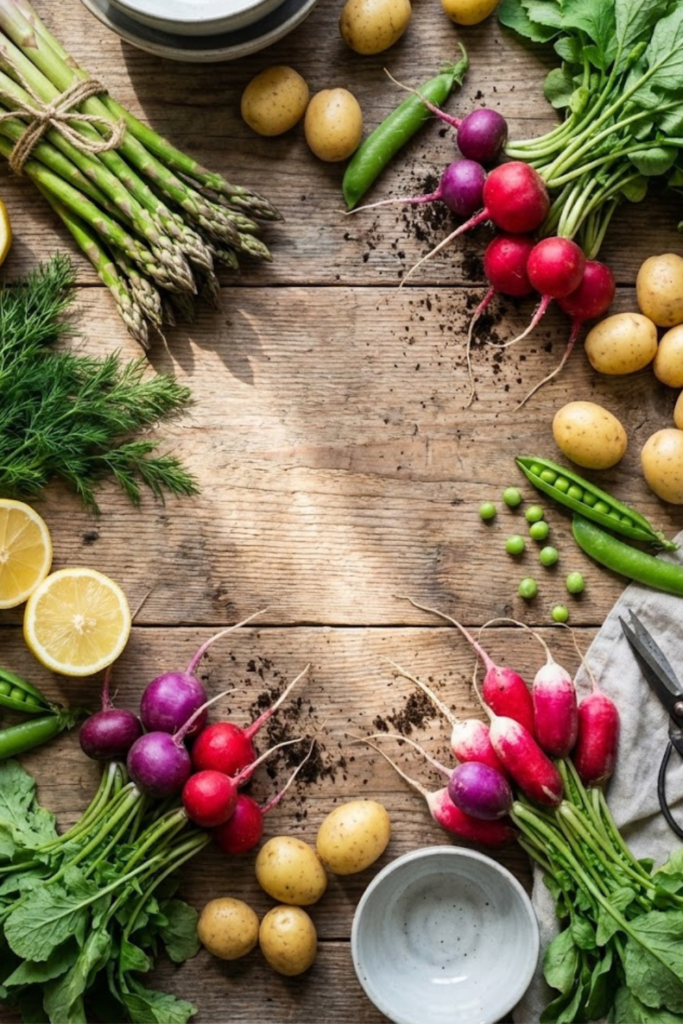
Essential Ingredients for a Flavorful Sheet Pan Dinner
So, you have your produce picked out. Now, what exactly do you need to grab from the pantry to make this spring vegetable tray bake recipe actually taste good? It is pretty simple, but the mix matters. I used to think I could just toss anything on a pan, but I ended up with some weird combos that my family politely pushed around their plates.
The Vegetable Base
First up is your base. You gotta have the sturdy stuff. I always grab a bag of new potatoes—the little ones—and some carrots. Red onions are great too because they get all sweet and jammy when they roast. These are the guys that need the most heat, so they are the anchors of the meal. If you don’t have red onion, a regular yellow one works, but it isn’t as pretty.
The “Soft” Veggies
This is where people mess up. I used to throw everything in at the exact same time. Big mistake. If you put zucchini or asparagus in with the potatoes right at the start, you are gonna have a bad time. They turn into slime. I usually keep these separate on the counter until the end. It took me a few soggy dinners to figure that timing out, but trust me, nobody wants mushy asparagus.
The Magic Marinade
Now for the sauce, or marinade, or whatever you want to call it. You don’t need anything fancy. Good olive oil is key. I go through a bottle a week, I swear. Then lemon zest. Do not skip the zest! The juice cooks off, but the zest keeps that bright flavor. I also smash a few cloves of garlic—like, way more than the recipe usually says. And fresh herbs if you have them. Dill or parsley work great. Dried is fine in a pinch, but fresh makes it look like a magazine cover.
Protein Add-ons
Lastly, if you want to make this a full meal and not just a side, think about protein. My favorite trick is to toss a can of chickpeas on the tray. They get crispy like croutons. Or, crumble some feta cheese over the top right when it comes out of the oven. It gets warm and creamy. You could add chicken sausage slices too, but honestly, the veggies are so good you might not even miss the meat.
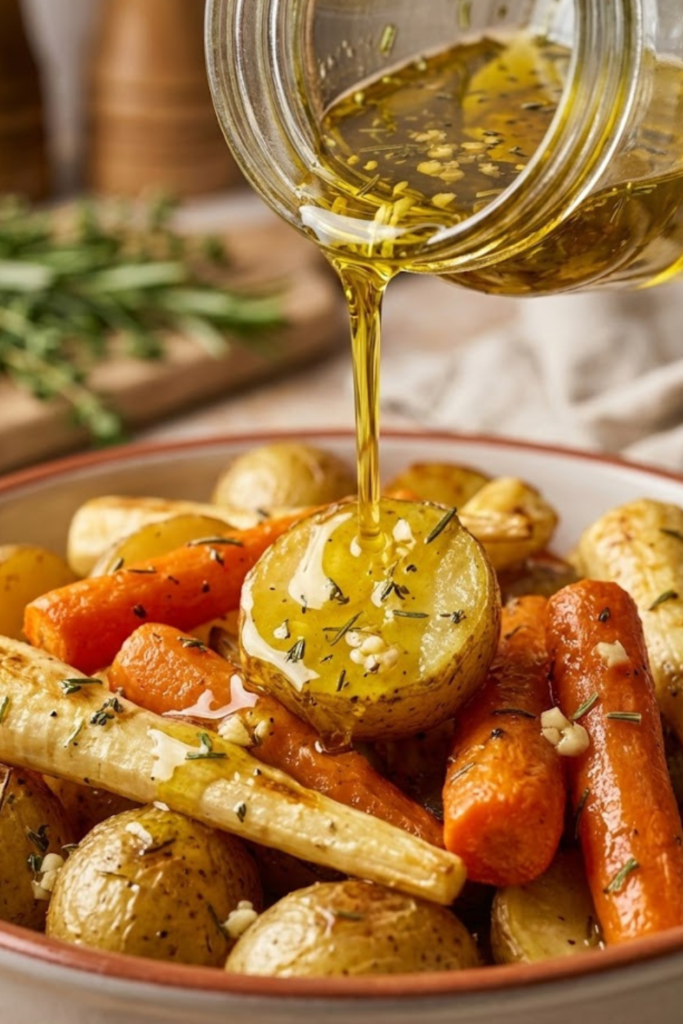
Step-by-Step Guide to the Perfect Spring Vegetable Tray Bake
I used to think cooking was just throwing things in heat and hoping for the best, but I learned the hard way that how you treat the veggies before they hit the oven changes everything. When I make my spring vegetable tray bake recipe, I start by washing everything really good. Nobody likes gritty asparagus.
Prep Work
Then comes the chopping. I sit there and try to cut the carrots and potatoes into chunks that are about the same size. It sounds fussy, but it’s not. If you have big fat carrots and tiny potato wedges, the potatoes will turn to charcoal before the carrots are even soft. It’s annoying to pick out burnt pieces, so taking a minute to chop them evenly saves dinner.
Par-boiling vs. Roasting
Okay, here is a secret. If I have time, I par-boil the potatoes. That just means boiling them for like 5 minutes before roasting. It makes the insides super fluffy while the outside gets crisp. But let’s be real, on a Tuesday night when I’m tired? I usually skip it. I just cut them a little smaller so they cook faster. It still tastes great, so don’t stress if you skip this step.
Tray Arrangement
This is the biggest mistake I see people make. Do not pile the veggies on top of each other! If the pan is too full, the veggies just steam in their own juices instead of roasting. You end up with soggy food, which is the worst. I grab a second sheet pan if I need to. Give them some personal space so the air can move around.
Temperature & Timing
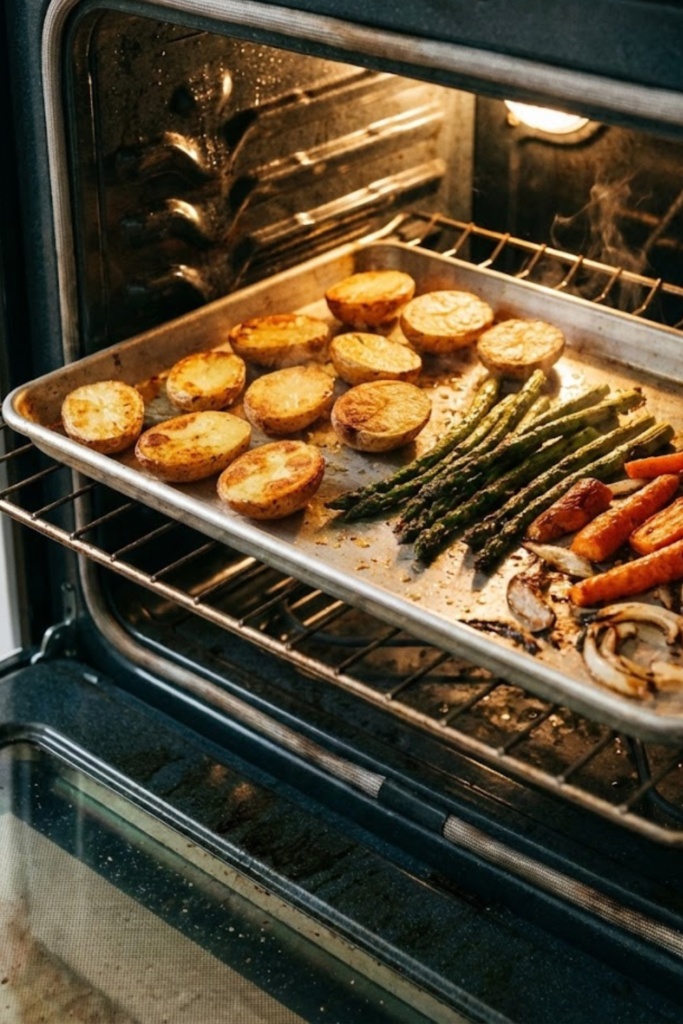
Set your oven hot. I go for 400°F (200°C). You need that high heat to get the crispy, caramelized edges. If the oven is too cool, they just dry out and get tough. I usually check them after 20 minutes and give the pan a shake. You want them to look a little brown on the edges—that is where the flavor is. Don’t be scared of a little char.
Serving Suggestions and Pairings for Spring Dinners
You can totally eat this straight off the pan—I won’t judge, I’ve done it standing over the stove plenty of times—but if you want to make it a real sit-down dinner, you need a few extras. I learned that just a couple of simple additions can turn a plain tray of veggies into something that looks like a fancy meal.
Sauces & Dips
Roasted veggies are great, but let’s be honest, sometimes they can feel a little dry if you don’t have a sauce. A sauce takes them to the next level. I usually whip up a quick yogurt and dill sauce while the oven does the work. It’s just plain Greek yogurt, a squeeze of lemon juice, and some chopped fresh dill. Super easy. If I’m feeling lazy, I just grab a jar of pesto from the fridge or drizzle some balsamic glaze over the top. The acid really cuts through the roasted flavor.
Side Dishes
If you want to stretch this spring vegetable tray bake recipe to feed a hungry crowd, you probably need a side. I like to serve it with fluffy quinoa or couscous because those grains soak up the yummy juices at the bottom of the pan. A big hunk of crusty sourdough bread is also perfect for wiping the plate clean. If you want to keep it super light, just toss some fresh arugula with oil and vinegar. The peppery taste of the greens goes really well with the sweet roasted carrots.
Presentation
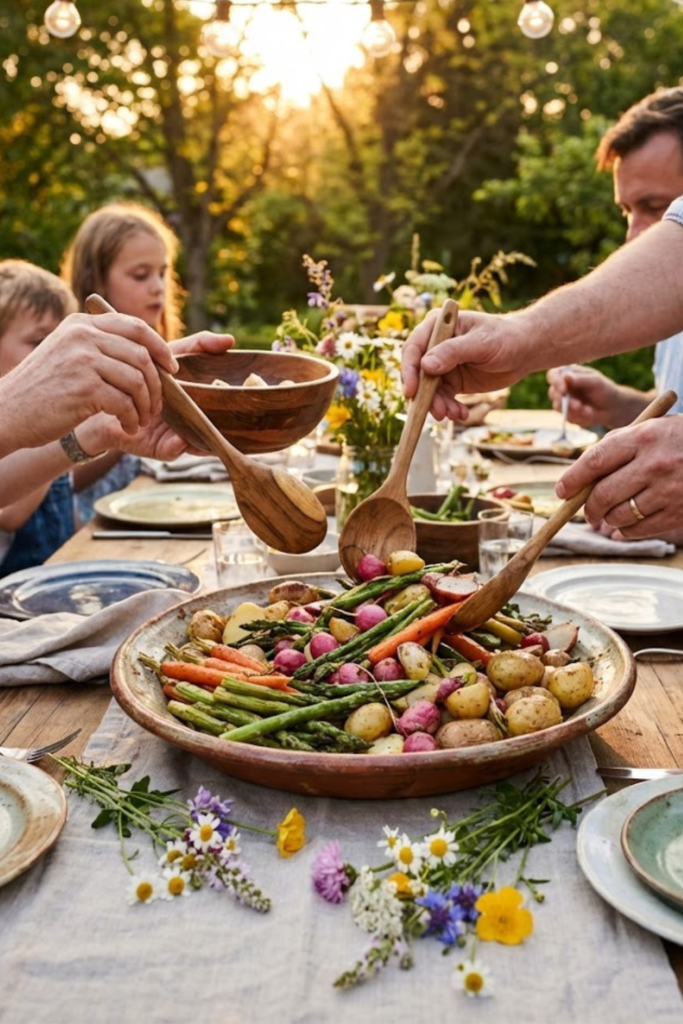
Plating doesn’t have to be hard. I just pile everything onto a big white platter. The pink radishes and orange carrots look amazing against the green asparagus. It’s so colorful that you don’t really have to do much else. It looks like you tried way harder than you actually did, which is my favorite kind of cooking.
Storage and Reheating Tips for Meal Prep
I used to be terrible at eating leftovers. I’d shove the container in the back of the fridge and find it two weeks later as a science experiment. But with this spring vegetable tray bake recipe, the leftovers are actually pretty good if you handle them right. I actually try to make extra now so I have lunch ready for the next couple of days. It saves me from buying expensive sandwiches at work.
Refrigeration
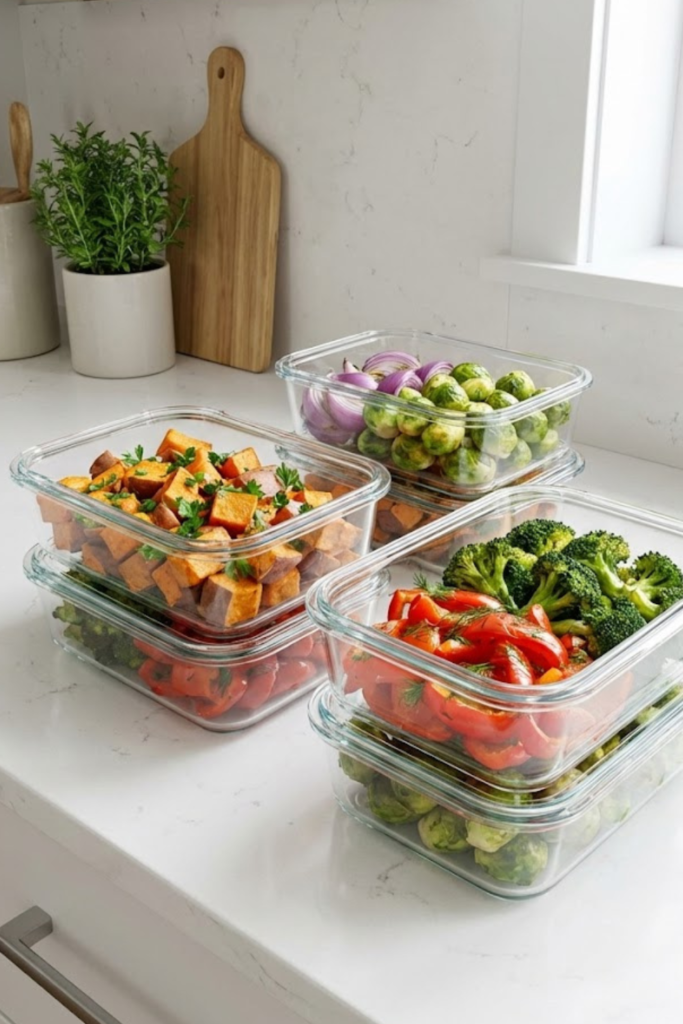
First off, let the veggies cool down all the way before you put the lid on. If you seal them up while they are still hot, they steam inside the container and get slimy. Nobody wants that. I use glass containers because the plastic ones sometimes get stained by the carrots or spices. They usually stay good for about 3 or 4 days. After that, they start to lose their texture and get a bit mushy.
Reheating
Okay, please listen to me on this one. Do not put roasted vegetables in the microwave if you can help it. The microwave turns them into a soft, wet mess. It ruins all that crispy goodness you worked for. I always use my air fryer or the toaster oven to heat them up. It only takes like 5 minutes at 350 degrees to bring the crunch back. It’s worth the extra time, I promise. If you only have a microwave, well, it’s still edible, just not as tasty.
Repurposing Leftovers
If you don’t want to eat the exact same meal two days in a row, you can totally change it up. I love throwing the cold roasted veggies into a frittata for breakfast. The flavors of the onions and herbs have had time to meld together, so the eggs taste amazing. Or, I toss them cold onto a bed of spinach with some vinaigrette for a quick salad. It makes me feel like I’m really on top of my life, even when the rest of the house is a disaster.
Honestly, this spring vegetable tray bake recipe has saved my sanity more times than I can count. It is just one of those meals that makes you feel like you have it all together, even when the laundry is piling up and you are exhausted. I love how the colors look on the table—it really does feel like a little celebration of spring after a long, gray winter.
I really hope you give this a try. It is not about being perfect or having a spotless kitchen; it is just about getting something good and healthy into your body without spending hours at the stove. If you end up making it, let me know how it turned out! And hey, if you liked this recipe, please pin it on Pinterest so you can find it again later. It helps me out a ton, too. Enjoy the sunshine and the good food!