“Eat your vegetables,” they said. “It’ll be fun,” they said. Well, honestly? It wasn’t fun until I stopped boiling them to death and discovered the magic of high heat! Welcome to the only guide you’ll need for this season. I’m going to share my go-to roasted spring vegetables sheet pan recipe that transforms humble produce into a caramelized masterpiece. Spring produce is fleeting—asparagus, tender radishes, baby carrots—so we have to treat them right. I’ve burnt more batches than I care to admit, but I’ve finally cracked the code to getting that perfect char without the mush. We aren’t just tossing veggies on a tray; we are building flavor layers! Get your oven mitts ready, because this is going to be delicious.
Choosing the Best Produce for Your Spring Sheet Pan
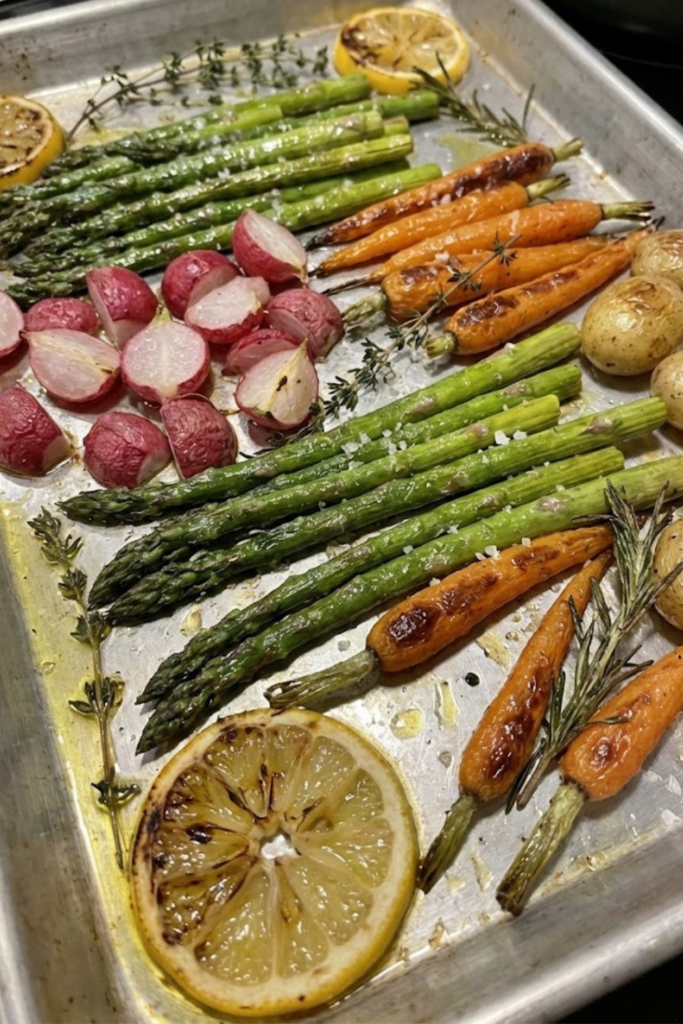
I used to think a carrot was just a carrot. I’d grab whatever bag was on sale, toss it in the oven, and wonder why my dinner tasted like roasted cardboard. It wasn’t until I started really paying attention to the produce aisle that my meals actually started tasting good. When you are planning a roasted spring vegetables sheet pan recipe, the shopping trip is honestly 90% of the battle. If you start with tired veggies, you’re gonna end up with a tired dinner.
The Snap Test is Real
Here is a trick I learned the hard way. When you are buying asparagus, don’t just look at the tips. Look at the bottoms. If they look dry or woody, put them back. Seriously. I once tried to salvage a bunch of dry asparagus by soaking it, and let me tell you, it was a disaster.
You want stalks that are firm. If you bend a spear, it should snap cleanly, not bend into a U-shape. This is crucial for that crunch we all want. For snap peas, the same rule applies. They should feel tight and look bright green. If they look dull, they’ve been sitting there too long and they won’t caramelize right.
Size Actually Matters
This is where I messed up for years. I would throw tiny baby carrots on the same tray as thick wedges of potato. By the time the potatoes were cooked, the carrots were basically charcoal.
- Asparagus: Go for the medium thickness. The pencil-thin ones burn too fast at high heat, and the giant ones take forever.
- Radishes: Look for the little guys. Spring radishes should be small and firm. If they feel spongy when you squeeze them, they are hollow inside. Gross.
- Carrots: If you can find the actual baby carrots (not the shaved down nubs in a bag) with the greens still on, grab those. They are sweeter and roast beautifully.
Don’t Fear the Dirt
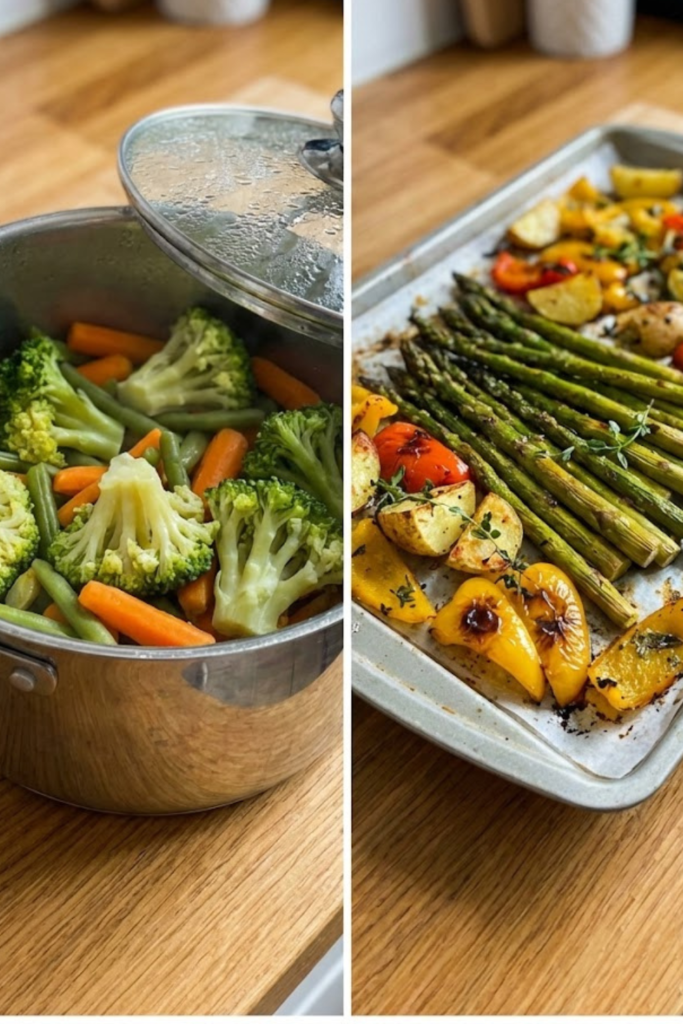
I know it’s tempting to buy the pre-washed stuff in bags. I do it too when I’m lazy. But for a roasted spring vegetables sheet pan recipe, loose produce is usually better. You can pick exactly what you want. Plus, pre-bagged veggies often have excess moisture trapped inside, which is the enemy of roasting. We want roasting, not steaming!
I remember bringing home a bag of “washed” broccoli florets that smelled a bit funky as soon as I opened the bag. It ruined the whole tray. Now, I prefer to wash them myself right before I cook. It takes two extra minutes, but the flavor difference is huge. Just make sure you dry them really well—like, use a dish towel, not just a paper towel—or you’ll never get those crispy edges.
Essential Seasonings and Marinades for Roasted Veggies
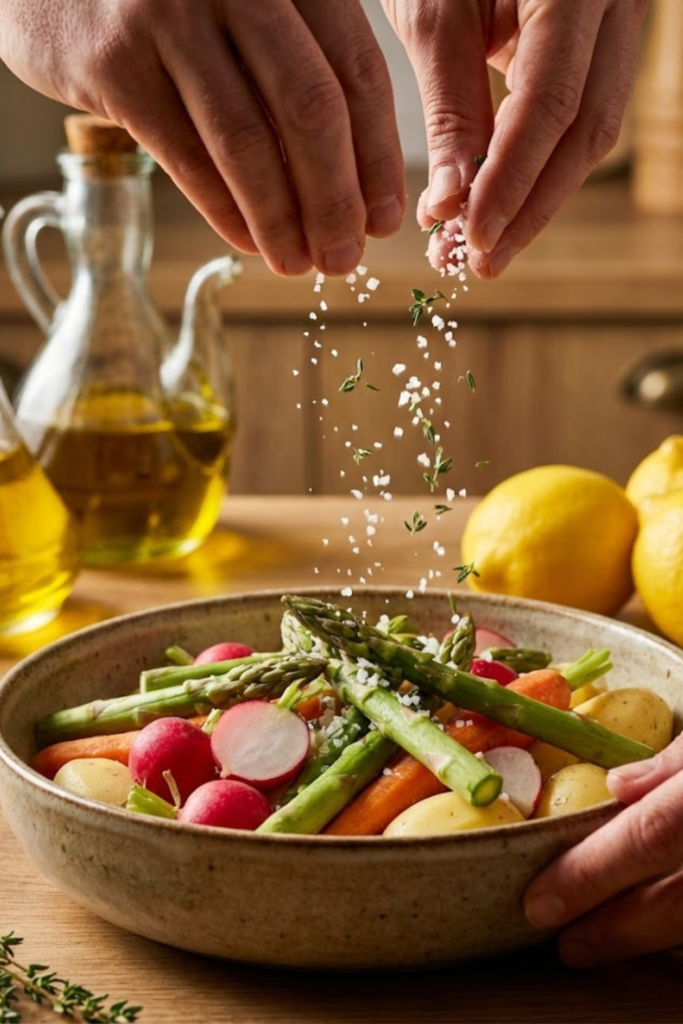
I used to think that just a little salt and pepper was enough. I was wrong. If you want your roasted spring vegetables sheet pan recipe to actually taste like something you’d order at a restaurant, you have to be brave with the seasonings. I’ve ruined a few batches by being too shy with the spice rack, and nobody wants bland broccoli.
The Oil Debate: What I Actually Use
Here is the deal with oil. For the longest time, I just grabbed whatever was next to the stove. Usually, that was extra virgin olive oil. It tastes great, but I noticed that when I cranked my oven up to 425°F (which you need to do for crispiness), the kitchen would get smokey.
Now, I mostly use avocado oil for the high heat stuff. It doesn’t smoke as easily. But, I’ll be honest, I still use olive oil if I’m roasting at 400°F because I love the flavor. The trick is to coat everything, but don’t drown it. You want the veggies to glisten, not swim. If there is a puddle of oil on the pan, your veggies will just boil in it.
Fresh vs. Dried Herbs
In the spring, I really try to use fresh herbs. Dried oregano is fine for winter stews, but for spring veggies? Fresh is way better.
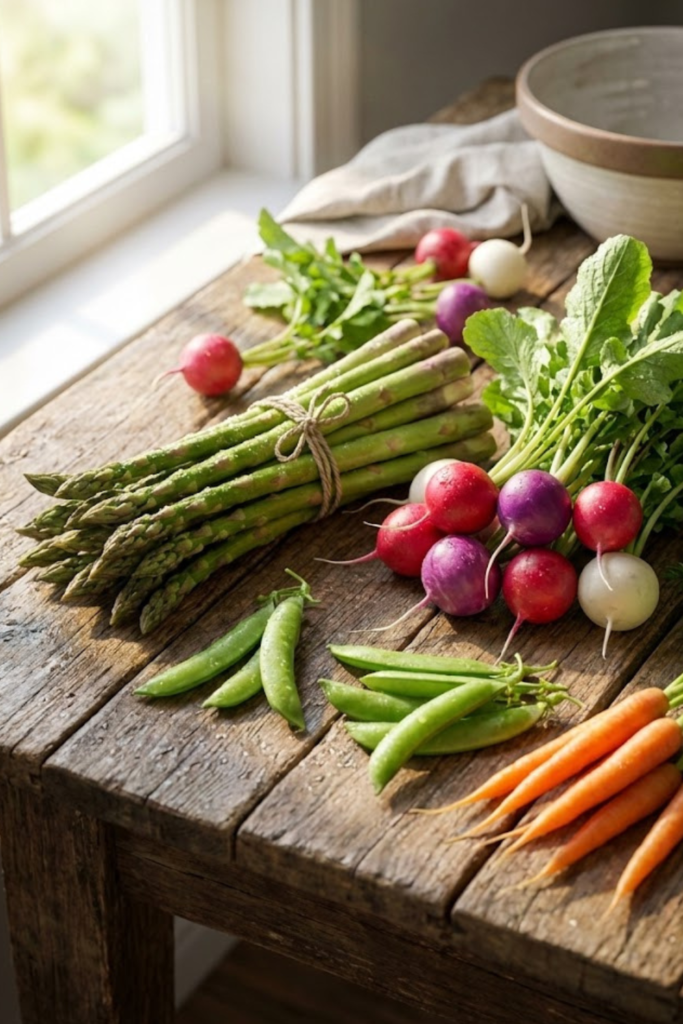
- Thyme: This is my go-to. I just strip the leaves off the woody stems and toss them on.
- Dill: I love dill on roasted radishes and potatoes. It sounds weird, but try it.
- Rosemary: Be careful here. Rosemary is strong. I once used a whole branch chopped up and it was like eating a pine tree. A little goes a long way.
If you only have dried herbs, that’s okay too. Just remember to rub them between your fingers before sprinkling them on. It wakes up the flavor a bit.
The Acid Factor
This is the secret step I missed for years. I would pull the pan out of the oven, eat a carrot, and think, “It needs… something.” That something is usually acid.
Right after the veggies come out of the hot oven, I squeeze half a lemon over the whole tray. The heat hits the lemon juice and it creates this instant, bright sauce. If I don’t have lemons, a splash of balsamic glaze works too, especially on asparagus. It cuts through the oil and makes the whole dish pop.
Step-by-Step Roasted Spring Vegetables Sheet Pan Recipe
Okay, let’s get down to business. This is where the magic happens. I’ve walked you through the shopping and the flavors, but the technique is what separates a soggy mess from a glorious dinner. This roasted spring vegetables sheet pan recipe is forgiving, but there are a few rules I stick to.
Prep Work: The Drying Game
I cannot stress this enough: water is the enemy here. I used to wash my veggies and throw them straight onto the pan while they were still dripping. Big mistake. They just steamed in their own juices. Now, after I wash everything, I lay it all out on a clean kitchen towel and pat it dry. If I have time, I let them air dry for a bit. You want those veggies bone dry before the oil touches them.
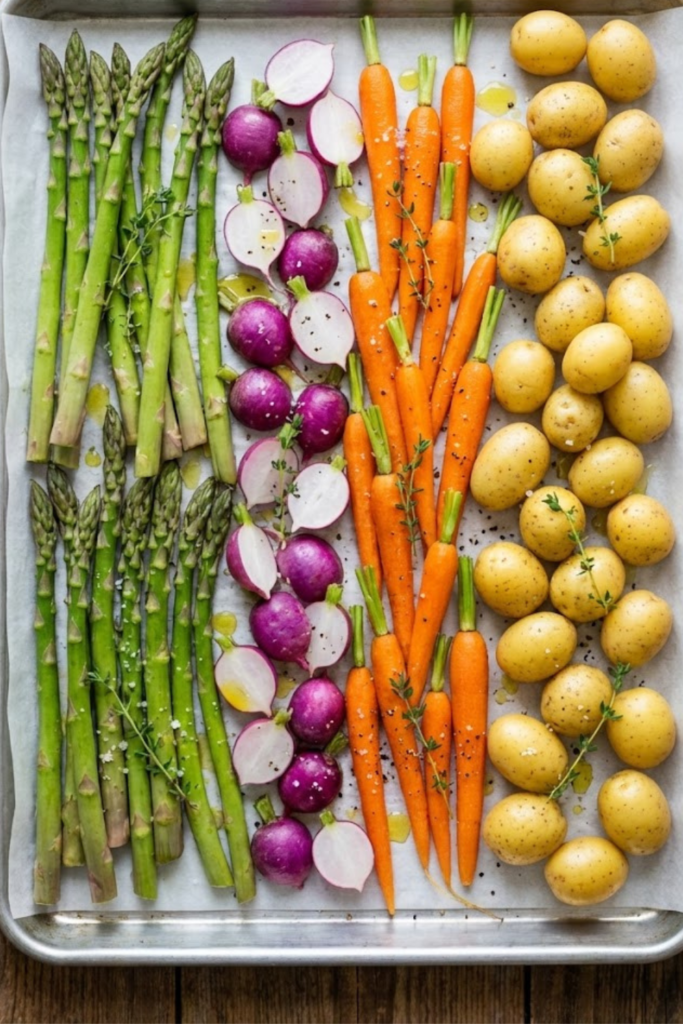
Then comes the chopping. I try to cut everything roughly the same size. If I leave the potatoes in huge chunks and cut the carrots into thin coins, the carrots will be burnt to a crisp before the potatoes are even soft. I aim for bite-sized pieces, maybe an inch or so.
The Pan Setup: Give Them Space!
This is the number one mistake I see people make. I used to do it too because I didn’t want to wash two pans. I would pile everything onto one sheet pan until it was a mountain of vegetables.
Don’t do that.
Vegetables need personal space. If they are touching, they steam each other. If they have a little room to breathe, the hot air can circulate around them and roast them. I usually use two large baking sheets. I line them with parchment paper for easy cleanup (because scrubbing burnt pans is the worst), but you can put them directly on the metal if you want extra char. Just make sure to grease the pan well.
Roasting Temperatures: Crank It Up
I used to be afraid of high heat. I thought I would burn everything. So I would roast at 350°F. It took forever, and the veggies were soft but never crispy.
Now, I preheat my oven to 425°F (220°C). Yes, it’s hot. But that heat is what caramelizes the natural sugars in the spring vegetables. That’s where the flavor comes from!
Here is my general timeline:
- Hard Veggies First: If I’m using new potatoes or carrots, I toss them with oil, salt, and pepper and put them in first for about 15-20 minutes.
- Add the Softer Stuff: Then, I pull the pan out (carefully!) and add the asparagus, snap peas, and radishes. I give everything a stir to recoat with the oil on the pan.
- Finish It Off: Pop it back in for another 10-15 minutes.
I always keep an eye on it near the end. Ovens are different. My old oven ran hot, so I had to check it sooner. You are looking for tender veggies with golden-brown edges. If the asparagus tips are getting a little charred, that’s perfect. That’s the best part!
Common Mistakes When Roasting Spring Vegetables
I’ve messed up a lot of sheet pan dinners. Like, a lot. It looks so easy on Instagram, right? You just toss it all on a pan and boom, dinner. But my first few tries at a roasted spring vegetables sheet pan recipe were… well, let’s just say my dog wouldn’t even eat them. There are a few traps that are really easy to fall into.
The Crowded Pan Disaster
I think I mentioned this before, but it’s the biggest one. I used to try to squeeze a week’s worth of meal prep onto one single baking sheet. The veggies were practically stacked on top of each other. Instead of getting that nice, brown crunch, they just sat there and steamed. It was like eating boiled vegetables, which is definitely not what I wanted. If you can’t see the bottom of the pan between the veggies, grab a second pan. Seriously, it’s worth the extra dishwashing.
Bad Timing
This was my other big fail. I’d throw the asparagus on the pan at the exact same time as the baby potatoes. Twenty minutes later, the potatoes were still rock hard, and the asparagus was a slimy green mush. It was gross. Not all veggies cook at the same speed!
- Fast cookers: Asparagus, snap peas, green beans (these only need like 10-15 mins).
- Slow cookers: Potatoes, carrots, onions (these need 25-30 mins).
If you want them to finish at the same time, you have to start the slow guys first. It takes a little more attention, but it saves your dinner.
Being Scared of Salt
I used to barely sprinkle any salt because I was trying to be “healthy.” But roasted vegetables without enough salt just taste like hot water. You need to season them well before they go in the oven so the flavor cooks into the vegetable. And here is a pro tip: taste a piece right when it comes out. If it tastes boring, hit it with a tiny bit more salt right then. It makes the flavors wake up.
Forgetting the Flip
I used to just shove the pan in and walk away for 30 minutes. The bottoms would be burnt black and the tops would be pale. You gotta give them a toss halfway through! I usually set a timer on my phone so I don’t forget. Just open the oven, give the pan a shake or use a spatula to flip them over. It helps everything cook evenly.
Serving Suggestions and Leftover Ideas
So, you’ve pulled your beautiful tray out of the oven. Now what? Honestly, half the time I just stand at the counter and eat them right off the pan. But if you actually want to make a meal out of this roasted spring vegetables sheet pan recipe, there are so many good ways to do it.
What to Serve With It
This is the best part about sheet pan veggies—they go with literally everything.
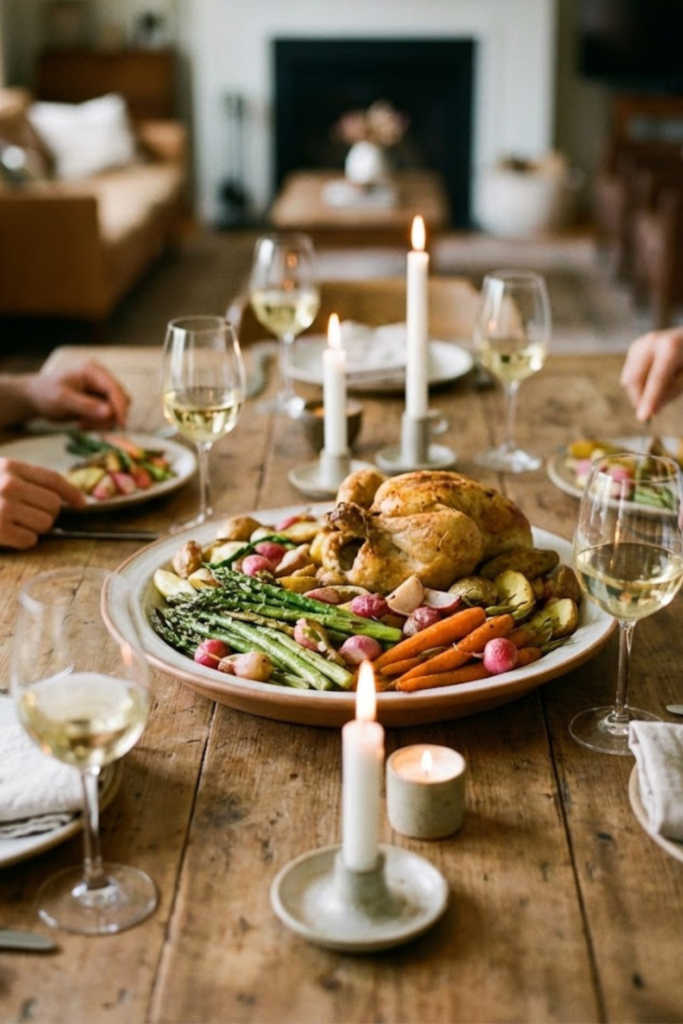
- Roast Chicken: If I’m feeling ambitious, I’ll roast a chicken on a separate rack at the same time. The timing usually works out if you put the chicken in first.
- Salmon: This is my weeknight go-to. About 15 minutes before the veggies are done, I’ll clear a little space on the pan and nestle in a few salmon fillets. They cook right alongside the asparagus. It’s one pan to wash, which is a huge win in my book.
- Grain Bowls: On Sundays, I like to cook a big pot of quinoa or farro. Then I just pile these roasted veggies on top, add a handful of spinach, and maybe some feta cheese. It makes lunch for the next few days super easy.
Dip It Good
My kids are way more likely to eat their vegetables if they can dip them in something. It sounds silly, but it works.
- Hummus: We go through tubs of this stuff. Roasted carrots dipped in hummus is surprisingly good.
- Garlic Aioli: If you want to feel fancy, mix some garlic powder and lemon juice into a little mayonnaise. It tastes amazing with the roasted potatoes.
- Tahini Dressing: This is my personal favorite. I whisk together tahini, lemon, and a little water until it’s creamy. Drizzle it over the whole tray right before serving.
The Magic of Leftovers
I always—and I mean always—make extra. Roasted vegetables shrink a lot in the oven, so what looks like a mountain of raw spinach turns into a tiny pile.
If you have leftovers, don’t toss them!
- Frittatas: The next morning, I chop up the cold veggies and throw them into some beaten eggs. A little cheese on top, bake it, and breakfast is done.
- Salads: Cold roasted veggies are actually really good in a salad. They add a nice texture that raw veggies don’t have.
- Wraps: Mash the roasted sweet potatoes or carrots a little bit and spread them on a tortilla with some black beans. It’s a great lunch on the go.
Basically, this recipe is the gift that keeps on giving. You cook once, and you eat well for a couple of days. That is my kind of cooking.
Well, there you have it. That is basically everything I know about making a roasted spring vegetables sheet pan recipe that doesn’t taste like mush. It took me a while to figure out the right temps and that whole drying-the-veggies thing, but once you get it, you get it.
I hope this helps you eat a few more veggies this week. It really is one of those dinners that feels fancy but is actually super lazy (my favorite kind). You don’t need to be a chef to toss stuff on a pan.
If you try this and actually like it, do me a huge favor? Please save this pin to your “Healthy Dinners” board on Pinterest. It helps other people find the recipe, and honestly, it helps me out too so I can keep writing these. Let me know in the comments if you found a better combo—I’m always looking for new ideas!