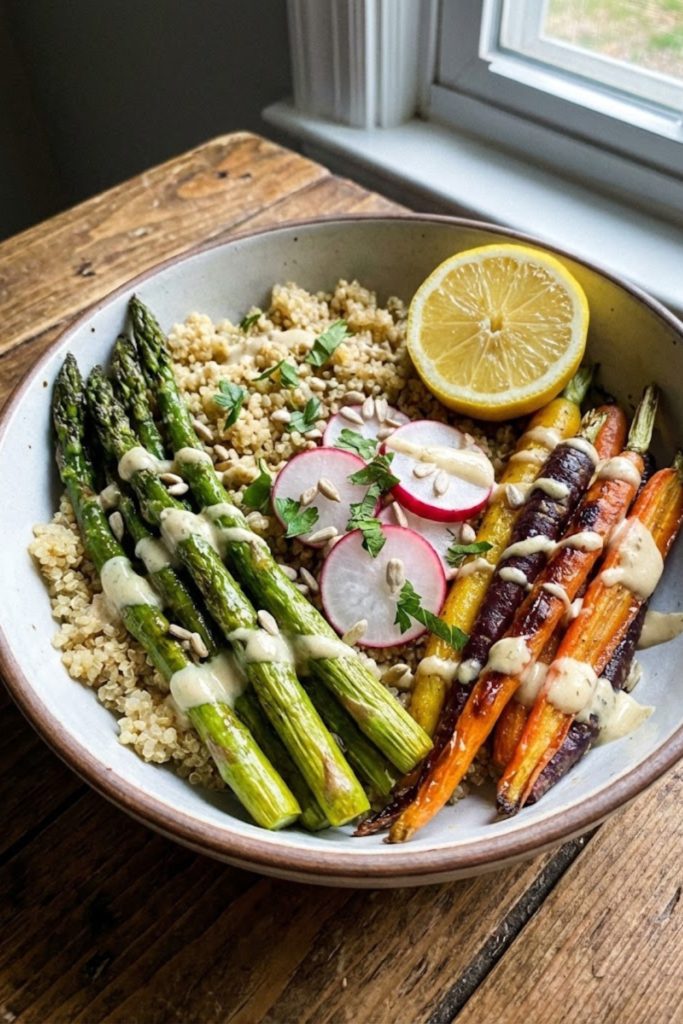
Did you know that eating seasonal produce can boost your nutrient intake by nearly 50% compared to eating out-of-season crops? It’s true! I’ve been a teacher for twenty years, and I always tell my students that nature knows exactly what we need when the weather starts to warm up. This spring grain bowl with roasted vegetables recipe is my absolute favorite way to celebrate the return of the sun!
I remember the first time I tried to make a grain bowl; I accidentally turned my quinoa into a mushy soup. It was a total disaster! But after a few tries (and many “happy accidents”), I figured out the secret. You want those veggies to have a bit of a crunch and the grains to be fluffy. This dish is bright, it’s filling, and it makes me feel like I’ve actually got my life together! Let’s get cooking!
Picking the Best Grains for Your Bowl
Alright, let’s talk about the base of your bowl. Think of the grains as the floor of a house. If the floor is shaky or boring, the whole house feels a bit off, right? I have seen a lot of lunch boxes in my twenty years of teaching, and the ones that always look the best are the ones with a solid, fluffy grain base. When I first started making a spring grain bowl with roasted vegetables recipe, I just used whatever was in the back of my pantry. Sometimes it was plain white rice, and honestly, it was kind of a letdown. It didn’t have that “chew” that makes a bowl feel like a real meal.
The Quick and Easy Quinoa Option
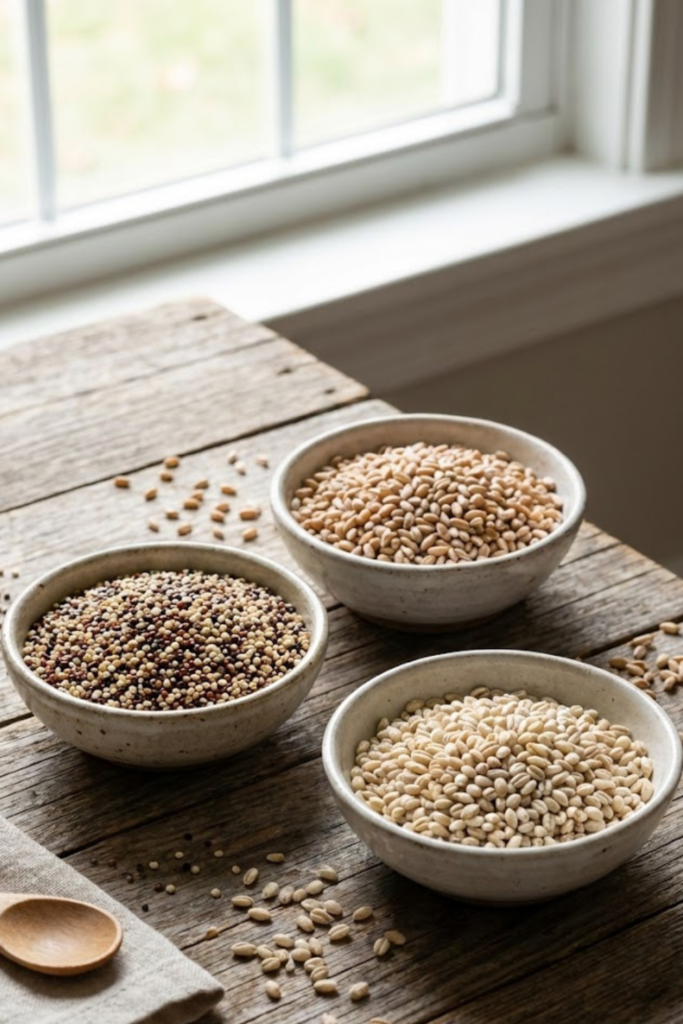
Quinoa is probably the most popular choice for a reason, even though it is technically a seed and not a grain. I love it because it cooks up in about fifteen minutes. If you are a busy person or just don’t want to spend all night standing over a stove, quinoa is gonna be your best friend. It has a slightly nutty flavor that works so well with spring flavors. I usually buy the tri-color kind because the red and black bits look really pretty against the green asparagus. One big tip: make sure you rinse it under cold water before you boil it. I forgot to do that once and the whole batch tasted like dirt! It was a real “teaching moment” for me in my own kitchen.
Getting Hearty with Farro and Barley
If you want something that really sticks to your ribs, you have to try farro or pearled barley. These are called “ancient grains” and they have a much tougher, chewier texture than rice. I like to tell my students that farro is like the “tough guy” of the grain world—it holds its shape no matter what. Barley is a bit softer but still has a great bite. Both of these take longer to cook, usually around thirty or forty minutes. Because of that, I always make a huge pot on Sunday nights. That way, I can just grab a scoop for my lunch all through the week without any extra work.
Tips for the Best Texture
Nobody wants a soggy, mushy bowl. To keep things light and fluffy, I use a little less water than what the box says. For quinoa, I usually do one cup of grains to one and a half cups of water. Once the water is gone, I turn off the heat and let it sit with the lid on for about five minutes. Then, I fluff it up with a fork. This lets the steam finish the job without making the grains wet. If you follow these steps, your base will be the perfect foundation for all those yummy roasted veggies we’re about to add. It really makes the whole dish feel way more professional!
Mastering Roasted Spring Vegetables
Now we are getting to the heart of the matter! If the grains are the floor of our house, the vegetables are definitely the furniture and the decorations. They are what make this spring grain bowl with roasted vegetables recipe really pop with color and flavor. When I was younger, I used to think the only way to eat spring veggies was to steam them until they were limp and sad. My poor family had to eat so much mushy asparagus! But once I started roasting them in a hot oven, everything changed. It brings out a sweetness in the vegetables that you just can’t get any other way.
Finding the Right Heat for Caramelization
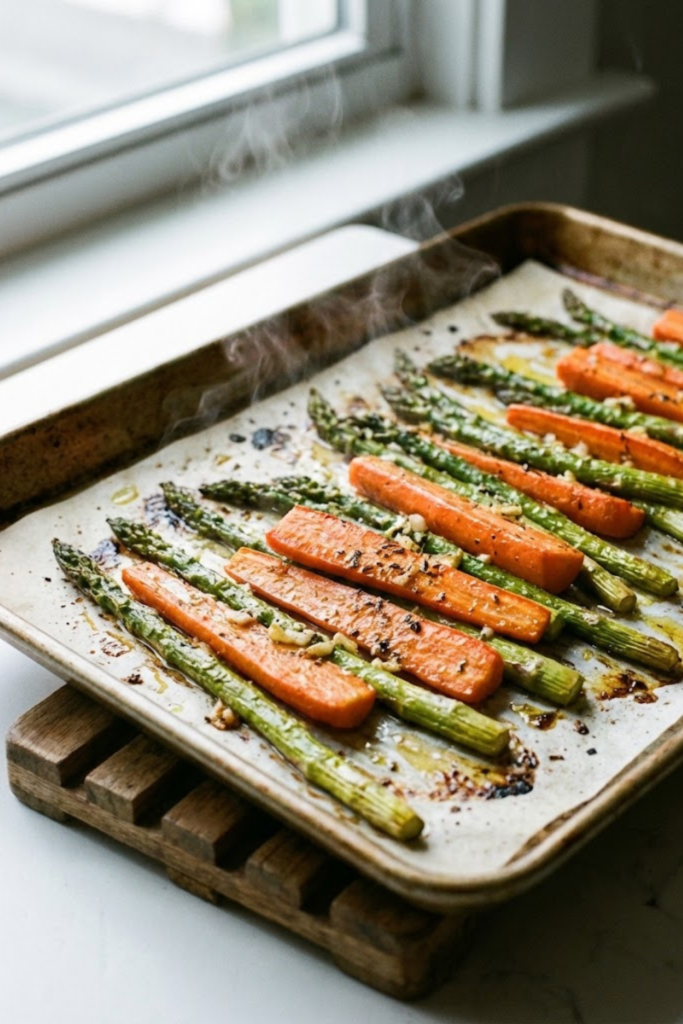
To get those crispy, brown edges we all love, you have to turn the heat up. I usually set my oven to 400 degrees Fahrenheit. I’ve found that if the oven isn’t hot enough, the vegetables just sit there and get soft instead of getting that nice crunch. I always tell people to watch the asparagus closely. Since the stalks are thin, they cook much faster than a thick carrot. I usually wait until the tips look a little bit charred. That burnt flavor is actually the best part! It tastes like a backyard barbecue even if it’s still a bit chilly outside.
The Surprise of Roasted Radishes
If you have never roasted a radish, you are in for a real treat. Most people only eat them raw in salads, and they can be pretty spicy and sharp. But when you toss them in the oven with a little olive oil and salt, they turn mellow and almost sweet. They lose that “bite” and become juicy. In my classroom, I like to do little food experiments, and roasting radishes is always the one that shocks the students the most. They go from being something people pick out of their food to being the first thing everyone grabs from the bowl.
Crowding the Pan is a No-No
One mistake I see all the time is people trying to fit too many veggies on one baking sheet. I did this for years because I didn’t want to wash two pans! But if the vegetables are touching each other too much, they start to steam instead of roast. You want plenty of space between your carrots and asparagus so the hot air can move around. If you hear a sizzling sound, you’re doing it right. If it’s quiet, you might have too many things on the pan. Give them some breathing room, and they will turn out perfect every single time.
The Zesty Lemon-Tahini Dressing
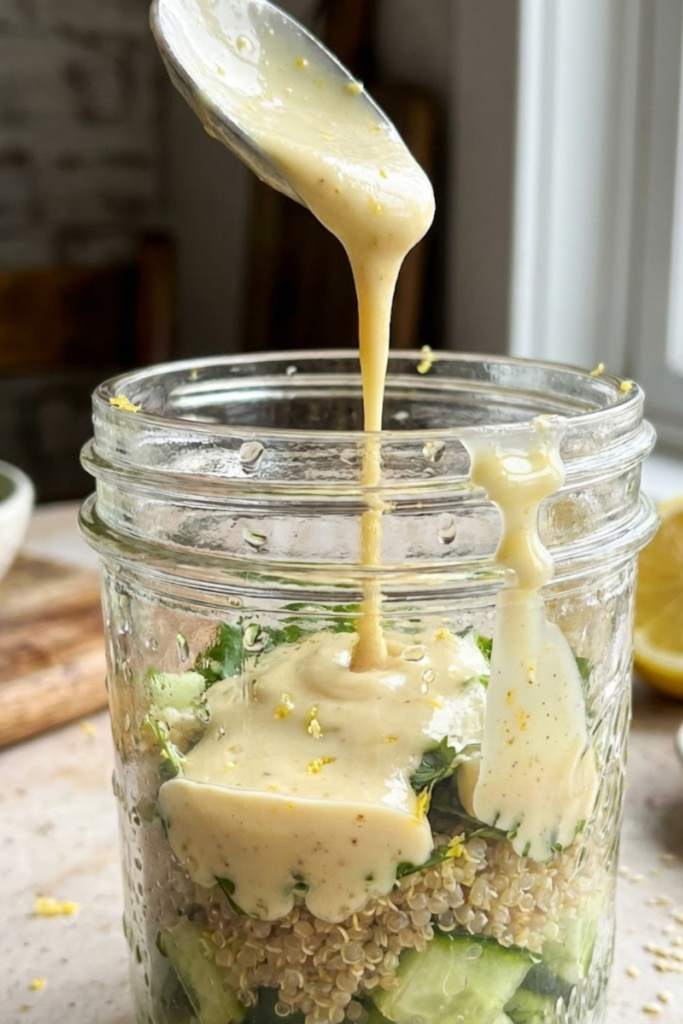
Okay, let’s talk about the sauce. If the grains are the floor of our house and the veggies are the furniture, then the dressing is definitely the paint on the walls. It is what ties everything together! I’ll be honest, the first time I tried to make a spring grain bowl with roasted vegetables recipe, I just dumped some plain olive oil and a bit of salt on top. It was okay, but it was kind of boring. Then I discovered tahini, and my life changed! Tahini is just ground-up sesame seeds, but it’s so creamy and rich without even using any dairy.
How to Whisk Without the Mess
When you first open a jar of tahini, there is usually a thick layer of oil sitting on top. Don’t you dare pour that oil out! You have to stir it back in. It takes a little bit of elbow grease, but it’s worth the work. When I’m in the middle of a busy school week, I sometimes forget to do this and end up with a dry, hard clump at the bottom of the jar. That is a total bummer.
Once you have your tahini ready, you add fresh lemon juice, a little crushed garlic, and some sea salt. Now, here is the weird part: sometimes when you add the lemon juice, the sauce gets really thick and chunky. It looks like it’s totally ruined! But don’t worry. I call this the “magic phase.” You just have to add a tablespoon of warm water and keep whisking. Suddenly, it turns from a grainy mess into a smooth, creamy dream. It’s a great lesson in patience, which is something I try to teach my students every single day in the classroom.
Finding the Perfect Flavor Balance
I like my dressing to be a little bit zingy, so I usually go pretty heavy on the lemon. If the sauce tastes too sour for you, you can add a tiny drop of maple syrup or honey to mellow it out. It’s all about what you like. I usually taste it with a little piece of a roasted carrot to see if it’s right. You want the dressing to be thin enough to drizzle over the bowl but thick enough to coat the grains. If it’s too thick, it just sits in one spot like a blob of glue, and that’s not what we want.
This dressing is truly the secret weapon for this spring grain bowl with roasted vegetables recipe. It makes the whole thing feel fancy, even if you’re just eating it at your desk during a quick ten-minute lunch break. Trust me, once you start making your own dressing like this, you’ll never want to go back to the store-bought stuff in those plastic bottles again!
Protein Add-ons and Customizations
Every good meal needs a bit of staying power to keep you moving. As a teacher who has spent twenty years watching kids try to get through a long afternoon of algebra on just a bag of chips, I know how important it is to have a solid lunch. This spring grain bowl with roasted vegetables recipe is already pretty filling because of the fiber in the grains, but adding a little extra “oomph” makes it a complete meal that keeps you full until the final school bell rings. I usually tell my students that protein is like the fuel in a car—without it, you just aren’t going to go very far before you run out of gas!
Plant-Based Power with Chickpeas and Tofu
Most days, I stick to plant-based proteins because they are so easy to pack in a lunch box and they don’t get weird if they sit for a few hours. My favorite trick is to toss a can of chickpeas onto the same baking sheet as the veggies. They get all crispy and salty, and they add a great texture. If you like tofu, you can press the water out and bake that too. I remember one time I didn’t press the tofu enough and it turned into a soggy block of sponges. It was pretty gross, so don’t do that! Just make sure you dry it off really well with a paper towel before you put it in the oven.
Fresh Herbs and the Final Crunch
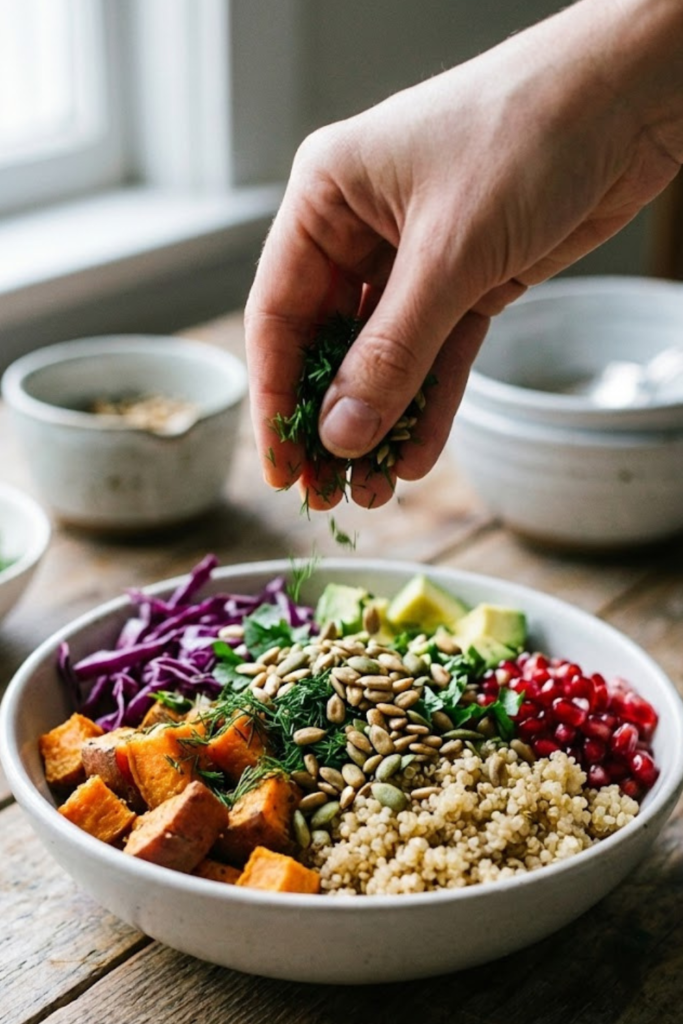
The very last thing that makes this bowl special is the fresh stuff you put on at the end. Spring is all about green things growing, so I use a lot of mint and parsley. One of my fellow teachers once asked me why my lunch smelled like a fresh garden, and it was because of all the fresh dill I chopped up! It makes the whole thing taste so bright and lively. I also love to throw a handful of sunflower seeds or slivered almonds on top right before I eat. That extra crunch is what makes it feel like a fancy restaurant meal instead of something you just threw together in ten minutes. It’s these little things that turn a boring lunch into the highlight of your day!
Your New Spring Favorite
I really hope you give this spring grain bowl with roasted vegetables recipe a try this week! After twenty years in the classroom, I’ve learned that the best lessons are the ones that are simple and leave you feeling good, and this meal is exactly that. It isn’t just about eating healthy; it’s about taking a minute to enjoy the fresh flavors that come with the new season. Every time I sit down with one of these bowls, it feels like a little reward for getting through a long winter. It is bright, it is colorful, and it just makes sense for this time of year.
Making the Recipe Your Own
One of the things I always tell my students is that there is no such thing as a “perfect” way to do things—except maybe in math class! For this recipe, you should feel free to swap things around based on what looks good at your local market. If you can’t find asparagus, maybe try some snap peas or green beans. If you aren’t a big fan of tahini, a simple balsamic drizzle works wonders too. The main goal is to get those roasted veggies and hearty grains into your belly. I’ve had many days where I realized I was out of quinoa and used some leftover brown rice instead. You know what? It was still delicious! Don’t let a missing ingredient stop you from making something good for yourself.
Sharing the Love with Others
I remember bringing this to a potluck lunch at school last year. Some of the other teachers were a bit skeptical about “grain bowls”—they thought it sounded a bit too fancy or complicated. But once they saw the vibrant colors and smelled that roasted garlic, they were all asking for the recipe. It made me so happy to see everyone enjoying something that was actually good for them. I even had a few students ask what that “good smelling stuff” was during my lunch duty! It just goes to show that good food brings people together, no matter how old they are.
Save This for Later!
I know how it is—you see a great recipe online, and then you can’t find it when you actually have time to cook. To make sure that doesn’t happen, please save this recipe to your Pinterest boards! It’s the easiest way to keep it handy for those busy weeknights when you don’t know what to make. Plus, it helps me out a lot when you share my work with your friends. I can’t wait to hear how your bowl turns out and what special twists you decide to add to yours! Enjoy the spring!