I couldn’t agree more! Life is simply too short to skip the sweet stuff, especially when it involves warm, gooey dough and a mountain of cream cheese frosting. There is nothing—and I mean nothing—quite like the aroma of cinnamon and sugar filling your kitchen on a lazy Saturday morning!
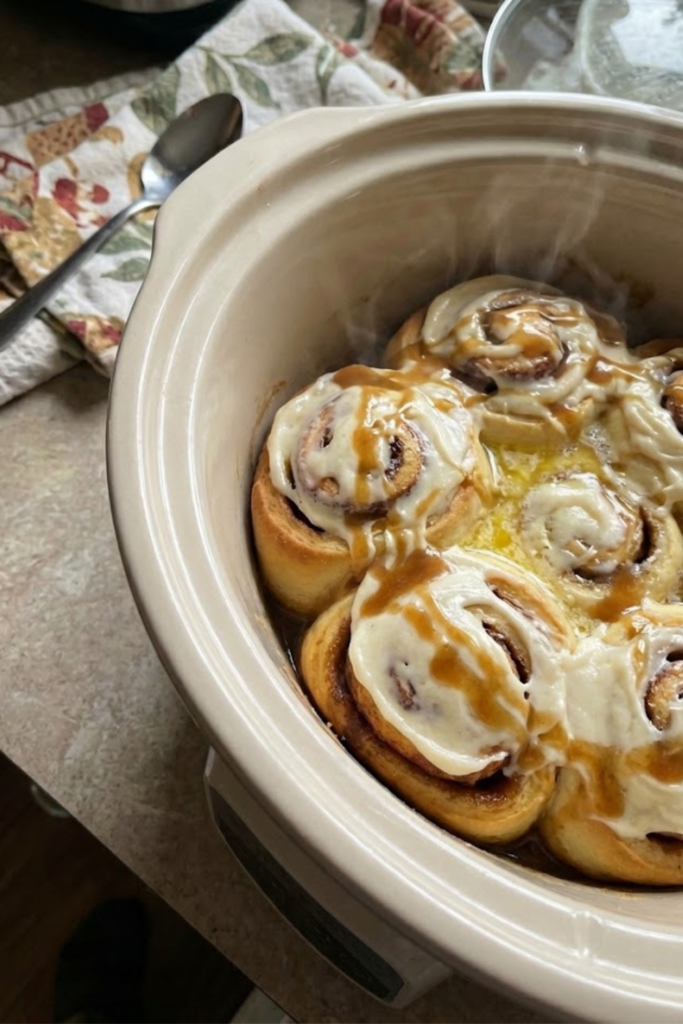
But here is the real kicker. We all love cinnamon rolls, but who actually loves fighting with the oven temperature or timing the rise perfectly while trying to get coffee ready? Not me. That is exactly why I switched to making homemade crock pot cinnamon rolls. It sounds like a cheat code, and honestly, it kind of is. The slow cooker creates this steamy, moist environment that keeps the rolls incredibly soft, preventing those hard, crusty edges you sometimes get in the oven. Whether you are prepping for a holiday brunch or just treating yourself (because you deserve it!), this method is a total game-changer. Let’s get baking!
Why Choose the Slow Cooker Over the Oven?
Honestly, I used to be a total skeptic about baking in a slow cooker. In my head, bread belonged in the oven, and soup belonged in the crock pot. Period. But that changed about five years ago during a holiday brunch disaster I like to call “The Great Burnt Bottom Incident.” I was trying to juggle a ham, a casserole, and fancy rolls all in one oven. I got distracted by a chatty aunt, and boom—smoke alarm city. The tops were raw, and the bottoms were charcoal. It was embarrassing.
That is when I finally gave in and tried making homemade crock pot cinnamon rolls. And let me tell you, I felt a little silly for not doing it sooner. It’s not just about saving space; it actually changes the texture for the better.
No More “Oven Tetris”
We have all been there. You are hosting a dinner or a big breakfast, and you are trying to fit three different pans onto two racks. It is a nightmare. Using the slow cooker is a huge relief because it frees up your main oven for the heavy hitters, like the turkey or the bacon.
I literally put the slow cooker on a side table in the dining room sometimes just to get it out of my way. It’s a “set it and forget it” situation, which saves my sanity when the kitchen is chaotic.
The Steam Factor
Here is the science-y part (don’t worry, I won’t bore you). The magic of the slow cooker is that it traps moisture. When you bake in an oven, dry heat is blasting your dough. If you aren’t careful, you get crusty, hard edges.
But with homemade crock pot cinnamon rolls, the lid keeps the steam inside. It creates this humid environment that makes the dough incredibly soft and gooey. It’s almost like a steamed bun but with all the buttery goodness you want. I have found that my rolls stay soft for days, whereas oven-baked ones usually get stale by the next morning.
It’s Way More Forgiving
I am not a professional baker. I make mistakes. I forget to set timers. The beautiful thing about the slow cooker is that it is gentle. If you leave the rolls in for an extra 15 minutes because you were running after the dog, they usually don’t burn. The heat is lower and more consistent.
It takes a bit of the stress out of the timing. You don’t have to watch it like a hawk. Just throw a paper towel under the lid (I’ll explain that trick later) and let it do its thing. It is pretty hard to mess this up, which is exactly my kind of cooking.
Keeping the Kitchen Cool
This is a big one for me in the summer. I crave sweets in July just as much as I do in December, but I refuse to turn on my oven when it is 90 degrees out. The slow cooker keeps the heat contained. You can have your warm, sticky buns without sweating through your shirt. It’s a win-win.
Final Thoughts on the Switch
If you are on the fence, just try it once. You might miss that crispy brown top you get from the oven (though you can stick the crock pot bowl in the broiler for a minute if you really care), but the trade-off for that melt-in-your-mouth texture is totally worth it. Plus, nobody complains when the food tastes this good.

Essential Ingredients for Fluffy Yeast Dough
I have a confession to make: I used to be absolutely terrified of baking with yeast. For years, I avoided any recipe that called for it because I was convinced I would mess it up. I had this one traumatic experience in my 20s where I tried to make bread, and the result was basically a hockey puck. I’m pretty sure I killed the yeast by dumping it into scalding hot water. Whoops.
But once I got over that fear, I realized that making a yeast dough recipe isn’t actually rocket science. It just comes down to using the right stuff. If you want your homemade crock pot cinnamon rolls to turn out fluffy and not like dense rocks, you have to pay attention to these ingredients.
The Yeast Debate: Active Dry vs. Instant
You will usually see two types of yeast at the store: active dry and instant. I used to grab whatever was on sale, but they aren’t exactly the same. Active dry yeast needs to be “woken up” in warm liquid first. It’s a little high maintenance, but I honestly prefer it because I like seeing that foam bubble up—it proves the yeast is actually alive before I waste my flour.
Instant yeast (or rapid rise) can be dumped right in with the dry ingredients. It’s faster, sure. But for the slow cooker method, I feel like active dry yeast gives a better flavor development. Just check the expiration date! I once used a packet from the back of my pantry that expired in 2019, and let’s just say… nothing happened. It was tragic.
Flour Power
Can you use all-purpose flour? Yes. Should you? Maybe not, if you want that bakery-style chew. I switched to using bread flour a few years ago, and it made a massive difference.
Bread flour has a higher protein content than all-purpose flour. That protein creates more gluten, which gives the dough that nice, elastic stretch. It helps the rolls hold their shape better in the moist heat of the crock pot. If you only have all-purpose, don’t sweat it—it still works! But if you can grab bread flour, do it.
Don’t Skimp on the Fat
We aren’t making diet food here, folks. We are making comfort food. The secret to that rich, tender dough (like a brioche) is fat. I always use whole milk and real butter in the dough mix.
I tried using skim milk once because it was all I had in the fridge. The rolls turned out okay, but they lacked that melt-in-your-mouth richness. The fat in the whole milk and butter tenderizes the gluten, making the crumb soft rather than chewy-tough.
The Room Temperature Rule
Here is a tip I learned the hard way: make sure your eggs and butter are at room temperature before you start. If you dump cold eggs into your warm milk and butter mixture, the butter will seize up and curdle. It looks gross, like weird yellow cottage cheese.
Just set your eggs out on the counter about 30 minutes before you start. If you forget (which I do, literally half the time), just pop the eggs in a bowl of warm water for 5 minutes. It works like a charm. Getting your ingredients to the same temperature helps everything emulsify smoothly, giving you that perfect, silky dough for your homemade crock pot cinnamon rolls.

Step-by-Step: Preparing the Dough
Okay, roll up your sleeves (literally). We are getting into the messy part. I used to think making dough required a degree in chemistry or magic hands. Honestly, I avoided it for years because I hate having sticky stuff all over my fingers. But once I got the hang of the feel of the dough, it became my favorite part. There is something really therapeutic about beating up a ball of flour after a long week of grading papers.
Making the base for your homemade crock pot cinnamon rolls is all about patience and touch. Don’t rush this part, or you will end up with sad, dense rolls.
The Yeast “Foam Party”
First things first: proofing the yeast. This is basically just making sure your yeast is alive and ready to party. You mix your warm milk and sugar, then sprinkle the yeast on top.
Here is where I have messed up a million times. The milk temperature matters. If it’s too hot, you will kill the yeast (RIP). If it’s too cold, nothing happens. I used to just guess, but now I use my pinky finger. It should feel like a warm bath—comfortable, not scalding. If it burns your finger, it will definitely burn the yeast.
Let it sit for about 5 to 10 minutes. You want it to look foamy and bubbly, kind of like the head on a root beer float. If it’s flat water after 10 minutes, throw it out and start over. Seriously. Don’t try to save it. I tried that once and baked “brick rolls” that could have been used as doorstops.
The Mixing Workout
Once your yeast is foamy, add your melted butter (cooled slightly!), eggs, and salt. Then, start adding the flour. I usually do this in a stand mixer because I am lazy, but doing it by hand is a great arm workout.
If you are mixing by hand, use a sturdy wooden spoon. The dough will look shaggy and messy at first. That is normal. Keep mixing until it starts to pull away from the sides of the bowl. It’s going to look ugly before it looks pretty.
Kneading Until Smooth
Now, dump that dough onto a floured surface. This is where kneading techniques come into play. You want to push the dough away from you with the heel of your hand, fold it back over, and turn it. Push, fold, turn.
I used to make the mistake of adding way too much flour during this step because I hated the dough sticking to my hands. Big mistake. Adding too much raw flour makes the rolls dry. The dough should be tacky—like the back of a Post-it note—but not a sticky mess.
Knead it for about 5 to 7 minutes. It should feel smooth and elastic. If you poke it, it should spring back slowly. It should feel soft, kind of like a baby’s cheek. If it tears easily, keep kneading. You really can’t over-knead this by hand, so don’t worry about that.
The Waiting Game (First Rise)
Now comes the hard part: waiting. Grease a clean bowl with a little oil or butter. Plop your dough ball in there and turn it over once so it gets coated. This keeps a crust from forming on the dough skin.
Cover it with a warm, damp towel or plastic wrap. You need to find a warm, draft-free spot for proofing dough. My house is always freezing in the winter, so I usually turn my oven on for one minute, turn it off, and then stick the bowl inside. It creates a perfect little warm box.
Let it rise for about an hour, or until it has doubled in size. Do not poke it. Do not peek every five minutes. Just walk away and drink some coffee. When you come back, it should be puffy and beautiful, ready to be transformed into those delicious homemade crock pot cinnamon rolls.

Creating the Gooey Cinnamon Sugar Filling
Let’s be real for a second. The dough is important, sure, but the filling? The filling is the soul of the cinnamon roll. It is the reason we eat these things. I have definitely been guilty of unrolling a bun just to eat the sticky center first. Don’t judge me!
For your homemade crock pot cinnamon rolls, getting the filling right is actually a bit different than baking in an oven. Because the slow cooker uses moist heat, you want a filling that stays put and gets gooey, not one that turns into a watery soup at the bottom of the pot.
The Holy Trinity: Butter, Sugar, Cinnamon
You really only need three things, but the type of ingredients matters a lot here.
First, the sugar. Please, I am begging you, do not use white granulated sugar for the filling. It just doesn’t melt the same way. You need brown sugar filling. The molasses in the brown sugar creates that thick, caramel-like sauce that we all dream about. I usually use light brown sugar, but if you want a deeper flavor, dark brown sugar is amazing too.
Second, the cinnamon. Since this is the main flavor, don’t use the dusty jar that has been sitting in your spice rack since 2018. Get some fresh ground cinnamon. I like to be heavy-handed with it. If the recipe says two tablespoons, I usually accidentally-on-purpose add three.
The Softened Butter Trick
Here is a mistake I made for years. I used to melt the butter and brush it onto the dough because it was faster. Big mistake.
When you use melted butter, it tends to leak out of the rolls as soon as they start getting warm in the slow cooker. You end up with dry rolls and a pool of butter at the bottom of the crock pot. It’s a mess.
Instead, use softened butter. It should be the consistency of mayonnaise. You want to smear it onto the rolled-out dough with a spatula or the back of a spoon. This creates a barrier that holds the cinnamon and sugar in place. It makes the final result so much richer.
To Crunch or Not to Crunch?
This is a divisive topic in my house. My husband loves pecans in his rolls; my kids act like I have poisoned them if they find a nut.
If you are adding nuts or raisins, chop them up really small. Since these are a sweet roll recipe cooking in a tight space, big chunks can make it hard to roll the dough up tightly. If you do add them, press them gently into the butter and sugar layer so they don’t fall out when you roll it up.
Spreading the Love (Evenly)
When you spread your filling, go almost all the way to the edge. I leave about a tiny strip (maybe half an inch) at the very top edge clean, just so the dough can seal shut when I roll it. But on the sides? Go to the edge!
There is nothing worse than getting the “end piece” of a cinnamon roll and having it be 90% dry dough and zero flavor. That is just sad. Treat those edges with respect. Smear that sugary butter all over.
One last tip: Once you sprinkle your brown sugar and cinnamon over the butter, take your hand or a rolling pin and gently press it down into the butter. It helps everything stick together so you don’t end up with a pile of loose sugar on your counter when you try to roll it up.

Rolling, Cutting, and Placing in the Crock Pot
Okay, we are in the home stretch! You have your dough rolled out and covered in that buttery, sugary goodness. Now we have to get it into the pot without making a huge mess. I used to rush this part because I was impatient to eat, but trust me, taking a breath here pays off.
If you don’t roll it tight enough, they unravel while cooking and look like sad, flat snakes. If you cut them wrong, you squish all the air out. But don’t worry, I have a few weird tricks up my sleeve to help you out.
The “Tight tuck” Roll
Starting at the long edge closest to you, start rolling the dough up. You want to keep it pretty tight. I use my thumbs to tuck the dough under as I go, almost like I’m rolling a sleeping bag back into its sack.
If the dough feels too soft or sticky to handle, pop the whole sheet pan in the fridge for 10 minutes. It makes the butter firm up a bit. Once you have a long log, pinch the seam shut so it doesn’t pop open. I usually roll the log so the seam is on the bottom to keep it secure.
The Dental Floss Cutting Trick
This sounds insane, but it is my absolute favorite kitchen hack. For the longest time, I used a knife to cut my cinnamon rolls. But unless your knife is razor-sharp (mine never are), the sawing motion squishes the beautiful round log into an oval. You lose that pretty cinnamon bun swirl.
Enter: dental floss. Yes, really. Slide a piece of long, unflavored floss under the log. Cross it over the top and pull quickly. It slices through the dough cleanly without squashing it.
Please, for the love of everything holy, make sure it is unflavored. I once grabbed mint floss by accident. Let me tell you, mint and cinnamon do not mix. It was a flavor disaster that my family still teases me about. If you don’t have floss, a very sharp serrated bread knife works too, just use a gentle sawing motion.
Save Your Pot (And Your Sanity)
Before you even think about putting those rolls in, you need to line your slow cooker. Slow cooker baking can get messy. The sugar melts and can burn onto the ceramic crock, turning into hard cement that takes three days to scrub off.
I always use parchment paper hacks here. Cut a piece of parchment paper large enough to cover the bottom and go halfway up the sides. Spray the crock with non-stick cooking spray first to help the paper stick to the sides, then spray the paper too. This makes cleanup a breeze—you literally just lift the paper out when you’re done.
Give Them Room to Breathe
Place your cut rolls into the lined pot. I usually fit about 7 or 8 rolls in a standard oval slow cooker. You might be tempted to cram them all in tightly, but don’t do it.
They need space! Remember, they are going to rise again before they cook, and then puff up more while cooking. If you pack them in like sardines, the centers won’t cook through, and you’ll end up with raw dough in the middle. Leave about half an inch of space between them. They will snuggle up naturally as they bake.

Slow Cooking Times and the Paper Towel Trick
Alright, pay attention, because this is the part where things can go from “amazing” to “soggy disaster” real quick. I learned this lesson the hard way a few years ago when I made a batch of slow cooker recipes for a teacher’s appreciation breakfast. I was so proud of myself until I opened the lid and water poured all over my beautiful buns. They looked like they had been left out in a rainstorm. It was heartbreaking.
Cooking in a crock pot is different than an oven because the moisture has nowhere to go. That’s great for keeping things soft, but bad if you want them to actually look appetizing.
The Magic Paper Towel Hack
If you take nothing else away from this, remember this tip: the kitchen towel trick. As the rolls cook, steam rises and hits the glass lid. Then, it turns back into water and drips right back down onto your food.
To stop this “rainforest effect,” you need to place a barrier under the lid. I usually layer two or three paper towels across the top of the crock pot before I put the lid on. You can also use a clean kitchen towel, but make sure it’s not one that smells like laundry detergent (been there, done that, yuck).
Pull the paper towel or cloth tight so it doesn’t sag and touch the dough. This catches all that slow cooker condensation so your rolls stay fluffy, not mushy. It is a total game-changer.
High or Low? The Great Debate
Every slow cooker is a little different. My old one from college runs hotter than the sun, while my new one takes forever. Generally speaking, I prefer to cook these on HIGH for about 1.5 to 2 hours.
Why high? Because yeast dough needs a certain amount of heat to get that final “oven spring” (or crock pot spring, in this case). If you cook them on low for 4 hours, they sometimes just spread out and get weirdly dense.
Start checking them around the 90-minute mark. You want the edges to be slightly golden. If they look pale and sad, let them keep going. But don’t walk away for three hours, or you will burn the bottoms.
How to Tell When They Are Done
This is tricky. Since the top won’t get brown and crispy like it does in an oven, you can’t just judge by looks. I used to just guess, poke the middle, and hope for the best. Usually, that meant the middle was raw dough.
The best way to know is to use a digital thermometer. Stick it into the center of the middle roll. You are looking for an internal temperature baking reading of about 190°F to 200°F.
If you don’t have a thermometer, use a fork to gently pull up the center of the middle roll. If it looks doughy or wet, put the lid back on (with the paper towel!) and give it another 10-15 minutes. It’s better to be safe than to eat raw yeast. Trust me, your stomach will thank you.
Avoiding the “Gummy” Center
One last thing about cooking temperature. If your rolls are browning too fast on the sides but are still raw in the middle, turn the pot to LOW or even OFF for the last 20 minutes. The residual heat will finish cooking the center without burning the edges.
It takes a little practice to learn your specific machine’s quirks, but once you get it, it’s easy peasy. And honestly, even a slightly gummy cinnamon roll covered in frosting is still pretty delicious.

The Ultimate Cream Cheese Glaze Recipe
You made it! The house smells amazing, the rolls are puffed up, and now comes the best part. I firmly believe that a cinnamon roll is just a vehicle for frosting. I have been known to lick the bowl clean before the rolls are even out of the pot. No shame in my game.
For these homemade crock pot cinnamon rolls, you can’t just slap on a can of store-bought icing. It melts weirdly and tastes like chemicals. You need the real deal: tangy, sweet cream cheese frosting.
Getting the Texture Right
Here is the secret to non-lumpy frosting: room temperature ingredients. I cannot stress this enough. If you try to beat cold cream cheese with butter, you will end up with tiny chunks of cheese floating in your sugar. It looks unappealing, and the texture is all wrong.
Take your brick of cream cheese and your butter out when you start making the dough. By the time the rolls are done, they will be soft enough to whip into a cloud.
Combine the cream cheese, butter, vanilla extract, and a splash of milk. Beat it until it’s smooth. Then, slowly add the powdered sugar. If you add it all at once and turn the mixer on high, you will look like a ghost covered in white dust. I did this last Thanksgiving, and my kitchen floor is still recovering.
The “Melting” Debate
There are two schools of thought on when to frost. Some people like to wait until the rolls are cool so the frosting sits nicely on top like a hat. Those people are wrong. (Just kidding… mostly).
I am team “frost while hot.” When you slather that cinnamon roll icing onto the hot buns right out of the slow cooker, it melts down into all the cracks and crevices. It soaks into the dough and makes everything gooey and moist.
My pro tip? Do both. Put a thin layer on while they are hot so it melts in. Then, let them cool for about 20 minutes and put a thick dollop on top. It is the best of both worlds.
Flavor Twists
If you want to get fancy, you can switch up the glaze. Sometimes I add a little maple syrup instead of vanilla for a fall vibe. Or, if I’m feeling zesty, I grate a little orange peel into it. It brightens up the heavy sugar flavor.
But honestly? Classic vanilla bean is hard to beat. It’s nostalgic. It tastes like Saturday morning cartoons used to feel.

So there you have it—the secret to stress-free, melt-in-your-mouth breakfast bliss. Making homemade crock pot cinnamon rolls might just become your new favorite tradition for 2026. It takes the intimidation out of baking yeast dough and rewards you with the softest buns you have ever tasted.
I know it seems like a lot of steps, but once you do it once, you’ll wonder why you ever bothered with the oven. Don’t be afraid to get messy with the flour and experiment with the filling. Cooking is all about having fun and sharing something delicious with the people you love.
If you try this recipe, I would love to hear how it turned out for you! Did you use the dental floss trick? Did you burn the sugar? (It happens to the best of us). Let me know in the comments below.
Did you love this recipe? Pin it to your Breakfast or Slow Cooker boards on Pinterest so you don’t lose it!