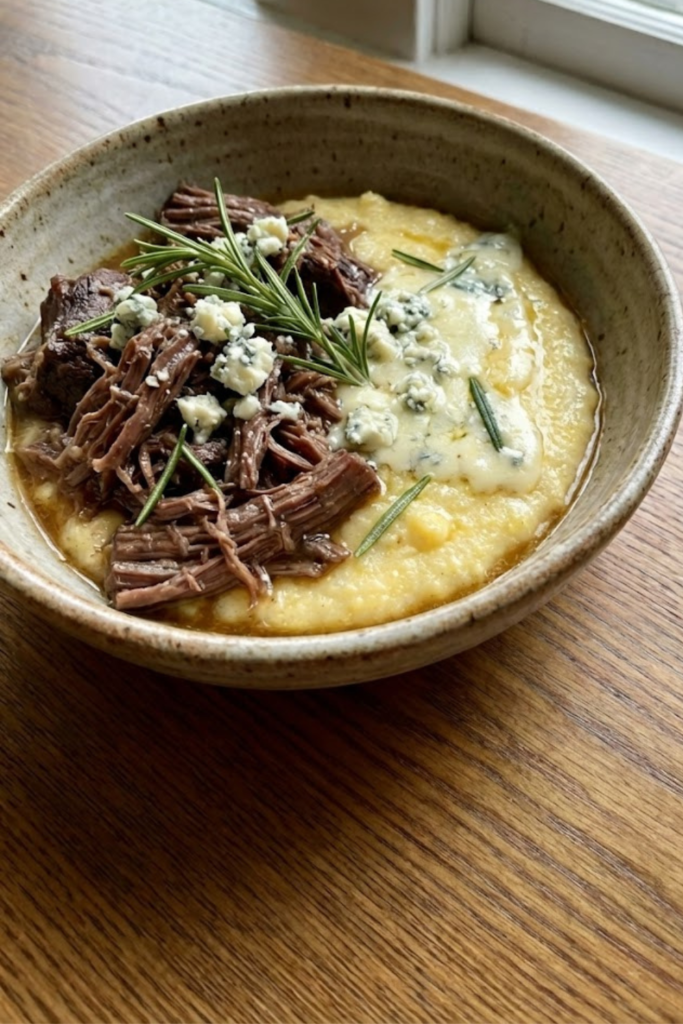
Did you know that the sense of smell is responsible for about 80% of what we taste? Well, let me tell you, when this Italian Pot Roast with Gorgonzola Polenta is simmering in your oven, the aroma alone is enough to drive you wild! I remember the first time I tried to make a pot roast; I rushed the searing process and ended up with gray, sad meat. Huge mistake! But after years of tweaking and tasting, I’ve found the secret to that fall-apart tender beef that pairs perfectly with the sharp, creamy bite of gorgonzola. Get your Dutch oven ready, because we are about to make some magic happen in the kitchen.
Choosing the Perfect Cut of Beef for Braising
Honestly, walking up to the meat counter used to give me major anxiety. I remember one time, trying to impress my in-laws, I bought this expensive, super-lean roast because I thought “less fat means better quality,” right? Wrong. It came out tougher than an old boot, and I was absolutely mortified. It wasn’t the recipe’s fault; it was just the wrong cut of meat.
When you are making an Italian pot roast, you gotta ignore the urge to go lean. We are looking for something specific here.
Why Chuck Roast is King
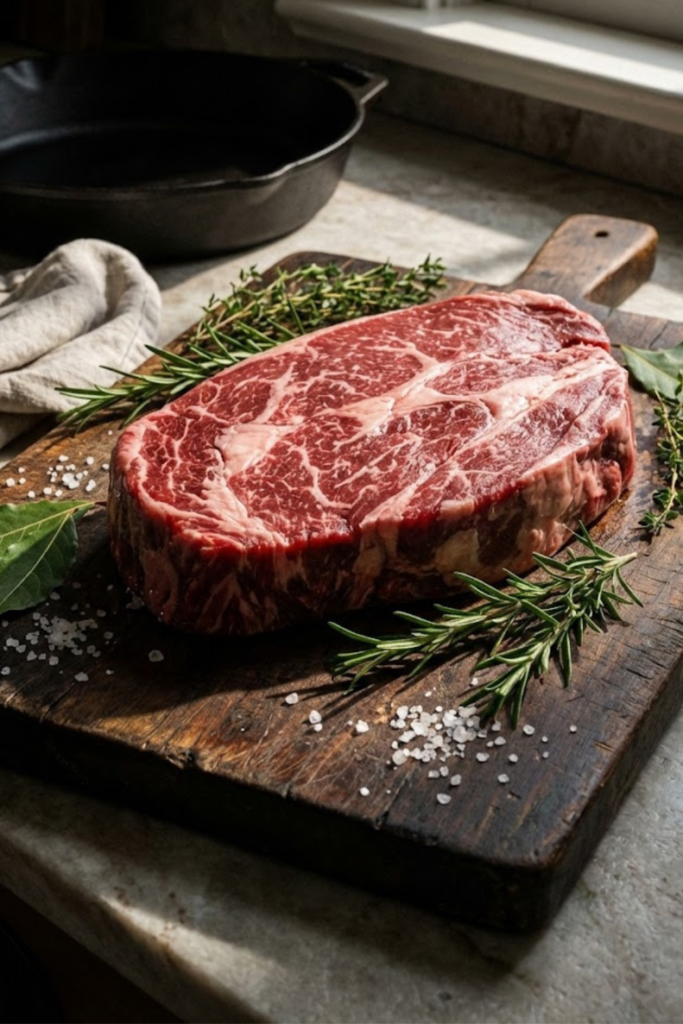
For a melt-in-your-mouth texture, the chuck roast is hands down the winner. It comes from the shoulder area of the cow, which means the muscles did a lot of work. This sounds bad, but it’s actually perfect for slow cooking.
That toughness is caused by connective tissue. When you braise it low and slow, that tissue breaks down into gelatin. That gelatin is what gives your pot roast that silky, rich mouthfeel we all crave. If you use a lean cut like a round roast, you just won’t get that same result. It dries out fast.
Marbling Matters
Next time you are at the store, take a good look at the meat. You want to see lots of white flecks of fat running through the red meat. That is called marbling.
I used to pick the piece with the least fat because I was scared of it being greasy. Big mistake. That fat renders down while it cooks, basting the meat from the inside out. It is literally flavor insurance. If the meat looks too red and clean, put it back! You want the one that looks a bit messy with white lines.
Bone-in or Boneless?
This is a common debate. I usually go for boneless just because it is easier to slice later for serving. However, if you can find a bone-in chuck roast, grab it.
The bone adds a bit more depth to the gravy, kind of like making a stock while you cook. But don’t stress if you can only find boneless; your Italian pot roast will still taste amazing. Just make sure it is a nice, thick cut, at least 3 to 4 pounds.
Prep Before the Pot
Here is a trick I learned the hard way. Do not take the meat out of the fridge and throw it straight into the hot pan. Cold meat lowers the pan temperature instantly, and you won’t get a good sear.
I let my roast sit on the counter for about 30 to 45 minutes before I start cooking. Also, pat it dry with paper towels. I mean really dry it! If the meat is wet, it steams instead of browning, and we want that brown crust for flavor. Trust me, these little steps make a huge difference in the final dish.
Mastering the Sear for Deep Flavor
Okay, confession time. For the longest time, I thought searing meat was just about “locking in the juices.” I’d throw the meat in the pan, flip it after thirty seconds, and call it a day. The result? A pale, sad-looking roast that tasted kinda flat. I had no idea what I was missing until I actually learned what searing does.
If you want your Italian pot roast to taste like it came from a grandmother’s kitchen in Tuscany, you cannot skip this step. And you can’t rush it, either.
The Maillard Reaction (The Tasty Science)
There is this fancy term called the Maillard reaction. It sounds intimidating, but it’s basically just the science of browning. When the amino acids and sugars in the beef hit high heat, they react and create hundreds of new flavor compounds.
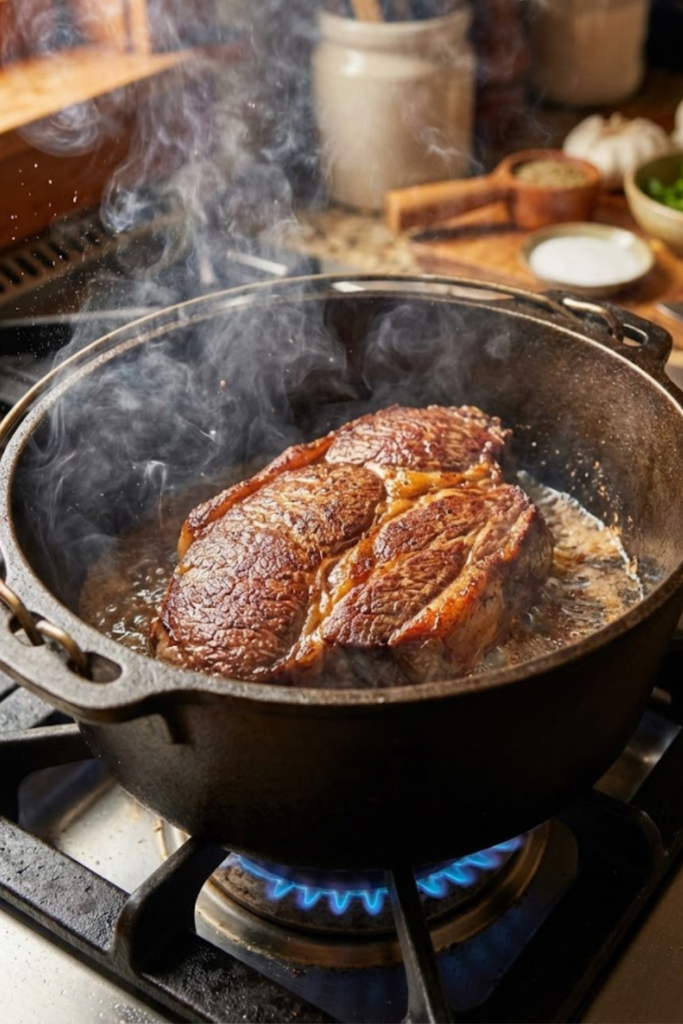
That savory, deep, rich taste—the stuff that makes your mouth water—only happens when that meat turns a deep, dark brown. If the meat is gray, you are missing out on all that flavor potential. It’s the difference between a boiled burger and a grilled steak. You want that crust!
Don’t Be Afraid of the Heat
Here is where I used to mess up big time. I was terrified of burning the pot or setting off the smoke detector (which, to be fair, happens occasionally). So, I would keep the heat on medium.
But to get a proper sear on your beef chuck roast, you need to get that Dutch oven hot. Like, really hot. I usually heat my oil until it’s shimmering and just starting to smoke a tiny bit. If you drop the meat in and it doesn’t hiss aggressively, the pan isn’t hot enough. Take the meat out and wait. It requires a bit of bravery, but it’s worth it.
Patience and Batches
This is the hardest part for me because I am naturally impatient. If you have cut your roast into chunks, do not throw them all in at once. If you overcrowd the pan, the temperature drops, and the meat releases moisture. Instead of searing, the meat starts steaming in its own juices.
Steamed meat is gray and chewy. Yuck.
I cook in batches, leaving plenty of space between the pieces. Yes, it takes an extra ten minutes, but it ensures that every side gets that beautiful golden-brown crust. I usually listen to a podcast while I do this to keep from rushing.
The Fond: Liquid Gold
After you have seared all the meat and set it aside, look at the bottom of your pot. See those brown, sticky bits stuck there? Do not—I repeat, do not—wash those out!
That stuff is called fond, and it is basically concentrated flavor. It looks like a mess, but it is the foundation for your sauce. When we pour in the wine later to deglaze the pan, those bits will dissolve and turn your braising liquid into something spectacular. It’s the secret weapon for a rich sauce.
Crafting the Red Wine Braising Liquid
I have to tell you about the time I ruined a perfectly good roast. I was out of wine, so I grabbed a bottle of that “cooking wine” they sell next to the vinegar at the grocery store. It was salty, metallic, and honestly just nasty. I tried to salvage the dinner, but the flavor was completely off.
Lesson learned: if you wouldn’t drink a glass of it, do not pour it into your pot! The liquid is the soul of this dish, so we have to treat it right.
Picking the Right Red
You don’t need to buy a fifty-dollar bottle, but you do need something decent. For an authentic Italian pot roast, I always reach for a dry Italian red. A nice Chianti or Sangiovese is perfect here.
These wines have good acidity and tannins that help cut through the richness of the beef fat. I usually buy a bottle that’s around ten or fifteen bucks. It adds that deep, complex flavor without breaking the bank. Plus, the cook gets to have a glass while the food simmers, right?
The Holy Trinity: Soffritto
After you remove the meat, throw your veggies into that hot fat. In Italy, they call this mix soffritto, but it’s really just chopped onions, carrots, and celery.
I like to cut mine into chunky pieces rather than a fine dice. They are going to cook for a long time, and if they are too small, they just turn to mush. We want them to hold up a little bit. Sauté them until they start to soften and smell sweet. This aromatic base builds a layer of flavor you just can’t get from powder spices.
Herbs and the Simmer
Now, toss in your fresh herbs. Dried herbs are okay in a pinch, but fresh rosemary and thyme really make this dish sing. I throw the whole sprigs in there; the leaves fall off during cooking, and you can just fish out the stems later.
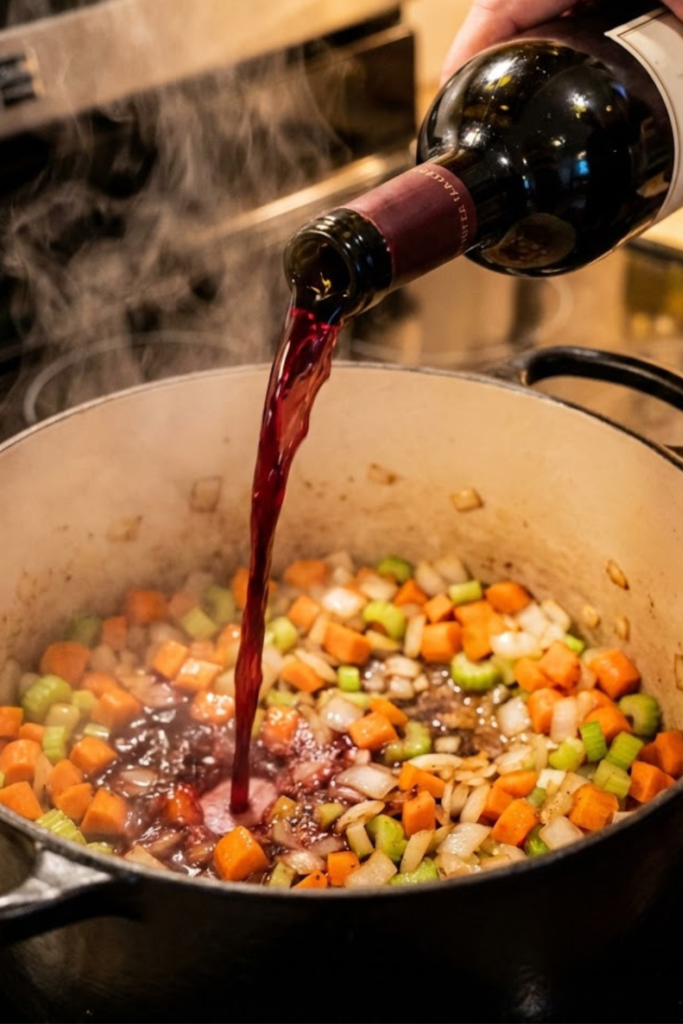
Pour in your wine and use a wooden spoon to scrape up all that fond we talked about earlier. Bring it to a boil for just a minute to cook off the raw alcohol smell. Then, add your stock and return the beef to the pot.
Here is the key: once that lid goes on, keep it low. You want a gentle simmer, not a rolling boil. If you boil the meat aggressively, it tightens up and gets tough. We want gentle bubbles for a tender beef result. It requires patience, but the smell filling your kitchen will be worth the wait.
Creating Creamy Gorgonzola Polenta
I used to think polenta was just tasteless, yellow mush. I’m serious. The first time I made it, I bought a tube of the pre-cooked stuff, sliced it up, and fried it. It was rubbery and weird, and I swore I’d never eat it again. But then, I had real, soft polenta at a restaurant, and my mind was blown. It was rich, cheesy, and smoother than mashed potatoes.
If you want to take your Italian pot roast to the next level, you have to serve it on a bed of this creamy polenta. It soaks up that red wine sauce like a sponge.
Ditch the Instant Stuff
Okay, here is the deal. You need to buy traditional stone ground cornmeal. I know the instant polenta says it cooks in five minutes, and that is tempting. I get it. But the texture just isn’t the same. It’s grainy and doesn’t have that deep corn flavor.
Traditional polenta takes about 30 to 40 minutes of stirring. Yeah, your arm might get a little tired. But think of it as a workout before dinner, right? The slow cooking allows the corn to fully hydrate and “bloom,” giving you that velvety texture we are after.
The Liquid Ratio
A lot of recipes tell you to use just water. Don’t do that. Water is boring.
For the best creamy polenta, I use a mix of chicken stock and milk. The stock gives it a savory backbone, and the milk adds richness. I usually stick to a 4:1 ratio—four cups of liquid to one cup of polenta.
If you pour the cornmeal into boiling liquid all at once, you are going to get lumps. Big, dry lumps that refuse to break apart. It’s a nightmare. The trick is to whisk the liquid furiously while you slowly—and I mean slowly—rain the cornmeal in.
The Cheesy Goodness
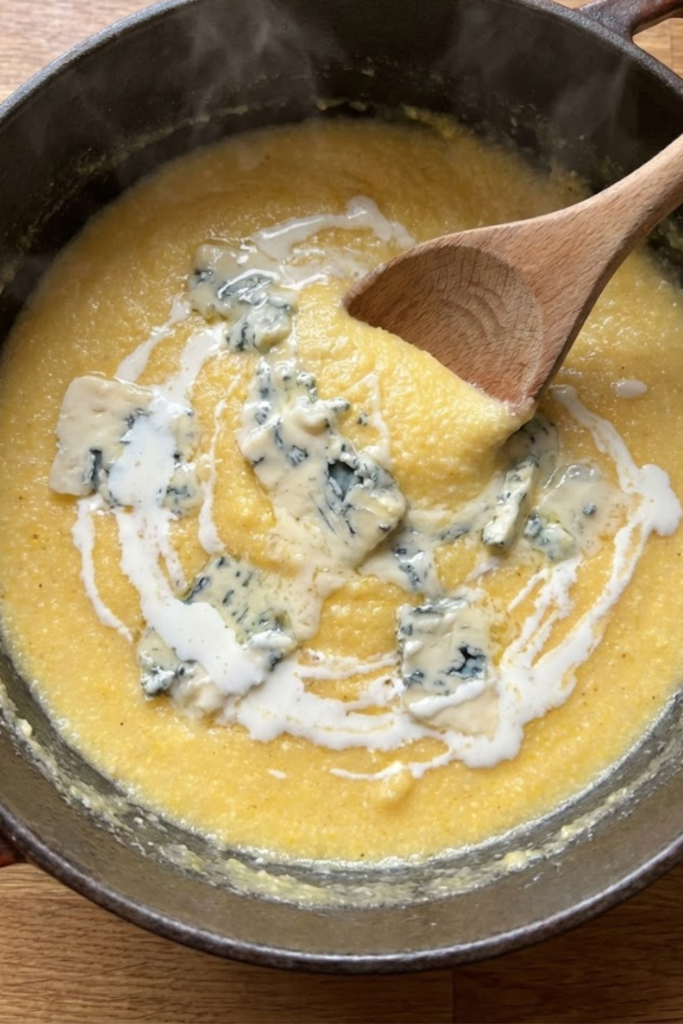
Once the polenta is soft and pulling away from the sides of the pot, it’s time for the star of the show: Gorgonzola dolce.
There are two types of Gorgonzola: mountain (piccante) and sweet (dolce). You want the sweet one. It is creamier and melts way better. I usually fold in about half a cup. It gives the dish this funky, sharp kick that cuts right through the heavy beef. If you aren’t a fan of blue cheese, you could swap it for parmesan, but honestly, the polenta with cheese combo is what makes this dish unforgettable.
Butter Makes It Better
Just when you think it’s done, I do one last thing. I stir in a big tablespoon of cold butter.
It sounds like overkill, I know. But the butter emulsifies into the hot corn and gives it this glossy, restaurant-quality finish. It’s a small step that makes a massive difference. Serve it immediately, because polenta waits for no one!
Plating and Serving Your Italian Feast
You know that feeling when you have spent hours smelling something delicious, and you are finally ready to eat? It takes every ounce of my willpower not to just eat this straight out of the Dutch oven. But trust me, taking five minutes to plate this Italian pot roast properly makes it taste even better. We eat with our eyes first, right?
I used to just ladle everything into a bowl like a stew, which is fine for a Tuesday night alone. But for a Sunday dinner, we want a little drama.
Shredding the Meat
By the time this roast comes out of the oven, you shouldn’t need a knife. If you need a knife, it’s not done!
I take two big forks and gently pull the meat apart. I like to leave it in big, rustic chunks rather than shredding it completely like pulled pork. You want that texture. If the meat resists you at all, put the lid back on and give it another thirty minutes. It is frustrating to wait, but fall-apart tender beef is non-negotiable here.
Sauce Consistency
Here is a little pro tip I picked up. Sometimes, when you pull the pot out, the sauce looks a bit thin or greasy. Don’t panic.
I usually fish the meat and veggies out and set them on a platter. Then, I put the pot back on the stove over high heat. Boil that liquid down for about five or ten minutes. It concentrates the flavors and thickens it into a rich, glossy gravy. If there is a lot of oil floating on top, I just skim it off with a spoon. You want a sauce consistency that coats the back of a spoon, not one that runs like water.
The Perfect Spoonful
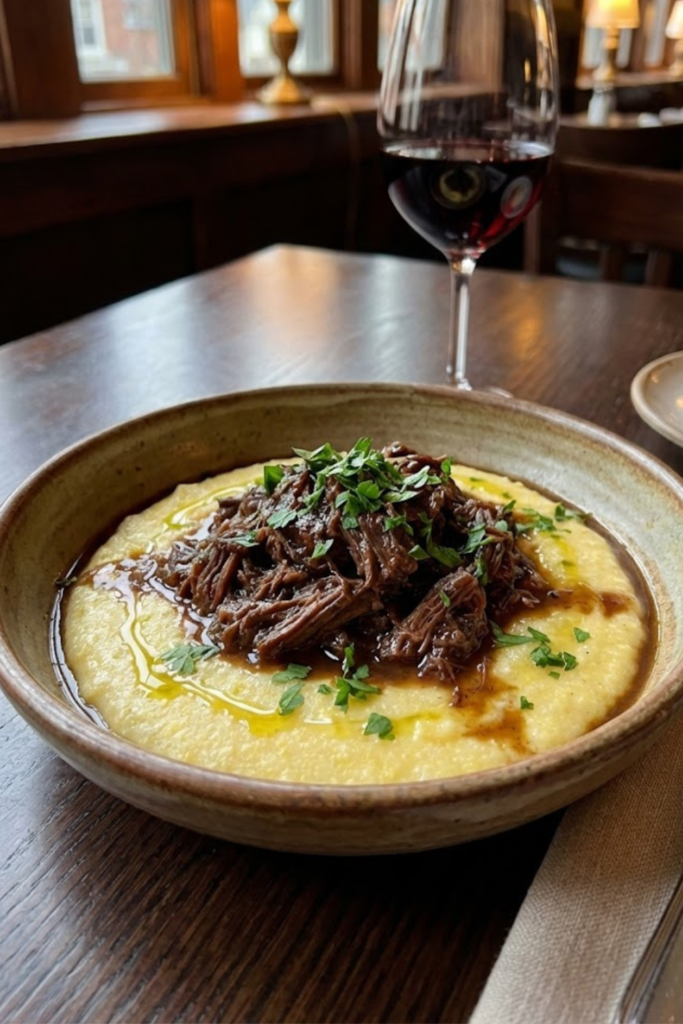
Now for the assembly. Grab a wide, shallow bowl. I always start with a big scoop of that creamy gorgonzola polenta. Use the back of your ladle to make a little well in the center.
Nestle a big chunk of beef right in that well. Then, ladle that reduced wine sauce generously over the meat, letting it pool around the polenta. I like to finish it with something fresh to cut the richness. A sprinkle of gremolata (lemon zest, parsley, and garlic) is traditional, but honestly, just some chopped fresh parsley works wonders. It adds a pop of green that makes the dish look professional.
Wine Pairing
You simply cannot serve this dish with water. It’s against the rules!
Since you already opened a bottle of red wine to cook with, that is usually your best bet for drinking, too. The rule of thumb is “cook with what you drink.” A glass of that same Chianti or Sangiovese bridges the gap perfectly. The tannins in the wine scrub your palate after a bite of the rich, cheesy polenta. It is the perfect end to a perfect meal.
There you have it—a meal that truly feels like a warm hug on a cold day. This Italian Pot Roast with Gorgonzola Polenta isn’t just a recipe; it’s an experience that brings the family together. The contrast between the deep, wine-braised beef and the sharp, creamy polenta is honestly unmatched. I really hope you give this a try this weekend; your kitchen will smell like an Italian trattoria! If you loved this recipe, please don’t forget to pin this to your Dinner Ideas board on Pinterest so you can find it again!